Naval Auxiliary Air Station King City, California
Longitude: -121.1213056
Current Role: Former short-lived Navy auxiliary station occupying the former Army Air Forces/Palo Alto Airport contract primary flying school at King City; now City of King City's public Mesa Del Rey Airport with one public-use runway, aviation fuel, tie-downs/parking, pilot facilities, T-hangars, private hangar land leases, aviation businesses, and aerobatic/flight-training activity.
Naval Auxiliary Air Station King City was one of the small, fast-moving pieces of the Navy's World War II aviation network: a short-lived auxiliary station built on an already active wartime flying field in the Salinas Valley and used during the final months of the war to support Navy pilot training. Its Navy career was brief, but the location tells a larger story. The field began as King City Airport / Palo Alto Airport, Inc., a civilian-operated Army Air Forces contract primary flying school, then passed into Navy use in 1945 as carrier aviation, fighter training, and torpedo-plane training demanded more landing fields than the major naval air stations could safely absorb.
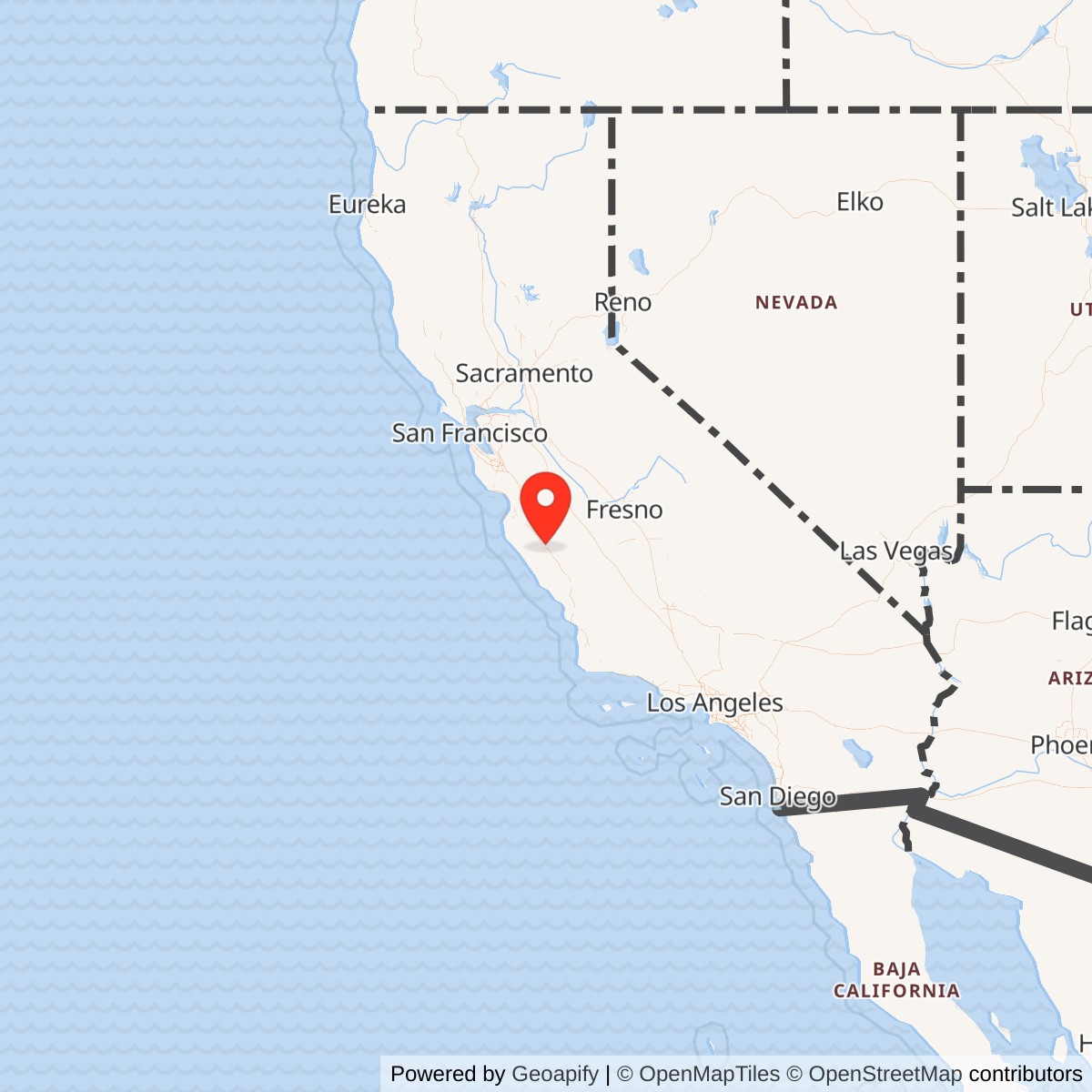
The site sat in a practical flying-training corridor. King City lay in southern Monterey County, between the agricultural floor of the Salinas Valley and the coastal ranges that shielded the valley from much of the immediate Pacific weather. Aviation writers and local accounts have long emphasized the area's unusually good flying weather, and the field's position gave student pilots broad airspace over a rural valley rather than over a crowded urban region. A local aviation history describes wartime aircraft filling the airspace between San Ardo and Greenfield, with King City near the middle of that training landscape. That geography explains why the same airport could serve successive Army and Navy training needs in rapid sequence.
The installation should be understood as a Navy auxiliary air station rather than a major permanent naval base. It did not have the industrial scale of Naval Air Station Alameda, the carrier logistics role of North Island, or the research depth of later weapons stations. Its value was in the opposite direction: it was a usable runway, training plant, barracks area, and local support field that could be folded quickly into the Navy's larger wartime aviation system. King City was the kind of place that made the Navy's big air stations workable. By giving pilots another inland field for practice, transition, and emergency use, it relieved pressure on the parent network and helped keep training aircraft moving.
Pre-Navy Development: Army Contract Flying School
The King City field's military importance began before the Navy arrived. The airport opened in April 1940 as Palo Alto Airport or King City Airport. Construction of the flying school began in December 1940, and local-history accounts state that buildings were complete by May 1941. The early plant included barracks, a hospital, an administration building, a mess hall, schoolrooms, hangars, runways, and apron areas. It was not originally a Navy field. It was part of the Army Air Forces' contract flying-school system, in which civilian operators provided primary flight instruction under military supervision.That contract-school model was one of the quiet engines of American air mobilization. Instead of building every training station from scratch as a government-operated Army airfield, the Army used civilian contractors with aviation experience to teach the earliest phase of pilot training. At King City, the contractor was Palo Alto Airport, Inc. Local accounts describe a facility built to house and support roughly 280 cadets, with instructors, mechanics, administrative staff, military staff, and civilian workers. Cadets trained in primary aircraft such as Stearmans, Ryans, and Fairchild PT-19s, receiving the foundation of flying skill before moving on to more advanced military schools.
The field's Army-era system included several local auxiliary fields used for emergency or overflow landings. Reference summaries identify Benard, Hanson, Sorenson, and Trescony auxiliary fields as part of that earlier training environment, with little or no visible trace surviving today. Their existence matters because it shows that even before the Navy arrived, King City was not just a single runway. It was the center of a small training web spread across nearby rural land, designed to keep novice pilots safe and to distribute flight operations across a broader area.
By October 1944, Army primary training at King City had ended. One local museum history states that approximately 10,000 cadets had passed through and graduated from the school before the Army contract operation closed. That scale was far larger than the later Navy phase, and it means that the built environment inherited by the Navy was already a proven wartime aviation campus. When the Navy took over, it did not create King City aviation history from nothing. It converted a recently completed Army training field into a naval auxiliary station for the war's final push.
Navy Mission and Activity
The Navy assumed use of the King City facility in 1945. Sources differ slightly on the exact transition date: local histories often describe the Navy takeover in February 1945, while airport reference histories describe military control transferring to the Navy in April 1945. Once under Navy control, the field was known as Naval Auxiliary Air Station King City.The Navy mission was fighter and torpedo-plane pilot training. That role fit the Navy's broader late-war needs. By 1945, aircraft carriers had become central to Pacific operations, and the Navy required an enormous shore-based training system to prepare pilots before they ever reached a carrier deck. Major stations could not perform all of that work alone. A field like King City gave the Navy extra runway capacity, more rural airspace, and another place to station personnel, aircraft, mechanics, instructors, and support crews.
Local accounts state that roughly 800 to 900 men were stationed at the Naval Auxiliary Station at King City during the Navy period. That number is modest compared with the huge naval air stations on the coast, but it is large for a small agricultural-valley airport. Those personnel would have included instructors, students or transitioning aviators, aircraft maintenance personnel, operations and administrative staff, medical and mess personnel, and security or support workers. The daily rhythm of the station would have been practical and repetitive: launch aircraft, recover aircraft, brief flights, maintain planes, manage fuel, house and feed personnel, and keep the field available for a high tempo of training operations.
King City's Navy value was also connected to the kind of flying practiced there. Fighter and torpedo-plane training required repeated takeoffs and landings, formation work, navigation, emergency procedures, and aircraft handling in aircraft that were faster and more demanding than primary trainers. A small inland field could not reproduce carrier-deck operations, but it could absorb many land-based parts of the training pipeline. The Navy's great wartime aviation machine depended on exactly this kind of distribution: basic and intermediate skills practiced ashore, increasingly specialized work concentrated at larger stations, and carrier qualification or combat deployment handled through the wider fleet training system.
Because the Navy period lasted only a few months, NAAS King City does not appear to have produced a long list of famous units, major construction campaigns, or postwar tenant commands. Its importance lies in tempo and timing. It was activated late, used hard for a short period, and declared surplus when the rapid end of the war made its continued naval operation unnecessary. On September 30, 1945, the Navy declared the airport surplus. That date effectively marks the end of King City's career as a Navy installation.
Site Design and Facilities
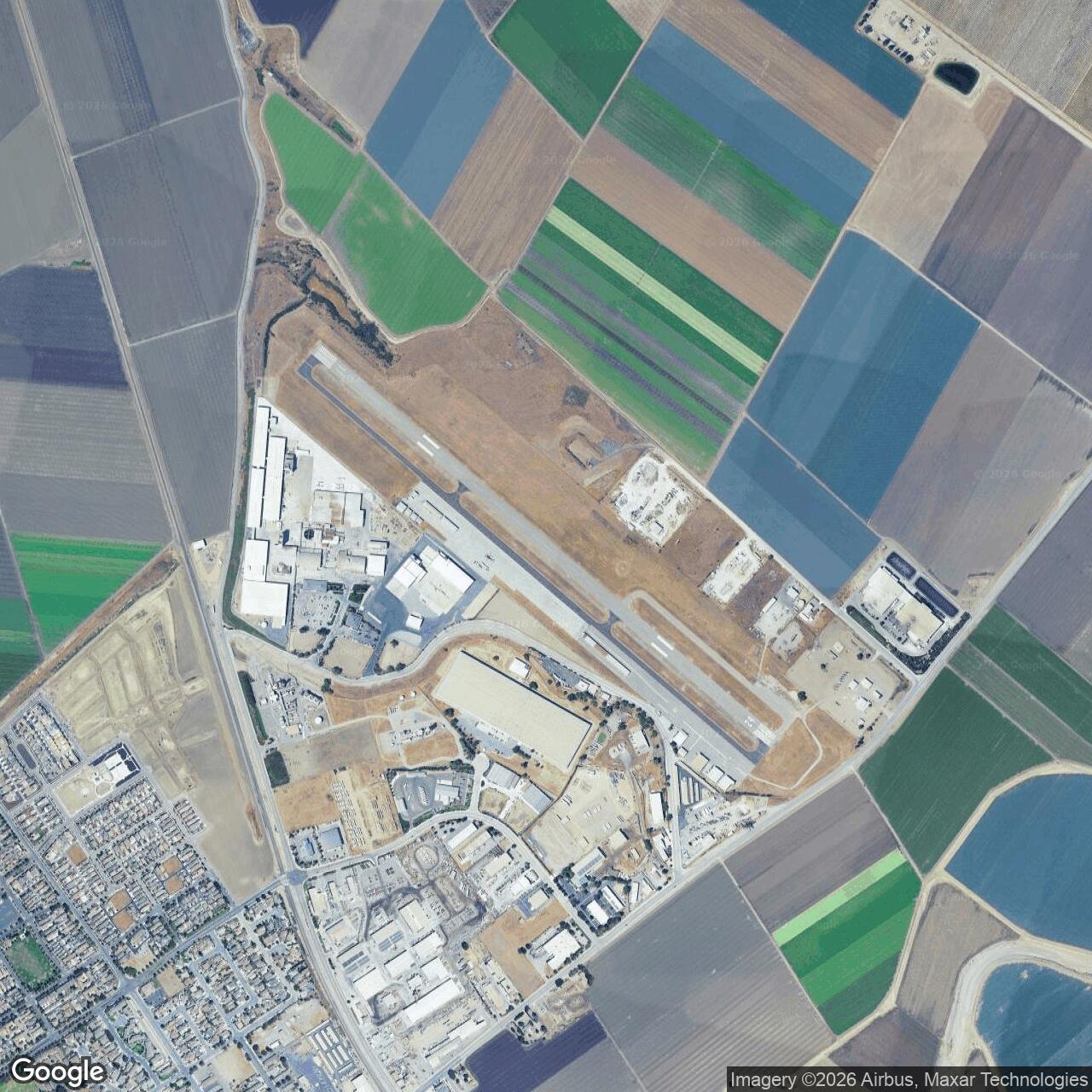
The physical plant the Navy inherited had been created for the Army contract flying school. The original airport had a hard-surfaced northwest-southeast runway, with reference summaries giving the early runway length as roughly 4,570 feet. Wartime construction produced barracks, hangars, administrative space, a hospital or medical facility, mess facilities, schoolrooms, apron space, and other training-school support structures. A 1941 description summarized by local aviation historians lists five barracks, a hospital, an administration building, a mess hall, and two or three hangars, depending on the account.The field was not a compact Navy base built for permanence. It was an aviation-training plant adapted to wartime urgency. Buildings were practical, functional, and tied to the needs of flight instruction: cadet quarters, instructor spaces, maintenance areas, aircraft storage, mess and medical services, and operations support. The runway and open valley airspace were the essential assets; the buildings existed to keep the flying schedule running.
Its setting amplified its usefulness. Mesa Del Rey sat just northeast of King City, close enough to town for labor, supplies, transportation, and later municipal reuse, but far enough from dense city fabric to permit active military flying. The Salinas Valley offered an elongated north-south corridor, and nearby communities such as San Ardo and Greenfield framed the training airspace described in local accounts. The Pacific influence moderated weather, while the coastal mountains helped shield the area from some coastal conditions. The result was a rural aviation site that could support high-use training on many days of the year.
The current airport preserves the runway-centered logic of the historic field. Mesa Del Rey Airport is now a public airport owned by the City of King City. AirNav lists it as FAA identifier KIC / ICAO KKIC, located one mile northeast of King City, with a surveyed elevation of 374.2 feet and a single public runway, 11/29, approximately 4,479 feet by 100 feet. The City of King describes the present facility as a municipal airport offering fuel, parking, a pilot lounge, public restrooms, T-hangar rentals, and land leases for private hangars. In other words, the field's military training plant has become a local general-aviation airport, but the basic aviation geography remains readable.
Units, Organizations, and Systems
The Navy organization at King City appears in historical sources primarily as Naval Auxiliary Air Station King City rather than as a long-term home for named squadrons with a substantial independent lineage. That is typical for short-lived auxiliary air stations. Their function was often less about hosting a famous command than about supporting the parent station's training program and the wider naval aviation system.The clearest predecessor organization was the Army Air Forces contract flying school operated by Palo Alto Airport, Inc. That school formed the personnel and infrastructure basis for the later Navy station. Its cadets, instructors, mechanics, and civilian workers belonged to the broader wartime air-training pipeline that expanded American airpower before and during World War II. The Navy then used the same field for fighter and torpedo-plane pilot training, folding a former Army contract school into the Navy's own late-war training requirements.
King City also belonged to the Alameda-centered network of northern and central California naval auxiliary fields. NAS Alameda's World War II role as a major naval air station depended on a constellation of auxiliaries, outlying fields, and specialized training sites spread across the region. Fields such as Crows Landing, Hollister, King City, Livermore, Monterey, Santa Rosa, Vernalis, Watsonville, and others helped distribute air traffic and provided training space away from the crowded Bay Area. King City's location south of Monterey and Salinas placed it at the southern reach of that network and gave naval aviators another inland field in a rural valley.
No major post-World War II Navy units remained at King City because the Navy station closed almost immediately after the war. The postwar story belongs instead to King City, the War Assets Administration, later private and municipal ownership, and the general-aviation community. That distinction is important: the Navy installation was real, but it was a short wartime layer placed on a field whose longer history includes Army training before it and civilian aviation after it.
Role in the Wider Military Network
Naval Auxiliary Air Station King City makes sense only as part of a larger aviation-training system. The Navy's World War II aviation infrastructure expanded from a small prewar establishment into a national network of major air stations, reserve air bases, auxiliary fields, and satellite fields. The Navy's own World War II base-construction history emphasized that by 1945 the air station had become as indispensable to naval operations as older shore installations such as navy yards and training centers. Aircraft required runways, maintenance, fuel, housing, shops, and ground crews, and the fleet's demand for pilots could not be met by a few coastal stations alone.King City served that system by providing distributed runway capacity. It allowed training flights to happen away from Alameda's main field, away from the densest Bay Area air traffic, and in a rural valley with useful weather and open airspace. This was especially important because naval aviation training required repetition. Pilots did not become combat-ready through classroom instruction alone. They needed takeoffs, landings, navigation, formation work, emergency drills, and aircraft handling time. Each auxiliary field increased the number of flight hours the system could produce.
The site also shows how flexible the wartime air-training network became by 1945. A field built for Army Air Forces primary training could be repurposed quickly for Navy use when the Army no longer needed it and the Navy still did. That kind of cross-service reuse was common in wartime America. The federal government had invested in runways, barracks, hangars, and support buildings; when one training pipeline contracted, another could take over. King City's Navy history was brief precisely because it occupied the hinge between two wartime cycles: the end of Army primary training there and the final Navy training surge before Japan's surrender.
Closure and Postwar Reuse
The Navy declared the airport surplus on September 30, 1945, only weeks after the end of World War II. The speed of that action reflects the sudden contraction of wartime training demand. Fields that had been essential during mobilization could become excess almost overnight once victory eliminated the requirement for continuous pilot production.The property eventually moved through the War Assets Administration and returned to civilian use. Local histories state that the property reverted to King City in 1951 and that in 1957 it was purchased by Basic Vegetable and Dehydration. Over time the airport became Mesa Del Rey Airport, a public general-aviation facility associated with the City of King City. The surrounding aviation-school campus and industrial/agricultural reuse patterns mean that not every wartime building or parcel remained in airport use, but the runway and airport identity survived.
Today Mesa Del Rey Airport is open to the public and continues to serve the community. The City of King operates it as a municipal airport for air access to and from the area, and AirNav identifies it as a publicly owned airport with fuel and aviation services. The modern field has a single runway, aviation fuel, aircraft parking, pilot facilities, and hangar-related uses. It is no longer a military installation, but it remains an operating airfield whose wartime training origins are still connected to the site's physical identity.
Chronology
- 1940-04 The airport opened as Palo Alto Airport / King City Airport.
- 1940-12 Construction began on the Army Air Forces contract flying-school facilities at King City.
- 1941-03-15 The first Army Air Corps cadets arrived by train for training at Mesa Del Rey.
- 1941-03-21 The first class of Army Air Corps cadets began training.
- 1941-05 The main flying-school buildings were complete, including barracks, medical, administrative, mess, and hangar facilities.
- 1941-1944 King City operated as an Army Air Forces contract primary flying school operated by Palo Alto Airport, Inc.
- 1944-10-16 Army primary pilot training at King City ended.
- 1945-02 Local histories describe the U.S. Navy taking over the facility for fighter and torpedo-plane pilot training.
- 1945-04 Airport reference histories describe military control of the airport transferring to the U.S. Navy.
- 1945 The field operated as Naval Auxiliary Air Station King City, supporting Navy fighter and torpedo-plane pilot training with roughly 800 to 900 men stationed there according to local accounts.
- 1945-09-30 The Navy declared the airport surplus.
- 1951 Local histories state that the property reverted to King City.
- 1957 Local histories state that the property was purchased by Basic Vegetable and Dehydration.
- Present The former NAAS King City site is Mesa Del Rey Airport, a public general-aviation airport owned by the City of King City.