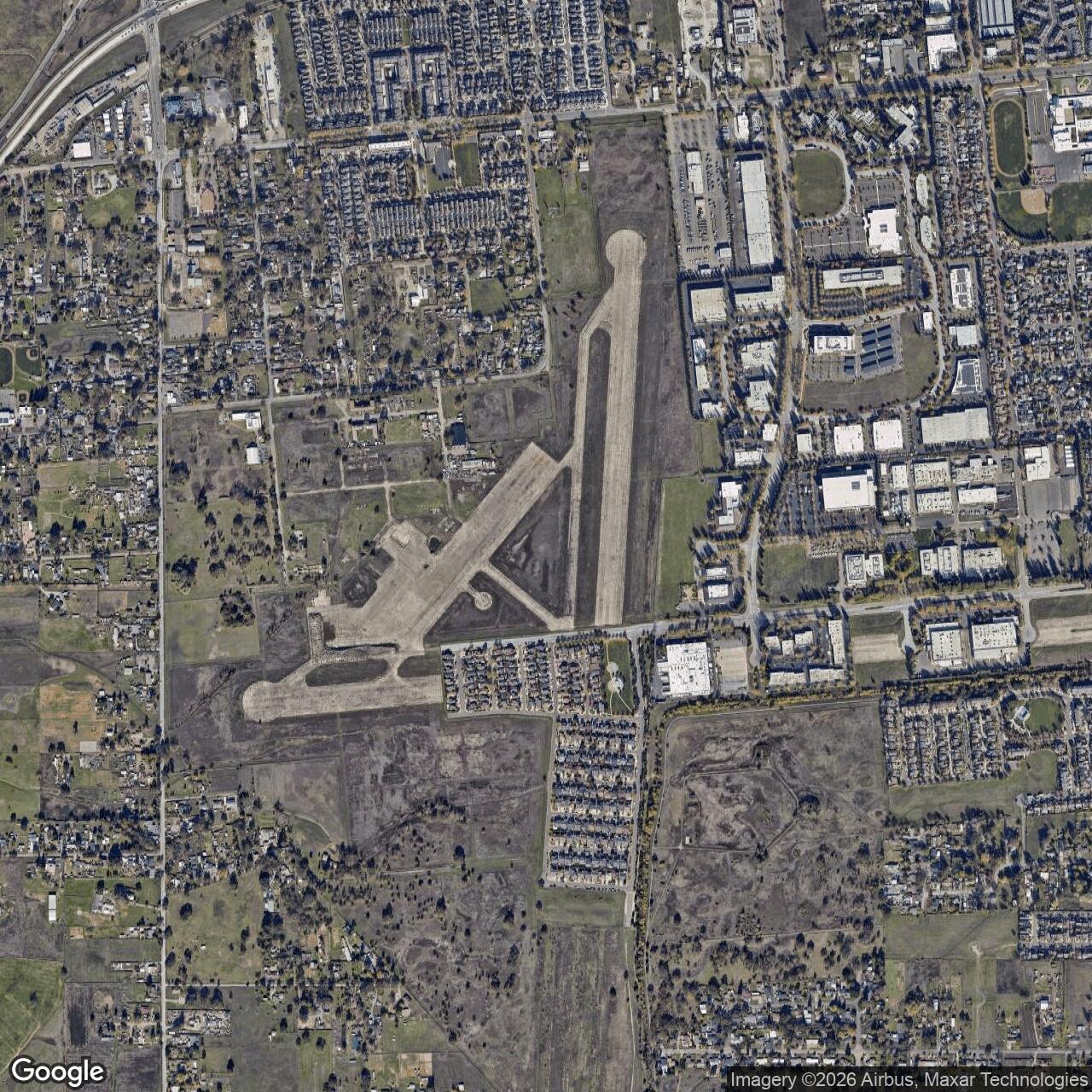
Naval Auxiliary Landing Field Santa Rosa, California
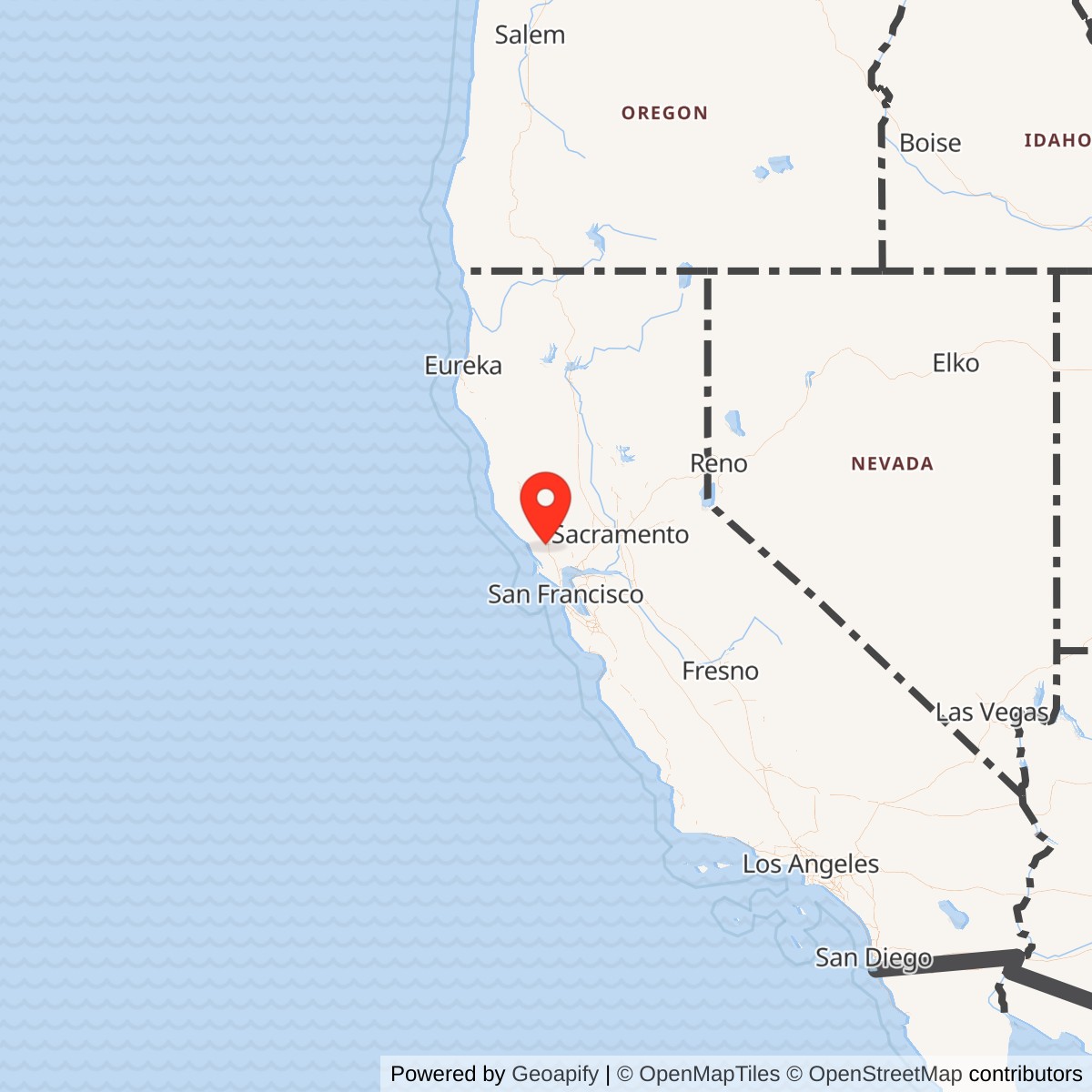
Longitude: -122.759217
Current Role: Former NAS Alameda auxiliary air station/landing field and later Santa Rosa Air Center; now a southwest Santa Rosa redeveloped former airfield landscape with commercial, industrial, educational, public/utility and other parcel uses, surviving runway traces, and a FUDS/environmental-restoration record.
Naval Auxiliary Landing Field Santa Rosa was a World War II and Korean War-era Navy aviation installation in southwest Santa Rosa, California. It was also widely described as Naval Auxiliary Air Station Santa Rosa, and the distinction matters because the field's role changed over time. In its fullest wartime form it functioned as a substantial auxiliary air station tied to Naval Air Station Alameda, with two 7,000-foot concrete runways, taxiways, ramps, hangars, maintenance shops, fuel storage, barracks, administration and classroom buildings, bachelor officer quarters, medical and dental facilities, an ammunition-storage area, sports facilities, utilities, and aircraft-support infrastructure. After its first Navy operating period, it slipped into inactive, civil, or caretaker use, then returned briefly to Navy activity during the Korean War before finally passing out of military hands.
The site was not a small grass strip or a casual emergency landing ground. It was built quickly, heavily, and deliberately as part of the Navy's wartime expansion of carrier-aircraft training capacity around the San Francisco Bay region. Santa Rosa stood inland from the fog, congestion, and traffic of the Bay Area's main naval air stations, yet close enough to Alameda to function as part of the same operational system. That combination made the field valuable: enough runway for high-performance carrier aircraft, enough open land for training activity, and enough distance from Alameda to relieve the main base while still remaining under its administrative and training orbit.
Santa Rosa's aviation history is sometimes confused with the separate Santa Rosa Army Air Field / Sonoma County Airport north of town. The former Navy field treated here was the southwest Santa Rosa airfield that later became Santa Rosa Air Center. The current Charles M. Schulz-Sonoma County Airport is the successor to the former Army airfield, not to the Navy's Santa Rosa auxiliary station.
Mission Evolution
The Santa Rosa Navy field emerged from a larger wartime site-selection problem in Sonoma County. The Navy initially looked toward Cotati as the main auxiliary air station location and Santa Rosa as an outlying field, but drainage problems at Cotati changed the plan. The Navy developed Santa Rosa as the more substantial station and left Cotati as a supporting outlying field. Construction at the Santa Rosa site began in late 1942, with the field built between November 1942 and mid-1943. The station was commissioned in June 1943, with M. L. Shettle's naval-air-station history, as preserved by Paul Freeman's airfield history, giving June 29, 1943 as the commissioning date.The original mission was pilot and carrier-squadron training. Santa Rosa supported the Alameda-centered training system at the point when carrier aviation had become one of the Navy's decisive wartime instruments. NAS Alameda was a major West Coast naval air station, but the wartime Navy could not crowd all training, maintenance, and squadron work onto one field. Santa Rosa became one of the stations that absorbed that pressure. Its long runways and support buildings allowed carrier aircraft to cycle through operational training while the main Alameda station handled the larger command, maintenance, assembly, ferrying, and fleet-support environment.
In 1943 and 1944 the station hosted carrier aircraft service units and carrier squadrons preparing for Pacific deployment. Contemporary and later accounts identify Composite Aircraft Service Unit 13, Composite Aircraft Service Unit 18, and CASU 36 in the early operating history, followed by a rotation of carrier torpedo, bombing, fighting, composite, and shore-based support squadrons. The aircraft associated with Santa Rosa's Navy era included SBD Dauntless dive bombers, F4U Corsairs, SB2C Helldivers, TBF/TBM Avengers, F6F Hellcats, F8F Bearcats, F7F Tigercats, F9F Panthers, and AD Skyraiders. That aircraft mix captures the field's arc: propeller-driven carrier warfare during World War II, then a short Korean War-era reactivation at the dawn of the jet carrier age.
The Navy's first Santa Rosa operating period ended after World War II. The station had operated continuously as a military base until 1946. In the immediate postwar years, portions of the property were used by Santa Rosa Junior College, and the documentation of the airfield's exact use between 1946 and 1950 is incomplete. The field nevertheless remained visible on aeronautical charts and in Navy records as a former or inactive Navy field, and its runways remained substantial enough to be reactivated.
That reactivation came with the Korean War. The Navy brought Santa Rosa back to life in 1950 or 1951, and the public-participation plan prepared for the former site states that the base was reactivated during the Korean War and deactivated on February 7, 1952. Veteran recollections and airfield histories identify FASRON 10 at Santa Rosa in 1951 and describe the field supporting Carrier Air Group 2 as it prepared for Korea. This second Navy period was shorter and more focused than the World War II mission. It showed the residual value of the field as a reserve aviation plant: even after postwar drawdown, its runways and basic facilities could still support a mobilization need.
The post-military mission changed again. The Navy later turned over most of the property as excess to the General Services Administration, while retaining a smaller federal parcel for a time. The airfield was eventually auctioned or sold into private and public hands, reopened in the 1960s as the Santa Rosa Air Center, and continued as a civil airfield until closing in the early 1990s. The landscape then shifted toward mixed redevelopment, while former military contamination concerns brought the property into the Formerly Used Defense Sites process.
Operational Role
Santa Rosa's operational importance lay in throughput. It existed to turn trained naval aviators and organized carrier squadrons into units ready for fleet deployment. That work was not glamorous in the way a carrier battle was glamorous, but it was one of the essential preconditions for carrier warfare. Planes had to arrive, be maintained, fueled, armed for training, flown, parked, inspected, and flown again. Pilots had to sharpen formation work, approaches, carrier-landing habits, gunnery and bombing routines, and squadron coordination. Ground crews had to support the aircraft tempo. Administration, classroom work, housing, messing, medical care, communications, and ordnance handling all had to happen away from the main fleet base.The field's two 7,000-foot concrete runways were its defining operating feature. They provided the length and durability needed for Navy carrier aircraft of the period and enough pavement to support repeated takeoffs, landings, and training cycles. The crossed-runway layout, with north-south and east-west axes, allowed operations under varying wind conditions. Santa Rosa also had taxiways, ramps, hangars, maintenance areas, and support buildings, so it was not merely a runway pair. It was a complete training station scaled to support multiple squadrons and thousands of personnel.
Santa Rosa's World War II activity tied it directly to carrier-air-group preparation. Airfield histories drawn from Shettle's work describe Carrier Air Group 6 transferring from Alameda to Santa Rosa in May 1944 for approximately six months of operational training. Carrier Air Group 5 followed later in 1944, with its fighter and bombing squadrons, and Marine fighter squadrons VMF-452 and VMF-214 joined the air group at Santa Rosa before the group embarked on USS Franklin in February 1945. Carrier Air Group 19 and Carrier Air Group 11 also appear in the later wartime Santa Rosa sequence. The field thus did not serve only anonymous "training aircraft." It supported named carrier air groups during the last and most intense year of the Pacific carrier war.
The human scale was significant. A 1992 Press Democrat retrospective, drawing on Navy veterans' recollections, stated that from 1943 to 1945 the Santa Rosa station operated under CASU 36 and a training-base organization that included bombing, torpedo, fighter, and transport squadrons bound for Pacific duty. The same article described the field's high point as approximately 1,800 Navy personnel. That is smaller than a major naval air station, but large enough to make Santa Rosa a serious wartime installation with a substantial local footprint.
Santa Rosa's operating environment also included two supporting fields. Cotati and Little River functioned as outlying fields in the Santa Rosa system. Cotati, originally intended as the main station, became an outlying landing field after drainage problems limited its usefulness. Little River, north in Mendocino County, added another piece of operating space. This hierarchy matters because Santa Rosa itself was part of Alameda's larger network, yet it also had its own satellites. In wartime aviation geography, the "base" was not a single fence line; it was a distributed training system.
The Korean War reactivation gave Santa Rosa a second operational identity. Instead of a large World War II throughput role, the field appears to have supported a narrower readiness requirement: bringing carrier aircraft and air-group support capacity back online during the first emergency of the Cold War. Aircraft types associated with the reactivation period included AD Skyraiders, F4U Corsairs, and F9F Panthers. That mix captures the transition from late piston-engine strike aircraft to early carrier jets. Santa Rosa's runways, built for World War II, were still useful enough to support this transitional moment.
Facilities and Physical Layout
The former Santa Rosa Navy site was a roughly cross-shaped airfield in southwest Santa Rosa. The federal government acquired approximately 498 acres between 1941 and 1943 for the original naval facility. Later environmental documentation described the former site as about 467 acres made up of multiple parcels, bounded generally by Finley Avenue, Ludwig Avenue, and Wright Road. The site lay less than three miles from downtown Santa Rosa, close enough to affect the city's wartime housing, labor, and social life, but far enough west and southwest to provide room for runways and training activity.The airfield's most visible physical elements were two concrete runways about 7,000 feet long. Sources describe them as oriented roughly north-south and east-west, with parallel taxiways and a concrete apron in the northwest quadrant of the runway crossing. The runways created the cross-shaped footprint still noted in environmental and airfield-history records. At a time when many auxiliary fields were smaller or temporary, Santa Rosa's long paved runways made it one of the more substantial Alameda-linked training fields.
The built facilities made the field a true air station. Water Board and Corps-related documentation lists aircraft hangars and maintenance shops, fuel-storage areas, administration and classroom buildings, bachelor officer quarters, barracks, a theater, medical and dental facilities, an ammunition-storage area, water wells, sports facilities, and utilities. These facilities supported the aircraft mission but also created a military community. Sailors, Marines, pilots, mechanics, ordnance personnel, administrators, medical staff, and support crews could live and work at the station without constantly returning to Alameda.
The station also contained environmental risk points typical of mid-twentieth-century aviation installations. Fuel storage, maintenance shops, ammunition storage, oil and solvent use, firefighting and aircraft operations, underground or aboveground tanks, and disposal practices later became the kinds of activities that environmental investigators had to reconstruct. The former field's physical layout therefore matters not just for aviation history but for cleanup history. The same facilities that made Santa Rosa useful to the Navy created potential soil and groundwater issues after the military left.
After military use ended, the physical plant eroded unevenly. The site spent years inactive, was reopened as the Santa Rosa Air Center in the 1960s, and later lost aviation function. Some buildings and runway remnants survived for decades while other structures were demolished or removed. By the late 1990s, Water Board documentation stated that most air-station buildings had been demolished, that many building footings and piers remained, that only a few former buildings survived in the northwest portion of the site, and that portions of the north-south runway, the western part of the east-west runway, and part of the warm-up apron were still intact but inactive.
Units, Aircraft, and Organizations
The station's first operating layer was the Alameda naval-air system. Santa Rosa was an auxiliary of NAS Alameda, and its purpose was shaped by Alameda's need for additional training and operating space. Alameda itself was one of the Navy's principal West Coast air stations, and World War II turned it into the hub of a wide network of auxiliary fields. Santa Rosa belonged to that network, along with Crows Landing, Hollister, King City, Livermore, Monterey, Vernalis, Watsonville, Cotati, Little River, and other fields that absorbed carrier-aircraft training and practice activity.Composite Aircraft Service Units were central to Santa Rosa's day-to-day operations. CASU 13 and CASU 18 appear in the earliest operating sequence, and CASU 36 became the permanent support organization at the station in October 1943. CASUs were practical units: they kept aircraft maintained, supported flight operations, provided technical services, and allowed squadrons to train and move onward. A field like Santa Rosa could not function on runways alone. Its operational tempo depended on the service units that fueled, fixed, moved, and sustained the aircraft.
The station hosted a broad range of carrier squadrons and air groups. Airfield histories identify torpedo, bombing, fighting, composite, bomber-fighter, and carrier air group organizations passing through Santa Rosa. These included VT-2, VB-2, VB-11, VF-28, VC-4, VB-301, VB-302, VB-303, Carrier Air Group 6, Carrier Air Group 5, VF-5, VB-5, VMF-452, VMF-214, Carrier Air Group 19, Carrier Air Group 11, and VBF-151. The exact composition changed as squadrons moved through the training pipeline, but the pattern is clear: Santa Rosa was a preparation station for air groups and squadrons headed toward fleet service.
Aircraft types named in the former-site records and airfield histories show the variety of training conducted there. SBD Dauntlesses and SB2C Helldivers represented dive bombing; TBF/TBM Avengers represented torpedo and attack work; F6F Hellcats, F4U Corsairs, F8F Bearcats, and F7F Tigercats represented the fighter and fighter-bomber world; AD Skyraiders and F9F Panthers represented the postwar and Korean War transition. Santa Rosa's aircraft story is therefore not a single-model story. It reflects the Navy's rapid evolution from early-war carrier aircraft to late-war high-performance fighters and early jet-era aircraft.
The field's strongest combat connection may be its relationship with Carrier Air Group 5 and USS Franklin. Santa Rosa trained portions of CAG-5, including Marine fighter squadrons, before that air group embarked on Franklin in February 1945. Franklin was severely damaged by Japanese air attack in March 1945, one of the most devastating carrier-damage episodes of the war. Santa Rosa was not the battlefield, but its training pipeline helped prepare squadrons that entered the carrier war at enormous risk.
Role in the Wider Military Network
Santa Rosa only makes full sense as part of a network. The Navy's own World War II base-construction history explains that by the end of the war the Navy had expanded from a small prewar aviation establishment into almost eighty air stations and a large number of satellite fields. Carrier-based aircraft had to be trained ashore, and the Navy needed outlying fields because traffic at the major stations became unsustainable. Santa Rosa was one of those satellite answers: an inland field that relieved Alameda and helped translate the Navy's aircraft-procurement boom into usable carrier squadrons.Within the Bay Area and northern California, Santa Rosa sat in a layered aviation geography. Alameda was the major base. Santa Rosa was a substantial auxiliary station. Cotati and Little River functioned below Santa Rosa as outlying fields. Other Alameda-linked fields across central and northern California handled their own portions of training and support. The network spread aircraft across space, reduced congestion, used local weather advantages, and created specialized places for repeated takeoffs, landings, and squadron work.
Santa Rosa also sat beside a separate Army aviation system. The Santa Rosa Army Air Field north of town trained Army fighter groups and later became Sonoma County's main airport. The Navy field and Army field were different installations, but the two together made Santa Rosa an unusually dense wartime aviation community. Navy pilots and Army pilots trained in proximity, competed informally, used local businesses, and left overlapping memories in the city. The presence of both fields reinforces how deeply World War II aviation remade northern California's civilian landscapes.
After World War II, Santa Rosa's system role narrowed but did not vanish. The Korean War reactivation showed that inactive wartime airfields remained part of a latent mobilization reserve. Even if a field had gone quiet, the military could return to it when international crisis demanded. That kind of standby value was common in the early Cold War, when the United States had not yet decided how many World War II installations to keep, close, or repurpose permanently.
Closure, Transfer, and Reuse
Santa Rosa's World War II mission ended in stages rather than in a single dramatic closure. The station operated continuously as a military base until 1946. Afterward, portions of the property were used by Santa Rosa Junior College, and the field appears to have been inactive or only partially used until Korean War reactivation. The Navy deactivated the base on February 7, 1952. Later records describe additional steps: the Navy retained federal control for years, declared the station surplus in the late 1950s, and turned over most of the property to the General Services Administration in 1961 while retaining a smaller parcel.The former military field then entered an uneven civilian aviation afterlife. Private interests acquired or leased portions of the site, and it reopened in the mid-to-late 1960s as the Santa Rosa Air Center. Its long concrete runways were useful to private pilots and aviation operators even after the Navy had left. But the field was no longer the region's main aviation focus. The former Army field north of Santa Rosa became the county's primary airport, and the old Navy field eventually closed as an airport in 1991.
The site's redevelopment history reflects the fate of many former wartime airfields: partial reuse, partial demolition, environmental concern, and gradual absorption into urban growth. The cross-shaped runway footprint influenced later roads and parcels, and visible remnants persisted into the late twentieth and early twenty-first centuries. Commercial, educational, public, utility, and other parcels replaced the unified naval installation. Instead of a preserved base, Santa Rosa became a fragmented former defense landscape embedded in a growing city.
The Formerly Used Defense Sites process became the main federal cleanup framework. Water Board documentation states that the former Santa Rosa Naval Auxiliary Air Station qualified for FUDS because it had been owned by the federal government from 1941 to 1961 and operated by the Department of the Navy during the 1940s and early 1950s. The Corps, working with state regulators, evaluated potential soil and groundwater contamination connected to former Navy use. Identified potential contaminants included petroleum hydrocarbons, chlorinated solvents, PCBs, and heavy metals. This cleanup record is a major part of the field's post-military identity.
Current Status
Naval Auxiliary Landing Field Santa Rosa is no longer an active military installation and no longer an operating airport. The military field closed after Korean War-era reactivation, passed through federal surplus and private/public ownership, and later operated as the Santa Rosa Air Center before that civil airport use ended. The former station area is now a mixed former-airfield landscape in southwest Santa Rosa, with commercial, industrial, educational, public, and other local uses spread across the old installation footprint.The site is still legible in places because former runways and aviation alignments influenced the later landscape. Environmental documentation from the late 1990s described the site as a roughly cross-shaped area of about 467 acres with remnants of the two concrete runways, surviving portions of warm-up apron and taxiway pavement, and only a few former military buildings remaining. Even where the physical structures have disappeared, the land pattern preserves the memory of the field.
Chronology
- 1941 The federal government began the acquisition period for what became Santa Rosa Naval Auxiliary Air Station.
- 1941-1943 The federal government acquired three parcels totaling approximately 498 acres for the naval facility.
- 1942-11 Construction began at the Santa Rosa site as the Navy reversed earlier plans that had favored Cotati as the main station.
- 1943-06-29 Naval Auxiliary Air Station Santa Rosa was commissioned as an Alameda auxiliary station, according to M. L. Shettle's naval air station history.
- 1943-08-06 Composite Aircraft Service Unit 13 arrived for training before moving toward Pacific service.
- 1943-09-20 CASU 13 departed Santa Rosa.
- 1943-09-24 CASU 18 arrived at Santa Rosa.
- 1943-10-20 CASU 36 commissioned and became the permanent station support unit.
- 1943-1945 Santa Rosa trained carrier aircraft units including fighter, dive-bomber, torpedo, composite, support, and carrier air group organizations.
- 1944-04 Santa Rosa appeared on the Sacramento Sectional Chart as "Santa Rosa (Navy)."
- 1944-05-10 Carrier Air Group 6 transferred from Alameda to Santa Rosa for operational training.
- 1944-09 Elements of Carrier Air Group 5 began arriving at Santa Rosa.
- 1944-11 Carrier Air Group 6 left Santa Rosa, and additional CAG-5 squadrons moved in.
- 1945-02-08 Carrier Air Group 5, including Marine fighter squadrons that had trained at Santa Rosa, embarked on USS Franklin.
- 1945-02 Carrier Air Group 19 replaced CAG-5 at Santa Rosa.
- 1945-05 VF-19 received the Navy's first F8F Bearcats at Santa Rosa.
- 1945-08 Navy Day/open-house events at Santa Rosa displayed the field's wartime aircraft and captured Japanese aircraft to the local community.
- 1946 The station ended its continuous World War II military operating period.
- 1946-1950 Portions of the facility were used by Santa Rosa Junior College; the field's aviation status was mixed and incompletely documented.
- 1947 Santa Rosa's status changed from NAAS to an outlying landing field of Alameda according to Shettle's account.
- 1950-1951 The Navy reactivated the field for Korean War needs.
- 1951 FASRON 10 operated at Santa Rosa to support Carrier Air Group 2's preparation for Korean War service.
- 1952-02-07 The base was deactivated after its Korean War-era reactivation period.
- 1954 Aeronautical charts still depicted Santa Rosa OLF/Navy-related airfield information even as the field was listed as closed or unattended.
- 1958-07 The Santa Rosa Naval Auxiliary Air Station was reportedly declared surplus.
- 1961 The Navy turned over approximately 467 acres to the General Services Administration, retaining about 31 acres.
- 1961 The General Services Administration auctioned or disposed of much of the former station property.
- 1963-11-25 The former airfield was renamed as the Santa Rosa Air Center when a permit was issued, according to local airfield-history accounts.
- 1966-1967 The former Navy field reopened as the civilian Santa Rosa Air Center.
- 1991 Santa Rosa Air Center closed as a civilian airport.
- 1990s The former station entered formal FUDS/environmental investigation activity involving the Army Corps of Engineers and state regulators.
- 1998 The Water Board's public-participation plan described the former station as about 467 acres, with remnants of two runways and multiple parcels.
- Present The former Navy field is a redeveloped southwest Santa Rosa landscape with remaining airfield traces and a FUDS/environmental-restoration record.