
Naval Air Station Livermore, California
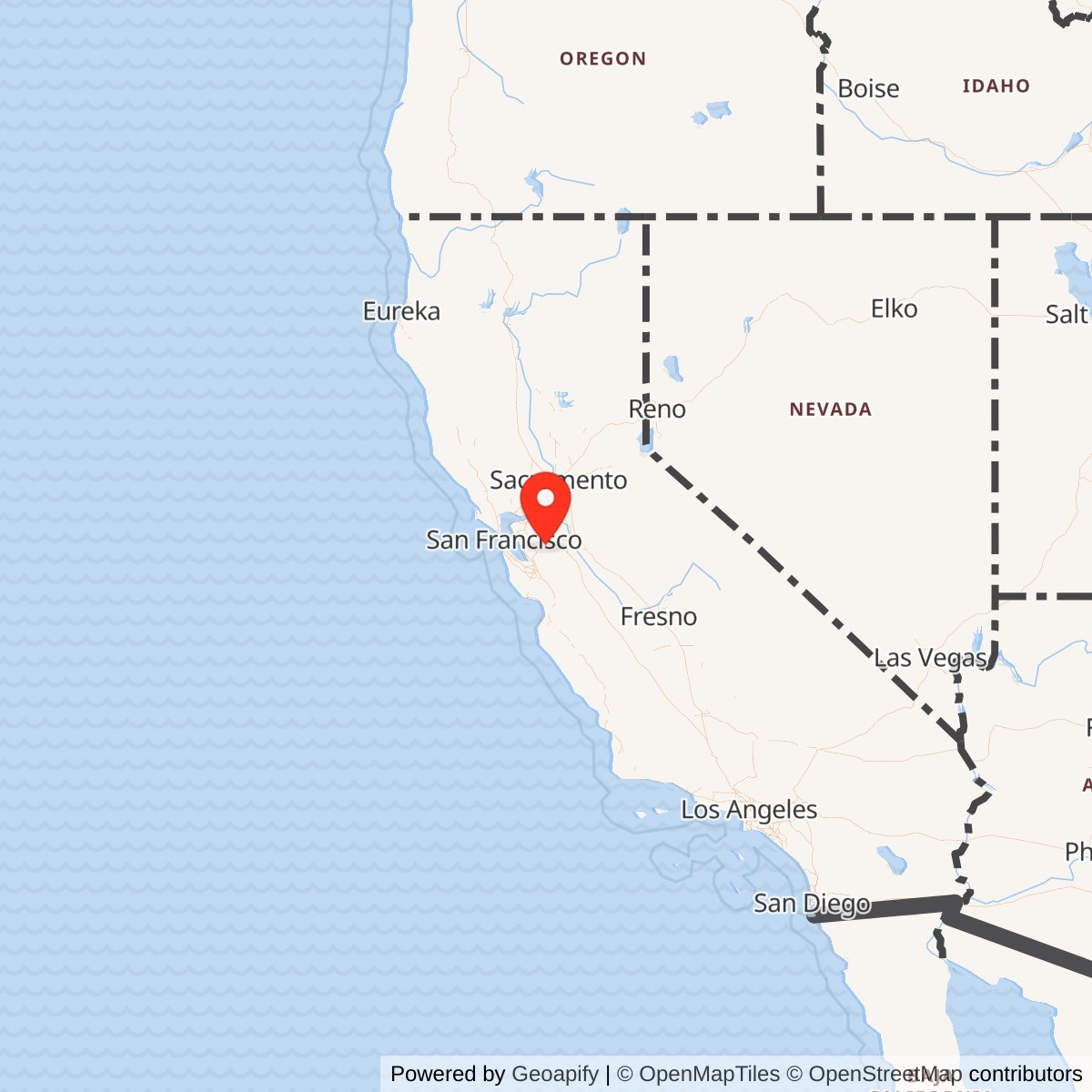
Longitude: -121.706111
Current Role: Former World War II naval air station and postwar Navy reserve-training site; now Lawrence Livermore National Laboratory main site at 7000 East Avenue, an active DOE/NNSA national-security research laboratory operated by Lawrence Livermore National Security, LLC, with continuing EPA/DOE/California environmental restoration and long-term groundwater/soil cleanup actions.
Naval Air Station Livermore is one of the most dramatic reuse stories in the California Navy landscape. The Navy built it quickly during World War II as an inland air station for pilot training and aircraft support. Less than a decade later, the same runways, hangars, roads, utilities, and guarded federal land became the physical starting point for one of the most consequential Cold War scientific institutions in the United States: Lawrence Livermore National Laboratory. The site therefore belongs in Navy history not only because naval aviators trained there, but because a wartime aviation base became a national-security laboratory almost without passing through ordinary civilian reuse.
The air station stood east of Livermore, in the inland valley country beyond the dense shoreline of San Francisco Bay. That location mattered. The Bay Area already held major Navy aviation and fleet-support installations, including Oakland, Alameda, Moffett Field, and other naval aviation facilities. As wartime aircraft training surged, the Navy needed additional inland runway capacity away from the most congested airspace and waterfront industrial zones. Livermore offered open agricultural land, flying weather, enough distance from the core Bay Area to reduce traffic pressure, and enough proximity to naval aviation commands and supply networks to make the new field useful almost immediately.
The installation should be understood in two linked identities. First, it was a World War II naval air station created in 1942 for flight training, aircraft assembly, repair, overhaul, and later reserve-training activity. Second, after Navy use ended, it became the foundation of the Atomic Energy Commission and University of California laboratory that opened in 1952 and eventually became Lawrence Livermore National Laboratory. The Navy installation itself was relatively short-lived. Its afterlife has been enormous. Few former naval air stations were converted so directly into a central institution of the nuclear age.
Mission Evolution
The Navy acquired the Livermore site in 1942, during the rapid expansion of naval aviation after Pearl Harbor. LLNL's own historical material describes the Navy purchase as 629 acres of land east of Livermore in the winter of 1942, bought at $120 per acre, followed by rapid construction of an air station for pilot training. Contemporary and later base-history summaries describe the station as having been built about four miles east of Livermore to relieve overcrowding at Navy air facilities in the Bay Area. The mission was practical and immediate: create more runway, training, maintenance, and support capacity so the Navy could keep producing pilots and supporting aircraft for the global war.During World War II the station's Navy mission centered on aviation training and aircraft support. EPA's federal-facility history states that the Navy operated the site beginning in 1942 and used it until 1946 as a flight-training base and for aircraft assembly, repair, and overhaul. Those activities place Livermore in a more substantial category than a simple emergency landing field. It was not merely a strip of pavement in farm country. It was a functioning naval air station with shops, hangars, fuel systems, personnel support, maintenance functions, and enough operating value to remain in Navy hands after the wartime training surge ended.
After the war, the mission narrowed rather than disappearing at once. Between 1946 and 1950, the Navy housed the Reserve Training Command at the site. This was a typical immediate postwar pattern: wartime air stations no longer needed for mass pilot production were either closed, reduced, transferred, or repurposed for reserve training, storage, and caretaker functions. Livermore's reserve-training phase kept the site in the naval system while the United States was rapidly demobilizing from World War II and then reassessing its posture as the Cold War hardened.
The decisive transition began in 1950. EPA records state that the Navy allowed the Atomic Energy Commission to occupy the site in 1950 and that the AEC formally received the property in 1951. On January 5, 1951, the Bureau of Yards and Docks formally transferred the former Naval Air Station Livermore to the AEC for use by the University of California Radiation Laboratory. That transfer ended the Navy installation identity, but it did not erase the built federal plant. Instead, the Navy's air station infrastructure gave the AEC a ready-made controlled site where classified scientific work could begin quickly.
The new scientific mission followed within months. Lawrence Livermore National Laboratory's official history states that the laboratory was established in 1952, began operations on September 2, 1952, and was cofounded by Ernest O. Lawrence and Edward Teller, with Herbert York serving as first director. The original name was the University of California Radiation Laboratory, Livermore Branch. The mission was rooted in urgent Cold War national-security needs, especially nuclear weapons science and technology. In effect, the old naval air station became the place where a second major U.S. nuclear-weapons laboratory was created to complement and compete with Los Alamos.
Operational Role
NAS Livermore's operational Navy life was brief but busy. Its first job was to help solve a bottleneck. The Navy's wartime aircraft and pilot demands expanded faster than the prewar shore establishment could support. A few large coastal air stations could not absorb all primary, intermediate, operational, and reserve aviation requirements. The Navy's World War II base-construction history makes clear that naval air stations and their satellites became indispensable to keeping aircraft flying, because aircraft required maintenance, fuel, shops, storage, spare parts, ground crews, and trained flight crews before they could contribute to fleet operations. Livermore served that system by adding an inland field close to the Bay Area naval aviation network.The daily Navy mission would have been repetitive in the way all successful training stations are repetitive. Aircraft launched, recovered, refueled, and went back into maintenance. Pilots practiced takeoffs, landings, navigation, emergency procedures, and aircraft handling. Ground crews kept engines, airframes, instruments, radios, and landing gear working. Shops supported assembly, repair, overhaul, and serviceability. Administrative and support personnel housed, fed, medically supported, supplied, and disciplined the personnel who made the flight schedule possible. The station's significance was not a single famous battle or one dramatic incident; it was the industrial rhythm of wartime aviation training.
Livermore also supported a web of nearby outlying fields. Wartime references identify multiple Livermore-associated outlying landing fields, including Abel Field, Brown-Fabian, Cope, Gelderman, Heath, Linderman, Livermore Airport, May's School Field, Rita Butterworth, Spring Valley, and Wagoner. These were not all full installations on the scale of NAS Livermore, but they mattered operationally. Training pilots need repeated landings, dispersed emergency options, and fields away from crowded main runways. The outlying-field network let the Navy distribute flight activity across a larger rural region and reduce pressure on the main air station.
The postwar Reserve Training Command role kept Livermore tied to naval aviation after mass wartime training ended. Reserve training was less spectacular than wartime pilot production, but it was a key part of the Navy's immediate postwar readiness posture. The United States was trying to preserve trained manpower and aviation skills while shrinking the wartime military. Livermore's existing airfield and support infrastructure made it useful for that transitional reserve mission until the AEC mission displaced it.
The AEC conversion changed the operational meaning of the site completely. The former Navy field stopped being an aviation training station and became a controlled scientific reservation. Yet the Navy plant mattered because it shortened the time between policy decision and laboratory operation. Open land, security separation, utilities, roads, hangars, shops, and federal ownership gave the AEC and University of California a platform that could be repurposed for large classified physics, engineering, and weapons-design work. The first Livermore scientific programs grew in a landscape that had been shaped by flight lines and military support buildings.
Units, Organizations, and Systems
The principal Navy organization associated with the wartime site was Naval Air Station Livermore itself, operating under the Navy's wartime air-training and support structure in the Twelfth Naval District / Bay Area naval aviation environment. The station's full unit roster is less visible in public sources than its installation function, but EPA's description of training, assembly, repair, and overhaul confirms that Livermore was more than a bare landing field. It was a station with aviation and support activities substantial enough to leave a distinct institutional footprint.The Navy Reserve Training Command occupied the site from 1946 to 1950. That organization links the air station to the broader postwar reserve system, in which the Navy sought to preserve aviation competence after demobilization. Reserve-training use also explains why the site did not immediately leave Navy control in 1946 even though the wartime emergency had ended.
The Bureau of Yards and Docks appears in the transfer history because it formally transferred the former NAS Livermore to the Atomic Energy Commission in 1951. That detail is important because Bureau of Yards and Docks responsibility highlights the site's property, construction, and public-works identity. The same Navy organization that built and managed shore infrastructure during the war became part of the legal and administrative handoff that moved the air station into the nuclear-weapons complex.
After transfer, the Atomic Energy Commission became the responsible federal owner, and the University of California Radiation Laboratory became the operating scientific institution. The laboratory became autonomous from the Berkeley laboratory in 1971 and later took the Lawrence Livermore name. Today the site is operated by Lawrence Livermore National Security, LLC for the Department of Energy's National Nuclear Security Administration. The organizational chain therefore runs from Navy aviation to AEC weapons research to DOE/NNSA national-security science.
Facilities and Physical Layout
The wartime air station occupied a compact federal aviation site on former ranch and agricultural land east of Livermore. LLNL's historical summary identifies the original Navy purchase as 629 acres. That scale was large enough for a naval air station, runways, hangars, shops, fuel facilities, barracks, administration, and support infrastructure, but small compared with sprawling bombing ranges or later weapons-test reservations. It was a runway-centered station, built quickly to meet wartime demand rather than a permanent architectural showpiece.The Navy facilities included the physical requirements of flight training and aircraft support: landing surfaces, hangars, assembly and repair facilities, overhaul and maintenance spaces, fuel and hazardous-material systems, personnel support buildings, roads, utilities, and administrative areas. EPA's description of routine Navy use of solvents, paints, and degreasers during the station's flight-training, assembly, repair, and overhaul period confirms the kinds of industrial activities present at the site. Those materials were ordinary in aviation maintenance, but they also help explain why later environmental documentation treats the former Navy period as part of the site's longer contamination history.
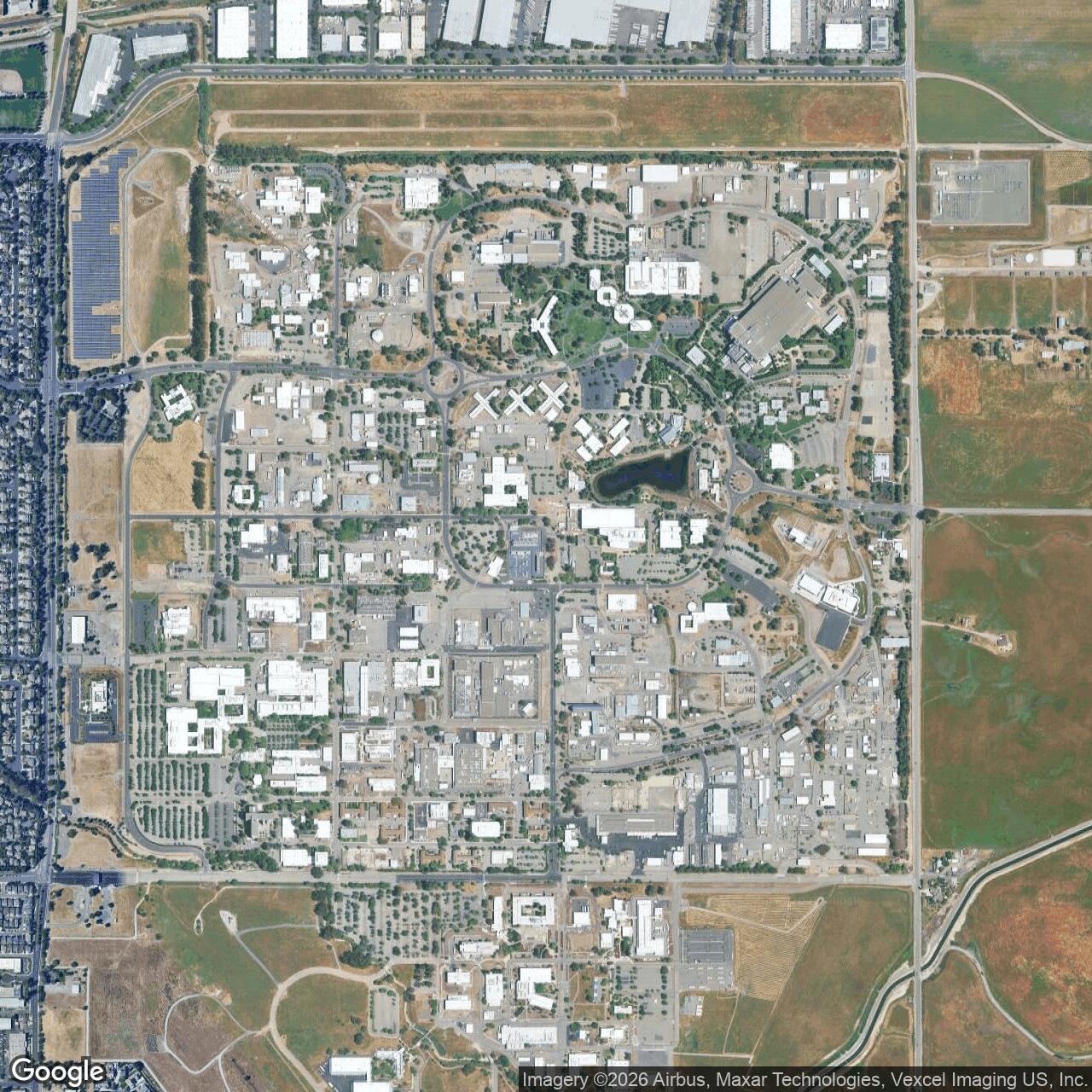
The AEC and University of California then adapted the aviation plant into a scientific campus. The transition did not preserve the site as an airfield landscape in the public-airport sense. Runway and hangar logic gave way to laboratories, accelerators, shops, weapons-design buildings, administration, security systems, and specialized research facilities. UC's overview describes the Livermore laboratory as occupying about one square mile southeast of San Francisco, while DOE describes the modern LLNL main site as a multidisciplinary research and development center focused on weapons development, stewardship, and national security. The old Navy station therefore became the core landform of a scientific installation rather than a reused municipal airport.
The present site is not open as a public former airfield. It is an active federal national-security laboratory at 7000 East Avenue. EPA identifies the Lawrence Livermore National Laboratory Main Site as a federal Superfund site, with DOE as the lead agency and EPA, California DTSC, and the regional water board involved in the cleanup framework. EPA notes that long-term remedy operation, maintenance, monitoring, and additional investigation continue. The modern physical legacy is therefore not only scientific campus development, but also the environmental-management footprint of decades of Navy and laboratory-era industrial activity.
Role in the Wider Military Network
NAS Livermore belonged first to the Navy's World War II aviation expansion. The Navy entered the war with a shore aviation establishment that could not support the pilot, aircraft, maintenance, and carrier-airpower demands of a global maritime war. The solution was a massive expansion of naval air stations, auxiliary fields, outlying fields, and training networks. Livermore was one of the inland California pieces of that system. It relieved pressure on crowded Bay Area fields, created more landing and maintenance capacity, and supported the production and preservation of naval aviation manpower.The station also belonged to the northern California auxiliary-field geography associated with NAS Oakland, NAS Alameda, and other Bay Area naval aviation commands. This network included large bases, smaller auxiliary air stations, emergency fields, and outlying landing fields. The important point is not that every field had the same status. They did not. The important point is that wartime naval aviation depended on distributed geography. Main stations needed satellites; satellites needed emergency strips; training pilots needed many places to land. Livermore's contribution was to turn inland ranch land into a controlled Navy aviation node close enough to the Bay Area to be useful and distant enough to relieve its airfield congestion.
After 1951, Livermore's system role changed more radically than almost any other former Navy air station in California. It moved from the naval aviation system into the AEC nuclear-weapons complex. The former air station became Site 200 in the Lawrence laboratory geography, while Berkeley was Site 100 and the later remote experimental test site became Site 300. In that new network, Livermore's role was not to train pilots. It was to provide weapons-design competition, big-science capability, nuclear deterrence research, high-energy-density science, computing, diagnostics, and later stockpile-stewardship and national-security technology. The underlying military connection remained strong, but the mechanism changed from aircraft to physics, engineering, and classified research.
That conversion is why NAS Livermore matters in the wider military network. It shows how World War II military real estate could be redirected into Cold War national-security infrastructure. The Navy built the site to fight a carrier-airpower war. The AEC reused it to fight a nuclear-science competition. The physical ground moved from one military-technological era to another with unusual speed.
Chronology
- 1942 The U.S. Navy purchased land east of Livermore and rapidly built Naval Air Station Livermore for pilot training.
- 1942 Navy operation of the site began; EPA identifies the Navy period as beginning in 1942.
- 1942-1946 The Navy used the site as a flight-training base and for aircraft assembly, repair, and overhaul.
- 1943-1945 NAS Livermore operated with a wider group of outlying landing fields that supported wartime flight training.
- 1946 The main World War II Navy flight-training period ended.
- 1946-1950 The Navy housed the Reserve Training Command at the site.
- 1950 The Navy allowed the Atomic Energy Commission to occupy the former air station.
- 1951-01-05 The Bureau of Yards and Docks formally transferred former NAS Livermore to the Atomic Energy Commission for use by the University of California Radiation Laboratory.
- 1952 The site was established as a separate part of the University of California Radiation Laboratory.
- 1952-09-02 The Livermore laboratory began operations, with Herbert York as first director.
- 1958 After Ernest O. Lawrence's death, the University of California Board of Regents renamed the Berkeley and Livermore laboratories after him.
- 1971 The Livermore laboratory became administratively autonomous from the Berkeley laboratory.
- 1975 Federal responsibility for the site transferred from the AEC to the Energy Research and Development Administration.
- 1977 Responsibility transferred to the U.S. Department of Energy.
- 1981 The laboratory was designated Lawrence Livermore National Laboratory.
- 1987 EPA listed the LLNL Main Site on the National Priorities List.
- 2007-10-01 Lawrence Livermore National Security, LLC assumed management and operation of LLNL from the University of California.
- Present The former NAS Livermore site remains the LLNL main site, an active DOE/NNSA national-security laboratory and federal Superfund cleanup site.
Sources & References
- WEB Lawrence Livermore National Laboratory Our History
- WEB Lawrence Livermore National Laboratory Our History - 1950s
- WEB Lawrence Livermore National Laboratory Our Purpose
- WEB U.S. Environmental Protection Agency Lawrence Livermore National Laboratory Main Site (USDOE), Cleanup Activities
- WEB U.S. Environmental Protection Agency Lawrence Livermore National Laboratory Main Site (USDOE), Site Information
- WEB U.S. Department of Energy Lawrence Livermore National Laboratory
- WEB University of California Office of the President Lawrence Livermore National Laboratory (LLNL)
- WEB Naval Historical Center / HyperWar Building the Navy's Bases in World War II, Chapter X, The Air Stations
- PDF Lawrence Livermore National Laboratory 65th Anniversary Book
- WEB Lawrence Livermore National Laboratory Superfund tours at Livermore site and Site 300