
Naval Outlying Landing Field Little River, California
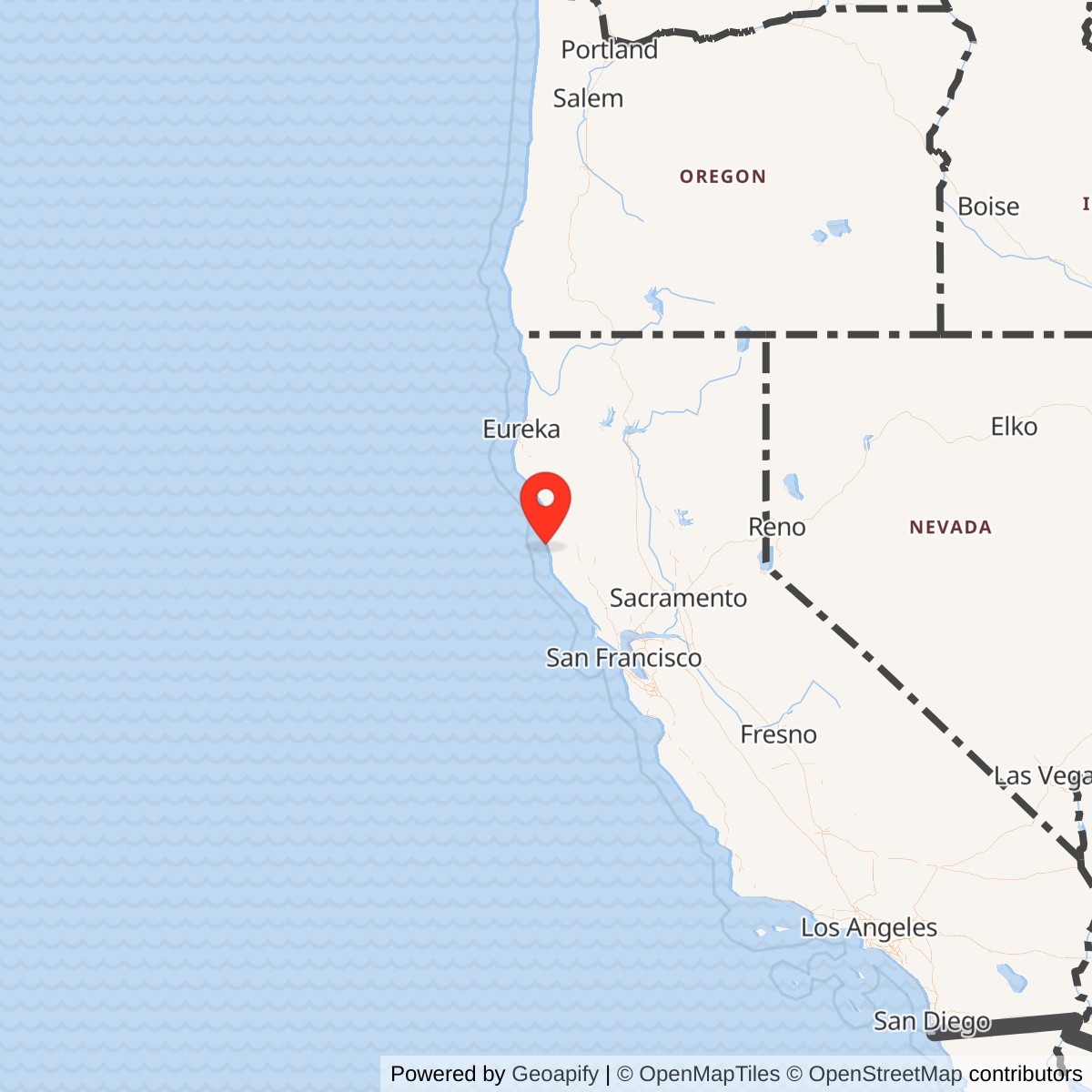
Longitude: -123.7537778
Airport ICAO ID: KLLR
Current Role: Former Navy outlying landing field associated with NALF Santa Rosa and the NAS Alameda auxiliary-field network; now Little River Airport (KLLR/LLR), a Mendocino County public-use airport with one asphalt runway.
Naval Outlying Landing Field Little River was a small World War II Navy aviation field on the Mendocino coast, built near the end of the war to support the Navy's northern California carrier-training network. It was not a full naval air station, and it did not have the heavy built-up infrastructure of NAS Alameda, Crows Landing, Hollister, or Santa Rosa. Its value came from a more modest but still important function: it gave naval aviators another remote runway where landings, takeoffs, approaches, emergency work, and field familiarization could be practiced away from the crowded main bases of the San Francisco Bay Area and the Santa Rosa training station.
Airfield-history sources identify Little River as one of the outlying fields associated with Naval Auxiliary Landing Field Santa Rosa in 1945, paired with Cotati as Santa Rosa's two listed outlying fields. AirNav's current airport data gives Little River Airport's activation date as December 1944, which fits the late-war timing of the Navy field. The site continued after the war as Little River Airport, a public-use airport owned by Mendocino County. That continuity makes the site especially legible today: unlike Cotati, where the Navy field was erased by redevelopment, Little River still functions as an airport on the same coastal plateau.
The installation's historical identity is therefore dual. During World War II it was Naval Outlying Landing Field Little River, a satellite in the Alameda-Santa Rosa auxiliary-field system. In the postwar era it became Little River Airport, FAA identifier LLR and ICAO identifier KLLR, serving general aviation on the Mendocino coast. The modern airport is not a Navy installation, but it preserves the runway landscape of a former Navy outlying field.
Wartime Mission and Naval Aviation Role
Little River's mission was part of the Navy's explosive wartime expansion of shore aviation training. In 1942, the Navy recognized that the main operating bases could not absorb the increased training and operational load created by carrier air group preparation, advanced flight training, fleet support, and the growth of naval aviation. The official construction history of Building the Navy's Bases in World War II describes the "development of outlying fields" as a major 1942 construction phase, explaining that the Navy expanded large air bases through auxiliary fields and satellites because the main fields could not handle the load alone. Alameda was specifically identified as a major air base whose auxiliary system grew during that period, with Cotati, Concord, and Hollister put under construction first, followed later by Crows Landing, Santa Rosa, and South San Francisco.Little River entered that system through Santa Rosa. Santa Rosa itself became an important northern California auxiliary field for NAS Alameda. Its two long runways, arresting-gear and catapult-related training equipment, and wartime carrier-air-group activity made it a major step below Alameda but well above the smallest outlying fields. Airfield sources identify Santa Rosa as having two outlying fields in 1945: NOLF Cotati and NOLF Little River in Mendocino County to the north. That wording is important because it places Little River directly in Santa Rosa's orbit rather than making it an isolated local strip.
The field's mission was almost certainly austere. Outlying landing fields generally existed to let aircraft cycle through repetitive landing practice, approaches, touch-and-go work, emergency landings, and dispersed training without monopolizing the runways and airspace of larger stations. Little River's coastal location also gave the Navy a field in a different weather and terrain environment than the Bay Area or inland valley fields. The Mendocino coast brought fog, marine air, rugged terrain, and a narrower plateau setting, all useful realities for pilots who needed to operate beyond the predictable geometry of a main training base.
No evidence indicates that Little River hosted permanently assigned squadrons, major barracks, a large station complement, or a separate naval air command comparable to Santa Rosa or Crows Landing. Its most likely day-to-day role was to receive aircraft from the parent training system, support limited outlying-field operations, and provide a runway available for repeated practice or diversion. That limited role should not be mistaken for insignificance. Naval aviation training depended on exactly this kind of distributed field network. A single carrier air group or training command could consume enormous runway capacity; satellites such as Little River helped keep the system moving.
Relationship to NAS Alameda and NALF Santa Rosa
Little River's historical meaning is best understood through the two-layer network above it. NAS Alameda was the major operating base. Santa Rosa was the auxiliary air station or auxiliary landing field that served the northern part of that training system. Little River was a still smaller satellite to Santa Rosa. In practical terms, the hierarchy ran from Alameda to Santa Rosa, and from Santa Rosa out to Cotati and Little River.This relationship explains why Little River appears in some records only indirectly. The Navy's major construction histories naturally emphasized the large bases and the bigger auxiliary stations. Alameda, Crows Landing, Hollister, and Santa Rosa received fuller treatment because they required large construction programs, supported many personnel, and hosted regular unit activity. Little River was a smaller outlying field, so its paper trail is thinner. That is common for wartime OLFs. Their installations were essential to flight operations, but their documentation often appears as subordinate fields under a parent air station rather than as large independent base histories.
Site Design and Facilities
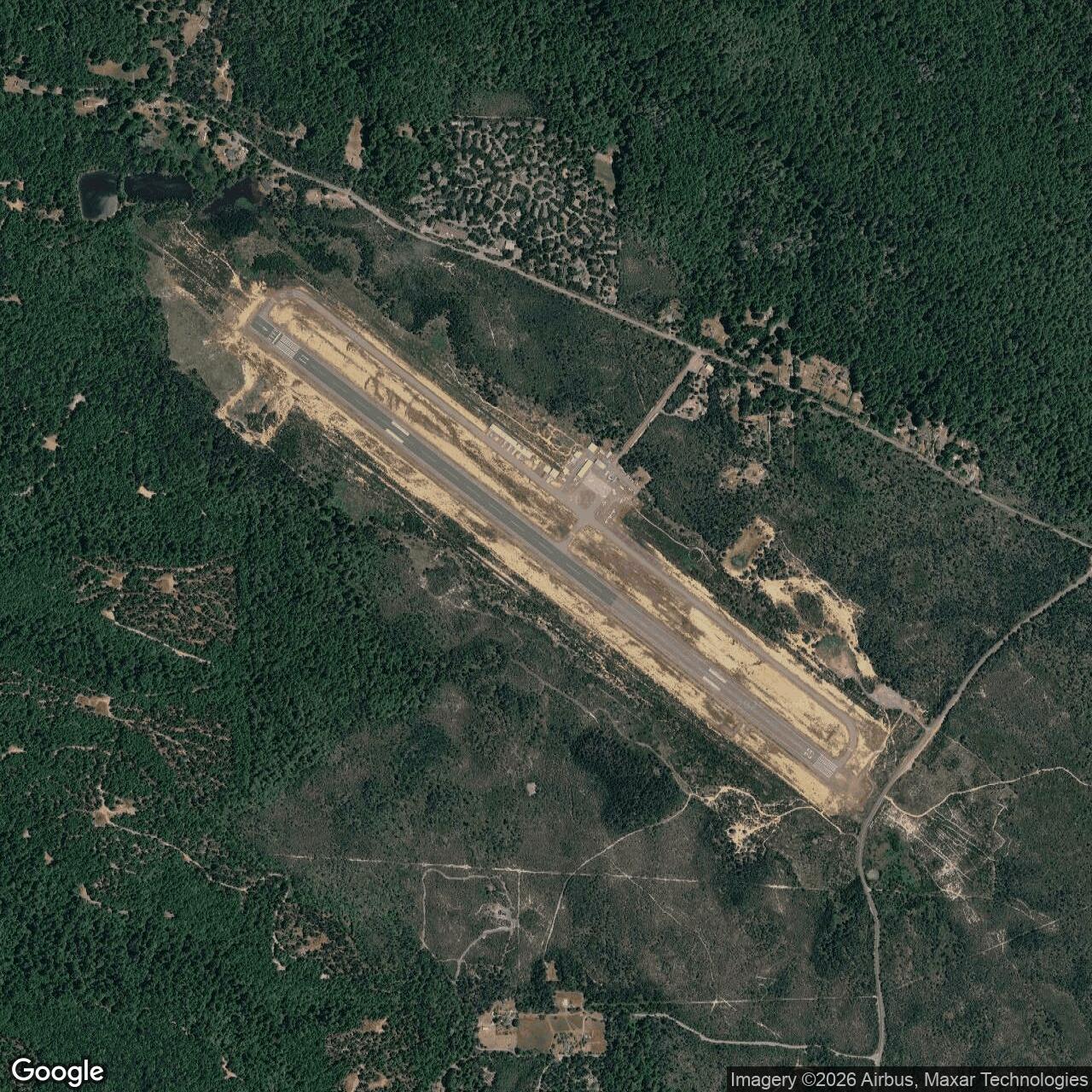
Little River was a landing field rather than a large station. The present airport has one asphalt runway, Runway 11/29, listed by AirNav as 5,249 by 100 feet. Mendocino County's airport page similarly describes Little River Airport as having a 5,250-foot by 100-foot runway, along with fuel, hangars, AWOS/unicom service, PAPI, a large paved apron, tie-down area, and other modern general-aviation features. The current runway should not be read as a complete inventory of wartime facilities, but it preserves the fundamental aviation footprint: a single runway on a coastal plateau, oriented northwest-southeast, with enough length for useful military and later civilian operations.The site's location made sense for an outlying field. It was away from dense urban development, close enough to the northern California naval aviation network to be useful, and situated on a relatively open piece of coastal terrain. It did not need the barracks, hangars, shops, ordnance magazines, or major repair capacity of a full station. What it needed was a serviceable runway, safe approaches, basic operating support, and enough clearance for training aircraft to use it without colliding with the traffic patterns of the parent base.
Because Little River remains an active airport, the site is easier to interpret than many former wartime OLFs. The runway, airport road, apron, and aviation use all continue the land-use pattern established during the war. At the same time, the surviving airport should not be assumed to preserve every wartime feature. Any temporary Navy support buildings, fueling arrangements, field markings, or small utility structures may have been removed, replaced, or absorbed into later airport development. The continuing runway is the primary historic landscape feature.
Units, Aircraft, and Events
The field's users should be understood as aircraft and pilots operating from the Santa Rosa-Alameda training system rather than a permanent Little River-based unit. Santa Rosa's wartime activity included carrier air groups and naval aircraft types associated with fighter, bomber-fighter, dive-bomber, and carrier training. Little River likely supported that broader activity as an outlying field, but the surviving readily available sources do not identify specific squadrons stationed at Little River itself.
Closure, Transfer, and Civilian Airport Use
Little River's Navy role appears to have ended soon after World War II. AirNav lists the airport activation date as December 1944, while local and aviation summaries describe the airport as built by the Navy during the war and later transferred into civilian use. Because the parent Santa Rosa field was relinquished by the Navy between 1946 and 1947 before a short Korean War reactivation of Santa Rosa, Little River's Navy use was probably brief, late-war, and postwar-disposal oriented.The site then became Little River Airport. By the late 1940s the airport reportedly supported commercial air service using surplus DC-3 aircraft, showing that the wartime runway quickly entered the civilian transportation system. Today the airport remains public-use and county-owned. Mendocino County identifies Little River Airport at 43001 Airport Road and lists current facilities including avgas, FBO services, hangars, AWOS/unicom, PAPI, parking, apron space, and a 5,250-foot runway. AirNav lists the field as open to the public, owned by Mendocino County, and located three miles southeast of Little River.
Current Status
Little River is no longer a Navy installation. It is an active public airport owned by Mendocino County. AirNav lists the field as KLLR / LLR, open to the public, with coordinates 39.2620556, -123.7537778 and Runway 11/29 measuring 5,249 by 100 feet. Mendocino County's airport page confirms the airport's public-facing facilities and current aviation role.The current site use is general aviation and local airport service for the Mendocino coast. Unlike many former Navy outlying fields, Little River has not disappeared under housing, industrial redevelopment, or agriculture. Its postwar reuse preserved the most important physical feature of the Navy field, the runway. That continuity makes it one of the cleaner examples of a small wartime Navy OLF whose military life was short but whose aviation life continued.
Chronology
- 1942 The Navy expanded major air stations through auxiliary fields and satellites because main fields could not handle the increased operational and training load created by wartime naval aviation growth.
- 1942 NAS Alameda's auxiliary-field system began expanding with fields such as Cotati, Concord, and Hollister, followed by later fields including Crows Landing and Santa Rosa.
- 1944-12 AirNav lists Little River Airport's activation date as December 1944, consistent with late-war Navy outlying-field development.
- 1945 Little River was identified as one of Santa Rosa's two outlying fields, along with Cotati, in the northern California Navy aviation training network.
- 1945 NOLF Little River supported the Santa Rosa / Alameda aviation training system as a small outlying landing field in Mendocino County.
- 1946 Navy use likely ended in the immediate postwar period.
- Late 1940s The former Navy field entered civilian aviation use as Little River Airport; commercial air service reportedly used surplus DC-3 aircraft in the period after the war.
- Present Little River Airport remains a public-use airport owned by Mendocino County, with one asphalt runway and general-aviation facilities.
Sources & References
- WEB Airfields Freeman California: Santa Rosa Area
- WEB Building the Navy's Bases in World War II Chapter 10, "Aviation Facilities"
- WEB Mendocino County Airports
- WEB AirNav "KLLR - Little River Airport"
- WEB FAA Airport Master Record Little River Airport / LLR
- WEB SkyVector LLR - Little River Airport