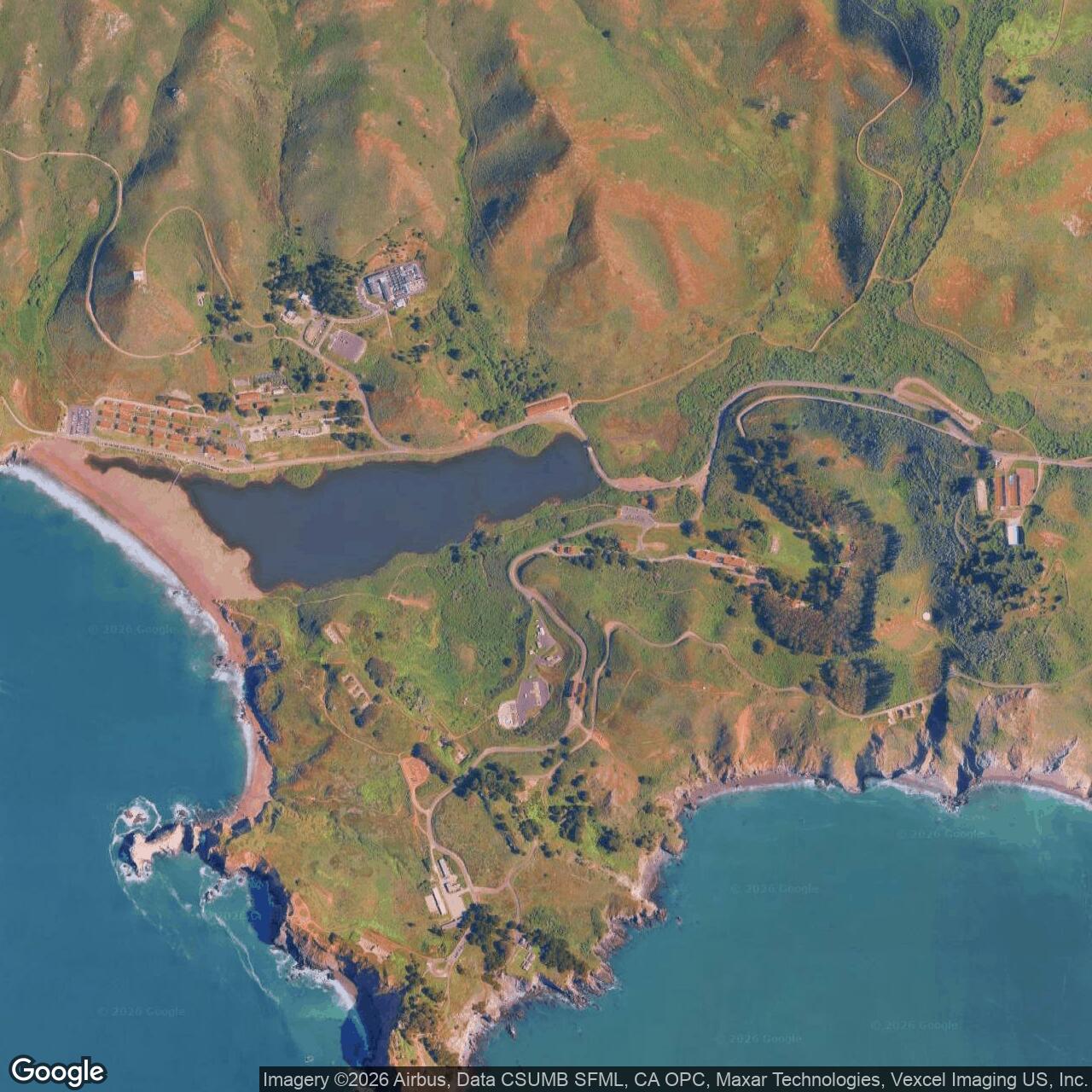
Fort Barry Army Base, Sausalito California
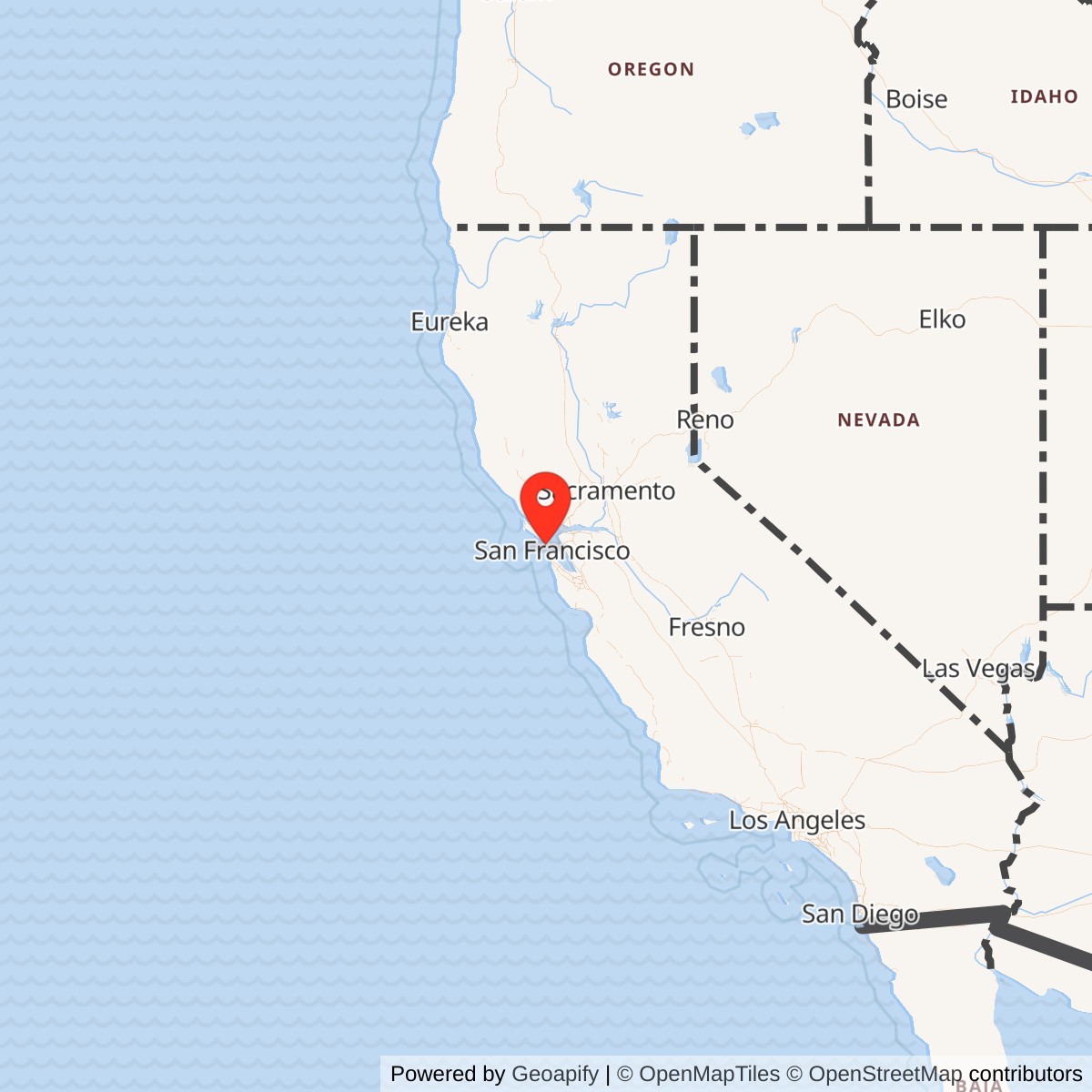
Longitude: -122.527144
Official Base Website: https://www.nps.gov/goga/planyourvisit/fort-barry.htm
Current Role: Golden Gate National Recreation Area; preserved Endicott batteries, Fort Barry Balloon Hangar, Headlands Center for the Arts, trails, Point Bonita access, wildlife habitat, and Nike Missile Site SF-88 museum/open-house interpretation.
Former Marin Headlands Army post constructed in 1908 as an outer Golden Gate Endicott defense; expanded through World War I/balloon observation, World War II Harbor Defenses of San Francisco, mine groupment command/communications, antiaircraft modernization, and Cold War Nike Site SF-88. Army missile mission ended with SF-88 decommissioning in 1974; associated Point Bonita/Coast Guard land transfers continued later.
Fort Barry was a U.S. Army seacoast-defense, mine-command, World War II harbor-defense, antiaircraft, and Nike missile installation in the Marin Headlands north of the Golden Gate. It was constructed as a permanent Army post in 1908 after the Army had already begun emplacing major Endicott-period batteries on the exposed ocean-facing headlands outside the Golden Gate Strait. The Army post is closed. Its principal military landscape is now part of Golden Gate National Recreation Area, where the batteries, cantonment, balloon hangar, World War II support buildings, trails, partner-reused buildings, Point Bonita access, and the restored Nike missile site SF-88 remain visible in one of the most complete military landscapes on the Pacific Coast.
The most defensible Army closure date for Fort Barry is 1974, when the Nike missile site SF-88 was inactivated and the Army mission that had survived the end of coastal artillery finally ended. Some related federal lands and functions associated with Point Bonita and the lighthouse completed transfer or management changes later, but the Army installation closed in 1974 and transferred into National Park Service stewardship as part of the Golden Gate National Recreation Area system. Its historic buildings and defense works remain heavily used for public interpretation, trails, arts programming, environmental restoration, and preservation.
Fort Barry is best understood as the outward-facing partner of Fort Baker and the immediate predecessor and neighbor of Fort Cronkhite. Fort Baker occupied the more sheltered Lime Point and Horseshoe Cove ground just inside the Golden Gate and served as an inner north-side post, mine depot, and later command location. Fort Barry pushed the Army's heavy guns westward to the exposed ridge-and-cove terrain around Point Bonita, where they could meet an enemy fleet before it entered the strait. Fort Cronkhite, built later at Rodeo Lagoon during the 1940-1941 mobilization, added a World War II cantonment and helped support the great 16-inch batteries and later Nike-era functions in the same headlands. Together, Forts Baker, Barry, and Cronkhite form the north-side Golden Gate defensive landscape, a National Register district of 2,279 acres of uplands and tidelands.
The site mattered because the Golden Gate was both a harbor entrance and a strategic vulnerability. San Francisco Bay held naval facilities, Army posts, shipping, industry, population, and later Cold War targets that could not be protected by a single fort. The headlands north of the entrance offered early observation of ships approaching from the Pacific and room for batteries, observation stations, plotting rooms, searchlights, power plants, cable routes, mine-command stations, antiaircraft positions, and eventually missile-launch and radar sites. Fort Barry was not merely a picturesque post with scenic ruins; it was a technical weapons landscape built to integrate guns, mines, communications, observation, radar, and missiles across changing eras of national defense.
Mission Evolution
Fort Barry grew out of the Endicott modernization of American seacoast defenses. By the late nineteenth century, older masonry forts and Civil War-era guns were badly outclassed by modern steel warships. The Endicott program replaced many of those obsolete defenses with concrete batteries, breech-loading rifles, disappearing carriages, rapid-fire guns, submarine minefields, electrical systems, searchlights, communications, and centralized fire-control networks. San Francisco Bay, as one of the country's most important Pacific harbors, received a dense version of that modernization. Fort Barry was part of the move from inner harbor defense to a wider, more layered system that could strike enemies farther out at sea.
The Army had already built major north-side defenses at Fort Baker by 1902, but the logic of the Golden Gate demanded still farther outward coverage. By 1905, the Fort Barry battery group had become one of the strongest collections of early twentieth-century coast defenses in the country. Battery Mendell, Battery Alexander, Battery Smith-Guthrie, Battery Samuel Rathbone, and Battery Patrick O'Rorke gave the Point Bonita Reservation heavy and intermediate artillery that could cover ocean approaches, minefield approaches, and key sectors of water outside the Gate. When the permanent post of Fort Barry was constructed in 1908, it gave those batteries a supporting cantonment: barracks, officers' quarters, administration, hospital, guardhouse, bakery, exchange, roads, and utility systems.
The first mission was heavy seacoast artillery. Battery Mendell, the most visually famous early Fort Barry battery, mounted two 12-inch breech-loading rifles on disappearing carriages. A disappearing carriage allowed the gun to rise into firing position, discharge its shell, then recoil downward behind the concrete parapet for reloading. The technical idea was simple but powerful: expose the gun and crew only briefly, hide behind earth and concrete while reloading, and combine the battery's fire with observation and plotting data from other parts of the defense system. Battery Mendell could fire an 1,100-pound projectile more than eight miles, giving the Army a means to reach hostile ships well outside the harbor mouth.
The smaller batteries were not secondary in the everyday tactical sense. Battery Alexander, Battery Smith-Guthrie, Battery Rathbone-McIndoe, and Battery O'Rorke filled gaps, protected minefields and approaches, and formed part of a geometry of fire in which gun size, caliber, sector, and rate of fire mattered. The Army was not trying to build one dramatic battery; it was building a system. Fort Barry's guns had to work with Fort Baker, the Presidio, Fort Winfield Scott, Fort Miley, Fort Funston, Angel Island, Alcatraz, and the mine defenses that could close the Golden Gate in emergency.
Fort Barry also had a community mission. It was isolated by terrain, weather, and poor roads. Soldiers could see San Francisco across the water, but for many years travel to Sausalito, ferries, saloons, shops, and off-post recreation required difficult movement over a long coastal road. The post therefore functioned like a self-contained town. It had its own hospital, post exchange, gymnasium, bakery, guardhouse, barracks, officers' quarters, and administrative buildings. Windbreak plantings and the arrangement of buildings around the parade ground were not decorative afterthoughts; they made life bearable on a windy, exposed post.
The 1918 Baker-Barry Tunnel changed the daily geography of the post. Before the tunnel, travel between Fort Baker and Fort Barry was difficult and sometimes dangerous. The tunnel created a direct route through the ridge, improving military communication, supply, medical movement, and personnel access between the inner and outer north-side posts. It also reinforced the operational reality that Fort Barry and Fort Baker were separate posts but part of a single defensive system.
After World War I, Fort Barry gained an unusual aviation layer. The Army experimented with tethered observation balloons to improve coastal artillery spotting and range finding. The 24th Balloon Company and related units used balloons to supply aerial data for gun practice and target spotting. The Fort Barry Balloon Hangar, completed in 1921, was built to house an inflated observation balloon and associated equipment. Although the balloon mission was brief, the hangar is nationally significant because it is one of the few surviving physical records of the Army's early attempt to connect aviation and coastal artillery.
World War II transformed Fort Barry from an Endicott-era post into a node in the Harbor Defenses of San Francisco. The Army modernized, camouflaged, and supplemented older batteries, installed antiaircraft defenses, improved communications, and used Bonita Ridge and related stations for fire-control and mine-command functions. The fort's position over the ocean and the Golden Gate made it valuable not only as a gun site but also as an observation and command landscape. Soldiers at Fort Barry were part of a defense that assumed Japanese submarines, surface raiders, aircraft, or sabotage might threaten the Bay Area, especially after the attack on Pearl Harbor.
The final major mission change came during the Cold War. The threat shifted from enemy ships to enemy aircraft carrying nuclear weapons. Beginning in 1954, the Army constructed permanent Nike missile launch sites around the Bay Area, including Fort Barry's SF-88. The Nike system took the old logic of coastal defense and moved it into the air: detect the enemy, track the target, compute an intercept, and fire a guided weapon from a prepared site. SF-88 initially used Nike Ajax missiles and later converted to Nike Hercules missiles, which could carry nuclear or high-explosive warheads and had much greater range and altitude capability. Fort Barry therefore became one of the few American defense landscapes where disappearing guns, observation balloons, World War II antiaircraft defenses, mine-command posts, and nuclear-age missile defenses all occupied the same ground over time.
Operational Role
Fort Barry's operational role began with the control of distance. An enemy vessel entering San Francisco Bay had to pass a sequence of danger zones: ocean approach, outer batteries, minefield approaches, inner batteries, and the narrows of the Golden Gate itself. Fort Barry existed to push the danger outward. Its batteries could engage ships before they reached the strait, while inner defenses and minefields remained ready if an attacker survived the outer fire.
The work required to make those batteries effective was intensely technical. Coast Artillery soldiers did not simply aim big guns by eye. The system depended on observation stations, range finders, plotting boards, telephone and cable networks, powder magazines, shell hoists, target practice, communications discipline, and careful maintenance. A projectile fired from Battery Mendell or Battery Wallace represented the final visible act of a much larger process involving observers, plotters, phone talkers, range sections, gun crews, ordnance personnel, and command staff.
Target practice at Fort Barry illustrates the complexity. During a firing exercise, observers had to identify and track a target, often a towed target at sea. Data moved through telephone or other communications circuits to plotting rooms. Corrections had to account for range, bearing, target movement, wind, tide, powder temperature, projectile type, and timing. A gun crew then loaded a heavy projectile and powder charge, elevated and traversed the weapon, fired, and reset. The apparent simplicity of a coastal battery masked the precision of a large technical organization.
The mine-defense mission added another layer. San Francisco's controlled submarine mines could be planted in the waters near the Golden Gate and detonated from shore stations when a hostile vessel entered a designated zone. Fort Baker was the major mine depot and mine-command location, but Fort Barry's high ground and Bonita Ridge stations formed part of the observation, control, and command system. Fort Barry's communications annex and cable-related functions was not a separate post with an independent mission but part of the command, observation, plotting, and communications network required to coordinate batteries, mines, and later missile functions.
The garrison's daily operations were shaped by both isolation and readiness. Soldiers had ordinary post duties-guard mount, inspections, maintenance, food service, police calls, medical appointments, recreation, training, and discipline-but the reason for the post was constant readiness. A Coast Artillery battery could not be improvised after a threat appeared. Guns had to be maintained, magazines secured, communications tested, crews trained, and fire-control systems exercised. In wartime, the required state of readiness tightened sharply.
During World War II, Fort Barry became an active component of the Harbor Defenses of San Francisco. After Pearl Harbor, the psychological situation changed overnight. The Bay Area was no longer just a theoretical target. Soldiers manned defenses with the expectation that a raid, submarine action, or naval attack might occur. Batteries were camouflaged, blackout discipline mattered, antiaircraft positions multiplied, and the fort's old concrete defenses were incorporated into a much broader wartime system.
The Nike era required an even more compressed form of readiness. SF-88 crews operated under the assumption that enemy bombers could appear with little warning and that their missiles might have to be fired quickly. The system included a launch area, administrative area, and integrated fire-control area. Radars acquired and tracked targets; computers calculated intercepts; commands were relayed to launch crews; missiles were elevated from underground magazines and prepared for firing. The launch area at Fort Barry was only one piece of that system, but it is the piece that survives most vividly today.
World War II Mission and Activity
Fort Barry's World War II story is more than a set of batteries. It was a working component of a regional defense command that had to protect one of the most important harbors on the West Coast. San Francisco Bay was a naval, industrial, troop-movement, and logistics center. A successful attack on the Golden Gate could have damaged shipping, threatened fleet facilities, disrupted embarkation, and caused public panic. The Harbor Defenses of San Francisco therefore treated the entrance to the bay as a critical military system.
The 6th Coast Artillery Regiment and related Coast Artillery units are central to Fort Barry's wartime human story. Oral-history material collected by the National Park Service preserves the experience of soldiers who arrived by train, crossed the Golden Gate Bridge in covered trucks, and discovered that they were part of the Coast Artillery system in the Marin Headlands. Some men first occupied older barracks at Fort Baker while newer Fort Barry barracks and battery areas were still being finished or adapted. The transition from civilian life or basic induction to the specialized world of 12-inch and 16-inch coastal guns could be abrupt and disorienting.
The mobilization period brought new construction, new troops, and new routines. Fort Barry's earlier Endicott batteries remained part of the landscape, but World War II defense required more than pre-1918 concrete. Battery Wallace, constructed between 1917 and 1921 with two large gun emplacements, became one of the prominent Fort Barry-area batteries visible above the older works. Battery Hill, completed in 1944 and armed with two 16-inch 50-caliber guns on barbette carriages, represented the late development of heavy seacoast firepower on the Marin side. Although some of the largest World War II batteries are often associated with the broader Fort Barry-Cronkhite-Townsley landscape rather than the original 1908 cantonment alone, they belonged to the same defensive system.
Wartime work included camouflage. Fort Barry's batteries were prominent concrete structures set into open headlands. Camouflage reduced visibility from sea and air and helped integrate the batteries into the terrain. NPS oral history preserves accounts of physical camouflage work before casemating, making clear that camouflage was not just a painted pattern but a practical part of preparing batteries for wartime survival.
Antiaircraft defense became increasingly important. The prewar Coast Artillery world had been focused primarily on ships, but World War II made aircraft a central threat. Fort Barry's coastal ridge locations gave the Army positions for antiaircraft guns, observation, and warning. These air-defense functions foreshadowed the later Cold War Nike mission. The same headlands that offered excellent ship observation also offered valuable fields of view for radar, air warning, and missile control.
Mine defense also remained critical. The Golden Gate could be defended not only by guns but by controlled minefields. Fort Barry's high ground and Bonita Ridge command stations supported the mine groupment command system during the war. Operators needed to know which vessels were friendly, which channels were open, which sections were mined, and when emergency closure or detonation might be necessary. The system depended on identification, observation, communications, electrical control, and disciplined coordination with other defense stations.
The Fort Barry Balloon Hangar also had a wartime afterlife. By World War II the brief balloon-observation experiment was over, but the building remained useful because it was large, enclosed, and already part of the military reservation. The Army converted the former balloon field and nearby area into a motor pool and adapted the hangar for vehicle, shop, and support uses. In 1943 the sliding doors were removed and the entrance enclosed, transforming the building from an aviation structure into a wartime support facility. That reuse is a classic military pattern: a building constructed for one specialized mission survived because it could be adapted to another.
Fort Barry did not fire in anger against an enemy fleet, but that does not make its World War II mission symbolic. Most homeland-defense systems exist precisely to prevent, deter, or defeat attacks that may never happen. Soldiers at Fort Barry lived with readiness orders, target practice, drills, blackout conditions, security restrictions, inspections, maintenance, and the knowledge that the Golden Gate was a strategic target. The absence of a naval battle at the entrance to the bay is not evidence of insignificance; it is evidence that the wartime defense system fulfilled a deterrent and protective role without being forced into open battle.
Batteries, Fire Control, and Physical Plant
Fort Barry's physical plant followed the logic of a dispersed technical post. The cantonment sat in Rodeo Valley and the headlands, with buildings arranged around the needs of a self-contained Army community. The batteries were distributed across ridges and slopes where they commanded water approaches. Fire-control stations, plotting rooms, observation posts, searchlight positions, magazines, roads, and cable routes linked those separated elements into a single defensive system.
Battery Mendell was the first and most important of the early Fort Barry batteries. Its two 12-inch disappearing guns reflected the peak of Endicott-era thinking: fewer guns than older forts, but much more powerful weapons, protected by concrete and earth, supplied by internal magazines, and integrated with fire-control systems. The battery's tactical field covered the outer approach to the Golden Gate, and its surviving concrete mass remains one of the clearest places to understand how an early twentieth-century disappearing-gun battery worked.
Battery Alexander added another element to the early outer defense of Fort Barry. Like the other Endicott-period works, it was built into the terrain and designed to be harder to see and harder to destroy than older masonry batteries. Battery Smith-Guthrie, Battery Samuel Rathbone, Battery James McIndoe, and Battery Patrick O'Rorke filled out the Fort Barry artillery group. These names are sometimes compressed or hyphenated in later sources, especially where batteries were paired, renamed, or discussed together as Rathbone-McIndoe or Smith-Guthrie. The key point is that Fort Barry's early strength came from a group of batteries, not from one showcase emplacement.
Battery Wallace, completed in the World War I era and prominent in later World War II use, represented the continuing modernization of the headlands. The battery's two large emplacements stand near the Point Bonita route and give visitors a direct visual connection between the Endicott period and the later heavy-gun era. Battery Hill, completed during World War II with two 16-inch guns, represented the ultimate development of fixed seacoast artillery in the Fort Barry landscape. Its 16-inch rifles were part of a national shift toward longer-range, heavier, and often casemated weapons designed to survive aerial and naval attack.
Fire control made these batteries effective. Observation stations identified target position. Plotting rooms calculated firing data. Telephone and cable networks moved information. Battery commander stations, plotting boards, speaking tubes, power systems, and switchboards turned the headlands into a communications grid. Without that grid, the batteries were simply large guns on scenic cliffs. With it, they became a coordinated defense.
The communications landscape is especially important because it explains why a Fort Barry Communications Annex row can be treated as part of the Fort Barry history rather than as a separate standalone installation. The annex represents the hidden infrastructure of defense: cables, switchboards, plotting, command posts, and later missile communications. Fort Barry's military importance depended as much on this invisible network as on concrete gun pits.
The permanent post buildings gave the garrison continuity. Barracks housed Coast Artillery companies. Officers' quarters and the commander's residence supported the hierarchy of the post. The hospital, gymnasium, post exchange, bakery, and guardhouse made the post a functioning Army town. Later partner reuse of these buildings, especially by the Headlands Center for the Arts and other organizations, preserves the scale and texture of the Army landscape even where military functions have disappeared.
The Fort Barry Balloon Hangar
The Fort Barry Balloon Hangar is one of the most distinctive military buildings in the Marin Headlands. Its significance lies in the Army's short but important attempt to use lighter-than-air aviation for coastal defense. After World War I, the Army experimented with tethered observation balloons to improve artillery spotting, range finding, and target observation. The 24th Balloon Company and related units brought balloons, vehicles, winches, hydrogen equipment, mooring gear, and communications equipment into the San Francisco harbor-defense system.
On November 24, 1920, balloon-assisted firing at Fort Barry demonstrated the concept dramatically. A balloon crew supplied data for firing by Battery Mendell's 12-inch guns, helping the Army explore whether aerial observation could improve coastal artillery accuracy. Balloons were not stable platforms. Wind, changing baselines, moving tether points, weather, and communications difficulties made the work complex. Yet the experiment showed the Army's willingness to combine old and new technologies: heavy guns rooted in concrete and observation balloons floating above the headlands.
The hangar was completed on June 27, 1921. It was large enough to shelter an inflated Type C-3 observation balloon and a smaller free balloon, and the complex included a hydrogen generator house and pipe connections because hydrogen storage and inflation were essential to the mission. The building was not a simple shed. It was a specialized aviation and artillery-support structure designed around the needs of a large lighter-than-air craft.
The balloon mission at Fort Barry ended quickly, but the hangar endured. By the late 1930s it still appeared in quartermaster records as a balloon hangar, even though the Army likely used it for storage and other support functions. In 1941 and 1942, as the Marin Headlands forts expanded for war, the surrounding landing field was converted into a motor pool area with vehicle sheds. In 1943, the hangar was remodeled by removing the tall sliding doors and enclosing the balloon entrance. Its interior became shop and support space.
During the Cold War, the hangar and associated sheds again found military use, this time as part of the antiaircraft and missile-support landscape. The 1953 conversion for armament shop use and 1954 association with the Nike assembly area show how the building moved from aviation experiment to World War II motor pool to missile-era support. Few buildings demonstrate Fort Barry's layered technological history more clearly. The hangar is not just an artifact of an obscure balloon program; it is a surviving structure through which early aviation, coastal artillery, World War II mobilization, and Nike-era maintenance can all be read.
Nike Missile Site SF-88 and the Cold War
The Nike missile site SF-88 is Fort Barry's most nationally important Cold War feature. After World War II, the threat to San Francisco shifted from surface ships to aircraft carrying nuclear weapons. The Army Air Defense system developed a ring of Nike sites around major cities and strategic areas. In the Bay Area, the Army constructed 12 permanent launch sites with associated control, housing, and command locations. Fort Barry's SF-88 was one of the north-of-the-Golden-Gate sites, part of a circle of defenses intended to protect the population, military installations, industry, and shipping of the San Francisco Bay Area.
Nike was a system, not merely a missile. Each battery required an administrative area, launch area, and integrated fire-control area. The launch area stored and elevated missiles. The control area used radars and computers to acquire, track, and engage targets. The administrative area housed the battery's daily command, maintenance, supply, and personnel functions. For SF-88, the launch area is the famous restored site in the Marin Headlands; the control area was on high ground at Wolf Ridge; and the broader Fort Barry-Cronkhite landscape provided the terrain necessary for radar, launch, and support separation.
Construction of Nike sites in the Bay Area was under way in 1954. Contemporary reporting listed sites near Lake Chabot and at Forts Baker, Barry, and Cronkhite. On October 1, 1954, the 9th Antiaircraft Artillery Guided Missile Battalion became a Nike-equipped unit. Battery A, commanded initially by Captain Henry Paine, drew missiles and prepared temporary positions while permanent facilities were built. The first temporary SF-88L emplacements were ready for inspection by October 28, 1954.
The original missile at SF-88 was the Nike Ajax. Ajax was a pioneering guided antiaircraft missile, but by the late 1950s the speed, altitude, range, and nuclear threat posed by Soviet bombers demanded a more powerful system. Nike Hercules provided that next step. Hercules had greater range and altitude, used solid propellant, and could carry either nuclear or high-explosive warheads. SF-88 was modified for Hercules in 1958, and the first local missile personnel trained on the new system at Fort Bliss before returning to operate it in the Bay Area.
Nike Hercules changed the psychological geography of Fort Barry. The fort had always existed to prevent attack, but now the defense was explicitly tied to nuclear war. Crews lived with the knowledge that a launch would likely occur in a catastrophic situation. The preserved oral histories and NPS interpretation emphasize the strain of readiness, the technical pride of missileers, and the uneasy knowledge that Nike was a last line of defense rather than a guarantee of survival.
The Bay Area Nike system was tied to regional command structures. Fort Baker became home to the Sixth ARADCOM region, which commanded all 12 Bay Area Nike missile sites. The 40th Artillery Brigade, the 29th and 30th Artillery Groups, and battalion-level organizations formed part of the changing command structure. Fort Winfield Scott remained important for administration and headquarters functions, while Fort Barry's SF-88 retained the physical launch and fire-control mission. The old harbor-defense network had become an air-defense network, but the principle of distributed command and linked sites remained recognizable.
By the early 1970s, the Nike system was losing strategic relevance. Intercontinental ballistic missiles, changing air-defense doctrine, cost, arms-control policy, and the realignment of continental air defense made fixed Nike batteries increasingly obsolete. In February 1974, Secretary of Defense James Schlesinger announced the phase-out of 48 Nike Hercules batteries in the continental United States. Bay Area Nike sites were scheduled for inactivation during 1974. SF-88 was closed after twenty years of operation.
The reason SF-88 matters today is that it was not destroyed. Most Nike sites were dismantled, demolished, buried, or adapted beyond easy recognition. At Fort Barry, Army and National Park Service officials arranged for the site to be transferred for historic preservation. The transfer required removal of explosives and classified material, but the physical launch area, magazines, and interpretive potential survived. Volunteers and NPS staff later restored the site, acquired inert missiles and equipment, and turned SF-88 into the most fully restored Nike missile site in the United States.
Units, Organizations, and Systems
The Coast Artillery Corps defined Fort Barry's first military identity. Coast Artillery soldiers manned the batteries, maintained guns and ammunition, operated fire-control systems, and trained within the Harbor Defenses of San Francisco. This was a technical branch whose work combined ordnance, mathematics, communications, engineering, and disciplined crew drills. Fort Barry was one of the posts where that branch's culture shaped daily life.
The Corps of Engineers was central to the construction and physical development of the site. Engineers surveyed, designed, and oversaw the construction of batteries, roads, magazines, command stations, power systems, and support infrastructure. The Point Bonita construction camp and the presence of engineer families during the early construction period remind us that the fort was not simply built by anonymous contractors; it was an Army engineering project that briefly created its own construction community.
The 6th Coast Artillery Regiment is especially important for the World War II history of Fort Barry. Oral-history material identifies soldiers of Battery K and other 6th Coast Artillery elements serving at Fort Barry and nearby batteries. This regiment and related Harbor Defense personnel provided the trained manpower that converted the headlands from a peacetime coastal post into a wartime defense station.
The Harbor Defenses of San Francisco provided the system-level command. Fort Barry's batteries, mine-command posts, antiaircraft positions, fire-control stations, and communications annex functions did not operate independently. They were coordinated within a larger command that included the Presidio, Fort Winfield Scott, Fort Baker, Fort Cronkhite, Fort Miley, Fort Funston, Fort McDowell, Alcatraz, and other Bay Area military sites. The system is the key to understanding the fort.
The 24th Balloon Company and associated Air Service personnel gave Fort Barry its early aviation layer. Their balloon experiments connected coastal artillery to aerial observation, and the Fort Barry Balloon Hangar is the surviving physical trace of that effort. Even though the balloon companies departed by the end of 1921, their brief presence marks an important transitional moment between ground-based observation and the later radar-and-missile age.
The Nike-era units included the 9th Antiaircraft Artillery Guided Missile Battalion and later Army Air Defense Artillery formations connected to the San Francisco Defense Area. Battery A of the 9th became the early SF-88 Nike unit. Later command structures included the 40th Artillery Brigade and the 29th and 30th Artillery Groups. Military police detachments, maintenance personnel, radar technicians, communications specialists, battery officers, and launch crews all supported the missile mission.
The National Park Service and volunteer organizations became the defining post-military stewards. Their role is not a military assignment, but it is essential to the fort's afterlife. Without preservation decisions in the 1970s and volunteer restoration from the 1980s and 1990s onward, SF-88 would likely have become another obliterated Cold War site. The present public understanding of Fort Barry depends on that second generation of caretakers.
Fort Barry Communications Annex
Fort Barry's batteries, mine-command stations, antiaircraft positions, and Nike sites all depended on communications. Field telephones, buried cables, switchboards, plotting rooms, battery commander stations, radar links, and command circuits were as essential as guns and missiles.
In the coastal artillery era, communications linked observation stations to plotting rooms and batteries. If the data chain failed, even the largest gun lost its effectiveness. During World War II, communications linked mine groupment command posts, battery positions, antiaircraft sites, and the broader Harbor Defenses of San Francisco. Fort Barry's Bonita Ridge stations and cable routes were part of that system.
In the Nike era, communications became still more complex. A missile battery needed radar tracking data, launch commands, maintenance channels, security reporting, and integration with regional air-defense command. SF-88's launch area, administrative area, and integrated fire-control area were physically separated, and their separation made communication essential. The annex row therefore belongs inside the Fort Barry parent history as a communications-support layer spanning gun, mine, and missile defense.
Closure, Transfer, and Reuse
Fort Barry's closure was not a single day of abandonment. The decline of traditional coastal artillery had already occurred before the end of World War II, and by the late 1940s the Army's fixed big-gun defenses were obsolete. The Cold War Nike mission gave the headlands a new military purpose for two more decades. When the Nike system was inactivated in 1974, the last active Army defense mission at Fort Barry ended.
The creation of Golden Gate National Recreation Area made the post-military future possible. Instead of being sold off piecemeal or stripped of its military features, much of the headlands landscape moved into public preservation. The transfer of SF-88 as a historic memorial to Nike Hercules air defense was especially important. It allowed the launch area and associated resources to survive at a time when most comparable sites disappeared.
Reuse came in layers. Some former Army buildings became partner spaces, including the Headlands Center for the Arts. Other areas became trails, overlooks, environmental restoration zones, picnic areas, or interpretive stops. The Fort Barry Balloon Hangar and motor vehicle sheds entered preservation planning as nationally significant historic structures. The batteries became accessible ruins and interpretive landmarks. The Nike site became a museum-like restoration supported by NPS staff and dedicated volunteers.
Reuse also brought continuing responsibilities. Former military landscapes can contain environmental, safety, and preservation problems long after closure. The former Fort Barry Small Arms Firing Range has been investigated under the Defense Environmental Restoration Program for Formerly Used Defense Sites. In 2024, the National Park Service publicized the U.S. Army Corps of Engineers process for possible Restoration Advisory Board participation related to the former rifle range. That process illustrates the long tail of military land use: even a beloved national recreation area can carry cleanup and public-involvement obligations from its Army past.
Recent preservation security has also become part of the site's history. In March 2025, the historic SF-88 Nike Missile Site magazine suffered forced entry and extensive vandalism, including spray-painted hate speech and spilled hazardous chemicals. The National Park Service sought public tips and emphasized that SF-88 remains the most fully restored Nike missile site in the country. This was not an Army operational event, but it was a significant post-military preservation event because it affected the site's most important Cold War resource.
Current Status
Fort Barry is closed as a U.S. Army installation and is now part of Golden Gate National Recreation Area. It is a public historic, scenic, ecological, and recreational landscape rather than an active military post. NPS describes Fort Barry as a former 1908 Army post in the Marin Headlands that includes the historic military post, Battery Mendell, Battery Alexander, the Point Bonita Lighthouse area, trails, wildlife habitat, and access to the Nike Missile Site and museum.
Current uses include hiking, historic interpretation, scenic access, partner reuse, arts programming, camping nearby, environmental restoration, and scheduled Nike site interpretation. The Headlands Center for the Arts occupies several rehabilitated Army buildings. The YMCA Point Bonita and other partner activities connect the former military reservation to education and public engagement. The batteries and roads give visitors direct access to the defensive geography that once made the site militarily valuable.
Fort Barry remains one of the clearest layered defense sites in the United States. A visitor can move from Endicott batteries to a World War I-era balloon hangar, from World War II fire-control and battery landscapes to Nike missile magazines, and from Army barracks to modern adaptive reuse. Few closed Army installations preserve so many successive generations of military technology in such a compact and readable setting.
National Park Service Fort Barry History Tour.
Chronology
- 1890s The Endicott modernization program reshaped U.S. seacoast defense planning and led to new concrete batteries, modern guns, minefields, and fire-control systems around San Francisco Bay.
- 1901 Battery Mendell at Fort Barry was completed or entered its early operational period with two 12-inch disappearing guns covering the ocean approach to the Golden Gate.
- 1902 Major new seacoast fortifications at Fort Baker were completed inside the Golden Gate, setting the stage for additional outer defenses at Fort Barry.
- 1904 Batteries Samuel Rathbone and James McIndoe were completed as part of the Fort Barry defense group and later defended minefield approaches outside the Golden Gate.
- 1905 Fort Barry's early batteries formed one of the strongest collections of contemporary coastal defenses in the United States.
- 1908 Fort Barry was constructed as a permanent Army post in the Marin Headlands to support the outer Golden Gate batteries.
- 1915 Army family life at the Point Bonita Reservation had grown enough that the Army agreed to provide a school building for children associated with the construction and post community.
- 1918 The Baker-Barry Tunnel was constructed to improve travel and military communication between Fort Baker and Fort Barry.
- 1920-11-24 Balloon-assisted firing at Fort Barry demonstrated aerial spotting support for Battery Mendell's 12-inch guns.
- 1921-06-27 The Fort Barry Balloon Hangar was completed for the Army's lighter-than-air coastal-defense observation mission.
- 1921 late The balloon companies were removed from the Harbor Defenses of San Francisco, ending Fort Barry's brief active balloon mission.
- 1939 Quartermaster records still listed the Fort Barry Balloon Hangar as a balloon-capacity structure, even though the building was likely being used for reserve storage and other support purposes.
- 1940 Vehicle sheds associated with the former balloon hangar area were developed as Fort Barry and the Marin Headlands prepared for wartime mobilization.
- 1941 Fort Barry expanded and intensified its readiness as the Army prepared for possible war with Japan and Germany.
- 1941-12-07 The attack on Pearl Harbor shifted Fort Barry from mobilization to emergency wartime harbor-defense readiness.
- 1941-1945 Fort Barry served as part of the Harbor Defenses of San Francisco during World War II.
- 1942 Fort Barry communications, plotting, antiaircraft, and mine-command functions formed part of the wartime defense system for the Golden Gate.
- 1943 The Fort Barry Balloon Hangar was remodeled; its large doors were removed and the building was converted for wartime shop and motor-pool support.
- 1944 Battery Hill was completed in the Fort Barry landscape with two 16-inch 50-caliber guns on barbette carriages.
- 1945 The World War II harbor-defense mission began winding down as the fixed coastal artillery system moved rapidly toward obsolescence.
- 1952 The Cold War antiaircraft defense era began in the Golden Gate landscape as the Army shifted from coastal guns toward missile defense.
- 1954-07-07 Public reporting indicated that Nike launch sites were under construction in the Bay Area, including Fort Barry.
- 1954-10-01 The 9th Antiaircraft Artillery Guided Missile Battalion officially became a Nike-equipped unit; Battery A prepared to operate the Fort Barry site.
- 1954-10-28 The first temporary SF-88L launch emplacements at Fort Barry were ready for inspection.
- 1958 SF-88 was modified for Nike Hercules missiles, replacing or supplementing the earlier Nike Ajax capability with a more powerful system.
- 1959 The Bay Area Nike command system continued to reorganize, including the reactivation of the 40th Artillery Brigade and changes in group command responsibilities.
- 1961 Improved Nike Hercules capabilities and high-power radar systems reflected the increasing speed, altitude, and complexity of the Cold War air-defense mission.
- 1974-02-04 Secretary of Defense James R. Schlesinger announced the planned reduction of continental U.S. Nike Hercules batteries.
- 1974-03 to 1974-08 Bay Area Nike sites, including SF-88, were scheduled for inactivation during this period.
- 1974 Nike Site SF-88 was inactivated after roughly twenty years of operation, ending Fort Barry's active Army defense mission.
- 1974-02-25 Army real-estate planning identified SF-88 for transfer to the National Park Service as a historic memorial to Nike Hercules air defense.
- 1974-08-16 Army real-estate status reporting identified the IFC and launch areas as transferred to Golden Gate National Recreation Area, while the administrative area remained temporarily assigned for Army use under agreement.
- 1976 Final transfer arrangements placed SF-88 and related property fully into National Park Service stewardship for preservation and interpretation.
- 1980s Volunteer restoration activity began at SF-88, including work to recover and restore the launch area and missile-magazine features.
- 1990s NPS interpretation and volunteer-led restoration made SF-88 a public Cold War history site.
- 1998 The National Park Service completed What We Have, We Shall Defend, an interim history and preservation plan for Nike Site SF-88L.
- 2004 NPS documentation of the Fort Barry Balloon Hangar and motor vehicle sheds identified the hangar as a nationally significant surviving example of the Army's early coastal-defense balloon program.
- 2024-03-14 The National Park Service publicized the U.S. Army Corps of Engineers Restoration Advisory Board process for the former Fort Barry Small Arms Firing Range FUDS investigation.
- 2025-03-15 to 2025-03-19 Forced entry and extensive vandalism occurred at the historic SF-88 Nike Missile Site magazine.
- 2025-03-25 The National Park Service issued a news release seeking public tips about the SF-88 vandalism.
- Present Fort Barry remains a closed Army installation preserved within Golden Gate National Recreation Area, with historic batteries, the balloon hangar, the Nike missile site SF-88, partner-reused Army buildings, trails, environmental restoration, and public interpretation.