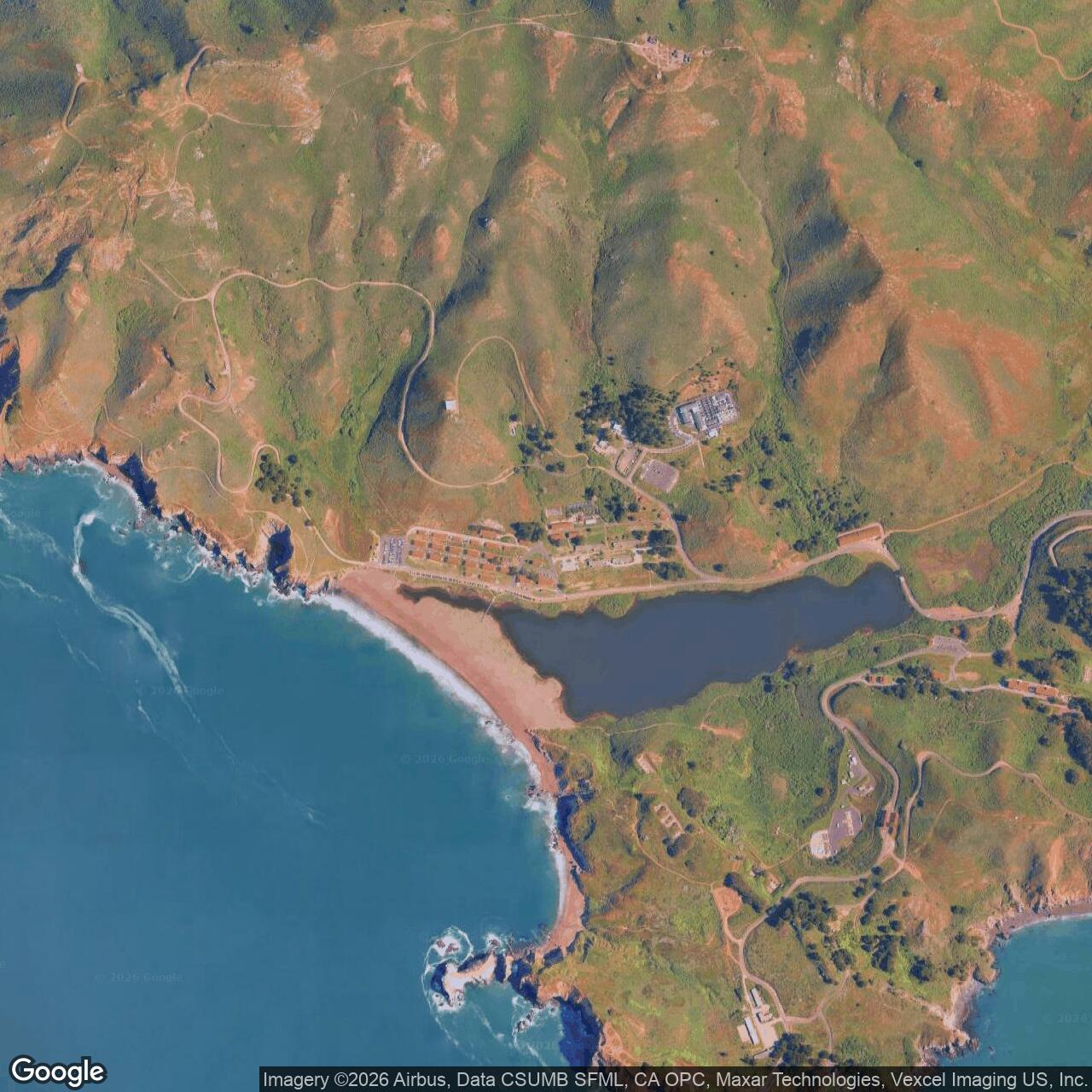
Fort Cronkhite Army Base, Sausalito California
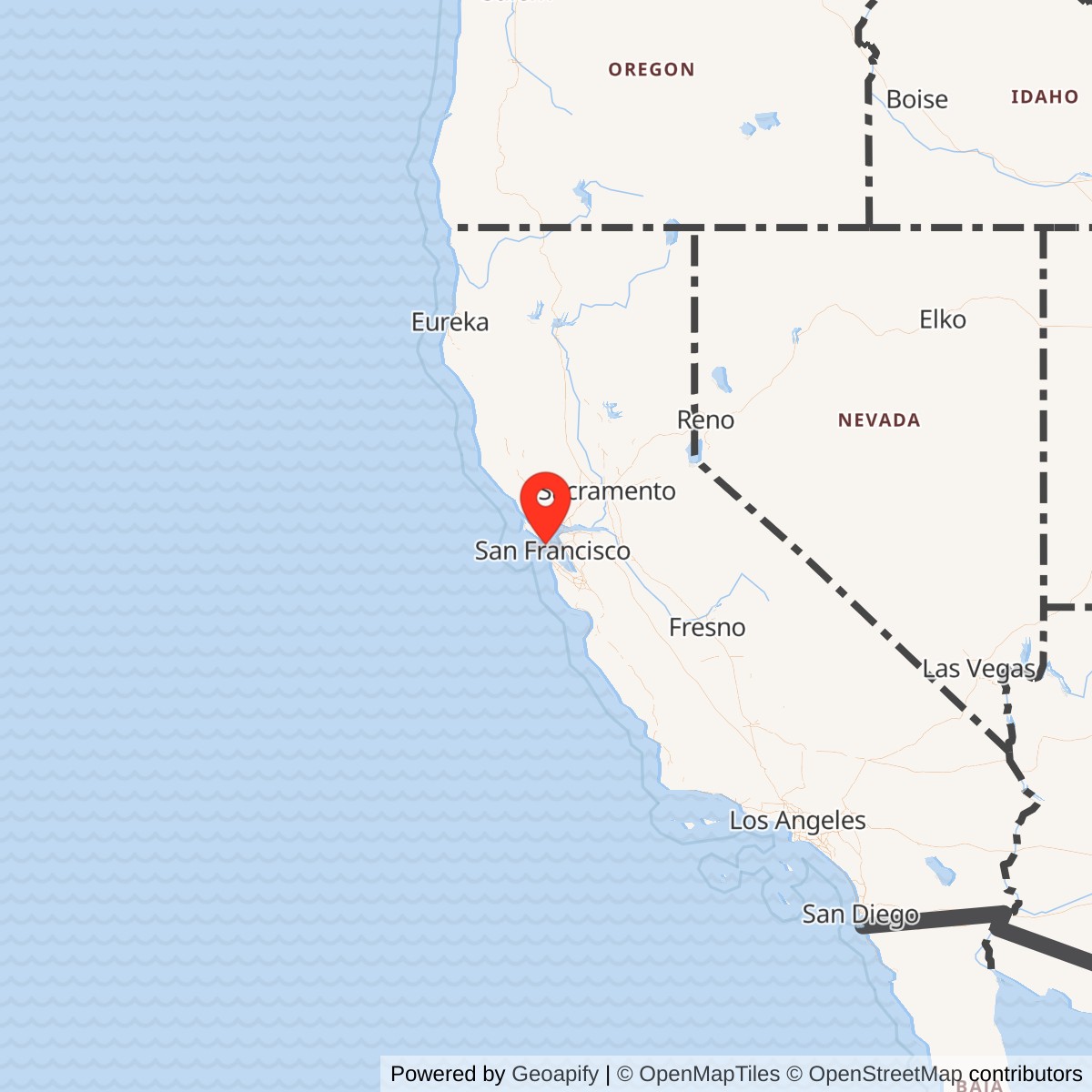
Longitude: -122.535
Official Base Website: National Park Service Fort Cronkhite
Current Role: Golden Gate National Recreation Area; preserved WWII mobilization post at Rodeo Lagoon/Rodeo Beach with Battery Townsley interpretation, surviving barracks/mess halls and partner/NPS reuse, trails, public recreation, and Marin Headlands cultural landscape.
Fort Cronkhite was a World War II U.S. Army mobilization, coast-artillery, air-defense, and later Nike missile support post in the Marin Headlands of California. The Army established the post in the emergency years before the United States entered World War II, completed its standard wood-frame cantonment in 1941, and used it to house and support Coast Artillery soldiers assigned to the Harbor Defenses of San Francisco. Its active Army role continued through the Cold War Nike missile era and ended in 1974, when the Army deactivated the Marin Headlands missile defenses and the former military landscape passed into National Park Service stewardship within Golden Gate National Recreation Area.
The post is different from nearby Fort Baker and Fort Barry. Baker and Barry were Endicott-era permanent coast-artillery posts, with early twentieth-century parade grounds, formal officer and enlisted housing, permanent batteries, and long prewar institutional histories. Cronkhite was the wartime addition. It was built quickly beside Rodeo Lagoon because the Army needed a living post close to the new high-ridge defenses, especially Battery Townsley, fire-control stations, radar sites, antiaircraft positions, beach-defense facilities, and later Cold War missile-control infrastructure. Its white wood-frame buildings were never meant to be architectural monuments. They were meant to be fast, standardized, inexpensive, flexible, and adequate enough to house soldiers who might be called to their guns on short notice.
That temporary character is exactly why Fort Cronkhite is important today. The National Park Service identifies it as one of the park's best-preserved examples of a World War II "mobilization post," a building type once common across the United States but often demolished after the war. Between 1940 and 1945 the Army built tens of thousands of similar barracks, mess halls, administration buildings, recreation structures, garages, supply buildings, and utilities to support the sudden expansion of the armed forces. Most of those landscapes vanished because their buildings were temporary by design. Cronkhite survived because the Marin Headlands were retained in military use through the Cold War and then became parkland before wholesale redevelopment erased the cantonment.
The site's military value came from geography. Fort Cronkhite stands at the edge of the Pacific, immediately behind Rodeo Beach and Rodeo Lagoon, beneath the ridges that command the outer approaches to the Golden Gate. Any hostile force moving toward San Francisco Bay from the ocean would have been observed, tracked, and engaged across this terrain. Fort Cronkhite's soldiers were not training for a distant battlefield in the way soldiers at many interior mobilization camps were. They were stationed at a defensive front line. The attack they feared never came, but the Army treated the threat as real after Pearl Harbor, and the Harbor Defenses of San Francisco placed the post and its nearby batteries on high alert.
The installation also belongs to a longer San Francisco defense story. The Golden Gate's north side had been militarily important since the nineteenth century because the bay's narrow entrance could not be defended from the Presidio side alone. Fort Baker and Fort Barry carried the earlier phases of that mission. Fort Cronkhite carried the final seacoast-artillery phase, when the Army moved from exposed disappearing guns and open batteries to long-range casemated 16-inch guns, radar, fire-control instruments, antiaircraft positions, blackout routines, and integrated regional command. After World War II, the same terrain became useful again for Cold War air defense. Radar and missile systems replaced seacoast guns, and the Marin Headlands became part of the Bay Area Nike network until 1974.
Mission Evolution
Fort Cronkhite's mission evolved through four overlapping phases. The first was land acquisition and strategic planning. During the 1930s the Army recognized that older harbor defenses around San Francisco Bay could no longer meet the threat posed by modern battleships, aircraft, and long-range naval guns. The new standard seacoast weapon was the 16-inch rifle, a battleship-class gun capable of firing a roughly one-ton armor-piercing projectile about twenty-five miles out to sea. To make that weapon useful, the Army needed protected casemated batteries on both sides of the Golden Gate, new fire-control stations, better communications, searchlights, antiaircraft support, and a nearby cantonment for the soldiers assigned to operate them.
The Army acquired additional land in the Marin Headlands in 1937 with the intent to build Fort Cronkhite. That acquisition brought the Rodeo Lagoon and Wolf Ridge area into the Harbor Defenses of San Francisco and made Cronkhite the last harbor-defense post under that command. The new post was named for Major General Adelbert Cronkhite, a West Point graduate and World War I division commander who had led the 80th Division in France. The name placed a new emergency-mobilization camp within the older tradition of naming Army posts for senior officers, but the physical design was thoroughly modern in its temporary, standardized wartime character.
The second phase was World War II mobilization. In 1939, President Franklin D. Roosevelt proclaimed a limited national emergency as war expanded in Europe. By 1940 the Selective Service Act and rapid enlistment had made housing a national military problem. The Army's Quartermaster Department and the Corps of Engineers produced standardized plans based on speed, simplicity, conservation of materials, flexibility, and safety. Fort Cronkhite was one local expression of that national program. Its cantonment was not a large divisional training camp like Camp Bowie or Camp Roberts, but it used the same mobilization logic: simple wood-frame buildings grouped by function, built quickly, heated, wired, supplied, and connected by roads so soldiers could live in reasonable conditions while performing military duties.
The third phase was active harbor defense. Once completed in 1941, Fort Cronkhite housed hundreds of Coast Artillery soldiers assigned primarily to the Harbor Defenses of San Francisco. Those soldiers manned Battery Townsley and other installations, maintained antiaircraft and beach-defense positions, drilled on the main parade ground, staffed fire-control stations on the surrounding hills, and supported radar and communications as those systems came online. Their mission was to prevent enemy ships, aircraft, or landing forces from threatening San Francisco Bay, the Golden Gate Bridge, shipyards, port facilities, military bases, and the San Francisco Port of Embarkation.
The fourth phase was postwar and Cold War reuse. Heavy seacoast guns became obsolete rapidly after 1945. Aircraft, guided missiles, nuclear weapons, and changing naval doctrine made fixed harbor guns far less useful than they had seemed in 1938. Battery Townsley's massive guns were scrapped in 1948, and the Coast Artillery Corps was deactivated in 1950. Yet Fort Cronkhite did not immediately disappear. Korean War soldiers used the post in the 1950s, and during the 1960s and early 1970s the former cantonment became a support base for soldiers operating nearby Nike missile facilities. The Cold War mission was very different from seacoast artillery, but it preserved the Army's use of the headlands for another generation.
World War II Mission and Activity
Fort Cronkhite's World War II mission was to make the outer Golden Gate defense system operational every day. The post housed soldiers, fed them, treated them, organized them, disciplined them, entertained them, and placed them close enough to batteries and fire-control posts to respond quickly. It was not merely a barracks area attached to a famous battery. It was the living, logistical, and administrative base that allowed Battery Townsley, beach defenses, antiaircraft guns, fire-control stations, communications lines, and radar-supported observation to function as a system.
The daily rhythm was tightly regulated. Soldiers drilled, trained, cleaned barracks, stood inspections, ate at scheduled times, performed kitchen duty, practiced communications, and moved between the low cantonment and the high ridges. The first soldiers stationed there included personnel assigned to the 5th and 6th Coast Artillery Regiments. Their work combined the older skills of coast artillery with the realities of modern war. They had to know gun drill, ammunition handling, range finding, communications, security, blackout discipline, gas-mask procedure, antiaircraft alert routines, and emergency response. Salt air, wind, fog, and dampness made maintenance constant. Even ordinary equipment had to be protected against the climate of the Marin Headlands.
Battery Townsley was the major weapon that gave Fort Cronkhite its wartime meaning. Constructed between 1937 and 1940 and built into Wolf Ridge above Rodeo Lagoon, it mounted two 16-inch guns in a heavily protected casemated battery covered by concrete, earth, and camouflage. Each gun could fire a 2,100-pound armor-piercing projectile roughly twenty-five miles out to sea. The battery was named for Major General Clarence P. Townsley, a World War I general officer and former West Point commandant. Together with Battery Davis at Fort Funston on the south side of the Golden Gate, Townsley represented the Army's final generation of San Francisco seacoast guns. Those two batteries covered the ocean approaches from roughly Point Reyes to Half Moon Bay and were intended to keep hostile battleships from reaching effective firing range against the bay and city.
Battery Townsley was also secret. San Franciscans knew that batteries existed in the Marin Headlands, but their exact positions were not publicized. The battery's design had never before been fired, so the soldiers trained for months before the first live-firing. In July 1940, after waiting for a clear day, the Army fired test rounds from Townsley. The concussion shook the mountain and was heard across San Francisco. The test confirmed the battery's power and range and made Townsley and Davis prototypes for future 16-inch seacoast batteries elsewhere in the country.
The soldiers at Fort Cronkhite did not simply live below Townsley and hike up when needed. After Pearl Harbor, the Army changed the relationship between the cantonment and the gun. On December 7, 1941, as news of the Japanese attack reached the Bay Area, the Harbor Defenses of San Francisco ordered all guns manned. Leave was canceled, soldiers formed up, and Fort Cronkhite personnel reported to Battery Townsley and the beach defenses. The Harbor Defenses went to "A" alert, which meant the guns had to be ready to open fire at a moment's warning. For the men at Cronkhite, the shift from tedious drill to possible combat was immediate.
Because the cantonment was roughly a fifteen-minute walk from the battery, the Army installed bunks for more than 150 men inside the battery's halls and galleries so crews could remain near the guns around the clock. Soldiers also dug underground rooms along Wolf Ridge, near a trio of antiaircraft guns overlooking the battery, for sleeping, eating, and ammunition storage. This winter 1941-1942 period was one of the most intense moments in Fort Cronkhite's history. Men lived in cold, damp, windy, and often dark conditions; blackout regulations were strict; and the possibility of enemy action seemed plausible to civilians and soldiers alike.
Fire control made the big guns useful. Fort Cronkhite soldiers manned concrete and steel fire-control stations partly buried in the hillsides along the coast. These stations used telescopes and instruments to observe the ocean, determine bearings, and transmit information by telephone to plotting rooms and gun crews. Each observer worked shifts, scanning the dark Pacific for enemy vessels. These stations could be uncomfortable and primitive, with no heat, latrines, or light during blackouts. Food and supplies had to be hauled up from the cantonment. In emergency conditions, drivers sometimes moved through steep blacked-out roads without headlights. The glamour of the 16-inch guns depended on a much less glamorous system of observation, communication, plotting, and logistics.
Antiaircraft defense added another layer. By 1941 the Army understood that ships were no longer the only threat to harbor defenses. Enemy aircraft could attack batteries, bridges, shipping, and port facilities. Fort Cronkhite's soldiers trained with antiaircraft weapons and supported positions on the ridges. The rise of aircraft ultimately made the big guns obsolete, but during the early war years the Army still treated seacoast guns, antiaircraft weapons, fire control, searchlights, radar, and blackout discipline as parts of a single defensive posture.
The post's wartime routine changed as the war turned. By fall 1942 the fear of an immediate West Coast attack had faded, and the alert level dropped to a condition that allowed men to sleep in their barracks as long as they could reach their batteries within fifteen minutes. Harbor defense settled into routine. Men left the bitter ridge quarters and returned to heated wooden barracks, while battery crews still received support from USO entertainers, Red Cross mobile canteens, and routine military supply. By late 1942 the tide of the Pacific war had begun to favor the United States, and the Army increasingly moved heavy-artillery soldiers to other theaters or other roles. San Francisco remained a vast port of embarkation for the Pacific war, but the chance that hostile battleships would sail to the Golden Gate receded.
Cantonment, Facilities, and Army Life
Fort Cronkhite's surviving physical plant is the heart of its historical value. Its main cantonment sits on low ground between Rodeo Lagoon, Rodeo Beach, and the hills leading toward Battery Townsley. The buildings were arranged along streets such as Edison Street, Kirkpatrick Street, Hagget Street, and Mitchell Road. The layout included barracks, mess halls, headquarters space, a guardhouse, post exchange, fire station, recreation/service club, supply buildings, roads, bridges, utilities, and open training space. The large paved parking lot near Rodeo Beach occupies the area that served as the main parade ground and training area.
Many of the buildings were standard mobilization designs. Barracks Building 1059, for example, represents one of the most common World War II building types and was designed to hold up to sixty-three men in single bunks. Mess halls such as Building 1049 served groups of barracks. Each set of soldiers had cooks, kitchen patrol duties, standard-issue mess equipment, and the ordinary routine of three meals a day. The post headquarters occupied Building 1033. Building 1044 served as the guardhouse for temporarily detained soldiers. Building 1045 was built as the fire station. Building 1046 served as the post exchange, where soldiers could purchase small comforts such as food, cigarettes, and magazines. Building 1077 was built as the service club and later used as an informal recreation lounge for enlisted men.
These buildings mattered because they made the post a functioning military community rather than a scatter of shelters. Soldiers at Fort Cronkhite received food, housing, medical care, dental care, barber services, recreation, and religious or social support. Off-duty men used day rooms with ping-pong, pool, and reading material. The newly constructed chapel at nearby Fort Barry provided multi-denominational services, dances, and stage shows. Leave passes gave soldiers a chance to escape foggy Cronkhite for Sausalito or San Francisco. The post was isolated by terrain and weather, but not far from one of the largest cities on the West Coast, creating a distinctive mix of frontier-like military duty and urban leave.
Fort Cronkhite also reflects the segregated Army of World War II. The NPS Fort Cronkhite History Walk notes that one troop of African American soldiers, identified by the Army as part of the 54th Coast Artillery Regiment (Colored), was briefly assigned to the post. Their presence is important because the Harbor Defenses of San Francisco were not socially neutral spaces. African American soldiers served under the Army's segregation policy, were often assigned to segregated units, and did not receive equal access to facilities, training, or treatment. The later desegregation order signed by President Truman in 1948 came after this wartime experience. Any accurate Fort Cronkhite history must recognize that the post preserved a rare mobilization landscape while also preserving evidence of the Army's segregated wartime structure.
The 1944 Commando Combat School added another mission to the post. As heavy-artillery manpower was reduced and soldiers were moved overseas, the Army established a school at Fort Cronkhite that trained officers from the U.S. Army, Coast Guard, and California State Guard in commando tactics, combat training, and leadership skills. NPS describes it as the first school of its kind in the Western Defense Command. This activity shows that Cronkhite was more than a static coast-defense support camp. As threat perceptions changed, the Army reused the post's terrain, buildings, and field environment for combat-skills training that better fit late-war needs.
Fort Cronkhite's physical environment shaped every aspect of service. The post looked toward Rodeo Beach and the Pacific, but fog, wind, damp air, and exposed ridges made duty demanding. The approach to Battery Townsley was steep. Fire-control stations could be cold, wet, and unlit. Roads were difficult in blackout conditions. The beauty of the landscape today can obscure the discomfort of the wartime station. The soldiers' world included inspections, blackout discipline, alarms, standing watches, wet clothing, salt corrosion, rough roads, and the constant pressure to be ready for a threat that might arrive from the ocean.
Harbor Defenses of San Francisco
Fort Cronkhite only makes full sense as one piece of the Harbor Defenses of San Francisco. The Golden Gate was a one-mile-wide maritime choke point leading to one of the most important harbors on the Pacific Coast. After the Gold Rush and the American acquisition of California, Army planners recognized that both sides of the entrance had to be armed. Fort Point, Alcatraz, Angel Island, Fort Mason, Fort Baker, Fort Barry, Fort Miley, Fort Funston, and Fort Winfield Scott all became part of a layered defense system over time.
The Endicott and Taft modernization programs produced reinforced-concrete gun batteries, disappearing guns, mortar batteries, minefields, electrification, searchlights, telephone communications, and fire-control networks. Fort Winfield Scott at the Presidio became the coast-artillery headquarters in 1912. By the interwar period, however, technology had changed again. Modern naval guns could reach farther, aircraft threatened exposed batteries from above, and older emplacements were increasingly vulnerable. The Army therefore moved toward deeply protected, long-range 16-inch batteries whose weapons could engage modern battleships before they neared the harbor entrance.
Fort Cronkhite was the late answer to that problem on the north side of the Golden Gate. Battery Townsley's guns were not ordinary additions to an older post. They were the culminating weapons of San Francisco's seacoast-defense era. They sat within a network that included Battery Davis at Fort Funston, older Endicott batteries at Fort Barry and Fort Baker, fire-control stations along the coastline, searchlights, mines, antiaircraft guns, communications cables, command posts, and radar. The Army's objective was not simply to fire a large gun; it was to detect, track, calculate, communicate, and fire before a hostile fleet could threaten the bay.
World War II also turned San Francisco Bay into one of the nation's great military logistics zones. Shipyards, naval air stations, the Oakland Army Base, Mare Island, Hamilton Field, Treasure Island, and the San Francisco Port of Embarkation made the region central to the Pacific war. The Fort Cronkhite History Walk notes that more than 1.6 million men and more than 23 million tons of supplies passed through the Golden Gate on the way to the Pacific islands by the end of the war. The guns above Cronkhite did not fire in combat because no enemy fleet attacked the bay, but the installation protected a transportation and military-industrial system whose importance was immense.
The post also illustrates the end of an era. The same war that made Battery Townsley operational made it obsolete. Carrier aircraft, high-altitude bombing, submarines, amphibious warfare, and eventually atomic weapons changed the strategic problem. The Harbor Defenses of San Francisco became less relevant even before the war ended, and heavy seacoast artillery soldiers were transferred to antiaircraft or infantry duties. In 1948 Townsley's guns were scrapped. In 1950 the Coast Artillery Corps was deactivated. Fort Cronkhite therefore stands at the summit and the collapse of American seacoast artillery.
Cold War and Nike Missile Era
After World War II, the Bay Area's defense problem shifted from enemy ships to enemy aircraft. The Soviet bomber threat, nuclear weapons, and early Cold War planning made antiaircraft missile defense more important than harbor guns. The Army's Nike missile system was designed to intercept hostile aircraft using radars, computers, tracking systems, missile guidance, launch areas, and dispersed control sites. In the Bay Area, beginning in 1954, the Army built twelve permanent Nike launch sites with associated control, housing, and command facilities.
Fort Cronkhite's terrain remained useful. North of the Golden Gate, the Army constructed Nike sites at Fort Cronkhite, Fort Barry, Angel Island, and San Rafael. South of the gate and across the Bay Area, the system included sites at Fort Winfield Scott, Fort Funston, Milagra Ridge, San Pablo Ridge, Rocky Ridge, Lake Chabot, and Coyote Hills. Fort Baker became the headquarters for the Sixth ARADCOM Region, which commanded the Bay Area Nike network. Early-warning information came from the radar station at Mill Valley Air Force Station on Mount Tamalpais, while radars and computers at each Nike control area tracked targets and sent guidance to launch sites and missiles.
Fort Cronkhite's Cold War role was tied especially to radar and personnel support. The Integrated Fire Control radars for Nike Site SF-88 were on Wolf Ridge above the post, overlooking Fort Cronkhite. Their purpose was to search for incoming enemy aircraft, track them, plot their course, and guide the Nike missiles toward the target. The launch area most strongly associated with the public Nike story today is SF-88L at Fort Barry, which survives as the best-preserved Nike missile site in the country. Cronkhite's role was less visually dramatic than the launch magazines, but it was central to the missile system's operation because Nike depended on radar, computers, communications, power, security, trained crews, and housing as much as on the missiles themselves.
The Cold War also changed the physical post. NPS notes that by the 1960s and early 1970s Fort Cronkhite became the home base for soldiers operating nearby Nike facilities, and that the Army removed much of the eastern half of the original wood-frame cantonment and replaced it with cinderblock barracks for Nike personnel. This means the preserved cantonment is not a perfectly frozen 1941 landscape. It is a layered place where World War II temporary buildings, postwar alterations, Cold War construction, radar remains, and later park uses overlap. That layering is historically valuable because it shows how military terrain was reused when technology changed.
The Nike era ended in 1974. By then intercontinental ballistic missiles, strategic arms policy, and changing air-defense technology had reduced the importance of the continental Nike network. The two Nike sites in the Marin Headlands closed, and the Army began to deactivate the former post. That year marks the end of Fort Cronkhite as an active Army installation. It also marks the beginning of the preservation era that allowed so many of its temporary buildings and associated defense landscapes to survive.
Postwar Transfer and Current Status
Fort Cronkhite's active Army use ended in 1974, but the site did not become vacant wasteland. It became part of Golden Gate National Recreation Area, a National Park Service unit created in 1972 from former military, private, and public lands around San Francisco Bay. The transfer turned a restricted military landscape into a public cultural and natural landscape. The former post now stands within the Marin Headlands, where Rodeo Beach, Rodeo Lagoon, Battery Townsley, trails, wildlife habitat, partner facilities, park offices, and interpretive resources overlap.
The National Park Service preserves and adaptively reuses the surviving Fort Cronkhite buildings. Many interiors are not open to casual visitors because park partners and NPS operations occupy them. The plan-your-visit page identifies current partners and uses that include the Golden Gate Raptor Observatory, The Marine Mammal Center, NatureBridge, the Marin Headlands Native Plant Nursery, and other educational, environmental, and stewardship activities. This reuse is historically appropriate in a practical sense: buildings designed for temporary military utility now support public service and conservation instead of military readiness.
Battery Townsley has become one of the strongest interpretive anchors at the site. After the war it was dismantled, stripped of ammunition, and sealed. Over time it suffered neglect and vandalism. Beginning in the mid-2000s, the National Park Service, Golden Gate National Parks Conservancy, and volunteers worked to clean, stabilize, and interpret the battery. Preservation work has included removing vegetation and debris, lead-paint abatement, restoration of light fixtures and conduits, installation of security doors, and efforts to reconstruct elements of the wartime interior. Tours and open houses allow visitors to experience the scale of the casemated 16-inch battery and understand how the low cantonment below supported the weapon.
The surrounding landscape also remains active as a public outdoor destination. Rodeo Beach is a popular coastal site; Rodeo Lagoon is a brackish habitat supporting birds, frogs, and endangered fish; trails connect the beach, cantonment, Battery Townsley, and the ridges. The same topography that once made the area valuable for observation, fire control, and radar now makes it valuable for public recreation and interpretation. Visitors can see the barracks rows, walk former military streets, reach the beach, hike to Townsley, and look across the Pacific approaches that the soldiers watched during World War II.
Chronology
- 1937 The Army purchased approximately 800 acres in the Marin Headlands with the intent to build Fort Cronkhite as the last Harbor Defenses of San Francisco post.
- 1937-1940 Battery Townsley was constructed on Wolf Ridge above the future Fort Cronkhite cantonment.
- 1938 Major construction began at Battery Townsley, requiring major excavation, concrete, steel, road work, and heavy construction equipment.
- 1939 President Franklin D. Roosevelt proclaimed a limited national emergency as war expanded abroad, accelerating U.S. mobilization planning.
- 1940 Fort Cronkhite was constructed as coastal defenses expanded; NPS identifies its standardized design as one of the best examples of a World War II mobilization post.
- 1940-07 Battery Townsley conducted live test firing, demonstrating the power and range of its 16-inch guns.
- 1941 Fort Cronkhite's wood-frame mobilization buildings were completed near Rodeo Lagoon and Rodeo Beach.
- 1941 Fort Cronkhite began housing Coast Artillery soldiers assigned to the Harbor Defenses of San Francisco.
- 1941-12-07 After the Japanese attack on Pearl Harbor, the Harbor Defenses of San Francisco ordered all guns manned, and Fort Cronkhite soldiers reported to Battery Townsley and beach-defense positions.
- 1941-1942 Battery Townsley crews operated under high-alert conditions, with more than 150 men housed inside the battery's corridors and galleries for rapid response.
- 1942 The 54th Coast Artillery Regiment (Colored) was briefly assigned to Fort Cronkhite, reflecting both the post's wartime manpower needs and the segregated structure of the World War II Army.
- 1942 By fall, immediate invasion fears had receded and alert conditions allowed soldiers to return to heated barracks if they could reach batteries quickly.
- 1943 Radar improvements increased the effectiveness of the 16-inch guns and antiaircraft weapons around the Marin Headlands.
- 1944 The Army established a Commando Combat School at Fort Cronkhite for officers from the U.S. Army, Coast Guard, and California State Guard.
- 1945 World War II ended; Fort Cronkhite's seacoast-artillery mission rapidly declined as aircraft, missiles, and atomic weapons changed coastal defense doctrine.
- 1948 Battery Townsley's 16-inch guns were scrapped.
- 1950 The Coast Artillery Corps was deactivated, marking the end of traditional Army seacoast artillery.
- 1950s Korean War soldiers were stationed at Fort Cronkhite as the Army continued to use the former World War II cantonment.
- 1954 The Army began building permanent Nike missile sites around the Bay Area, including sites north of the Golden Gate at Fort Cronkhite, Fort Barry, Angel Island, and San Rafael.
- 1960s-early 1970s Fort Cronkhite served as a home and support base for soldiers operating nearby Nike missile facilities, including the SF-88 control/radar landscape on Wolf Ridge.
- 1972-10-27 Golden Gate National Recreation Area was established, creating the future park framework for former military lands around the Golden Gate.
- 1974 The Marin Headlands Nike sites closed, and Fort Cronkhite's active Army post era ended.
- 1974 The Army began deactivating and transferring the former post to National Park Service stewardship within Golden Gate National Recreation Area.
- 2005-2006 Major preservation work began at Battery Townsley through the National Park Service, Golden Gate National Parks Conservancy, and volunteer efforts.
- Present Fort Cronkhite is a closed former Army installation preserved within Golden Gate National Recreation Area as a World War II mobilization post, Battery Townsley support landscape, Cold War Nike-era landscape, public recreation area, and partner-use campus.