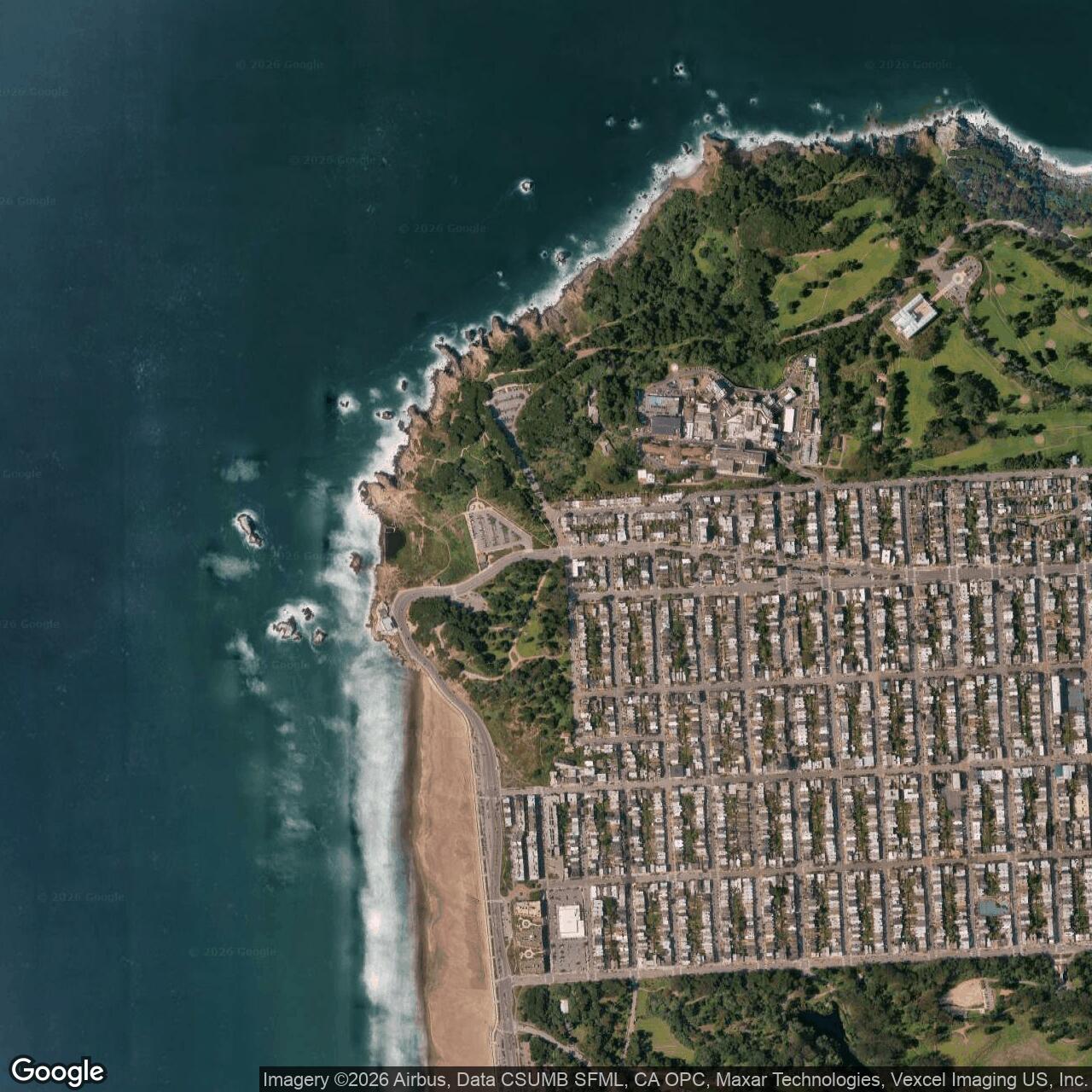
Fort Miley Army Base, San Francisco California
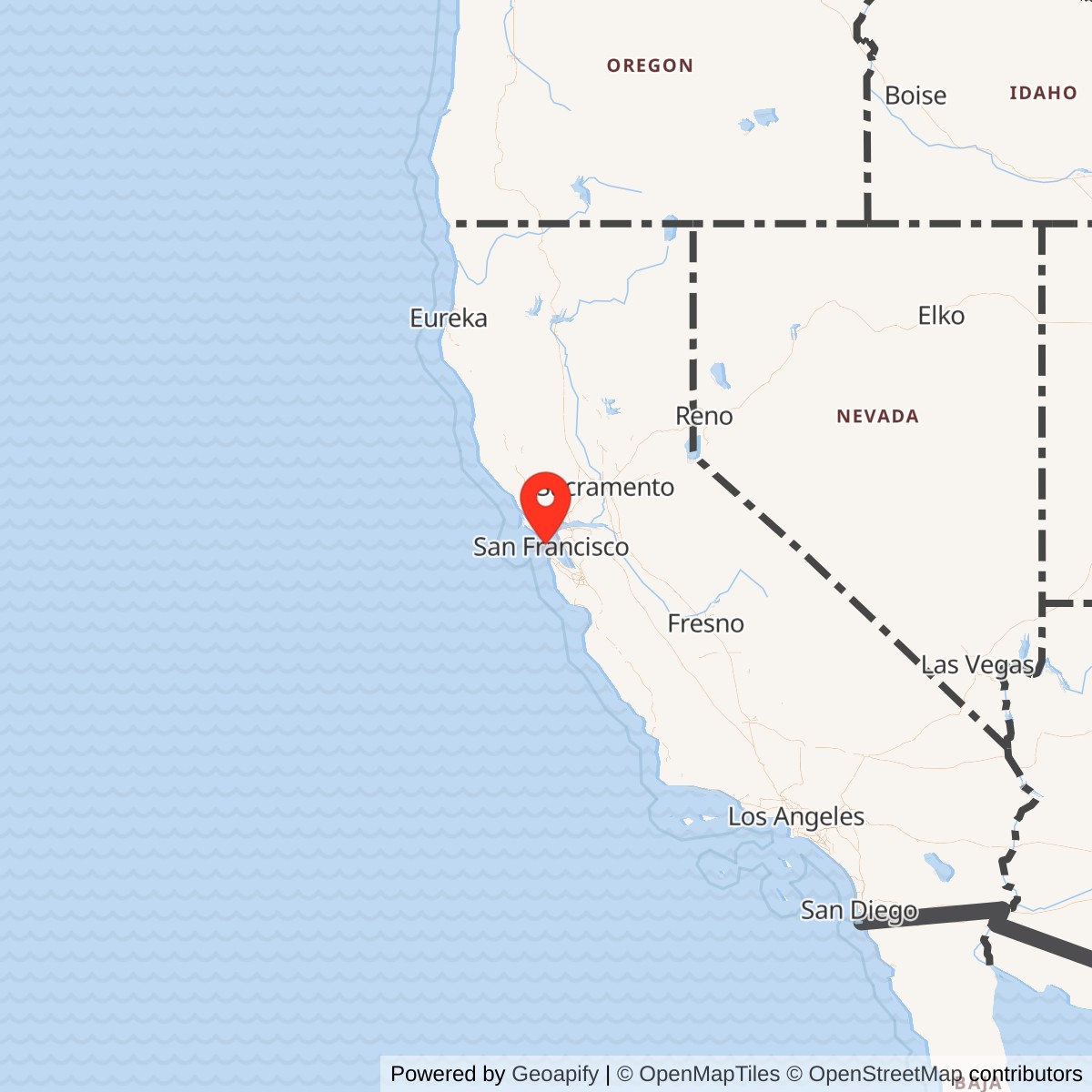
Longitude: -122.5100
Official Base Website: https://www.nps.gov/places/fort-miley-military-reservation.htm
Current Role: Golden Gate National Recreation Area / Lands End public historic landscape; Battery Chester picnic area; San Francisco VA Medical Center on former central post
Fort Miley was a U.S. Army coast-artillery military reservation on Point Lobos at Lands End, the high outer headland on the southern side of the Golden Gate. It was acquired by the Army in 1893, fortified beginning in 1899, renamed Fort Miley in 1900, and garrisoned as part of the Harbor Defenses of San Francisco. Its Army combat mission was seacoast defense: heavy guns, mortars, searchlights, fire-control stations, and later a World War II six-inch battery positioned to protect the Golden Gate, the submarine minefields outside the entrance, and the wartime shipping lifeline through San Francisco Bay.
The installation is inactive as an Army post. The original coast-artillery garrison landscape was largely broken up in 1932-1934, when the Veterans Administration acquired the central portion of the reservation and constructed the San Francisco VA Medical Center on the former main post. The Army retained the batteries and related defense facilities, reactivated them during World War II, and removed the last traditional seacoast guns in the postwar period. National Park Service interpretation treats Fort Miley as an active U.S. military post from 1903 to 1975, when the remaining lands were turned over to the National Park Service as part of Golden Gate National Recreation Area. The practical status is therefore dual: the Army coast-defense post is closed, the central medical campus remains an active federal VA facility, and the remaining East and West Fort Miley military landscape is now preserved and used as part of Golden Gate National Recreation Area / Lands End.
The name honors Lieutenant Colonel John D. Miley, U.S. Volunteers, who died in Manila in 1899 after service in the Spanish-American War and Philippine-American War era. Before that dedication, the property was known as the Point Lobos Military Reservation. The name can be confusing because modern visitors often encounter Fort Miley through the VA hospital, the Lands End trail system, Battery Chester picnic area, the Lincoln Park golf landscape, or the NPS-maintained ruins of batteries and fire-control structures rather than through a surviving cantonment. The original Army post around the parade ground is gone except for one surviving ordnance storehouse, now used by the National Park Service.
The military value of the site came from geography. Point Lobos projected toward the Pacific and sat west of the Presidio, giving Army engineers a place to push heavy guns farther seaward than the earlier inner-harbor defenses. From Fort Miley, artillery could cover the south, main, and north channels of approach to the Golden Gate and support the wider system of guns, mortars, searchlights, observation stations, controlled mines, and command posts that defended San Francisco Harbor. Together with Fort Barry on the north side of the Gate, Fort Miley formed part of the turn-of-the-century outer line of defense. It was not a large troop post in the style of Fort Mason or the Presidio, and it did not become a Nike missile post like nearby Fort Winfield Scott, Fort Barry, or Fort Funston. Its importance lay in a narrower but crucial function: putting large-caliber coast artillery as far toward the open sea as the Army could place it on the southern side of the Golden Gate.
Mission Evolution
Fort Miley's first mission was born from the Endicott-era modernization of American seacoast defense. In the late nineteenth century, the United States Army concluded that older brick and masonry forts were no longer adequate against modern naval guns, armor, and steam-powered warships. San Francisco Harbor was considered one of the nation's most important strategic ports, second only to New York in Endicott Board priorities. The Army therefore sought new reinforced-concrete batteries, dispersed gun positions, electric systems, searchlights, communications, and fire-control stations around the Golden Gate. Fort Miley was one of the locations chosen to push the defense perimeter outward.
The reservation itself had a complicated pre-Army history. Point Lobos had first been set aside for military purposes by executive order in 1850, but it was excluded from the San Francisco military reservations a year later and came back under city jurisdiction. The land later became part of Golden Gate Cemetery, a large municipal burial ground. By the 1890s civic and federal pressure converged: prominent San Franciscans wanted the cemetery removed, and the Army wanted the headland for defense. In January 1893 the Army acquired about 54 acres from the City and County of San Francisco by condemnation, but military construction could not proceed fully until graves in the selected area were removed and reinterred elsewhere. That burial-ground history is important because Fort Miley's military landscape was literally laid over one of San Francisco's displaced cemetery landscapes.
Construction of fortifications began in 1899. Work started on a mortar battery planned for sixteen 12-inch mortars, and construction of the heavy gun battery was under way the same year. The Army renamed the reservation Fort Miley in 1900. By 1901-1903, the main Endicott batteries were substantially in place. Battery LaRhett Livingston held the 12-inch mortars; the south half of the mortar battery later became Battery Anton Springer. Battery James Chester mounted two, and later three, 12-inch rifles. These were the weapons that defined Fort Miley's original mission. The mortars could fire high-arc plunging rounds, while Battery Chester's rifles covered the approach channels into the Golden Gate. The fortification was completed around 1902 and operated as a subpost of Fort Winfield Scott / the Presidio coast-artillery command.
The post mission broadened slightly but remained coast artillery. Wood-frame barracks, administrative buildings, storage buildings, stables, officers' facilities, and support structures were built around a parade-ground area, but Fort Miley was never meant to be a large independent army town. Its garrison existed to maintain and fight the batteries. Soldiers drilled, cared for guns and carriages, handled ammunition, maintained communications, and operated the searchlight and observation systems that made the heavy weapons useful. A smaller Battery Loren H. Call, built in 1915 with two 5-inch rapid-fire guns, reflected the Army's continuing concern with close-in threats and smaller vessels. Searchlight power, mine-control support, and fire-control stations reflected the Taft-era shift from guns as isolated weapons to guns as parts of an electrically linked, data-driven defensive system.
World War I changed Fort Miley less dramatically than some other Army posts, but it did affect the armament. Many coast-defense gun tubes were removed from fixed batteries around the United States for possible overseas use on mobile railway or field mountings. At Battery Chester, two gun tubes were removed in 1918 and shipped east for modification, though the war ended before they could be deployed. Replacement tubes later came from Battery Spencer at Fort Baker and Battery Lancaster at Fort Winfield Scott. The episode shows Fort Miley's place in the national artillery system: its guns were part of a wider pool of heavy weapons the Army tried to adapt to the Western Front, even when the batteries themselves never fired in combat.
During the interwar period, the Army's estimate of Fort Miley's future changed. The heavy 12-inch batteries and mortars had been impressive in 1900, but aircraft, longer-range naval guns, improved fire control, and the possibility of attack from the air made open Endicott batteries increasingly vulnerable. By 1937, the Army had decided that 12-inch batteries such as Battery Chester should be abandoned when the harbor defenses could be modernized with a new generation of weapons. The Army had already surrendered much of the old post area to another federal mission. In 1932 the central part of Fort Miley was deeded to the Veterans Administration for a new hospital, and in 1933-1934 most of the main-post buildings were demolished to clear the site. The new San Francisco VA Medical Center opened in November 1934, physically dividing the surviving military resources into East Fort Miley and West Fort Miley.
World War II interrupted the planned obsolescence. The Japanese attack on Pearl Harbor brought the West Coast to immediate alert, and San Francisco Bay became a major war port, naval base, shipbuilding, supply, and command region. Fort Miley's batteries, although obsolete on paper, were reactivated because the modernized harbor-defense program was not yet complete. Battery Chester, Batteries Livingston and Springer, fire-control stations, searchlights, and other surviving facilities again became part of the defensive system. The VA hospital had to evacuate patients in December 1941 because it stood in the middle of a potentially targeted military position. Fort Miley's mission briefly returned to its original purpose: defend the Golden Gate against the possibility of naval or air attack.
By 1943, the strategic situation in the Pacific had changed enough that the Army began scrapping older coast guns. Battery Chester's guns were salvaged, and the 12-inch mortars of Batteries Livingston and Springer were removed. Yet the Army still built Battery 243 at Fort Miley in 1944. This unnamed World War II construction-number battery was designed for two 6-inch rapid-fire guns protected by steel shields rather than the older earth-and-concrete parapet style. Its purpose was not to fight battleships at maximum range. It was to cover submarine minefields outside the Golden Gate and make enemy minesweeping difficult or impossible. The guns were not mounted until 1948, after most other seacoast guns in the Bay Area had been scrapped. That late arming made Fort Miley one of the last expressions of traditional gun-and-mine coastal defense in the San Francisco system.
The final mission transition came after World War II. Radar, carrier aviation, long-range bombers, guided missiles, and atomic weapons ended the practical era of fixed seacoast artillery. The NPS harbor-defense chronology states that just two years after the war, all remaining San Francisco seacoast defense guns were declared surplus, the last weapons were removed in 1950, and the Coast Artillery was deactivated that same year. Fort Miley no longer had a combat reason to exist as a gun post. Its remaining lands became part of the long postwar story of urban military surplus, VA medical use, local park activism, and eventual inclusion in Golden Gate National Recreation Area.
Operational Role
Fort Miley's daily operational role was the disciplined maintenance of readiness at a place that never had to fire in anger. That kind of history can be easy to underestimate. Coast artillery posts were built for rare, catastrophic events: the appearance of hostile warships, mine sweepers, raiders, or submarines off a strategic harbor. Their peacetime work was therefore repetitive, technical, and highly procedural. Crews maintained guns, magazines, carriages, plotting rooms, telephone lines, power systems, observation stations, and searchlights so that the weapons could be brought into action quickly if needed.
Battery Chester was the fort's main direct-fire statement. Its three 12-inch rifles were the weapons that gave the southern outer Golden Gate approach a heavy punch. The early battery design included disappearing-carriage positions for the first two guns and a later barbette position for the third, creating a distinctive hybrid battery. The guns were intended to strike armored vessels before they reached the inner harbor. The battery's siting on the western portion of the reservation gave it broad coverage across the south, main, and north channels. In operational terms, Battery Chester was not a symbolic ruin but part of a calculated geometry of fire shared with batteries on the Presidio and Marin headlands.
Batteries Livingston and Springer performed a different task. Their 12-inch mortars were designed for plunging fire. Rather than shoot directly across the water like a rifle, a mortar hurled a heavy projectile in a steep arc so it could descend onto the vulnerable decks of ships. Mortar batteries were a central element of early Endicott design because they promised to defeat armor by attacking from above. Fort Miley's mortar pits also had all-around fields of fire, meaning they could contribute to defense against multiple lines of approach. The sheer mass of the earthworks, magazines, and pits illustrates how much engineering went into weapons that were already becoming vulnerable to changes in naval and air power by the interwar years.
Fire control made the system work. By World War II, Fort Miley and nearby locations contained multiple reinforced-concrete fire-control stations. Observers in base-end stations measured the bearing to a target from known positions, sent data by telephone to plotting rooms, and helped gun crews aim at vessels miles offshore. Searchlights allowed night detection and illumination. In the broader San Francisco system, fire control depended on a dispersed network stretching across the headlands, the Presidio, the Marin shore, and outer coastal positions. Fort Miley's value lay not only in its guns but in the fact that its cliffs, stations, and view lines helped the entire harbor-defense system see and calculate.
The World War II operating environment gave Fort Miley a new urgency. San Francisco Bay was one of the essential American gateways to the Pacific. Troops and cargo moved through the San Francisco Port of Embarkation, naval and shipyard facilities ringed the Bay Area, and every vessel bound to or from the Pacific had to pass through the Golden Gate. NPS describes the wartime defense as an integrated system of guns, underwater mines, antisubmarine nets, fire control, radar, searchlights, and men. Fort Miley stood in that system at a precise place: the southern outer headland, watching the approach, supporting minefield defense, and maintaining older batteries until the new long-range 16-inch system and later radar-centered fire-control systems were ready.
Battery 243 shows the last phase of that operational thinking. The Army still believed that smaller, rapid-fire coast guns had a role in protecting minefields against minesweepers and small vessels. A minefield could not defend itself if enemy sweepers could remove or neutralize it. Six-inch guns, firing faster than the older heavy pieces and shielded against fragments, could make that work dangerous. That is why Fort Miley received a World War II 6-inch battery even as the older 12-inch rifles and mortars were being scrapped. The irony is that the guns were mounted after the war, when the whole concept was already obsolete. Battery 243 therefore belongs to both operational history and technological epilogue.
Units, Organizations, and Systems
Fort Miley belonged to the Coast Artillery system rather than to a maneuver or training-command system. Its garrison served the guns. During most of the post's active life, the relevant organization was the Coast Artillery Corps and the local Coast/Harbor Defenses of San Francisco command. Fort Winfield Scott, established in 1912 on the western Presidio, became the headquarters post for the Bay Area coast-artillery network. Fort Miley was one of the subordinate posts whose batteries, fire-control stations, and support facilities contributed to that network.
The Harbor Defenses of San Francisco were not a single fort. They were a system of posts and batteries around the Golden Gate and inside San Francisco Bay. Fort Winfield Scott, Fort Mason, Fort Miley, Fort Funston, Fort Baker, Fort Barry, Fort Cronkhite, Fort McDowell, and related batteries all formed pieces of the defensive geometry. The heavy guns at one point covered the approaches that another point could not. Mortars covered spaces where direct-fire guns were less effective. Minefields forced ships into known channels or prevented them from entering. Searchlights, observation posts, radar, communications lines, and plotting rooms bound the pieces together. Fort Miley's contribution was especially important because it pushed the southern side of the defense line toward the ocean.
The Veterans Administration became the second major federal institution on the reservation. In 1932 the VA acquired the central portion of the fort, and the San Francisco VA Medical Center opened in 1934. Its mission was not Army defense but veterans' medical care. Yet because it occupied the old main post, it shaped Fort Miley's military afterlife. The VA complex removed most of the old barracks and support buildings, divided the surviving East and West Fort Miley historic resources, and became the dominant built landmark on the former reservation. During World War II, proximity to still-active batteries made the hospital vulnerable enough that patients were evacuated. After the war, the hospital reopened and expanded into a major Veterans Health Administration facility.
The National Park Service became the third major institutional steward. Fort Miley and Lands End were central to the early movement that produced Golden Gate National Recreation Area. A proposal for a National Archives building at East Fort Miley in the early 1970s helped trigger local organizing by People for a Golden Gate National Recreation Area. Congress created Golden Gate NRA in 1972, and Fort Miley / Lands End lands were added during the 1974-1975 period. The NPS now administers the surviving public military landscape, interprets the gun batteries and ruins, and uses the surviving ordnance storehouse as a maintenance building.
Facilities and Physical Layout
The original Fort Miley reservation occupied about 54 acres on Point Lobos. The land was narrow, bluff-top, and tactically valuable, but it did not offer the space of a large cantonment. The Army laid out the fort so that the main post occupied the central area, while the batteries sat toward the east and west portions of the reservation. Battery Chester and Battery 243 were in West Fort Miley; Batteries Livingston and Springer were in East Fort Miley. The central parade-ground area later disappeared beneath the VA hospital campus.
West Fort Miley held the most visible surviving coast-artillery remains. Battery Chester's concrete emplacements, magazines, and platforms remain as a ruin and picnic-area landscape. The battery's hybrid design, with two disappearing-gun emplacements and a later barbette position, makes it a particularly instructive Endicott-period artifact. Nearby were the searchlight power plant, fire-control stations, and Battery 243. The remnants of these features show how the site evolved from turn-of-the-century heavy artillery to World War II fire control and late six-inch gun defense.
East Fort Miley contains the remains of the mortar batteries. Batteries LaRhett Livingston and Anton Springer were massive earth-and-concrete works built for 12-inch mortars. They were less visually legible than a simple gun platform because mortar batteries depended on pits, magazines, traverses, and earth cover, but they represented one of the Army's main Endicott design solutions. The Fort Miley National Register documentation treats East and West Fort Miley as historically connected even though the VA hospital physically divides them. That division is a modern landscape result, not a difference in historical theme.
The main post once included wood-frame barracks, storage buildings, administrative buildings, an officers' club, a mess hall, stables, and support structures. Those buildings were mostly demolished in 1933-1934 for the VA hospital. The surviving ordnance storehouse, originally Building No. 4 and later identified as FI-304, is the only remaining Army building from the early Fort Miley post. It matters because it is the last building-scale reminder that Fort Miley was not only a string of gun emplacements but also a lived garrison landscape with stores, horses, officers, enlisted men, equipment, paperwork, and daily routines.
The San Francisco VA Medical Center is the dominant non-Army successor facility on the central former post. Built in 1934 in a Mayan Deco / Art Deco federal style, it replaced the old parade-ground community with a hospital campus. The medical center's construction physically erased much of the Army cantonment but preserved the federal-use character of the land. It also created a strange and important overlap: patients and doctors occupied the former garrison core while active or reactivated coastal batteries remained around them. During World War II, this overlap became untenable, and patients were evacuated until the immediate threat declined.
The current public landscape is split among the VA campus, NPS-administered East and West Fort Miley, Lincoln Park, Lands End trails, Battery Chester picnic areas, and nearby cultural resources such as the Palace of the Legion of Honor and former Golden Gate Cemetery landscape. Visitors today often encounter Fort Miley as ruins in a park rather than as a coherent fort. That fragmented experience reflects the actual history of the site: cemetery, military reservation, coast-artillery post, VA medical campus, World War II alert position, surplus open land, preservation battleground, and urban national park.
Role in the Wider Military Network
Fort Miley is best understood as one node in the Harbor Defenses of San Francisco. San Francisco Bay's importance came from port capacity, naval and army facilities, shipbuilding, commerce, and the strategic role of the Golden Gate as the single ocean entrance to the bay. A hostile fleet, raider, submarine, or minesweeper force entering or threatening the Gate could endanger not only San Francisco but the military supply network for the Pacific. The Army therefore layered defenses over time: Civil War and Third System works, Endicott batteries, Taft-era mines and communications, World War II 16-inch batteries, radar, antisubmarine nets, and later Cold War Nike missiles.
Fort Miley occupied a specific tactical gap in that system. Earlier defenses at Fort Point, Alcatraz, and the Presidio protected the inner gate and bay, but modern warships could fire from farther offshore. The Army needed guns and mortars placed farther seaward. Fort Miley on the south and Fort Barry on the north became the outer pair of heavy Endicott positions near the ocean. Their presence made the entrance to San Francisco Bay a crossfire problem for any hostile vessel. Batteries at Fort Baker, Fort Mason, Fort McDowell, Fort Winfield Scott, Fort Funston, and Fort Cronkhite filled out the larger geometry.
World War II temporarily made the whole system urgent again. San Francisco Bay was a major logistics and naval hub for the Pacific war. NPS notes that Fort Mason served as a port of embarkation for over a million soldiers and that shipyards, naval bases, ammunition depots, and port facilities all depended on the Golden Gate remaining open. Fort Miley's older batteries, its fire-control stations, and Battery 243's minefield-coverage function must be read against that port system. It was not guarding empty water. It was guarding a shipping channel that tied California industry and American manpower to the Pacific theater.
The postwar abandonment of seacoast artillery shows how quickly military systems can become obsolete. Fort Miley's batteries had taken decades of planning, condemnation, construction, armament, maintenance, and modernization. Yet by 1950 the guns were surplus and the Coast Artillery itself had been deactivated. Anti-aircraft missiles, nuclear weapons, jet bombers, and new naval tactics made fixed guns irrelevant. Fort Miley did not receive a Nike missile battery in the way Fort Winfield Scott, Fort Funston, and the Marin Headlands did. Instead, its military identity moved directly into preservation, VA use, and parkland reuse.
Post-Military Reuse and Preservation
The post-military reuse of Fort Miley began before the Army was done with the batteries. The VA hospital decision in 1932 transferred the main-post center out of coast-artillery use while the battery edges remained military. The hospital opened on Veterans Day, 1934, with hundreds of beds and a federal medical mission that continues today. This means Fort Miley did not pass from Army to park in one clean step. It was divided first between veterans' health care and residual harbor-defense work.
After World War II, the defense function faded, but Fort Miley remained a valuable federal and civic landscape. The VA medical campus expanded and modernized. The batteries and surrounding open areas attracted preservation attention. In 1970-1972, East Fort Miley became one of the places where local citizens, environmentalists, and park advocates pushed back against federal development plans and argued for a broad urban national park around the Golden Gate. Amy Meyer and other organizers associated with People for a Golden Gate National Recreation Area used Fort Miley and other military surplus lands to make the case that the old defense landscapes should become public landscapes.
The National Park Service era preserved Fort Miley in a partly ruined, partly interpreted form. The fort's surviving concrete batteries are not restored as working weapons, but they are legible. Battery Chester's gun platforms are visible and used as a picnic area. Battery Livingston and Battery Springer remain as massive earthworks. The surviving ordnance storehouse gives the site one rare intact post building. Fire-control stations and searchlight infrastructure help tell the story of the technical system behind the guns. NPS management also places Fort Miley within the broader Lands End and Lincoln Park landscape, where military history sits beside cemetery history, shipwrecks, trails, ocean overlooks, and art-museum grounds.
Current Status
Fort Miley is closed as an Army installation. The current site is divided between the San Francisco VA Medical Center and the National Park Service / Golden Gate National Recreation Area. The former central post is an active VA health-care campus, while East and West Fort Miley preserve the remaining military reservation resources. The NPS-administered areas include Battery Chester, Battery Livingston, Battery Springer, Battery 243 remnants, fire-control structures, the searchlight power plant area, trails, overlooks, and picnic or maintenance uses. Lands End and Lincoln Park surrounding the site are public recreational and cultural landscapes.
Chronology
- 1850 Point Lobos was initially set aside for military purposes by executive order before being excluded from the San Francisco military reservations the following year.
- 1868 The area that later included Lincoln Park and part of Fort Miley was reserved by the City of San Francisco for Golden Gate Cemetery.
- 1890 The United States undertook a national modernization of coastal defenses, setting the context for Endicott-era batteries at San Francisco.
- 1893 The U.S. Army acquired about 54 acres at Point Lobos from the City and County of San Francisco for coastal-defense fortifications.
- 1897 Construction preparation could proceed after cemetery removals and reinterments cleared the military site.
- 1899-11-27 Work began on the planned 16-mortar battery at Fort Miley.
- 1899 Construction of Battery Chester was under way as part of the Point Lobos / Fort Miley fortification project.
- 1900 The reservation was renamed Fort Miley in honor of Lieutenant Colonel John D. Miley, U.S. Volunteers.
- 1901 Battery LaRhett Livingston, the 12-inch mortar battery, was completed.
- 1901 Battery Chester was built with two 12-inch rifles.
- 1902 Fort Miley was completed and garrisoned as a subpost of Fort Winfield Scott / the Presidio coast-artillery command.
- 1903 A third 12-inch gun was added to Battery Chester.
- 1904 The three-gun battery was named Battery James Chester; the mortar battery was formally associated with the LaRhett Livingston / Anton Springer designations.
- 1913 A concrete coastal searchlight power plant was constructed at Fort Miley.
- 1915 Battery Loren H. Call was constructed with two 5-inch rapid-fire guns.
- 1918 Two Battery Chester gun tubes were removed and shipped east for potential wartime modification; the armistice came before they could be deployed overseas.
- 1921 Battery Call's guns were dismounted.
- 1932 The Army deeded central Fort Miley acreage to the Veterans Administration for a new medical center.
- 1933 Demolition of the Fort Miley main post began to clear the site for the VA hospital.
- 1934-11-11 The San Francisco VA Medical Center at Fort Miley opened.
- 1937 The Army decided that 12-inch batteries such as Battery Chester should be abandoned after modernization.
- 1941-12 After Pearl Harbor, Fort Miley's batteries were reactivated and VA patients were evacuated because of the risk of attack.
- 1943 Battery Chester's guns were ordered salvaged as the danger of enemy attack declined and older batteries were scrapped.
- 1943 Batteries Livingston and Springer were declared obsolete and their 12-inch mortars were salvaged.
- 1944 Battery 243 was completed for two 6-inch rapid-fire guns intended to cover the submarine minefields outside the Golden Gate.
- 1946 Patients returned to the San Francisco VA Medical Center after the wartime evacuation period.
- 1948 Battery 243's guns were mounted, making it one of the last traditional coastal-gun batteries armed in the San Francisco Bay Area.
- 1950 The last remaining seacoast defense weapons in the San Francisco system were removed, and the Coast Artillery was deactivated.
- 1971 The proposed National Archives project at East Fort Miley helped spark People for a Golden Gate National Recreation Area.
- 1972 Public Law 92-589 created Golden Gate National Recreation Area and included Fort Miley / Lands End in the broader park concept.
- 1974-1975 Fort Miley and Lands End were added to Golden Gate National Recreation Area through national and local actions.
- 1975 NPS identifies Fort Miley's active military-post era as ending when the Army turned remaining lands over to the National Park Service.
- 1980-05-23 Fort Miley Military Reservation was listed in the National Register of Historic Places.
- Present Fort Miley is a closed former Army coast-artillery post divided between the active San Francisco VA Medical Center and NPS-administered Golden Gate NRA / Lands End historic and recreational landscapes.