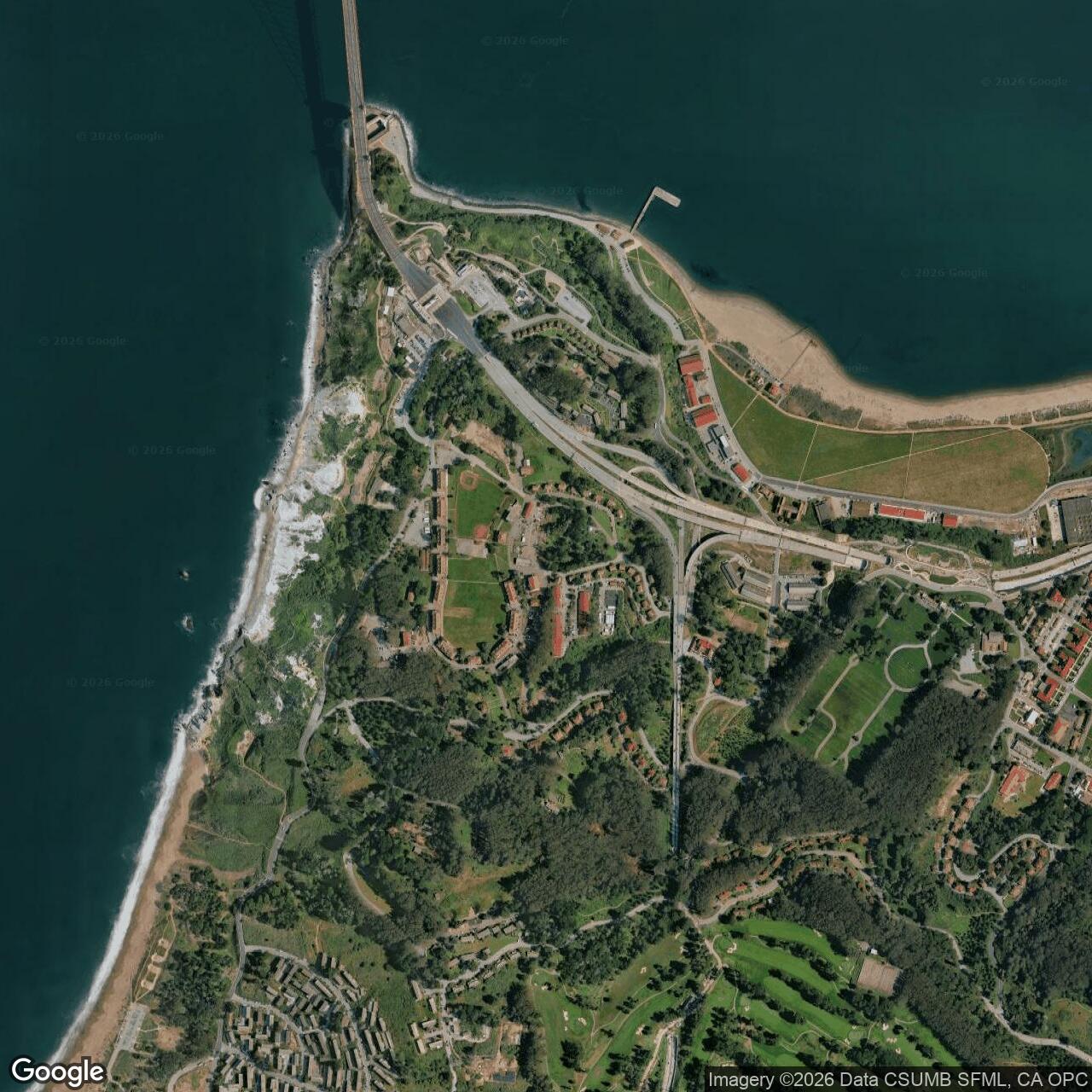
Fort Winfield Scott Army Base, San Francisco California
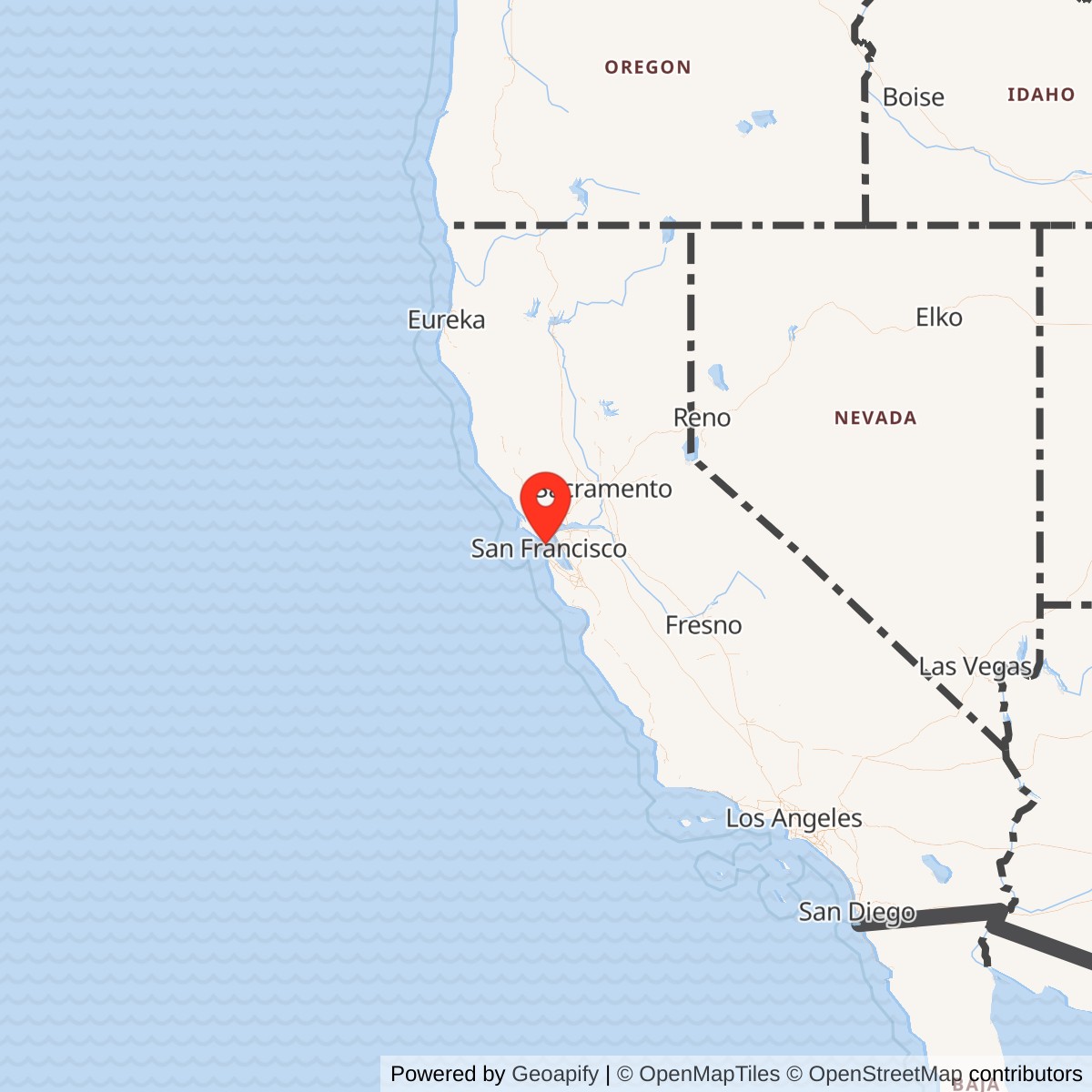
Longitude: -122.4728
Official Base Website: Fort Scott and the Presidio
Current Role: Presidio national park site; historic parade ground, Mission Revival barracks, Fort Scott Field, Presidio Nursery/native plant restoration, public access, events, and rehabilitation/adaptive-reuse planning.
Fort Winfield Scott was a U.S. Army coast-artillery post, harbor-defense headquarters, antiaircraft and Nike missile administrative site, and Presidio district in the western part of the Presidio of San Francisco. The Army established it as a separate coast-artillery post on 1912-06-19, after more than two decades of effort to create a purpose-built garrison for the soldiers who manned the modern concrete batteries around the Golden Gate. The post's active Army identity ended with the Presidio's closure on 1994-09-30 and its transfer into the national park system on 1994-10-01. Fort Winfield Scott is therefore inactive as an Army installation, but it survives as a preserved historic district and adaptive-reuse landscape within the Presidio national park site.
Fort Winfield Scott must be distinguished from the older Presidio main post and from Fort Point. The name "Fort Winfield Scott" was first applied to the masonry fort at Fort Point in 1882, then was released when that work became a Presidio sub-post in 1886. The name was later reused for the new Coast Artillery post completed in the western Presidio in the early twentieth century. The installation covered a compact but strategically placed campus near the coastal batteries. The modern Presidio Trust describes the core Fort Scott campus as about thirty acres, organized around ten Mission Revival-style barracks and a historic parade ground. Those barracks, the parade ground, nearby batteries, roads, and later Cold War administrative buildings formed a specialized military district within the broader Presidio reservation.
The post was named for Lieutenant General Winfield Scott, one of the most prominent officers in nineteenth-century U.S. Army history. That naming carried deliberate institutional weight. Scott had commanded the U.S. Army, fought in the War of 1812, led the Mexico City campaign in the Mexican War, and remained a national military figure at the beginning of the Civil War. By applying his name to the new coast-artillery post, the Army joined the old regular-army tradition of named forts to a new technical mission built around reinforced concrete, heavy guns, electric communications, minefields, plotting rooms, searchlights, and specialized artillery organizations.
Fort Scott's significance lies less in the small acreage of its campus than in the system it commanded. In 1922 it became headquarters of the Coast Defenses of San Francisco, and in 1925 that command became the Harbor Defenses of San Francisco. From that headquarters role Fort Scott controlled most of the Army's Bay Area seacoast-defense posts, including Forts Baker, Barry, Cronkhite, Miley, and Funston. The Presidio of San Francisco and Fort Mason did not fall under Fort Scott's command, even though they contained coastal-artillery or supporting facilities. Fort Scott was therefore both a garrison and the headquarters brain of a distributed defense system around one of the most important harbors on the Pacific Coast.
Mission Evolution
Fort Winfield Scott grew out of the late nineteenth-century transformation of American harbor defense. After the Civil War, masonry forts such as Fort Point no longer offered reliable protection against modern naval artillery. The nation's older seacoast system had been built for smoothbore cannon, close-range bombardment, and stone or brick works; by the 1880s and 1890s, steel warships, rifled guns, breech loading, high explosives, and longer-range fire had made that system obsolete. The Endicott-era response replaced older forts with dispersed concrete batteries, heavy guns on disappearing or barbette carriages, rapid-fire guns, submarine minefields, plotting rooms, fire-control stations, and electrical communications.
San Francisco Bay was a logical priority for this new system. It was the principal harbor of northern California, a military and commercial gateway to the Pacific, a point of embarkation for overseas operations, and a deep-water anchorage whose entrance narrowed at the Golden Gate. Any enemy force attempting to attack the bay from the Pacific would have to pass between the Presidio bluffs on the south and the Marin Headlands on the north. Fort Scott occupied the south-side command and garrison ground closest to the batteries that watched that channel.
The Army's need for Fort Scott emerged before the post formally existed. By the 1890s the Presidio already contained expanding coast-artillery works, but the older main post also housed infantry, cavalry, administrative, hospital, and other functions. Coast artillery was a specialized technical arm. Its troops needed barracks close to batteries, drill and instruction space, storage, offices, communications links, and a command environment adapted to heavy-gun defense. Congress authorized the creation of the Artillery Corps in 1901, the Coast Artillery Corps was created as a separate branch in 1907, and NPS records note that the Army sought an independent coast-artillery post at the Presidio for more than twenty years before the project was finished. Construction began in 1902; the new buildings were occupied before completion, and Fort Scott was fully occupied by 1912.
The post's first mission was to house, train, and command coast-artillery soldiers serving the Presidio batteries. NPS states that Fort Scott housed seventeen Endicott-era gun batteries constructed, armed, and manned at varying levels between 1891 and 1946. Those batteries were not all identical. Some mounted heavy 12-inch guns intended to defeat battleships; some mounted mortars designed to plunge shells onto decks and beaches; some held 6-inch or 3-inch rapid-fire weapons intended to protect minefields and prevent smaller craft from slipping through the defenses. Fort Scott's soldiers and officers lived in a designed military campus but worked in a larger technical landscape spread across the Presidio bluffs and Golden Gate approaches.
The mission expanded in the interwar period. On 1922-11-27, Fort Scott became headquarters of the Coast Defenses of San Francisco. On 1925-06-09, that term changed to Harbor Defenses of San Francisco. This change was more than nomenclature. The old idea of simply placing guns at the coast had matured into a command system responsible for the entire harbor-defense zone: batteries, minefields, searchlights, observation stations, communications circuits, fire-control data, ammunition supply, inspections, readiness, and subordinate posts. Fort Scott's value became command integration. It was where the Army connected the many individual batteries and forts into one coordinated defense.
World War II placed that headquarters mission under maximum pressure. After the Japanese attack on Pearl Harbor, the defense of West Coast ports became urgent. San Francisco Bay was not merely a civilian harbor; it was a military shipping, hospital, logistics, troop movement, and command region. Fort Mason served as a major port of embarkation, the Presidio became headquarters of the Western Defense Command and Fourth Army, and the Bay Area supported shipyards, depots, hospitals, and staging activity for the Pacific war. Fort Scott's Harbor Defenses of San Francisco mission therefore existed inside a wider wartime geography. Its guns, fire-control stations, antiaircraft defenses, mine plans, alerts, and communications protected a harbor on which the Pacific war effort depended.
After World War II the mission changed quickly. The old seacoast-artillery system was made obsolete by air power, amphibious doctrine, nuclear weapons, and guided-missile technology. On 1946-06-01 the Army transferred the Coast Artillery School from Fort Monroe, Virginia, to Fort Scott, but this was an institutional coda rather than a renewal. The school operated only briefly. Fort Scott was redesignated a sub-post of the Presidio in 1946, traditional coast-defense weapons were increasingly scrapped, and the Coast Artillery branch disappeared as a separate arm of the Army in 1950. The post's original reason for existing had vanished.
The Cold War gave the Fort Scott district a new military layer. The threat had shifted from enemy ships to enemy aircraft carrying nuclear weapons. In the San Francisco area, the Army built a ring of Nike missile sites around the Bay, including Battery Caulfield at Fort Winfield Scott. The Battery Caulfield launch site was assigned the Nike designation SF-89L. Since 1952, the 740th AAA Missile Battalion, part of the 30th Antiaircraft Artillery Group, managed Battery Caulfield from Fort Winfield Scott. In 1957 the Army constructed Presidio Building 1648 as the 740th AAA Missile Battalion headquarters and administration building. Fort Scott thus moved from harbor defense by gunfire to air defense by missiles, radar, operations rooms, security clearances, and classified material control.
Coast-Artillery System and Batteries
Fort Scott's history cannot be separated from the batteries around it. The post was a barracks and headquarters district, but the tactical work took place in concrete emplacements, magazines, plotting rooms, observation posts, and fire-control lines spread along the Presidio's coastal bluffs. The Endicott system replaced centralized stone fortresses with dispersed positions. That dispersion made sense militarily: guns could be hidden or protected by earth and concrete, fields of fire could overlap, and enemy fire could not disable the entire defense by striking one masonry work.
Battery Godfrey illustrates the early heavy-gun mission. Completed in 1895, it mounted three 12-inch guns on barbette carriages. NPS describes it as the first 12-inch artillery platform in the nation and a battery built to match or outrange contemporary battleships at ranges up to about ten miles. Its 12-inch guns could fire 1,070-pound shells, making Battery Godfrey one of the most powerful weapons positions associated with Fort Scott. It represented the blunt heavy-force side of the system: stop major enemy warships before they could enter the Golden Gate.
Battery Lancaster represented a different geographic problem. Completed in 1898, it held three 12-inch disappearing guns and was unique among the major Endicott batteries on the south shore because it aimed directly at the narrowest part of the Golden Gate. Its field of fire made it a critical choke-point battery. The later construction of the Golden Gate Bridge altered its physical setting; one emplacement became associated with the bridge visitor center area, and another was partly affected by the roadbed. Battery Lancaster's afterlife shows how military works around the bridge were absorbed into later civic, transportation, and park landscapes.
Battery McKinnon-Stotsenberg shows the mortar component of the system. Completed in 1898, it initially contained four mortar pits, each with four 12-inch mortars. These mortars could lob heavy projectiles in high arcs, reaching targets that flat-trajectory guns might not hit. Their 360-degree field of fire allowed them to target water, beaches, and land. In 1906 the battery was divided into eastern and western halves, Battery Stotsenburg and Battery William McKinnon. In 1917 four mortars were transferred to Battery Howe at Fort Funston, reflecting the Army's constant adjustment of weapons to changing requirements.
Battery Chamberlin is the most publicly legible surviving Fort Scott battery today. Built and armed in 1904 to protect underwater minefields laid outside the Golden Gate, it originally mounted four 6-inch guns on disappearing carriages. Those weapons could cover minefields and smaller vessels at a faster rate of fire than the great 12-inch batteries. The original guns were dismounted in 1917 for World War I use, and the battery was modified in 1920 for two 6-inch guns on simpler barbette carriages. During World War II the Sixth Coast Artillery Regiment manned the guns under camouflage netting. In 1977 the National Park Service installed a 6-inch gun and disappearing carriage received from the Smithsonian in one emplacement, making Battery Chamberlin a rare place where the physical mechanics of Endicott-era seacoast artillery can still be interpreted.
Battery Baldwin and the smaller rapid-fire works show the relationship between guns and mines. Completed in 1901, Battery Baldwin had two 3-inch, 15-pounder rapid-fire guns on balanced pillar mounts. Its purpose was to protect the inner harbor and mine defenses; its guns could fire rapidly at smaller vessels attempting to sweep or penetrate minefields. Once submarine mines moved outside the Golden Gate, the battery lost much of its purpose and was abandoned early. Later road construction and excavation complicated its survival, but NPS documentation notes that Caltrans uncovered the disarmed battery during Presidio Parkway work.
Other batteries associated with Fort Scott, including Blaney, Boutelle, Cranston, Crosby, Dynamite, Howe-Wagner, Marcus-Miller, Saffold, Sherwood, and Slaughter, formed a layered tactical landscape. Some were heavy batteries; some were smaller works; some were removed, buried, modified, or reused. The important point is that Fort Scott's military footprint was not limited to its parade ground. It was an integrated post-battery system. Barracks and headquarters sat inland; batteries occupied bluffs, dunes, and points of tactical advantage; fire-control systems linked observers to plotting rooms and guns; and the whole set of works functioned as a single defensive machine.
World War I and the Interwar Command Post
World War I affected Fort Scott in two ways. First, it raised the general readiness of American harbor defenses even though no enemy fleet attacked San Francisco. Second, it pulled weapons and trained artillery resources toward overseas and national requirements. Several American coast-defense guns were dismounted during the war for potential use elsewhere, and some Fort Scott batteries lost original weapons in that process. Battery Chamberlin's original 6-inch guns were removed in 1917; two of Battery Lancaster's 12-inch guns went to Watervliet Arsenal for use elsewhere, while the third later went to Battery Chester at Fort Miley. This movement of weapons shows that fixed coast artillery was not entirely fixed in wartime practice. The Army used harbor defenses as a reserve of heavy ordnance and trained artillery capacity.
The interwar years made Fort Scott a command center more than a construction frontier. The post had already received its principal Mission Revival campus. The nearby batteries were largely complete. What changed was the language and organization of command. The Artillery District of San Francisco became Coast Defenses of San Francisco and then Harbor Defenses of San Francisco. This meant Fort Scott's officers had to think about a geographically dispersed region, not simply their own post. They oversaw readiness, training, inspection, ammunition, personnel, target practice, communications, and maintenance for posts across both sides of the Golden Gate and elsewhere in the Bay Area.
During this period Fort Scott also formed part of a larger Presidio that had become a major Pacific-facing Army installation. The Presidio had already supported soldiers moving to the Philippines during the Spanish-American and Philippine-American War era. It contained Letterman hospital functions, Crissy Field aviation activity, the main post, cavalry and infantry legacies, and higher headquarters. Fort Scott was distinct, but never isolated. It was a specialized coast-artillery headquarters embedded inside a wider Army reservation that handled multiple missions.
World War II Mission and Activity
Fort Scott entered World War II as headquarters of a mature harbor-defense system at a moment of intense fear on the Pacific Coast. The attack on Pearl Harbor on 1941-12-07 transformed West Coast defense planning. San Francisco Bay was a vital port and logistics region, and the possibility of enemy submarines, raids, sabotage, or air attack shaped Army planning. The Presidio and its associated posts dug foxholes, heightened security, expanded antiaircraft measures, and supported a Western Defense Command mission that included both military defense and controversial domestic wartime policies.
Fort Scott's World War II role was to command and sustain seacoast defense rather than to operate as a single battlefield position. Its headquarters had to coordinate weapons whose locations ranged across the Presidio, Fort Funston, Fort Miley, Fort Baker, Fort Barry, Fort Cronkhite, and related defense sites. Some batteries guarded the Golden Gate directly; others covered minefields, beaches, approaches, or inner harbor routes. Older Endicott batteries remained in service where useful, while newer 16-inch casemated batteries elsewhere in the harbor defense system reflected the final generation of heavy seacoast guns.
The system depended on observation and information as much as on gun tubes. Coast artillery did not simply point a cannon toward the ocean. It required observers, range finders, azimuth instruments, plotting boards, telephone circuits, meteorological data, time intervals, ammunition handling, searchlights, fire-control stations, and command procedures. Fort Scott's headquarters role was therefore operationally sophisticated. If an enemy vessel or aircraft threatened the Bay Area, the response would have depended on communications, plotting, and command decisions moving through this network.
The post also remained a troop and training environment. Artillery soldiers needed drill, maintenance, readiness inspections, security details, weapons practice, and technical instruction. The parade ground and barracks continued to provide the familiar rhythm of military life, but the wartime mission around them was more urgent than ceremonial. Fort Scott soldiers were part of a defensive posture that protected troop movements, ship repair, hospital flows, and supply movement supporting the Pacific war.
The Sixth Coast Artillery Regiment's World War II association with Battery Chamberlin gives a useful example of the wartime routine. The battery's two guns were manned and camouflaged against potential air attack. By then many of the older batteries had reached the edge of obsolescence, but camouflage, readiness, and continued manning show that the Army could not instantly discard older weapons during an emergency. World War II produced a layered defense: old batteries, new batteries, antiaircraft guns, radar and observation systems, mine planning, and security measures overlapped until the threat and technology changed again.
The end of the war brought an abrupt reassessment. The United States emerged with overwhelming naval and air power, atomic weapons, and new missile technology. Enemy battleships attempting to force the Golden Gate were no longer the central problem. The Army still needed to defend American cities and military regions, but fixed coastal guns had lost their doctrinal primacy. Fort Scott's postwar Coast Artillery School phase therefore marked the institutional closing chapter of a mission that had justified the post's creation.
The Coast Artillery School and the End of the Gun Era
The transfer of the Coast Artillery School from Fort Monroe to Fort Scott on 1946-06-01 is one of the most historically revealing episodes in the post's history. Fort Monroe in Virginia had long been associated with Army artillery education and coast-defense tradition. Moving the school to Fort Scott placed the Army's professional coast-artillery institution at one of the country's great harbor-defense posts, but the timing was fatal. The move occurred just as aircraft, missiles, nuclear weapons, and new amphibious doctrine had made permanent seacoast artillery appear obsolete.
Fort Scott was redesignated a sub-post of the Presidio in 1946, ending its long independent identity. The school did not develop into a lasting postwar center. Instead, the Coast Artillery branch disappeared as a separate arm in 1950. The closing of the branch did not simply mean that guns were removed. It meant that an entire professional culture-one built around disappearing guns, mortar pits, mine casemates, searchlights, plotting rooms, fire-control arithmetic, and harbor-defense districts-ceased to exist as a separate Army identity.
For Fort Scott, that transition was profound. The post had been designed around the Coast Artillery Corps. Its barracks, parade ground, batteries, and headquarters reflected the assumption that the Army would always need specialized seacoast artillerymen at the Golden Gate. After 1950 that assumption was gone. The same buildings remained useful, but the organizing mission changed from heavy coastal gunfire to air defense, administration, housing, and eventually general Presidio support.
Cold War Nike and Battery Caulfield
Fort Scott's Cold War role continued the defense of San Francisco Bay, but with new weapons and a new threat. After World War II, the United States confronted the possibility of Soviet long-range aircraft carrying nuclear weapons. National defense shifted toward air warning, antiaircraft guns, radar, guided missiles, and later ballistic-missile defense. In the Bay Area, the Army built a ring of Nike missile sites intended to protect the metropolitan region, military installations, ports, and strategic infrastructure.
Battery Caulfield was Fort Scott's Nike site. The Army assigned it the designation SF-89L. NPS identifies it as the only Nike battery named after an Army officer: Lieutenant Colonel Thomas D. Caulfield, a Korean War officer who died at Letterman Army Hospital. The naming itself shows how Fort Scott's Cold War layer remained tied to the Presidio medical and military community even as the weapons changed.
The Nike system required much more than a launch pad. A complete Nike site included missiles, launchers, magazines, radars, an Integrated Fire Control area, operations and command functions, communications, security, and trained personnel. The system used radar and computers to track incoming aircraft and guide missiles toward targets. Nike Ajax had a range of up to about thirty-seven miles, while later Nike Hercules could reach farther and carry more destructive warheads. Battery Caulfield, however, was not upgraded to Nike Hercules. Its Nike Ajax missile function was inactivated by 1962, and the last Nike Ajax sites in the United States were inactivated in 1964.
Building 1648 is the key surviving administrative symbol of this phase. Built in 1957, it served as the headquarters and administration building for the 740th Anti-Aircraft Artillery Missile Battalion at Battery Caulfield. The building housed the S-2 Security Intelligence branch and the S-3 Operations branch. Personnel there handled security clearances, personal histories, fingerprints, classified material, operations, missile-related offices, supply, storage, meeting space, and command administration. NPS notes that all classified material related to the Presidio's Nike missile program funneled through this office, while the men who worked the launch site and Integrated Fire Control area lived across the street in Fort Scott barracks.
The 740th AAA Missile Battalion was redesignated when the Army changed its missile organization. After 1958 it became the 4th Missile Battalion, 61st Artillery, which retained control of Battery Caulfield Nike operations until 1969. After 1969 the Headquarters Battery of the 1st Battalion, 250th AAA Regiment, California National Guard, moved into Building 1648 and remained until 1974. The building then passed to an intelligence use when the 902nd Military Intelligence Group's San Francisco Military Intelligence Detachment occupied it for nearly two decades. This sequence shows how Fort Scott's Cold War utility did not end at the launch-site fence. The district provided secure administrative space, housing, and office infrastructure for successive air-defense and intelligence missions.
By the early 1970s the Nike system itself was becoming obsolete. Soviet intercontinental ballistic missiles could fly higher and farther than Nike missiles could address, while national defense priorities shifted toward anti-ballistic missile concepts and strategic deterrence. The Army declared the Nike missile system obsolete by 1974 and removed the last missiles from service in 1979. Fort Scott's missile-era mission thus ended much as its gun-era mission had ended: a once-modern defense system was overtaken by a new strategic technology.
Units, Organizations, and Systems
The Coast Artillery Corps was Fort Scott's founding military community. The post existed because the Coast Artillery mission had become too technical and too important to be handled as a minor appendage of an older garrison. Coast artillerymen operated heavy guns, mortars, rapid-fire guns, mine-defense guns, searchlights, communications systems, and fire-control instruments. Their work combined engineering, mathematics, artillery drill, harbor geography, and command discipline.
The Artillery District of San Francisco was the early headquarters context. Fort Scott was established as a separate coast-artillery post and district headquarters in 1912, placing it at the command level above individual batteries. In 1922 the command became Coast Defenses of San Francisco; in 1925 it became Harbor Defenses of San Francisco. These successive titles reflect changes in Army terminology, but they also show the maturing of a regional defense system.
The Harbor Defenses of San Francisco were Fort Scott's most important operational system. They included multiple posts, batteries, and supporting works around the Bay Area. Forts Baker, Barry, Cronkhite, Miley, and Funston fell under Fort Scott's command at different times, while the Presidio and Fort Mason stood outside that specific command arrangement. This means Fort Scott should be read as a headquarters installation even when other places held many of the individual guns.
The Sixth Coast Artillery Regiment is one of the important World War II units tied to the Fort Scott battery landscape, including Battery Chamberlin. Its presence connects the post to the wartime manning of the Presidio's seacoast weapons. The regiment's work represented the final active-gun phase of Fort Scott's coastal-defense mission.
The U.S. Army Coast Artillery School briefly defined the post after World War II. Its arrival from Fort Monroe on 1946-06-01 marked Fort Scott as the temporary institutional home of coast-artillery education. Its short duration underscores the speed with which the branch disappeared after the war.
The 30th Antiaircraft Artillery Group and 740th AAA Missile Battalion brought Fort Scott into the Nike system. The 740th managed Battery Caulfield from Fort Scott beginning in 1952, and Building 1648 was constructed to support battalion headquarters, security intelligence, and operations. The 4th Missile Battalion, 61st Artillery continued the mission after redesignation. The California National Guard's 1st Battalion, 250th AAA Regiment then occupied Building 1648 after 1969.
The 902nd Military Intelligence Group and San Francisco Military Intelligence Detachment represent Fort Scott's late Cold War administrative reuse. Their nearly twenty-year occupation of Building 1648 and installation of a secure vault show how a former missile-administration building could be adapted for intelligence work. This is an important final military layer before the Presidio's closure and transfer.
Facilities and Physical Layout
Fort Scott's built environment was one of the Presidio's major early twentieth-century construction achievements. The Mission Revival campus introduced a style that became visually associated with the Presidio: white walls, red-tile roofs, balanced forms, and an orderly military setting adapted to California architectural imagery. The core of the campus consisted of ten barracks around a horseshoe-shaped parade ground. That spatial organization created a self-contained post identity even though Fort Scott sat within the larger Presidio reservation.
The parade ground was the center of daily Army life. It was a place for formations, inspections, ceremonies, drill, athletic and unit activity, and the visible exercise of command. Around it, barracks housed the artillerymen who operated nearby batteries. Presidio Trust interpretation notes that Fort Scott housed and trained about 1,000 artillerymen. This makes the district more than an administrative office cluster. It was a living garrison, a technical-training environment, and a command post.
The batteries formed the outer tactical layer. Battery Chamberlin at Baker Beach, Battery Godfrey on the coastal bluffs, Battery Lancaster near the Golden Gate Bridge approach, Battery McKinnon-Stotsenberg near Rob Hill, and other Fort Scott batteries were tied to the garrison by roads, trails, communications, orders, and personnel. The soldier might sleep in a Mission Revival barracks, drill on the parade ground, report to headquarters, then man a concrete battery facing the Pacific. The post worked because those pieces were close enough to operate as one system.
Building 1648 created a distinct Cold War layer. It was a one-story rectangular concrete building with a central corridor and offices on both sides. Its internal arrangement reflected Nike administration: operations, intelligence, missile-related offices, message and mail spaces, command rooms, supply, storage, and later a secure vault. The building's history is important because it documents the move from open parade-ground military culture to classified Cold War operations. The same Fort Scott barracks that once housed coast artillerymen later housed Nike personnel who worked across the street in a concrete missile-administration building.
The current Fort Scott landscape includes public, ecological, and adaptive-reuse functions. The historic parade ground is now an open landscape supporting native plants and wildlife. The Presidio Nursery grows native plants for restoration sites across the park. Fort Scott Field and nearby public areas support recreation and events. Some buildings have been reused, while others have awaited rehabilitation. The district's military layout remains visible, but its function has changed from defense to preservation, access, restoration, and managed reuse.
Closure, Transfer, and Current Status
Fort Winfield Scott's Army closure was part of the larger end of the Presidio as an active military post. The Presidio served as a military installation under Spain, Mexico, and the United States before becoming part of Golden Gate National Recreation Area after the Army departed. Congress had created Golden Gate National Recreation Area in 1972 and provided that the Presidio would become part of it if the military no longer needed the post. At the end of the Cold War, the Presidio was selected for closure in 1989.
On 1994-09-30, the Army lowered its flag at the Presidio for the last time. On 1994-10-01, the former post joined the national park system as part of Golden Gate National Recreation Area. In 1996 Congress created the Presidio Trust to steward most of the Presidio in partnership with the National Park Service and the Golden Gate National Parks Conservancy. Fort Scott's current management and reuse therefore sit inside a special federal park model rather than ordinary surplus-property disposal.
Today Fort Winfield Scott is inactive as an Army post. Its status is closed and transferred. The district remains within the Presidio, a National Historic Landmark landscape with hundreds of historic structures across the broader post. Fort Scott itself is a historic thirty-acre campus in the western Presidio, with Mission Revival barracks, a parade ground, nearby batteries, public access, natural-resource restoration, and ongoing rehabilitation planning. Its official public identity is now park, preservation, and reuse rather than military command.
The modern setting keeps the military story unusually visible. A visitor can stand at Fort Scott's parade ground, walk to Battery Chamberlin, look toward Battery Godfrey and the Golden Gate, and understand why the Army placed a Coast Artillery headquarters there. The post is no longer armed, but the relationship between ground, view, architecture, and defense remains legible.
Chronology
- 1882 The name Fort Winfield Scott was first given to the masonry fort at Fort Point.
- 1886 The older Fort Point work became a sub-post of the Presidio, freeing the name Fort Winfield Scott for later reuse.
- 1891-1946 Seventeen Endicott-era batteries associated with the Fort Scott district were constructed, armed, and manned at varying levels.
- 1895 Battery Godfrey was completed with three 12-inch guns on barbette carriages.
- 1898 Battery Lancaster was completed with three 12-inch disappearing guns aimed toward the narrow Golden Gate channel.
- 1898 Battery McKinnon-Stotsenberg was completed as a 12-inch mortar battery.
- 1901 Congress authorized the Artillery Corps, a key institutional step toward specialized coast-artillery organization.
- 1901 Battery Baldwin was completed with two 3-inch rapid-fire guns for inner-harbor and mine-defense protection.
- 1902 Construction began on the new coast-artillery post in the western Presidio.
- 1904 Battery Chamberlin was completed and armed with four 6-inch guns to protect minefields outside the Golden Gate.
- 1905 By this year, NPS notes that twelve reinforced-concrete artillery batteries had been built along the San Francisco headlands to supplement bay defenses.
- 1907 The Coast Artillery Corps was created as a specialized Army branch.
- 1909-1912 Presidio Trust interpretation dates the construction of the Fort Scott campus to this period.
- 1910 Coast Artillery soldiers began occupying the new Fort Scott buildings before final completion.
- 1912-06-19 Fort Winfield Scott was formally established as a separate coast-artillery post and headquarters of the Artillery District of San Francisco.
- 1912 The Fort Scott Mission Revival campus was fully occupied.
- 1917 Original guns were removed from Battery Chamberlin for World War I use.
- 1917 Two Battery Lancaster guns were removed and shipped to Watervliet Arsenal; the third later went to Battery Chester at Fort Miley.
- 1917 Four mortars were transferred from Battery McKinnon-Stotsenberg to Battery Howe at Fort Funston.
- 1920 Battery Chamberlin was modified to receive two 6-inch guns on barbette carriages.
- 1922-11-27 Fort Scott was designated headquarters of the Coast Defenses of San Francisco.
- 1925-06-09 Coast Defenses of San Francisco was renamed Harbor Defenses of San Francisco.
- 1941-12-07 The Japanese attack on Pearl Harbor made West Coast defense an urgent wartime priority.
- 1941-1945 Fort Scott served as headquarters for much of the Bay Area harbor-defense system during World War II.
- 1943 The War Department ordered Battery Godfrey and other obsolete batteries salvaged.
- 1943 Battery McKinnon-Stotsenberg was also ordered salvaged as no longer needed.
- 1946-06-01 The U.S. Army Coast Artillery School transferred from Fort Monroe, Virginia, to Fort Scott.
- 1946-06-25 Fort Scott's independent post role ended when it was designated a sub-post of the Presidio of San Francisco.
- 1948 Traditional coastal defense had become obsolete, and Fort Scott became headquarters for the 30th Artillery Group (antiaircraft).
- 1948 Battery Chamberlin was disarmed after Coast Artillery deactivation.
- 1950 The Coast Artillery branch disappeared as a separate Army arm.
- 1952 The 740th AAA Missile Battalion began managing Battery Caulfield from Fort Winfield Scott as part of the 30th Antiaircraft Artillery Group.
- 1954 The Army began constructing permanent Nike launch sites around the San Francisco Bay Area.
- 1957 Presidio Building 1648 was constructed as the 740th AAA Missile Battalion headquarters and administration building for Battery Caulfield/SF-89L.
- 1958 The Army began upgrading many Nike Ajax sites to Nike Hercules, but Battery Caulfield was not upgraded.
- 1958 The 740th AAA Missile Battalion was inactivated and redesignated as the 4th Missile Battalion, 61st Artillery.
- 1962 The Nike Ajax missile function at Battery Caulfield was inactivated.
- 1964 The last Nike Ajax sites in the United States were inactivated.
- 1969 The 4th Missile Battalion, 61st Artillery ended its control of Battery Caulfield Nike operations.
- 1969 Headquarters Battery, 1st Battalion, 250th AAA Regiment, California National Guard moved into Building 1648.
- 1974 The Army declared the Nike missile system obsolete.
- 1974 The 902nd Military Intelligence Group's San Francisco Military Intelligence Detachment moved into Building 1648.
- 1977 The National Park Service received a 6-inch gun and disappearing carriage from the Smithsonian Institution and installed them at Battery Chamberlin.
- 1979 The last Nike missiles were removed from national service.
- 1989 The Presidio was selected for closure at the end of the Cold War.
- 1992 The Military Intelligence Battalion moved out of Building 1648 as the Presidio transfer approached.
- 1993-1996 The U.S. Park Police occupied Building 1648 for a short post-Army transitional period.
- 1994-09-30 The Army lowered its flag at the Presidio for the last time.
- 1994-10-01 The Presidio entered the national park system as part of Golden Gate National Recreation Area.
- 1996 Congress created the Presidio Trust to steward the Presidio in partnership with the National Park Service and the Golden Gate National Parks Conservancy.
- Present Fort Winfield Scott remains a closed former Army post and preserved historic district within the Presidio national park site.