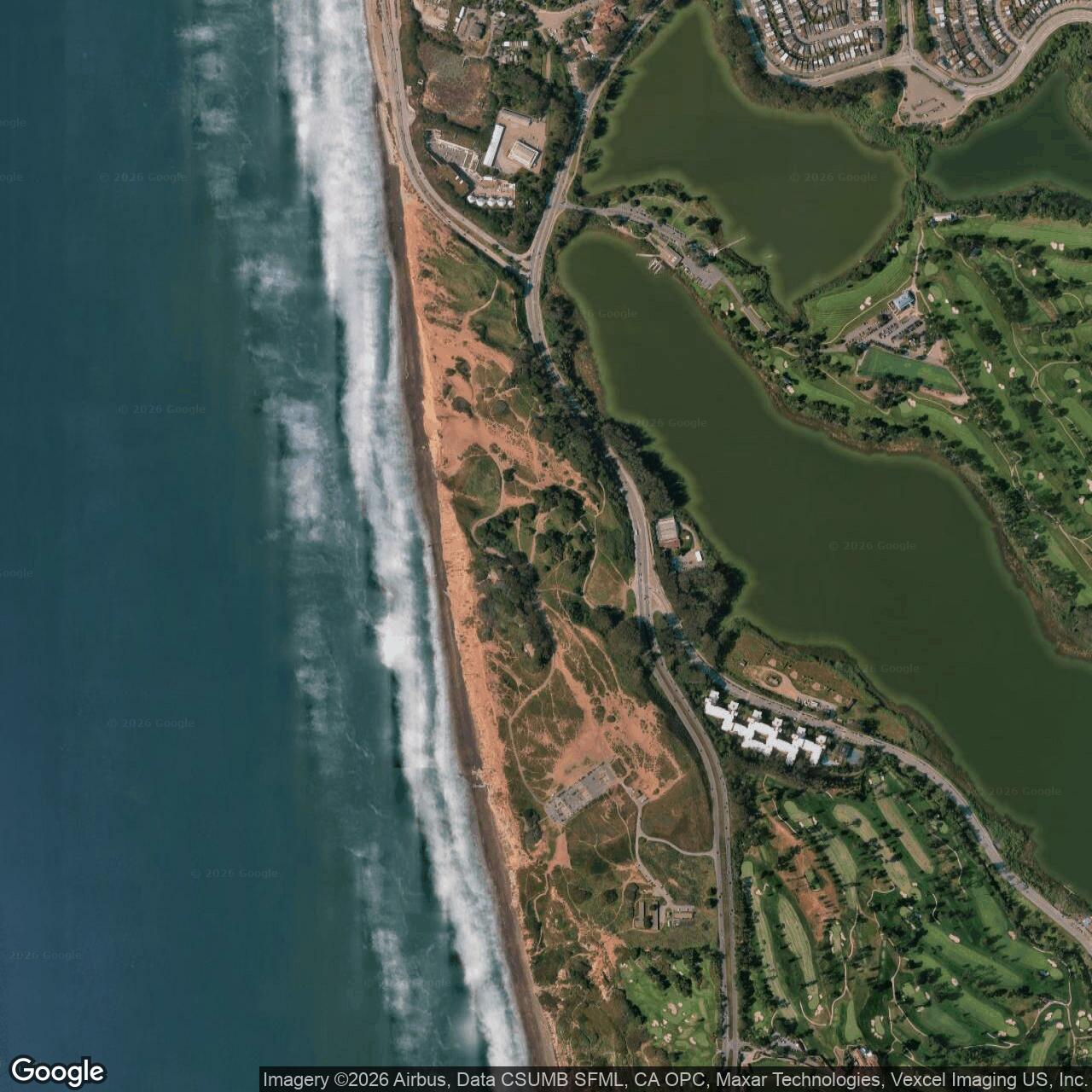
Fort Funston Army Base, San Francisco California
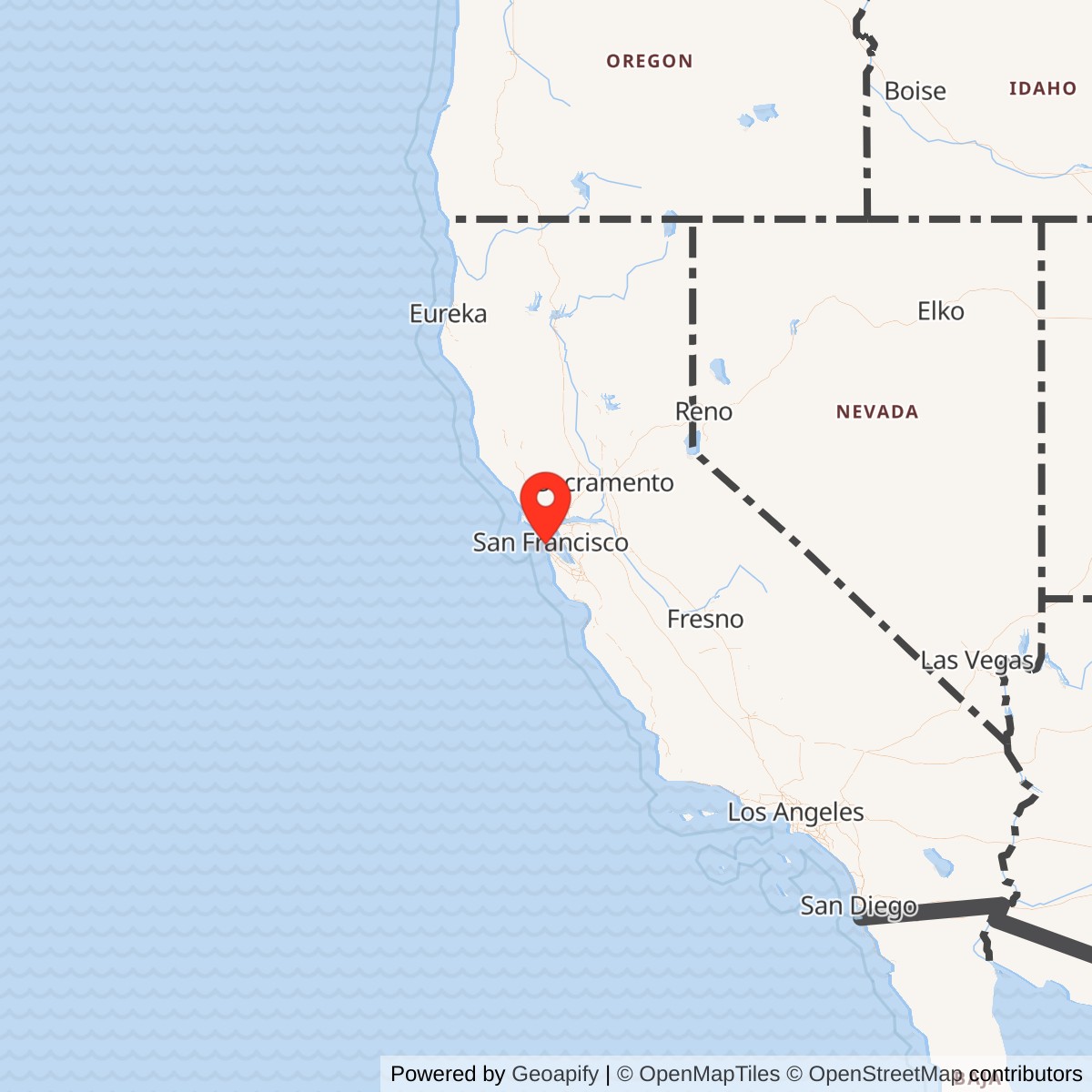
Longitude: -122.5027
Official Base Website: https://www.nps.gov/goga/planyourvisit/fortfunston.htm
Current Role: Golden Gate National Recreation Area; public coastal park, trails, hang-gliding area, dog-walking landscape, dune and bank-swallow habitat, and preserved Battery Davis/Nike-era military landscape.
Fort Funston was a U.S. Army coastal-defense and air-defense installation on the Pacific bluffs of southwest San Francisco. Its military life began in 1900, when the federal government acquired the Lake Merced Military Reservation as one more link in the Army's effort to defend San Francisco Bay from seaborne attack. The installation later took the name Fort Funston in 1917, after Major General Frederick N. Funston, the controversial but famous Army commander remembered in San Francisco for his role in the 1906 earthquake and fire relief effort. As an Army post, Fort Funston was active through the World War I, interwar, World War II, and Cold War periods, then closed as a military installation in 1963 and was transferred to the Golden Gate National Recreation Area in 1974.
The identity of the site is dual. The historic Army fort is inactive, closed, and transferred. It no longer functions as an Army installation. The current Fort Funston is a public landscape within Golden Gate National Recreation Area, administered by the National Park Service as open space, wildlife habitat, trail land, recreational coastline, and a preserved but eroding military-history site. The 16-inch Battery Davis remains the dominant historic structure, while Nike missile magazines lie beneath the main parking area and former missile-era barracks have been reused for park and environmental purposes. The name therefore still appears on maps and visitor signs, but the military post ended in the twentieth century.
Fort Funston's location made it different from the older batteries inside the Golden Gate. Fort Point, Alcatraz, the Presidio batteries, Fort Mason, and later Fort Baker and Fort Barry were all tied closely to the harbor entrance itself. Fort Funston sat farther south, on open Pacific frontage beyond the southern edge of Ocean Beach. From those wind-cut bluffs, guns could cover offshore approaches before an enemy ship reached the Golden Gate. The post's field of fire faced the ocean rather than the inner bay, and that made it especially useful once twentieth-century naval guns gained the range to bombard coastal cities from far offshore. The site was also connected to Lake Merced, the Ocean View railroad corridor, the Great Highway, and the western edge of San Francisco, making it isolated enough for guns and later missile launchers while still tied to the Army's San Francisco command system.
The physical setting shaped every phase of the fort's history. The bluffs rise about 200 feet above the Pacific and are made of unstable sand and sedimentary material. The wind, fog, ocean, dunes, and erosion were not background scenery; they were operational facts. The Army had to build on shifting ground, protect concrete structures with earth and sand, and later watch as erosion exposed, buried, or destroyed parts of the fort. Today that same setting explains why Fort Funston is one of the few places in San Francisco where active sand dunes remain, why the bluffs provide habitat for threatened bank swallows, why the site is nationally known for hang gliding, and why preserved military fabric is vulnerable to collapse.
Mission Evolution
The original Lake Merced Military Reservation was part of the late nineteenth-century and early twentieth-century modernization of American seacoast defense. After the Endicott Board reforms of the 1880s, the Army rebuilt harbor defenses around disappearing guns, mortars, controlled mines, searchlights, plotting stations, electrical communications, and carefully sited fire-control systems. San Francisco was one of the most important American harbors on the Pacific, and the Army treated it accordingly. Early planning at Lake Merced envisioned heavy mortar batteries placed between the ocean and the lagoon, adding southern coverage to the Coast Defenses of San Francisco.
For years, however, little permanent construction followed. The reservation existed before it became a fully formed post. The decisive change came with American entry into World War I in 1917. The Army expanded the ground by adding about 150 acres, raised the flag over the new post, placed troops in tents, and began building frame barracks and gun positions. Contemporary descriptions emphasized the unfinished, improvised quality of the camp. Soldiers assigned to the new fort lived in temporary conditions while constructing the very post they would occupy. That was typical of wartime mobilization, but it also reveals Fort Funston's first working character: it was not an ornamental coast fort, but a rough, rapidly built extension of the harbor-defense system.
The first operational batteries reflected World War I urgency and the reuse of older weapons. Battery Howe mounted 12-inch mortars, and Battery Bruff mounted 5-inch pedestal guns. These batteries extended the defensive coverage southward from the Presidio. They were part of the older logic of harbor defense, in which heavy guns and mortars guarded channels and approaches against armored warships. Yet they also arrived at the end of an era. Battery Bruff was declared obsolete very quickly, and Battery Howe outlasted some of the older "permanent" mortar works only because the Army's changing weapons inventory and budget cycles did not always move at the same speed as strategic logic.
The interwar mission shifted toward longer-range ocean defense and antiaircraft protection. Fort Funston received antiaircraft guns in the 1920s, reflecting the growing realization that aircraft were becoming a serious threat to fixed coastal installations. The most important change, however, was the decision to build Battery Richmond P. Davis. During the 1920s and 1930s, the Army obtained large naval guns made available by naval-arms limitation and changes in battleship construction. At Fort Funston, this produced one of the most important West Coast seacoast artillery projects of the period: a two-gun 16-inch battery intended to reach far out into the Pacific.
Battery Davis was constructed in the late 1930s and completed as a massive concrete-and-earth structure. Its 16-inch guns could fire a shell roughly 25 miles out to sea. More importantly, Battery Davis was a prototype. The Army was moving away from open barbette batteries and toward casemated heavy-gun emplacements that could better resist air attack. Battery Davis, together with Battery Townsley across the Golden Gate at Fort Cronkhite, became the San Francisco expression of this last generation of large seacoast artillery. These guns were meant to stop or deter enemy battleships before they could bombard San Francisco or force the harbor. They embodied the Army's final prewar faith that heavy coast artillery still had a decisive role in protecting American ports.
World War II gave Fort Funston its largest conventional military mission. After Pearl Harbor, the possibility of Japanese raids or bombardment made San Francisco's harbor defenses feel urgent. Soldiers manned lookouts, operated listening and detection equipment, maintained 24-hour watches, and prepared Battery Davis and associated weapons for combat that never came. The garrison expanded, and temporary barracks and support buildings multiplied. Fort Funston became the southern heavy-gun anchor of the ocean-facing defense, paired conceptually with Battery Townsley in the Marin Headlands and integrated into the wider Harbor Defenses of San Francisco.
The war also made the fort more complicated than a single battery. Battery Davis was the showpiece, but Fort Funston included temporary and auxiliary batteries, 155-mm guns on Panama mounts, antiaircraft positions, observation points, plotting rooms, switchboard spaces, searchlight and fire-control relationships, barracks, service buildings, and communications links to the larger defense command. The site's mission was not simply to shoot. It was to detect, identify, plot, communicate, illuminate, range, aim, supply, maintain, and coordinate. That system work is what made a gun battery militarily meaningful.
At the close of World War II, the seacoast artillery mission collapsed quickly. Airpower, submarines, guided missiles, nuclear weapons, and long-range strike systems made fixed heavy guns obsolete. Battery Davis's guns were removed and scrapped in the late 1940s, a process remembered in NPS materials as "Operation Blowtorch." The concrete remained, but the core weapon mission was gone. Fort Funston did not close immediately, because its location still mattered for air defense, but the old coast-artillery world had ended.
The Cold War mission shifted from stopping battleships to stopping bombers. Fort Funston hosted antiaircraft gun activity in the early Cold War, including radar-controlled 90-mm weapons, and then became part of the San Francisco Nike missile defense area. Nike missile sites ringed major cities, ports, and defense-industrial areas as the Army's last line of defense against Soviet bombers. Fort Funston housed Nike site SF-59, one of the Bay Area Nike sites. The main Fort Funston parking area now covers former Nike launch magazines, and the missile-men's barracks were later reused for park purposes. This Nike role was the last major military mission of the post. Fort Funston's Army role ended in 1963, and the transferred landscape became part of Golden Gate National Recreation Area in 1974.
Operational Role
Fort Funston's operational role was always tied to distance. Earlier San Francisco defenses concentrated on the strait and inner approaches, but twentieth-century naval warfare made it possible for enemy ships to stand offshore and fire at long range. A fort on the outer Pacific bluffs helped push the defensive perimeter seaward. Battery Davis could reach targets far beyond the visible surf line, and its southern position widened the defended ocean frontage. In a harbor-defense system, that mattered as much as the battery's individual power. Fort Funston created an additional angle of fire, complicated enemy approach routes, and gave the Harbor Defenses of San Francisco a heavy-gun position south of the Golden Gate.
The earliest operational phase was modest and rough. World War I soldiers at Fort Funston lived in tents, built barracks, and operated or prepared batteries at a site still becoming a post. The Army was using the reservation as an expansion point for coast defense at the same time it was rushing to mobilize for war. The daily work involved construction, guard duty, drill, gun service, maintenance, communications, and adaptation to a difficult sand-and-fog environment. The post did not fire in anger, but that does not make the mission unimportant. The purpose of coast artillery was deterrence and denial. A battery that never fired might still succeed if its presence shaped enemy assumptions or if the war ended before attack came.
Battery Howe and Battery Bruff illustrate that transitional role. They represented a continuation of older coast-artillery types, including mortars and smaller-caliber rapid-fire guns. Mortars were intended to lob heavy projectiles onto the decks of armored ships, while smaller guns could cover faster craft or secondary approaches. But technology and doctrine were moving fast. The Army's rapid declaration of obsolescence for some early Fort Funston armament reveals the problem facing the Coast Artillery Corps after World War I: weapons built for one tactical problem were aging out almost as soon as they reached newer outlying sites.
Battery Davis changed the scale of operations. Moving, emplacing, protecting, and operating 16-inch guns required rail movement, heavy engineering, ammunition handling, magazine systems, hoists, plotting rooms, power, communications, and specialized crews. The guns themselves were enormous naval weapons adapted to Army coast defense. Their purpose was not close-in harbor work but long-range ocean denial. A 16-inch shell could weigh over a ton, and the battery's range meant that the gun crews were connected to observers, range-finders, and command posts that extended far beyond the immediate gun pit. Battery Davis was a weapon, but also an engineered system.
During World War II, Fort Funston's operational tempo increased. Soldiers manned concrete lookouts on continuous shifts after Pearl Harbor, watching the water and sky for enemy vessels or aircraft. Listening devices and other detection methods supported the garrison's effort to identify threats before they came within effective range. The fort's barracks and temporary buildings housed the men who kept that system operating. The garrison included elements of the Coast Artillery forces assigned to the Harbor Defenses of San Francisco, and the fort's guns and observation points were part of a layered system that included the Presidio, Fort Miley, Fort Winfield Scott, Fort Baker, Fort Barry, Fort Cronkhite, Fort McDowell, controlled minefields, searchlights, and command communications.
The practical work of operating Fort Funston in wartime was repetitive and technical. Gun crews drilled. Plotting-room personnel translated observations into firing data. Communications personnel maintained lines and switchboards. Ammunition personnel managed powder and projectiles. Searchlight and observation teams coordinated with command posts. Antiaircraft crews prepared for air raids that might strike the harbor or the batteries themselves. The existence of 86 temporary barracks and other wartime buildings by 1942 shows that Fort Funston had become a real garrison landscape, not just a concrete battery on a dune.
The fort's 155-mm Panama mounts added flexibility. Panama mounts were circular concrete-and-steel gun platforms that allowed mobile 155-mm guns to traverse more effectively. At Fort Funston they gave the Army a medium-caliber, more flexible coastal-defense component near Battery Davis. Their later partial destruction by cliff erosion also makes them one of the clearest examples of how the site's natural setting has consumed its military remains. The Historic American Engineering Record documentation of the Panama mounts records both their engineering importance and their vulnerability to the moving cliff line.
The postwar operational role was a bridge between coast artillery and guided missiles. Heavy guns were removed, but the site still had open land, existing military access, a view over the Pacific, and proximity to San Francisco. Antiaircraft gun units used the area in the 1950s, and NPS and public-domain image sources preserve the memory of radar-controlled 90-mm antiaircraft guns at Fort Funston. That period reflects the Army's search for a way to defend cities against high-speed aircraft before guided missiles fully replaced gun-based air defense.
Nike SF-59 completed the transition. Nike Ajax and later Nike Hercules systems were designed to intercept enemy bombers. The San Francisco Defense Area included a ring of Nike positions around the Bay Area, and Fort Funston was one of the southern coastal pieces of that ring. A Nike site required launch magazines, missile assembly and maintenance areas, radar and fire-control relationships, security, communications, crew quarters, and a connection to regional air-defense command. Unlike Battery Davis, whose guns faced ships at sea, SF-59 belonged to a nuclear-age network aimed upward at aircraft. The terrain was the same, but the threat had changed completely.
Units, Organizations, and Systems
Fort Funston's early organizational identity belonged to the Coast Defenses of San Francisco, later called the Harbor Defenses of San Francisco. This was not one fort acting alone. It was an integrated Army command that controlled multiple posts, batteries, mine facilities, observation stations, searchlights, communications centers, and fire-control networks around the Golden Gate. Fort Winfield Scott at the Presidio served as a central headquarters; Fort Funston was one of the outer ocean-facing posts that gave the system range and depth.
The Coast Artillery Corps shaped the post's daily military life. Coast Artillery soldiers were not simply infantrymen stationed near guns. They were specialists in heavy weapons, mechanical systems, fire control, electricity, communications, ammunition, plotting, range-finding, searchlights, and fixed-defense procedures. Fort Funston's batteries required that specialization. Battery Davis especially depended on men who could operate large guns safely and coordinate them with observation and plotting systems across a broad field of fire.
During the World War II emergency, Fort Funston was tied to the larger wartime Harbor Defenses of San Francisco and to Coast Artillery units manning the batteries around the bay. Publicly accessible summaries identify elements of the 18th Coast Artillery Regiment among the garrison during the period after Pearl Harbor. The exact composition of the garrison shifted with wartime reorganization, but the functional pattern is clear: gun batteries, antiaircraft batteries, fire-control detachments, communications personnel, maintenance units, and support troops all worked together to keep the fort operational.
The technical systems at Fort Funston mattered as much as unit names. Battery Davis depended on magazines, powder rooms, projectile handling, fire-control data, telephone and switchboard links, and protected access tunnels. Observation posts and base-end stations translated visual sightings into targeting information. Searchlights and acoustic or listening equipment helped detect possible naval or aerial threats. Antiaircraft positions added a second layer of defense. Fort Funston was therefore part of both a geographic system-the ring of San Francisco harbor defenses-and a technological system that transformed observation into gunfire.
The Nike period introduced a different organizational world. Fort Funston became part of the Army Air Defense Command's San Francisco missile network. Nike sites were tied into regional radar, command, and control systems intended to respond quickly to hostile bomber attacks. SF-59 was one of twelve Bay Area Nike missile defense sites identified by NPS materials as part of the Cold War ring around the bay. The launch area, missile magazines, barracks, and support buildings at Fort Funston were one local piece of a much larger air-defense architecture that included radar sites, integrated fire-control areas, missile launch batteries, command centers, and later broader continental air-defense systems.
After the Army closed the post, the National Park Service, Golden Gate National Recreation Area, and park partners became the main institutional stewards. Their mission is not military readiness but preservation, interpretation, habitat protection, public access, safety, and resource management. This transition from Army command to public-land stewardship is itself part of the installation's system history. Fort Funston moved from a closed defense node to an open urban national-park landscape, and that changed the meaning of every remaining structure.
Facilities and Physical Layout
Fort Funston's layout followed the contour of the bluffs and the logic of firepower. The post occupied a strip of high ground above the Pacific, with Lake Merced inland and Ocean Beach to the north. The old military reservation placed guns, lookouts, roads, barracks, magazines, and support buildings on or near the dunes and bluffs. Unlike a parade-ground-centered nineteenth-century post, Fort Funston was organized around batteries and fields of fire. The gun positions mattered first; the living and support areas followed.
The World War I layout included a parade ground, temporary troop housing, wood-frame barracks, and early batteries. The Army's first permanent or semi-permanent work had to be fitted onto sand and unstable ground. Soldiers initially lived in tents, underscoring the post's provisional wartime character. Over time, the Army added more substantial support buildings, but Fort Funston never developed the architectural presence of the Presidio, Fort Baker, or Fort Winfield Scott. Its built environment remained more utilitarian, more exposed, and more vulnerable.
Battery Davis dominated the later layout. Its two 16-inch gun positions were protected by massive concrete and earth casemates. The battery included tunnels, magazines, ammunition and powder spaces, plotting and switchboard functions, and access routes. The structure was designed to hide and protect the guns from air attack while allowing them to fire far out into the Pacific. Today the tunnel entrances and concrete forms are among the most visible military remains at Fort Funston, though the interior spaces are secured, altered, damaged, or inaccessible.
The Panama mounts and Battery Bluff added a different physical type. Instead of enormous casemated heavy guns, the Panama mounts consisted of circular platforms for 155-mm guns. They were more exposed, more flexible, and less massive than Battery Davis. Their location near the cliff edge became a long-term preservation problem. Erosion exposed foundations, collapsed at least one mount, and left surviving or buried elements as shifting archaeological and engineering remnants. The HAER documentation of the Panama mounts captured a site already being changed by natural processes.
Battery Howe and Battery Bruff largely disappeared. Their loss is historically important because it shows how much of Fort Funston's visible military landscape is selective. Visitors see Battery Davis and traces of the Nike landscape, but much of the World War I and interwar post has been demolished, buried, obscured by vegetation, or lost to erosion and reuse. Fort Funston is therefore not a complete preserved fort. It is a fragmentary but powerful landscape where the surviving pieces represent several different military eras.
The World War II garrison complex included many temporary barracks and support buildings. NPS material notes that the wartime expansion included 86 temporary barracks and other buildings. Those structures gave the post a larger troop capacity during the emergency years, but they were never meant to last indefinitely. After the war, many were demolished or removed as the Army's mission changed. The surviving missile-era barracks and later reused buildings belong to the smaller Cold War layer rather than to the full wartime cantonment.
The Nike layout transformed the site again. Nike missile systems required underground magazines, launch pads, assembly and support buildings, roads, security features, and crew facilities. At Fort Funston, the main visitor parking area now sits over the Nike missile magazines. This is one of the site's most striking reuse patterns: the place where Cold War missiles stood ready to defend San Francisco against Soviet bombers is now where visitors park before walking dogs, hiking, or launching hang gliders. Former missile-men's barracks have served as ranger and environmental-science facilities, linking military architecture to public-land stewardship.
The current physical layout is defined by public access and environmental protection. Paved and unpaved trails cross dunes and bluffs. The Sunset Trail passes near Battery Davis and gives visitors access to the military-history landscape without requiring them to enter secured structures. Beach access descends steeply through sandy paths. The northwest portion includes a resource-protection closure for bank swallow habitat. Erosion zones, unstable cliffs, and storm damage limit where visitors can safely go. Fort Funston's physical plant is therefore now managed through a combination of interpretation, hazard control, habitat protection, and recreational access.
Role in the Wider Military Network
Fort Funston was one element in a defensive system that changed radically over time. In the Endicott and Taft periods, the system was seacoast artillery. Heavy guns, mortars, controlled mines, fire-control stations, and searchlights defended harbors against armored ships. In San Francisco, that system included batteries at the Presidio, Fort Miley, Fort Baker, Fort Barry, Fort Cronkhite, Angel Island, Alcatraz, and other sites around the bay. Fort Funston's role was to extend that system along the Pacific shore south of the Golden Gate.
During World War II, the system reached its last heavy-gun form. Battery Davis at Fort Funston and Battery Townsley at Fort Cronkhite represented the mature 16-inch casemated battery concept. They were paired across the Golden Gate region, one south and one north, giving the Harbor Defenses of San Francisco long-range fire over ocean approaches. Battery 129 at Fort Barry was planned as another 16-inch position, though it was not completed and armed. Together, these projects show how seriously the Army took the possibility of offshore naval bombardment in the late 1930s and early 1940s.
That system became obsolete almost immediately after reaching maturity. The Second World War demonstrated the dominance of aircraft, carriers, submarines, radar, and mobility over fixed heavy-gun defense. By the late 1940s the guns at Battery Davis were cut up and removed. The Army had invested enormous resources in permanent concrete defenses that lost their strategic meaning within a few years. Fort Funston is therefore an unusually clear example of a broader military pattern: technology can make a once-formidable installation obsolete before the concrete has even aged.
The Cold War system was air defense. Nike sites encircled major American urban and strategic areas, including the San Francisco Bay Area. Fort Funston's SF-59 belonged to that network, which was designed to stop nuclear-armed bombers after they penetrated outer air defenses. The site no longer needed to command the ocean surface; it needed to fit into radar and missile engagement zones. The old coastal-defense post became a guided-missile installation because the same geography-high ground near a major city with federal control and existing access-still had military value.
The public-lands system replaced the defense system in the 1970s. Public Law 92-589 created Golden Gate National Recreation Area in 1972, and Fort Funston and Ocean Beach were part of that transfer story. San Francisco voters and federal park advocates supported bringing former military and city lands into a national recreation area that would preserve open space around an increasingly urban bay. Fort Funston's value changed from strategic denial to public access, habitat, scenery, interpretation, and recreation. This was a new kind of national defense of landscape: not guns and missiles, but preservation of land that would otherwise face intense urban pressure.
Current Status
Fort Funston is currently part of Golden Gate National Recreation Area and is no longer an active Army installation. The Army post closed in 1963, and the land became part of the national recreation area in 1974. The site is administered for recreation, resource protection, and historical interpretation. It is known today for 200-foot bluffs, hang gliding, hiking, horseback riding, dog walking, beach access, remnants of Battery Davis, traces of the Nike missile landscape, dune habitat, and bank swallow nesting areas.
The present public landscape preserves military history unevenly. Battery Davis is the most visible and interpretable Army feature, and NPS materials identify it as a major Harbor Defenses of San Francisco structure. The Nike missile magazines beneath the parking area are less visible but historically important. Former missile-era buildings have been reused for park functions. Other batteries, lookouts, and small structures are demolished, buried, obscured, vandalized, secured, or threatened by erosion. Visitors walking the site are encountering a partial survival, not a fully restored military museum.
Natural-resource management is now inseparable from historic preservation. Fort Funston contains one of the largest remaining dune fields on the San Francisco peninsula. The bluffs also support one of the only known coastal nesting sites for bank swallows in California, and NPS monitoring has tracked the colony since 2000. Resource protection can therefore limit recreational access, especially in sensitive areas. The same cliff erosion that creates swallow habitat and dune processes also threatens historic structures. Fort Funston's current management problem is not simply how to preserve a fort; it is how to manage a military ruin inside a dynamic coastal ecosystem.
Erosion remains one of the central preservation issues. Portions of military structures have fallen or slid down the bluff, including a World War II-era concrete structure that fell to the beach in January 2023 after storm saturation and slope failure. Earlier erosion exposed and damaged Panama mount remains. The long-term reality is that not all of Fort Funston's military fabric can be preserved in place. Some structures can be interpreted, some secured, some documented, and some may eventually be lost to the sea.
Chronology
- 1900 The federal government acquired the Lake Merced Military Reservation on the Pacific bluffs west of Lake Merced as part of the San Francisco coastal-defense system.
- 1890s-1900s Army engineers planned additional coastal defenses between Laguna de la Merced and the Pacific Ocean, including concepts for mortar batteries.
- 1917 After U.S. entry into World War I, the post expanded by about 150 acres and began developing as an active Army coastal-defense installation.
- 1917 The reservation was renamed Fort Funston in honor of Major General Frederick N. Funston.
- 1917-1918 Soldiers lived in tents and built wood-frame barracks and support facilities while the post developed.
- World War I era Battery Howe and Battery Bruff were established as early Fort Funston gun batteries.
- 1920 Battery Bruff was disarmed after the withdrawal of the 5-inch gun from Army service.
- Early 1920s Antiaircraft Battery No. 5 was added, reflecting the growing air threat to fixed defenses.
- 1936 Construction of Battery Richmond P. Davis began at Fort Funston.
- 1937 The massive 16-inch guns for Battery Davis were moved toward Fort Funston for emplacement.
- 1938 Battery Davis's construction and soil-stabilization work continued; the battery became the southern 16-inch gun counterpart to Battery Townsley.
- 1938-1939 155-mm gun Panama mounts were installed at Fort Funston, later documented by the Historic American Engineering Record.
- 1941-12 After the attack on Pearl Harbor, Fort Funston entered its highest-alert wartime period as part of the Harbor Defenses of San Francisco.
- 1942 The World War II expansion included Battery Davis, temporary barracks, and many supporting buildings and facilities.
- 1941-1944 Elements of the Coast Artillery garrison manned Fort Funston as part of the wartime Harbor Defenses of San Francisco.
- 1945 Battery Howe remained in service longer than many older mortar batteries before the heavy-gun system itself became obsolete.
- 1948 Battery Davis's 16-inch guns were removed and scrapped during the postwar elimination of obsolete coast artillery.
- 1950s Fort Funston supported early Cold War antiaircraft gun activity, including radar-controlled 90-mm antiaircraft weapons.
- 1950s Nike antiaircraft missiles stood guard at Fort Funston during the Cold War.
- 1956 Nike missile site SF-59 became part of the San Francisco Defense Area at Fort Funston.
- 1963 Fort Funston's Army military role ended with closure of the post and Nike-era mission.
- 1972 Public Law 92-589 created Golden Gate National Recreation Area and included Fort Funston and Ocean Beach in the new preservation framework.
- 1973 Additional San Francisco lands were transferred to Golden Gate National Recreation Area after local voter approval.
- 1974 Fort Funston was transferred to Golden Gate National Recreation Area.
- 1997 The Fort Funston Panama mounts were photographed and documented for the Historic American Engineering Record as erosion threatened the remains.
- 2000 NPS began systematic monitoring of breeding bank swallows at Fort Funston.
- 2001 NPS announced a year-round closure of about 12 acres in northwest Fort Funston to protect resources from off-trail recreational use.
- 2006 An NPS-sanctioned survey group examined secured Battery Davis interior spaces as part of preservation and documentation interest.
- 2023-01 A World War II-era concrete structure associated with the Battery Davis coastal-defense landscape fell onto the beach after bluff failure.
- Present Fort Funston remains a Golden Gate National Recreation Area site preserving military history, dune habitat, bank swallow habitat, trails, hang gliding, dog walking, and coastal open space.