
Fleet and Industrial Supply Center Oakland / Naval Supply Center Oakland, California
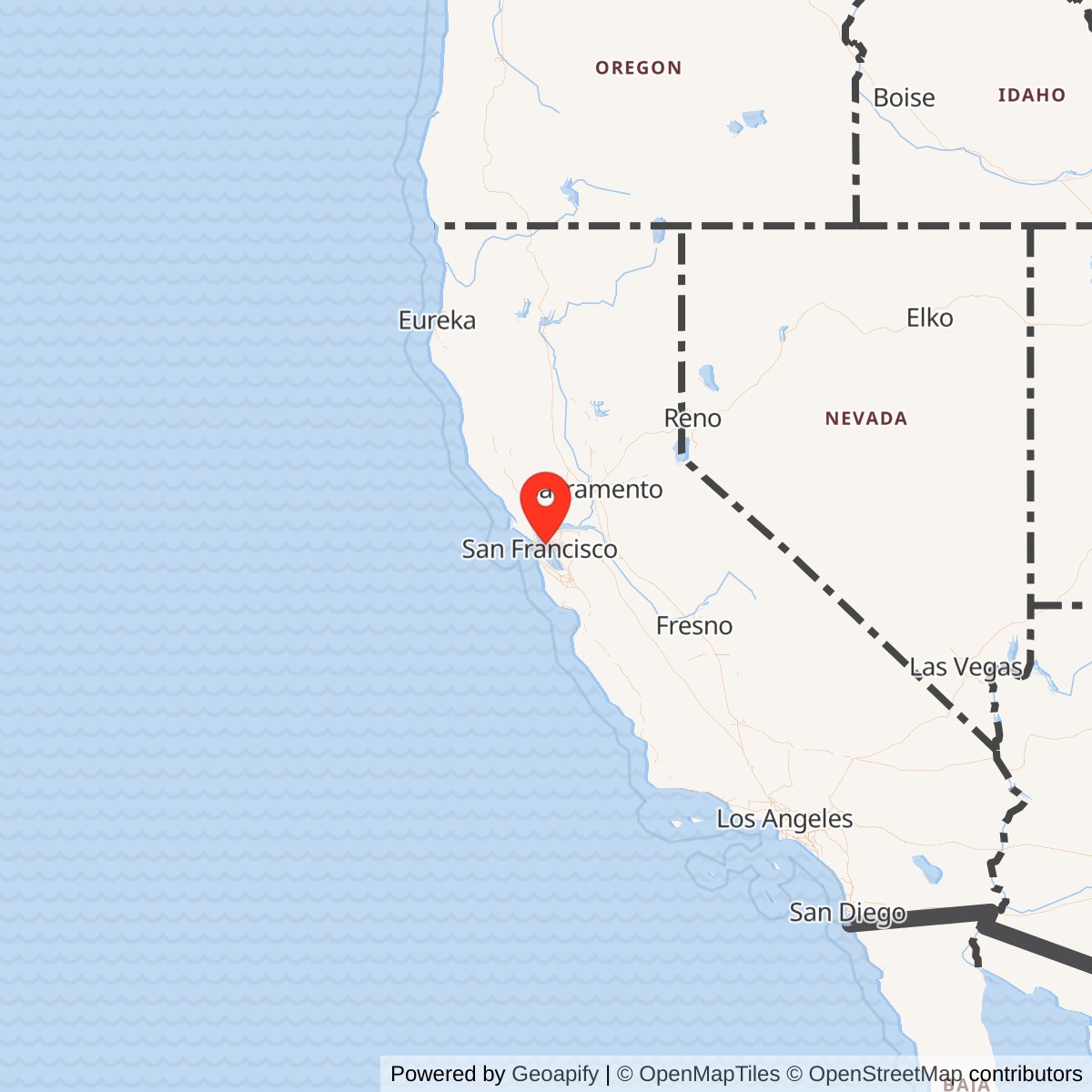
Longitude: -122.313889
Current Role: Former Navy supply depot and supply center at Oakland Middle Harbor with associated Alameda Facility/Annex and Point Molate fuel functions; main Oakland property now supports Port of Oakland maritime, rail, logistics, and Middle Harbor Shoreline Park reuse; Alameda Annex conveyed for residential/commercial/industrial reuse with Navy environmental obligations continuing where required.
The Navy did not build its Oakland supply base because the site was scenic. It built there because war in the Pacific was going to be won or lost through ports, rail lines, warehouses, fuel systems, ship chandlers, material handling, and the ability to push millions of tons of cargo across an ocean larger than any battlefield. Naval Supply Depot Oakland occupied reclaimed tidelands on the West Oakland waterfront, directly inside one of the Bay Area's most important rail-and-maritime corridors. It stood beside the Army's Oakland port facilities, across the estuary from Alameda, within reach of Mare Island, Hunters Point, Treasure Island, San Francisco, Richmond, and the wider wartime shipbuilding system. In a region famous for shipyards and aircraft plants, Oakland was one of the places where supplies became fleet power.
The installation began when Oakland sold marshland on the Middle Harbor waterfront to the Navy in 1940 for a nominal price, allowing the Navy to reclaim and develop a large supply depot before the United States entered World War II. The depot entered service on December 15, 1941, barely a week after the Pearl Harbor attack. Its timing explains its importance. The Pacific Fleet suddenly needed a West Coast logistics base capable of receiving, storing, accounting for, and issuing food, clothing, spare parts, electronics, medical supplies, ship stores, aviation materiel, construction materials, and countless other items. Oakland's value was not only that it had waterfront. It had deep ties to railroads, highways, port labor, Bay Area industry, and nearby naval installations.
The name changed over time, but the core identity remained logistical. It was first Naval Supply Depot Oakland, then Naval Supply Center Oakland, and later Fleet and Industrial Supply Center Oakland. The command eventually operated a multi-site Bay Area complex rather than a single fenced block: the main Oakland facility, the Point Molate Fuel Department, the Alameda Facility, and the Alameda Annex. The Oakland site was the largest, while the Alameda Annex became especially important in the later BRAC and reuse record. This row treats the Oakland supply-center system as a Navy installation, with the main Oakland Middle Harbor site as the coordinate anchor and the Alameda Annex included because Navy BRAC and disposal documentation treats it as part of the FISC Oakland complex.
Mission Evolution
The first mission was wartime distribution. In 1940 and 1941 the Navy needed a major West Coast supply depot to relieve pressure on older facilities and support the rapidly expanding Pacific Fleet. The Oakland waterfront offered undeveloped marshland that could be reclaimed for warehouses, open storage, piers, rail trackage, roads, administrative space, and material-handling yards. Once commissioned in December 1941, the depot became part of the emergency logistics architecture that sustained the Pacific war.During World War II, the installation operated around the clock. Historical summaries credit the depot with delivering roughly twenty-eight million tons of material during the war. That figure should be understood not merely as warehouse throughput, but as a measure of how the Navy fought a transoceanic war. Every island advance, every carrier task force, every amphibious operation, and every forward base depended on a chain of supply that began in continental depots and ended at ships, advance bases, repair yards, or combat units thousands of miles away. Oakland's labor force moved cargo by hand, rail, forklift, truck, crane, and ship-side systems in a period before later computerized inventory controls and automated warehouses became central to supply management.
After World War II the depot did not disappear. The Navy still needed a Pacific supply hub, and the Cold War gave Oakland a long second life. In the late 1940s it transitioned from a depot to a Naval Supply Center. That change reflected a broader shift from wartime emergency supply handling to peacetime and crisis-era fleet support, inventory control, tenant support, regional services, and management of satellite sites. By the early 1980s, historical accounts described the Oakland complex as covering roughly 1,150 acres across its Bay Area properties, including 541 acres at Oakland, 410 acres at Point Molate, 107 acres at the Alameda Facility, and approximately 100 acres at the Alameda Annex. The complex contained nearly ten million gross square feet of covered storage, three million square feet of open storage, and about 350 structures.
The Cold War mission also became more technologically complex. Oakland's supply work no longer depended only on manual storage and issue. The center became one of the Navy's early users of electronic data systems and advanced material-handling technology. It installed major automated storage and retrieval systems and developed supply-management practices that linked local warehousing to worldwide Navy customers. Late in 1979, the center took on wholesale aviation supply functions that had previously been performed at nearby Naval Air Station Alameda. That change tied Oakland even more tightly to naval aviation and to the Alameda repair-and-air-station complex across the estuary.
By the Vietnam era and late Cold War, Naval Supply Center Oakland was not simply a warehouse base. It supported fleet readiness directly, issued supplies to Pacific Fleet ships, served as a wholesaler to major overseas supply depots such as Guam, Subic Bay, and Yokosuka, supported other Navy supply centers, served thousands of customers, and outfitted new West Coast-built surface ships. It also provided administrative and base-support services for numerous regional tenant activities. The installation functioned as a Navy logistics city on the waterfront: a place where supply, transportation, personnel, tenant command support, medical and dental detachments, reserve groups, audit offices, investigative services, Military Sealift Command elements, printing and publication support, and other regional functions overlapped.
The final mission change came through base closure. The 1995 Base Realignment and Closure process recommended closure of Fleet and Industrial Supply Center Oakland. Closure planning, parcel leasing, environmental review, tenant relocation, and port-reuse negotiations unfolded through the mid-1990s. The installation closed in September 1998. The main Oakland site was transferred into port-oriented reuse, while the Alameda Annex moved through a separate Navy disposal and reuse process tied to the larger NAS Alameda / Alameda Point redevelopment. The Navy BRAC record for the Alameda Annex notes full disposal of the annex property while preserving Navy responsibility for remaining environmental cleanup.
Operational Role
What actually happened at Oakland was the unglamorous work that made naval operations possible. The supply center received cargo from industry and other depots, stored it, inventoried it, protected it, broke it into issues, staged it for movement, and sent it to ships and shore activities. During World War II this meant food, uniforms, spare parts, rope, paint, lumber, ordnance-related support items, repair materials, electronics, medical stores, and the enormous miscellany that naval forces consumed every day. A warship could not steam, fight, repair, feed its crew, communicate, or remain deployed without that support.The depot's physical location made it operationally powerful. Oakland had rail access, port access, open waterfront land, and proximity to other Bay Area military installations. Naval Supply Depot Oakland sat within a dense wartime network: Mare Island repaired and built ships; Hunters Point and private yards handled repair and conversion; Alameda hosted carrier aircraft and naval aviation support; Treasure Island handled training, receiving, and administrative functions; Richmond, Sausalito, and other shipyards produced vessels; and the Army's Oakland facilities supported the San Francisco Port of Embarkation system. Oakland's naval supply base was one of the connective tissues of that system.
During World War II, the depot's work force and material flows turned the waterfront into a military-industrial machine. Large warehouses, rail-served storage, piers, roads, loading platforms, open yards, and administrative buildings supported continuous supply operations. Oakland Public Library's Naval Supply Depot newsletter holdings show that the installation had its own internal information culture by 1943, with the Oak Leaf newsletter documenting personnel, human resources, and general Navy issues at the depot. Such publications are valuable because they show that the installation was not only a storage site but a huge workplace, with civilian and military labor communities that sustained the Navy's daily logistics rhythm.
The Korean War and Cold War kept the base relevant. The Navy still needed West Coast logistics for the Pacific, and Oakland was already built, connected, and experienced. Historical summaries emphasize that the Korean War again demanded huge manual movement and storage of supplies. In the later Cold War, the center's value shifted toward sophisticated inventory, automation, and worldwide distribution. Oakland served ships directly and also supplied other major Navy depots and supply centers. This made the base less visible than a shipyard or air station, but in some ways more pervasive: its material touched thousands of units and commands.
The center also became a multi-tenant shore establishment. By the early 1980s, accounts listed activities at Naval Supply Center Oakland such as Commander Service Group One, Military Sealift Command Pacific, Naval Audit Office San Francisco Bay Area, Naval Biosciences Laboratory, Naval Investigative Service resident activity, Naval Regional Dental Center Annex, Naval Regional Medical Center branch clinic, naval reserve groups, Naval Sea Cadet Corps units, Navy material transportation, publications and printing, plant equipment offices, and other support activities. The point is not that all tenants defined the base equally. It is that the supply center became a landlord and service provider for a broad slice of the Navy's Bay Area administrative and logistics system.
The 1979 transfer of wholesale aviation supply functions from NAS Alameda was especially important. Alameda was one of the Navy's major West Coast air stations and a central aviation rework and fleet-aircraft support location. Moving wholesale aviation supply into the Oakland supply center linked warehouse control, aviation parts, procurement, inventory management, and maintenance support in one regional supply system. The Federal Labor Relations Authority's 1981 decision on the related bargaining-unit question confirms that employees were administratively transferred into the Aviation Department within Naval Supply Center Oakland as a result of the October 1, 1979 reorganization. The labor case was about representation, but historically it confirms the operational change.
Units, Organizations, and Systems
The installation's primary command identity evolved from Naval Supply Depot Oakland to Naval Supply Center Oakland and then Fleet and Industrial Supply Center Oakland. Each name reflected a phase of Navy logistics. "Depot" emphasized storage and issue during wartime mobilization. "Supply Center" reflected broader regional support and management of multiple sites. "Fleet and Industrial Supply Center" reflected the Navy's later emphasis on integrated fleet, shore, industrial, procurement, and supply support.The Oakland complex included several geographically separate components. The main Oakland site was the largest and occupied reclaimed waterfront at Middle Harbor. The Point Molate Fuel Department across the Bay added a major fuel function. The Alameda Facility and Alameda Annex connected the supply center to the Alameda side of the Oakland Inner Harbor and to naval aviation, industrial, and support functions near NAS Alameda. Navy BRAC documentation for the Alameda Annex describes about 147 acres, while older NSC histories described the Alameda Facility and Annex as separate components within a larger multi-site supply complex. Those differences matter because the name "FISC Oakland / Alameda Annex" can mean the BRAC disposal site, while "Naval Supply Center Oakland" can mean the broader Cold War command.
Oakland also sat inside the Navy supply system beyond the Bay Area. Historical accounts describe it issuing supplies directly to hundreds of Pacific Fleet ships and serving as a wholesaler to Guam, Subic Bay, and Yokosuka, while also supporting Puget Sound, Pearl Harbor, San Diego, and thousands of other customers worldwide. That made Oakland part of a transpacific material network. It did not merely support local ships; it fed the Navy's forward logistics chain.
Military Sealift Command, Pacific, and other transportation-related tenants reinforced the installation's wider role. The presence of transportation, audit, investigative, medical, dental, reserve, printing, personnel, and regional support elements shows how a supply center could become a general-purpose shore-support hub. Oakland's logistics mission also made it a natural partner to the adjacent Army port system, even though the Army base and Navy supply center remained separate installations.
Facilities and Physical Layout
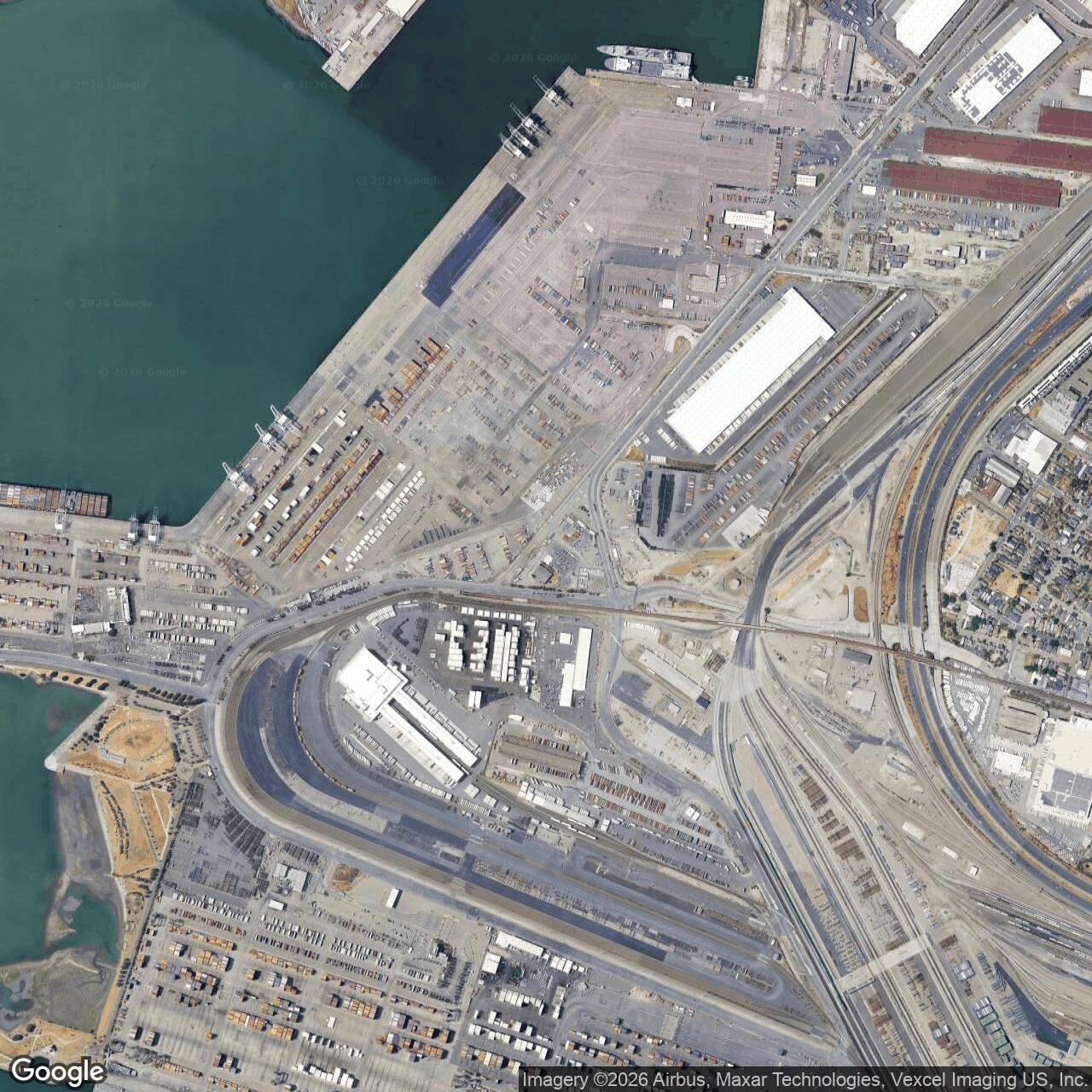
The main Oakland site was shaped by tidelands, rail access, and ship-loading needs. The Navy received partially submerged marshland and turned it into a working industrial waterfront. Reclamation was not incidental; it created the land on which the Navy could build large warehouses, open storage yards, roads, rail sidings, piers, administrative facilities, shops, utility systems, and security controls. Because supply work depends on flow, the base was organized to move material efficiently between railcars, trucks, warehouses, open yards, piers, and ships.By the early 1980s, the broader Naval Supply Center Oakland complex was described as having nearly ten million gross square feet of covered storage space, another three million square feet of open storage, and about 350 structures. The main Oakland property covered roughly 541 acres, while additional acreage at Point Molate, the Alameda Facility, and Alameda Annex brought the full complex to nearly 1,150 acres. These figures illustrate why Oakland was not merely a local warehouse. It was a regional logistics infrastructure system.
Middle Harbor was the best-known physical expression of the main site. One of the most important surviving public-history references is Building 122, a huge warehouse whose footprint is now interpreted at Middle Harbor Shoreline Park. Port of Oakland history describes Building 122 as a 190,000-square-foot warehouse built as one of two primary storage and supply facilities for the Navy's Pacific Fleet. Its irregular shape allowed rail service on all sides, showing how warehouse architecture was shaped by supply throughput rather than appearance.
The Alameda Annex had a different physical and legal history. Navy BRAC documentation identifies it as about 147 acres along the southern shore of the Oakland Inner Harbor, southeast of the Port of Oakland and east of Alameda Point. Before military use, the area was marsh and tidal flat, then commercial-airport land, then Army depot property. The Navy obtained the southern portion in 1946 and the northern portion in 1966, using the property as part of the supply center supporting fleets and shore activities in the Pacific Basin. When the Alameda Annex closed under BRAC, the entire annex was conveyed for reuse, with Navy cleanup responsibilities remaining.
The waterfront itself was also regulated as a naval operating space. The Code of Federal Regulations established a restricted area in Oakland Harbor in the vicinity of Naval Supply Center Oakland. The rule restricted unauthorized vessels and required large vessels bound for the supply center to use a qualified pilot. Such restrictions show that the installation's operating area extended beyond fences and warehouses into navigational control, pier approach, and harbor-security management.
Role in the Wider Military Network
Fleet and Industrial Supply Center Oakland only makes sense as part of the wider Bay Area military network. During World War II the Bay Area was one of the most important military-industrial regions in the United States. It contained shipyards, air stations, Army ports, naval repair yards, embarkation facilities, training centers, receiving stations, medical facilities, and supply commands. Oakland's naval supply installation was one of the nodes that allowed that network to function as a system.The base also belonged to the Pacific logistics network. It was not enough for the United States to build ships on the West Coast. Those ships needed supplies, replacement parts, communications equipment, fuel support, food, medical supplies, and repair materials across the Pacific. Oakland's output moved into the chain that supplied forward bases and fleet units. The depot's support to Guam, Subic Bay, Yokosuka, Pearl Harbor, San Diego, and other centers shows that Oakland was one link in a transpacific supply architecture that stretched from California to the western Pacific.
Within the local Bay Area network, Oakland complemented rather than duplicated nearby installations. Mare Island and Hunters Point were industrial and ship-repair centers. Alameda was an aviation base and later a major naval air-rework and carrier-aircraft support site. Treasure Island handled training, administrative, receiving, and distribution functions. Oakland Army Base and the San Francisco Port of Embarkation moved Army personnel and cargo. Naval Supply Center Oakland handled the Navy's material flow. These installations worked in parallel, and sometimes in physical proximity, but each had a distinct system role.
The installation also became a model of postwar logistics modernization. Its shift toward automated material-handling, electronic inventory systems, consolidated personnel functions, and wholesale aviation supply shows how Navy logistics evolved from wartime warehouse labor into integrated supply management. In that sense Oakland's history is not only about World War II. It is also about how a wartime depot became a Cold War logistics-management center.
Closure, Disposal, and Reuse
Fleet and Industrial Supply Center Oakland was caught in the post-Cold War contraction that reshaped the Bay Area's military landscape. The 1995 BRAC process recommended closure, and the installation closed in September 1998. Closure did not mean an empty site simply passed into ordinary real estate use. It required tenant relocation, environmental review, parcel leasing, reuse planning, legal disposal authorities, and coordination among the Navy, Port of Oakland, City of Alameda, regulators, and local redevelopment bodies.The main Oakland site became part of port-oriented reuse. Public and port-facing sources describe transfer to the Port of Oakland and redevelopment for maritime, rail, truck, intermodal, and port-support purposes. A portion of the former supply depot became Middle Harbor Shoreline Park, where Port of Oakland interpretation preserves the footprint and memory of Building 122 and the Navy's Pacific Fleet supply activity. The park's creation is significant because most Navy supply-center structures were removed or absorbed into port redevelopment; the interpreted warehouse footprint gives the public a rare physical way to understand the scale of the former depot.
The Alameda Annex followed its own BRAC disposal path. Navy documentation states that the Alameda Annex was designated for closure in 1996, formally closed in September 1998, and fully transferred, with intended reuse including residential, commercial, and industrial components. The Navy retained responsibility for remaining environmental cleanup. Federal Register disposal documentation also tied the annex to the broader NAS Alameda / Alameda Point reuse process, noting that the Alameda Annex and Facility were part of the Navy supply complex at FISC Oakland and that the annex closed on September 30, 1998.
Environmental obligations remain part of the installation's legacy. EPA lists Fleet Industrial Supply Center Oakland as a federal facility at 7th & Maritime in Oakland, with the site deferred to RCRA rather than listed on the National Priorities List. Navy BRAC documentation for the Alameda Annex similarly emphasizes environmental cleanup responsibilities after property transfer. These records are an important part of the modern status: the Navy supply center is closed, but regulatory and restoration responsibilities continued after operational activity ended.
Current Status
The former FISC Oakland / Naval Supply Center Oakland is no longer an active Navy base. The main Oakland site is part of the Port of Oakland's maritime, rail, logistics, and waterfront-reuse landscape. Middle Harbor Shoreline Park preserves a public-facing portion of the former depot landscape, including interpretation of Building 122's footprint and the Navy supply history. Other areas are absorbed into the port's working cargo and intermodal infrastructure.The Alameda Annex is also closed as a Navy installation. It has been conveyed for reuse as part of the Alameda-side redevelopment landscape, with residential, commercial, industrial, and related reuse components planned or implemented under local reuse authorities. Navy BRAC records continue to connect the annex to environmental restoration responsibilities.
Chronology
- 1936 Oakland voters approved donation of Bayfront Middle Harbor land for a naval supply depot, following years of advocacy for a Pacific Fleet supply facility.
- 1940-01 Naval Supply Depot Oakland was established after the City of Oakland sold approximately 500 acres of marshland to the Navy for a nominal price.
- 1940-1941 The Navy reclaimed partially submerged tidelands and built the first major warehouses, roads, rail connections, waterfront facilities, and depot infrastructure.
- 1941-12-15 Naval Supply Depot Oakland entered service, one week after the Pearl Harbor attack.
- 1943 The depot's Oak Leaf newsletter began publication, reflecting the scale and internal work culture of the supply installation.
- 1941-1945 The depot operated continuously in support of the Pacific war and is credited in historical summaries with delivering about twenty-eight million tons of material during World War II.
- 1946 The Navy obtained the southern portion of what later became the Alameda Annex.
- Late 1940s The installation transitioned from Naval Supply Depot Oakland to Naval Supply Center Oakland.
- 1950-1953 The Korean War renewed the heavy Pacific logistics demands that kept Oakland central to Navy supply operations.
- 1961 Federal restricted-area regulations governed Oakland Harbor in the vicinity of Naval Supply Center Oakland, reflecting the installation's waterfront operating and security role.
- 1966 The Navy obtained the northern portion of the Alameda Annex, completing the later annex property configuration.
- 1960s-1970s Oakland became increasingly important for electronic data processing, automated material handling, regional support, and multi-site supply management.
- 1979-10-01 Wholesale aviation supply functions and employees associated with NAS Alameda were administratively transferred into the Aviation Department of Naval Supply Center Oakland.
- 1981 A Federal Labor Relations Authority decision confirmed the labor-unit implications of the 1979 transfer of aviation supply employees into NSC Oakland.
- Early 1980s Published historical summaries described NSC Oakland as a multi-site complex of roughly 1,150 acres, nearly ten million square feet of covered storage, three million square feet of open storage, and about 350 structures.
- 1993 The Alameda Annex Restoration Advisory Board was established to review cleanup-related technical documents and activities.
- 1995 The BRAC process recommended closure of Fleet and Industrial Supply Center Oakland.
- 1996 Alameda Annex was designated for closure under BRAC, and a base closure planning process moved forward.
- 1997-08 The Navy executed a master lease with the Port of Oakland for FISC Oakland property, reserving areas still occupied by FISC until closure.
- 1998-09-30 FISC Oakland / Alameda Annex closure date used in Navy and Federal Register records.
- 1999 The Navy transferred the main Oakland supply-center property to the Port of Oakland.
- 2000-03-09 The Federal Register published the Navy's record of decision for disposal and reuse of NAS Alameda and the FISC Oakland Alameda Annex and Facility.
- 2003-2004 Middle Harbor Shoreline Park opened in phases on part of the former Oakland Naval Supply Depot landscape, preserving public interpretation of the depot footprint.
- Present The former Oakland supply-center site is part of Port of Oakland maritime, rail, logistics, and waterfront reuse; the Alameda Annex is conveyed/reused with Navy environmental responsibilities continuing where required.
Sources & References
- WEB Navy BRAC Program Management Office Former Fleet and Industrial Supply Center Oakland / Alameda Annex
- PDF California State Military Museum / United States Navy and Marine Corps Bases, Domestic Oakland, Calif., Naval Supply Center, 1940-
- WEB EPA Superfund Site Profile Fleet Industrial Supply Center Oakland
- WEB Federal Register Record of Decision for the Disposal and Reuse of Naval Air Station Alameda, California, and the Fleet and Industrial Supply Center Oakland's Alameda Annex and Facility, Alameda, CA
- WEB GovInfo Federal Registe text for 65 FR 12524
- WEB Port of Oakland, Middle Harbor Shoreline Park https://www.portofoakland.com/community/waterfront-recreation/middle-harbor-shoreline-park/
- WEB https://www.portofoakland.com/about/media/90-years-of-public-service NHHC photo record, "NH 94198 Naval Supply Center, Oakland California"
- WEB NHHC, UA 475.13 Fleet and Industrial Supply Center (FISC): Oakland Collection https://www.history.navy.mil/our-collections/photography/alphabetical---donations0/f/ua-475-13-fleet-and-industrial-supply-center--fisc---oakland-col.html
- WEB https://oaklandlibrary.org/archival_post/oakland-naval-supply-center-records-1940-1998/ Oakland Public Library, "United States. Naval Supply Depot (Oakland, Calif.) Newsletter Collection"
- WEB National Archives, Records of Naval Districts and Shore Establishments https://www.archives.gov/research/guide-fed-records/groups/181.html
- WEB https://www.law.cornell.edu/cfr/text/33/334.1040 Federal/BRAC summary mirror, "Oakland - Navy Ports"