
Ladd Air Force Base, Fairbanks Alaska
An Army test field became the Air Force's northern Alaska hub for reconnaissance, air defense and Arctic research.
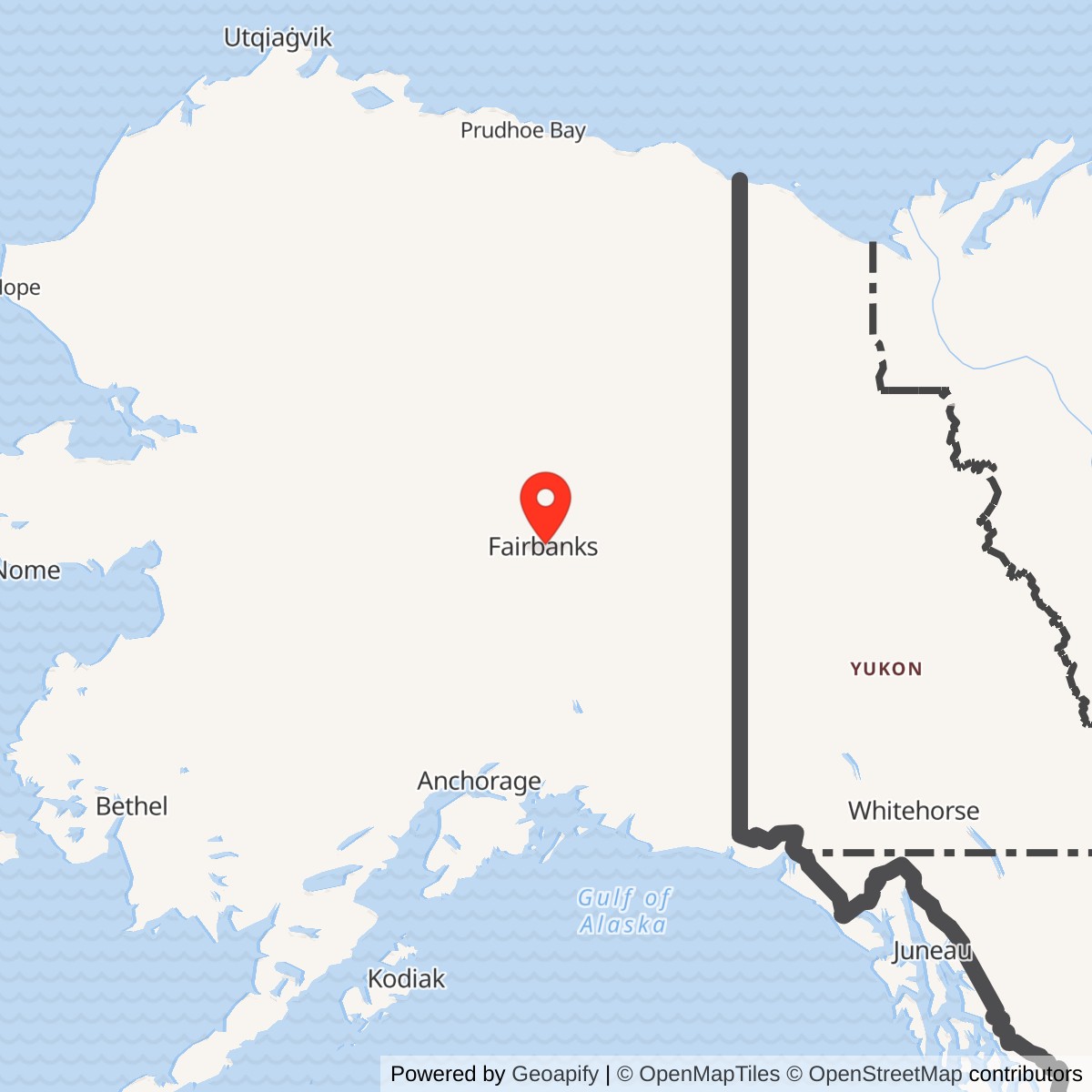
Longitude: -147.6145
- Service
- United States Air Force
- Air Force period
- 1947 to January 1, 1961
- Location
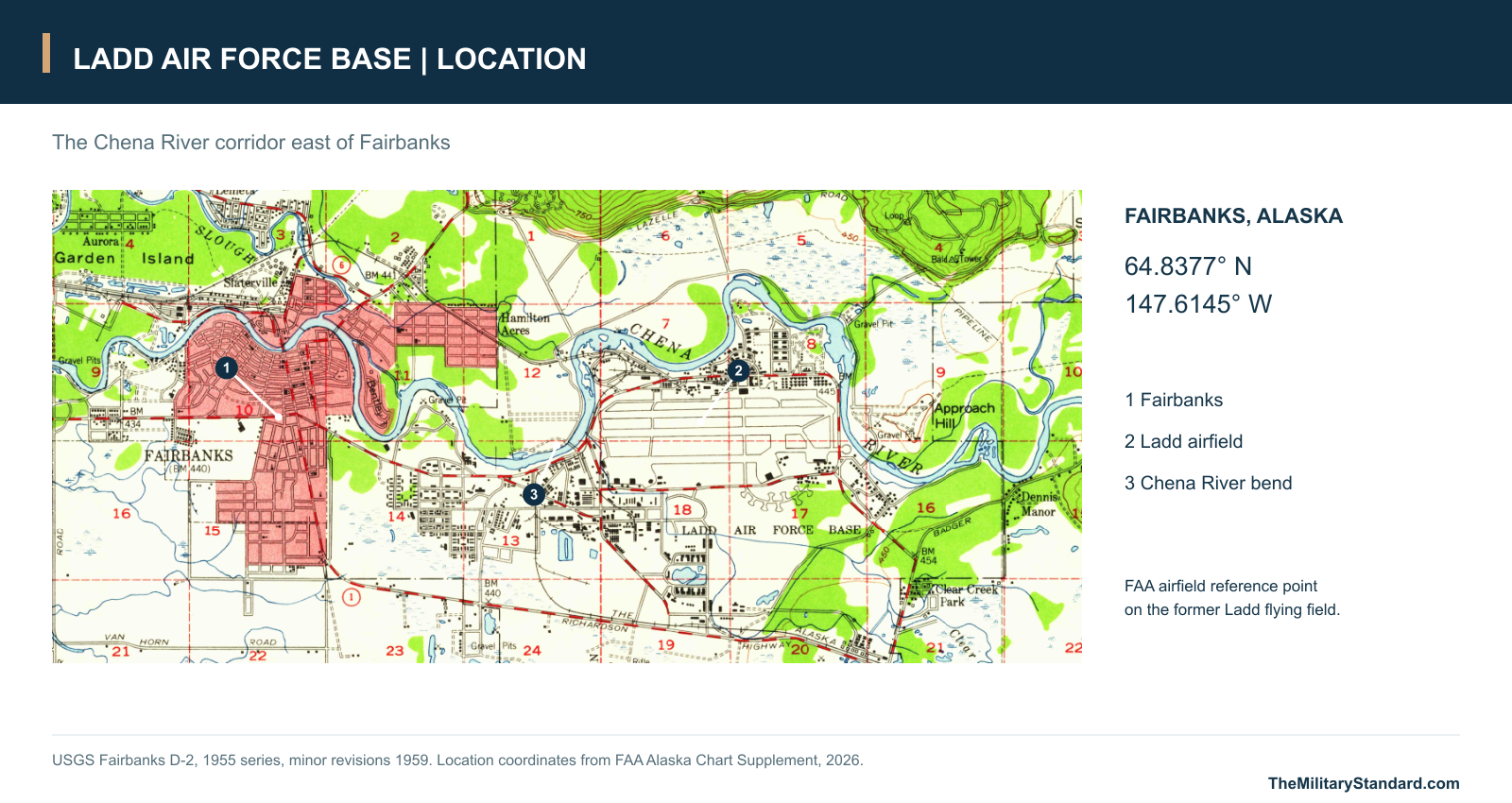
- On the Chena River east of downtown Fairbanks, Alaska
- Predecessor
- Ladd Field, U.S. Army Air Forces
- Successor
- Fort Wainwright and Ladd Army Airfield
- Primary roles
- Northern air defense, polar reconnaissance, logistics and Arctic research
- Sector headquarters
- 11th Air Division (Defense)
- Fighter aircraft
- F-82 Twin Mustang, F-94 Starfire and F-89 Scorpion
- Reconnaissance aircraft
- F-13 and RB-29 variants of the B-29
- Principal fighter unit
- 449th Fighter-Interceptor Squadron
- Research organization
- Arctic Aeromedical Laboratory
- Airfield reference
- 64.8377° N, 147.6145° W
From Ladd Field to Ladd Air Force Base
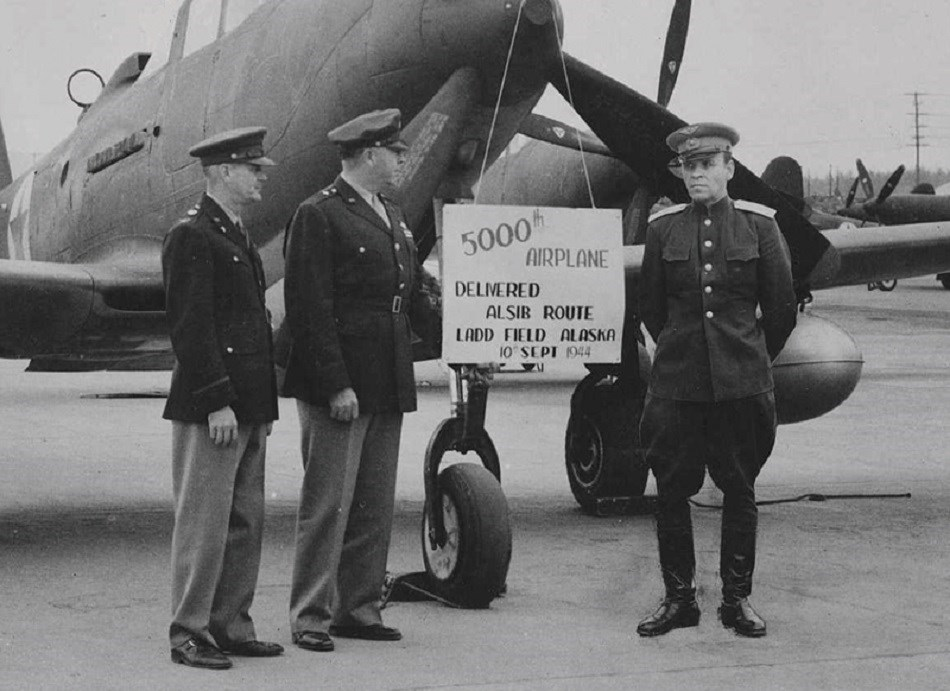
Ladd Air Force Base occupied the airfield on the Chena River immediately east of Fairbanks. The Army Air Corps opened Big Delta. These missions left a substantial airfield and depot at a time when very few places in northern Alaska could maintain large military aircraft. [2] [3] [21] [22]
Air Transport Command handed Ladd back to the Eleventh Air Force on November 1, 1945. In September 1946 Alaskan Air Command selected it as the headquarters of the Yukon Sector. The independent Air Force inherited the field in 1947 and gave it the Ladd Air Force Base designation. At Mile 26 southeast of Fairbanks, a separate wartime alternate field developed into Eielson Air Force Base. The two bases served the same region and grew into different roles. [1] [4] [9] [12] [20] [21]
Polar reconnaissance and weather flights
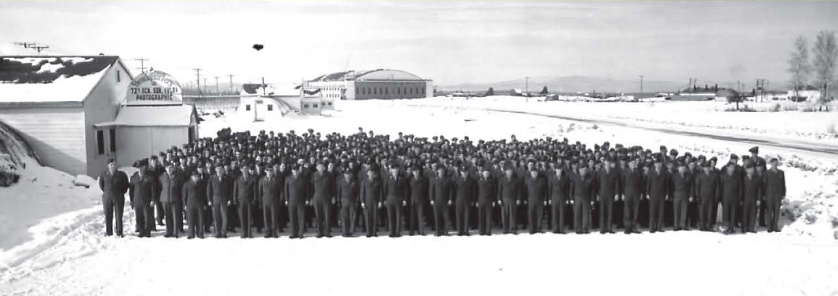
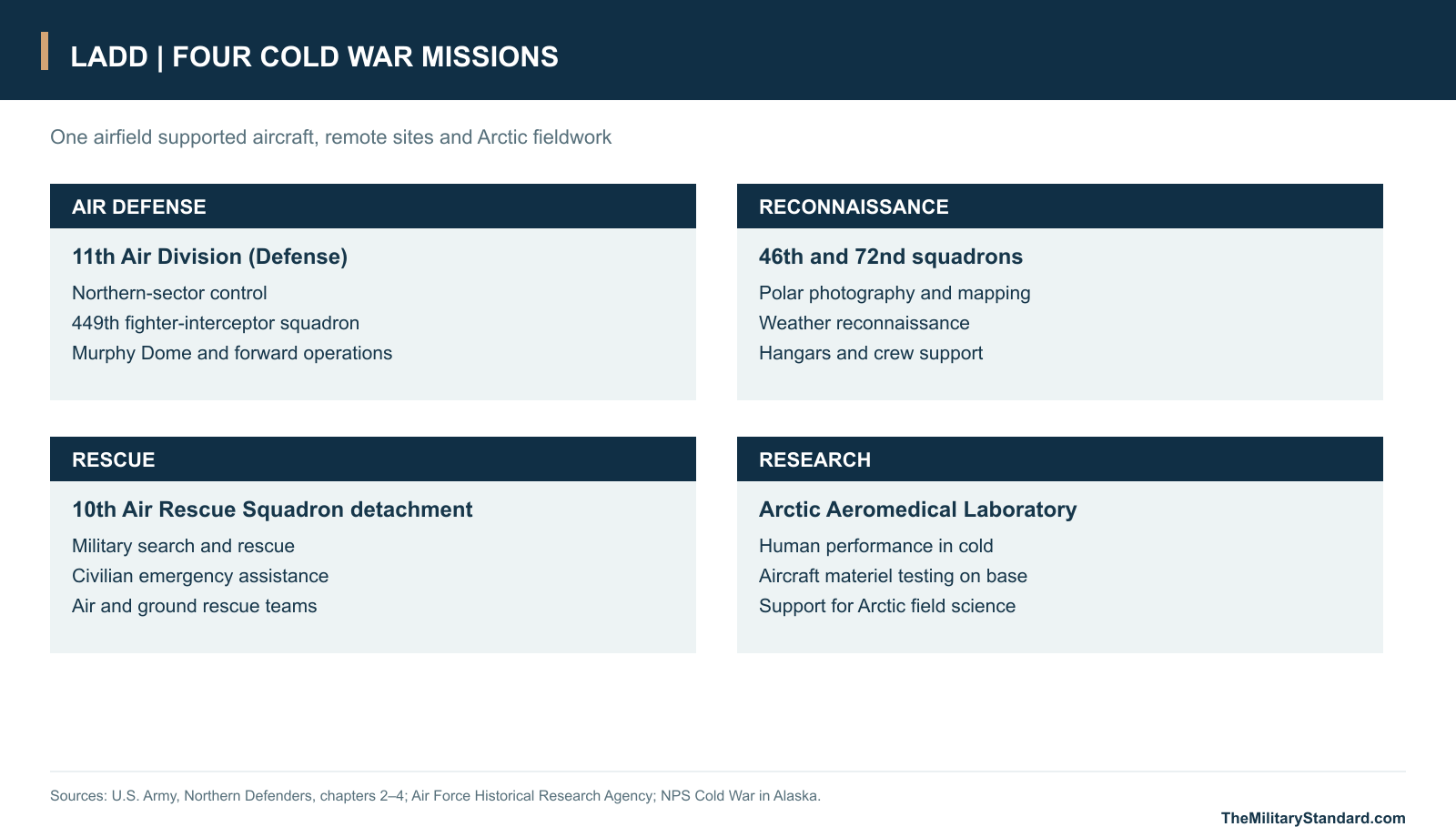
The 46th Reconnaissance Squadron began flying from Ladd in 1946. Its crews faced practical problems that had to be solved before aircraft could operate regularly in high latitudes. Familiar navigation references became unreliable near the pole, alternate fields were scarce, and weather observations were thin. The squadron developed polar navigation experience while photographing and mapping Arctic terrain. The 72nd Reconnaissance Squadron continued the work from October 1947 and became the 72nd Strategic Reconnaissance Squadron, Photographic, in February 1949. [5] [6] [7] [12]
The reconnaissance crews occupied the 900 Zone near the southeast side of the wartime airfield. The area combined quarters and support buildings with apron access and Hangar 6. The squadron's photographic work served military intelligence and Arctic mapping. A separate weather reconnaissance mission gathered observations useful to forecasters and flight planners. The later 55th Weather Reconnaissance Squadron used Hangar 3 and continued polar weather flights into 1960. Longer-range strategic reconnaissance increasingly shifted to Eielson as its facilities grew. [1] [6] [7] [12] [20]
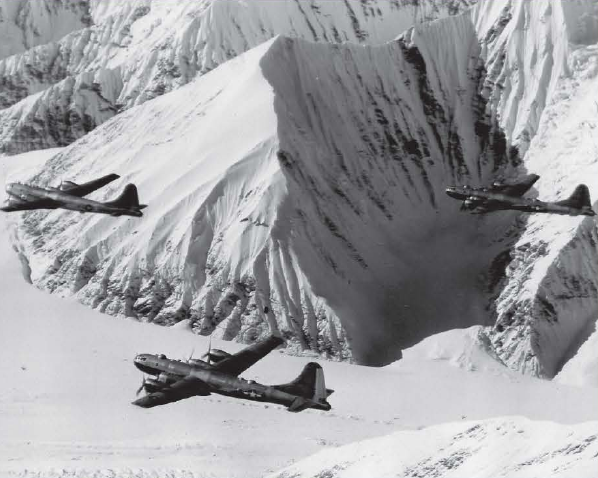
The loss of the Kee Bird in February 1947 illustrates the distances these crews worked over. A reconnaissance aircraft made an emergency landing in northern Greenland, and a crew searching from Ladd located it. A separate rescue aircraft recovered the stranded men. The episode linked polar reconnaissance with a problem that would recur across the decade: finding and retrieving people far beyond a road, settlement or conventional airfield. [1] [6] [7]
Air defense across northern Alaska
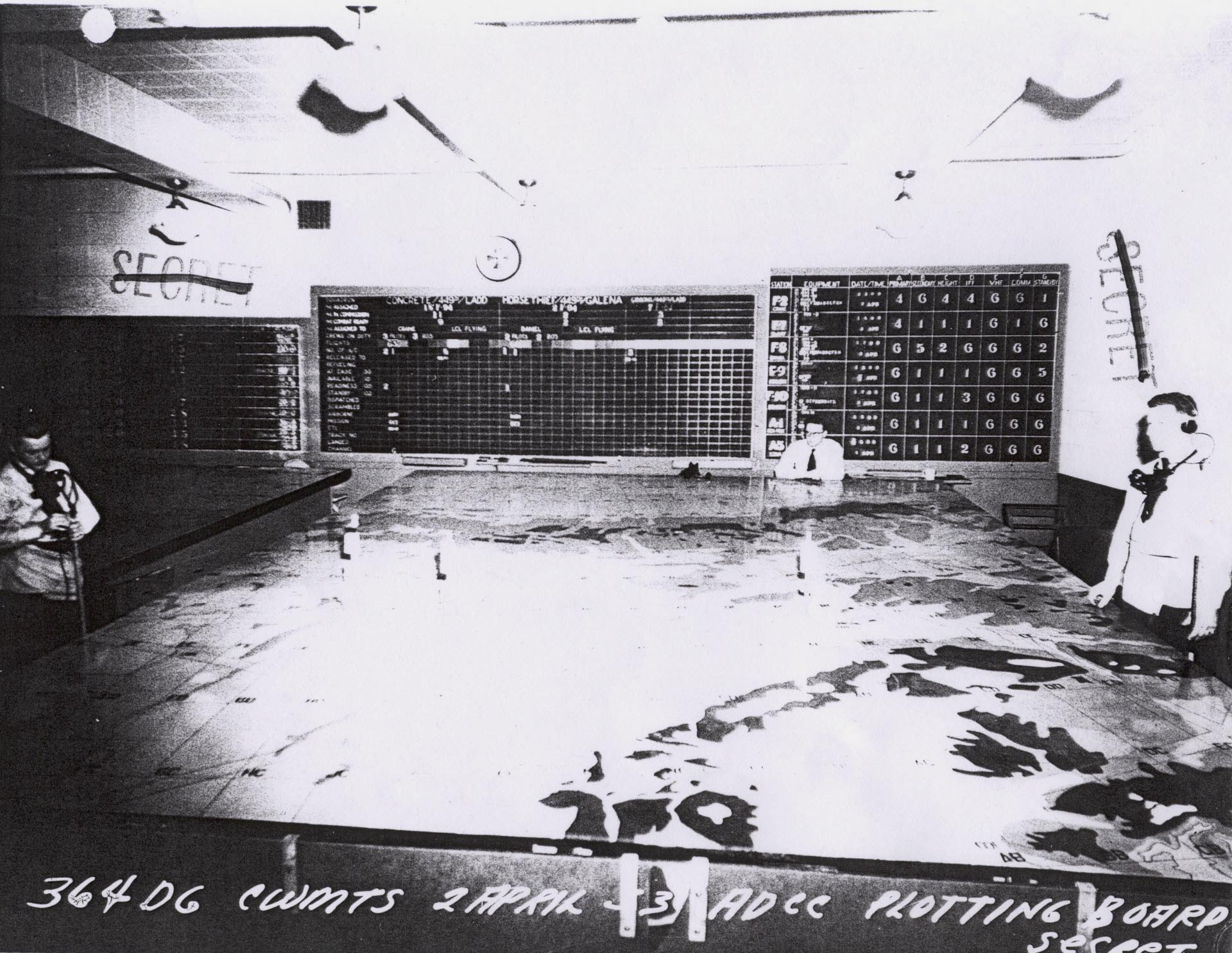
Ladd became headquarters of the 11th Air Division (Defense) during the early 1950s. Outlying aircraft control and warning stations furnished radar reports for the northern sector. Murphy Dome Air Force Station served as a regional direction center, and Galena Air Force Station provided a forward operating location closer to Alaska's western approaches. Ladd's headquarters connected the aircrews, controllers and support units that made those dispersed sites function as a system. [1] [9] [12] [20]
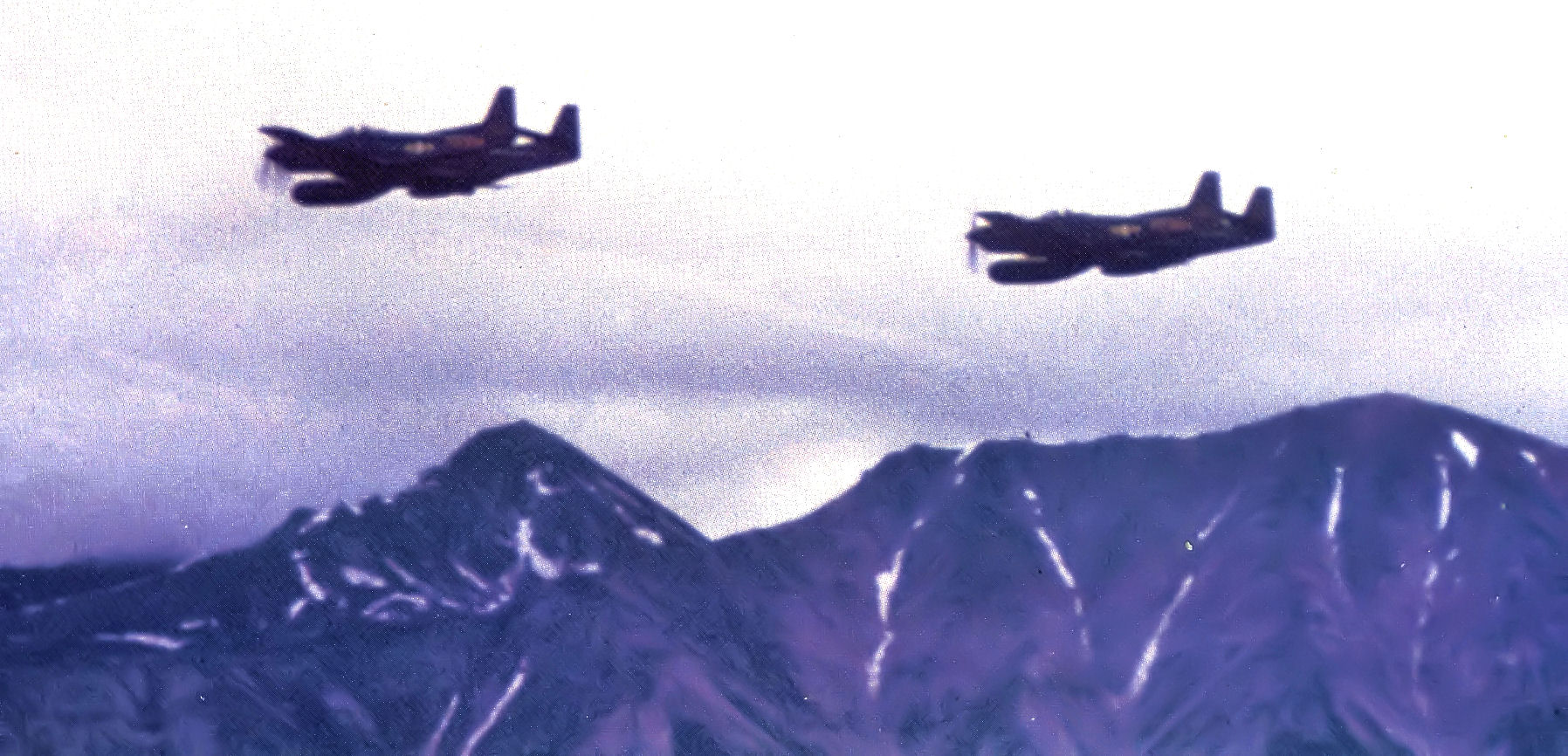
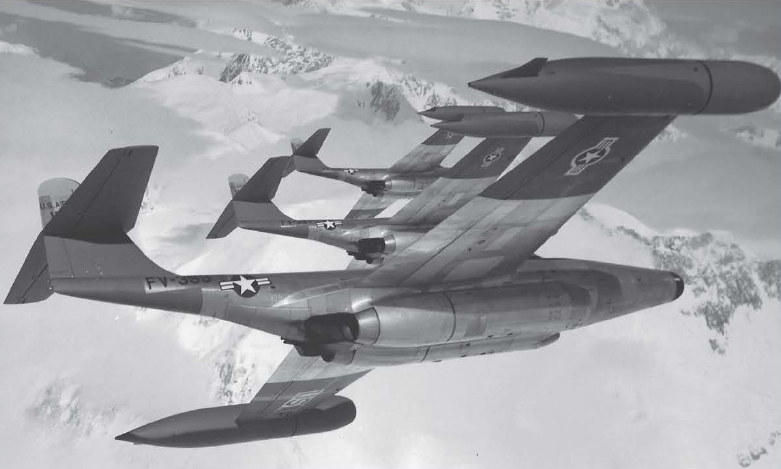
The 449th arrived from Davis Air Force Base on Adak in March 1949 as the 449th Fighter Squadron (All Weather). It flew the F-82 Twin Mustang and F-94 Starfire before receiving the F-89 Scorpion in 1954. The Air Force moved the squadron from Hangar 3 to Hangar 1 during the transition. The heavier Scorpion brought new loads to pavements and new demands on hangar and servicing space. The 18th and 433rd Fighter-Interceptor Squadrons were also listed at Ladd in 1956. Army infantry and antiaircraft artillery added local ground defense during the Air Force years. [1] [9] [11] [20] [25]
Remote stations also depended on a supply base. The 5001st Composite Wing's 1952 responsibilities included outlying facilities across the northern sector. Ladd organized airlift, maintenance and procurement for northern radar and communications outposts, with summer sealift adding capacity for bulky supplies. The 1959 base directory places off-base logistics staff at division headquarters and remote-site materiel and resupply in Building 1564. Those functions explain why the northern defense system needed warehouses and transportation staff alongside the aircraft and radar crews. [1] [12] [20]
Rescue, cold weather testing and research
Alaskan Air Command rebuilt search and rescue after wartime demobilization. The 10th Air Rescue Squadron coordinated from Elmendorf Air Force Base and maintained a detachment at Ladd. Crews prepared to find downed airmen on the Arctic pack, but they also answered overdue aircraft and medical evacuation calls in civilian Alaska. Aircraft handled the search and transport, while trained ground teams and survival equipment made it possible to reach people beyond usable landing areas. [1] [9] [20]
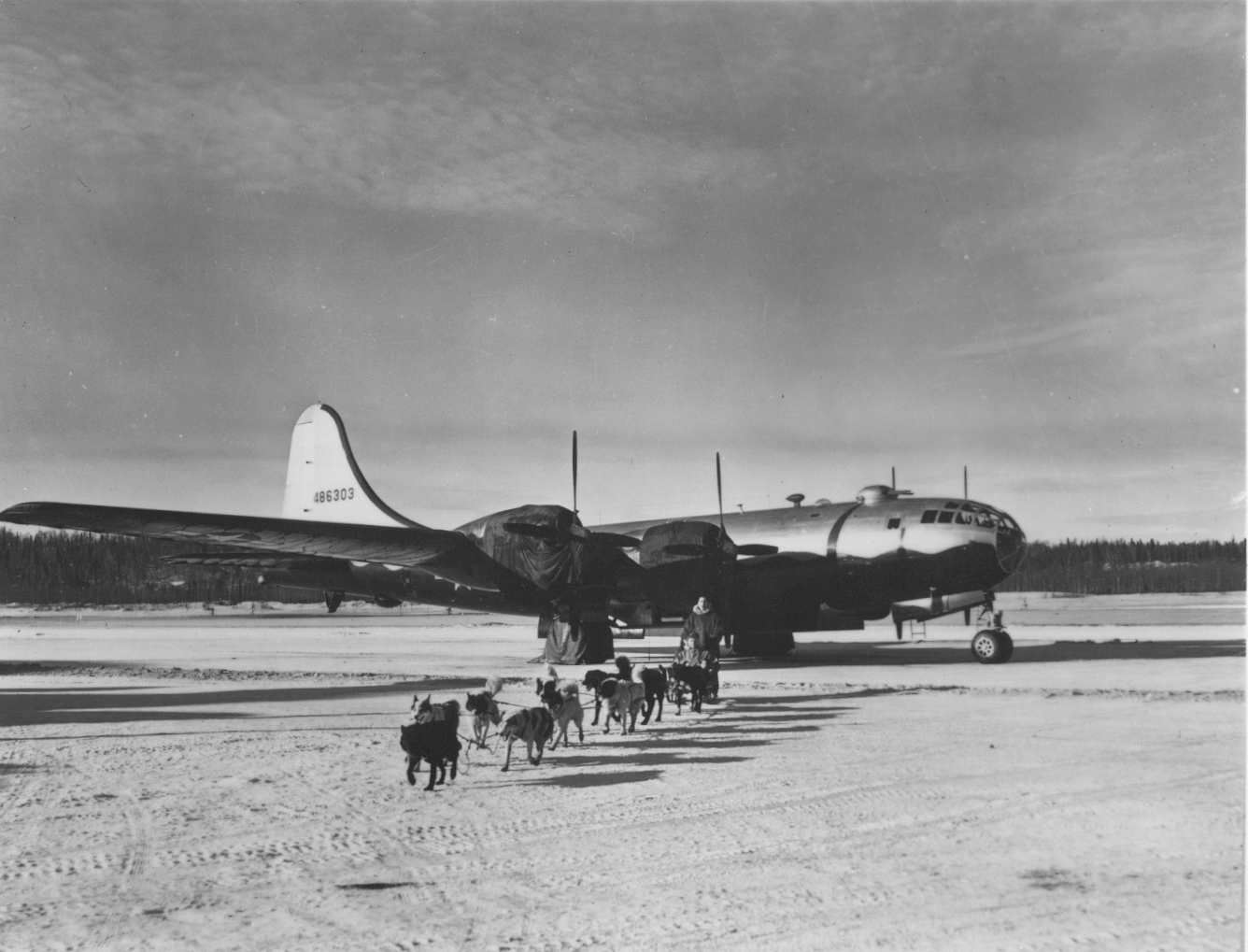
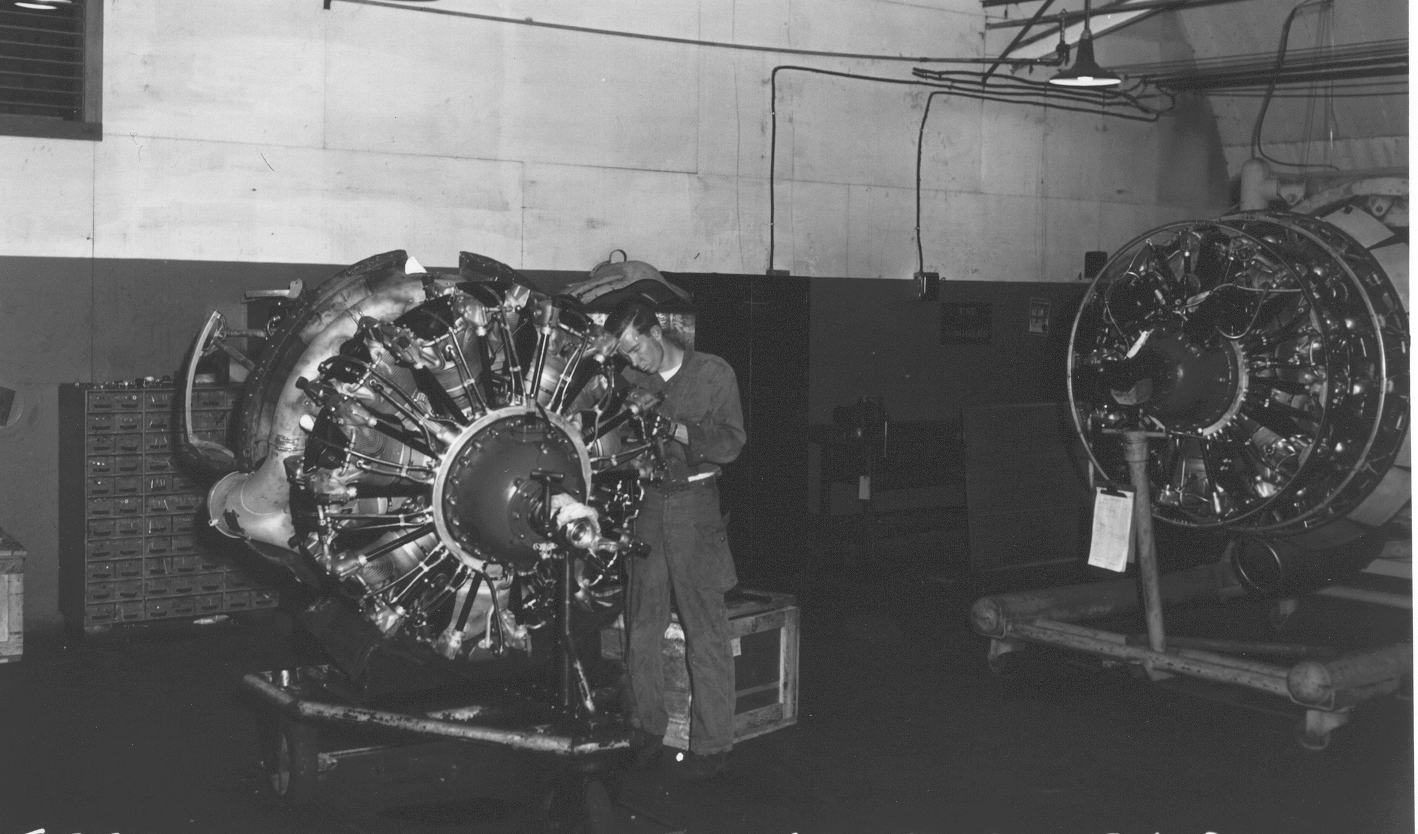
The 5064th Cold Weather Materiel Testing Station carried forward work on aircraft engines, clothing and maintenance in the early 1950s. The Arctic Aeromedical Laboratory studied the human side of those problems, including protection against cold injury and the effects of exposure on crews. By the middle of the decade the lab occupied a group of buildings near the hospital. Ladd also supported work on drifting Arctic ice stations, extending the practical relationship between polar flying and scientific fieldwork. [1] [7] [12] [20]
One aeromedical study used iodine-131 to investigate whether thyroid activity explained human acclimatization to cold. The program began in 1955 and concluded in 1957, enrolling Alaska Native people and military personnel. A later National Academies committee reviewed health risks and the ethics of the study, including whether participants understood what they were being asked to do. The episode is part of the history of the laboratory and of the communities from which it recruited. [13] [14]
The flight line and the growing base
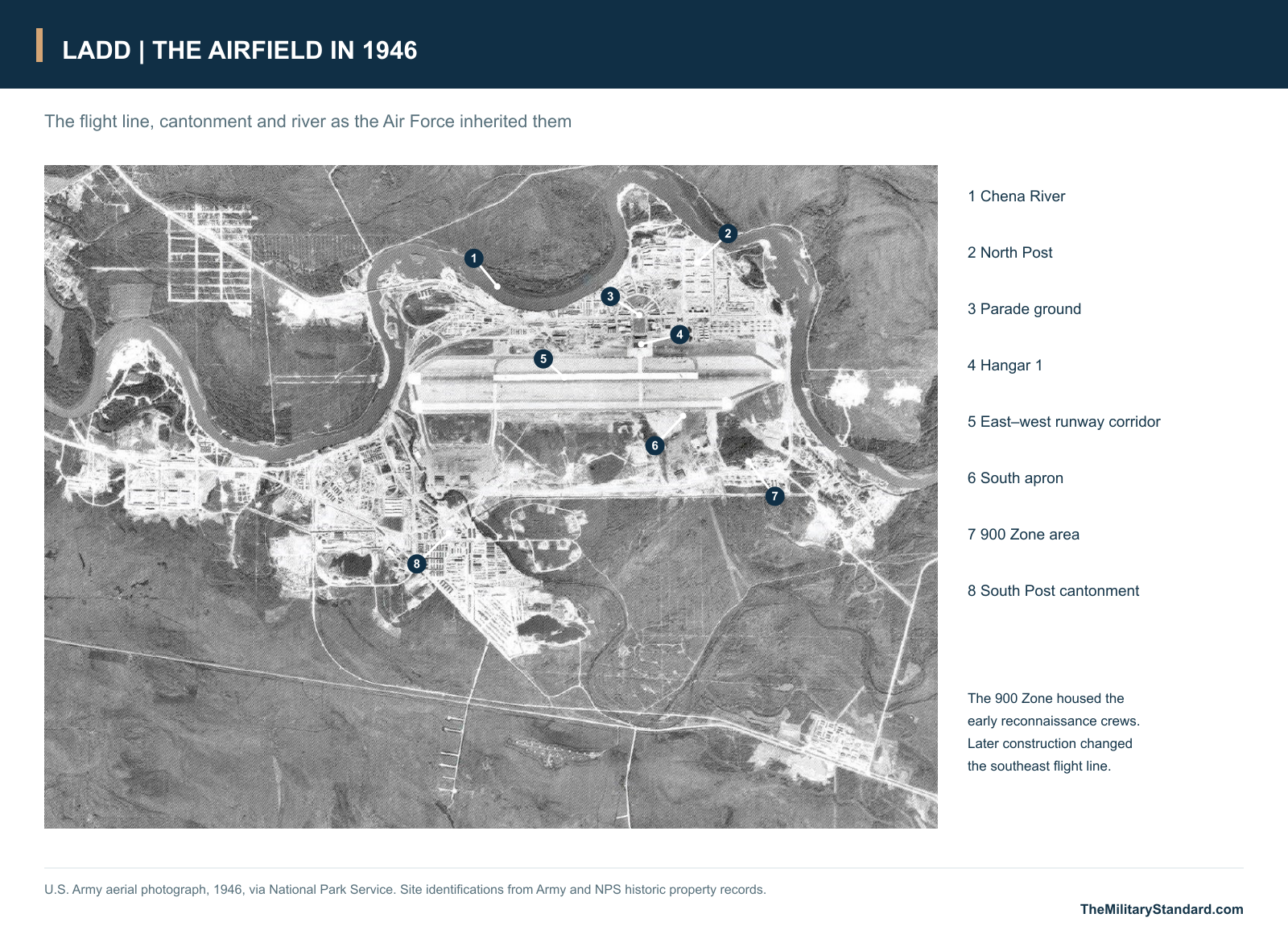
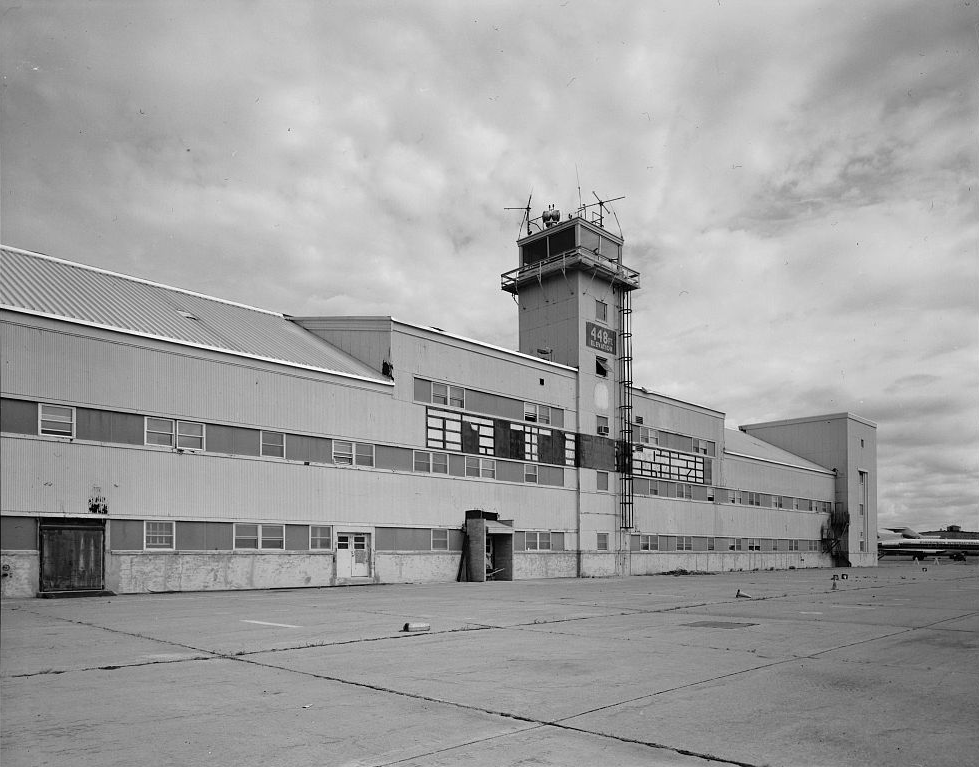
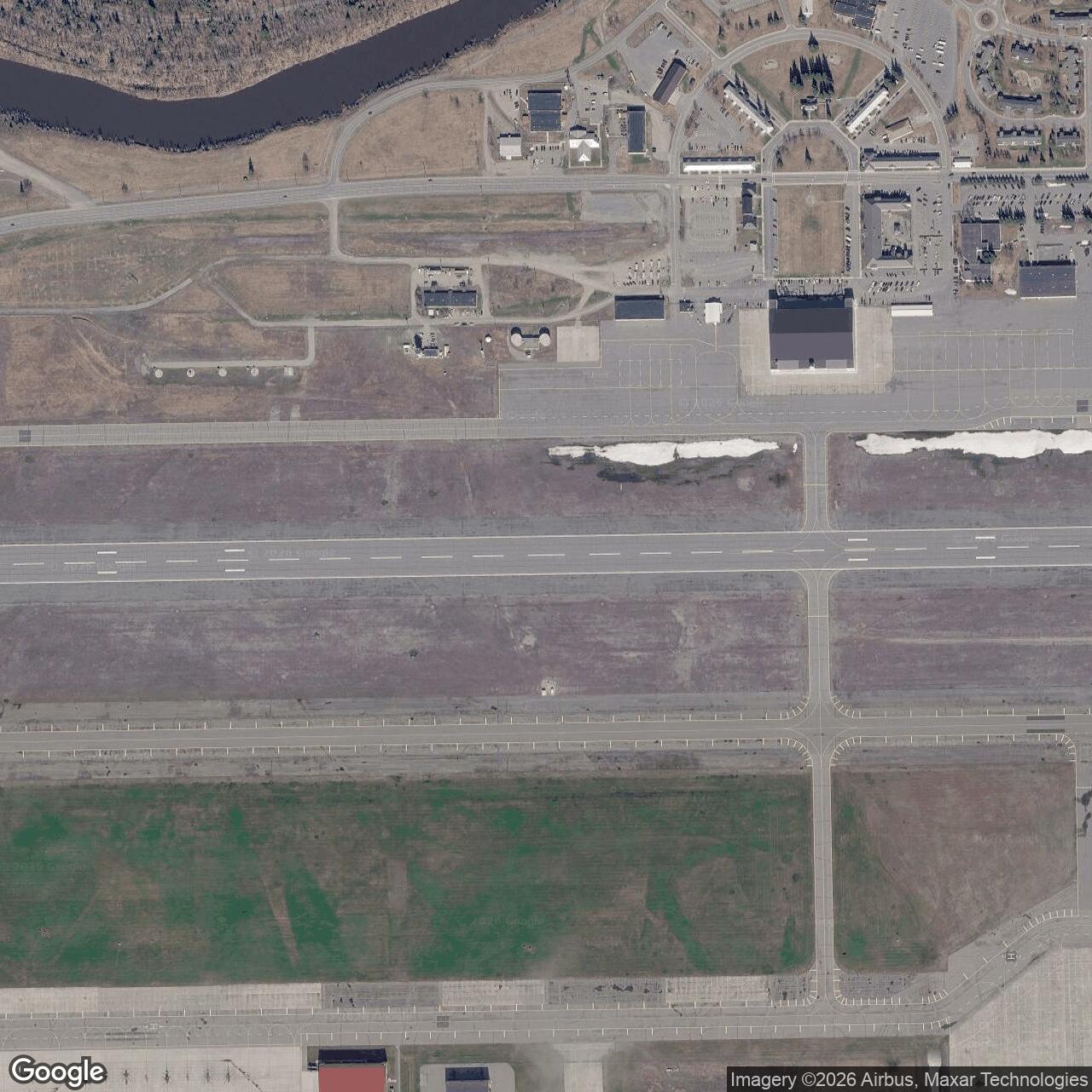
The former Army field gave the Air Force an east-west flight line framed by bends of the Chena River. North Post contained the original permanent buildings around the parade ground and Hangar 1 at the runway edge. On the opposite side of the flying field, hangars and aprons supported maintenance, weather and reconnaissance work. The 1946 aerial records the base as the Air Force inherited it, while the 1955 USGS map shows Ladd and its relationship to Fairbanks after the start of the Cold War building program. [2] [3] [7] [8] [18]
The construction program added facilities for an air defense headquarters and for the families arriving with its personnel. A new hospital opened in 1954, allowing the Air Force to reuse the former hospital, Building 1555, for headquarters offices. Housing, utilities, dining halls and recreation facilities gave the permanent base a different character from the wartime cantonment. The 1959 directory shows how often a building served several functions. Building 1004 combined billeting and food service with unit support and recreation space. [1] [9] [18] [20]
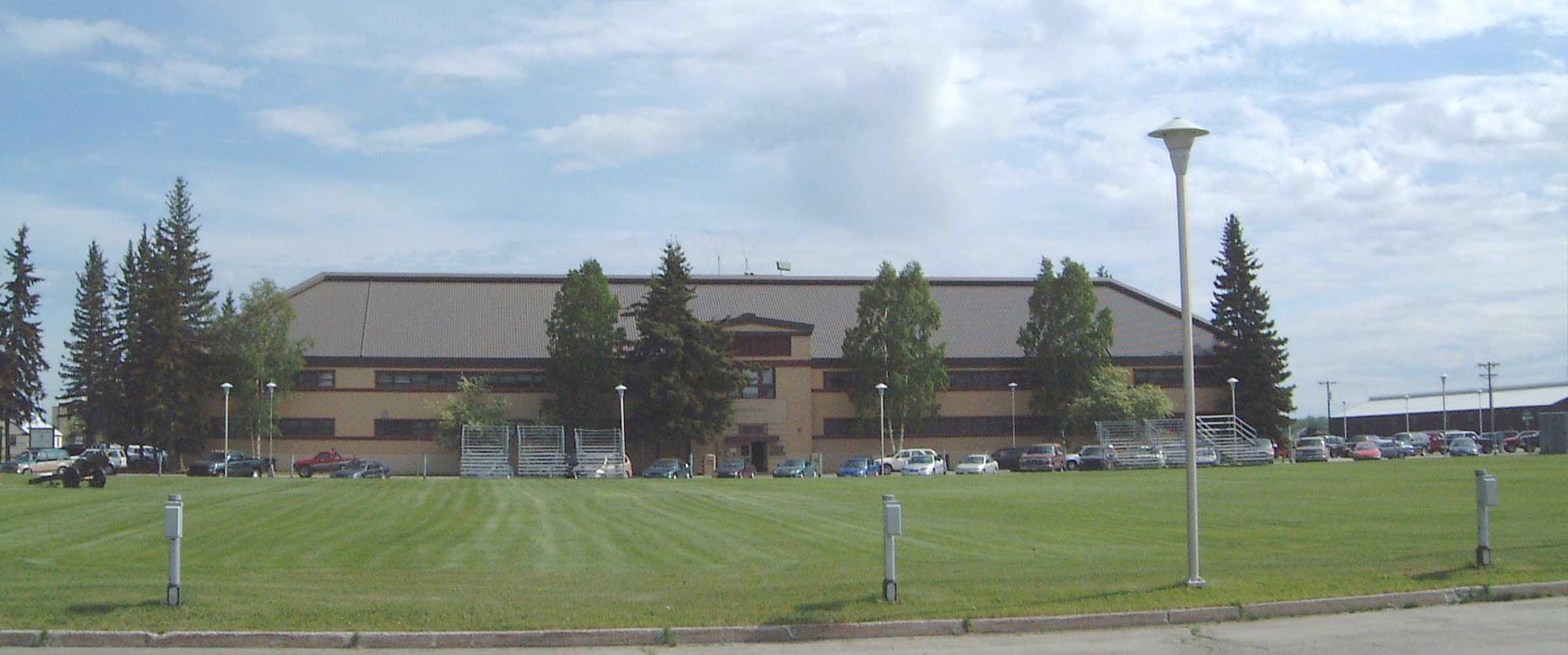
The same location that put Ladd close to Fairbanks limited its room to grow. The Chena bends constrained runway extension and the city expanded close to the approaches. Eielson had more room for a longer runway and the facilities required by heavy aircraft. Ladd retained a major role in interception, rescue, research and support through the 1950s, even as flying missions and investment shifted toward Eielson. [1] [8] [9] [20]
Transfer to Fort Wainwright
The Air Force decided in 1959 to consolidate Ladd's functions at Eielson and Elmendorf. The 449th inactivated on August 25, 1960, and Air Force flying at Ladd ended by September. Weather reconnaissance and Arctic survival training moved to Eielson, while Elmendorf took on much of the transport and remote-site logistics work. The hospital and Arctic Aeromedical Laboratory continued at the post for a time under Air Force control. [1] [9] [20] [25]
On January 1, 1961 the Army took jurisdiction and named the post Fort Wainwright. The transaction transferred housing, utilities, shops and an airfield to a new service as well as changing the name. The Federal Register later revised the Fairbanks control-zone description to reflect Army operation. Ladd Army Airfield remains the name of the airfield at Fort Wainwright, and its FAA reference point locates the historic flying field. [10] [15] [16] [21]
The wartime Ladd Field National Historic Landmark and the overlapping Cold War historic district preserve different periods of the same site. Hangar 1 helps tell both stories, from the early Army Air Corps to the 449th's Scorpions. Fort Wainwright's environmental restoration proceeds by individual source areas under the Army, Alaska DEC and EPA agreement. That work belongs to the continuing history of an installation used by successive services over many decades. [4] [11] [17] [18] [19] [22]
Chronology
- 1940 Ladd Field opens for Army Air Corps cold weather testing. [2] [3]
- 1942 The airfield adds depot and Lend-Lease aircraft transfer duties. [2] [3] [21]
- November 1, 1945 Air Transport Command returns Ladd Field to the Eleventh Air Force. [21]
- 1946 Polar reconnaissance begins and Ladd is designated Yukon Sector headquarters. [1] [6] [7]
- 1947 The independent Air Force takes over Ladd Field and the Ladd Air Force Base name comes into use. [4] [9]
- October 13, 1947 The 72nd Reconnaissance Squadron begins its Ladd assignment. [5]
- February 23, 1949 The 72nd becomes the 72nd Strategic Reconnaissance Squadron, Photographic. [5]
- March 28, 1949 The 449th moves from Adak to Ladd. [25]
- Early 1950s Ladd serves as headquarters of the 11th Air Division (Defense). [1] [12]
- 1954 A new hospital opens and the F-89 transition moves the 449th into Hangar 1. [1] [9] [11]
- 1955-1957 The Arctic Aeromedical Laboratory conducts its thyroid function study. [13] [14]
- 1956 The Ladd directory lists the 18th, 433rd and 449th fighter-interceptor squadrons. [1]
- September 1959 Air Force headquarters directs the consolidation of Ladd functions at Eielson and Elmendorf. [1]
- August 25, 1960 The 449th Fighter-Interceptor Squadron inactivates. [1] [25]
- September 1960 Air Force flying operations at Ladd have ceased. [1]
- January 1, 1961 The Army takes jurisdiction and names the installation Fort Wainwright. [10] [21]
- August 1961 The federal airspace description is amended to reflect the Army airfield name. [15]
- 1985 The wartime Ladd Field district is designated a National Historic Landmark. [22]
- 2001 The Cold War district is identified and determined eligible for the National Register. [4] [7] [18]
Related Sites
Information sources (25)
- PDFU.S. Army, Northern Defenders: Cold War Context of Ladd Air Force Base, 1947-1961
Mission history, building uses, 1959 directory, archival photographs and 1960 closeout.
- WEBNational Park Service, Ladd Field and the Lend-Lease Mission
Wartime testing, aircraft handovers, Fairbanks relationship and Army aerial photographs.
- WEBNational Park Service, Ladd Field National Historic Landmark nomination
Wartime facilities, depot, flight line, operations and historic district documentation.
- WEBU.S. Army, Ladd Air Force Base Cold War Historic District
Air Force designation in 1947 and the relationship between the two historic districts.
- WEBAir Force Historical Research Agency, 72 Test and Evaluation Squadron
72nd squadron designations, assignments and Ladd station dates.
- PDFAir University Press, A Need to Know
Air Force study of the opening period of strategic aerial reconnaissance, with unit and operational records.
- PDFU.S. Army, Cold War Historic District and the 46th/72nd Reconnaissance Squadron
The 900 Zone, Hangar 6, polar operations and historic district evaluation.
- PDFU.S. Geological Survey, Fairbanks D-2, 1955
Period map compiled with 1949 aerial coverage and cultural revision from 1954 photographs.
- WEBU.S. Army, Ladd Field Has Long History
Northern-sector operations, 449th interceptor assignment, the distinct airfield at Mile 26 and Army succession.
- WEBU.S. Army Garrison Alaska, Fort Wainwright History
Army predecessor and successor history and January 1961 transfer.
- WEBHistoric American Buildings Survey, Ladd Field, Hangar No. 1
Historic fabric, architectural photographs and measured drawings of Building 1557.
- PDFNational Park Service, Cold War in Alaska Resource Guide
Alaskan Command, polar reconnaissance and northern air warning in the early Cold War.
- WEBInstitute of Medicine and National Research Council, Arctic Aeromedical Laboratory Thyroid Study
Independent investigation of the participants, study results, consent and ethics.
- PDFU.S. Air Force, Arctic Aeromedical Laboratory study summary
Air Force account dates the study from its 1955 initiation to completion in 1957.
- PDFFederal Register, August 3, 1961
Post-transfer amendment identifies the field as Wainwright Army Airfield.
- PDFFederal Aviation Administration, Alaska Chart Supplement, October 29-December 24, 2026
Ladd Army Airfield reference position and current airfield identity.
- WEBAlaska Department of Environmental Conservation, Fort Wainwright
National Priorities List, 1991 Federal Facilities Agreement and restoration by source area.
- PDFU.S. Army Garrison Fort Wainwright, Master Plan Environmental Assessment, 2017
Landmark period, North Post layout and Cold War district eligibility.
- WEBFort Wainwright Directorate of Public Works, Hangar 1 consultation, 2021
Historic district context and a photograph of Hangar 1 around 1942.
- PDFAlaska Office of History and Archaeology, The Coldest Front
State study of Cold War properties, Ladd missions, and independent status of Eielson.
- WEBNational Park Service, Ladd Field
November 1945 transfer from Air Transport Command and January 1961 transfer to the Army.
- WEBNational Park Service, Ladd Field National Historic Landmark
Ladd Field testing, Lend-Lease and designation as a National Historic Landmark in 1985.
- WEBU.S. Air Force, 449th Twin Mustangs over the Alaska Range
Federal photograph of F-82s from Ladd in 1950, preserved in Wikimedia Commons.
- WEBU.S. Air Force, 449th Fighter-Interceptor Squadron F-94A at Ladd
Federal photograph of Starfire 49-2531, preserved in Wikimedia Commons.
- PDFU.S. Air Force, Combat Squadrons of the Air Force, World War II, 449th Fighter-Interceptor Squadron
Ladd station dates, unit designations and changes of assignment.