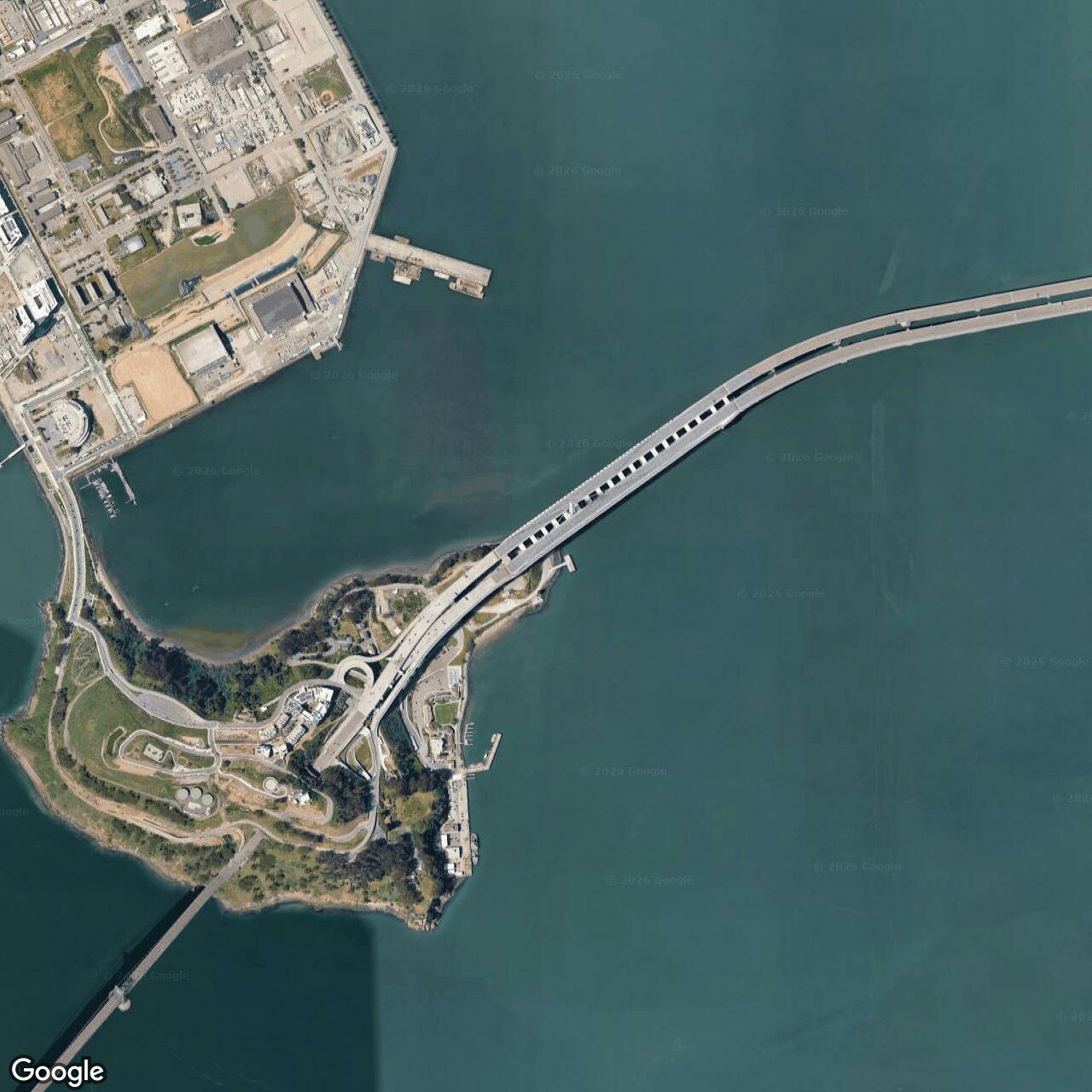
Yerba Buena Island Military Reservation / Army Post at Goat Island, California
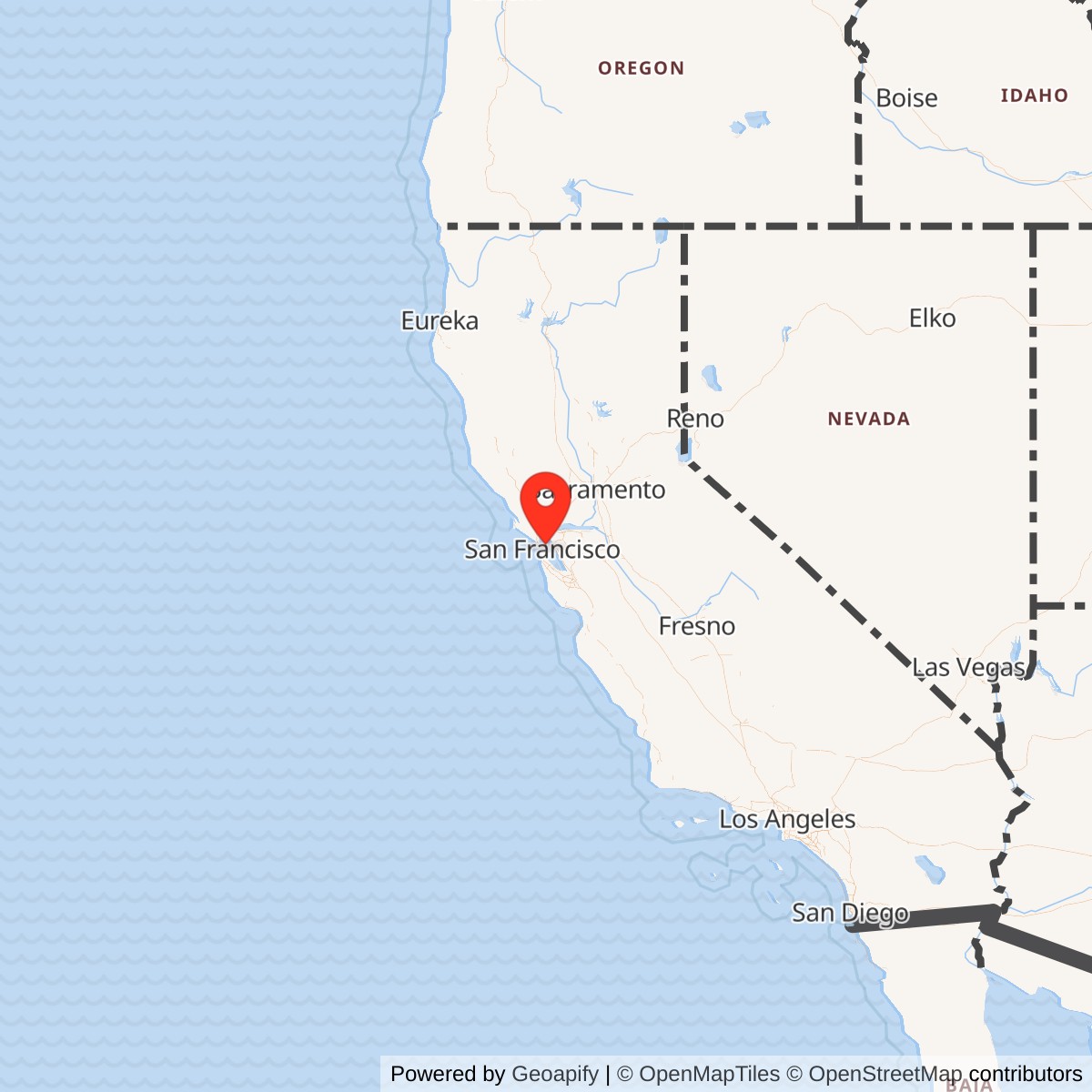
Longitude: -122.359167
Official Base Website: https://www.loc.gov/pictures/item/ca2557/
Current Role: Former Army torpedo-station area within Yerba Buena Island; current mixed Coast Guard, Bay Bridge/FHWA, former Navy housing, historic-building, and redevelopment landscape.
Yerba Buena Island was a former U.S. Army military reservation and harbor-defense post on the natural island between San Francisco and Oakland, later absorbed into the much better-known Navy and Coast Guard history of Treasure Island and Yerba Buena Island. The island was commonly known as Goat Island in the nineteenth century, and Army records and later historical summaries refer to the place through several overlapping names: Army post at Goat Island, Camp Yerba Buena Island, U.S. Engineer Depot at Yerba Buena Island, U.S. Quartermaster Depot at Yerba Buena Island, and the Army Torpedo Station or Torpedo Storehouse on Yerba Buena Island.
U.S. military control of Yerba Buena Island began in 1866 with the establishment of an Army post, the Army garrisoned up to 150 men, and it constructed many buildings on the eastern side of the island. The island later became famous for the Navy's first West Coast training station and for the larger Naval Station Treasure Island, but that Navy use came after the Army had already occupied the island as part of San Francisco Bay's harbor-defense system.
The most important surviving Army-era structure is the 1891 Torpedo Assembly Building, also known as Building 262 or the Torpedo Storehouse. In nineteenth-century coastal-defense terminology, the "torpedoes" assembled there were submarine mines intended for controlled harbor-defense minefields. The Army built the facility to support the defense of San Francisco Bay against hostile vessels that might enter the harbor, and later documentation identifies it as the only extant building that commemorates nearly a half-century of Army presence on Yerba Buena Island.
Mission Evolution
The original Army mission was defensive occupation of a strategically placed island in the middle of San Francisco Bay. The island sat inside the bay rather than at the Golden Gate itself, but Civil War-era and postwar military planners understood its value. A hostile ship slipping past Fort Point, Alcatraz, or other outer works in fog or poor visibility would still have to pass through the bay system. Yerba Buena Island gave the Army a controlled federal foothold close to the main water routes between San Francisco, Oakland, and the interior harbor.
The Army post developed in the 1860s and 1870s. NPS notes that the idea of a military post on Yerba Buena Island came from concern that an invading Civil War-era vessel might evade the outer defenses, and that Camp Yerba Buena Island was completed in the 1870s. The same period produced the Yerba Buena Island lighthouse and associated support buildings, authorized through the War Department and built in 1875 on the island's southern side. The lighthouse was not an Army combat facility in the ordinary sense, but it belonged to the same federal military-maritime landscape: navigation, fog signals, harbor control, and defense all overlapped on the island.
The most distinctive Army mission came in 1891, when the Army Corps of Engineers built the Torpedo Assembly Building and associated torpedo-station structures on the east/northeast side of the island. The building supported the controlled-mine system for San Francisco Bay. Mines could be stored, assembled, tested, and prepared for placement in the bay by cable if needed. This made Yerba Buena Island a technical harbor-defense facility, not just a small garrison. Its value lay in mine warfare, depot work, engineering control, and the protection of the inner bay.
In 1898, after the Spanish-American War emergency and amid the Navy's expansion on the Pacific, President William McKinley granted a substantial part of the island to the Navy for a training station. The Navy established the first U.S. Naval Training Station on the West Coast there, and that mission soon dominated the island's public identity. The Army did not instantly disappear, however. HAER and Treasure Island Museum historical material indicate that the Army continued to occupy and operate the Torpedo Station even after the Navy received the training-station area. The Army torpedo reservation remained a separate functional piece of the island until after World War II and was effectively taken over by the Navy by about 1953.
Operational Role
Yerba Buena Island's Army role was small in manpower but important in system terms. The Army garrison was never a large frontier post or training camp. HAER documentation gives the Army garrison as up to about 150 men. That scale fits the mission. The island required soldiers, engineers, laborers, storehouses, quarters, and support buildings, but it did not need brigade-level maneuver space. Its value came from location and from specialized harbor-defense infrastructure.
The Torpedo Assembly Building explains the actual work of the late Army period. Submarine mines were a central part of late nineteenth- and early twentieth-century harbor defense. The Army's Coast Artillery and Engineer systems used mine casemates, cable networks, storehouses, wharves, and assembly buildings to make harbor channels dangerous to enemy warships while leaving them open to friendly commerce in peacetime. Yerba Buena Island's torpedo station therefore connected the island to the broader Harbor Defenses of San Francisco, even though the best-known forts and batteries were at the Golden Gate, the Presidio, Fort Point, Fort Baker, Fort Barry, Fort Winfield Scott, Alcatraz, and Angel Island.
The operational logic was defensive depth. If outer-gate artillery and mines did not stop an enemy, or if a vessel penetrated the bay in poor visibility, the Army still needed control over interior water approaches. Yerba Buena Island stood at a central point in the bay. A mine-storage and assembly facility there helped support that defensive network, and its wharf/road/rail handling details mattered because mines were not abstract weapons; they were heavy technical devices that required storage, assembly, cable handling, and careful movement.
After 1898 the Army mission coexisted with a growing Navy mission. The Navy training station used most of the usable flat land around East Cove and the northeastern side of the island, while the Army torpedo buildings remained as a specialized reservation. This created an unusual multi-service landscape on a small island: Army mine-defense facilities, Navy recruit training and receiving functions, and lighthouse/Coast Guard maritime functions all occupied the same ground over time.
Facilities and Physical Layout
Yerba Buena Island is a natural island, unlike adjacent Treasure Island, which was later created by dredging in 1936-1937. HAER documentation describes Yerba Buena as the southernmost of the three major natural islands in San Francisco Bay, with Angel Island to the northwest and Alcatraz to the west. The island's topography constrained military use. The same HAER report notes that the Navy training station had access to only about 150 acres and no room for expansion, which explains why the island could support a garrison, torpedo station, lighthouse, and training station but not a large modern base.
The Army's nineteenth-century buildings were concentrated on the eastern side of the island. Only one of the Army-tenure buildings survives: the Torpedo Assembly Building. The building was constructed in 1891 and was later documented by HAER as Building 262. Library of Congress documentation identifies it as significant in military history and architecture, with a period of significance extending from 1891 through 1960. The building is also architecturally important as a very early reinforced-concrete structure associated with Ernest L. Ransome, one of the major nineteenth-century figures in reinforced-concrete engineering.
The torpedo-station complex was more than a single building. The 1995 historical study reproduced by the Treasure Island Museum identifies Buildings 262 through 266 as the U.S. Army Torpedo Station established in 1891. Building 262 was the Torpedo (Mine) Assembly Building; nearby structures included former Army quarters and storage buildings, most of which were demolished by the early 1960s. The survival of Building 262 matters because it is the remaining physical anchor of the Army story on an island now visually dominated by the Bay Bridge, Coast Guard facilities, Navy-era housing, and Treasure Island redevelopment.
The later Navy landscape altered the Army setting. Beginning in 1900, the Navy built barracks, officers' quarters, support buildings, wharves, and training facilities. The San Francisco-Oakland Bay Bridge construction in the 1930s then cut through the island with the Yerba Buena Tunnel and placed bridge infrastructure near the old Army torpedo area. World War II and postwar Navy use converted much of the island to receiving-station, housing, and support functions. The result is a layered military landscape: Army post and torpedo station, Navy training station, Navy receiving station, Coast Guard installation, bridge infrastructure, and modern redevelopment.
Units, Organizations, and Systems
Yerba Buena Island's Army identity was tied less to named tactical units than to the Army's engineer, quartermaster, and harbor-defense systems. The island appears in historical references as a U.S. Engineer Depot and U.S. Quartermaster Depot as well as an Army post. Those labels point to the practical functions that small harbor installations performed: storage, construction support, supply, engineering works, and the maintenance of defense infrastructure.
The Torpedo Assembly Building tied the island specifically to the controlled-mine element of coastal defense. In the late nineteenth century, submarine mining became an important part of the Army's harbor-defense doctrine. The Army Corps of Engineers designed and built much of the technical infrastructure, while later Coast Artillery organizations operated the mine-defense systems in wartime. Yerba Buena Island therefore belongs to the same system-level story as the larger San Francisco Bay mine casemates, batteries, and harbor-defense posts.
The Navy became the dominant organization after 1898. Its training station made Yerba Buena Island one of only four naval training facilities in the United States and the only one on the West Coast. After 1923 the Navy training station closed and the facility became a receiving-ship/receiving-station function. During World War II, Yerba Buena Island fell under Naval Station Treasure Island, headquarters of the Twelfth Naval District, while Treasure Island handled the major wartime personnel-processing mission. Those Navy missions do not erase the Army origin, but they explain why the island is often misfiled as purely Navy history.
The Coast Guard became increasingly important after World War II, especially around the lighthouse reservation and maritime operations. San Francisco planning materials state that 39 acres on Yerba Buena Island are owned and operated by the U.S. Coast Guard, while other lands went to the Federal Highway Administration, the Department of Labor, or the Treasure Island Development Authority under the former Naval Station Treasure Island reuse program. The current island is therefore a mixed federal/local redevelopment landscape rather than an Army post.
Post-Army Transfer, Navy Use, and Current Status
The Army's broad post function gave way to the Navy beginning in 1898, but the Army torpedo reservation lingered for decades. The Treasure Island Museum's summary says the Army built the Torpedo Assembly Building in 1891 and that control of the island was transferred to the Navy in 1898; the more detailed 1995 historical study clarifies that the torpedo station remained an Army reservation until after World War II and was taken over by the Navy by 1953.
The Navy era gave the island its best-known military identity. The first West Coast Naval Training Station operated on Yerba Buena Island until 1923, after which the Navy shifted training to San Diego but kept the island in receiving-station use. During World War II, the adjacent man-made Treasure Island and Yerba Buena Island became part of Naval Station Treasure Island. Navy BRAC documentation identifies former Naval Station Treasure Island as a two-island installation, with Treasure Island to the north and Yerba Buena Island to the south, and states that the installation closed on September 30, 1997.
Current Yerba Buena Island is no longer an Army installation. It is a mixed Coast Guard, transportation, redevelopment, residential, and historic landscape. The San Francisco General Plan describes Yerba Buena Island as a natural island historically used primarily by the Army, Navy, and Coast Guard, and notes surviving non-residential historic buildings including the Nimitz House, Torpedo Assembly Building, and Senior Officers' Quarters. Navy BRAC documentation identifies post-closure conveyances to the Coast Guard, Federal Highway Administration, and Treasure Island Development Authority, while the city continues long-term redevelopment of Treasure Island and Yerba Buena Island.
Chronology
- 1866 U.S. military control of Yerba Buena Island began with the establishment of an Army post on the island.
- 1870s Camp Yerba Buena Island was completed as a small Army post on the island, then widely known as Goat Island.
- 1875 The Yerba Buena Island lighthouse and associated support buildings were completed on the south side of the island.
- 1891 The U.S. Army built the Torpedo Assembly Building / Torpedo Storehouse on the eastern end of Yerba Buena Island for submarine-mine defense of San Francisco Bay.
- 1898-04-12 President William McKinley authorized Navy use of a substantial part of the island for a naval training station, while the Army continued to operate the Torpedo Station.
- 1900-1905 The Navy built the core buildings of the Yerba Buena Island Naval Training Station, beginning the island's dominant Navy identity.
- 1914-1918 Navy activity expanded during the World War I preparedness period; the island became overcrowded, and Navy training shifted increasingly toward San Diego.
- 1923 The Navy training station at Yerba Buena Island was decommissioned and replaced by a more limited receiving-ship function.
- 1933 Construction began on the San Francisco-Oakland Bay Bridge, permanently altering the island's topography and placing bridge infrastructure near the old Army torpedo-station area.
- 1930s The Army torpedo station's original harbor-mine role declined as mine-defense arrangements and harbor-defense doctrine changed.
- 1941-1942 Naval Station Treasure Island developed as a major World War II Navy installation, with Yerba Buena Island functioning under the wider naval station system.
- 1946 Navy receiving functions were re-designated toward Treasure Island, and Yerba Buena Island shifted increasingly into housing and support roles.
- 1953 Historical building records indicate that the Army Torpedo Station reservation had been taken over by the Navy by this time and was essentially no longer used for its original Army purpose.
- 1960s Most remaining former Army torpedo-station ancillary structures were demolished or converted, while Building 262 survived.
- 1993 Naval Station Treasure Island was selected for closure under BRAC.
- 1997-09-30 Naval Station Treasure Island closed; Yerba Buena Island entered a mixed Coast Guard, federal transportation, and local redevelopment period.
- 2008 The Torpedo Storehouse / Torpedo (Mine) Assembly Building and Long Range Accuracy Storage Building were listed in the National Register of Historic Places.
- Present Yerba Buena Island is no longer an Army installation. It remains a layered military and redevelopment landscape with Coast Guard facilities, Bay Bridge infrastructure, former Navy housing and historic buildings, and the surviving Army Torpedo Assembly Building.