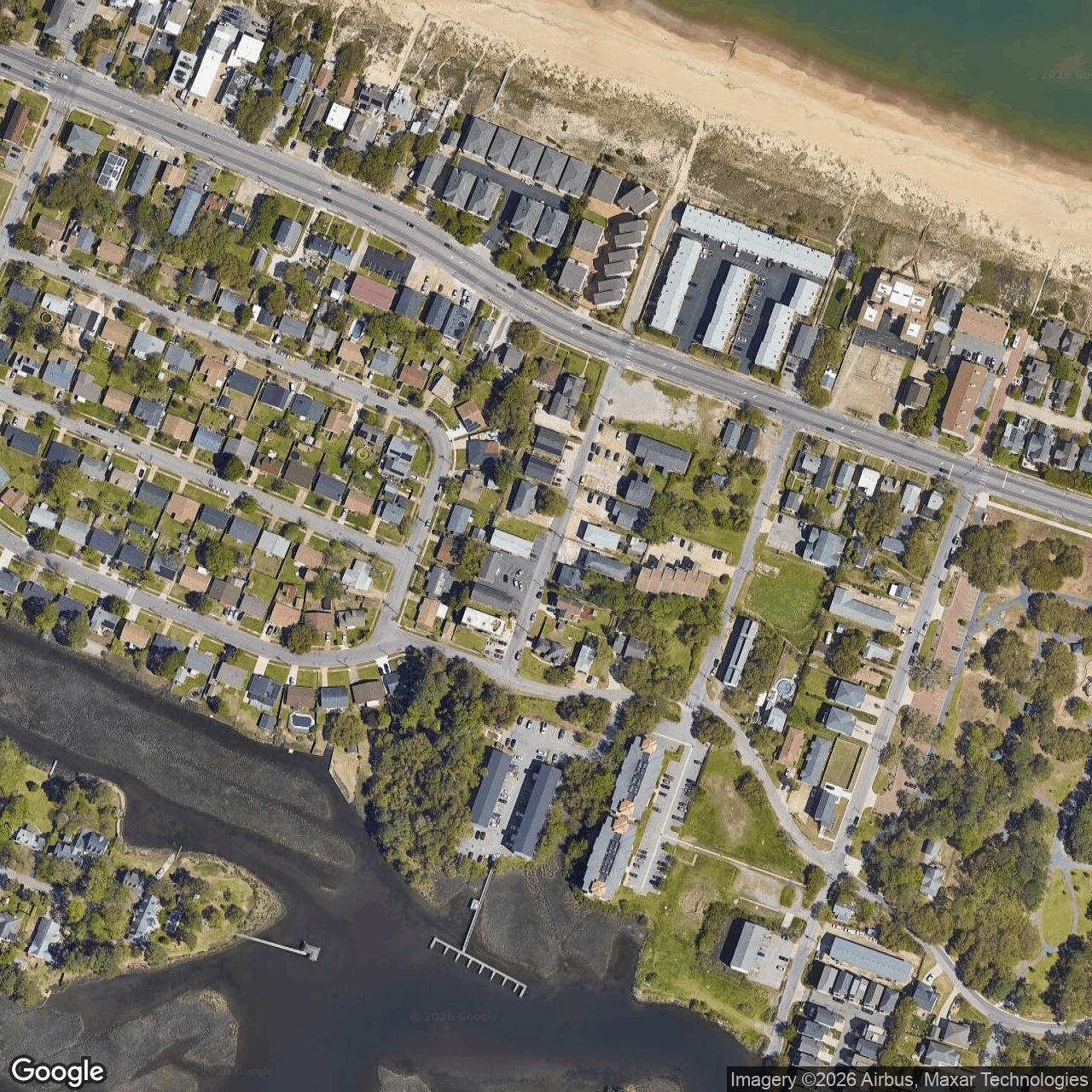
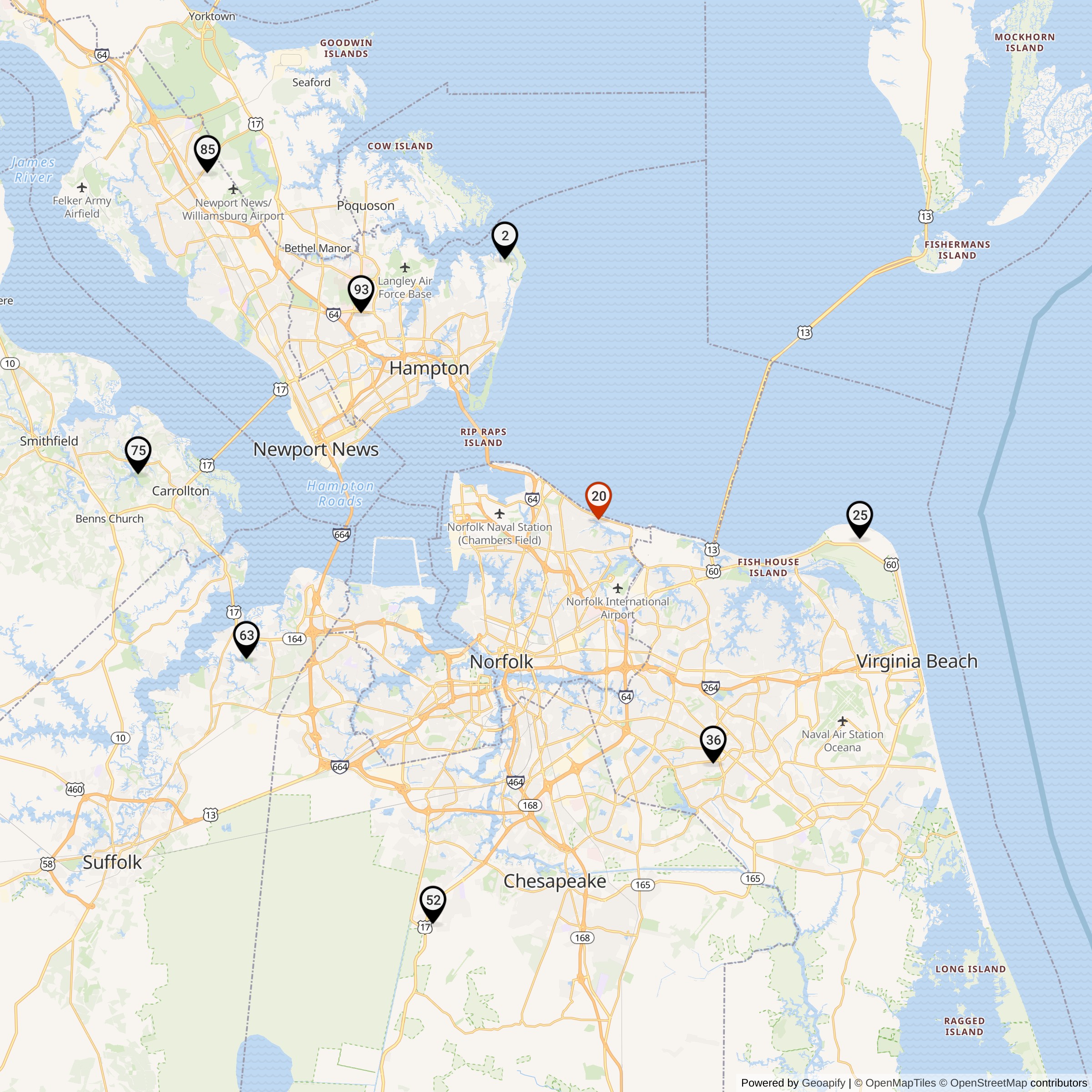
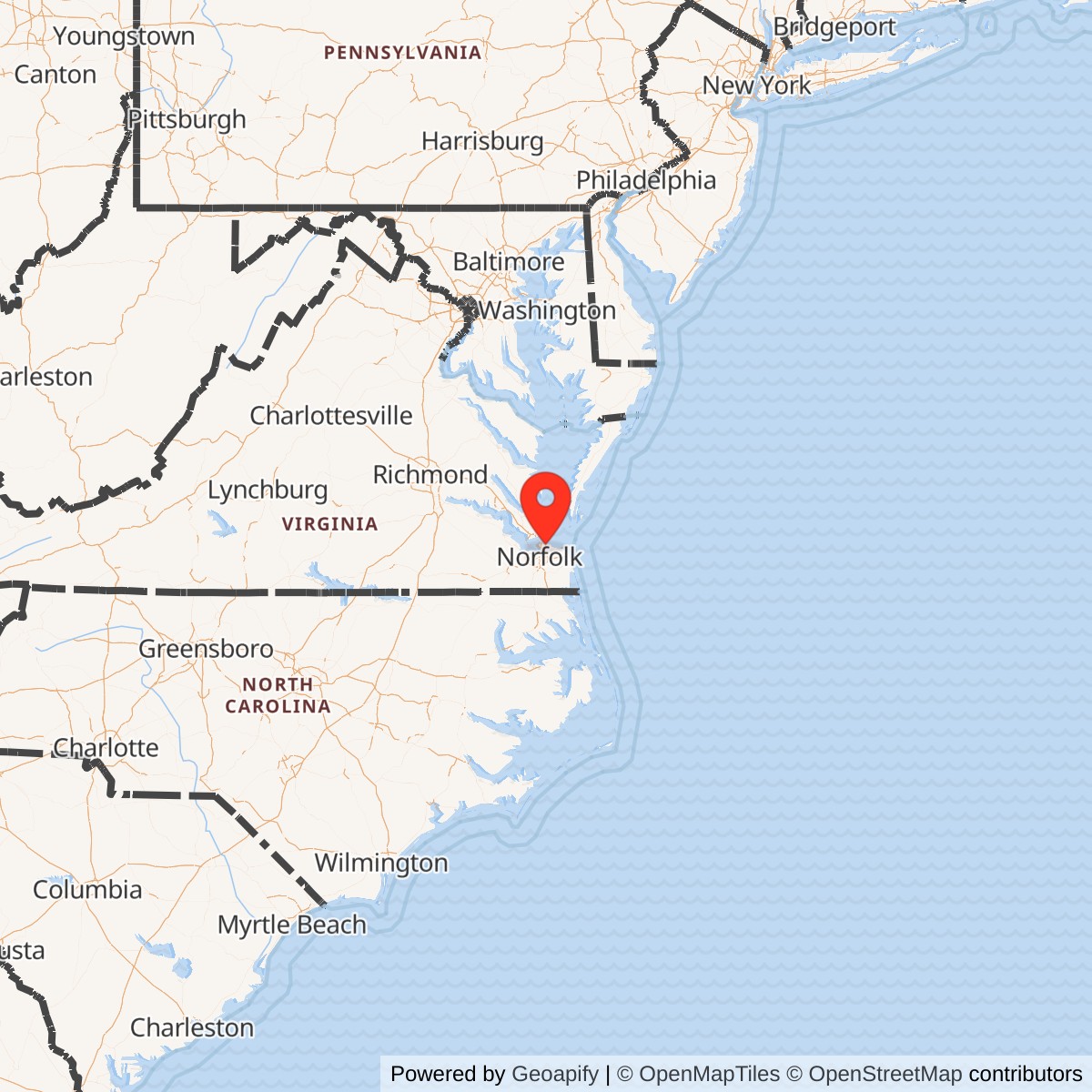
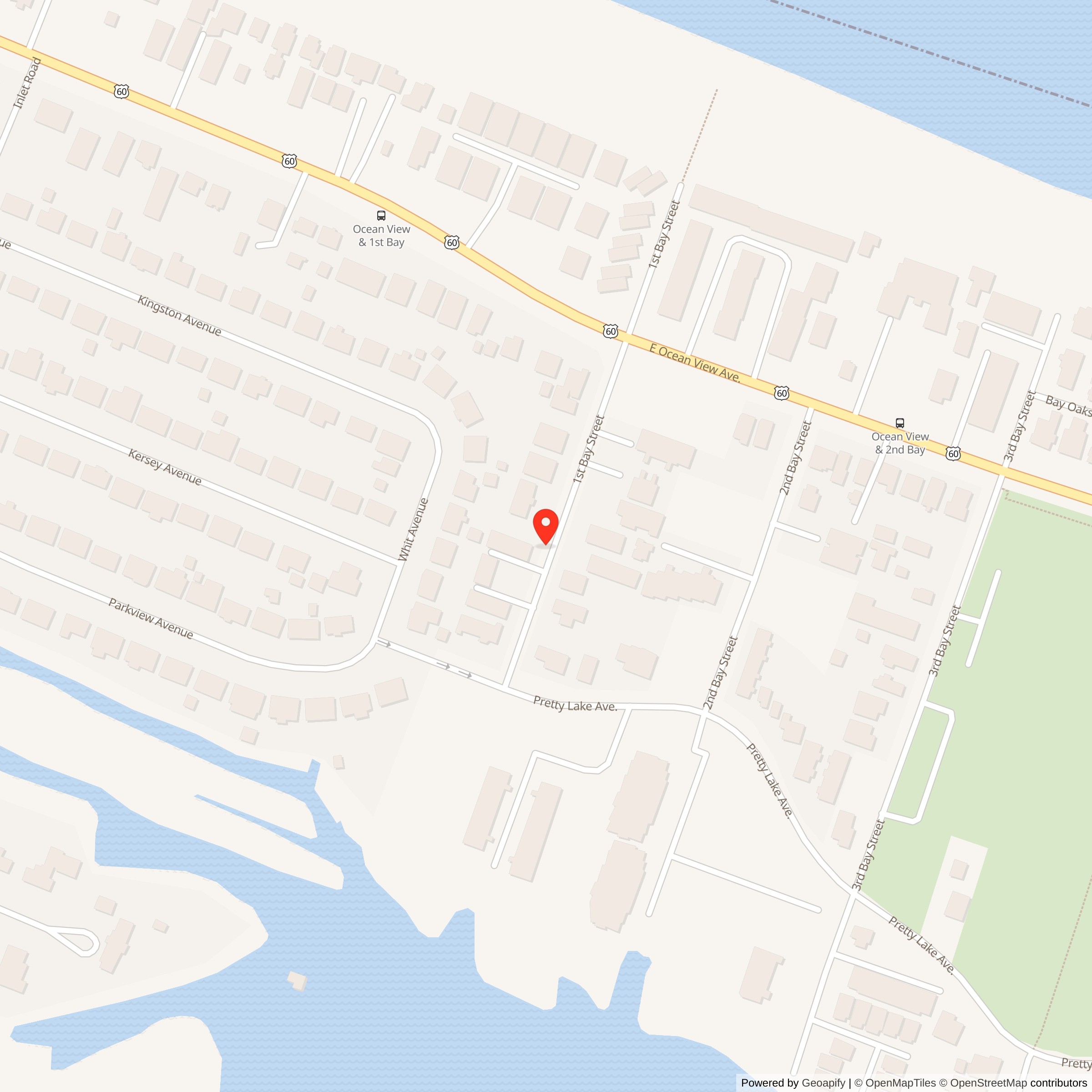
Nike Missile Site N-20 Launcher, Ocean View Virginia
Longitude: -76.216
This location was part of the Norfolk Defense Area
Site ID: N-20
Site Role: Launcher and IFC were both located at this temporary site
A typical Nike air defense site consisted of two separate parcels of land. One area was known as the Integrated Fire Control (IFC) Area. This site contained the Nike system's ground-based radar and computer systems designed to detect and track hostile aircraft, and to guide the missiles to their targets.
The second parcel of land was known as the Launcher Area. At the launcher area, Nike missiles were stored horizontally within heavily constructed underground missile magazines. A large, missile elevator brought the Nikes to the surface of the site where they would be pushed across twin steel rails to one of four satellite launchers.
Elaboration on how Nike worked here.
Current site status: Redeveloped
N-20 was the Ocean View temporary Nike missile site in Norfolk, Virginia, associated with the Norfolk Defense Area during the early Cold War. It is best understood as a short-lived or interim Nike Ajax position rather than a conventional permanent Nike battery with a fully documented, long-term integrated fire control area and launch area. The strongest federal narrative source lists N-20 as "Ocean View (temporary site)" among the Nike batteries built in the mid-1950s to defend the Tidewater region. Later site-condition registries identify the surviving trace, if any, as the control-side location on Ocean View Avenue and state that the site has been overbuilt, with no visible remains.
The site is no longer active. N-20 was never converted to Nike Hercules and does not appear in the later long-form tabular Virginia Nike site list that records permanent Norfolk sites such as N-02, N-25, N-36, N-52, N-63, N-75, N-85, and N-93. Its temporary character means that its exact operational chronology is less clearly preserved than the permanent Norfolk batteries. The best-supported interpretation is that N-20 belonged to the first Nike Ajax deployment pattern in the Norfolk Defense Area, probably dating to the mid-1950s, and that its function was later absorbed into the Fort Story battery, N-25/N-29.
Location and Military Setting
N-20 was located in the Ocean View area of Norfolk, a coastal neighborhood on the south side of the Chesapeake Bay. This was a logical place for an early temporary Nike position because the Norfolk Defense Area was not defending a single downtown city in the ordinary sense. It was defending one of the most strategically important military concentrations in the United States: the Hampton Roads naval complex, Norfolk's port and ship-repair infrastructure, the approaches to the Chesapeake Bay, Langley Air Force Base and NASA Langley to the north, Fort Monroe and the Hampton Roads Army Terminal, and a dense cluster of Army, Navy, Air Force, and industrial facilities around the Elizabeth River, James River, and Chesapeake Bay.The Ocean View position sat along the northern edge of Norfolk, facing the bay and the approaches to Hampton Roads. From a Cold War air-defense perspective, this was valuable terrain. The Nike system was a point-defense weapon, but the placement of batteries around the Tidewater region formed a ring or arc of coverage around naval installations, ports, airfields, and command facilities. Ocean View's coastal location made it useful as a temporary or early site before the more durable network settled into its later configuration.
The broader Norfolk Nike network included Fox Hill, Ocean View, Fort Story, Kempsville, Deep Creek/Portsmouth, Nansemond/Suffolk, Smithfield/Carrollton, Denbigh/Patrick Henry, and Hampton/Spiegelville. Headquarters and command facilities were located at Fort Monroe, Ballantine School in Norfolk, Reedsville/South Norfolk, Craddock Branch/Portsmouth, and Newport News. Command and control for the later Norfolk network was operated from a BIRDIE site at the Hampton Roads Army Terminal. Within that network, the sites modernized for Nike Hercules were N-25, N-52, and N-85. N-20 was not among them.
Mission Evolution
The mission of N-20 was to contribute to the Nike Ajax defense of Hampton Roads during the period when Soviet long-range bomber attack was considered a credible threat to the continental United States. Nike Ajax batteries were designed to intercept hostile aircraft that penetrated the outer air-defense screen of long-range radar warning, fighter interceptors, and Air Force air-defense systems. The Army's Nike batteries formed the last line of defense around targets considered important enough to require local missile protection.At Hampton Roads, the protected target set was unusually important. Norfolk was the center of a massive naval complex, and the naval facilities in the region were vital to Atlantic fleet operations, ship repair, amphibious operations, logistics, and maritime control. Langley Air Force Base and NASA Langley added aviation and research value. Fort Monroe and the Hampton Roads Army Terminal added Army command and logistical significance. A Soviet bomber attack on the Tidewater region would not merely have been an attack on a city; it would have targeted the operational infrastructure of the Atlantic defense establishment.
N-20's temporary designation suggests that it helped fill an early coverage or deployment requirement while permanent batteries were being completed, reorganized, renumbered, or modernized. The site notes specifically state that battery operations went to Fort Story. That is significant. Fort Story, later identified as N-25/N-29, became one of the major Norfolk-area Nike sites and was later converted for Nike Hercules. N-20 therefore appears to represent an interim Ocean View position in the early Norfolk Ajax network rather than a battery that developed into a permanent stand-alone Hercules site.
The Ajax-era role of N-20 also explains why it leaves a lighter record than the surviving and long-lived sites. Hercules conversion required major investment, modified magazines and launchers, additional security, and in many cases longer service into the 1970s. Ajax-only and temporary sites, by contrast, were often deactivated or absorbed when Hercules coverage reduced the number of batteries needed. The Norfolk overview confirms that only N-25, N-52, and N-85 were modernized for Hercules. N-20 was outside that later modernization group.
Operational Role and Site Function
A standard Nike Ajax battery had several main functional zones. The integrated fire control area, usually called the IFC or control site, contained the acquisition radar, target-tracking radar, missile-tracking radar, computer and plotting equipment, generator support, and operational buildings. The launch area held the underground missile magazines, elevators, launch rails, missile assembly and test building, fueling facilities, generator building, and launch-control equipment. The administrative and housing area, where present, supported the soldiers who operated and guarded the site.N-20's surviving description is unusual because it identifies the Ocean View location as "C," meaning control, and then notes that battery operations went to Fort Story. This strongly suggests that N-20 was not a normal full permanent site with a well-documented separate Ocean View launcher area. It may have functioned as a temporary control/battery position associated with the developing Fort Story defense mission, or as an interim site whose launch function was relocated or consolidated. Because the site has been overbuilt and no visible remains are reported, the physical configuration cannot be reconstructed with the same confidence as N-25, N-52, N-75, or other better-documented Norfolk batteries.
If N-20 operated as an Ajax-era temporary position, its equipment would have been consistent with early Nike Ajax practice: conventional Nike Ajax missiles rather than nuclear-capable Hercules missiles, Ajax fire-control radars, and the highly choreographed radar-computer command guidance process used throughout the Nike system. Ajax missiles were liquid-fueled, used a solid booster, and relied on ground-based radar tracking and command guidance. The fire-control system tracked both target and missile and used a computer to generate steering commands for interception.
Nike Ajax operation was labor-intensive and required constant training. Crews had to maintain radar readiness, test communications, handle liquid fuels and oxidizers, maintain missile electronics, drill on target-acquisition procedures, and coordinate with higher headquarters to avoid conflicts with friendly aircraft. At a coastal temporary site like Ocean View, the practical mission would have involved fitting into a larger identification and engagement network covering Hampton Roads airspace.
Physical Description
The exact physical layout of N-20 is not well preserved. The site notes describe the location as being on Ocean View Avenue in a residential/commercial area and state that it has been overbuilt with no signs left. This implies that any small buildings, pads, fencing, radar hardstands, temporary structures, access roads, or support features that may have belonged to N-20 have been removed or covered by later development.The temporary character of the site makes it unlikely that N-20 retained the substantial physical record seen at permanent launch sites. Permanent Nike Ajax launch areas often contained three underground magazines, missile assembly and test buildings, generator buildings, fueling berms, blast plates, crew hatches, access roads, and administrative buildings. Sites modernized for Hercules retained or modified even more substantial features. N-20, by contrast, is documented as temporary and lacks the surviving launch-area detail that appears for other Norfolk sites.
Relationship to Fort Story / N-25
The most important interpretive point for N-20 is its relationship to Fort Story. Site notes say that the Ocean View position was temporary and that battery operations went to Fort Story. Fort Story was located at Cape Henry, guarding the entrance to the Chesapeake Bay and the eastern approaches to Hampton Roads. It later appears in sources as N-25/later N-29 or N-25/29 and was one of the Norfolk sites converted to Nike Hercules.This relationship suggests that Ocean View's temporary function may have belonged to an early staging or interim deployment phase before the Fort Story installation fully assumed the coastal defense role. Fort Story was better suited to become a permanent coastal battery: it was already military land, sat at a strategic entrance to the bay, and had room for a more complete missile installation. Ocean View, in contrast, was an urbanized or urbanizing residential and commercial coastal neighborhood. A temporary Nike position there could provide near-term coverage, but it would be more difficult to preserve as a permanent Cold War military installation.
Current Status / Reuse
N-20 is closed, inactive, and no longer a military installation. The site is not active and is not preserved as a Nike missile facility. The available site-condition notes identify the Ocean View Avenue area as residential/commercial and report that the site has been overbuilt with no signs left.
Chronology
- 1945 Bell Telephone Laboratories and Western Electric began work on what became the Nike surface-to-air missile system, initially intended to provide guided missile defense against high-altitude bomber attack.
- 1949 The Soviet Union tested an atomic bomb, accelerating U.S. concern about continental air defense and the vulnerability of industrial, military, and urban targets.
- 1950 The Korean War and broader Cold War mobilization increased pressure to deploy effective air defenses around key U.S. military and industrial centers.
- 1951 A Nike missile successfully intercepted a drone bomber at White Sands, demonstrating the practical promise of the system.
- 1953 The United States began deploying Nike Ajax batteries around priority defense areas.
- 1954 Construction and activation of Nike Ajax batteries expanded around the United States, including the Norfolk/Hampton Roads region.
- Mid-1950s The Norfolk Defense Area was built to defend the Tidewater region, including the world's largest naval complex and associated Army, Air Force, port, and industrial facilities.
- Mid-1950s N-20 was identified as the Ocean View temporary Nike site in the Norfolk Defense Area.
- Mid-1950s N-20 functioned as part of the early Ajax-era Norfolk defense network, apparently as an interim Ocean View position.
- Late 1950s Battery operations associated with the Ocean View temporary site were transferred or absorbed into the Fort Story Nike mission.
- 1958 Nike Hercules began entering service elsewhere in the United States, reducing the number of sites required in some defense areas because of the missile's longer range and nuclear-capable warhead.
- 1958-1960 Norfolk-area Hercules modernization focused on N-25, N-52, and N-85, not N-20.
- 1960s The Ocean View N-20 site disappeared from the permanent operational inventory and did not remain as one of the long-lived Norfolk batteries.
- By the post-Nike period The Ocean View Avenue site area had been overbuilt by residential and commercial development, with no visible remains reported.
List of all Nike Installations in Virginia