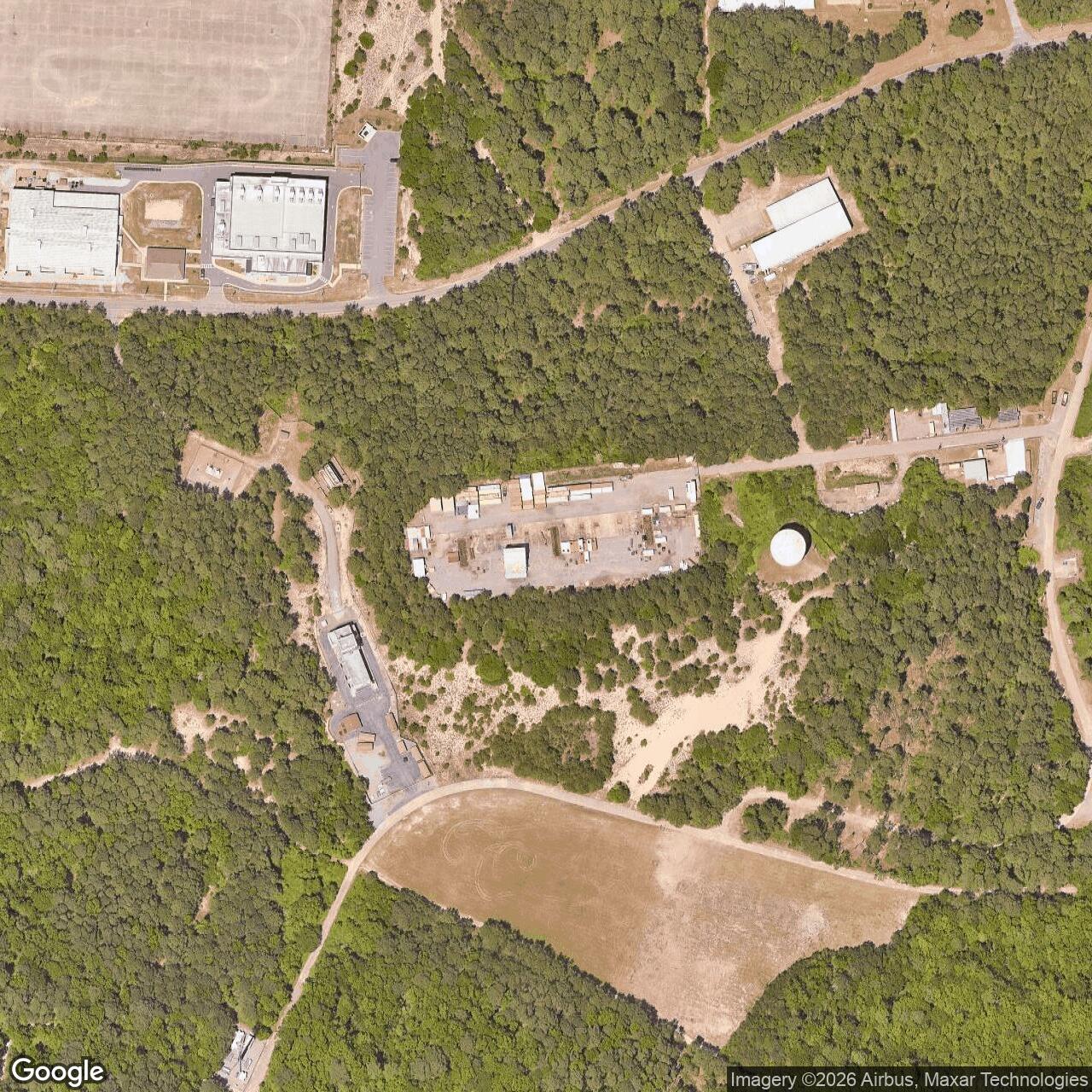
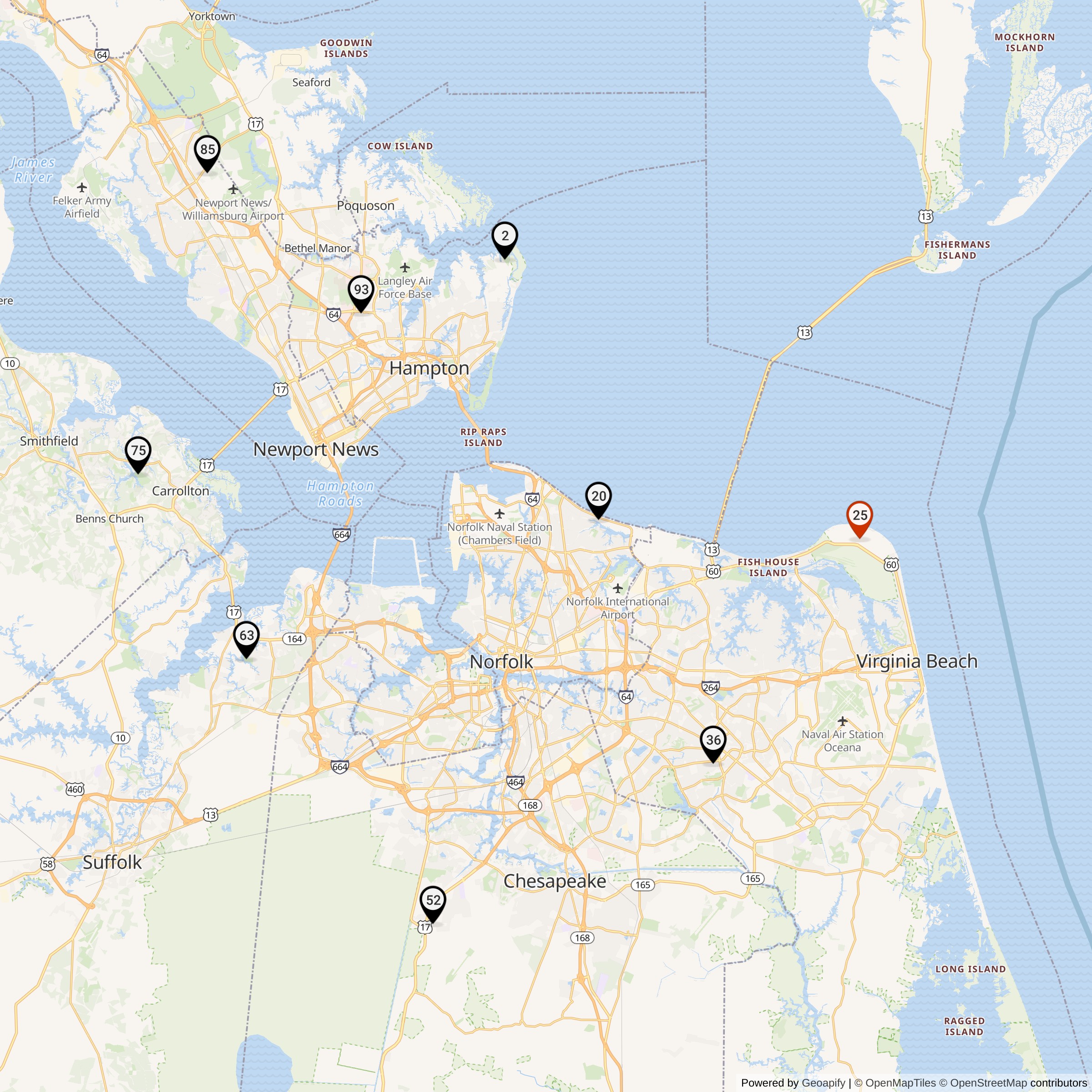
Nike Missile Site N-25 Launcher, Fort Story Virginia
Longitude: -76.0190504968456
This location was part of the Norfolk Defense Area
Site ID: N-25
The missiles at this Launch Area were controlled by the Integrated Fire Control site located here.
Site Role: Launcher
A typical Nike air defense site consisted of two separate parcels of land. One area was known as the Integrated Fire Control (IFC) Area. This site contained the Nike system's ground-based radar and computer systems designed to detect and track hostile aircraft, and to guide the missiles to their targets.
The second parcel of land was known as the Launcher Area. At the launcher area, Nike missiles were stored horizontally within heavily constructed underground missile magazines. A large, missile elevator brought the Nikes to the surface of the site where they would be pushed across twin steel rails to one of four satellite launchers.
Elaboration on how Nike worked here.
Date Site Converted to Hercules Missile: May 23, 1959
Nike Hercules were more powerful and nuclear capable missiles. Many locations originally built for the Ajax were later modified and upgraded to the newer Hercules.
Current site status: Army Base
Nike Missile Site N-25, often shown in later summaries as N-25 / N-29, was a former U.S. Army Nike Ajax and Nike Hercules air-defense missile installation at Fort Story, Virginia, now part of Joint Expeditionary Base Little Creek-Fort Story in Virginia Beach. It was part of the Norfolk Defense Area, the Cold War air-defense network built around Hampton Roads, one of the most important naval, port, shipbuilding, and military transportation regions in the United States. The Nike air-defense mission at this site is inactive. The underlying Fort Story installation is still an active military installation, but the Nike battery no longer performs any air-defense function.
Location and Physical Setting
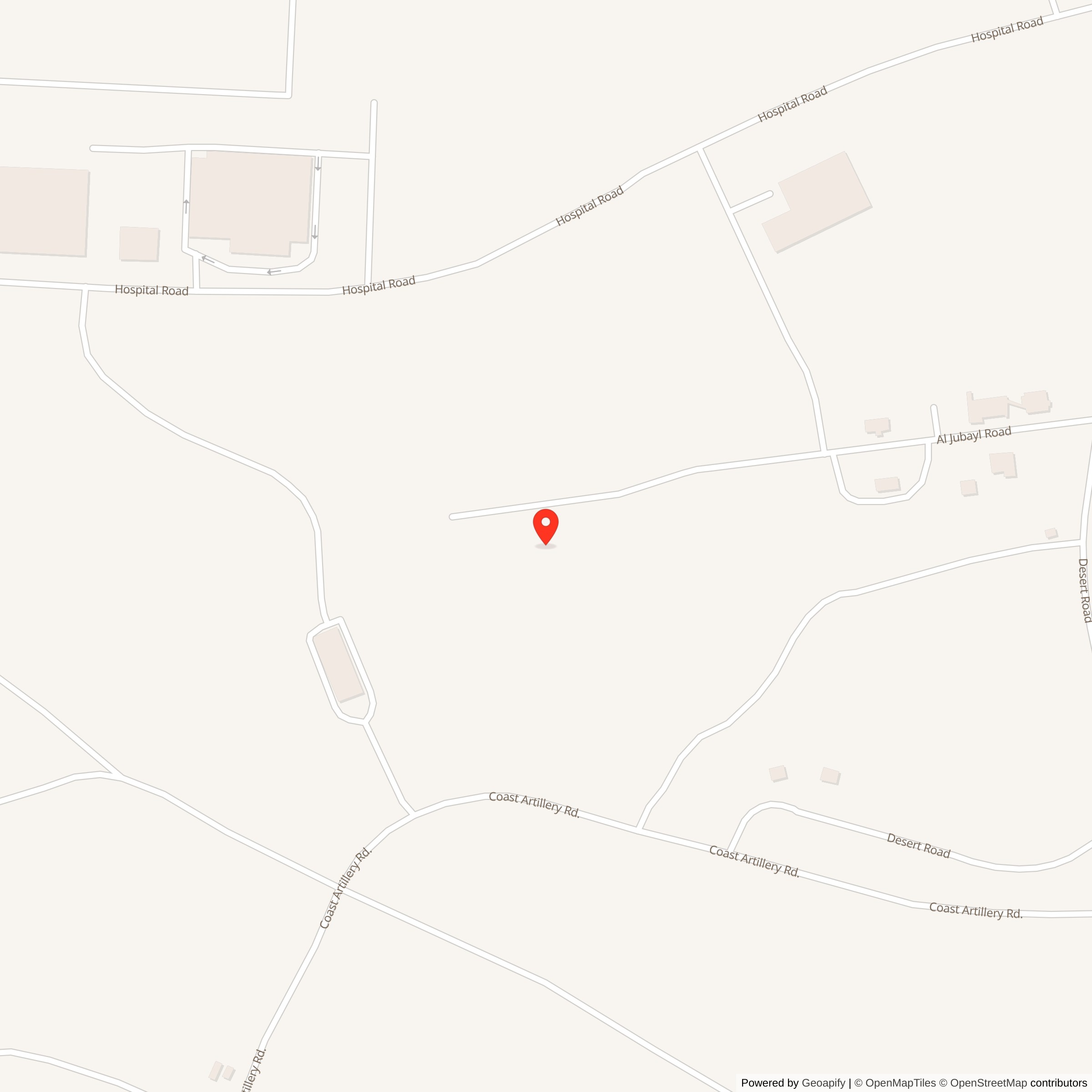
N-25 was located at Fort Story on Cape Henry, where the Chesapeake Bay meets the Atlantic Ocean. The site's geography is central to understanding why it was selected. Fort Story controlled ground at the mouth of the Chesapeake Bay, a strategic entrance to Hampton Roads, Naval Station Norfolk, Norfolk Naval Shipyard, Langley Air Force Base, the Army and Navy logistics terminals, the Elizabeth River shipbuilding and repair complex, and the wider maritime-industrial region of southeastern Virginia. An enemy bomber attack against Hampton Roads during the early Cold War could have threatened Atlantic Fleet readiness, naval repair capacity, amphibious and logistics training, port movement, command-and-control infrastructure, and one of the densest concentrations of military installations in the country.The Fort Story landscape already had a long military history before Nike. Cape Henry had been federally important since the colonial and early national periods because of its navigational and harbor-defense value. Fort Story became a military installation in 1914, and its earliest Army role was coastal defense. During the first half of the twentieth century, the Army used Fort Story for coast artillery, harbor-defense functions, and defenses of the Chesapeake Bay entrance. The official Fort Story environmental history describes the post's early armament as including six-inch and five-inch rapid-fire guns, later supplemented by Battery Pennington and Battery Walke with M1920 16-inch howitzers. During World War II, Fort Story's defenses included permanent six-inch batteries, 16-inch Navy rifles, and mine-casemate support for offshore minefields.
After World War II, the coast-artillery mission declined rapidly, but Fort Story's location remained valuable. Amphibious warfare training began at the post in 1940 and became a more permanent part of the post's mission in 1946 with the arrival of the 458th Amphibious Truck Company. The post's beaches, dunes, surf, open terrain, and access to the mouth of the Chesapeake Bay made it suitable for amphibious operations, logistics-over-the-shore training, and transportation training. The Nike battery therefore did not occupy an isolated greenfield tract. It was built into an active military reservation whose mission was shifting from fixed coastal artillery to a mix of amphibious training, transportation training, and Cold War air defense.
The physical Nike layout used three principal areas: the Integrated Fire Control area, the launch facility, and the administration area. Official Fort Story environmental material states that the IFC site held radar and associated control equipment, the missile launch facility held the missiles in large underground magazines, and the administration area held offices and buildings associated with the daily lives of the soldiers who worked there. It also states that the administration area was in the central section of Fort Story, between the IFC on the primary dune and the missile launch facility atop the large secondary dune. This arrangement made tactical sense. The IFC needed a high, open radar position with good coverage over the coastal approaches. The launch area needed a secure tract with enough room for underground magazines, launcher rails, support buildings, and safety separation, while still remaining within the geometry required for Nike command guidance.
Mission Evolution
The Fort Story Nike site was created during the transition from conventional antiaircraft artillery and coastal defense to guided missile air defense. In the early 1950s, U.S. defense planners expected that a Soviet attack on the continental United States would likely come from long-range bombers carrying nuclear weapons. The Army's Nike system was the last fixed guided-missile layer intended to defend selected urban, industrial, military, and transportation targets after outer warning, fighter-interceptor, and radar systems had detected an attack.N-25 initially belonged to the Nike Ajax era. Nike Ajax was the Army's first operational guided surface-to-air missile. It used a liquid-fueled sustainer and solid booster, carried conventional high-explosive fragmentation warheads, and depended on ground-based radar and computer guidance rather than an onboard seeker. The IFC tracked both the target and the outgoing missile, computed an intercept, and transmitted steering commands to the missile. The launch area stored the missiles horizontally in underground magazines, raised them to the surface by elevator, and moved them to launch rails.
Fort Story's Nike role soon shifted to Nike Hercules. Hercules was the larger, longer-ranged successor to Ajax. It used solid propulsion, had greater range and altitude capability, and could carry either conventional or nuclear warheads. In a region like Hampton Roads, Hercules mattered because it could engage higher, faster, and more numerous aircraft and could defend a wider area with fewer batteries. Official Norfolk Defense Area summaries identify N-25, N-52, and N-85 as the Norfolk sites modernized to fire Nike Hercules. Appendix D of History of the Nike Hercules Weapon System gives N-25 a Hercules conversion construction period from May 1958 to May 1959 and a Hercules operational date of May 23, 1959. Fort Story's own environmental-history material describes Fort Story as one of the sites upgraded from Ajax to Hercules and states that the upgrade allowed the site to retain the buildings and facilities constructed for the Ajax program, with the main physical alteration being the addition of auxiliary acquisition radar to increase surveillance range and reduce vulnerability to electronic countermeasures.
N-25's mission was not to defend Fort Story alone. It defended a sector of the Hampton Roads target complex. The Norfolk Defense Area included fixed Nike sites at Fox Hill, Fort Story, Kempsville, Deep Creek / Portsmouth, Nansemond / Suffolk, Smithfield / Carrollton, Denbigh / Patrick Henry, Hampton / Spiegelville, and a temporary Ocean View site. The network covered the region from multiple directions around the harbor, bay entrance, cities, shipyards, and military posts. N-25's Fort Story position gave the network a battery near the ocean entrance to the Chesapeake Bay and the approaches to Naval Station Norfolk and the lower bay.
Operational Role and Facilities
As a Nike firing battery, N-25 divided its work between the IFC, launch area, and support/administrative functions. The IFC was the radar and command-guidance side of the battery. It would have included acquisition radar, target-tracking radar, missile-tracking radar, battery-control equipment, communications, generators, and radar pads or towers. During Hercules operation, the site also gained auxiliary acquisition radar, which improved the ability to detect and track incoming targets at longer range and under more difficult electronic-warfare conditions.The launch area was the missile-storage and firing side. Official Fort Story material describes three large underground missile silos or magazines at the launch site. The Nike inventory's "double" / N-25/29 notation and its 24-launcher configuration indicate that Fort Story had a larger-than-standard or paired-site character compared with many single Nike batteries. Launch-area facilities would have included underground magazines, missile elevators, launcher rails or launch positions, launcher-control equipment, missile-assembly and test functions, security fencing, access roads, guard facilities, power equipment, and maintenance buildings. Because Fort Story was an active military post, the Nike launch and IFC areas also existed within a larger restricted training environment rather than on isolated civilian parcels.
The Fort Story site's coastal location shaped the way it looked and functioned. Unlike many inland Nike batteries placed on suburban high ground or farmland, N-25 occupied a dune-and-coastal-post landscape that had already been modified by decades of Army coastal-defense construction. The IFC on the primary dune would have benefited from elevation and open radar horizons. The launch area atop the large secondary dune used terrain that was both defensible and separated from the post's central administrative and training zones. The former Nike features were therefore layered over an older coast-artillery and mine-defense landscape, making the site part of a longer story of fixed defenses at the mouth of the Chesapeake Bay.
Command and Control
N-25 was one component of a regional and national air-defense system. The Norfolk Defense Area's headquarters facilities were located at Fort Monroe, Ballantine School in Norfolk, Reedsville / South Norfolk, Cradock Branch / Portsmouth, and Newport News. Federal Cold War missile-history material states that command and control for the Norfolk Nike network was operated from a BIRDIE site at the Hampton Roads Army Terminal. Later summaries also associate Norfolk air-defense command functions with Cape Charles Air Force Station and the AN/GSG-5(V) BIRDIE system as the Nike network became more integrated with the Air Force / NORAD radar system.For the Fort Story battery, this meant local crews did not simply decide independently to fire. The site's radars, missile crews, and launch-control functions were tied into a wider command chain that assigned targets, coordinated identification, prevented duplicate engagements, and integrated the battery with the rest of the air-defense network. This was especially important in Hampton Roads because the region had dense military and civilian air traffic, Navy and Air Force operations, shipping, training activity, and multiple high-value targets close together.
Units and Personnel
The public sources available for N-25 do not provide a complete year-by-year unit roster in the same form available for some other Nike sites. What can be stated securely is that both Regular Army and Virginia Army National Guard units contributed to manning the Norfolk Defense Area. Federal summaries note that in 1958, men of the 4th Missile Battalion, 51st Artillery formed an integrated choral group that performed at local hospitals and other venues. A National Register context for the Norfolk Nike network also identifies the 4th Missile Battalion, 51st Artillery of Hampton Roads' 3rd Artillery Group as a regional Nike unit and notes that it was recognized as the nation's top Nike firing battalion of 1959 after scoring nearly perfectly at annual practice firing at Red Canyon Range, New Mexico.Daily work at N-25 would have been highly technical and repetitive. Radar crews maintained acquisition, target-tracking, and missile-tracking equipment. Computer and control personnel maintained the engagement system. Launcher crews maintained magazines, elevators, missile-handling equipment, rails, launchers, generators, security systems, and the missiles themselves. Soldiers also drilled constantly on alert procedures, communications, target tracking, launcher readiness, and site defense. The point of the installation was readiness: no Nike missile was fired in combat from Fort Story, but the battery existed so that crews could respond quickly if hostile bombers approached Hampton Roads.
Fort Story's wider post mission also shaped soldier life. Unlike many Nike sites located in suburban or rural satellite parcels, N-25 stood within an established Army post that also hosted amphibious, transportation, and later logistics-over-the-shore training. The Nike soldiers therefore worked alongside other Army activities and in a place already defined by training ranges, coastal terrain, security gates, older artillery batteries, and military support buildings.
Current Status and Reuse
The N-25 Nike air-defense mission is closed. The former Fort Story Nike parcels are not public parkland like some decommissioned Nike sites; they remain inside an active military installation. This is an important difference from many other Nike batteries that became schools, parks, police academies, or private industrial parcels. Because N-25 remained on Fort Story, its post-Nike history is tied to military reuse rather than civilian transfer.Site-observer notes collected by the Nike historical community describe the IFC area as gated and secure, with buildings still in use and two radar towers visible without radar units. Those notes describe the launch area as a restricted training area, with secured gates, remaining magazine features, and military warning signs. The same source notes that buildings and a guard shack survived at the launch side and that parts of the site were associated with Marine Corps or amphibious/reconnaissance training use. These notes should be treated as field observations rather than official property records, but they are consistent with the broader official history: after Nike, Fort Story continued to support amphibious warfare, transportation, logistics-over-the-shore, and specialized training.
Official Navy sources state that Joint Expeditionary Base Little Creek-Fort Story was established on October 1, 2009, and consists of two properties: JEB Fort Story and JEB Little Creek. The official installation page describes the base as a major installation for housing and training expeditionary forces. Fort Story's environmental-history material states that, after the Nike program, the post continued to support amphibious warfare and transportation training, later Logistics Over-the-Shore training, and that Navy management began in 2009 as a result of BRAC. This means the former N-25 landscape survives, if at all, as part of a controlled military training environment.
Chronology
- 1607 English colonists made first landfall at Cape Henry, on or near what later became Fort Story.
- 1792 The first federally constructed lighthouse in the United States was built at Cape Henry.
- 1913 Federal funding was appropriated for establishing an Army garrison at Cape Henry.
- 1914 Fort Story became a military installation at Cape Henry.
- 1921 Fort Story's early defenses were supplemented by two batteries of M1920 16-inch howitzers, later known as Battery Pennington and Battery Walke.
- 1940 Amphibious warfare training began at Fort Story.
- 1941-1943 The Army constructed permanent six-inch batteries along the Fort Story dune line during World War II.
- 1944 The Army constructed additional 16-inch Navy-rifle batteries and mine-casemate support for offshore minefields at Fort Story.
- 1946 Amphibious training became a permanent component of Fort Story's postwar mission with the arrival of the 458th Amphibious Truck Company.
- Early 1950s U.S. air-defense planning emphasized guided missile defense of major military, industrial, transportation, and urban target regions against Soviet bomber attack.
- 1957 Nike Site N-25 / N-29 at Fort Story is generally listed as entering service as part of the Norfolk Defense Area.
- 1958 Fort Story's Nike Ajax facilities were in the period of Nike Hercules conversion and modernization.
- May 1958-May 1959 Appendix D records the N-25 Hercules conversion construction period.
- May 23, 1959 Appendix D records N-25 as operational with Nike Hercules missiles.
- 1959 The 4th Missile Battalion, 51st Artillery, associated with the Hampton Roads Nike network, was recognized in contemporary reporting as a top Nike firing battalion following annual practice firing.
- 1960s N-25 continued as one of the Hercules-capable Norfolk Defense Area batteries while many Ajax-only sites elsewhere were deactivated.
- June 1971 Common Nike site inventories list N-25/29 as deactivated in June 1971.
- April 1974 Official Fort Story environmental-history material states that Fort Story's Nike facilities were decommissioned in April 1974; this appears to represent final facility closure or the official end of Fort Story's Nike facility status, even though other Nike inventories place operational deactivation in June 1971.
- Late 1970s After the end of the Nike mission, Fort Story continued to be used for amphibious warfare and transportation training, although some training declined during this period.
- 1980s Fort Story's amphibious and transportation training mission was revitalized with the stationing of Army LACV hovercraft.
- 2005 The Base Realignment and Closure process recommended transfer of Fort Story management to the Navy.
- October 1, 2009 Joint Expeditionary Base Little Creek-Fort Story was established, combining the former Naval Amphibious Base Little Creek and the former Army Post of Fort Story under Navy management.
- Present The former Nike site area remains within an active military installation. The Nike air-defense mission is closed, while Fort Story continues as part of JEB Little Creek-Fort Story and supports expeditionary, amphibious, and specialized training missions.
List of all Nike Installations in Virginia