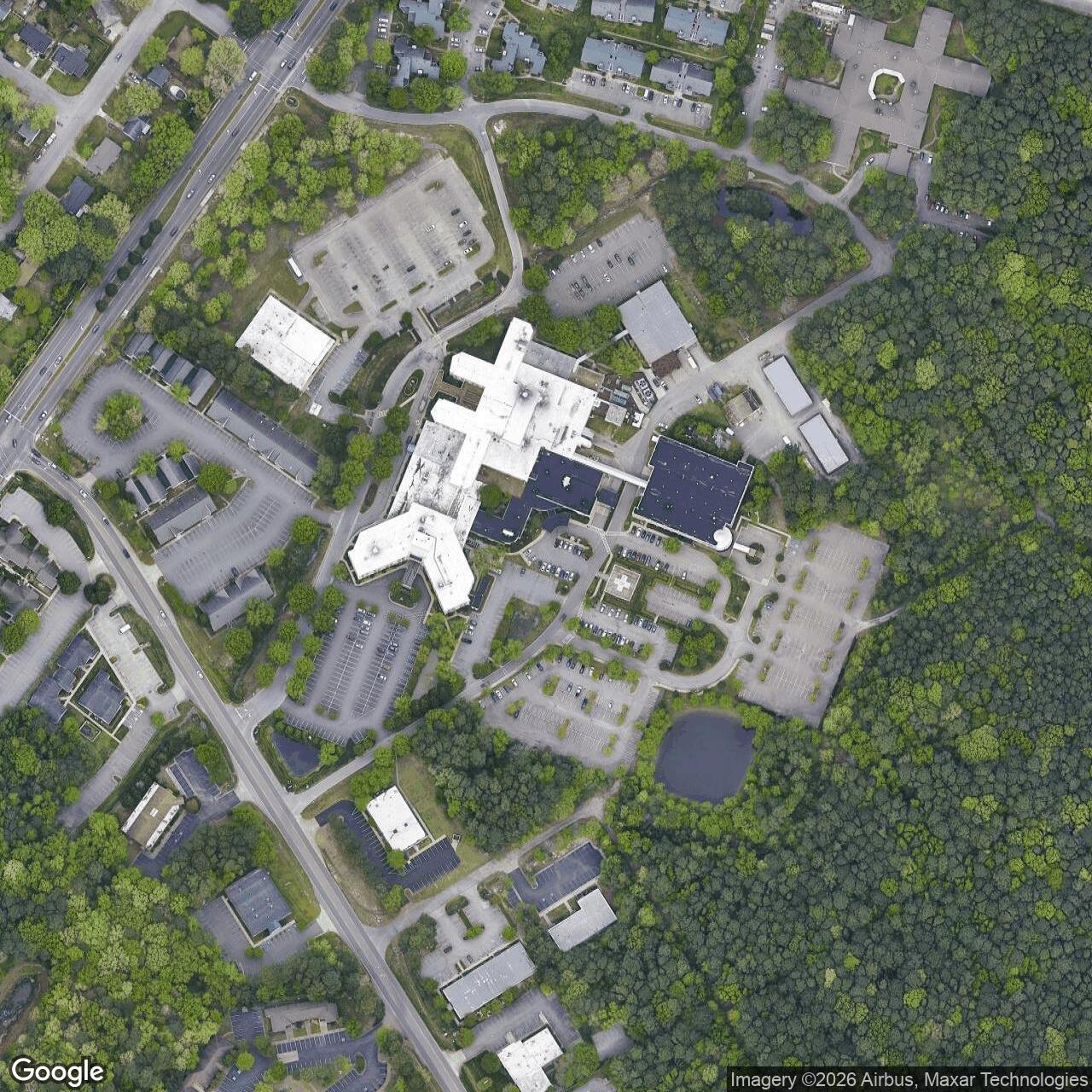
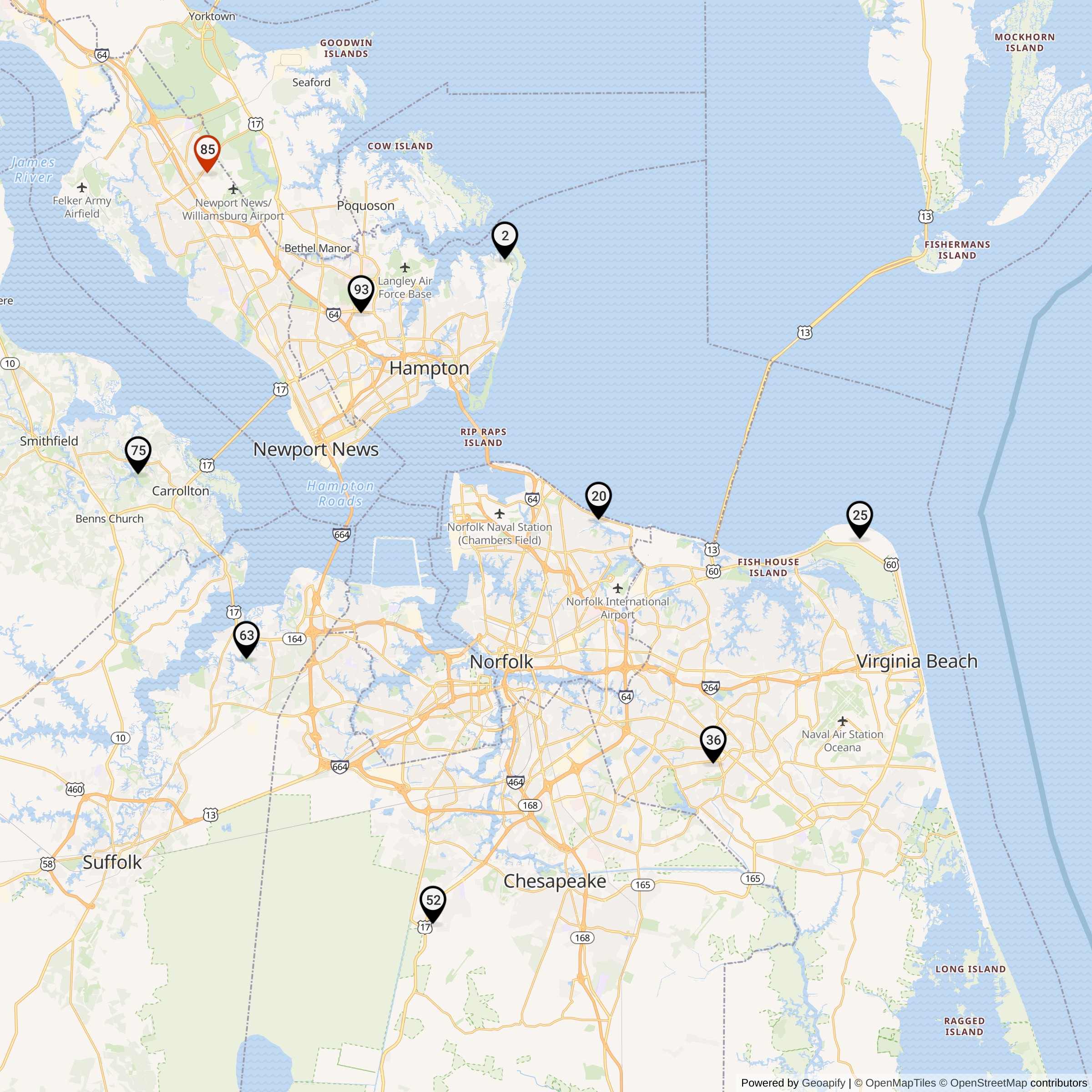
Nike Missile Site N-85 Launcher, Denbigh Virginia
Longitude: -76.5113193667108
This location was part of the Norfolk Defense Area
Site ID: N-85
The missiles at this Launch Area were controlled by the Integrated Fire Control site located here.
Site Role: Launcher
A typical Nike air defense site consisted of two separate parcels of land. One area was known as the Integrated Fire Control (IFC) Area. This site contained the Nike system's ground-based radar and computer systems designed to detect and track hostile aircraft, and to guide the missiles to their targets.
The second parcel of land was known as the Launcher Area. At the launcher area, Nike missiles were stored horizontally within heavily constructed underground missile magazines. A large, missile elevator brought the Nikes to the surface of the site where they would be pushed across twin steel rails to one of four satellite launchers.
Elaboration on how Nike worked here.
Current site status: Mary Immaculate Hospital / Warwick Forest area
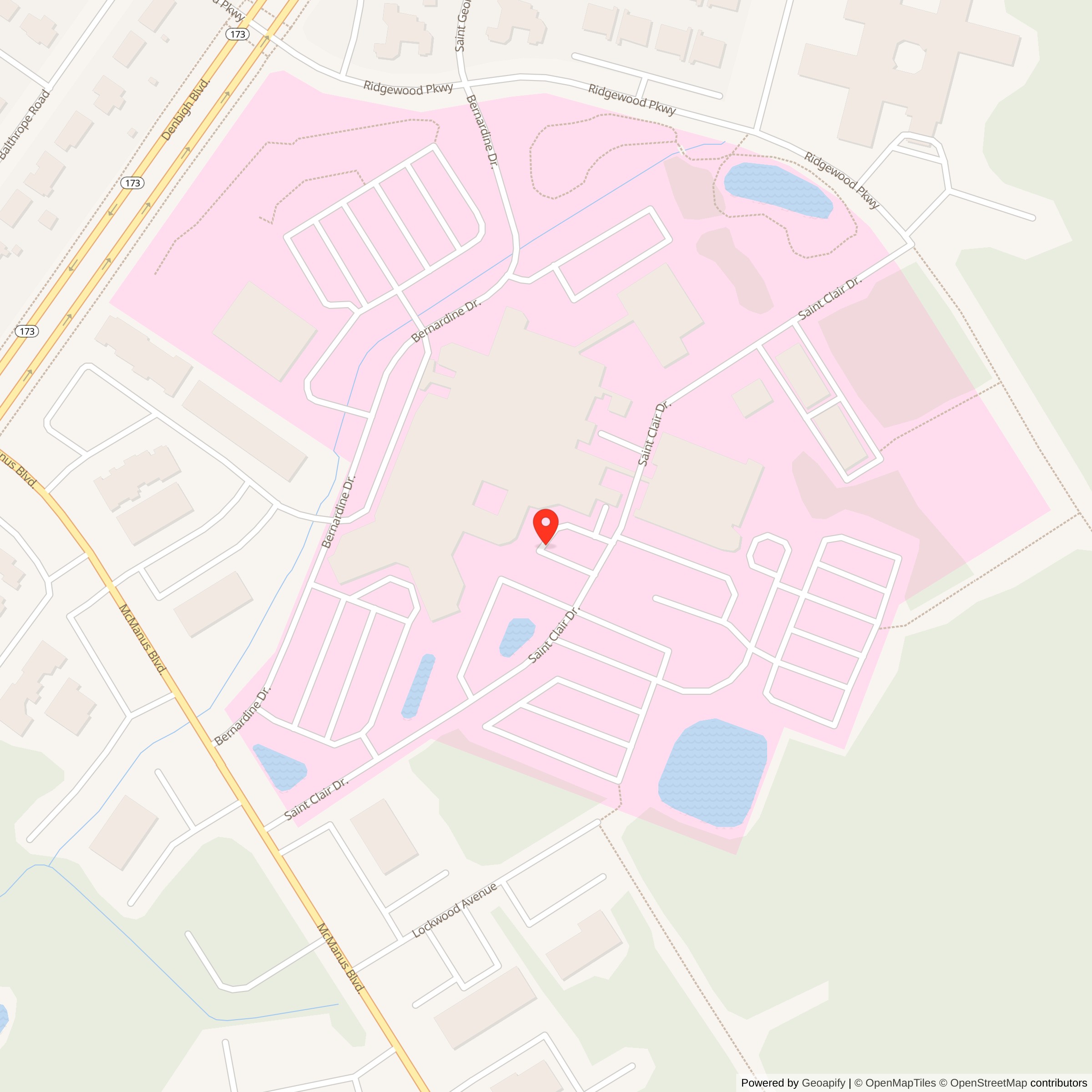
Nike Missile Site N-85 was a former U.S. Army Nike Ajax and Nike Hercules air-defense missile installation in Newport News, Virginia, within the Norfolk Defense Area. It was located in the Denbigh / Patrick Henry area near the former Camp Patrick Henry and the modern Newport News/Williamsburg Airport. The site is inactive and no longer serves any military air-defense function. It opened as part of the mid-1950s Nike Ajax network, was later converted to Nike Hercules, and remained active until April 1974.
The site had two principal components. The Integrated Fire Control, or IFC/control area, was the radar and engagement-control site near the airport side of the former Camp Patrick Henry property. The launch area was the missile storage and firing area farther west, near the Lockwood Avenue and Peebles Drive / Mary Immaculate Hospital area.
N-85 is sometimes shown in federal historical context as N-85 / later N-97, reflecting Norfolk Defense Area code drift and redesignation in some summaries. Appendix D of the Nike Hercules deployment history still lists the converted Norfolk Hercules site as N85, and most modern site lists continue to use N-85 for the Denbigh / Patrick Henry / Camp Patrick site.
Location and Physical Setting
N-85 stood on the Virginia Peninsula in the northern part of Newport News, in the former Warwick County / Camp Patrick Henry area. The military geography was highly significant. Hampton Roads was one of the most heavily militarized regions in the United States, containing Naval Station Norfolk, the shipyards and naval-industrial base on the Elizabeth River, the Army presence at Fort Monroe and Fort Eustis, Langley Air Force Base, Hampton Roads Army Terminal, and the port and transportation infrastructure that connected the Chesapeake Bay to the Atlantic approaches. A Soviet bomber attack on Hampton Roads would have threatened the Atlantic Fleet, naval repair and logistics facilities, air-defense and aviation facilities, and a major East Coast embarkation and transportation region.N-85 occupied ground that already had a military history before the Nike period. Camp Patrick Henry was established during World War II as a staging installation for personnel departing through the Hampton Roads Port of Embarkation. The camp area included barracks, roads, utilities, mess and support facilities, a rail connection, and later prisoner-of-war functions. After World War II, much of the camp property was transferred for civilian airport development, becoming Patrick Henry Field and later Newport News/Williamsburg Airport. The Army retained or reused a portion of the former camp property for Nike air defense, which is why N-85 is often described through three linked place names: Denbigh, Patrick Henry, and Camp Patrick.
The control site needed open radar horizons and clear engagement geometry. Nike IFC areas normally included acquisition radar, target-tracking radar, missile-tracking radar, battery control vans or buildings, radar towers or pads, generator and support buildings, and communications links to higher air-defense command posts. The launch area required a separate tract with underground magazines, elevator launcher sections, fueling and assembly facilities for Ajax-era operations, guard and security infrastructure, and enough distance from the radar site for safe operation while still remaining within the geometry required by the Nike command-guidance system.
Mission Evolution
N-85 was created to defend the Hampton Roads military and naval complex against high-flying Soviet bomber attack. The earliest Nike mission used Nike Ajax, the first operational U.S. guided surface-to-air missile system. Ajax was designed for point defense of vital military, industrial, and urban targets. It used radar command guidance: the IFC tracked the target and the missile, computed an intercept, and transmitted steering commands to the missile in flight. The missile itself was stored at the launch area and fired from above-ground launcher rails after being raised from underground magazine storage.The Norfolk Defense Area was not a single installation. It was a regional air-defense belt made up of several Nike batteries around Hampton Roads. Federal Cold War missile-history sources list the Norfolk-area Nike sites as Fox Hill, Ocean View temporary site, Fort Story, Kempsville, Deep Creek / Portsmouth, Nansemond / Suffolk, Smithfield / Carrollton, Denbigh / Patrick Henry, and Hampton / Spiegelville, with headquarters facilities at Fort Monroe, Ballantine School in Norfolk, Reedsville / South Norfolk, Cradock Branch / Portsmouth, and Newport News. That distribution put Nike fire units around the naval-industrial and port complex rather than only around one city center.
N-85 was one of the Norfolk sites selected for Nike Hercules modernization. This is a key point for the site's identity. Many Norfolk-area Nike sites remained Ajax-only and closed earlier, but N-25, N-52, and N-85 were modernized to fire Nike Hercules. Nike Hercules gave the Norfolk defenses longer reach, higher engagement capability, solid-fuel handling advantages, and nuclear-capable air-defense potential. Hercules was designed to destroy bomber formations rather than only individual aircraft, and its deployment reflected both technological improvement and the strategic importance of Hampton Roads.
Appendix D of Mary T. Cagle's Nike Hercules history lists N85 as a converted defense site in the Norfolk Defense Area. It gives the converted magazine type as 2B, the Hercules conversion construction period as May 1960 to August 1960, and the operational date with Hercules missiles as December 1, 1960. Some local histories state that Hercules appeared at the site in 1958, likely reflecting the beginning of broader Hercules deployment or local memory of the transition period.
Operational Role and Facilities
N-85's operational job was to engage hostile bombers approaching the Hampton Roads region. Its protected target set included naval facilities, Army terminals, shipyards, airfields, harbor approaches, and the dense military transportation infrastructure of the lower Chesapeake Bay and James River area. A successful attack on Hampton Roads could have damaged Atlantic Fleet operations, amphibious and logistics support, and regional military command-and-control capacity. N-85 helped cover the northwest and peninsula-side approaches to that system.The Nike system divided the work between the IFC and launch area. At the IFC, radar operators acquired and tracked targets. Battery-control equipment computed the intercept. The missile-tracking radar followed the outbound Nike missile. Commands were transmitted from the IFC to guide the missile toward the target. At the launch area, crews maintained missiles, prepared them for firing, raised them from underground storage, and launched them when ordered. Because Nike Hercules was larger and heavier than Nike Ajax, Hercules conversion generally required magazine and launcher modifications, electrical and control updates, and new security and handling arrangements.
The site's missile-type listing is usually given as Nike 2B, 1C / 18H, 30A / 12L-UA, (8L-H). In practical terms, this identifies N-85 as a mixed Ajax-to-Hercules converted site with magazine and launcher arrangements capable of supporting the later Hercules mission while retaining evidence of the Ajax-era design. The "18H" and "30A" notation reflects the missile mix or storage allowance commonly recorded in Nike site inventories. The "12L" launcher notation reflects the launch positions associated with the battery, while the Hercules conversion note identifies the subset adapted for Hercules service.
Command and Control
The Norfolk Defense Area used regional command-and-control facilities rather than each battery operating in isolation. Federal Cold War missile-history sources state that command and control for the Norfolk Nike network was operated from a BIRDIE site at the Hampton Roads Army Terminal. Later summaries also associate the Norfolk air-defense command function with Cape Charles Air Force Station and the AN/GSG-5(V) BIRDIE solid-state computer system as Nike command-and-control arrangements were integrated with the wider Air Defense Command / NORAD radar network.For N-85, the important operational point is that the battery was one component of a regional, integrated air-defense system. Its radars and launchers were meant to function with other Norfolk-area Nike batteries, Air Force radar warning, fighter-interceptor coverage, and command posts that assigned targets and coordinated engagements. This prevented duplicate engagements, reduced confusion in dense airspace, and allowed the air-defense network to prioritize threats approaching the naval base, harbor, and military terminals.
Units and Personnel
Both Regular Army and Virginia Army National Guard units contributed to manning the Norfolk Nike sites. The federal Norfolk Defense Area history specifically notes Regular Army and Virginia National Guard participation and records that men of the 4th Missile Battalion, 51st Artillery formed an integrated choral group in 1958 that performed at hospitals and other local venues. A later National Register context for the Norfolk Nike network also identifies the 4th Missile Battalion, 51st Artillery of Hampton Roads' 3rd Artillery Group as an important regional Nike unit, and notes that the battalion was recognized nationally for its practice-firing performance in 1959.Crew life at N-85 would have been shaped by the normal Nike pattern. Missile batteries required constant alert status, technical maintenance, security, radar checks, launcher drills, inspections, and practice firing at ranges such as Red Canyon Range in New Mexico. The soldiers worked in a highly technical Cold War environment: radar tracking, electronic computation, missile assembly, launcher maintenance, communications discipline, and nuclear-era security all had to function reliably. The site's location near Fort Eustis, Newport News, and the airport also meant it was embedded in a region where military and civilian land uses constantly overlapped.
The local postwar article on Camp Patrick Henry and N-85 states that single-story military housing around the former base was also used to house overflow from nearby Fort Eustis. That detail fits the site's transitional landscape: a World War II camp, a postwar civilian airport, remaining Army-controlled property, and Nike-era housing/support functions all occupied the same general area during the Cold War.
Current Status and Reuse
The IFC/control area is generally associated with the Newport News/Williamsburg Airport property near the end of Cherokee Drive. Site-observation references describe it as owned or controlled by the Peninsula Airport Commission, abandoned, gated, and overgrown, with visible radar towers or tower remnants. A 2021 local history article described the remaining towers as prominent orange-and-white structures rising above a dangerous, overgrown site and warned against trespassing.The launch area is generally associated with the Lockwood Avenue and Peebles Drive / Mary Immaculate Hospital / Warwick Forest Retirement Home area. Site-observation references state that the launch pits were filled before later hospital/medical construction and that a medical arts building was built over the former magazine area. They also note that a former administrative or launch-control area roughly two blocks away had lost at least one main building, with only traces visible in later aerial review.
Chronology
- 1942 Camp Patrick Henry was established as a U.S. Army staging installation for troops departing through the Hampton Roads Port of Embarkation.
- 1944-1945 Camp Patrick Henry also functioned as a prisoner-of-war camp for German and Italian prisoners who worked in support functions in the Hampton Roads area.
- 1946 Camp Patrick Henry was deactivated after World War II.
- 1946 The Virginia legislature created the Peninsula Airport Commission to develop a commercial airport for Newport News, Hampton, and Warwick.
- 1947-1949 The Peninsula Airport Commission acquired former Army land from Camp Patrick Henry for airport development.
- November 13, 1949 Patrick Henry Airport was officially dedicated; the airport designator PHF reflected Patrick Henry Field.
- 1955 Nike Missile Site N-85 was activated in the Denbigh / Patrick Henry / Camp Patrick area as part of the Norfolk Defense Area.
- 1955 N-85 initially formed part of the Nike Ajax network defending Hampton Roads.
- 1958 The Norfolk Nike network included the 4th Missile Battalion, 51st Artillery, and regional sources note Regular Army and Virginia Army National Guard participation in site manning.
- 1958-1959 The 4th Missile Battalion, 51st Artillery became associated with high-performing Norfolk-area Nike operations, including practice-firing recognition.
- May 1960 Formal Hercules conversion construction for N85 began, according to Appendix D of the Nike Hercules deployment history.
- August 1960 Formal Hercules conversion construction for N85 was completed.
- December 1, 1960 N85 became operational with Nike Hercules missiles.
- November 1964 Norfolk Site N-63, the last Ajax-only Norfolk battery, was deactivated; by this point the remaining long-term Norfolk defense mission depended on the Hercules-converted sites.
- April 1974 N-85 and N-52 remained active until April 1974, making them among the final Norfolk Defense Area Nike sites.
- After 1974 N-85 was closed as an active Army air-defense installation and its property passed into non-military or abandoned reuse.
- 2012 Site observers described the launch area near Mary Immaculate Hospital / Warwick Forest as redeveloped, with the former launch pits filled before construction above them.
- 2014 Site observers described the control area near the end of Cherokee Drive on Newport News/Williamsburg Airport property as abandoned, gated, and still visually associated with the former Nike control-site landscape.
- 2021 A local history article described the surviving N-85 control-site towers and the former Camp Patrick Henry / Nike landscape as overgrown, hazardous, and largely forgotten.
List of all Nike Installations in Virginia