Nike Missile Site N-63 Launcher, Nansemond Virginia
Longitude: -76.481628560764
This location was part of the Norfolk Defense Area
Site ID: N-63
The missiles at this Launch Area were controlled by the Integrated Fire Control site located here.
Weapon system: Nike Ajax only
Configuration: Nike 2B,1C/30A/12L-A
Site Role: Launcher
A typical Nike air defense site consisted of two separate parcels of land. One area was known as the Integrated Fire Control (IFC) Area. This site contained the Nike system's ground-based radar and computer systems designed to detect and track hostile aircraft, and to guide the missiles to their targets.
The second parcel of land was known as the Launcher Area. At the launcher area, Nike missiles were stored horizontally within heavily constructed underground missile magazines. A large, missile elevator brought the Nikes to the surface of the site where they would be pushed across twin steel rails to one of four satellite launchers.
Elaboration on how Nike worked here.
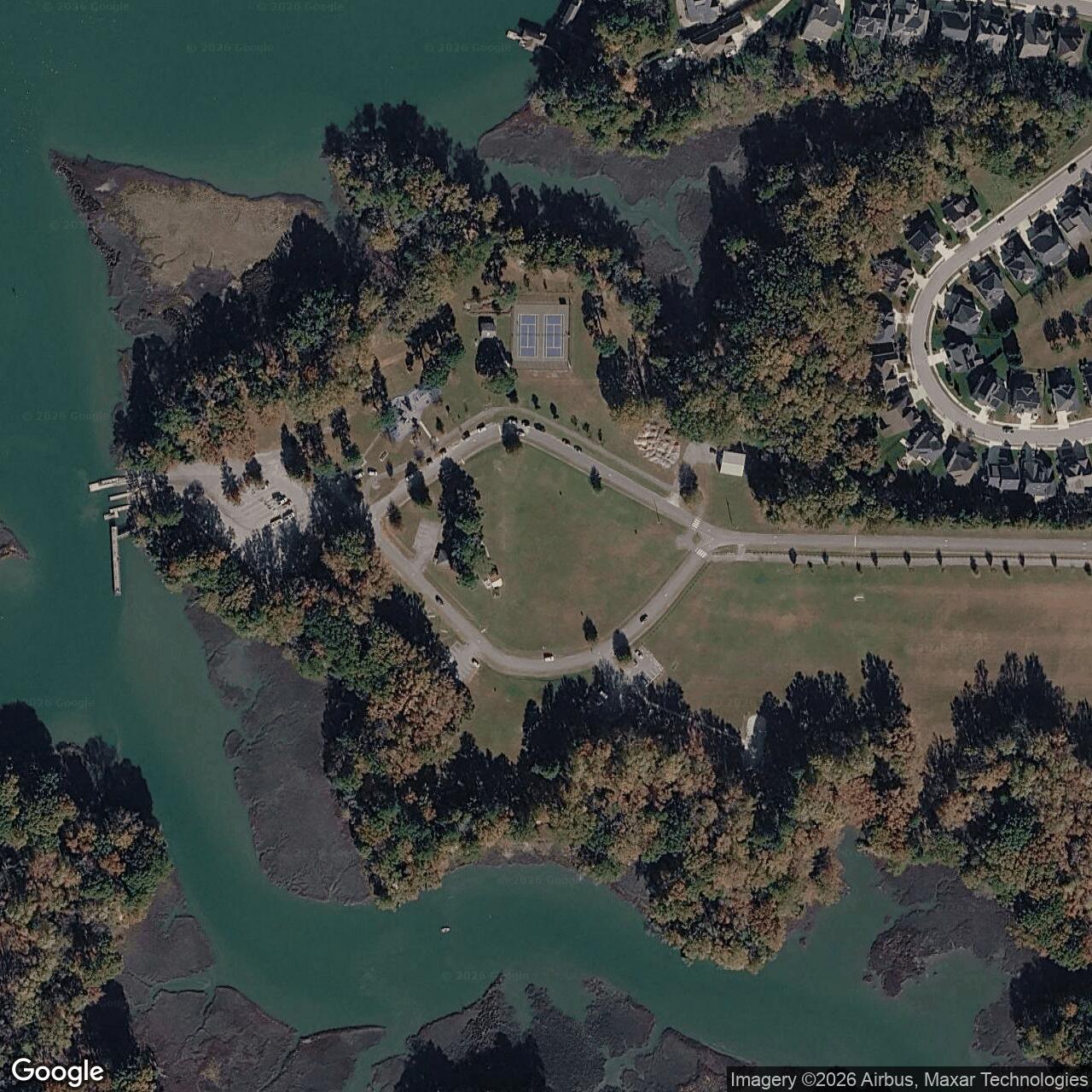
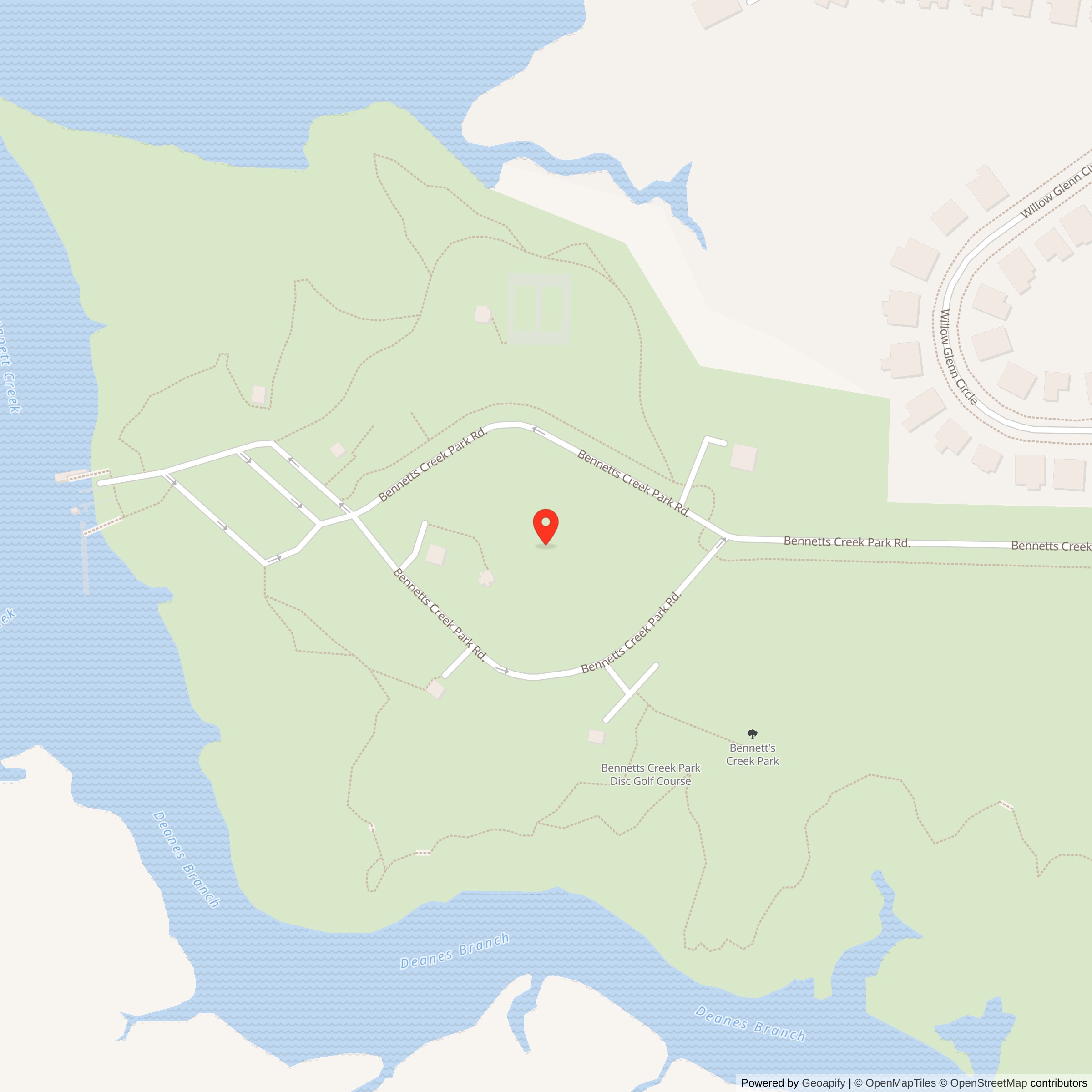
Current site status: Bennett's Creek Park
Nike Missile Site N-63 was a former U.S. Army Nike Ajax surface-to-air missile battery in the Norfolk Defense Area of southeastern Virginia. The site was built in the mid-1950s as part of the Cold War air-defense ring around Hampton Roads, one of the most strategically important military regions in the United States because it contained Naval Station Norfolk, the Newport News shipbuilding and naval-industrial complex, Langley Air Force Base, major Army coastal and port facilities, and the deep-water harbor approaches to the Chesapeake Bay.
It was active from 1955 until November 1964 and was not converted to Nike Hercules. It is historically significant because it was the last Nike Ajax battery in the Norfolk Defense Area, and contemporary federal Nike summaries identify it as the last Nike Ajax site to operate in the continental United States. The site is also an example of the code drift that appears in Norfolk Nike records: the Norfolk-area overview lists it as N-63/later N-69, while most site tables, coordinate lists, and reuse references continue to identify it as N-63.
The launch area was west of the control area, near the end of Shoulders Hill Road, in the Bennett's Creek Park area. The IFC/control area was east of the launch area, along or near Shoulders Hill Road, and was historically associated in later listings with a U.S. Army Reserve Center.
Location and Military Setting
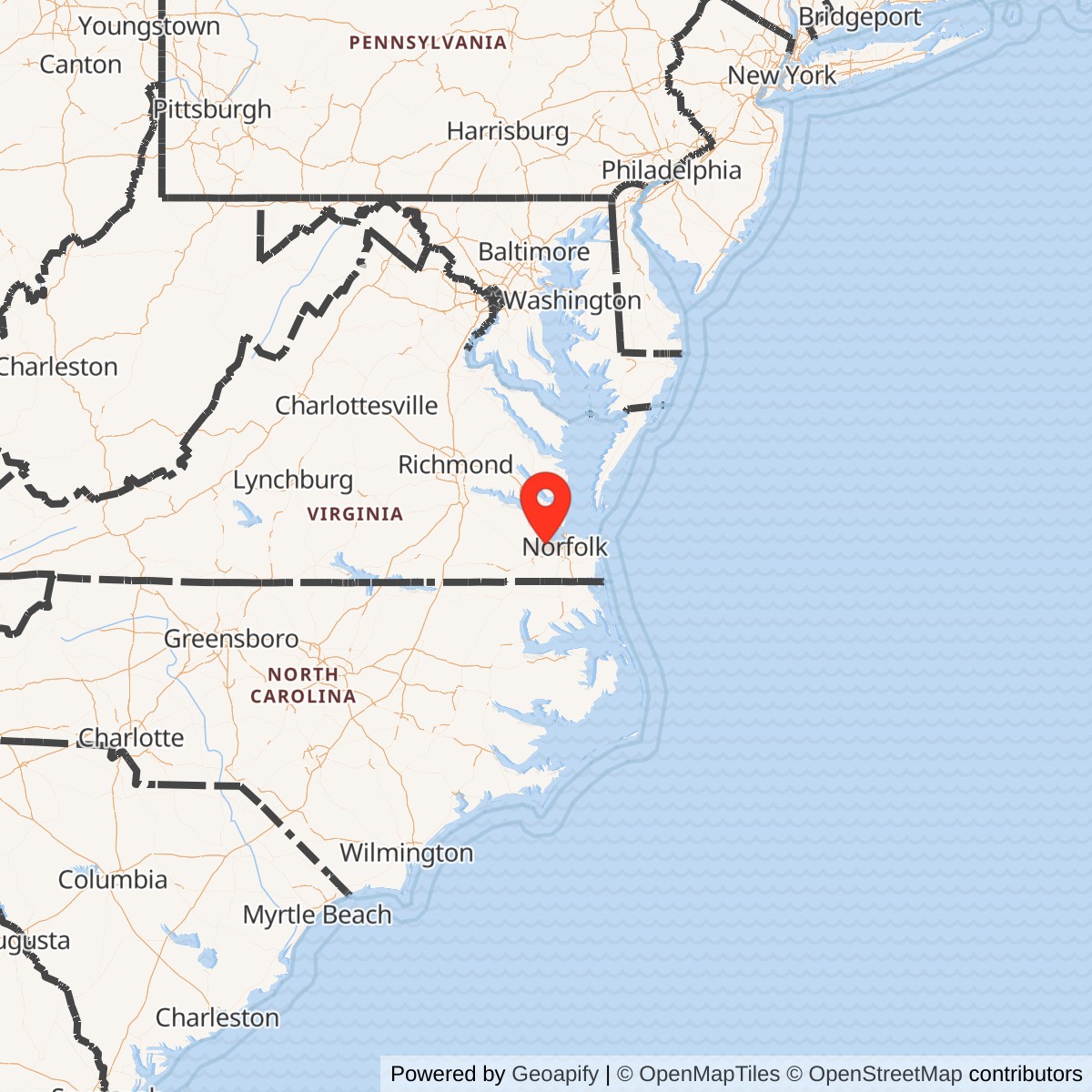
N-63 was located in the Nansemond/Suffolk portion of the Norfolk Defense Area. Historically, Nansemond County and the City of Suffolk were separate jurisdictions before Nansemond became an independent city in 1972 and merged with Suffolk in 1974. For Cold War Nike records, the location is normally described as Nansemond/Suffolk because the missile site was planned and built before that local-government consolidation.The site sat in the western part of the Hampton Roads defense ring, on the inland side of the Navy-heavy harbor complex. This position gave the battery a role in covering the western and northwestern approaches to the defended area. Nike sites were not placed randomly around cities. They were located so their radar-controlled missiles could form overlapping arcs of fire around likely bomber approach routes while also protecting the most important military and industrial targets. In Hampton Roads, that meant the Navy base complex, shipyards, air bases, port facilities, Army posts, and bridge-and-harbor infrastructure that would have been high-priority targets in a Soviet bomber attack.
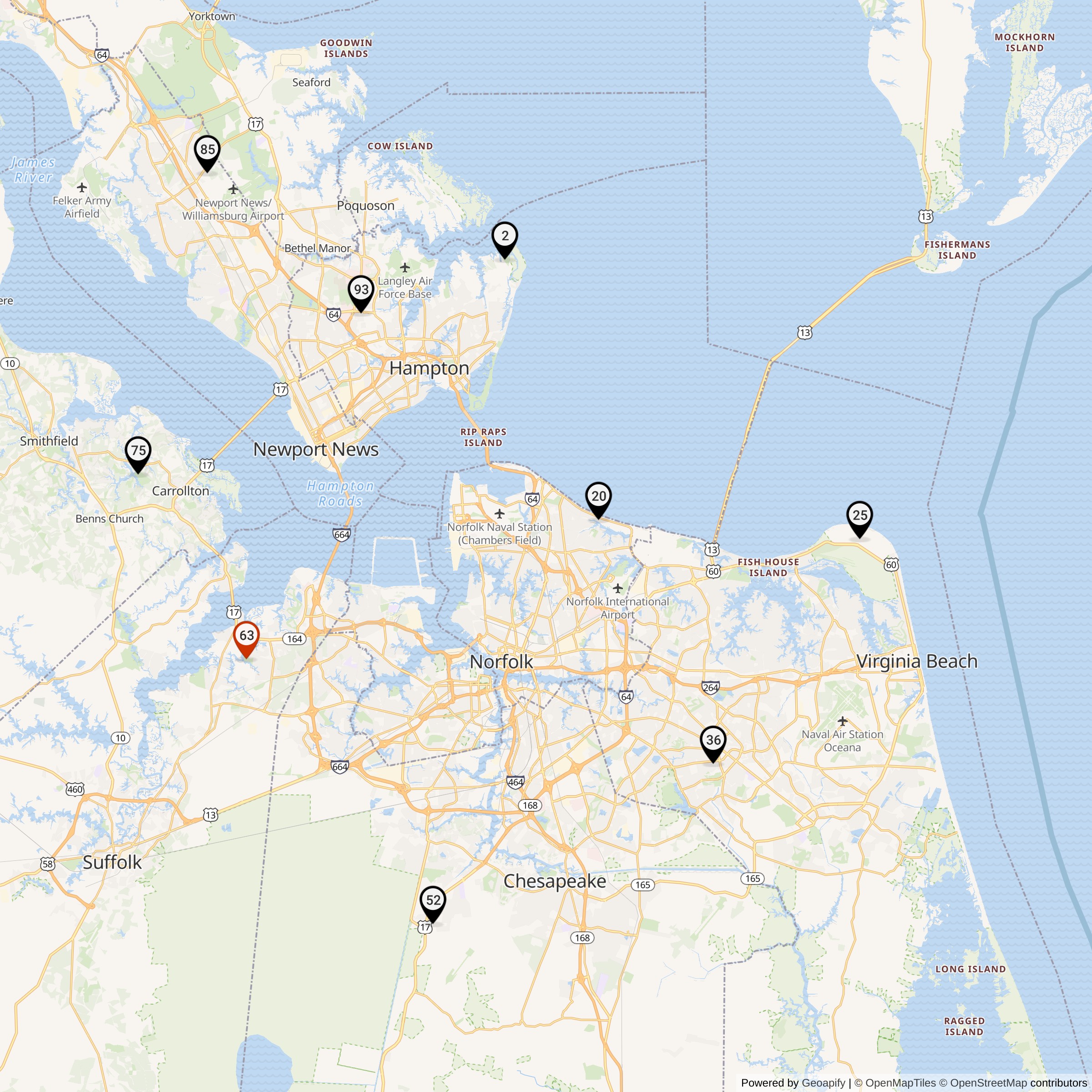
The Norfolk Defense Area included a ring of sites around the Tidewater region. The principal permanent sites included N-02 at Fox Hill, N-25/later N-29 at Fort Story, N-36/later N-49 at Kempsville, N-52/later N-59 at Deep Creek/Portsmouth, N-63/later N-69 at Nansemond/Suffolk, N-75 at Smithfield/Carrolton, N-85/later N-97 at Denbigh/Patrick Henry, and N-93/later N-99 at Hampton/Spiegelville. There was also a temporary Ocean View site, N-20. Command-and-control support for the defense area was tied to headquarters facilities at Fort Monroe, Ballantine School in Norfolk, Reedsville/South Norfolk, Craddock Branch/Portsmouth, and Newport News, and later to a BIRDIE command-and-control site at Hampton Roads Army Terminal.
Mission Evolution
N-63 was built during the first generation of nationwide Nike deployment. The Nike Ajax system emerged from the Army's post-World War II search for a guided missile that could replace or supplement conventional antiaircraft guns. By the early 1950s, the Army and the Army Corps of Engineers were placing Nike batteries around major urban, industrial, and military targets. Hampton Roads was an obvious candidate for a dense air-defense network because it was the largest concentration of naval infrastructure in the United States and one of the central maritime mobilization regions for the Atlantic.Nike Ajax was designed to defeat high-flying enemy bombers before they could reach their targets. The system was radar-guided. The battery's acquisition radar detected and tracked incoming aircraft, tracking radars followed both target and missile, and a ground-based analog computer calculated the intercept course. The missile itself did not operate as an independent, self-guided weapon. It depended on the integrated fire-control system at the IFC area, on radar tracking, and on command guidance from the ground.
N-63's operating life coincided with the transition period from Nike Ajax to Nike Hercules. Beginning in 1958, the Army started converting selected Ajax batteries to fire the larger, longer-range, nuclear-capable Nike Hercules. Within the Norfolk Defense Area, N-25, N-52, and N-85 were the sites modernized for Hercules. N-63 was not modernized. Its missile-type code, Nike 2B,1C/30A/12L-A, identifies it as an Ajax battery with 30 Ajax missiles and 12 Ajax launchers, and it does not include a Hercules conversion notation. This matters because it means N-63 remained part of the earlier, conventional-warhead Nike Ajax generation even after other Hampton Roads sites were upgraded.
The survival of N-63 as an Ajax site after other batteries had converted or closed gave it an unusual final role. It remained active until November 1964, later than the other Ajax-only Norfolk-area sites. Federal Nike histories describe it as the last Nike Ajax site in the Norfolk Defense Area and the last Nike Ajax battery to operate in the continental United States. There is a minor date discrepancy in the federal narrative: one general Nike Ajax section gives November 1963, while the Virginia site overview, Norfolk Defense Area text, and site inventory give November 1964.
Site Layout and Facilities
Like other Nike batteries, N-63 was divided into two physically separated but operationally integrated areas: the Integrated Fire Control area and the launch area. The IFC area contained the radars, computer and control trailers, communications equipment, power plant, and associated support structures. The launch area contained the underground missile magazines, launcher sections, missile assembly and test facilities, generator equipment, fueling and servicing areas, and launch-control equipment.The separation between the IFC and the launch area was essential to Nike operation. The radar and fire-control equipment needed a clear view of the sky and of the missile launch area, while the launch area needed enough land for underground magazines, launcher rails, assembly buildings, safety zones, and security fencing. At N-63, the IFC/control area lay east of the launch area.
The technical listing for N-63, Nike 2B,1C/30A/12L-A, is a compact description of the site's missile-storage and launcher configuration. It indicates a three-magazine Ajax installation: two type-B magazines and one type-C magazine, with a total of 30 Ajax missiles and 12 Ajax launchers. Each Ajax magazine normally used an elevator system that raised missiles from underground storage to the surface, where crews could move them onto launch rails. Type-B magazines could be adapted for Hercules in some circumstances, while type-C magazines reflected original Ajax-only design. N-63's listing contains no Hercules launcher conversion notation, confirming that it remained Ajax-only.
A Nike Ajax launch area was both industrial and military in character. The missiles were liquid-fueled, which required careful handling of hazardous propellants and oxidizers. Crews had to maintain, test, fuel, and assemble missiles under strict procedures. The launch area therefore included not only launch equipment but also maintenance, generator, fueling, and safety facilities. The IFC area, by contrast, was dominated by radars, control vans, and communications equipment. The site functioned only when those two areas operated together: the launcher crew could not independently fight an air battle, and the IFC could not defend the area without missiles ready at the launcher.
Operational Role in the Norfolk Defense Area
N-63's purpose was to add a western-sector layer to the Hampton Roads air-defense network. In the event of a Soviet bomber attack, the battery would have received target information through the regional air-defense command system, acquired or tracked the target with its own radar set, and launched Ajax missiles against hostile aircraft approaching the defended military complex. The missiles were intended to destroy enemy bombers before they reached the naval base, shipyards, port facilities, and supporting air bases.The Norfolk Defense Area was especially important because Hampton Roads was not just a city or a single installation. It was a concentration of overlapping military functions. Naval Station Norfolk was the center of Atlantic Fleet operations; Newport News was a critical shipbuilding and repair center; Langley Air Force Base contributed to air defense and later aerospace operations; Fort Monroe and other Army facilities supported command, coastal, port, and training functions; and the harbor itself was a strategic mobilization point. A successful attack on Hampton Roads could have disrupted Atlantic naval operations, ship repair, fleet logistics, and wartime deployment.
N-63 also illustrates the layered nature of Cold War air defense. Nike batteries were not the only defenses. They worked in a larger environment of Air Force radar, interceptor aircraft, naval and Army command posts, regional communications, and later automated or semi-automated command-and-control systems. In the Norfolk area, command and control was operated from a BIRDIE site located at Hampton Roads Army Terminal. BIRDIE was a compact Army air-defense command system used to coordinate Nike batteries and reduce the risk that multiple batteries would duplicate engagements or leave gaps in coverage.
Units and Manning
The Norfolk Defense Area as a whole was manned by both Regular Army and Virginia Army National Guard units. Federal summaries note that both components contributed to the operation of the Norfolk Nike network. In 1958, personnel of the 4th Missile Battalion, 51st Artillery were noted in the regional military press for forming an integrated choral group that performed at hospitals and other local venues, which gives a glimpse of the soldiers' presence in the Hampton Roads community beyond purely technical missile operations.A Nike battery required a large and technically trained crew. Personnel were needed for radar operation, target tracking, missile tracking, computer operation, communications, launch control, missile assembly, fueling, maintenance, security, vehicle support, generator operation, supply, administration, and mess functions. Even though Nike was often described in terms of missiles and radars, the system depended on sustained daily readiness by soldiers who maintained highly complex electronics and missile equipment under an alert posture.
Post-Closure Reuse and Current Condition
The federal site inventory identifies the N-63 control site condition/owner as a U.S. Army Reserve Center and the launch site condition/owner as Bennett's Creek Park. Later field notes from Nike researchers place the IFC/control area along Shoulders Hill Road and the launch area near the end of Shoulders Hill Road, west of the control area. Those same notes describe the launch area as essentially obliterated by later park development, with no obvious Nike-era construction visible during a 2012 visit.Bennett's Creek Park is now a public recreational facility in Suffolk. The City of Suffolk describes Bennett's Creek Park as a 56.8-acre park with boat ramps accessing the Nansemond River through Bennett's Creek, tennis courts, restrooms, shelters, a nature trail, open fields, a crabbing and fishing pier, and other recreational amenities. This reuse fits a common pattern among former Nike properties: large fenced military parcels on the urban edge were often turned into parks, public works yards, schools, law-enforcement training areas, reserve centers, or private development after missile operations ended.
Chronology
- 1945: The Army began development work that led to the Nike surface-to-air missile system.
- 1951: A Nike missile successfully engaged a QB-17 drone during testing at White Sands, helping validate the guided missile concept.
- 1953: The Army adopted the underground-magazine configuration for most Nike Ajax deployment sites, reducing land needs and making fixed missile batteries practical in crowded metropolitan and military-defense areas.
- 1955: N-63 became active as a Nike Ajax site in the Norfolk Defense Area.
- 1955-1964: N-63 operated as an Ajax battery at Nansemond/Suffolk, forming part of the Hampton Roads air-defense ring.
- 1958: The Army began nationwide conversion of selected Nike Ajax batteries to Nike Hercules.
- 1958: Norfolk Defense Area sources note the presence of the 4th Missile Battalion, 51st Artillery in the region.
- 1958-1960: Selected Norfolk Defense Area sites were modernized for Nike Hercules, but N-63 was not among the Hercules-converted batteries.
- 1960: N-52 and N-85 entered or completed their Hercules modernization period, while N-63 remained Ajax-only.
- November 1964: N-63 was deactivated, ending its operational life as an Ajax battery.
- Post-1964: The former IFC/control site was associated with a U.S. Army Reserve Center in federal/site listings.
- Post-closure period: The former launch area became associated with Bennett's Creek Park. Later field notes describe the launch area as heavily altered or obliterated, with little to no obvious Nike-era fabric visible in the accessible park landscape.
- Present: The former N-63 missile site is closed and no longer an active military installation. The launch-area vicinity is part of the Bennett's Creek Park landscape, and the IFC/control area vicinity has been altered by later military, civic, or private reuse.
List of all Nike Installations in Virginia