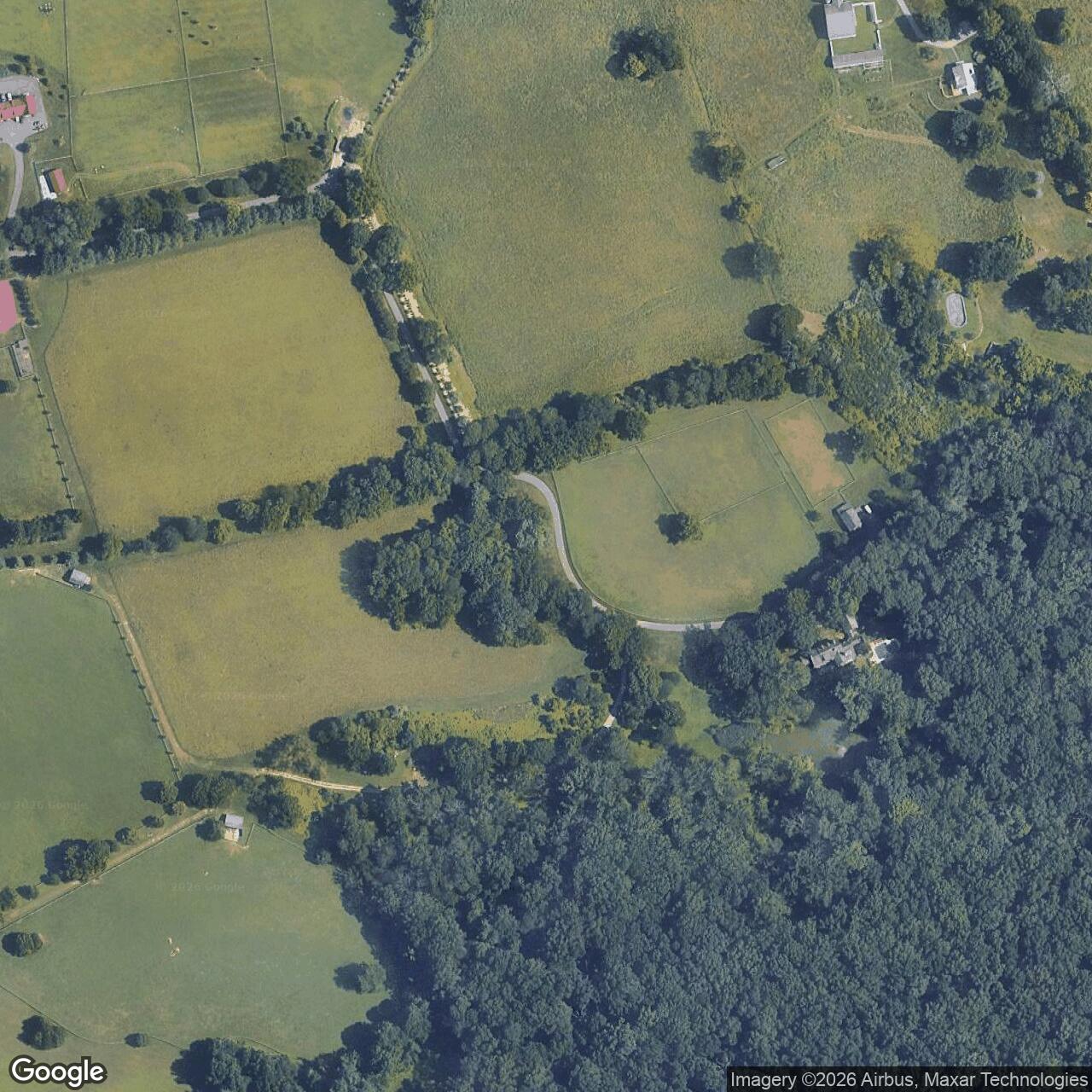
Nike Missile Site PH-75 Launcher, Willistown Pennsylvania
Longitude: -75.4445
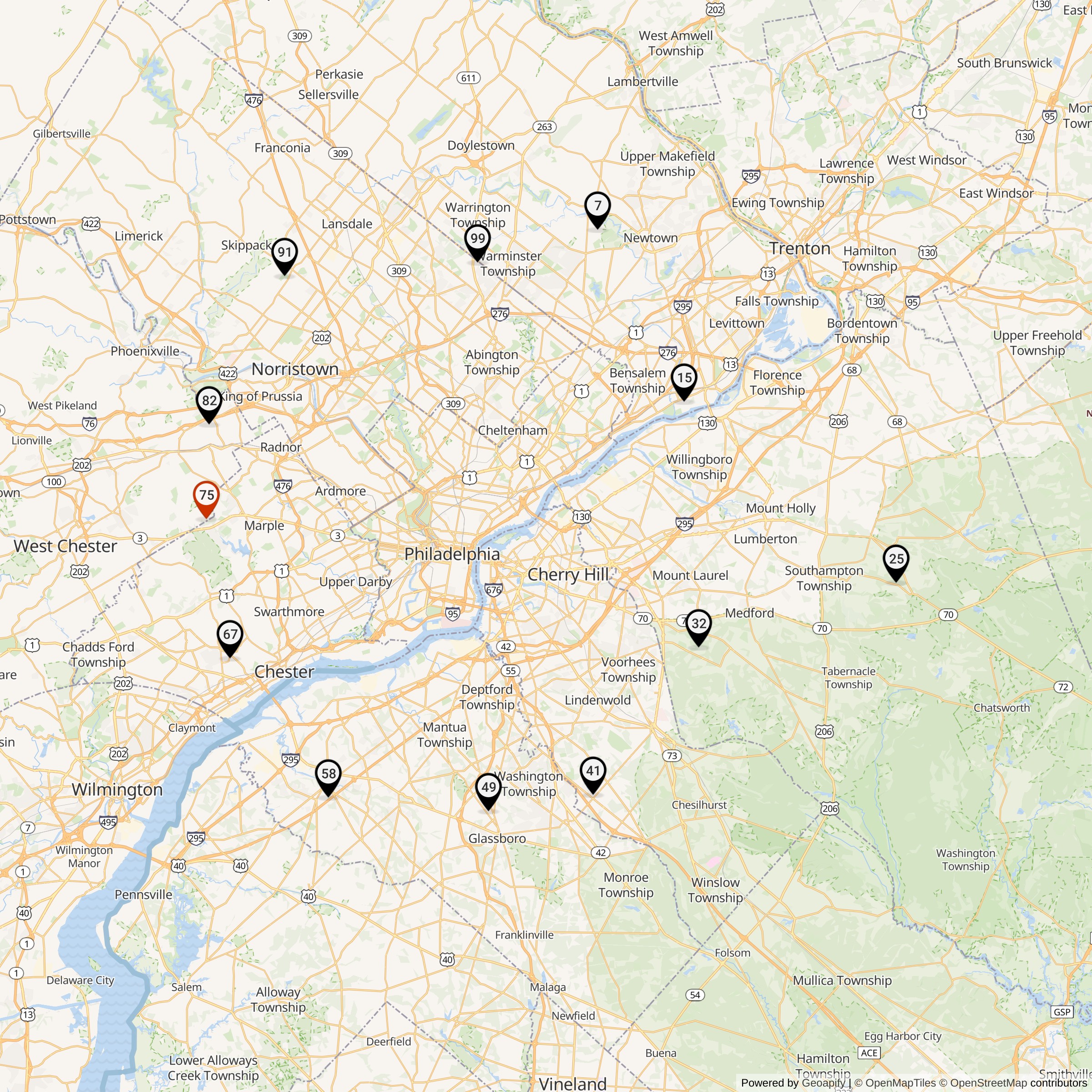
This location was part of the Philadelphia Defense Area
Site ID: PH-75
The missiles at this Launch Area were controlled by the Integrated Fire Control site located here.
Site Role: Launcher
A typical Nike air defense site consisted of two separate parcels of land. One area was known as the Integrated Fire Control (IFC) Area. This site contained the Nike system's ground-based radar and computer systems designed to detect and track hostile aircraft, and to guide the missiles to their targets.
The second parcel of land was known as the Launcher Area. At the launcher area, Nike missiles were stored horizontally within heavily constructed underground missile magazines. A large, missile elevator brought the Nikes to the surface of the site where they would be pushed across twin steel rails to one of four satellite launchers.
Elaboration on how Nike worked here.
Date Site Converted to Hercules Missile: 1963
Nike Hercules were more powerful and nuclear capable missiles. Many locations originally built for the Ajax were later modified and upgraded to the newer Hercules.
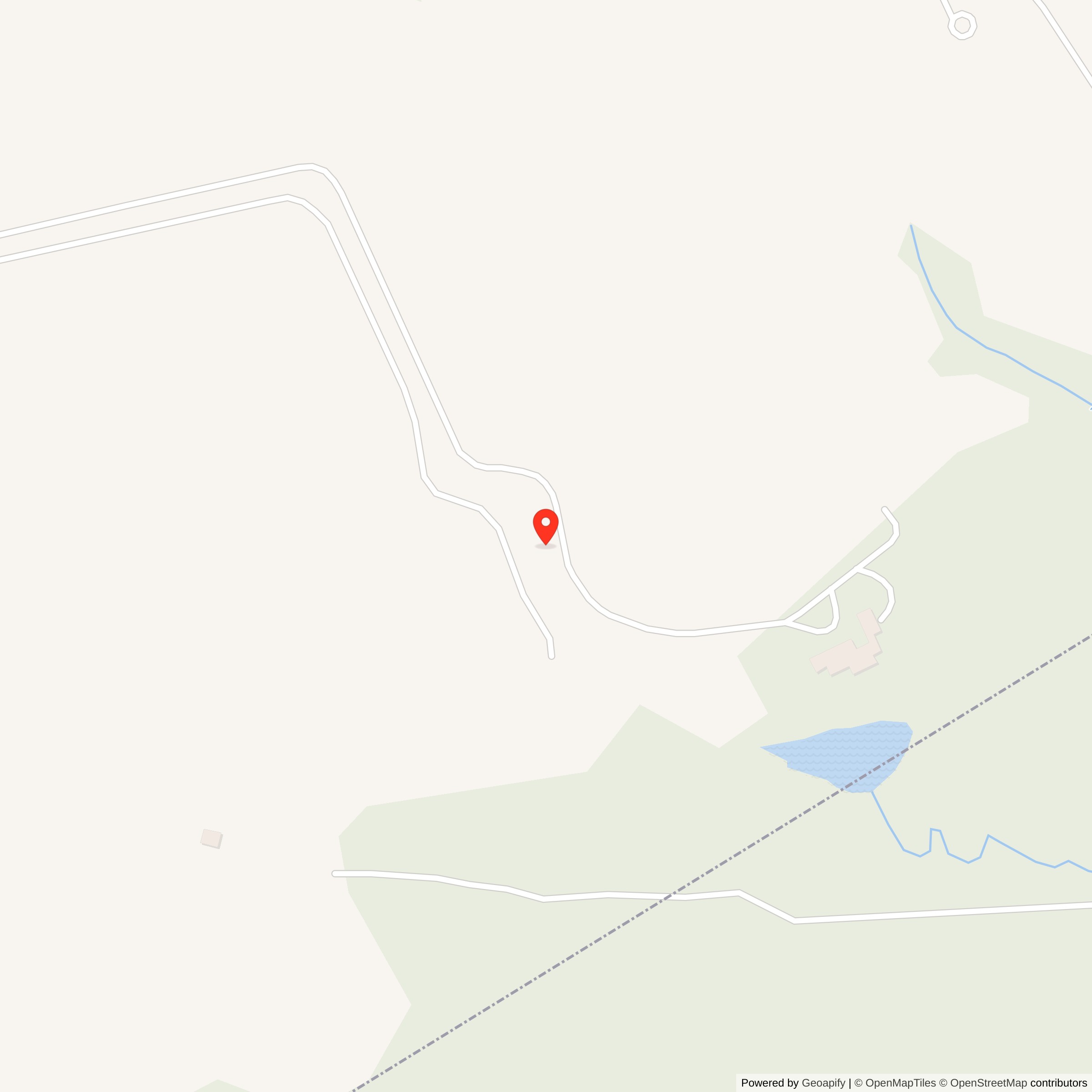
Nike Missile Site PH-75 was a U.S. Army Nike air-defense missile battery in the Philadelphia Defense Area. The site was located in Edgmont Township, Delaware County, Pennsylvania, in the Newtown Square / Edgemont area near West Chester Pike, Delchester Road, and Ridley Creek State Park. It is usually listed in Nike site inventories as PH-75, Edgemont / Delaware City or Edgemont / Delaware County. Some federal environmental and FUDS references identify the property as NIKE PH-75/78 (Media) or Former Media Nike Missile Battery PH-75/78 Control Area, reflecting the expanded or double-battery character of the installation and its association with the Media / Newtown Square area.
It was active from 1955 until late 1968. The Redstone Arsenal Nike inventory lists the dates of active service as 1955 to November 1968, while a local Newtown Square Historical Society article gives the local closure as September 1968.
The site was one of the Philadelphia Defense Area batteries upgraded from Nike Ajax to Nike Hercules. It therefore represents both phases of the Army's Cold War surface-to-air missile defense around Philadelphia: the first-generation Nike Ajax ring of the mid-1950s and the smaller, more powerful Nike Hercules system that followed.
The launcher area was on the south side of Pennsylvania Route 3 / West Chester Pike near Delchester Road, in the vicinity later associated with the Edgemont U.S. Army Reserve Center. The control / IFC area was north of Route 3, near Delchester Road, in the Newtown Square / Edgmont area.
History
The Philadelphia Nike defense network grew from the immediate post-World War II and Korean War-era expansion of continental air defense. In the early 1950s, the Philadelphia region was still protected by conventional antiaircraft gun batteries positioned within several miles of the center city. That arrangement reflected the transitional period between World War II gun-based air defense and Cold War guided-missile defense. As the Soviet bomber and nuclear threat became a central planning concern, the Army began replacing those gun defenses with Nike Ajax missile batteries.The Philadelphia Defense Area was intended to protect the Delaware Valley and the industrial, military, port, transportation, and population centers associated with Philadelphia, Camden, the Delaware River corridor, and Wilmington. One Tredyffrin Easttown Historical Society account describes the system as protecting the Delaware Valley from Trenton south to Wilmington. The completed Nike Ajax defense pattern consisted of twelve missile installations forming a "ring of supersonic steel" around Philadelphia. Seven of those sites were in Pennsylvania and five were in New Jersey.
On the Pennsylvania side of the Delaware River, the Nike batteries included PH-07 at Richboro, PH-15 at Newportville / Croydon, PH-67 at Chester / Media, PH-75 at Edgemont / Delaware County, PH-82 at Paoli / Valley Forge, PH-91 at Worcester / Center Square, and PH-99 at Warrington / Eureka. On the New Jersey side, sites included PH-25 at Lumberton, PH-32 at Marlton, PH-41 at Berlin / Clementon, PH-49 at Pitman, and PH-58 at Swedesboro. Headquarters facilities were located at Swarthmore, and the later Missile Master command-and-control facility for the defense area was based at Pedricktown, New Jersey.
PH-75 occupied the western-southwestern side of the Philadelphia ring. Its location near Edgmont and Newtown Square placed it outside the urban core, on higher and less densely developed suburban/rural land where the Army could establish a separated radar/control area and launcher area. This was typical of Nike siting: the control area needed enough elevation and clearance for radar coverage, while the launcher area needed open space for underground magazines, launch rails, assembly and maintenance facilities, security fencing, and explosive-safety clearances.
The Edgmont base was completed in 1955. It first operated with Nike Ajax missiles. Nike Ajax was the Army's first operational surface-to-air guided missile. It was designed to intercept formations of enemy bombers before they reached protected urban and industrial targets. In Nike Ajax service, PH-75 would have relied on acquisition radar, tracking radar, missile-tracking radar, and ground-based computing equipment to direct missiles toward incoming aircraft. The system was manpower-intensive and required a continuously trained crew.
PH-75 was larger and more complex than many single Nike Ajax batteries. The published Redstone Arsenal Nike inventory lists PH-75 as Nike 2B, 4C/18H, 60A/23L-UA, (11L-H). In the Nike inventory key, B and C refer to missile-storage magazine types; A refers to Ajax; H refers to Hercules; L refers to launchers; U or UA refers to universal or partially universal launchers; and launchers converted to Hercules are shown in parentheses. In practical terms, PH-75 was recorded as an expanded or double site with a large Ajax capacity and a later Hercules capability. It is also listed in some FUDS and EPA records as PH-75/78, which appears to reflect that double-site or expanded-control-area identity.
The Army converted PH-75 to Nike Hercules during the late 1950s. Appendix D of Mary T. Cagle's History of the Nike Hercules Weapon System lists PH-75 in the Philadelphia Defense Area among converted defense sites. That appendix records a construction/conversion period of June 1958 to September 1959 and an operational Nike Hercules date of 10 September 1959. The notation includes PH-75 with a 2B and 1C magazine conversion package, and the parenthetical note in the appendix indicates that only part of the battery site was represented in that particular conversion listing.
Nike Hercules changed the military character of PH-75. The Hercules missile was larger, longer-ranged, solid-fueled, and capable of carrying either conventional or nuclear warheads. In the Philadelphia Defense Area, PH-75 and PH-99 were the Pennsylvania-side sites upgraded to Hercules, while PH-25, PH-41, and PH-58 were the upgraded New Jersey-side sites. The shift to Hercules allowed the Army to reduce the number of active batteries while maintaining a broader defended area, because Hercules could engage targets at greater range and altitude than Ajax.
The presence of Nike Hercules also made sites such as PH-75 more politically and socially visible. Local residents had already been aware of Nike bases because they brought young soldiers, fencing, restricted land, radar towers, Army vehicles, and explosives into suburban communities. The possibility of nuclear-capable Hercules missiles intensified public concern. A local Newtown Square Historical Society article notes that, in 1958, about fifty young activists held a silent peace vigil at the entrance to the Edgmont base. This was early for local antiwar or antinuclear protest in the area and shows that PH-75 was not merely a technical military installation; it was part of the public geography of Cold War anxiety.
The site's function became less important as the principal threat to the United States shifted from manned bombers to intercontinental ballistic missiles and submarine-launched ballistic missiles. Nike Ajax and Nike Hercules were designed primarily to destroy aircraft. They could not provide a meaningful defense against a large-scale ballistic missile attack. By the 1960s, this doctrinal and technological change made many Nike batteries obsolete. Philadelphia's Ajax-only batteries were deactivated from 1961 to 1963. PH-75 survived longer because it had been upgraded to Hercules, but it too was closed before the end of the decade. The official Nike inventory gives PH-75's active service as 1955 to November 1968; local history places the Edgmont closure in September 1968.
Site Layout and Operation
Like other Nike batteries, PH-75 was divided into functionally separate areas. The Integrated Fire Control area held the radar and guidance equipment. The launcher area held the missiles, underground magazines, launch rails, missile-handling equipment, assembly and maintenance functions, and security perimeter. The administrative and personnel-support functions included barracks, headquarters, mess, recreation, and motor-pool facilities.A local article summarizes the three-part organization of the Edgmont site as a radar system to detect incoming aircraft and direct outgoing missiles; underground magazines with launchers; and a personnel / headquarters / barracks / mess / recreation / motor-pool area. The same account states that the base was staffed by 109 soldiers. This is consistent with the manpower-intensive operation of early Nike batteries, which required around-the-clock readiness, radar operators, launch crews, maintenance personnel, security personnel, and command staff.
The control area was located near 1011-1017 Delchester Road, Newtown Square, Pennsylvania. EPA's Superfund site profile identifies this former control-area property as the Former Media Nike Missile Battery PH-75/78 Control Area, with coordinates 39.972220, -75.476130. The control area contained the acquisition and tracking radars, radar towers, operations buildings, and guidance equipment necessary to control missile engagements.
The launcher area was the physically larger and more heavily engineered portion of the battery. It was located south of Route 3 / West Chester Pike near Delchester Road, on land later used as or associated with the Edgemont U.S. Army Reserve Center. The launch area was listed as a double launch area at 39.96349175467675, -75.46973750824286. In the Nike system, missiles were normally stored horizontally in underground reinforced-concrete magazines. When crews received an alert order, elevators raised the missiles to the surface, where they could be rolled onto launch rails and prepared for firing.
The Redstone Nike inventory lists PH-75 as having an unusually large Ajax/Hercules configuration: 2B, 4C magazines; 60 Ajax missiles; 18 Hercules missiles; 23 launchers recorded as Ajax/universal; and 11 launchers converted to Hercules. Because the site is identified as a double site, these figures should be understood as the total recorded capacity/configuration for the expanded PH-75 installation rather than a standard single-battery layout.
Post-Closure and Current Status
After PH-75 was deactivated, its land did not return to a single simple civilian use. Different parts of the former battery entered different reuse and environmental-management tracks.The Redstone Arsenal Nike inventory records the control site condition/owner as Ridley Creek State Park and the launch site condition/owner as a U.S. Army Reserve Center. Ed Thelen's Pennsylvania Nike site notes describe the control area north of Pennsylvania Route 3 near Delchester Road as having several remaining radar towers and overgrown buildings around 2000, and describe the launcher area south of Route 3 as part of a U.S. Army Reserve / engineer complex, with underground entrances sealed by steel plates and magazines not visible from the road because they were behind buildings on the hill.
EPA records identify the former control area as the Former Media Nike Missile Battery PH-75/78 Control Area at 1011-1017 Delchester Road, Newtown Square, Pennsylvania. EPA lists it as a federal facility, not on the National Priorities List, with a non-NPL status of NFRAP, meaning no further remedial action was planned under the Superfund process based on the information available at the time of the listing.
As of recent public references, the Edgemont U.S. Army Reserve Center remains associated with the former PH-75 launch area. CurrentOps lists Edgemont United States Army Reserve Center in Newtown Square, Pennsylvania, as owned or managed by the United States Army Reserve, and a 2025 SAM.gov notice identifies Edgemont Army Reserve Center at 2101 Delchester Road, Newtown Square. A local 2023 history article likewise states that the site continued to be used as a U.S. Army Reserve Center and that Cold War traces remained in the area.
List of all Nike Installations in the Philadelphia Defense AreaList of all Nike Installations in Pennsylvania