Nike Missile Site PH-67 Launcher, Upper Chicheste Pennsylvania
Longitude: -75.4178
This location was part of the Philadelphia Defense Area
Site ID: PH-67
The missiles at this Launch Area were controlled by the Integrated Fire Control site located here.
Site Role: Launcher
A typical Nike air defense site consisted of two separate parcels of land. One area was known as the Integrated Fire Control (IFC) Area. This site contained the Nike system's ground-based radar and computer systems designed to detect and track hostile aircraft, and to guide the missiles to their targets.
The second parcel of land was known as the Launcher Area. At the launcher area, Nike missiles were stored horizontally within heavily constructed underground missile magazines. A large, missile elevator brought the Nikes to the surface of the site where they would be pushed across twin steel rails to one of four satellite launchers.
Elaboration on how Nike worked here.
Nike Missile Site PH-67 was a U.S. Army Nike air-defense missile battery in the Philadelphia Defense Area. It was located in Delaware County, Pennsylvania, in the Village Green / Aston Township area, with Nike inventories often listing the site as Chester / Media or Village Green / Chester / Media. The site was part of the Cold War ring of Army surface-to-air missile batteries built around Philadelphia to defend the Delaware Valley, the Philadelphia-Camden industrial and port region, regional transportation corridors, and nearby military and defense-related targets from Soviet bomber attack.
It was an Ajax-era Nike site, active from the mid-1950s until the early 1960s. Published Nike inventories list its service dates as 1955 to 1963, while a site-specific PH-67 account gives the operational end as 1964 and lists the final Pennsylvania Army National Guard unit through March 1964.
PH-67 was not converted into an operational Nike Hercules site. Some sources state that the base was considered for Hercules conversion and that one magazine type was adaptable to Hercules, but the Hercules upgrade was never completed operationally. The site remained an Ajax-only Philadelphia Defense Area battery and was deactivated with the other Ajax-only sites after the more capable Nike Hercules system allowed the Army to reduce the number of batteries needed around Philadelphia.
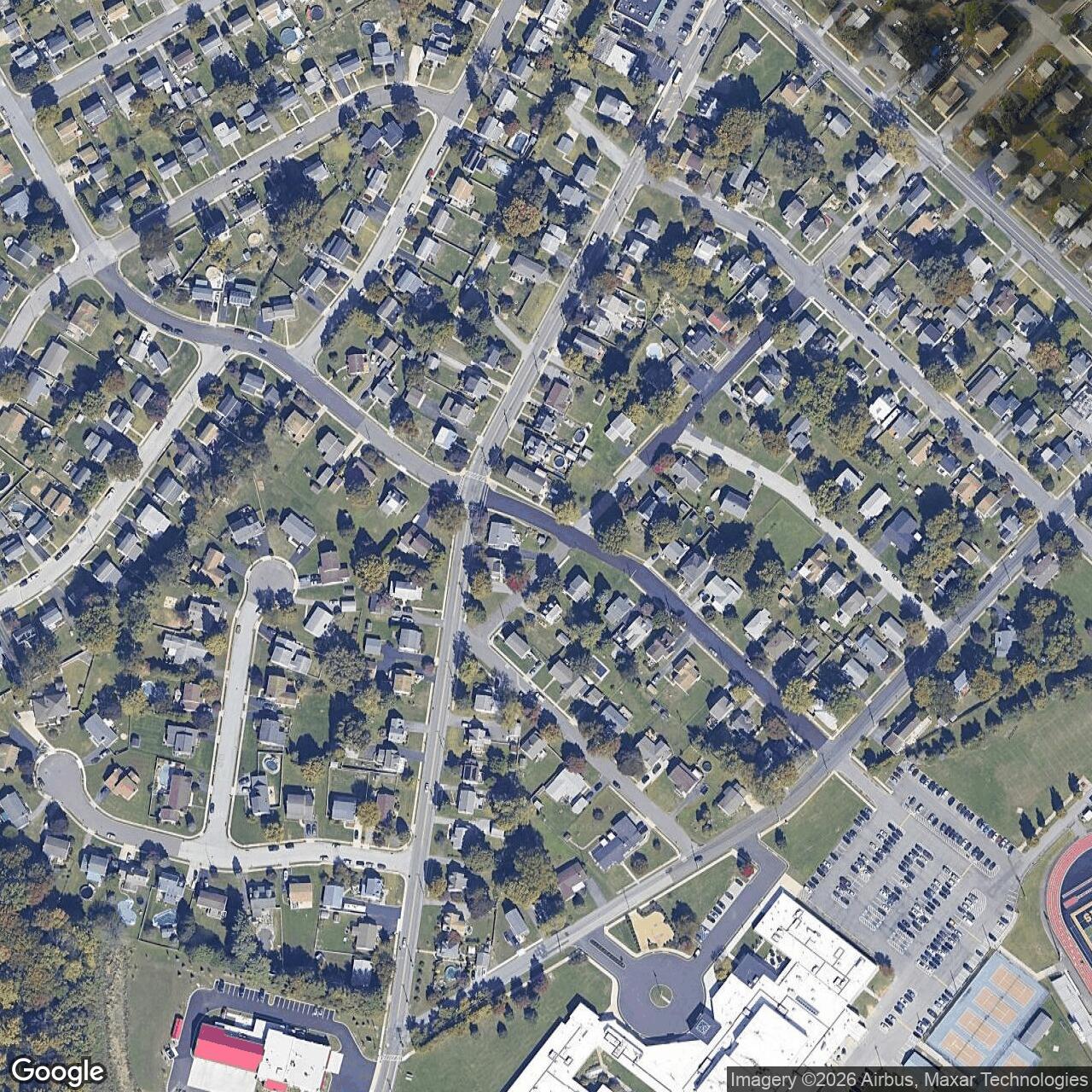
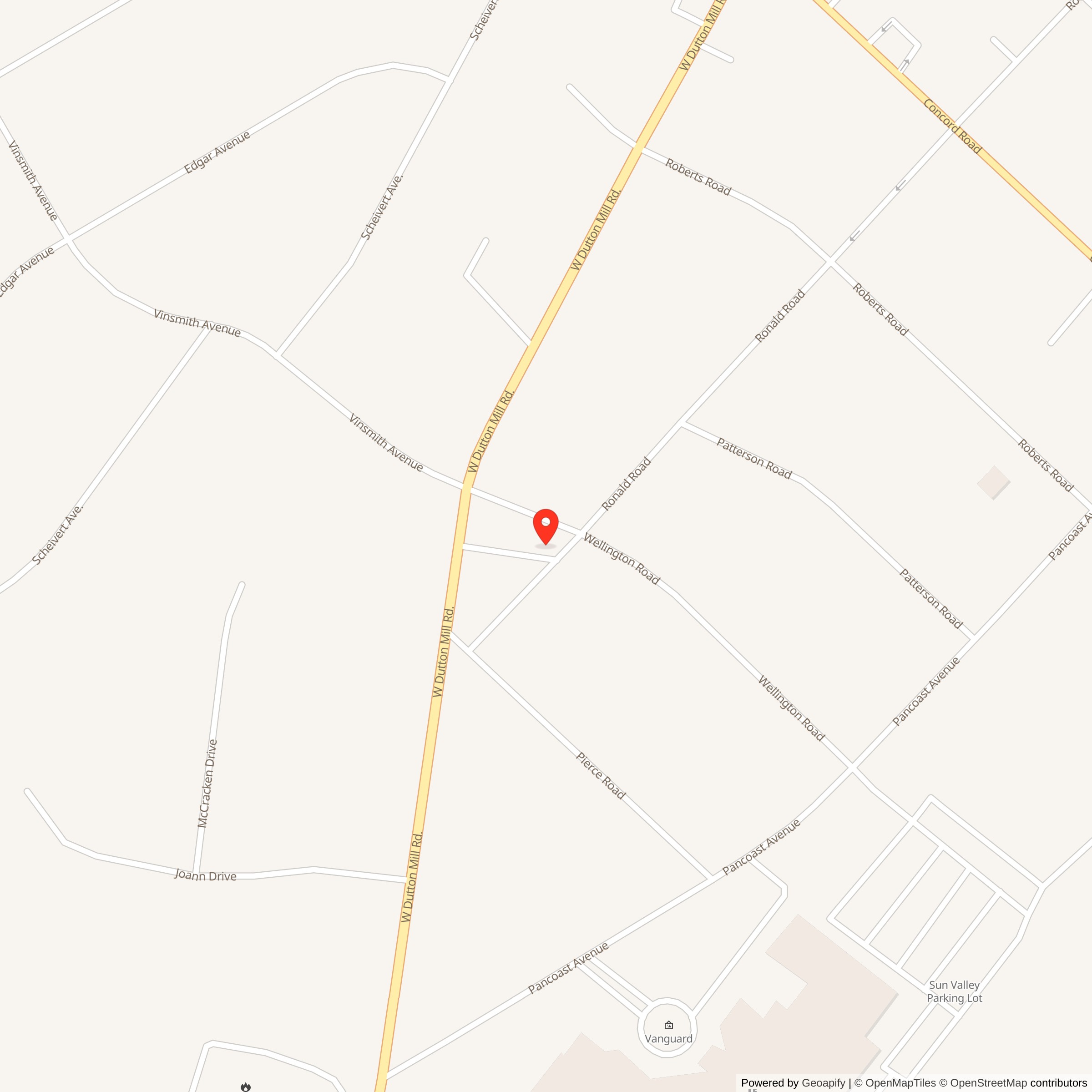
The launcher area was north of the Cherry Tree Road / Conchester Road area and later became associated with Hilltop Elementary School / Chichester School District property. The Integrated Fire Control area was in the Pennell Road / PA 452 area north of U.S. 322 and later became associated with Penn-Delco School District property, Pennell Elementary School, and the S. H. Smith Environmental Center area.
Units That Served at PH-67
- Battery C, 176th Antiaircraft Artillery / Artillery, U.S. Army: February 1955 to September 1958.
- Battery C, 2nd Missile Battalion, 59th Artillery, U.S. Army: September 1958 to April 1960.
- Battery C, 3rd Missile Battalion, 166th Artillery, Pennsylvania Army National Guard: April 1960 to March 1964.
This sequence matches the broader Philadelphia Defense Area pattern in which Regular Army Nike units initially operated the missile batteries and Pennsylvania Army National Guard units later assumed manning at some sites.
History
The story of PH-67 begins with the national air-defense crisis of the early Cold War. After the Soviet Union acquired nuclear weapons in 1949 and after the Korean War pushed the United States into a major rearmament program, American air-defense planning changed rapidly. During the first years after World War II, U.S. cities were defended, if at all, by antiaircraft artillery and fighter aircraft. By the early 1950s, that approach was no longer considered adequate against high-flying bombers that might carry nuclear weapons. The Army's Nike program was designed to provide a guided-missile last line of defense around major metropolitan areas, industrial centers, ports, military installations, and other high-value targets.Philadelphia was one of the urban-industrial regions selected for Nike protection. The city and its surrounding region had strategic value for several reasons. It was a major population center, a port city tied to the Delaware River corridor, a rail and highway hub, and part of a larger industrial belt extending through southeastern Pennsylvania, southern New Jersey, and northern Delaware. The region also lay near important military, naval, shipbuilding, petroleum, manufacturing, and logistics infrastructure. A successful bomber attack on the Delaware Valley would have had military, industrial, transportation, and civilian consequences.
Before Nike deployment, the Philadelphia area was protected by conventional antiaircraft gun batteries. The DoD Cold War missile-program history notes that in the early 1950s a dozen gun batteries positioned roughly six to seven miles from the center of the city protected Philadelphia. In the mid-1950s, the Philadelphia District of the U.S. Army Corps of Engineers supervised construction of a circle of twelve Nike Ajax sites averaging about twenty-five miles from Center City. The completed defense area included both Pennsylvania and New Jersey batteries.
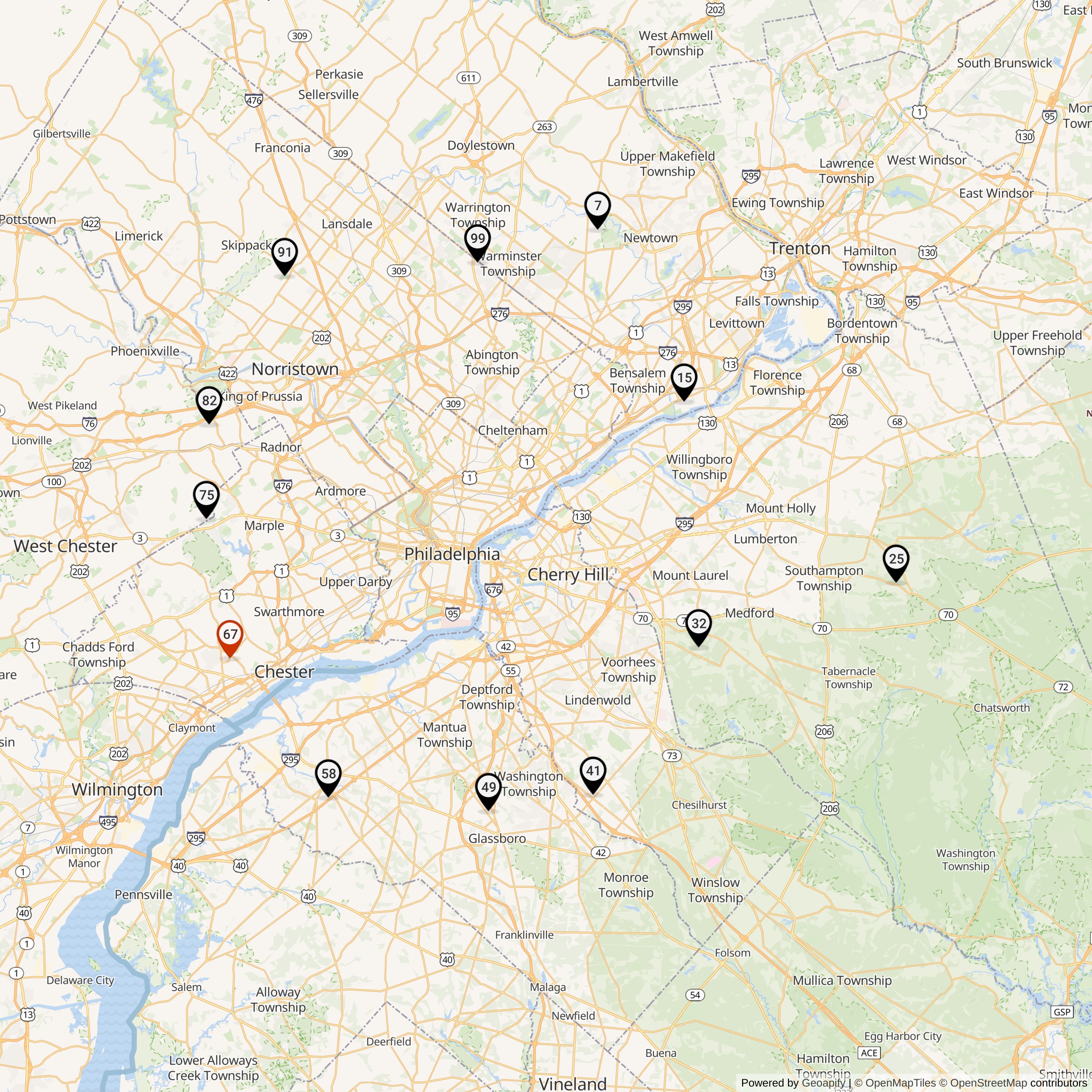
On the Pennsylvania side of the Delaware River, the Philadelphia Defense Area included PH-07 at Richboro, PH-15 at Newportville / Croydon, PH-67 at Chester / Media, PH-75 at Edgemont / Delaware County, PH-82 at Paoli / Valley Forge, PH-91 at Worcester / Center Square, and PH-99 at Warrington / Eureka. On the New Jersey side, related Philadelphia-area Nike sites included PH-23/25 at Lumberton, PH-32 at Marlton, PH-41/43 at Erial or Berlin / Clementon, PH-49 at Mantua / Pitman, and PH-58 at Woolwich / Swedesboro. Headquarters facilities were located at Swarthmore, and later Nike command-and-control functions for the defense area were supported by the Pedricktown / Gibbsboro-area Missile Master network in New Jersey.
PH-67 occupied the southwestern side of the Philadelphia Nike ring. Its position in the Chester / Media / Village Green area placed it outside the dense urban core but still close enough to contribute to the defended perimeter around the city and the Delaware River corridor. From that location, PH-67 helped cover potential southwestern and southern approaches toward Philadelphia, Chester, the Delaware River industrial corridor, and the western side of the metropolitan area. Its placement also made sense technically: Nike batteries needed enough open land for a separated launcher and radar-control area, enough distance from dense urban development for explosive safety, and enough line-of-sight relationship between the fire-control radars and the missile launchers.
PH-67 was built in 1955 by the U.S. Army Corps of Engineers. The site entered service as a Nike Ajax battery. Nike Ajax was the Army's first operational surface-to-air guided missile system. It was designed to intercept formations of enemy bombers before they could reach their targets. The Ajax missile itself was a supersonic, command-guided weapon, but the missile was only one part of the system. The full battery depended on acquisition radar, target-tracking radar, missile-tracking radar, analog computing equipment, launcher equipment, underground storage magazines, generators, communications, security, and trained crews who could keep the site ready for a rapid alert.
As an Ajax battery, PH-67 did not function like a conventional artillery post. The site was part of a larger electronic and command network. When a possible enemy aircraft track appeared, higher air-defense command elements and local Nike crews would identify, assign, track, and engage the target. The Integrated Fire Control area acquired and tracked the incoming aircraft while the launcher area prepared missiles for firing. The Nike computer calculated the intercept point and generated steering commands for the missile in flight. This made the Nike battery a combination of radar station, computer-guided weapons system, magazine complex, military garrison, and restricted security site.
The site-specific PH-67 account lists the base as having 30 Nike Ajax missiles and 12 Ajax launchers. Its magazine configuration is listed as one Type B magazine and two Type C magazines. In the Nike inventory system, C magazines were original Ajax-only magazines. B magazines could support Ajax and, with modification, could accommodate Hercules-related changes such as heavier launcher/elevator requirements. This is why the PH-67 history can contain both facts at once: it was an Ajax-only operational site, yet at least part of its underground magazine infrastructure had a type designation associated with Ajax/Hercules adaptability.
The PH-67 account also states that the site was to be upgraded to Nike Hercules but that the upgrade never became an operational reality. This is consistent with the site's absence from the main Hercules conversion sequence and with its recorded Ajax-only missile type in Nike inventories. The Hercules modernization dramatically changed the Philadelphia Defense Area. Instead of retaining all of the original Ajax sites, the Army converted only selected batteries to the longer-ranged, more powerful Hercules system. PH-67 was not one of the batteries that remained in long-term Hercules service. Philadelphia-area Hercules sites such as PH-75 and PH-99 in Pennsylvania and PH-23/25, PH-41/43, and PH-58 in New Jersey outlasted most Ajax-only sites.
PH-67 was initially manned by Regular Army personnel. Battery C of the 176th served from February 1955 to September 1958. In September 1958, Battery C, 2nd Missile Battalion, 59th Artillery took over and continued Regular Army operation until April 1960. After that, Battery C, 3rd Missile Battalion, 166th Artillery of the Pennsylvania Army National Guard operated the site until March 1964. This National Guard phase was not merely administrative. It reflected an important Cold War manpower policy: once the Nike system was established, many of the routine but demanding air-defense duties around American cities were carried by Guard units that were locally based but federally integrated into the air-defense mission.
The men assigned to PH-67 were part of the surrounding community as well as the defense system. A site-specific PH-67 account notes that servicemen from the base participated in local life: some were members of the Marcus Hook Fire Company, and others joined community football, basketball, baseball, and bowling teams. The same account notes participation in church services, Red Cross blood drives, March of Dimes activities, and local schools. This type of social integration was common at Nike sites. The installations were fenced, guarded, and militarized, but they were embedded in suburban and semi-rural communities, and the soldiers who staffed them lived, shopped, volunteered, and recreated nearby.
PH-67's operational life was relatively short because of the rapid evolution of Cold War weapons technology. Nike Ajax had been designed primarily to defend against manned bomber aircraft. By the late 1950s and early 1960s, however, the strategic threat was shifting toward intercontinental ballistic missiles and submarine-launched ballistic missiles. Nike Ajax could not defend against a large ballistic-missile attack, and even for bomber defense the Army preferred the longer-ranged Nike Hercules. In the Philadelphia area, this meant that some Ajax-only batteries were closed while a smaller number of Hercules-capable sites remained active. PH-67 was deactivated during this period, with sources giving either 1963 or March 1964 as the end of service.
Site Layout and Operation
PH-67 followed the standard Nike pattern of separated functional areas. The Integrated Fire Control area, often called the IFC or control area, held the radars and fire-control equipment. The launcher area held the missiles, underground magazines, elevators, launch rails, ready areas, missile assembly and maintenance functions, and security perimeter. The two parts needed to be separated for safety and operational reasons, but they also needed to be connected by line of sight and communications.The control area was located along or near Pennell Road / PA 452, north of U.S. 322. Later site notes identify it with Penn-Delco School District property and the S. H. Smith Environmental Center / Pennell Elementary School area. During the active Nike period, this area would have contained radar towers or radar pads, fire-control vans or buildings, power and communications support, maintenance buildings, and personnel spaces. The IFC equipment was responsible for target acquisition, target tracking, missile tracking, and generation of the intercept solution.
The launcher area was located north of Cherry Tree Road and Conchester / Westchester Road, later associated with Hilltop Elementary School and Chichester School District property. The site-specific PH-67 account identifies the launch area as Cherry Tree Road and states that its remaining visible structure after closure was essentially limited to the driveway alignment passing between two former refueling blast berms. Ed Thelen's site notes state that, around 2000, the launch area was still visible under a thin layer of blacktop in the schoolyard and that an elevator location had been marked out on the ground. A 2004 note reported school-district interest in the long-term stability of the covered elevators and ventilation shafts, which had reportedly been covered with steel plates.
As an Ajax launch area, PH-67's magazines would have stored missiles horizontally below grade. In an alert, crew members could raise missiles to the surface on elevators and move them on rails to launch positions. The system required repeated drills and careful maintenance. Ajax missiles used liquid-fuel sustainer systems and solid boosters, and the site would have required safe handling procedures for missile components, warheads, propellants, electrical systems, and radar-guidance equipment. The Nike battery was therefore both a weapons site and a technical maintenance facility.
PH-67's listed launcher configuration was 12 Ajax launchers. Its missile load was 30 Ajax missiles. Its magazine layout, one Type B and two Type C magazines, corresponds to a typical Ajax-era site with enough launcher and storage capacity to place missiles on alert while holding additional missiles in reserve below ground. Unlike the later Hercules sites, PH-67 did not have a verified operational nuclear Hercules mission. The site remained part of the conventional Ajax defensive ring until it was retired.
List of all Nike Installations in the Philadelphia Defense AreaList of all Nike Installations in Pennsylvania