Nike Missile Site PH-82 Launcher, Tredyffrin Pennsylvania
Longitude: -75.4412
This location was part of the Philadelphia Defense Area
Site ID: PH-82
The missiles at this Launch Area were controlled by the Integrated Fire Control site located here.
Site Role: Launcher
A typical Nike air defense site consisted of two separate parcels of land. One area was known as the Integrated Fire Control (IFC) Area. This site contained the Nike system's ground-based radar and computer systems designed to detect and track hostile aircraft, and to guide the missiles to their targets.
The second parcel of land was known as the Launcher Area. At the launcher area, Nike missiles were stored horizontally within heavily constructed underground missile magazines. A large, missile elevator brought the Nikes to the surface of the site where they would be pushed across twin steel rails to one of four satellite launchers.
Elaboration on how Nike worked here.
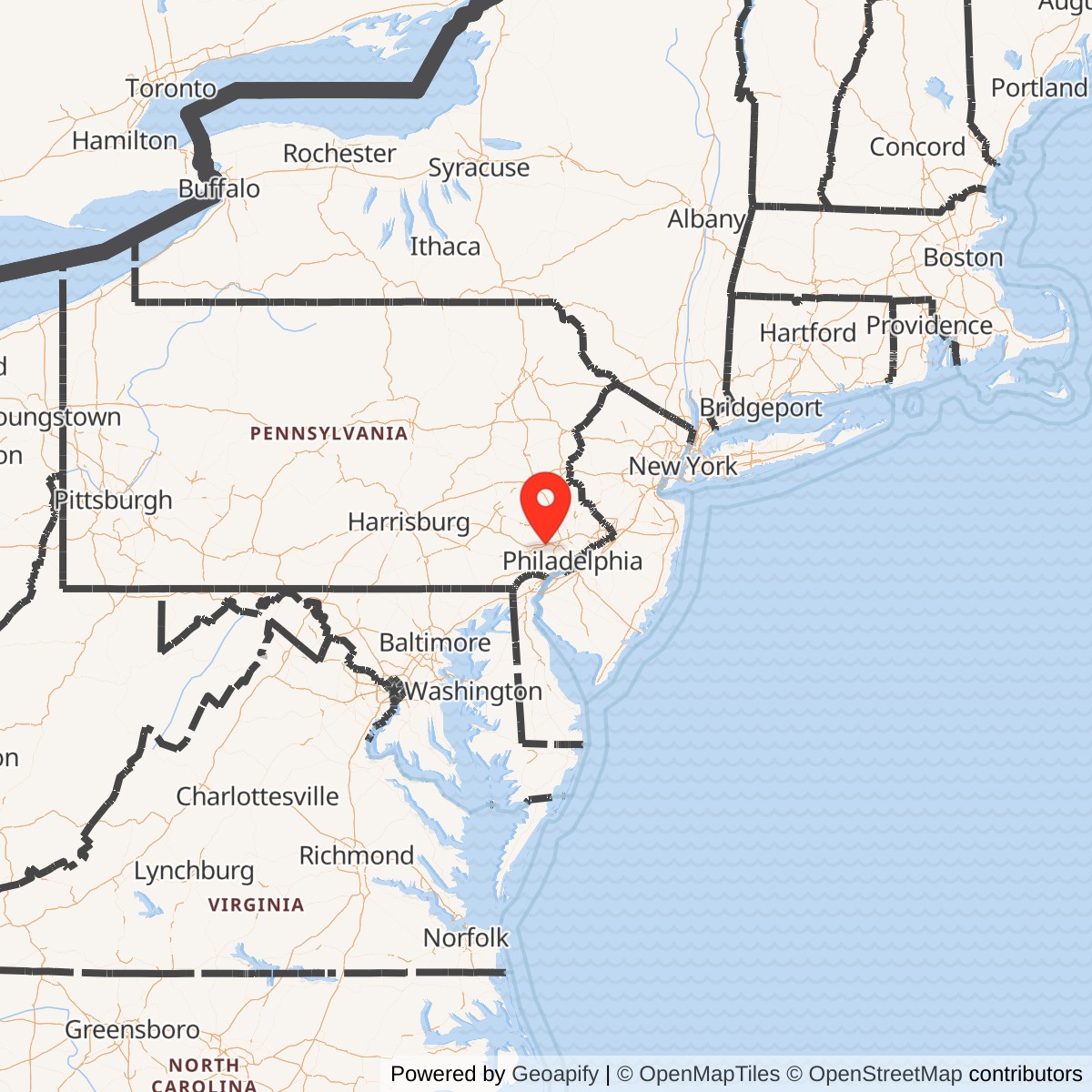
Nike Missile Site PH-82 was a U.S. Army Nike Ajax surface-to-air missile battery in the Philadelphia Defense Area. It was commonly identified as the Paoli / Valley Forge or Valley Forge / Paoli Nike base and was located in the Great Valley area of Chester County, Pennsylvania. The installation is not active. It was built during the mid-1950s as part of the ring of Nike missile sites defending Philadelphia and the Delaware Valley, operated as an Ajax-only site, was transferred from Regular Army operation to Pennsylvania Army National Guard operation in 1960, and ceased military operation in May 1964.
It was one of the Philadelphia Defense Area Ajax batteries that was not selected for permanent Hercules conversion. As Nike Hercules sites were introduced and the Philadelphia defense pattern was reduced, PH-82 was phased out rather than modernized.
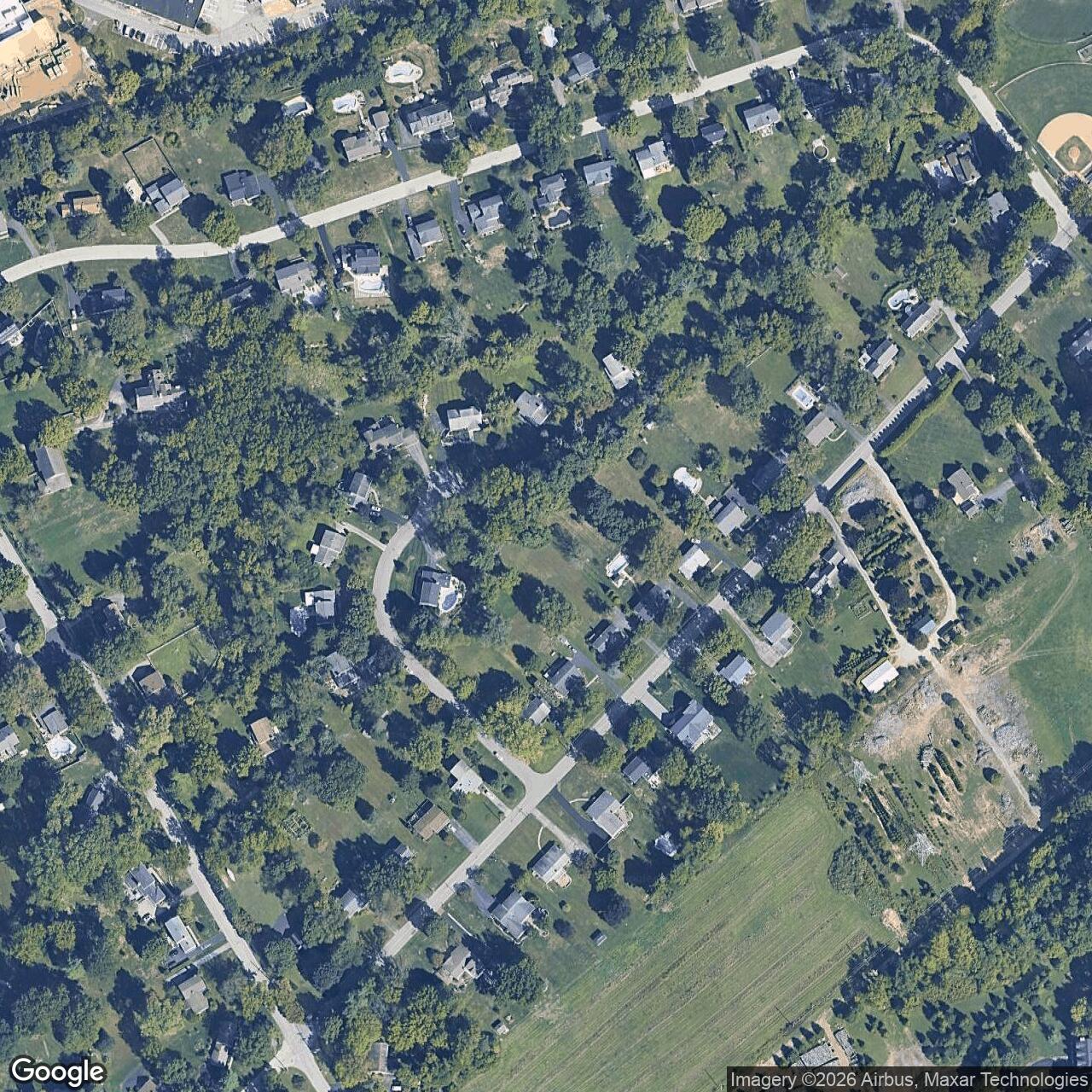
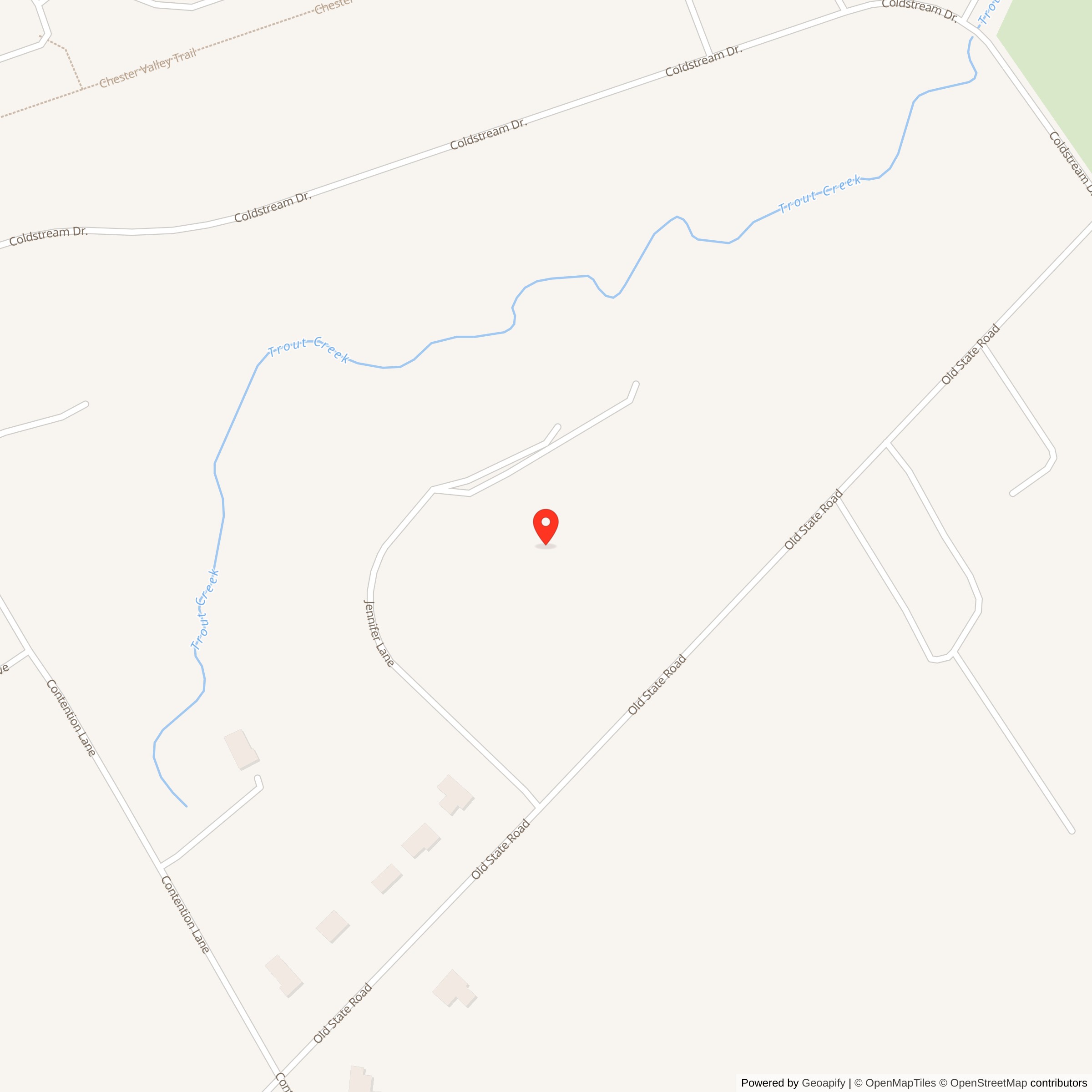
The launch area occupied the valley floor near the northeast corner of Swedesford Road and LeBoutillier Road in Tredyffrin Township. The Integrated Fire Control area was built roughly 2,400 yards to the north on higher ground along Horse Shoe Trail / Valley Forge Mountain in Schuylkill Township. That separation was not accidental. Nike Ajax depended on line-of-sight communication and radar geometry between the fire-control area and the launcher area, and the North Valley Hills gave the Army a high vantage point for radar coverage over the Great Valley and the western approaches to Philadelphia.
Defense Area
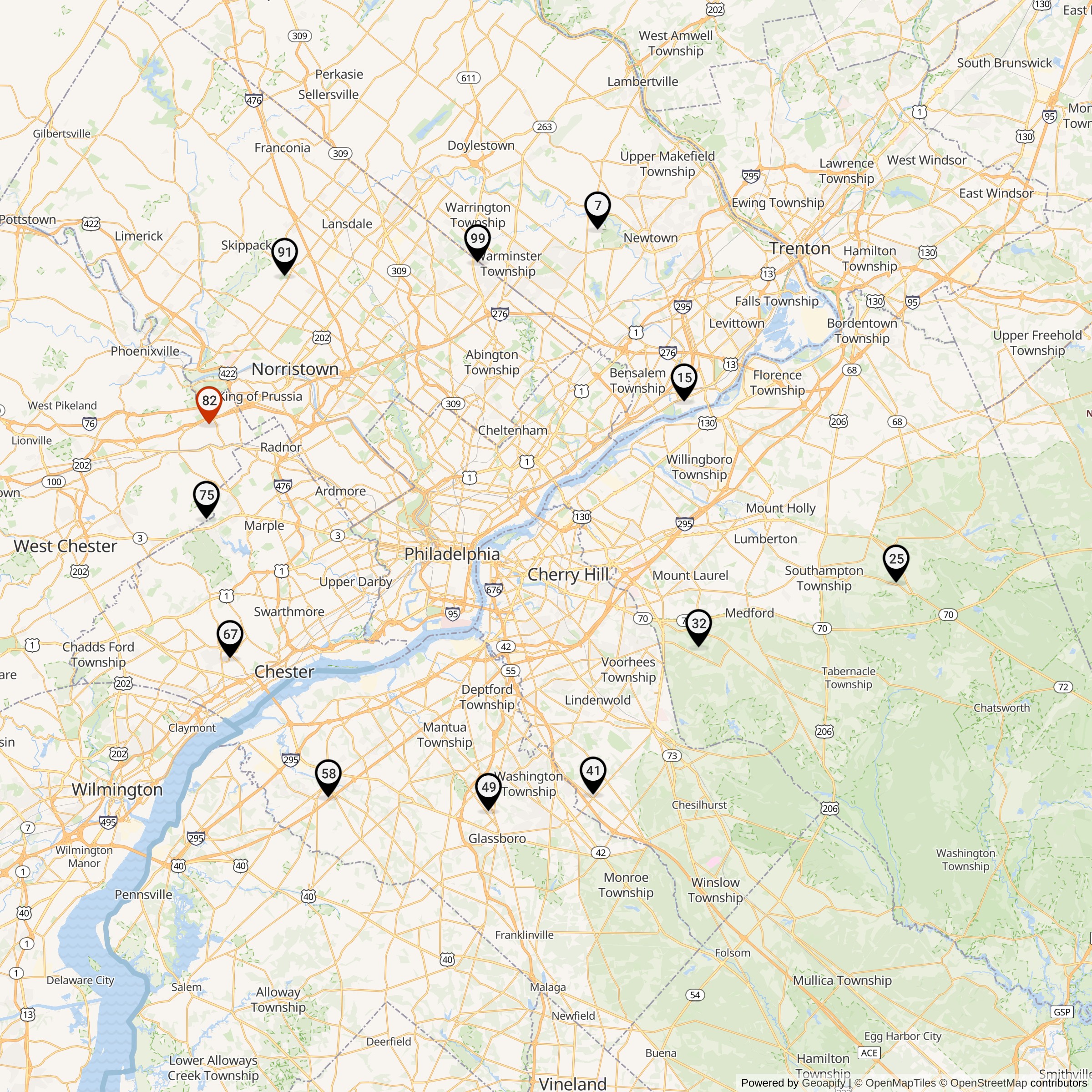
The Philadelphia Defense Area was part of the national Nike air-defense system developed during the early Cold War to defend major American cities, ports, military installations, and industrial regions from Soviet long-range bomber attack. Philadelphia's defense ring replaced or supplemented earlier antiaircraft gun defenses with guided missiles positioned around the metropolitan area. The Department of Defense Legacy missile history describes the mid-1950s Philadelphia Nike buildout as a circle of twelve Nike Ajax sites averaging roughly twenty-five miles from Center City Philadelphia, with sites on both sides of the Delaware River. On the Pennsylvania side, the listed Philadelphia-area sites included Richboro, Newportville / Croydon, Chester / Media, Edgemont / Delaware City, Valley Forge / Paoli, Worcester / Center Square, and Warrington / Eureka.PH-82 sat on the western and northwestern side of the Philadelphia ring. Its position in the Great Valley allowed it to help cover the western approaches to the city and the industrial, transportation, and population centers of the Delaware Valley. The site was part of a defensive architecture in which multiple Nike batteries, centrally coordinated by Army air-defense command-and-control facilities, were meant to detect incoming aircraft, track them, and destroy them before they reached the defended area.
Units that Served at PH-82
The available site-specific history identifies the original Regular Army unit at PH-82 as Battery A, 176th Antiaircraft Artillery Missile Battalion, 24th Air Defense Artillery Group. The battery began arriving as construction reached usable condition in early 1955. Its first commanding officer was Captain Henry Turck.Captain John Allen commanded PH-82 from June 1957 to May 1960. Former soldiers interviewed for the Tredyffrin Easttown history include then-Captain Allen, former Specialist Fourth Class Jon Freudenthal, who served at PH-82 from September 1956 to June 1959 as Acting Motor Pool Sergeant, and former missileman PFC Robert Kundert, who served at Paoli from 1956 into 1958.
On April 30, 1960, the Pennsylvania Army National Guard assumed command of PH-82 under the overall authority of the U.S. Army Air Defense Command. With that transfer, the Paoli base was redesignated Battery D, 3rd Missile Battalion (Nike-Ajax), 166th Artillery. The 3rd Battalion's Headquarters Battery was also attached to PH-82. The formal changeover was marked in May 1960 at Valley Forge State Park.
Construction and Land Acquisition
The Army began searching for land for PH-82 in early 1954. Public land in Valley Forge State Park was briefly considered, but the Army ultimately selected private land in the Great Valley. The choice created local opposition because the area was still largely rural, with farms, estates, quarry lands, and lightly developed country roads. Residents objected to the presence of a missile base, to the possibility of future land-use changes, to increased traffic, and to the intrusion of federal military authority into a quiet valley landscape.The two principal properties were not, however, taken from small individual homeowners in the way later local lore sometimes implied. The primary launch-site parcel was an undeveloped 35-acre tract owned by E. J. Lavino & Co. of Philadelphia near Swedesford and LeBoutillier roads. The Integrated Fire Control site was approximately 20 acres on Valley Forge Mountain along Horse Shoe Trail, transferred from developer Paul H. Lemen. Both parcels were transferred to the U.S. Army Corps of Engineers in the spring of 1954. Additional easements were required from neighboring landowners for line-of-sight clearance, blast-restriction buffers, security perimeters, access, and buried communications cable. The secure cable connection between the IFC and launcher had to cross the Pennsylvania Turnpike and intervening farmland.
Construction bidding was underway by June 1954, and reports at the time stated that work on launching platforms, underground ammunition storage structures, mess halls, assembly and test buildings, and other facilities was expected to begin in July. A standard Ajax installation generally required eight to nine months to build, but the Paoli site was expected to be completed within roughly six months at a cost of about one million dollars for land acquisition and permanent-type construction. By February 1955, the site was sufficiently complete to receive its Regular Army complement.
Site Layout and Facilities
PH-82 was divided into two functional areas: the launch area in the valley and the Integrated Fire Control area on the hill. This was the standard Nike configuration. The launcher area stored, assembled, fueled, armed, and launched the missiles. The IFC area acquired and tracked hostile aircraft, tracked the outgoing missile, computed the intercept, and transmitted steering commands to guide the missile to its target.The launch area was enclosed by a chain-link fence topped with barbed wire. Its single main entrance faced LeBoutillier Road and was protected by a guard shack and movable gate. Above-ground buildings were utilitarian and included enlisted barracks for launch platoon personnel, noncommissioned officer barracks, a missile assembly building, a storage building, a launch-control trailer, a well house, and a small water tower.
The most important part of the launch area was underground. PH-82 had three large concrete Nike Ajax magazines. Each magazine stored missiles horizontally below grade and had a hydraulic elevator that raised missiles to the surface for attachment to launcher rails. Each magazine had four above-ground launchers, two on each side of the horizontal steel elevator doors. The site's missile configuration is listed in Nike inventories as Nike 1B, 2C / 30A / 12L-A, meaning a three-magazine Ajax arrangement with 30 Ajax missiles and 12 Ajax launchers.
The Ajax missile was smaller than later strategic missiles but was a demanding and dangerous weapon system. With its booster attached it was about 34 feet long. The missile used a liquid-fuel sustainer system involving JP-4 fuel and red fuming nitric acid oxidizer. Fueling was one of the most hazardous jobs at an Ajax launch area because the chemicals were highly dangerous and had to be loaded in controlled sequence. PH-82's launch area included an earthen revetment beside the magazines where fueling and warhead attachment could be carried out with some blast protection.
The Integrated Fire Control area on Valley Forge Mountain was the battery's radar and command brain. It used a Low-Power Acquisition Radar (LOPAR) to detect and prioritize incoming targets, a Target Tracking Radar to lock onto the selected target, and a Missile Tracking Radar to track the outgoing Ajax missile. These radars fed data into a ground-based computer, which calculated the predicted intercept point and sent steering commands to the missile. When the system determined that the missile had reached the point of highest kill probability, it sent the burst command that detonated the Ajax's conventional warheads.
The IFC area was also fenced and had a guarded entrance off Horse Shoe Trail. A secondary gate at the east end of the site was intended for construction and heavy-equipment access. In addition to radar and control functions, the hill site served as the primary administrative and personnel area for Battery A. Its buildings included the administration building, supply room, post exchange, day room, mess hall, barracks, support buildings, and the radar towers. Photographs from the period show the IFC area's radar towers and the launch area's magazines, launch pads, roads, and fueling revetment laid out in the open farm landscape of the Great Valley.
Operation and Daily Life
PH-82 was not a large post, but it was a permanent military presence in a rural-suburban community. A standard Ajax battery in the 1950s called for roughly 106 officers and enlisted men. The soldiers who arrived at Paoli in 1955 and 1956 came from around the country. Some had trained at Nike practice ranges, including Red Canyon Range Camp in New Mexico, where Nike units fired live missiles at drone targets.The base changed the atmosphere of the Great Valley. Local residents remembered the surprise and unease that followed the Army's arrival, especially because the installation brought military traffic, noise, fences, guards, and young soldiers into a landscape that had previously been farms, country roads, riding paths, and estates. Some concerns were practical, such as dust, road conditions, tree removal, easements, traffic, and future land use. Others were psychological: the Nike site made the Cold War feel physically present in a quiet corner of Chester County.
The relationship between the base and its neighbors appears to have softened over time. Captain John Allen, who took command in 1957, later recalled visiting neighbors after arriving at Paoli and trying to build relationships with them. The local history records both objections and accommodations: complaints about dust and roads, but also personal contact between officers, soldiers, and residents. The site was a reminder that the Cold War air-defense system was not isolated on remote federal land. Nike batteries were deliberately placed around cities and among civilian communities, often in suburban or semi-rural locations where radar line-of-sight, land availability, and defensive geometry outweighed local preference.
Ajax-Only Status and Decision Not to Convert to Hercules
PH-82 remained a Nike Ajax installation. It was not upgraded to Nike Hercules. By early 1960, the Department of Defense had decided that PH-82 would not be modernized for nuclear-capable Nike Hercules missiles. Instead, the site would continue with Ajax and be turned over to the Pennsylvania Army National Guard. This decision reflected a national shift in Nike deployment. Hercules had greater range and altitude capability and could carry a nuclear warhead, which allowed the Army to defend larger sectors with fewer batteries. As Hercules sites were selected, many Ajax-only sites became redundant and were scheduled either for Guard operation during a transitional period or for eventual closure.In the Philadelphia Defense Area, only some batteries were upgraded. The Department of Defense Legacy missile history identifies PH-75 and PH-99 as the Pennsylvania-side Philadelphia sites upgraded to Hercules, while the remaining Ajax sites were deactivated during the early 1960s. PH-82 fits that pattern: it remained an Ajax site, passed to the Guard in 1960, and was then phased out as the Nike network contracted.
Deactivation and Post-Closure Use
By the end of 1962, Nike Ajax was increasingly obsolete in comparison with Nike Hercules. In March 1964, regional newspaper reporting stated that the Nike Ajax site at Paoli, then Battery D, would be phased out and closed by the end of April 1964. The Pennsylvania Army National Guard permanently ceased operations at PH-82 in May 1964, and responsibility for the two properties reverted to the U.S. Army Corps of Engineers.In 1965, the federal government transferred both the former launch and IFC properties to the trustees of the Moore School of Electrical Engineering of the University of Pennsylvania. The two parcels became the University's Valley Forge Research Center. The conveyance included conditions: the United States retained a right to re-enter during a national emergency; the properties were to be used continuously for educational purposes for a period of twenty years; and, if no breach or federal re-entry occurred, unrestricted title would eventually pass to the University.
The former IFC, known as the Upper Site, received significant post-military use. The University used it for instruction, research, and communications-related activity. Former students recalled courses and research activity there, and the site's remaining radar platforms made it attractive for radio and microwave work. The University's Amateur Radio Club used the Upper Site for annual Field Day events for decades.
The launch area, known as the Lower Site, was used much less intensively. It served mainly for storage and, for a time, caretaker occupancy. By the 1970s and 1980s it had become increasingly overgrown and deteriorated. Former residents remembered abandoned buildings, exposed magazine openings, and the site becoming a place for trespassing and informal use. The former magazines and deep underground spaces remained a major concern during later redevelopment.
By the mid-1990s, the University put both former Nike parcels up for sale. Tredyffrin Township considered acquiring the former launch area as open space or recreation land, but in June 1996 the supervisors rejected that proposal by a narrow vote. The launch site then proceeded into private residential development. The Turnbridge subdivision was built directly over the former launch area. The former IFC property was not removed from the University's inactive property listing until 2000, several years after the launch area had gone to private development.
Current Status
The launch area has been redeveloped as the Turnbridge residential subdivision in Tredyffrin Township. The former IFC area on the hill has also been redeveloped into residential use. The Tredyffrin Easttown history notes that by 2012 the only visible physical evidence of PH-82 was a row of tall evergreen trees along Swedesford Road, reportedly planted as seedlings by soldiers along the south perimeter of the launch site in 1956. List of all Nike Installations in the Philadelphia Defense AreaList of all Nike Installations in Pennsylvania