Nike Missile Site PH-91 Launcher, Worchester Pennsylvania
Longitude: -75.3545
This location was part of the Philadelphia Defense Area
Site ID: PH-91
The missiles at this Launch Area were controlled by the Integrated Fire Control site located here.
Site Role: Launcher
A typical Nike air defense site consisted of two separate parcels of land. One area was known as the Integrated Fire Control (IFC) Area. This site contained the Nike system's ground-based radar and computer systems designed to detect and track hostile aircraft, and to guide the missiles to their targets.
The second parcel of land was known as the Launcher Area. At the launcher area, Nike missiles were stored horizontally within heavily constructed underground missile magazines. A large, missile elevator brought the Nikes to the surface of the site where they would be pushed across twin steel rails to one of four satellite launchers.
Elaboration on how Nike worked here.
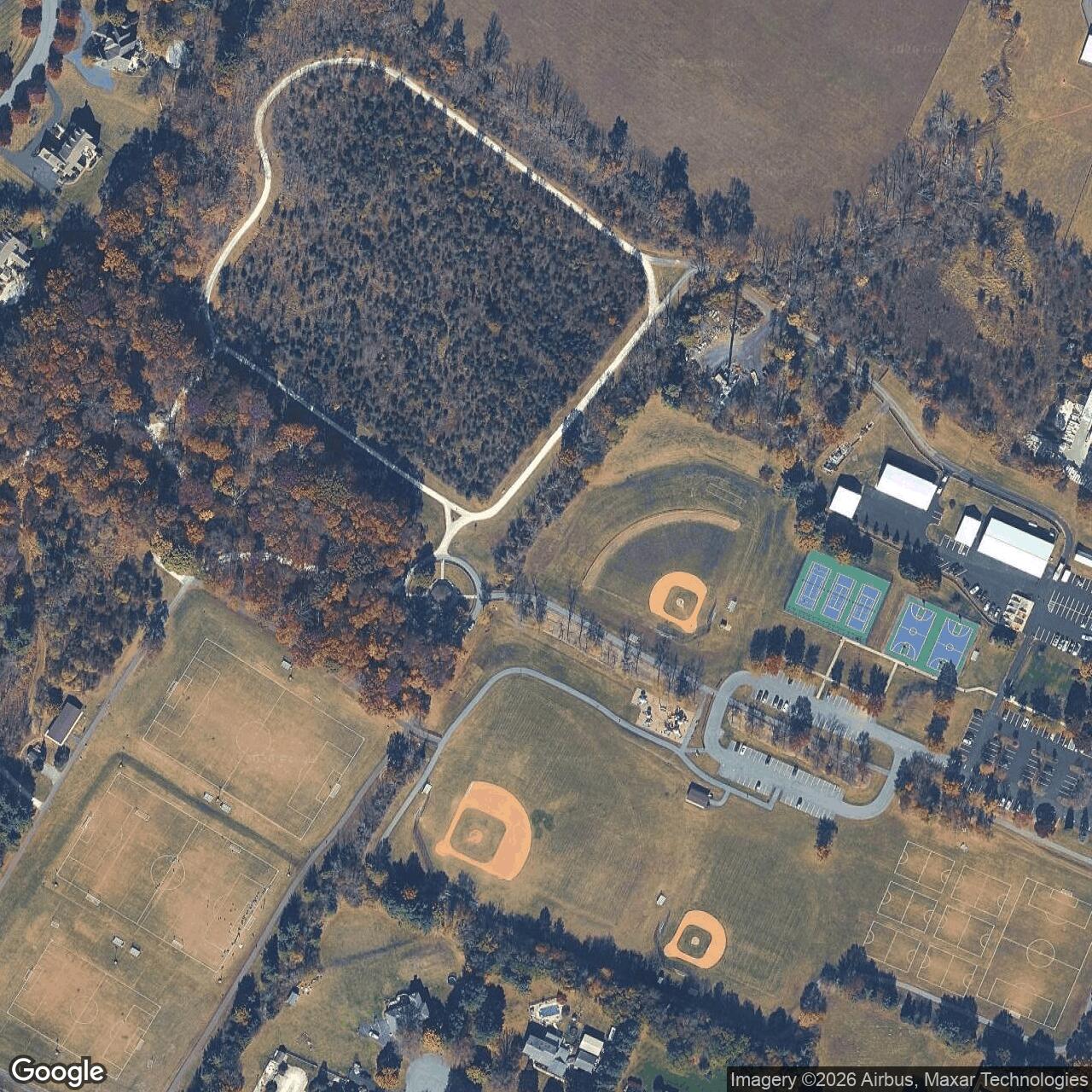
Nike Missile Site PH-91 was a U.S. Army Nike air-defense missile battery in the Philadelphia Defense Area. The site was located in Worcester Township, Montgomery County, Pennsylvania, in the Worcester / Center Square area north-northwest of Philadelphia. Older Nike inventories sometimes spell the place name as "Worchester," but the municipality is Worcester Township.
It was an Ajax-only Nike site, active as an operational missile battery from 1956 to 1963. It was not converted to Nike Hercules. This distinction matters because PH-91's active missile life ended during the Philadelphia Defense Area's early-1960s contraction, when the Army retained fewer sites after Hercules modernization made wide coverage possible with fewer, longer-ranged batteries.
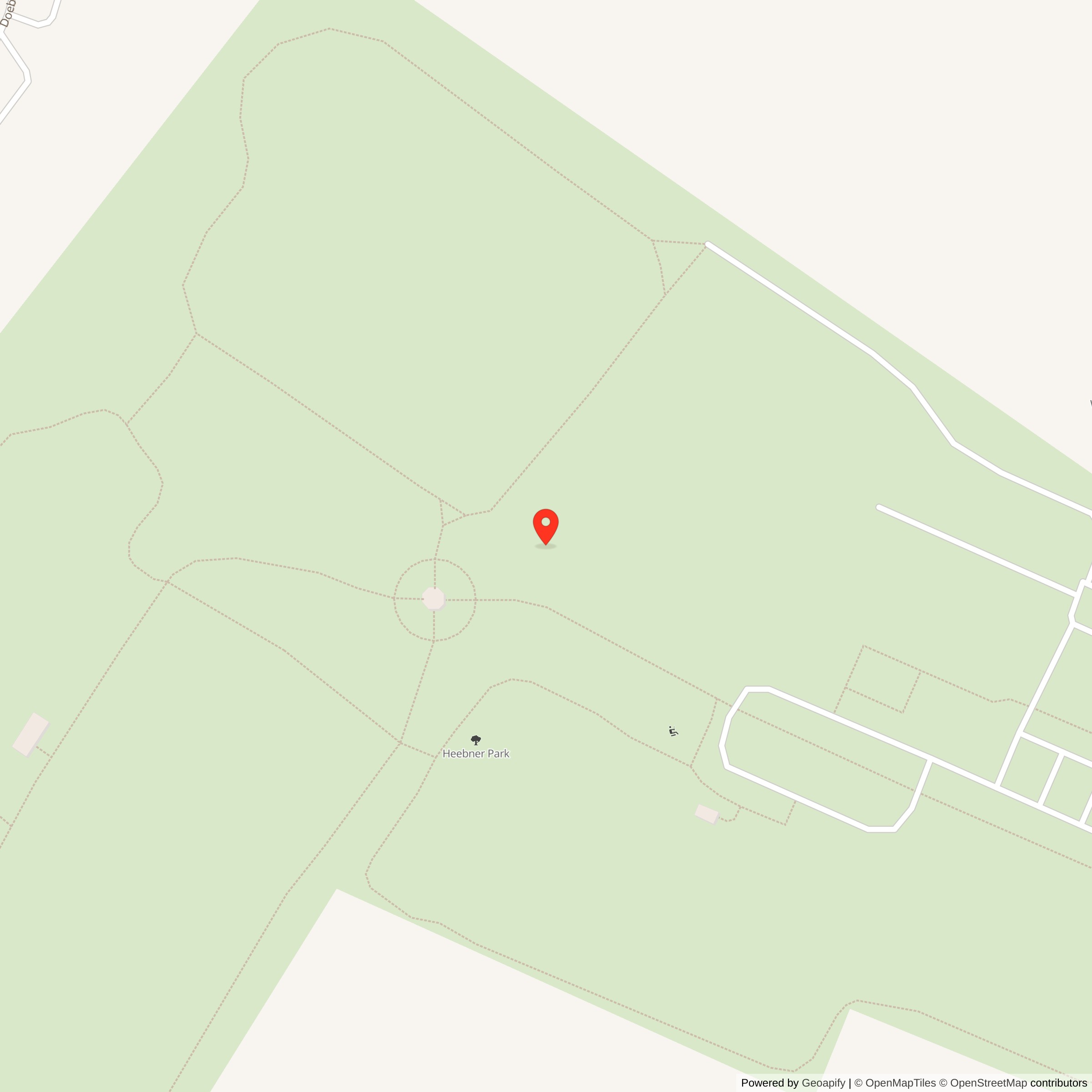
The former installation was divided into two separated but related areas. The Integrated Fire Control / control area was in the Church Road / North Trooper Road vicinity near Potshop Road, where the radars, battery control equipment, administration buildings, mess hall, barracks, generators, and related control-area facilities were located. The launch area was to the east-southeast near Berks Road, where the missiles were stored in underground magazines and prepared for launch. After closure, the control area was partly reused as Worcester Nike Park, while the launch area remained in Army hands for Army Reserve use before later transfer and redevelopment discussions.
History
Nike Site PH-91 was built in the context of the Korean War-era and early Cold War expansion of continental air defense. In the early 1950s, before the Nike missile ring was complete, Philadelphia was protected by conventional antiaircraft gun batteries located closer to the city. Those batteries were a transitional defense: they represented an older gun-based response to the bomber threat, but jet aircraft, atomic weapons, and the rapid growth of Soviet long-range aviation made guided missiles the preferred solution for defending American urban and industrial regions.The Philadelphia region was an obvious air-defense priority. It contained a major city, port facilities, rail and highway networks, shipbuilding and industrial infrastructure, petroleum and chemical facilities along the Delaware River corridor, and military installations across southeastern Pennsylvania and southern New Jersey. The Philadelphia Defense Area was designed to intercept hostile aircraft before they could reach the city or the broader Delaware Valley industrial target complex.
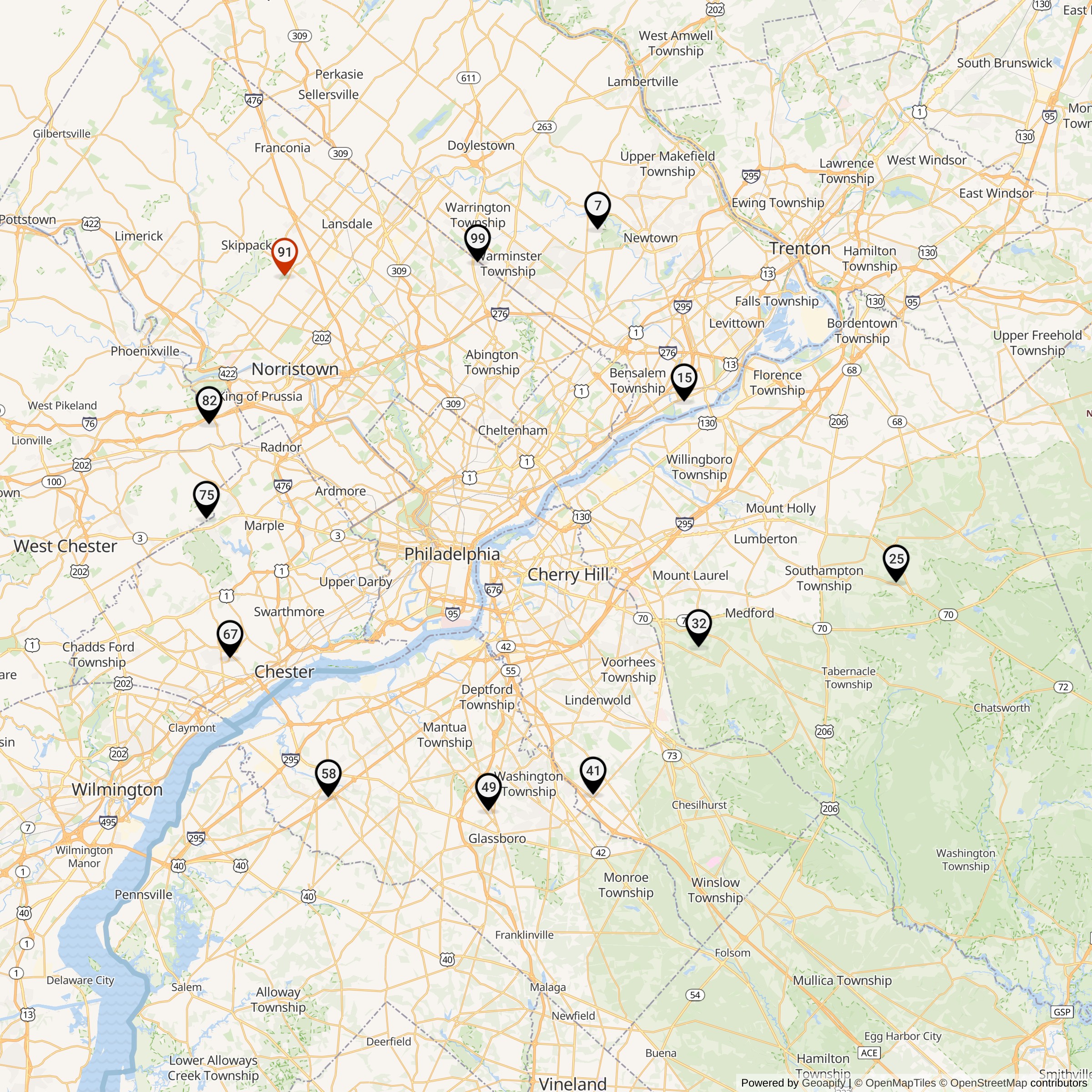
In the mid-1950s, the Philadelphia District of the U.S. Army Corps of Engineers supervised construction of a ring of twelve Nike Ajax sites averaging roughly twenty-five miles from Center City. On the Pennsylvania side of the Delaware River, those sites included PH-07 at Richboro, PH-15 at Newportville / Croydon, PH-67 at Chester / Media, PH-75 at Edgemont / Delaware County, PH-82 at Valley Forge / Paoli, PH-91 at Worcester / Center Square, and PH-99 at Warrington / Eureka. On the New Jersey side, the Philadelphia defenses included sites such as PH-25 at Lumberton, PH-32 at Marlton, PH-41 at Berlin / Clementon, PH-49 at Pitman, and PH-58 at Swedesboro. The Philadelphia Nike headquarters facilities were located at Swarthmore.
PH-91 occupied the northern / northwestern arc of the Philadelphia Defense Area. Its Worcester location placed it in a semi-rural suburban landscape north of the city, positioned to help cover approaches into the Philadelphia region from the north and northwest. Like other Nike sites, PH-91 was not a large self-contained post. It was a fixed missile battery made of specialized pieces: a control area for radar detection, tracking, and guidance; a launch area for missile storage and firing; and administrative and support buildings for the soldiers and equipment that kept the battery ready.
The missile system at PH-91 was the Nike Ajax. Nike Ajax was the U.S. Army's first operational guided surface-to-air missile system and the first of the Nike family deployed around American cities. The Army began fielding Ajax in 1954 around key urban, military, and industrial targets. By the late 1950s, nearly 200 Nike Ajax batteries had been deployed around the United States and at selected overseas locations. The system was intended to shoot down high-flying enemy bombers before they could deliver nuclear weapons.
Nike Ajax depended on a tight integration of radar, analog computing, communications, and missile-handling equipment. The IFC area searched for aircraft with acquisition radar, identified and tracked the selected target, tracked the missile after launch, and used ground-based computing equipment to generate steering commands. The missile itself was command-guided from the ground rather than autonomously guided. This made the radar and control equipment as important to the system as the missile in the launcher area.
The Ajax missile carried high-explosive fragmentation warheads rather than a nuclear warhead. It was a liquid-fueled missile with a solid booster, and its ground crews had to handle hazardous fuel and oxidizer systems as part of the battery's operating life. The missile's range and altitude were sufficient for the early Nike mission, but the system had important limitations. It could engage only one target at a time, and its range and warhead were less suitable for destroying large formations of bombers than the later Nike Hercules.
PH-91's site-specific history follows that larger technological arc. The site was built in the mid-1950s on and near Church Road in Worcester Township and housed Nike Ajax missiles. When Nike Hercules became available in the late 1950s, some Philadelphia Defense Area sites were converted to the new system, but PH-91 was not one of them. Its Ajax-only status placed it among the sites that were no longer needed once Hercules batteries could cover larger sectors of the region.
This is the most important interpretive point for PH-91. Some Philadelphia Nike sites continued into the late 1960s or early 1970s because they received Nike Hercules. PH-75 and PH-99 on the Pennsylvania side were upgraded, and the New Jersey sites PH-25, PH-41, and PH-58 also received Hercules. PH-91 did not. As a result, it should be treated as an Ajax-era site whose active missile role ended with the early-1960s drawdown of Ajax-only batteries, not as a nuclear-capable Hercules site.
Site Layout and Operation
PH-91's control and launch areas were separated by roughly half a mile to a little over a mile depending on the points measured, a normal arrangement for Nike sites. The two areas needed to be separated for safety, land-use, and tactical reasons, but they also needed to remain functionally connected. The control area had to maintain radar line-of-sight, and the launch area had to receive fire-control commands and launch authorizations from the IFC.The control area was the nerve center of the battery. It contained the acquisition radar that searched for aircraft, target-tracking radar, missile-tracking radar, control trailers, radar equipment, generators, and communications equipment. It also included the administrative and living functions usually associated with a small Nike battery: administration, mess, barracks, bachelor officer quarters, guard facilities, and utility structures. The PH-91 site-specific page notes that the control area contained radars and computer equipment used to search for enemy aircraft and control the missiles, along with the administration building, mess hall, and barracks.
PH-91's control area had at least one unusual layout feature. A site map note states that the barracks arrangement differed from the common L-shaped Nike barracks plan. Most Nike bases had an L-shaped barracks with enlisted men in one wing and bachelor officer quarters in the other, while the lower portion contained heating, latrine, and shower functions. At PH-91, the barracks were reportedly broken into two individual sections because the Army was unable to obtain the property configuration needed for the standard building arrangement, and a normal L-shaped building would have interfered with radar configuration.
The launch area was the most physically distinctive part of the battery. It was the place where Nike Ajax missiles were assembled, fueled, tested, maintained, stored in underground magazines, brought to the surface, and fired. The site-specific PH-91 history describes the launch area as the portion where missiles were assembled, fueled, tested, maintained, and stored in underground magazines. This description is consistent with the standard Nike Ajax layout.
In a typical Nike Ajax underground launcher area, missiles were stored horizontally below grade in reinforced-concrete magazines. Each magazine had an elevator that raised missiles to the surface. Once above ground, missiles were moved along rails to the launcher positions. The launcher area also contained a launch-control trailer, generator support, missile assembly and maintenance structures, safety facilities, fencing, guard control, access roads, and paved working surfaces.
PH-91's configuration is usually listed as Nike 1B, 2C / 30A / 12L-A. In practical terms, this describes an Ajax-only site with three magazines of two different types, capacity for thirty Ajax missiles, and twelve Ajax launchers. It was not a Hercules conversion site and did not have the later Hercules capacity or universal-launcher configuration associated with the retained Philadelphia Hercules batteries.
The daily operating life of PH-91 would have been repetitive, technical, and security-conscious. Soldiers maintained radar equipment, communications circuits, missile-control trailers, generators, launchers, magazines, and missiles. Crews trained for rapid reaction to an air-defense alert. In an actual alert, the IFC crew would acquire and track a target, identify it as hostile, compute an intercept, select a missile, and transmit guidance commands after launch. Launcher crews would prepare the missile, raise it from the magazine, position it on the launcher, and stand ready to fire when ordered.
Because Ajax missiles used hazardous liquid fuel and oxidizer, the launch-area mission also involved specialized safety procedures. Missilemen handled not only weapons but also volatile propellants, high-explosive warheads, electrical systems, compressed gases, and heavy mechanical equipment. Even during peacetime, the site was a restricted industrial and military workspace.
Deactivation and Post-Closure Use
PH-91's active Nike missile mission ended in 1963, during the Philadelphia Defense Area's transition away from Ajax-only batteries. Site-specific and inventory sources agree that PH-91 was not converted to Nike Hercules and was deactivated with the other Ajax-only sites once Hercules modernization allowed the Army to defend the region with fewer batteries. A site-specific PH-91 history describes the base as deactivated by the mid-1960s; the standard Nike inventory gives the active service period as 1956 to 1963.The site did not simply disappear after missile deactivation. The former launch area was retained by the Army and used for Army Reserve purposes. The PH-91 site-specific history identifies the post-closure launch area as the home of the 330th Combat Engineer Battalion Reserve Center. Later references identify the same general property as the North Penn U.S. Army Reserve Center / North Penn Memorial USARC. A later personal account by a former reservist assigned to the 330th Combat Engineer Battalion in the late 1980s recalls the reserve center as being located on the old Nike PH-91 site, with underground missile-magazine features still visible in the motor pool area.
The former control area followed a different path. A portion of the control site was given to Worcester Township. The township razed the remaining military buildings and developed the land as Worcester Nike Park. Another portion of the former control area was sold for private institutional or office-type use. The site-specific PH-91 page notes that a private training center for the developmentally disabled was built on the remaining portion.
Environmental and redevelopment history is an important part of PH-91's post-military story. The EPA's North Penn Area 12 Superfund profile identifies the site in Worcester Township, Montgomery County, and states that it includes a 26-acre parcel previously operated by Transicoil, a 12-acre area previously operated by the U.S. Army as a Nike missile control facility, and associated groundwater contamination. EPA added North Penn Area 12 to the National Priorities List in 1990. EPA's historical press material further describes groundwater contamination at North Penn Area 12 from volatile organic compounds associated with the former Transicoil property and a Nike Missile Battery installation operated by the U.S. Army. Because these environmental sources sometimes use broader operating-date language than the Nike operational histories, the dates should not be read as proof that PH-91 remained an active missile battery into the late 1960s. Rather, they document post-missile Army or defense-property activity and cleanup responsibilities in the former Nike landscape.
The former Army Reserve property on Berks Road also entered later local transfer and environmental review discussions. Worcester Township publicly reported that it had been in discussions with the U.S. Army to acquire the former U.S. Army Reserve Center on Berks Road, that the Army had agreed to transfer the 19-acre property to the township at no cost for recreational use, and that testing had identified possible PFOA and PFOS groundwater impacts from a site well on the property.
List of all Nike Installations in the Philadelphia Defense AreaList of all Nike Installations in Pennsylvania