
Naval Security Group Activity Adak, Alaska
Radio City grew from a wartime communications outpost into a North Pacific center for direction finding, surveillance and fleet telecommunications.
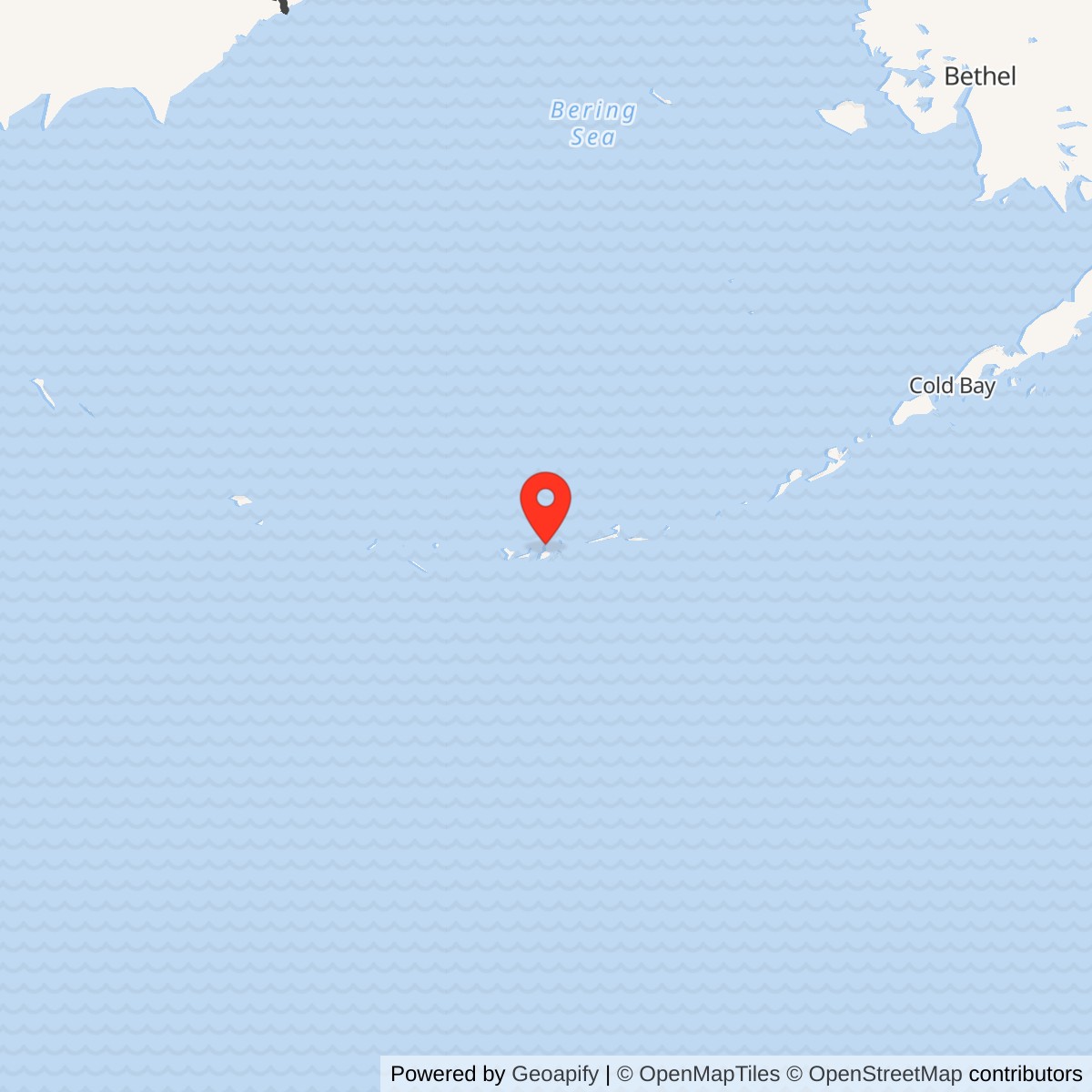
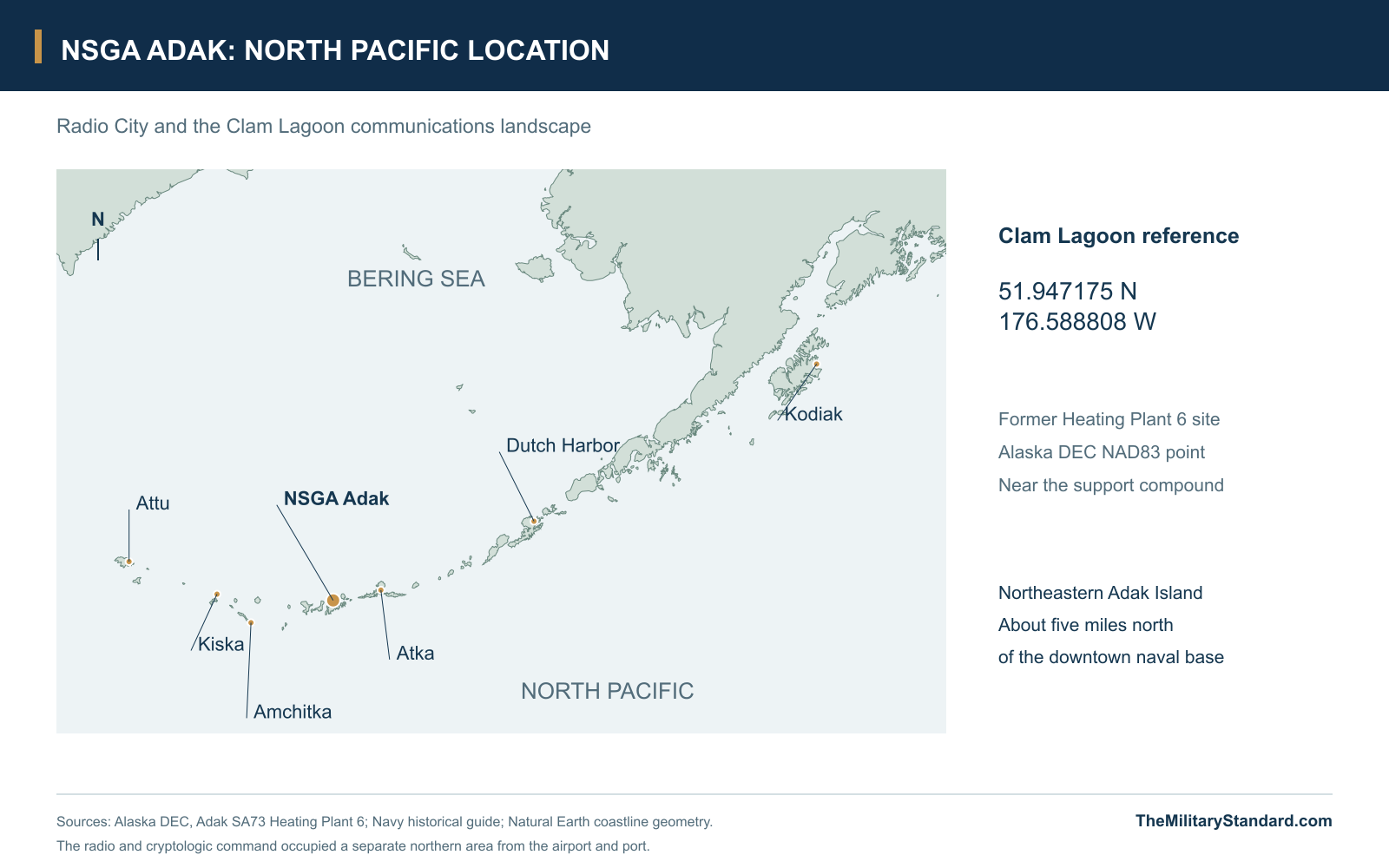
Longitude: -176.588808
Current Role: Former Radio City/Clam Lagoon military complex; abandoned structures and historical operating areas documented by Navy in 2021, with environmental restoration continuing in the broader former Adak complex.
- Command
- Naval Security Group Activity Adak; UIC 63886
- Principal roles
- HF direction finding, cryptologic operations, ocean surveillance and fleet telecommunications
- Wartime predecessor
- Naval Communications Supplementary Activity, September 1943
- Postwar predecessor
- Naval Communications Station Adak, October 1951
- NSGA commissioning
- April 1, 1977
- Principal antenna
- AN/FRD-10 Wullenweber circularly disposed antenna array
- Other systems
- CLASSIC WIZARD; VERDIN/ISABPS low-frequency submarine broadcasts
- Detached site
- Mount Moffett telecommunications transmitter site
- Enlisted quarters
- Building 10382: 234 beds in 122 rooms in the 1994 facility record
- Mess hall
- Building 10351: 99 seats; average 180 noon meals in the 1994 survey
- Formal decommissioning
- January 31, 1996; major missions ended in stages during 1993-1995
- Location
- Between Andrew Lake and Clam Lagoon on northeastern Adak Island
- Latitude / longitude
- 51.947175 N, 176.588808 W; former Heating Plant 6 reference, NAD83
Radio City on Clam Lagoon
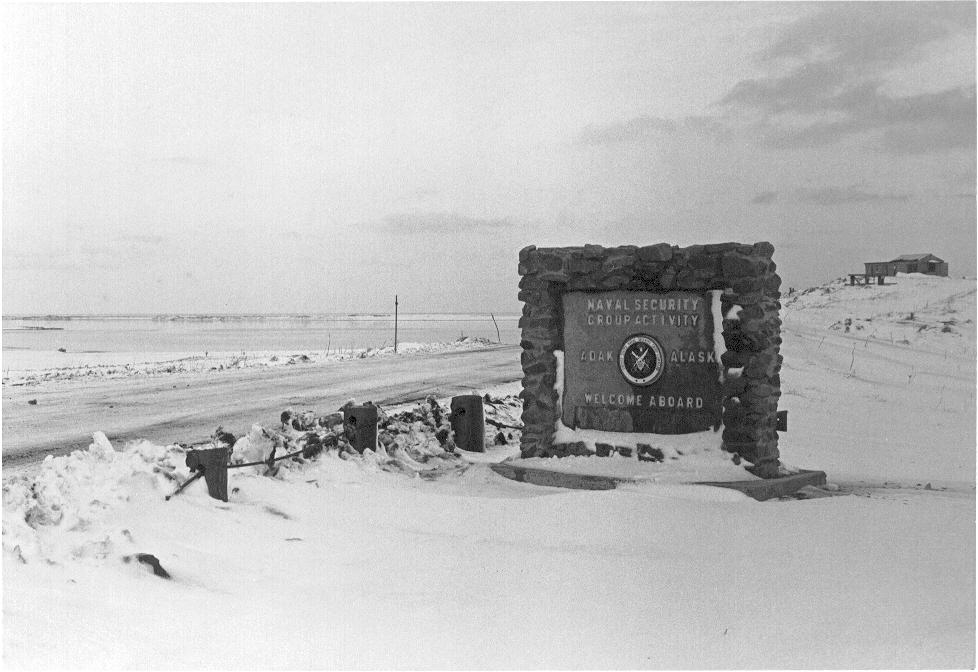
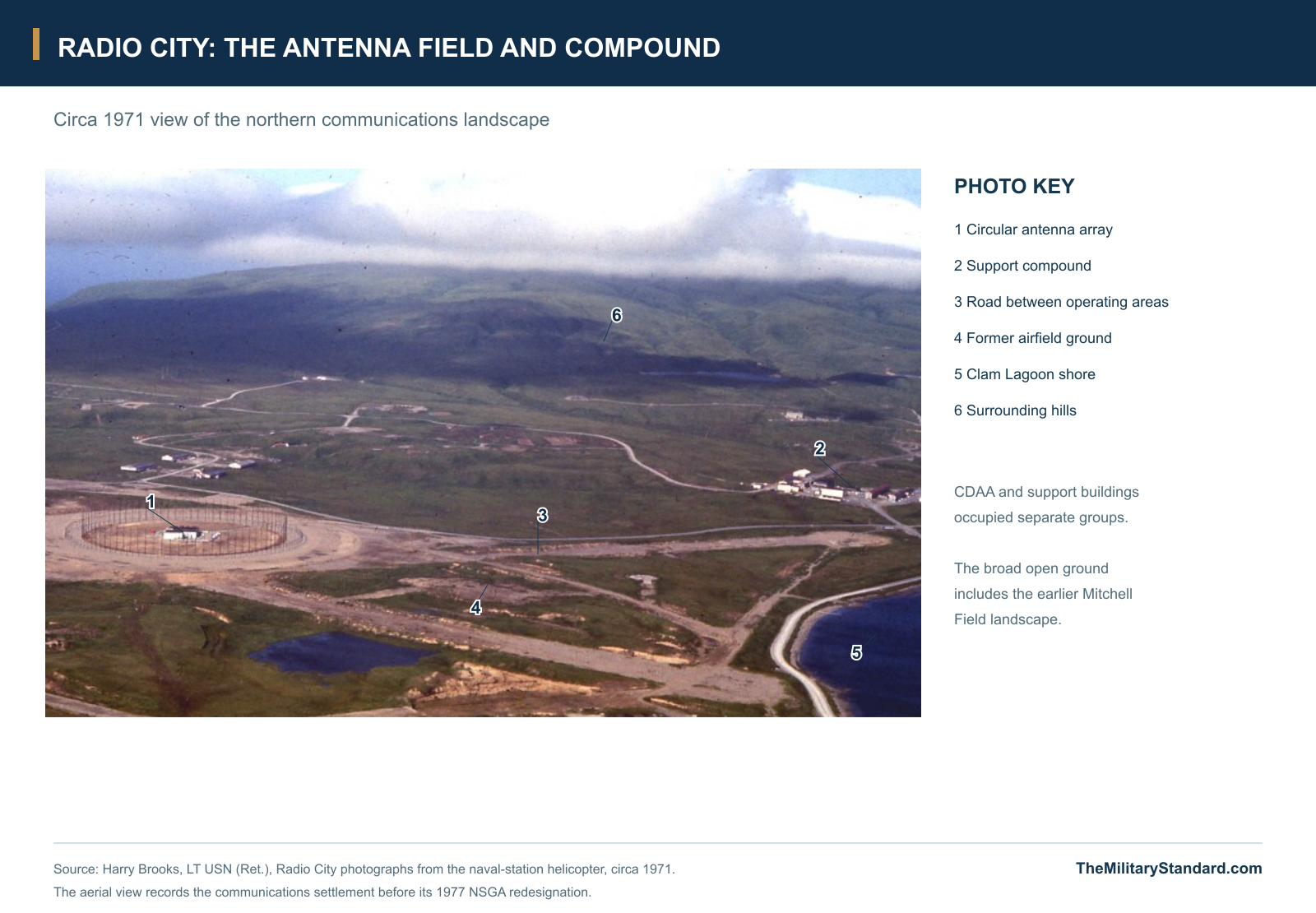
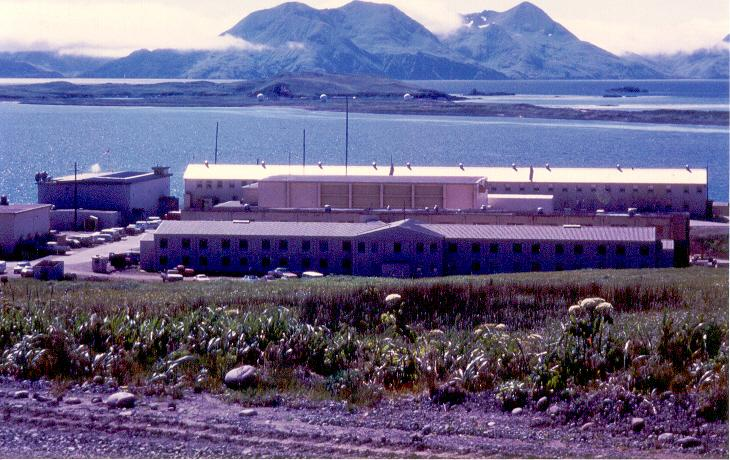
Naval Security Group Activity Adak occupied the northern part of the Navy's Adak Island complex, around the land between Andrew Lake and Clam Lagoon and below Mount Adagdak. Its work combined radio direction finding, cryptologic operations, ocean surveillance and fleet telecommunications. Sailors knew the older communications settlement as Radio City. The northern compound, antenna fields and detached operating sites formed a working landscape separate from the airport, port and town surrounding Naval Air Facility Adak farther south. [1] [2] [4]
The installation's history began decades before the NSGA name appeared in 1977. A small wartime communications activity grew into a postwar Naval Communications Station, acquired a large circular direction-finding array and supported increasingly specialized operations. The NSGA command inherited these responsibilities and continued them into the final years of the Cold War. Its closure unfolded in stages: individual missions stopped during 1993-1995, while formal decommissioning followed in January 1996. [1] [2] [3]
Wartime Beginnings and the Communications Station
Adak Army Base and the naval establishment developed after American forces landed on the island in August 1942. Their immediate purpose was to support the campaign against Japanese forces on Attu and Kiska. Naval communications first operated from temporary quarters, and direction-finding facilities developed around Zeto Point. In September 1943, the Navy established the Naval Communications Supplementary Activity at Adak, the organization from which the later cryptologic command traced its history. NSA's historical timeline likewise dates the Adak intercept site to that month. [1] [3] [4]
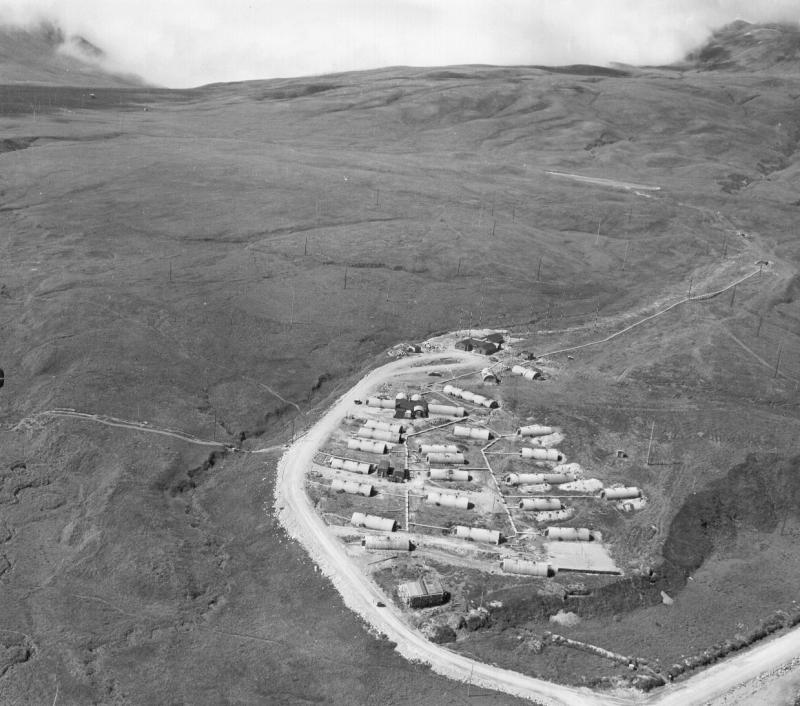
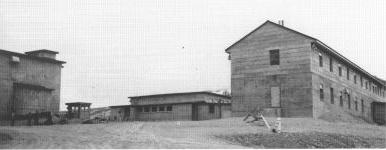
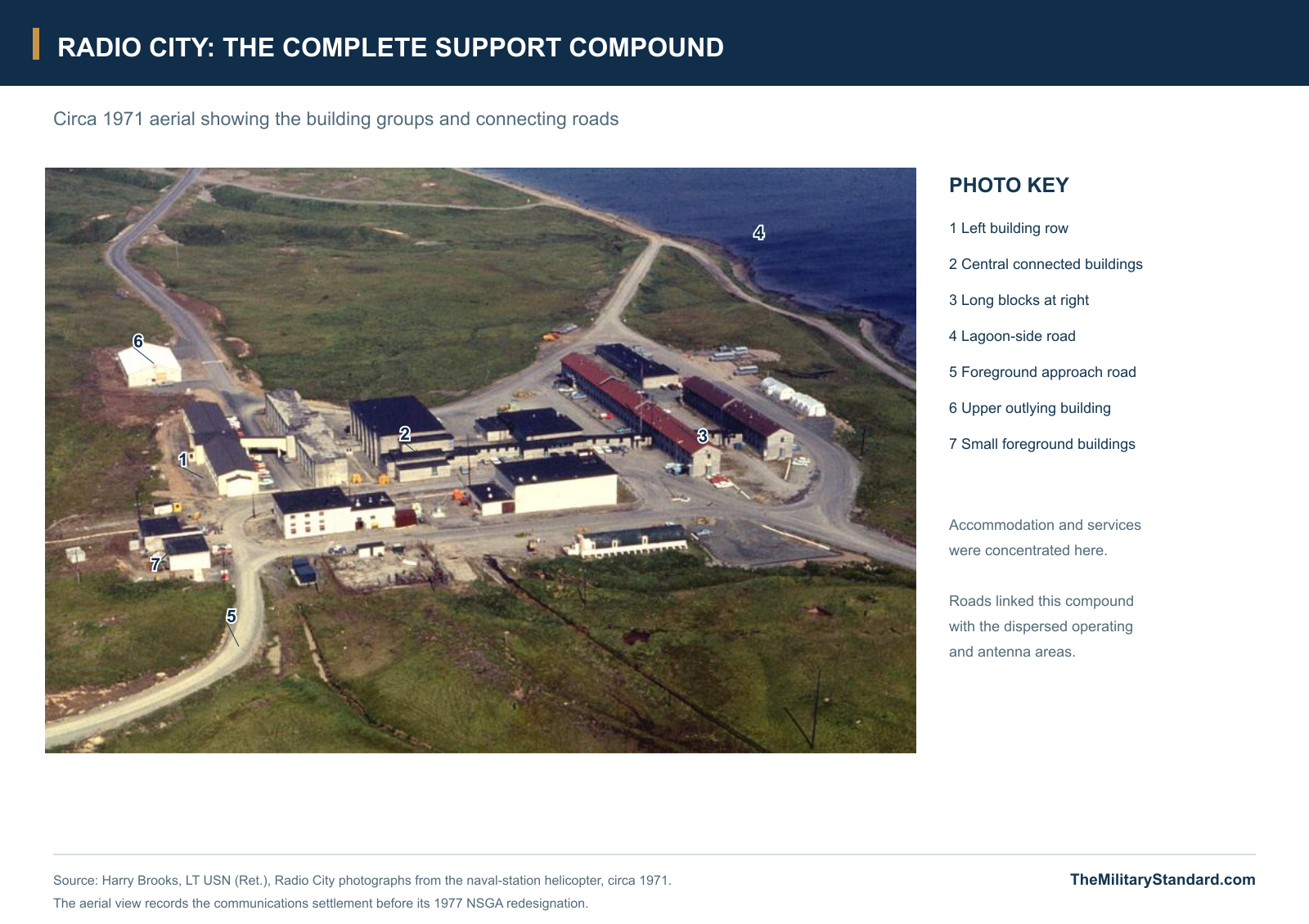
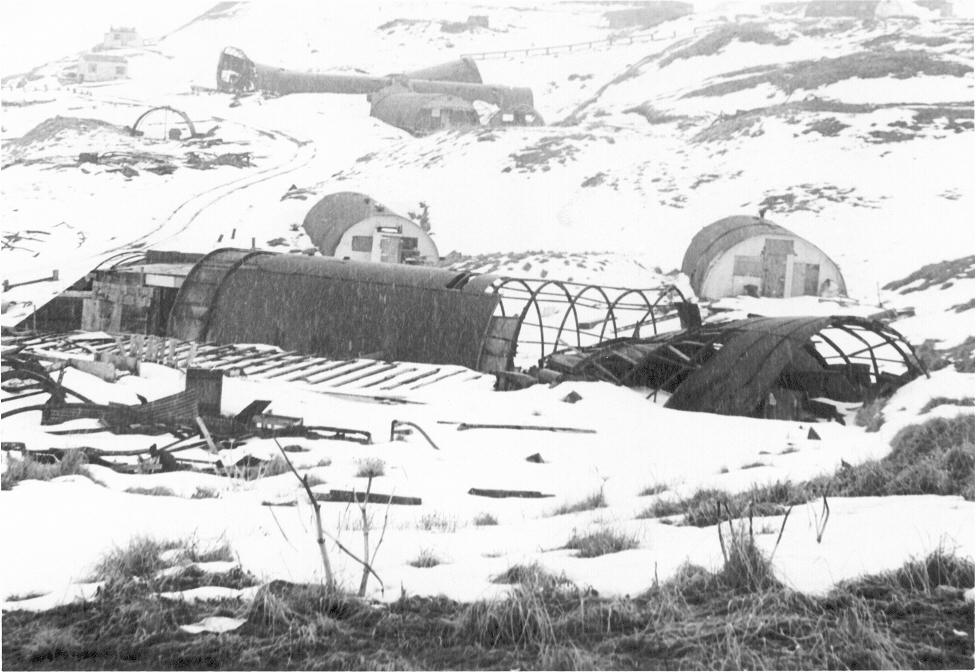
The original supplementary activity consisted of eight men working from Quonset huts. These curved steel buildings supplied quick shelter for receivers, operating positions and the people maintaining them. A new communications facility replaced the wartime temporary structures in June 1948, giving the activity a more substantial home after the Aleutian campaign had ended. Photographs of Radio City show its compact clusters of huts and later buildings against an otherwise open, treeless landscape. [1] [6]
The northern communications area shared the landscape with Albert E. Mitchell Field, the wartime naval airfield between Andrew Lake and Clam Lagoon. Seaplanes had used the lake and lagoon, and surviving hangars and runway traces remained after flying operations shifted to the downtown former Davis Air Force Base field. Communications development therefore reused a place already shaped by wartime aviation, roads, utilities and accommodation. The older huts still visible in 1984 photographs stood alongside the much newer electronic facilities. [4] [5]
In October 1951, the Navy decommissioned the supplementary activity and replaced it with Naval Communications Station Adak as a separate command. This postwar station served a broader, continuing North Pacific naval presence. Its responsibilities expanded beyond message handling to specialized communications and cryptologic work. The arrangement also established an organizational distinction that lasted through later name changes: the communications command depended on the island's common transport and services while directing its own operating facilities. [1] [2]
The Circular Direction-Finding Array
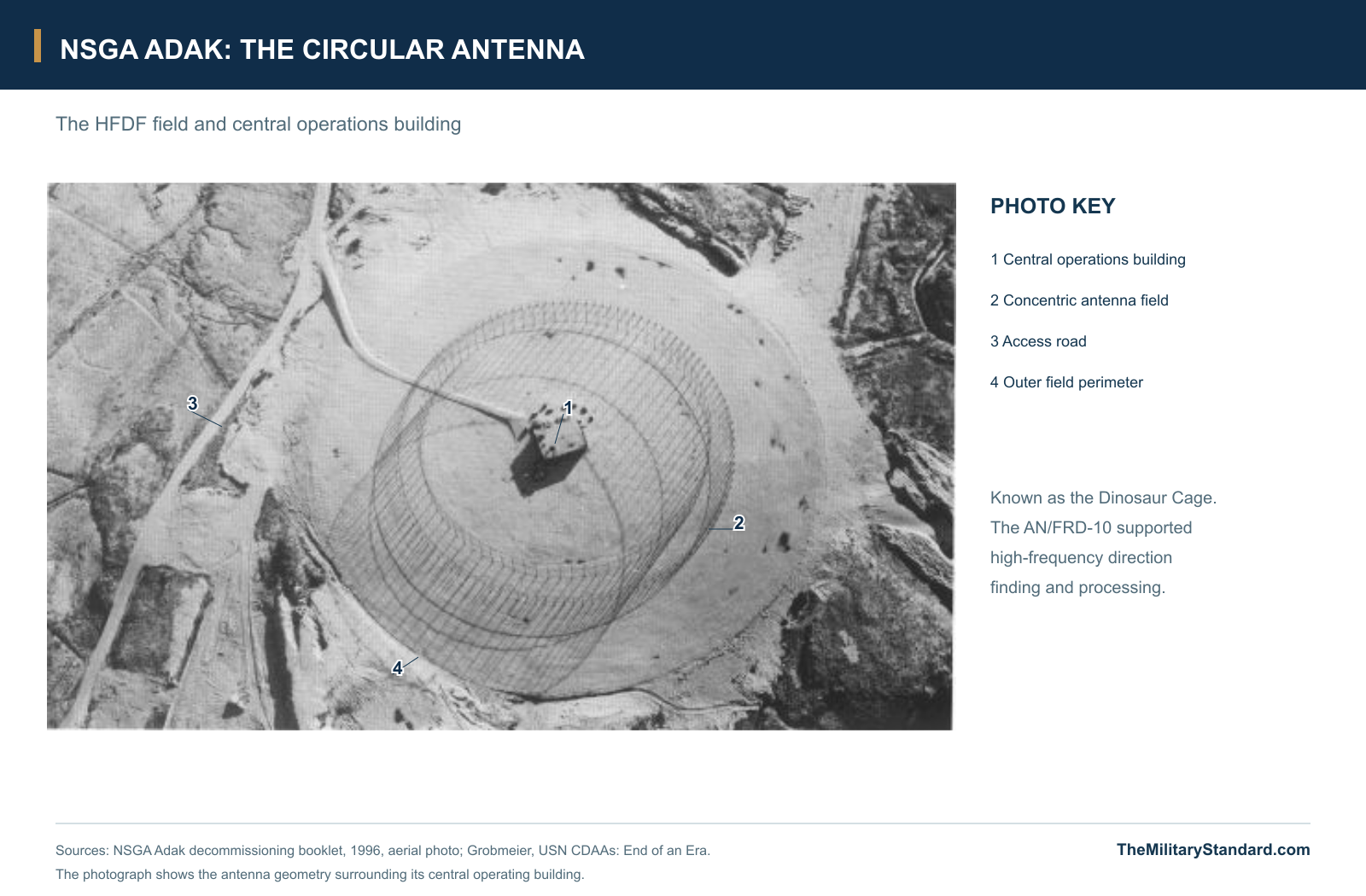
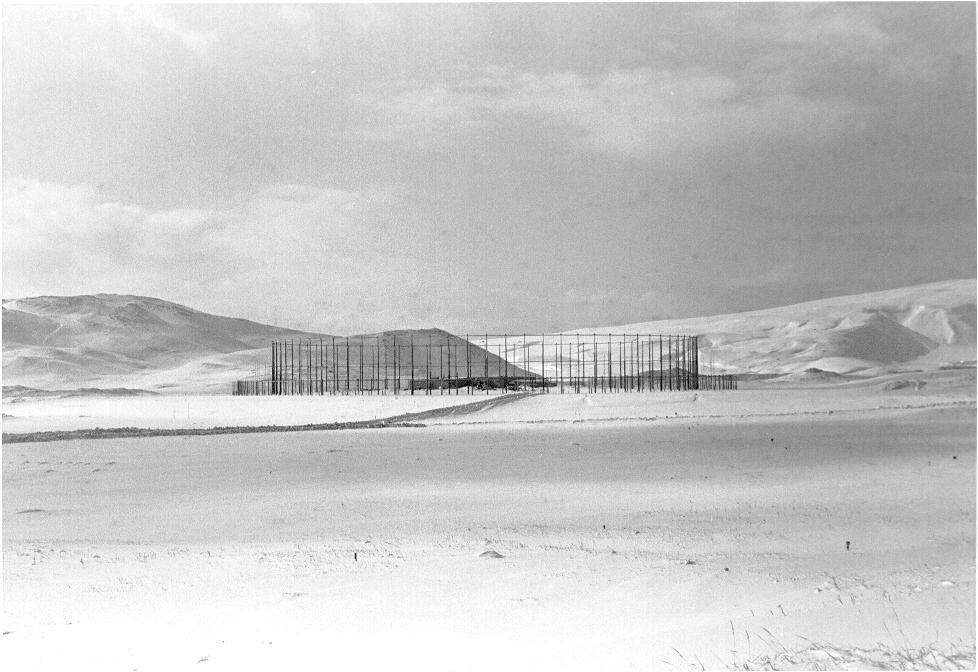
The most recognizable feature of the communications landscape was the Wullenweber circularly disposed antenna array, or CDAA. Adak was one of the Navy's AN/FRD-10 high-frequency direction-finding sites developed during the early 1960s. The array surrounded a central operations building with concentric ranks of antenna elements and screens. Its size and open setting made it conspicuous from the air and gave rise to the familiar nickname Dinosaur Cage. [1] [5] [7] [8]
High-frequency direction finding added a location function to radio interception. An operating station could determine the direction from which a transmission arrived, while processing and reporting connected that observation with the wider intelligence system. Adak's mission included narrowband and wideband direction-finding and processing for the northern Pacific. The circular antenna field, central building, receivers, processing positions and communications circuits formed parts of one operating system, sustained by both watch personnel and equipment maintainers. [1] [2]
The surrounding antenna inventory served several purposes and changed over time. The Navy's 1994 capacity records list receiving and transmitting antennas dating from the 1960s through the mid-1980s, with many covering portions of the 2-to-30-megahertz high-frequency range. Different aerials supported collection, communications and other station requirements. The large circular array was the dominant visual feature, but the broader command also relied on dispersed antennas, transmission lines, equipment rooms and technicians able to maintain them. [2]
Geography was central to the station's usefulness. Its position in the Aleutians gave it a northern Pacific operating perspective that could not simply be reproduced by moving the same equipment to another coast. The contemporary Navy capacity assessment treated Adak's HFDF coverage as geographically distinctive. That advantage required maintaining a complete shore establishment on a remote island, where storms, salt air, snow and long supply routes imposed a continuing maintenance burden on exposed aerials and their supporting equipment. [2] [5] [8]
Commissioning NSGA and Its Joint-Service Work
On April 1, 1977, Naval Communications Station Adak was decommissioned and Naval Security Group Activity Adak was commissioned in its place. The command retained telecommunications responsibilities while emphasizing its expanding cryptologic missions. Its own history describes growth to more than 700 assigned military personnel. The new name marked an organizational change within an established operating community, rather than the first military occupation or the beginning of all communications work at Clam Lagoon. [1]
By January 1, 1994, the reporting command had 16 officers, 455 enlisted personnel and 16 appropriated-fund civilians on board. Tenant activities accounted for another officer, 21 enlisted personnel and one civilian. These dated figures describe the station during drawdown rather than its earlier peak. They also show the range of work needed to sustain operations: administration, supply, public works, communications, technical control and electronic maintenance all supported the collection and reporting departments. [1] [2]
NSGA hosted people from other services as well as Navy specialists. Company I, Marine Support Battalion supplied Marine participation in operations. The Army's 743rd Military Intelligence Battalion maintained a detachment associated with CLASSIC WIZARD, and the Navy records also identify an Air Force collection position. These were operational and technical contributions within a naval host command. Their presence connected Adak's local work with wider service intelligence organizations and helps explain why several different uniforms appear in the command's closing photograph book. [1] [2]
Fleet Telecommunications and North Lake
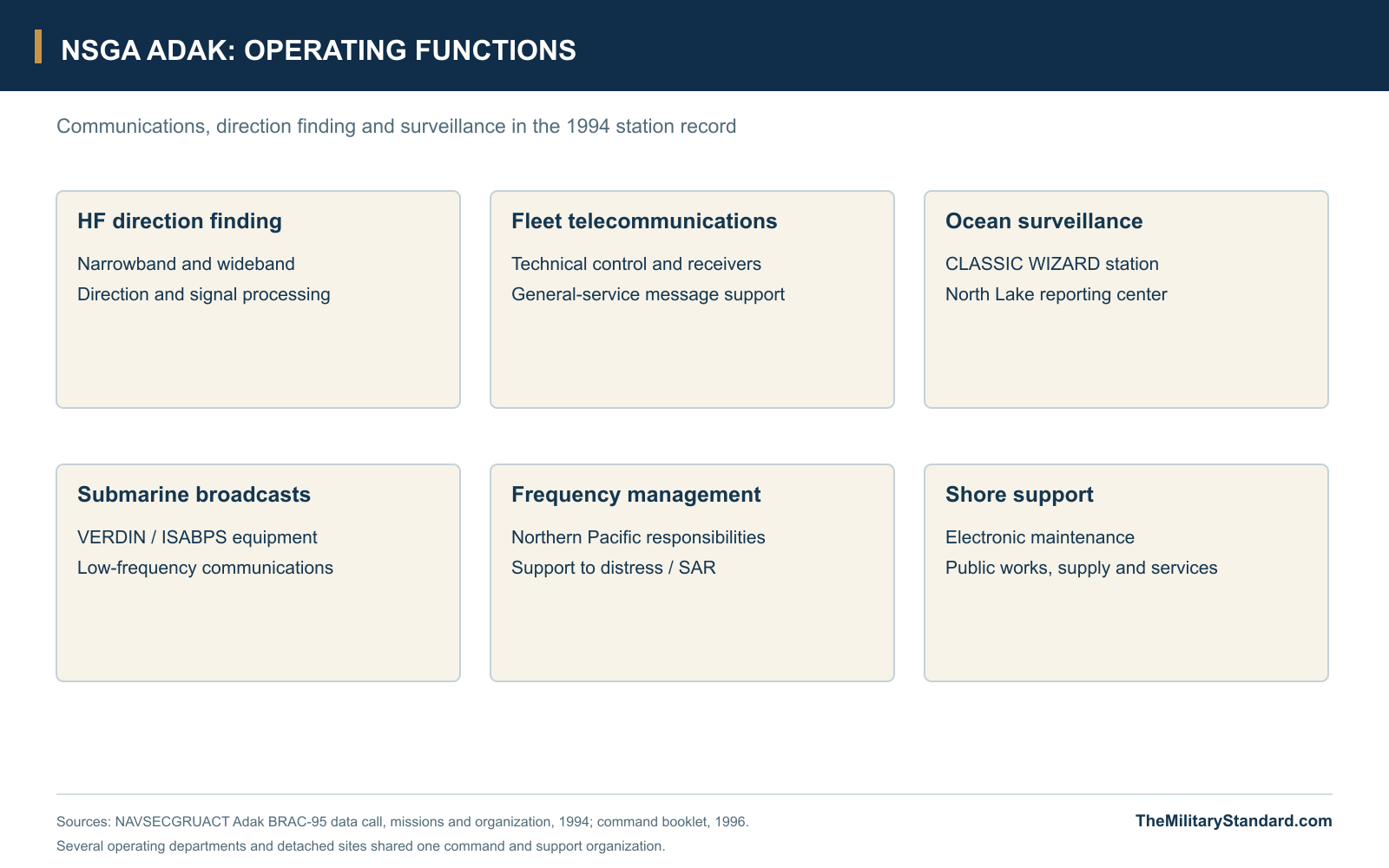
The command's mission was broader than its circular antenna. It operated technical-control and receiver facilities, a transmitter site and special-communications equipment. Its personnel maintained VERDIN/ISABPS low-frequency submarine-broadcast equipment, provided general-service messages for tenant commands and carried northern Pacific frequency-management responsibilities. The station also supported potential distress and search-and-rescue requirements. These functions connected the specialized cryptologic activity with the Navy's routine need to communicate reliably across a very large ocean area. [2]
Mount Moffett contained a detached telecommunications transmitter site. Technical-control personnel restored circuits and maintained links carrying traffic beyond the island, while other specialists supported secure and nonsecure telephones and cryptographic communications equipment. The 1994 records identify outgoing connections through Honolulu, McClellan, the eastern Pacific naval communications system and Fort Meade, with Elmendorf among the backup routes. These links carried the station's work into larger military communications and intelligence systems instead of ending at the local operations building. [1] [2]
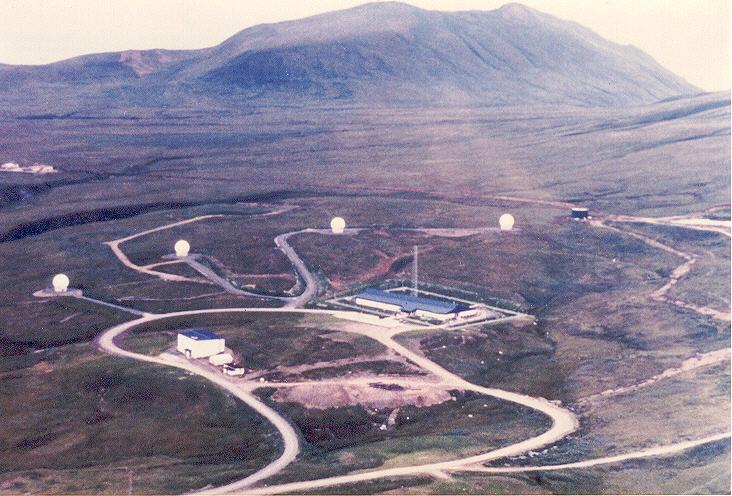
CLASSIC WIZARD formed another distinct operating element. Navy records describe Adak as a station in this ocean-surveillance system, and the decommissioning booklet identifies the North Lake Regional Reporting Center. Earlier operations had occupied a building around Zeto Point. During the late Cold War, new construction and relocation moved this work to a mountainside setting, with radomes and their antennas separated from the principal support compound and from the HFDF array. [1] [2] [4] [5]
Electronic Material Officer Dwane Knott recalled overseeing preparations for the relocation during his 1987-1989 tour. Equipment and radomes were moved in favorable winds, but heavy rain later followed the cable trenches into the new building. Water collected beneath the raised equipment floor, forcing a shutdown while crews pumped it out and redirected drainage. The episode joined civil engineering with electronics maintenance: cable routes and hillside runoff could interrupt the same mission as a failure inside a receiver or processor. [15]
The Compound and Its Essential Services
Radio City needed accommodation, food, heat, power, water, fire protection and transport in addition to its operating rooms. The compact support area contained substantial rectangular buildings and older Quonset structures connected by short roads and service spaces. The main naval air station supplied other island-wide services, including family housing and the airport connection. Personnel could live downtown and commute north, so the road between the two communities was part of the station's everyday operating system. [1] [2] [5] [8]
The 1994 facility survey listed three accommodation categories in enlisted-quarters Building 10382, totaling 234 beds in 122 rooms. Mess Hall 10351 contained 8,301 square feet and 99 seats and served an average of 180 people at the noon meal. Its reported shortcomings included refrigeration, electrical service and limited size. These details reveal the ordinary pressures behind a specialized communications mission: the station had to feed and house a substantial workforce while maintaining buildings inherited from several construction periods. [2]
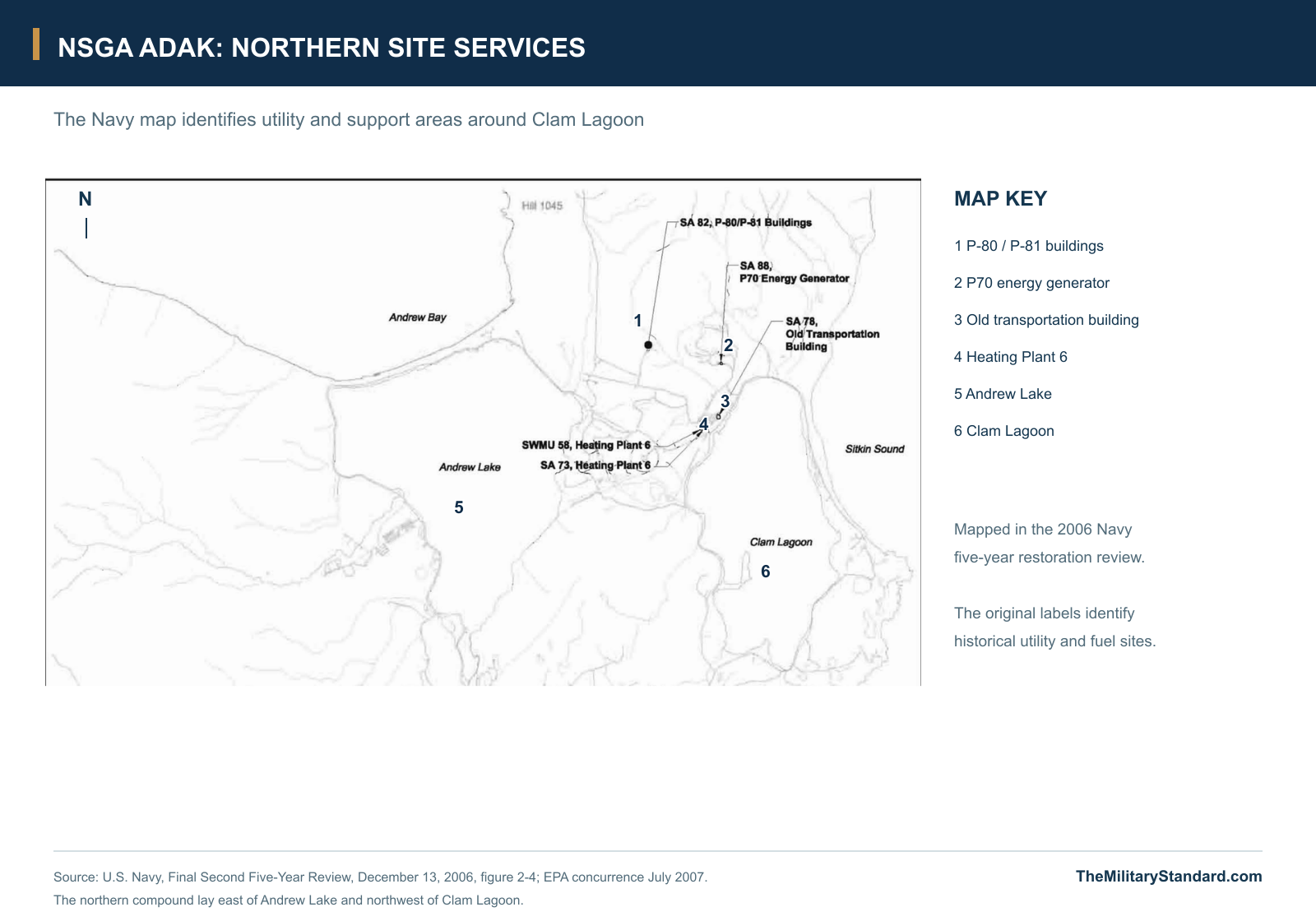
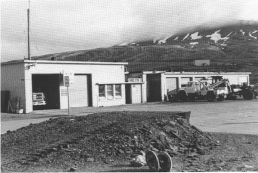
Utility capacity also represented a significant part of the shore establishment. The Navy survey recorded potable-water capacity of 250,000 gallons per day and sewage capacity of 80,000 gallons per day. Heating plants, fuel storage and distribution, roads and workshops required their own skilled staff. The transportation and fire-station building numbered 10590 was completed in 1989, adding a relatively new facility only a few years before the operating command began to contract. [2] [10] [11]
Technicians, Watch Sections and Island Life
Operators depended on electronics personnel who kept receivers, communications circuits and processing equipment working. Knott remembered an electronic-material department with 55 men and women filling 63 billets, organized into three divisions under senior enlisted leadership. Day workers and watch sections shared the maintenance burden. His account illustrates how an equipment-intensive station relied on personnel scheduling and experienced technicians as well as hardware. [15]
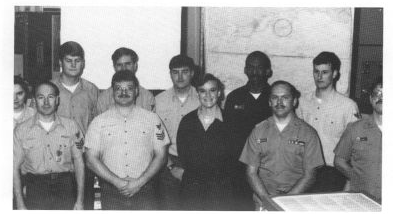
Seabees and other public-works personnel sustained the physical plant, while administrative and supply departments handled records, mail and material. Photographs in the command booklet show radio operators at workstations, HFDF maintainers, construction personnel, the chapel and the station exchange. These people belonged to one community even though their daily tasks differed. A functioning watch floor depended on repaired roads, maintained buildings, working utilities, available parts and the movement of supplies through the main Adak base. [1] [2]
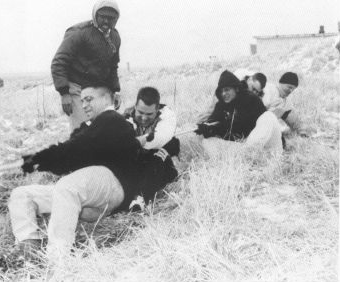
The station developed its own social institutions. The monthly Tundra Times began with a November 1981 issue, and command photographs record club events, holiday dinners, fishing, outdoor gatherings and organized fun days. A tug-of-war and an annual polar-bear swim offered diversions from work and the weather. The surrounding landscape supplied fishing grounds and open country, while the small community's galley, clubs and shared activities helped connect people serving far from home. [1] [12]
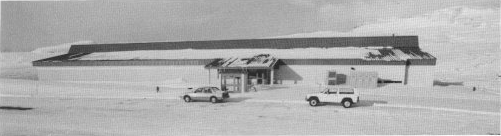
Weather was a constant physical presence. Winter photographs show deep drifts around huts, roads and the antenna field, sometimes burying much of a building's lower wall. Older wartime structures continued to serve long after newer barracks and operating buildings appeared. The resulting landscape mixed temporary construction inherited from the 1940s with large Cold War electronics installations and later support facilities, each requiring attention in the same exposed Aleutian setting. [1] [5]
The Phased Shutdown, 1993-1996
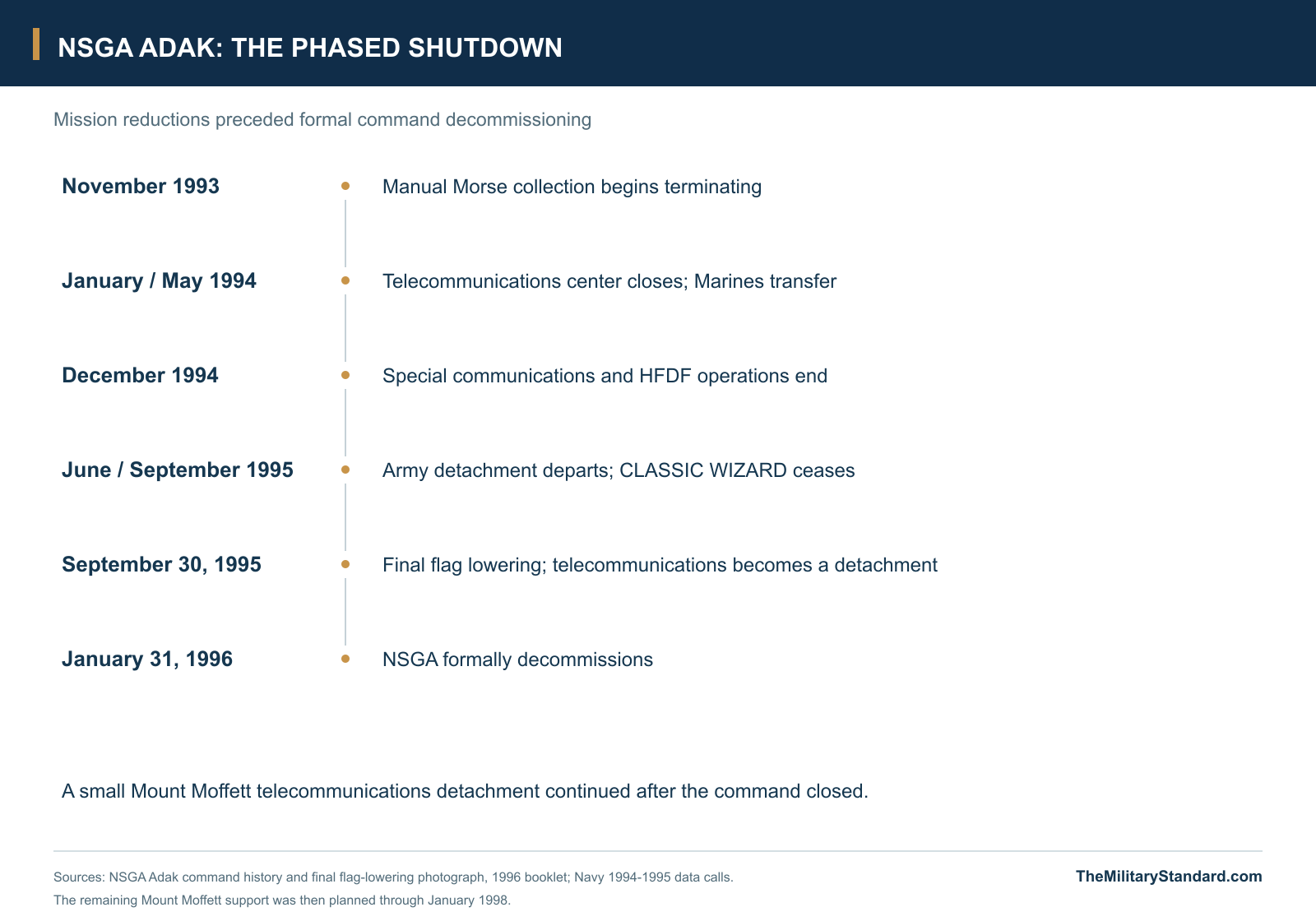
The end of the Cold War and the cost of sustaining remote operations led to a substantial reduction. NSGA began ending manual Morse collection in November 1993. The Naval Telecommunications Center closed in January 1994, and Company I, Marine Support Battalion transferred in May. Special communications and high-frequency direction-finding operations ended in December 1994. These separate mission decisions progressively reduced the work of a command that had once combined several major functions. [1]
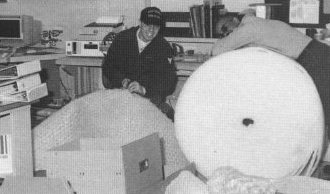
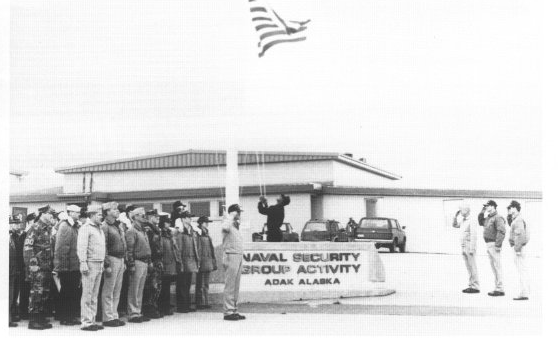
Drawdown continued during 1995. The Army detachment left in June, and CLASSIC WIZARD operations ceased in September. On September 30, the Telecommunications Department became a detachment of Naval Computer and Telecommunications Station Puget Sound. The command booklet dates its final flag-lowering photograph to that same day. Packing equipment, removing material, closing recreational cabins and preparing buildings for turnover occupied personnel whose operational jobs were already ending. [1]
NSGA Adak formally decommissioned on January 31, 1996. Its closure was a separate command action from the BRAC closure of Naval Air Facility Adak, whose military mission ended in March 1997. A small 15-person detachment remained to support Mount Moffett telecommunications, with service then planned through January 1998. Formal command closure therefore preceded the end of every related communications task, just as the September 1995 ceremony preceded the official January decommissioning date. [1] [2] [13]
The Former Station
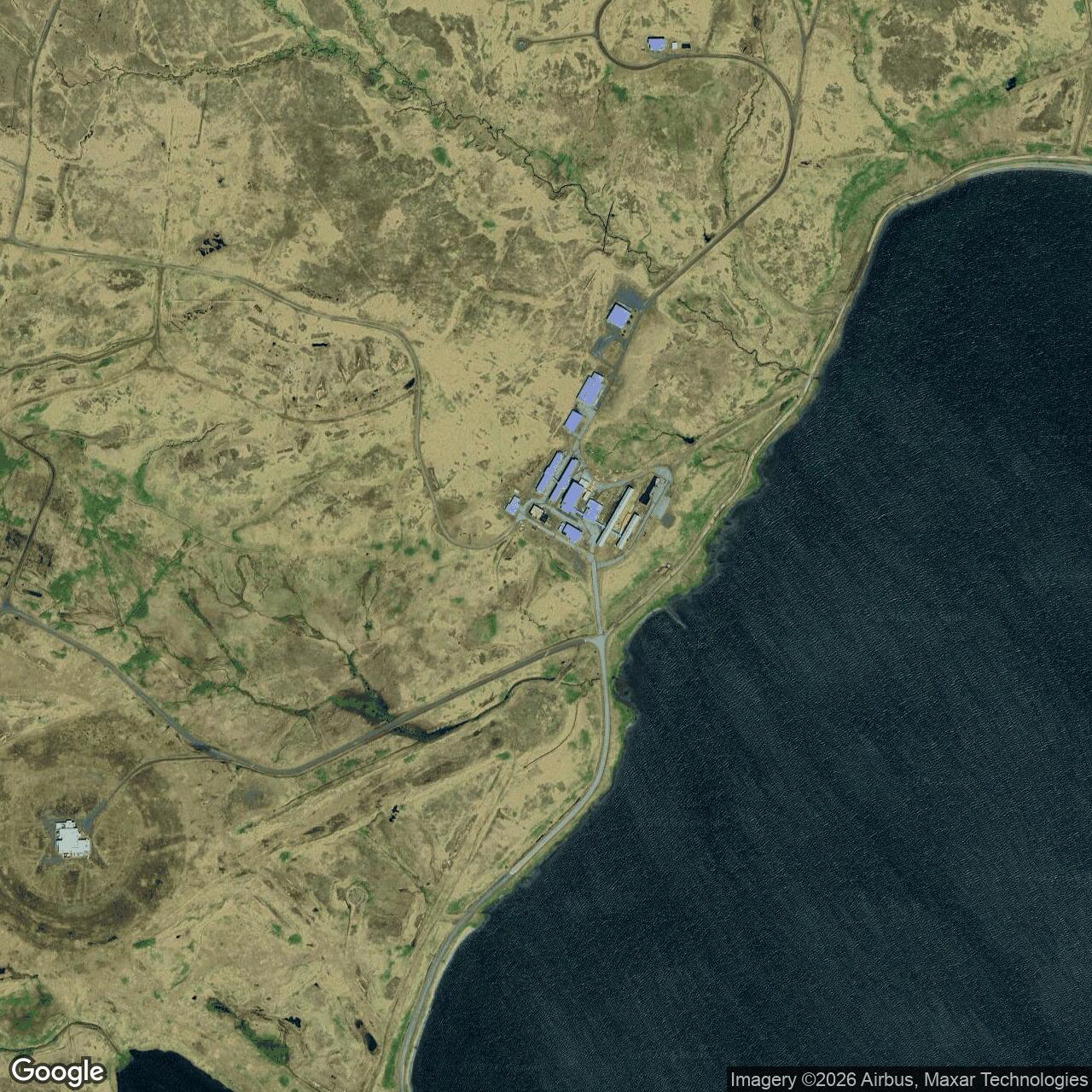
After departure, the northern compound became part of the much larger former naval-complex landscape. The 2021 Navy assessment described NSGA structures as abandoned, while the main-base history identifies civilian use concentrated around downtown Adak. Roads, building remains, airfield traces and former antenna areas record successive periods of use. The communications station's relationship to Mitchell Field remains visible in this geography, alongside the separate main naval base and White Alice sites elsewhere on the island. [4] [10] [13]
Environmental investigation and restoration continued after the command disappeared. Former fuel systems, heating plants, workshops and fire-protection areas entered the wider Navy cleanup program, with Alaska DEC and EPA oversight. These later records also preserve building numbers and the locations of ordinary station services. Radio City's surviving landscape reflects more than a single antenna: it represents the communications, intelligence, maintenance and community infrastructure that supported naval operations in the North Pacific for over half a century. [9] [10] [11] [14]
Chronology
- September 1943 The Naval Communications Supplementary Activity and Adak intercept site are established. [1] [3]
- June 1948 A new communications facility replaces the wartime temporary structures. [1]
- October 1951 Naval Communications Station Adak replaces the supplementary activity as a separate command. [1]
- Early 1960s Adak joins the Navy's AN/FRD-10 Wullenweber direction-finding network. [7]
- Circa 1971 Helicopter photographs record Radio City and the large circular antenna field. [8]
- April 1, 1977 Naval Communications Station Adak is replaced by Naval Security Group Activity Adak. [1]
- November 1981 The first issue of the NSGA monthly Tundra Times is published. [12]
- 1987-1989 CLASSIC WIZARD relocation and a subsequent drainage-related interruption occur during Knott's tour. [15]
- 1989 The new transportation and fire-station building, 10590, is completed. [11]
- November 1993 Manual Morse collection begins terminating. [1]
- January 1994 The Naval Telecommunications Center closes. [1]
- May 1994 Company I, Marine Support Battalion transfers. [1]
- December 1994 Special communications and HFDF operations end. [1]
- June 1995 The Army intelligence detachment departs. [1]
- September 1995 CLASSIC WIZARD operations cease. [1]
- September 30, 1995 The command holds its final flag lowering; telecommunications becomes a Puget Sound detachment. [1]
- January 31, 1996 NSGA Adak formally decommissions; a small Mount Moffett support detachment remains. [1]
- March 31, 1997 The separate main Adak naval air facility ends its military mission. [13] [14]
- 2021 A Navy assessment records abandoned NSGA buildings and investigates historical support areas. [10]
Related Sites
Information sources (16)
- WEBNaval Security Group Activity Adak, decommissioning booklet, January 31, 1996, preserved by Art Merat
Command history, April 1, 1977 commissioning, 1993-1995 mission shutdowns, January 1996 decommissioning, departments, facilities and command photographs.
- PDFU.S. Navy, NAVSECGRUACT Adak BRAC-95 data calls, UIC 63886, 1994-1995, archived by the University of North Texas
Separate command status, missions, tenants, dated manning, communications routes, antenna inventory, quarters, mess hall, utilities and closure planning.
- WEBNational Security Agency, Pre-1952 Historical Timeline
September 1943 establishment of the Adak intercept site within the wartime cryptologic chronology.
- WEBAdak Historical Society, U.S. Navy and Alaska Maritime National Wildlife Refuge, Adak Historical Guide, revised 1998 and 2012
Northern airfield and seaplane predecessors, Radio City, Zeto Point, North Lake and historical-site geography.
- WEBNaval Cryptologic Veterans Association command display, Adak photographs, 1984
Dated photographs of the NSGA entrance, Wullenweber operations building, support area, CLASSIC WIZARD and surviving wartime huts.
- WEBNaval Cryptologic Veterans Association command display, Adak photographs, 1943-1944
Radio City and radio-fingerprinting huts during the wartime communications establishment.
- WEBAlvin H. Grobmeier, U.S. Navy retired commander, USN CDAAs: End of an Era, updated 2007
Identification of Adak among the Navy AN/FRD-10 Wullenweber sites developed during the early 1960s.
- WEBHarry Brooks, U.S. Navy retired lieutenant, Radio City aerial photographs, circa 1971
Aerial views from the naval-station helicopter showing the support compound, circular antenna array, surrounding field and lagoon.
- WEBAlaska Department of Environmental Conservation, Adak SA 73 Heating Plant 6, hazard 2228
Existing NAD83 reference coordinate, former heating-plant location and recorded closure and restoration history.
- PDFNaval Facilities Engineering Systems Command Northwest, Basewide PFAS Preliminary Assessment, June 25, 2021
Former NSGA geography, utility and fire-station locations, abandoned-building conditions and historical environmental investigation.
- WEBAlaska Department of Environmental Conservation, Adak NSGA New Transportation Building 10590, hazard 1901
1989 transportation and fire-station building, earlier tank installation and subsequent removal and site cleanup.
- WEBLibrary of Congress, Tundra Times, Adak, Alaska, newspaper catalog record sn95060098
NSGA monthly station newspaper beginning with volume 1, number 1 in November 1981.
- WEBU.S. Navy BRAC Program Management Office, Former Naval Air Facility Adak
Separate northern NSGA development area, main-base March 1997 closure, later land transfers and continuing restoration.
- WEBAlaska Department of Environmental Conservation, Adak Former Naval Air Facility, including 2026 updates
Former naval-complex reuse, 2004 land exchange and continuing chemical and ordnance restoration programs.
- WEBDwane Knott, Naval Security Group Activity Adak, September 1987-March 1989, firsthand recollection published 2024
Electronic-material department staffing and the CLASSIC WIZARD relocation and rainwater incident during his Adak tour.
- PDFU.S. Navy, Final Second Five-Year Review of the Former Adak Naval Complex, December 13, 2006, figure 2-4, EPA concurrence July 2007
Historical map locating northern NSGA support and utility areas between Andrew Lake and Clam Lagoon.