
Naval Supply Annex Stockton / Naval Computer and Telecommunications Station Stockton, California
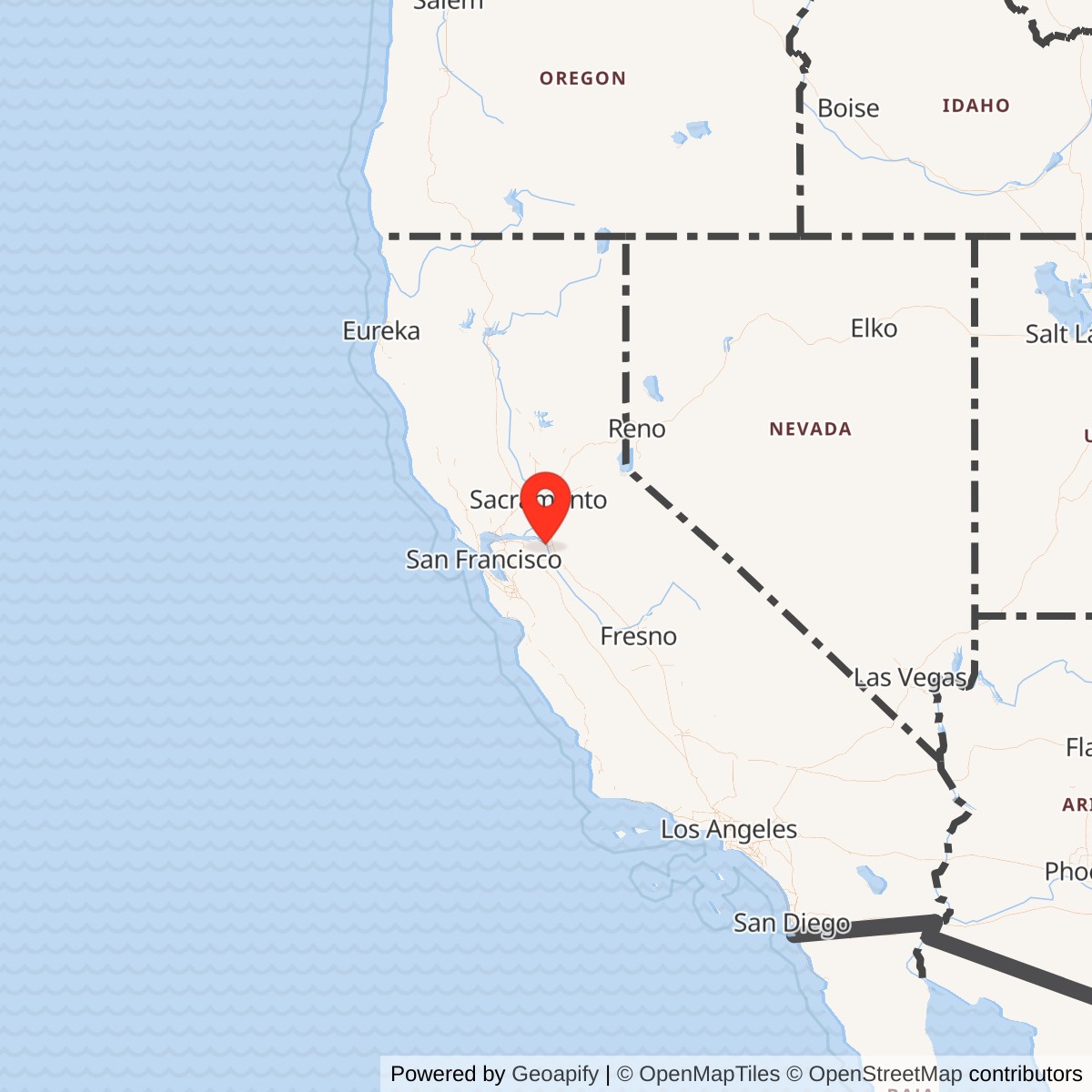
Longitude: -121.361337
Current Role: Former Naval Supply Annex built on Rough and Ready Island to relieve Naval Supply Depot Oakland; later Naval Communication Station / Naval Computer and Telecommunications Station Stockton; now Port of Stockton West Complex with maritime, warehouse, rail, industrial, agricultural, historic-district, and environmental-restoration uses.
Rough and Ready Island was one of those military places where geography did half the work before the Navy poured the concrete. It sat inland from San Francisco Bay, wrapped by the Stockton Deep Water Channel, the San Joaquin River, and Burns Cutoff, yet still connected by water, rail, road, and port infrastructure to the Bay Area and the Pacific war supply chain. That combination made the island unusual: far enough from the congestion and vulnerability of the Bay Area waterfront to offer relief and dispersal, but close enough to Oakland and San Francisco to function as part of the same naval logistics system.
The installation began as U.S. Naval Supply Annex Stockton, a World War II annex to the overcrowded Naval Supply Depot Oakland. Construction began in August 1944, the first barge movements from Oakland began around May 1945, and the annex was formally commissioned on June 30, 1945. The supply annex occupied most of Rough and Ready Island and was built during the final months of the war, when the Navy was still preparing for the possibility of an invasion of Japan. Its wartime service was brief, but its design was historically important. The Stockton annex was built around modern palletized cargo handling, with one-story warehouses, transit sheds, rail yards, roads, and a long wharf organized to move cargo from warehouse to rail, truck, barge, and ship with fewer handlings than older multi-story depots allowed.
The site then found a second life in the Cold War. As nuclear-era planning pushed the Navy to move communications facilities away from the San Francisco Bay Area, Rough and Ready Island became a communications station. The naval communications mission began operating there in 1960. The supply-annex function was decommissioned in 1965, and the island continued as Naval Communication Station Stockton and later Naval Computer and Telecommunications Station Stockton until Navy operations ceased in July 2000. From 2000 through 2010, Navy property on Rough and Ready Island transferred in phases to the Port of Stockton, which now operates the former base as part of its West Complex while the Navy retains defined environmental responsibilities.
Mission Evolution
The first mission was relief. By early 1944, the Naval Supply Depot at Oakland was one of the most congested pieces of the Navy's Pacific logistics system. Oakland had to receive, store, sort, pack, and ship vast quantities of materiel for shipyards, fleet units, advance bases, and Pacific operations. Its location on San Francisco Bay was valuable, but it was also crowded. A July 1944 supply-depot review identified the Oakland and San Francisco Bay Area supply situation as especially critical and recommended a new annex at Stockton. Bureau of Yards and Docks officials had already examined Rough and Ready Island, whose undeveloped land, deep-water channel, rail access, and proximity to Oakland made it a strong candidate.The Navy approved construction in July 1944, and work began the next month. This was late in the war, but it was not an afterthought. The Navy still faced immense supply requirements for the Central and Western Pacific, and planners were preparing for the invasion of Japan. The Stockton annex was intended to serve as an annex to Naval Supply Depot Oakland, a Navy Material Redistribution Center, and an in-transit storage area. Barges began moving cargo between Oakland and Stockton around May 1, 1945, before the formal commissioning ceremony, so the installation entered useful service even while its final construction details were still being completed.
After World War II, the supply mission remained useful but no longer defined the entire island. By 1955, the Cold War had created a new reason to use Rough and Ready Island. The Navy decided to move important communications infrastructure out of the San Francisco Bay Area, in part because of concern that major coastal and Bay Area facilities were vulnerable in a nuclear war. Construction of the communications facilities began in 1956, transfer work began in 1959, and on July 1, 1960, Naval Communication Center San Francisco, Stockton began operation. The new mission tied Rough and Ready Island to a wider network of Navy communications sites that included relay, receiving, transmitting, and satellite-related facilities elsewhere in Northern California and the Pacific system.
In 1965 the Naval Supply Annex was decommissioned, but the communications mission continued. From 1965 to 1976 the island was known as Naval Communication Station, San Francisco, Stockton. On May 5, 1976, it was renamed Naval Communication Station Stockton. By the late twentieth century the command was part of the Navy's computer and telecommunications system, and the site was known publicly through its closing and environmental records as Naval Computer and Telecommunications Station Stockton. This was a major mission change: a supply annex created to move physical cargo became a communications node created to move orders, data, messages, and command information.
The final mission change was conversion to civilian port use. Congress authorized the transfer of NCTS Stockton property and assets to the Port of Stockton in 1996. Navy operations ceased in July 2000, and property transfer proceeded in phases through MARAD and the Port of Stockton between 2000 and 2010. That transfer did not erase the Navy history. It converted a military logistics and communications island into a civilian maritime-industrial district while preserving many historic warehouses and leaving the Navy with continuing environmental obligations under the Environmental Services Cooperative Agreement.
World War II Supply Mission
Naval Supply Annex Stockton was a wartime logistics installation, not a combat base, but its work was directly tied to combat operations. The Navy's Pacific war depended on a massive flow of supplies: spare parts, construction materials, ship stores, base equipment, aviation supplies, packaging materials, tools, administrative goods, and the countless small items required to keep ships, aircraft, Seabee units, shore bases, and advance depots functioning. Oakland was the principal naval supply depot in the Bay Area, and Stockton existed because Oakland alone could not absorb the volume efficiently.The annex's wartime contribution was brief because it came online so late. Construction began in August 1944. Cargo began moving by barge between Oakland and Stockton by early May 1945. The installation was formally commissioned on June 30, 1945, just weeks before the atomic bombings and Japan's surrender. Even so, the Library of Congress Historic American Buildings Survey record (link to this PDF is in the Sources & References section at the bottom of this page) identifies the annex as making an important contribution during the crucial months at the end of the war, including the enormous supply preparations for a planned invasion of Japan. In that context, Stockton was not late because it was unimportant; it was late because the Navy's logistics system was still expanding toward what planners expected would be the largest operation of the Pacific war.
The installation also marked a turning point in how the Navy moved cargo. Older supply depots often relied on multi-story warehouses that were poorly suited to forklifts and standardized pallets. The Stockton annex was built around one-story warehouse and transit-shed designs intended for palletized handling. The Historic American Buildings Survey record emphasizes that the Stockton warehouses were the first in a Navy supply annex to be designed entirely around palletization. This mattered because palletization reduced repeated manual handling, improved movement between storage and transportation, and foreshadowed the postwar transformation of military and civilian warehousing. Stockton was therefore significant both as a wartime support installation and as an architectural/logistics experiment in modern cargo handling.
Construction itself became part of the wartime story. The Rough and Ready Island Determination of Eligibility report notes that labor availability was a major obstacle and that a labor camp was built on the island. In early 1945, 500 German prisoners of war were brought to Rough and Ready Island to work on construction, and additional German and Italian POW labor was requested. This did not make Stockton a POW camp in the same sense as a large prisoner compound, but it does place the installation inside the broader American wartime labor system, where enemy prisoners could be used under guard for non-combat work when domestic labor was scarce.
Cold War Communications Mission
The Cold War changed the value of Rough and Ready Island. The supply annex had been built to solve a World War II logistics bottleneck; the communications station used the inland island to reduce vulnerability and strengthen command-and-control resilience. In 1955 the Navy decided to transfer principal communications facilities away from the Bay Area, partly because of the Soviet nuclear threat. Rough and Ready Island already had Navy land, utilities, administration, and a controlled federal landscape, making it a logical inland relocation site.Construction for the communications mission began in 1956, the transfer started in 1959, and Naval Communication Center San Francisco, Stockton began operation on July 1, 1960. The Stockton station did not operate in isolation. It was linked to a network of communications and relay facilities, including Mount Diablo, Dixon, Treasure Island, Monterey, Jim Creek, Oakland, Mare Island, Moffett Field, Alameda, Bangor, Mount Vaca, and Concord. The island's function was therefore part of a distributed communications architecture. Rough and Ready Island housed command, processing, administrative, and support activities, while associated remote facilities handled transmitting, receiving, relay, and satellite-related functions.
The transition from Naval Supply Annex to Naval Communication Station also changed how the old built environment was used. The communications station used only a portion of the immense World War II warehouse district. Many buildings were vacant, lightly used, or leased to other federal and non-federal users. The historic district documentation from the 1990s notes that the communications station controlled the property while using relatively few of the buildings directly. That pattern is important because it explains why so many warehouse buildings survived into the Port of Stockton reuse era. The Cold War mission kept the island in Navy hands, but it did not require the total demolition or modernization of the World War II supply-annex landscape.
Facilities and Physical Layout
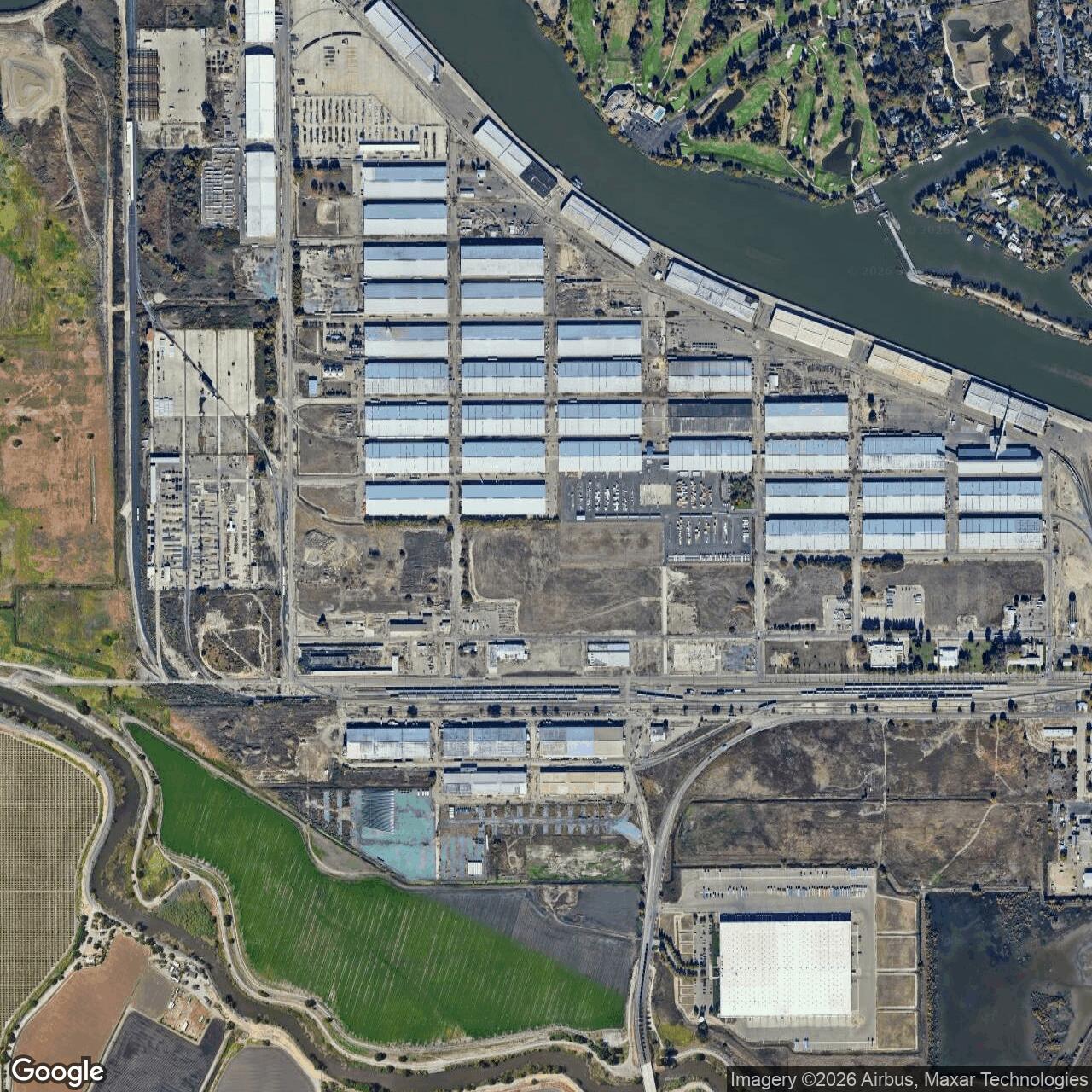
Rough and Ready Island's physical layout reflected logistics before anything else. The Navy selected the island because it was large, mostly undeveloped, surrounded by water, adjacent to the Stockton Deep Water Channel, served by the Belt Line Railway, and connected to the Southern Pacific, Western Pacific, and Santa Fe railroads. It was close enough to Oakland and San Francisco by land or water to function as a Bay Area annex, but it had the open space Oakland lacked.At commissioning, Naval Supply Annex Stockton occupied approximately 1,419 acres of Rough and Ready Island, while the remaining acreage belonged to oil companies. Later environmental and reuse records describe the former NCTS Stockton as historically occupying about 1,490 acres. The completed wartime base included 47 warehouses and transit sheds, approximately 40 miles of railroad trackage, 32 miles of roads, a 6,400-foot marginal wharf, a box factory, offices, machine and trade shops, and bachelor officers' quarters. The scale was enormous for an inland site and reflected the Navy's intention to move cargo in bulk through rail, road, barge, and ship connections.
The defining buildings were the warehouses and transit sheds. The standard storehouse design emphasized a one-story, approximately 200-by-600-foot building with rail-side loading platforms, truck-side offices, sprinkler protection, and open unheated storage space. The purpose was to accommodate palletized cargo and forklift movement. The site also included transit sheds along the waterfront, where cargo could be staged near wharfside movement, and large rail yards that connected the storage areas to regional and transcontinental rail systems. Unlike a ceremonial naval station with a parade-ground focus, Stockton was laid out as a machine for moving materiel.
The later communications mission added a different layer. Communications buildings, antennas, administrative spaces, and network-support functions occupied parts of the island while associated facilities elsewhere in California completed the wider system. The old supply-annex grid of warehouses, roads, and rail remained, but the command meaning changed. By the 1990s, the HABS record documented the site as Naval Supply Annex Stockton, then under the control of Naval Communication Station Stockton, with a large historic district of contributing buildings and structures still present.
Role in the Wider Military Network
Stockton belonged to two different Navy networks. The first was the Pacific logistics network of World War II. In that system, Naval Supply Depot Oakland was the overloaded central node, San Francisco Bay was the regional shipping and ship-repair hub, and Stockton was the inland relief valve. Supplies could move from Oakland to Rough and Ready Island by barge, be stored or redistributed through the annex, and then move onward by water, rail, or truck. Stockton was not a stand-alone supply depot; it was a supporting annex built to improve the performance of the whole Bay Area supply system.The second was the Cold War communications network. The move to Stockton reflected a dispersed survivability logic. Communications facilities crowded around the Bay Area were potentially vulnerable in a nuclear exchange, and some radio facilities were being encroached upon by other naval-industrial development. Rough and Ready Island provided inland federal space where communication-center functions could be relocated while still connecting to remote transmitting, receiving, relay, and satellite facilities. This network role explains why the island stayed important long after its original supply-annex rationale had faded.
The installation also belongs to the broader history of military logistics innovation. The HABS significance statement is unusually clear: the Stockton supply annex was important because it was an early and comprehensive Navy example of palletization-based cargo handling. The techniques refined in wartime supply depots influenced the postwar Department of Defense supply system and helped shape civilian warehousing practices until containerization became dominant. In that sense, Rough and Ready Island was part of a military-to-civilian technology transfer story: the Navy's need to move wartime cargo faster helped normalize material-handling systems later used far beyond the Navy.
Current Status
The former Naval Supply Annex Stockton / Naval Computer and Telecommunications Station Stockton is no longer an active Navy installation. Navy operations ceased in July 2000. From 2000 through 2010, the Navy transferred property on Rough and Ready Island to the Port of Stockton in four phases through MARAD. The Port now operates the former Navy base as its West Complex, with warehouses, docks, conveyors, rail, industrial tenants, agricultural uses, and maritime operations. The Port of Stockton describes Rough and Ready Island as a former naval base that has become a major working port and international trade center.The military landscape remains unusually visible. Historic warehouses, transit sheds, roads, rail patterns, waterfront structures, and the broad engineered island layout still reflect the wartime naval supply annex. The Naval Supply Annex Stockton Historic District was determined significant for military history and architecture/engineering, especially because of its fully palletization-oriented design. Port reuse has adapted many buildings rather than erasing the district outright, which makes Rough and Ready Island one of the more legible former Navy logistics sites in California.
Environmental responsibilities also remain. NAVFAC Southwest manages the Navy's Environmental Restoration Program at the former NCTS Stockton. Under the 2003 Environmental Services Cooperative Agreement, the Port performs many environmental services, but the Navy retains responsibility for CERCLA actions and Navy-retained conditions. The former site is not on the National Priorities List, and California agencies provide regulatory oversight. Environmental work has included IRP sites, landfill and warehouse-area issues, former firefighting-training-area concerns, and PFAS investigations that moved into remedial investigation after recent site-inspection findings.
Chronology
- 1850s Rough and Ready Island was reclaimed from Delta wetland and tideland conditions for agricultural and later industrial use.
- 1933 Stockton's port development extended industrial use to the north side of Rough and Ready Island, including rail access tied to the Port of Stockton.
- Early 1944 Navy officials examined Rough and Ready Island as a possible supply annex to relieve congestion at Naval Supply Depot Oakland.
- 1944-07 Admiral Greenslade's review identified the Oakland and San Francisco Bay Area supply-depot situation as especially critical and recommended construction of a Stockton annex.
- 1944-07-26 The Secretary of the Navy approved construction of a supply annex on Rough and Ready Island at a cost of nearly $29 million.
- 1944-08 Construction began on the Naval Supply Annex Stockton project.
- 1944-10-23 The earlier name Stockton Annex, Naval Supply Depot Oakland was superseded by Naval Supply Annex Stockton.
- 1944-11-01 The installation was officially identified as U.S. Naval Supply Annex, Stockton, California.
- Early 1945 German prisoners of war were brought to Rough and Ready Island to support construction labor.
- 1945-05-01 The first barges began shuttling cargo between Naval Supply Depot Oakland and Naval Supply Annex Stockton.
- 1945-06-30 Naval Supply Annex Stockton was formally commissioned.
- 1945-07 The planned complement of major buildings was completed around this period.
- 1945-08 Japan's surrender ended the immediate invasion-preparation context for which the annex had been built.
- 1955 The Navy decided to move major communications functions inland from the Bay Area to the existing Naval Supply Annex Stockton, partly because of Cold War vulnerability concerns.
- 1956 Construction began for the new communications facilities at Rough and Ready Island.
- 1959 Transfer of communications functions to Stockton began.
- 1960-07-01 Naval Communication Center San Francisco, Stockton began operation.
- 1960 Naval Communication Station, San Francisco became a tenant of Naval Supply Annex Stockton.
- 1965 Naval Supply Annex Stockton was decommissioned; the communications mission continued on Rough and Ready Island.
- 1965-1976 The site was known as Naval Communication Station, San Francisco, Stockton.
- 1976-05-05 The facility was renamed Naval Communication Station Stockton.
- 1984 The Navy's initial environmental assessment study identified the first Installation Restoration Program sites.
- 1996 Congress passed special legislation authorizing transfer of NCTS Stockton property and assets to the Port of Stockton.
- 1996-1997 Jurisdiction of much of Rough and Ready Island began transferring from the Navy toward Port of Stockton reuse.
- 1998 The Navy proposed transfer of NCTS Stockton property to the Port, with environmentally constrained parcels handled separately.
- 2000-07 Navy operations ceased at NCTS Stockton.
- 2000-2010 The Navy transferred NCTS Stockton properties on Rough and Ready Island to the Port of Stockton in four phases through MARAD.
- 2003 The Navy and Port entered into an Environmental Services Cooperative Agreement governing environmental responsibilities during property transfer.
- 2007 The Environmental Services Cooperative Agreement was amended during the later property-transfer phase.
- 2010 The final 60-acre Phase IV property transfer was completed.
- 2011 A covenant and agreement restricting land use and establishing long-term obligations was fully executed between the Navy, Port, DTSC, and the Regional Water Quality Control Board.
- 2018 The Port notified the Navy of a previously unidentified environmental condition involving PFAS in groundwater at the former firefighting-training area.
- 2021 Navy PFAS preliminary-assessment work identified areas of concern at former NCTS Stockton.
- 2023 A Navy PFAS site inspection was conducted for former NCTS Stockton.
- Present Rough and Ready Island is the Port of Stockton West Complex, while NAVFAC Southwest continues managing the Navy's environmental restoration obligations at the former NCTS Stockton.
Sources & References
- WEB NAVFAC Southwest Stockton NCTS
- WEB NAVFAC Southwest, Naval Computer and Telecommunications Station Stockton - Site Descriptions https://www.navfac.navy.mil/Divisions/Environmental/Products-and-Services/Environmental-Restoration/Southwest/Stockton-NCTS/Site-Descriptions/
- WEB History of Rough and Ready https://www.portofstockton.com/history-of-rough-and-ready/
- WEB Naval Supply Annex Stockton, Rough & Ready Island, Stockton, San Joaquin County, CA https://www.loc.gov/pictures/item/ca2371/
- WEB Naval Supply Annex Stockton, Rough & Ready Island data pages https://tile.loc.gov/storage-services/master/pnp/habshaer/ca/ca2300/ca2371/data/ca2371data.pdf
- WEB Rough and Ready Island Historic District Determination of Eligibility Report https://www.portofstockton.com/wp-content/uploads/2021/04/New-1-FINAL-Rough-and-Ready-Island-Historic-District-Determination-of-Eligibility.pdf
- WEB Building the Navy's Bases in World War II https://www.history.navy.mil/research/library/online-reading-room/title-list-alphabetically/b/building-the-navys-bases/building-the-navys-bases-vol-1-part-II.html
- WEB Stockton reference page https://www.navy-radio.com/commsta/stockton.htm
- WEB Aerial View: Rough and Ready Island https://scholarlycommons.pacific.edu/postcards/32/