Galena Army Air Base / Galena Post, Alaska
An inland Army post kept Lend-Lease aircraft moving while riverboats brought the supplies needed to sustain the field.
Longitude: -156.934555
Current Role: Present Edward G. Pitka Sr. Airport and former Air Force property at Galena.
- Military role
- Alaska-Siberia Lend-Lease staging, refueling, maintenance and regional supply
- Army period
- 1942-December 1945
- Operating transfer
- CAA to military operation, July 1, 1943
- Construction unit
- Company C, 176th Engineer General Service Regiment
- Original accommodation program
- 36 officers and 302 enlisted men; 338 planned places
- Medical facility
- 12-bed hospital in the initial program
- Main runway
- 7,500 feet by November 1943
- Birchwood hangar
- 200 × 202 feet; provided for use in 1944
- Secondary runway
- Northwest-southeast runway proposed; not completed
- Civil successor
- Edward G. Pitka Sr. Airport, GAL / PAGA
- Location
- North bank of the Yukon River at Galena, Alaska
- Latitude / longitude
- 64.736190 N, 156.934555 W; estimated present airport reference point
A Wartime Airfield on the Yukon
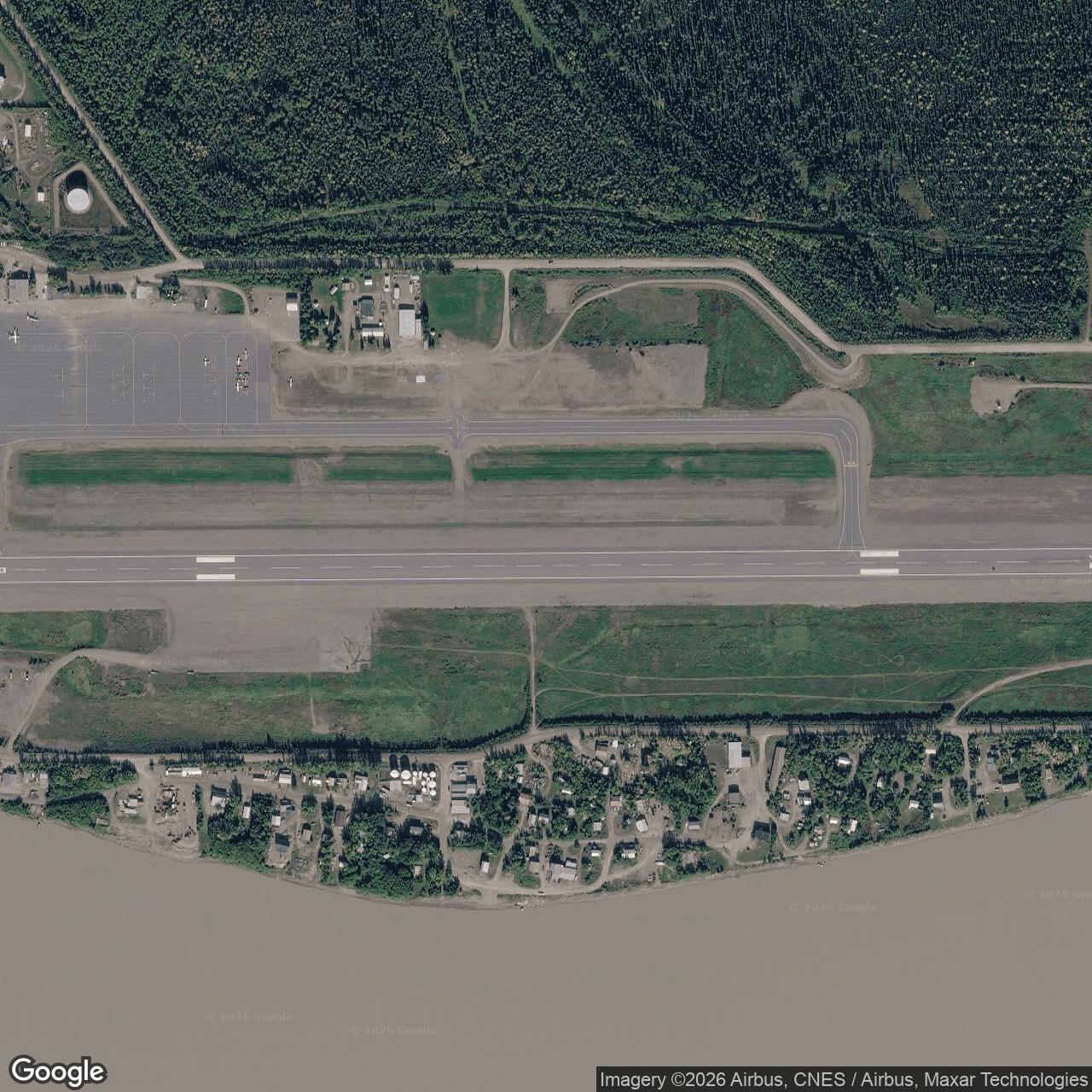
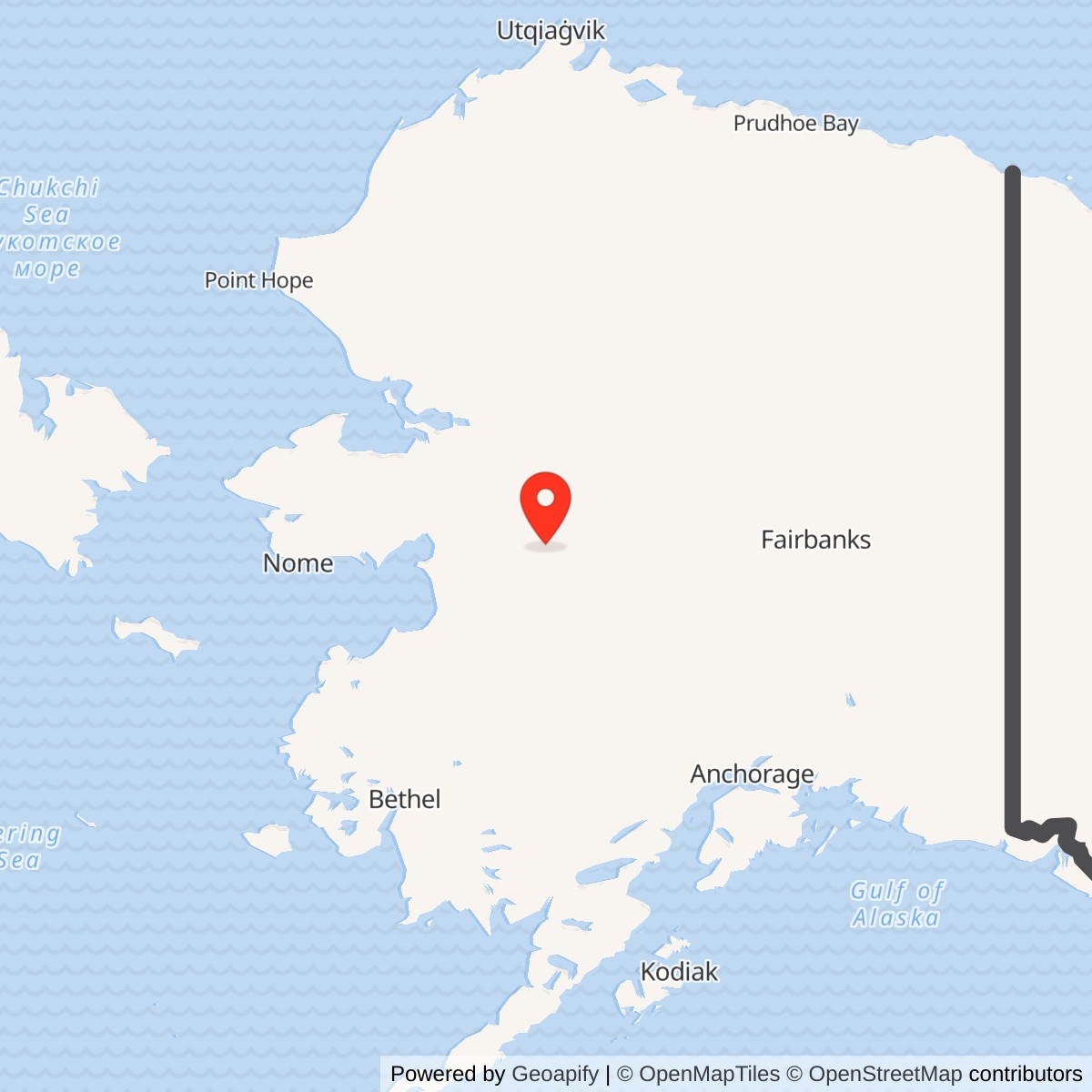
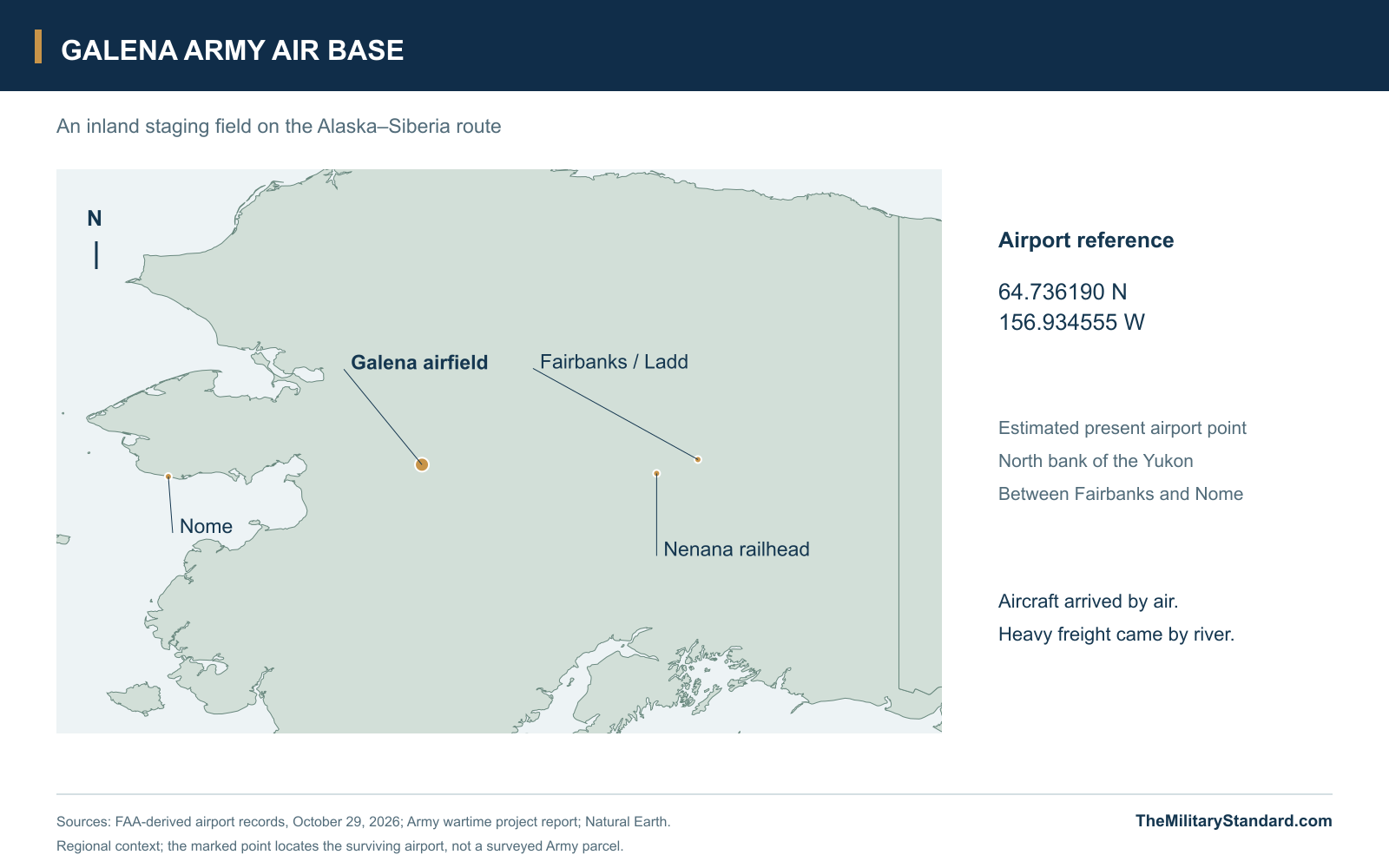
Galena Army Air Base grew around a civilian landing field on the north bank of the Yukon River, between Fairbanks and Nome. During World War II it serviced aircraft moving along the Alaska-Siberia Lend-Lease route and supplied military activity in a large, sparsely developed part of interior Alaska. Its usefulness depended on two very different transport systems: aircraft could move through the field throughout the year, but most heavy construction material had to arrive during the short river-navigation season. [1] [2]
The airfield stood beside an existing Alaska Native community and river settlement. Galena's civilian aviation facilities, village buildings and Army camp occupied neighboring parts of the river bend, sharing access to the runway and landing places. The later Cold War Galena Air Force Station developed on this same airport landscape. The wartime post, however, was organized around ferrying, servicing and supply, years before fighter-interceptor alert became the airport's principal military mission. [2] [8] [9]
From CAA Field to Army Post
The Civil Aeronautics Administration's first choice was West Ruby, east of the eventual Galena site. A winter selection concealed boggy ground that proved unsuitable when conditions changed, and that project was abandoned in late 1941. Work shifted to Galena, where the civilian field was completed in spring 1942. The move illustrates the practical difficulty of judging an Alaska construction site while frozen ground and snow concealed drainage and foundation problems. [2]
The Army established its Galena post in 1942. A platoon of Company C, 176th Engineer General Service Regiment, began construction on September 17, and additional men from the company followed after the expansion program was approved on June 17, 1943. Captain Herbert C. O'Neil served as resident engineer. The CAA formally transferred airfield operation to the military on July 1, 1943, while both civilian-airport construction and Army expansion continued around the operating field. [1] [3] [10]
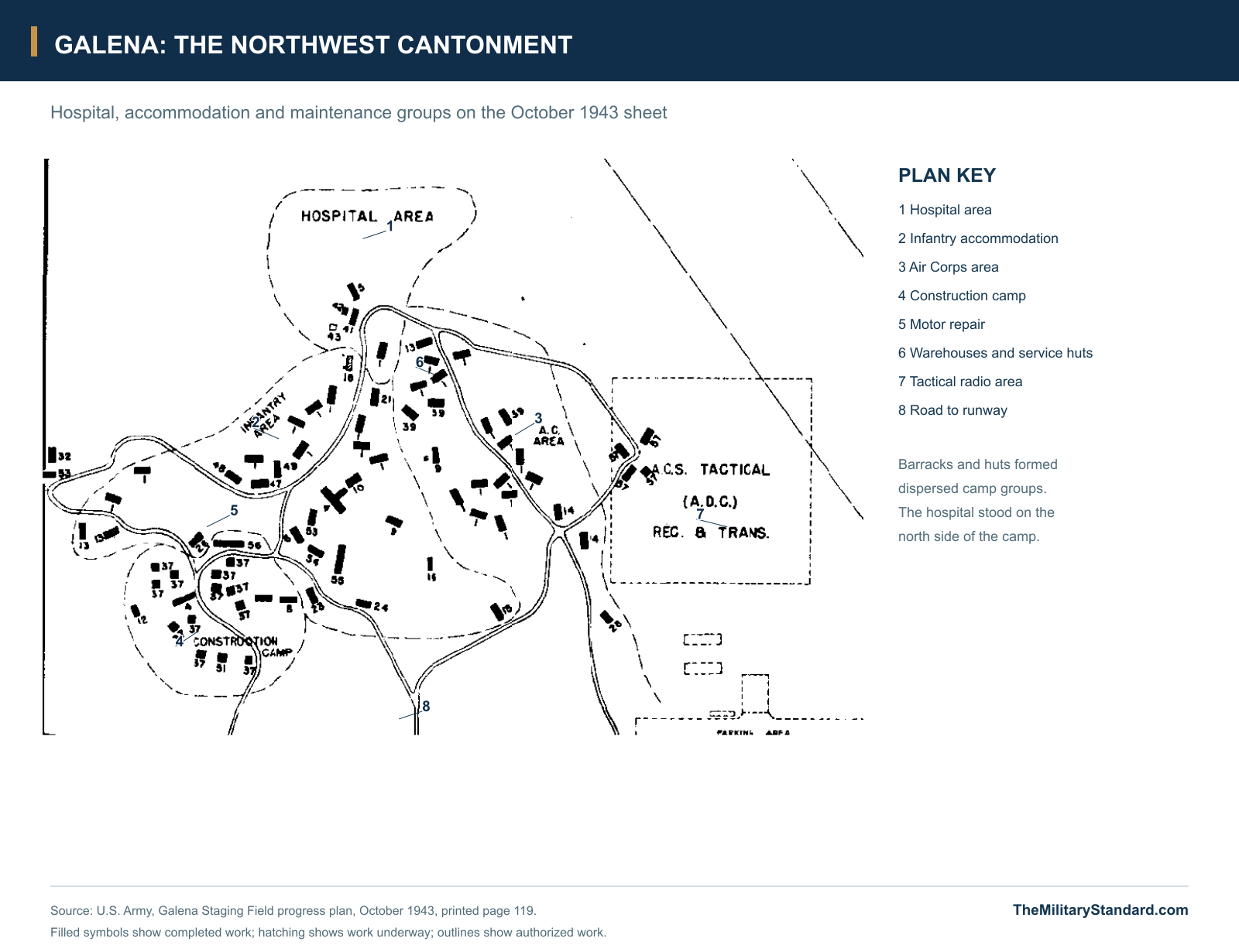
The initial Army program provided facilities for 36 officers and 302 enlisted men, a planned accommodation capacity of 338 rather than a count of everyone who passed through Galena. It included motor-repair shops and a 12-bed hospital. The original garrison program was subsequently combined with Air Transport Command expansion plans B and C. Galena was becoming more than a landing strip: it needed quarters, medical care, workshops, fuel handling and the administrative staff to sustain a working staging post. [1]
Runway, Hangar and Dispersed Camp
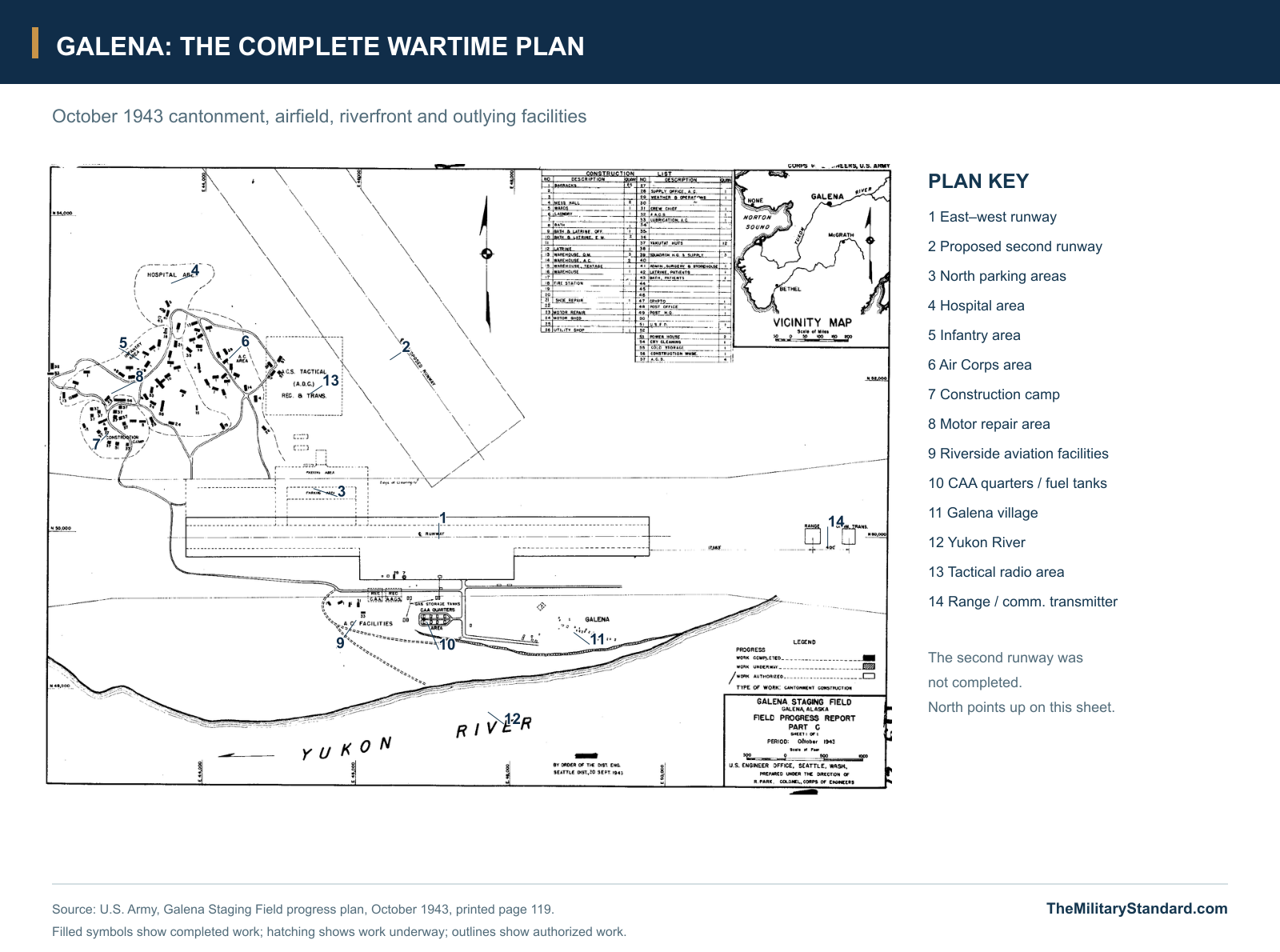
The principal east-west runway ran parallel to the nearby Yukon. In November 1943 it was extended to 7,500 feet for winter use; the Corps' later historic survey gives a width of 300 feet for the wartime strip. A second runway, angled northwest-southeast, was placed under a CAA contract with Summers Construction Company of Juneau. It appears prominently as proposed work on the October 1943 progress plan, but the later survey records that this secondary runway was never completed. [1] [2]
The northwest cantonment contained the construction camp, barracks and hospital area. Quonset huts, Pacific huts and standard frigid-zone theater-of-operations buildings supplied much of the accommodation. The progress drawing also identifies mess halls, bath and latrine facilities, laundry, warehouses, a fire station, motor repair, utility shops, powerhouses, cold storage and administrative offices. Their dispersed arrangement connected the living and service areas to the airfield by a branching road system rather than a single compact building. [1]
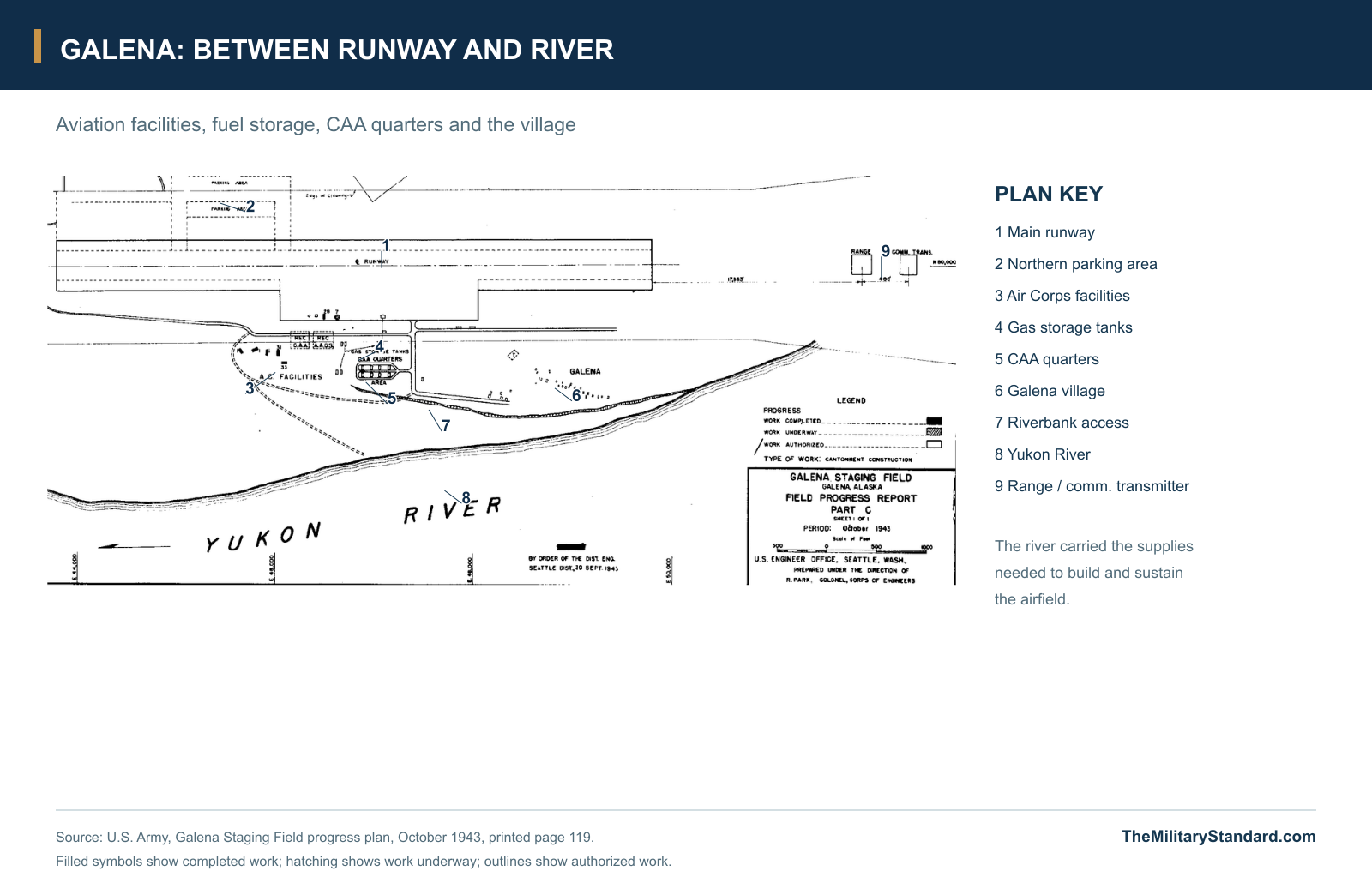
South of the runway, the CAA quarters and aviation facilities lay between the landing ground and the riverbank, west of the village. Fuel storage was concentrated near this civilian aviation area. The northern apron and parking areas connected the runway to the military service side. This arrangement placed aircraft handling, storage, camp services and river access close enough to work together, while leaving a substantial separation between the main cantonment and the older riverside settlement. [1] [2]
A large wooden Birchwood hangar was constructed for use in 1944 north of the runway, near the maintenance and warehouse facilities. The Army narrative gives its overall dimensions as 200 by 202 feet. The bowstring-truss structure provided covered working space at a field where winter servicing could otherwise take place in extreme cold. It became one of Galena's most recognizable wartime buildings and remained useful well into the later Air Force period. [1] [2]
Aircraft Moving Toward Siberia
Galena formed one link in an aircraft-delivery route whose key American-Soviet handover point was Ladd Field at Fairbanks. American crews ferried aircraft north through Canada to Alaska, and Soviet crews took aircraft onward toward Nome and Siberia. Galena offered an intermediate landing and refueling opportunity on the western Alaska leg. Aircraft could receive fuel and attention to mechanical problems without requiring every flight to make the entire Fairbanks-Nome passage without a stop. [2] [6]
The traffic supported an Allied supply effort, not an offensive air campaign flown from Galena against Japan. Aircraft moving through the route included fighters, bombers and transports destined for Soviet service, with their onward movement dependent on weather, aircraft condition and the availability of the next landing field. Galena's military staff also supported flights carrying stores to other interior stations. The same runway and service organization therefore handled both the international ferry mission and regional Army transportation. [2] [6]
By late 1943 Galena had become part of the Air Transport Command system. Its construction program was expanding in response to ferry traffic even as engineers struggled to bring in material. This explains the overlap between civilian construction workers, Army engineers and airfield operating personnel visible in the wartime record. The post's working strength lay in servicing and keeping traffic moving, with runway, fuel, maintenance, communications and living facilities all contributing to the aircraft-delivery mission. [1] [2] [7]
Supplying the Field by River
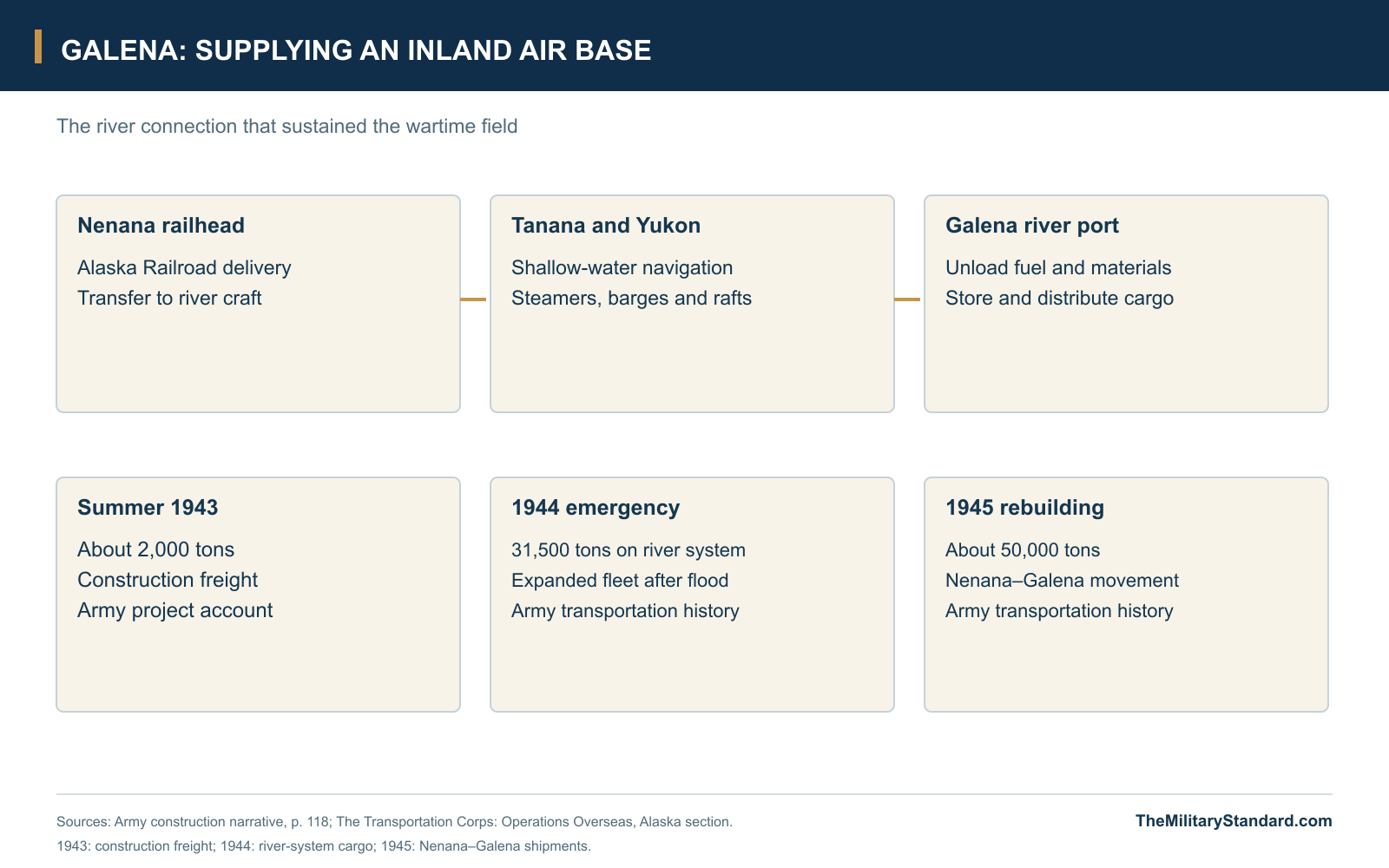
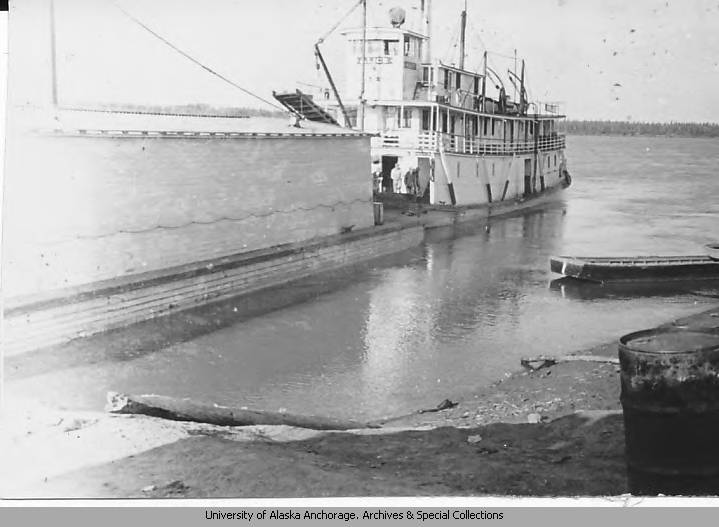
Galena's isolation made river transport an essential part of building and operating the base. The Army construction narrative describes a 366-mile river journey from the Alaska Railroad railhead at Nenana down the Tanana and Yukon rivers. Two small steamers and several barges carried about 2,000 tons of construction freight downstream in summer 1943. Shallow reaches of the Tanana caused groundings, so a shipment's arrival depended on water conditions as well as the short period of open navigation. [1]
After the 1944 flood, the Army Transportation Service assembled a much larger response. It hired available private vessels, diverted floating equipment from southeastern Alaska and supplemented the Alaska Railroad's steamers and barges. River ports at Nenana and Galena helped handle cargo, while rafts carried packaged fuel downstream. The official transportation history records 31,500 tons moved on this river system in 1944 and about 50,000 tons of supplies and equipment moved between Nenana and Galena in 1945. [4]
Seasonal access also shaped medical provisioning. On December 30, 1944, the Army prescribed a 300-day level for class II and IV medical supplies at icebound Nome and Galena, compared with 105 days at most other Alaska stations. This was a reserve of medical equipment and supplies rather than a general food allowance. Alongside the planned 12-bed hospital, it shows how a small inland post had to prepare for a long interval when routine replenishment could not be taken for granted. [1] [5]
Civilian Crews and Camp Life
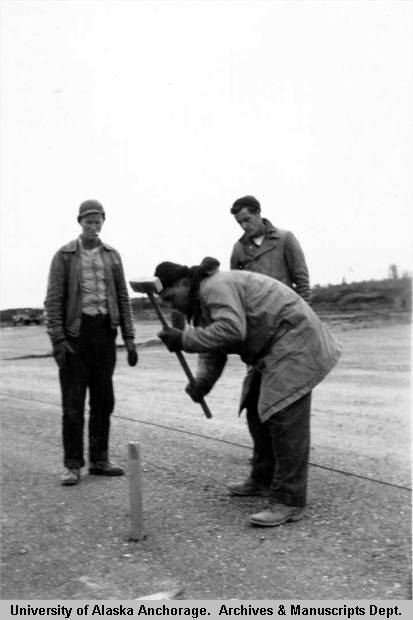
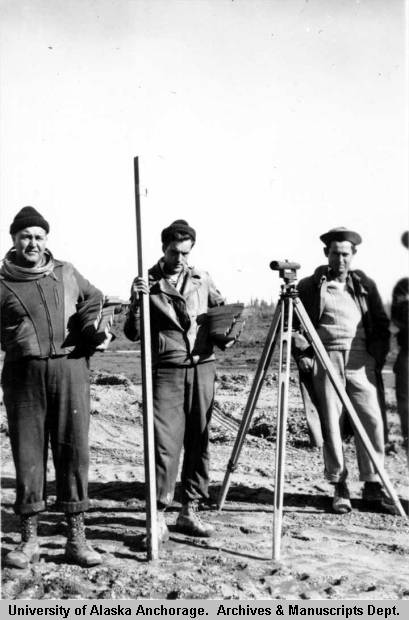
Civilian workers remained important after the first engineer camp was established. J.B. "Georgia" Harper, an asphalt technician employed by Baker Engineers, worked on the Army runway project in 1944-1945. His photographs show survey instruments, runway staking, a portable asphalt plant and the people who operated them. These were the practical skills behind an improved landing surface: surveying set the alignment and grades, and crews then translated the design into a runway that aircraft could use. [7] [12] [13]
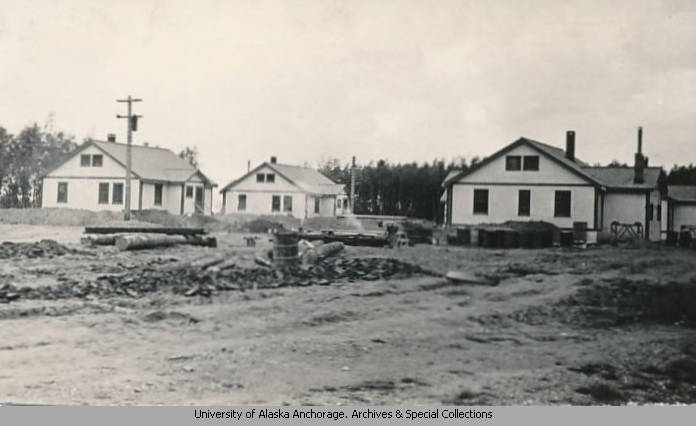
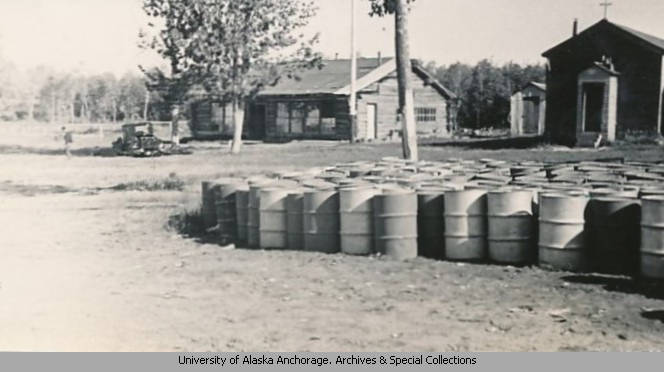
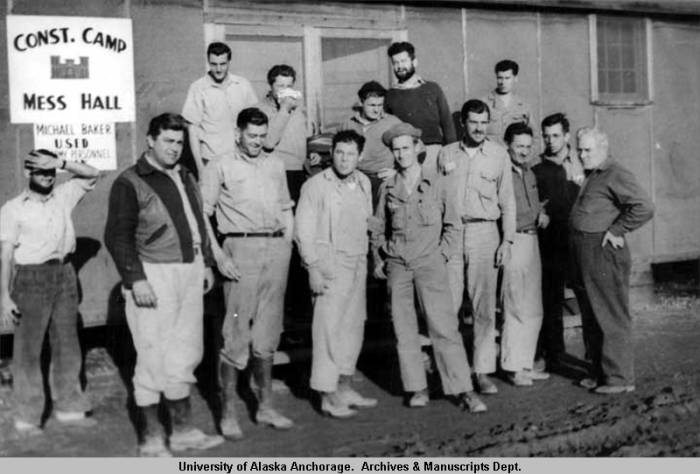
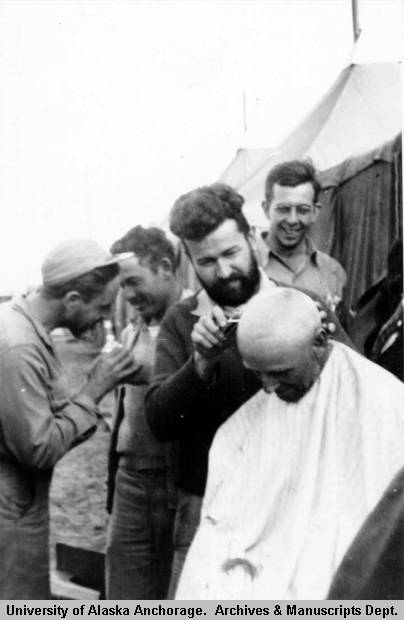
Harper's camp photographs also record the social setting of the job. Men gathered outside a mess hall marked for Michael Baker construction personnel, and another photograph shows a camp haircut while coworkers joked nearby. The Lawrence Demers album records the earlier CAA community, including houses, riverboats and rows of drums. Together these views show civilian aviation and Army construction as part of Galena's wartime settlement, with work, meals, accommodation and river activity closely connected. [7] [8] [14] [15] [16] [17] [18]
Floods, Civil Transfer and Later Service
The Yukon supplied Galena and repeatedly threatened it. A major flood damaged the base in 1944, prompting construction of an earthen protective dike. On May 24, 1945, another flood destroyed or damaged numerous facilities despite those efforts. Rebuilding and emergency supply continued during the final year of the war. The two floods were major operational interruptions at a staging field whose runway, stores and quarters all occupied low ground beside the river. [3] [4]
After the war, the Army declared the airfield surplus and transferred it back to the CAA in December 1945. This ended the wartime Army phase while retaining a useful aviation facility for western Alaska. Military use returned on a different basis in 1951, when the Air Force negotiated joint use for a forward fighter base. Campion Air Force Station, built separately away from the airport, supplied the radar and control functions associated with the Cold War air-defense mission. [3] [9]
Subsequent runway work and Air Force construction substantially changed the wartime landscape. The 1987 historic survey still described Birchwood hangar as being in use, whereas the 2007 federal assessment records that it had been demolished and removed. Today the state-operated Edward G. Pitka Sr. Airport carries on the airfield's transportation role, and former Air Force buildings have supported local institutions including the Galena Interior Learning Academy. The surviving airport preserves the site's continuity even though many individual Army-era buildings have disappeared. [2] [3] [10] [11]
Chronology
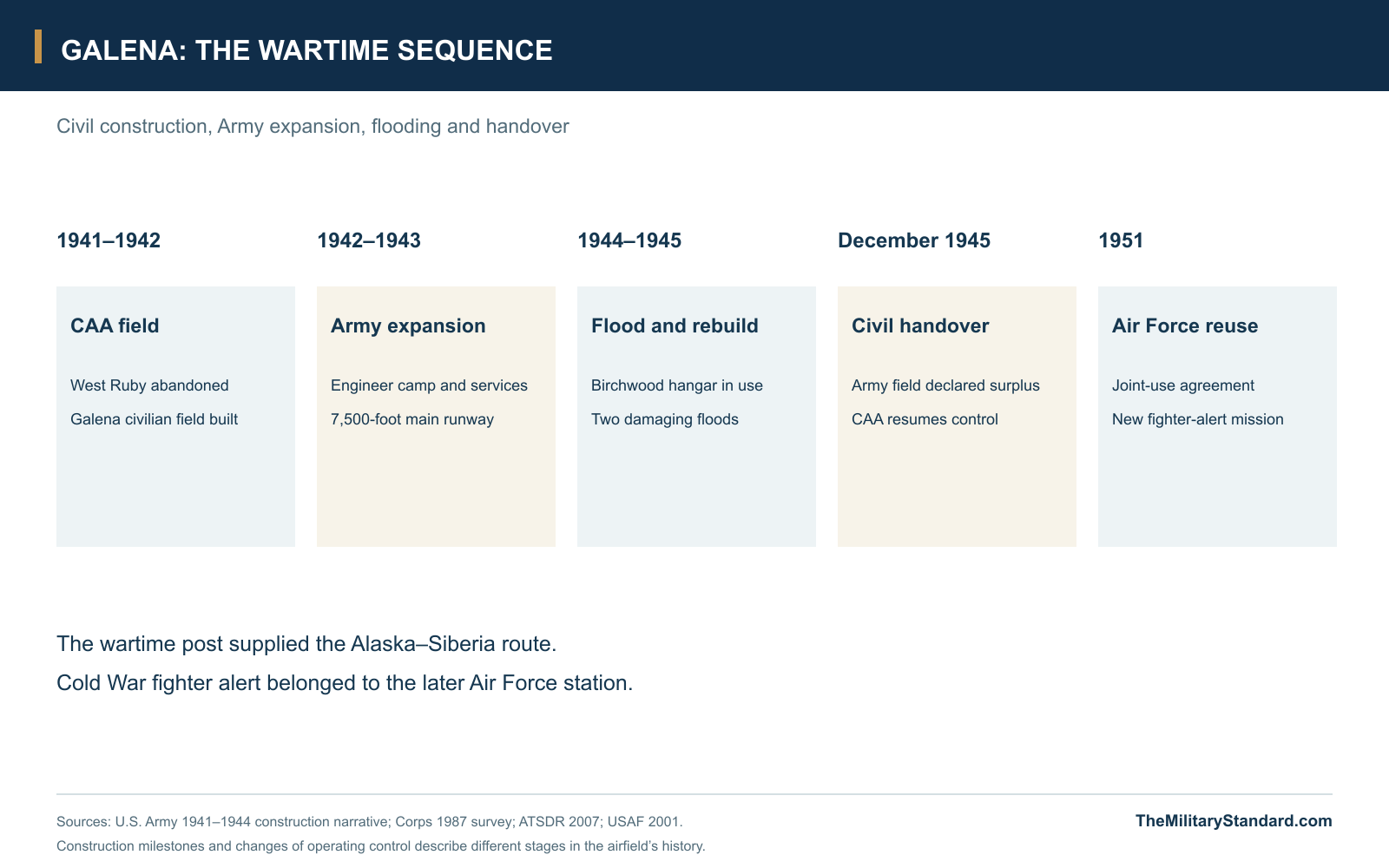
- Late 1941 The unsuitable West Ruby airfield site is abandoned and construction shifts to Galena. [2]
- Spring 1942 The CAA completes the civilian field at Galena. [2]
- 1942 The Army establishes a post at Galena. [3] [10]
- September 17, 1942 A platoon of Company C, 176th Engineer General Service Regiment, begins construction. [1]
- June 17, 1943 The expansion program is approved and the remainder of Company C is moved to the project. [1]
- July 1, 1943 The CAA formally transfers operation of the airfield to the military. [10]
- October 1943 The Army progress plan records the cantonment, runway, proposed second runway and riverside facilities. [1]
- November 1943 The main runway is extended to 7,500 feet for winter operations. [1]
- 1944 Birchwood hangar is provided for use, while flooding damages the base and leads to dike construction. [1] [3]
- December 30, 1944 The Army sets a 300-day level for specified medical supplies at icebound Galena and Nome. [5]
- May 24, 1945 A second major flood destroys or damages facilities at the airfield. [3]
- December 1945 The surplus Army airfield is transferred back to CAA control. [3]
- 1951 The Air Force negotiates joint use of the airport for a forward operating base. [9]
- By 2007 Birchwood hangar has been demolished and removed. [3]
Related Sites
Information sources (18)
- PDFU.S. Army, Narrative Report of Alaska Construction, 1941-1944, Galena project, printed pp. 117-119
Original construction dates, engineers, accommodation program, hospital, hangar, runway extension, river supply and October 1943 progress plan.
- PDFU.S. Army Corps of Engineers, World War II in Alaska Historic Resources Survey, 1987, Galena, pp. 5-74-5-75
Site selection, Lend-Lease operations, sector supply role, wartime layout and the unfinished secondary runway.
- PDFAgency for Toxic Substances and Disease Registry, Galena Airport Public Health Assessment, May 21, 2007, pp. 3-6
Army post establishment, wartime floods, December 1945 CAA transfer and later removal of Birchwood hangar.
- PDFU.S. Army Center of Military History, The Transportation Corps: Operations Overseas, Alaska inland-waterway operations
Emergency river fleet, Nenana and Galena ports, and the 1944-1945 supply movements after flooding.
- WEBU.S. Army Medical Department, Medical Supply in World War II, chapter XIII, Alaska section, p. 465
December 30, 1944 medical supply levels for icebound Nome and Galena.
- WEBNational Park Service, Ladd Field and the Lend-Lease Mission: Defending Alaska in WWII
American-Soviet aircraft transfer at Ladd Field and the Alaska-Siberia route through Galena toward Nome.
- WEBUniversity of Alaska Anchorage, J.B. Harper photograph album, HMC-0592, circa 1944-1945
Baker Engineers runway contract, named civilian workers, construction equipment and camp activities at Galena.
- WEBUniversity of Alaska Anchorage, Lawrence M. Demers photograph album, HMC-0748, 1929-1944
CAA construction-worker background, river transport and photographs of the Galena community and airfield settlement.
- PDFU.S. Air Force and Argonne National Laboratory, Defending Attack from the North, 2001, p. 10
Civil airfield construction, 1951 forward-base agreement, later rebuilding and the distinction between Galena and Campion.
- WEBAlaska Department of Environmental Conservation, Galena Air Force Station, updated September 10, 2025
July 1, 1943 military operating transfer, CAA reservation, later property transfers, airport use and restoration responsibilities.
- WEBFAA airport records reproduced by AirNav, Edward G. Pitka Sr. Airport, effective October 29, 2026
Estimated present airport reference coordinate, GAL/PAGA identifiers and current public-airport administration.
- WEBAlaska's Digital Archives, UAA-HMC-0592-20c, Surveying runway at Army Air Base, Galena, 1944-1945
Photograph of Bobo, McBride and Glenn with surveying equipment during runway construction.
- WEBAlaska's Digital Archives, UAA-HMC-0592-20f, Baker Engineers employees constructing runway, 1944-1945
Photograph of Bright driving a peg while Inman and McBride look on.
- WEBAlaska's Digital Archives, UAA-HMC-0592-14f, Baker Engineers construction camp mess hall, 1944-1945
Workers outside the Michael Baker construction-camp mess hall at Galena.
- WEBAlaska's Digital Archives, UAA-HMC-0592-23f, Barbering at Baker Engineers construction camp, 1944-1945
Camp haircut photograph with Smith, Underwood, Walsh, Glenn and Harper identified by the archive.
- WEBAlaska's Digital Archives, UAA-HMC-0748-3a, Steamboat Alice, undated
Demers album photograph of the steamer docked at Galena.
- WEBAlaska's Digital Archives, UAA-HMC-0748-1a, C.A.A. houses at Galena, circa 1939-1944
Photograph of civilian aviation housing during the airfield's early development.
- WEBAlaska's Digital Archives, UAA-HMC-0748-3g, Barrels and Buildings, circa 1939-1944
Photograph of rows of drums and buildings at Galena in the Demers collection.