Nike Missile Site CL-59 IFC, Parma Ohio
Longitude: -81.7586
This location was part of the Cleveland Defense Area
Site ID: CL-59
This site controlled the missiles at the Launch Area located here.
Site Role: IFC
A typical Nike air defense site consisted of two separate parcels of land. One area was known as the Integrated Fire Control (IFC) Area. This site contained the Nike system's ground-based radar and computer systems designed to detect and track hostile aircraft, and to guide the missiles to their targets.
The second parcel of land was known as the Launcher Area. At the launcher area, Nike missiles were stored horizontally within heavily constructed underground missile magazines. A large, missile elevator brought the Nikes to the surface of the site where they would be pushed across twin steel rails to one of four satellite launchers.
Elaboration on how Nike worked here.
Nike Site CL-59 was a U.S. Army Nike Ajax surface-to-air missile battery in the Cleveland Defense Area. The site defended the southwest side of the Cleveland metropolitan region, including Parma, Parma Heights, the Lake Erie industrial corridor, transportation routes, and the larger urban-industrial complex of northeastern Ohio. It was one of the eight Cleveland-area Nike installations built during the mid-1950s as part of the national air-defense system created to protect major American cities, air bases, ports, industrial regions, and military facilities against possible Soviet bomber attack.
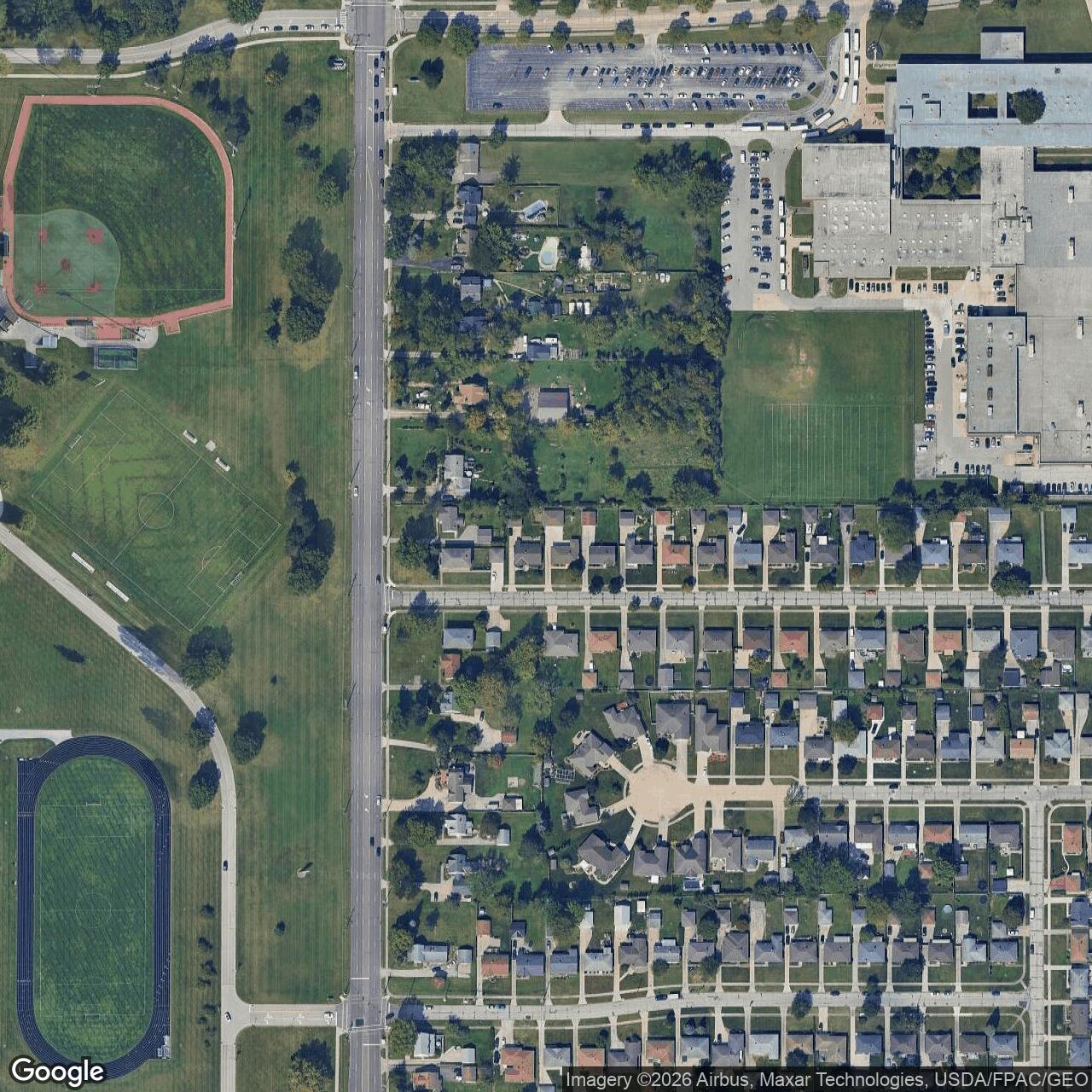
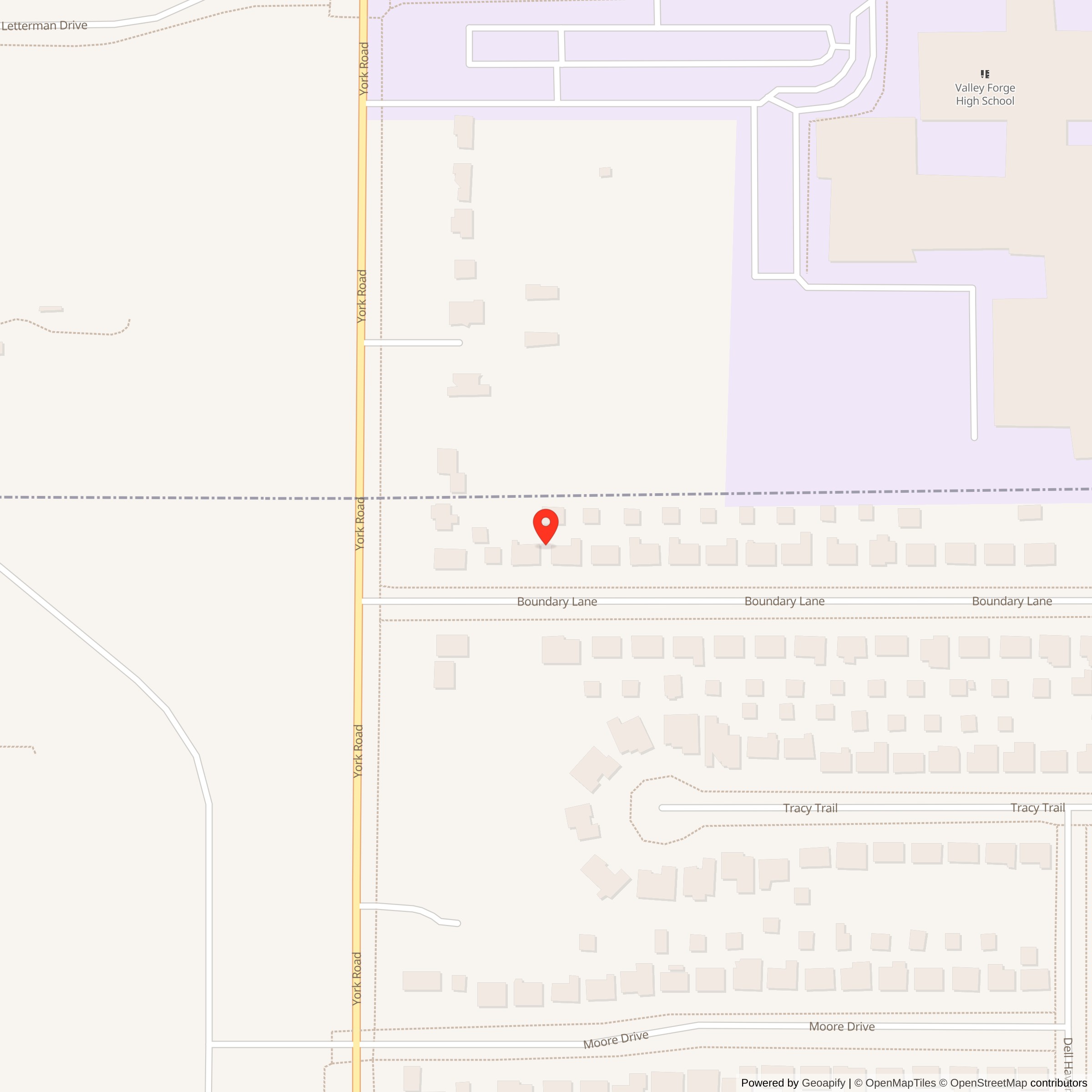
CL-59 operated as a Nike Ajax site from 1956 until August 1961. It was not one of the Cleveland batteries converted to operational Nike Hercules service. After the Army closed the site, the former Nike land was reused for public recreation and education. The former control area became associated with Nathan Hale Park / local recreational use, and the former launcher area became associated with Cuyahoga Community College's Western Campus and nearby parkland.
Units that served at CL-59:
CL-59 was manned by Regular Army air-defense units during its short operational life. The clearest site-specific unit listing identifies the following sequence:- July 1956-September 1958: Headquarters and Headquarters Battery, 351st U.S. Army
- July 1956-September 1958: Battery B, 351st U.S. Army
- September 1958-August 1961: Headquarters and Headquarters Battery, 1st Battalion, 68th U.S. Army
- September 1958-August 1961: Battery B, 1st Battalion, 68th U.S. Army
Historical Background
CL-59 belonged to the first-generation Nike missile network placed around Cleveland in the 1950s. The Nike program was the Army's answer to a problem that conventional antiaircraft artillery could no longer solve. Late World War II and early Cold War aircraft were faster, flew higher, and could potentially deliver nuclear weapons. After the Soviet Union detonated an atomic bomb in 1949, and after the Korean War accelerated American rearmament, U.S. air-defense policy shifted toward a layered system built around early warning, fighter interception, command-and-control networks, and fixed Army missile batteries.Cleveland was a logical target for this kind of defense. In the 1950s it was one of the major industrial centers of the Great Lakes region. Its metropolitan area included heavy manufacturing, steel and metalworking, chemical and petroleum-related industry, rail routes, port facilities, highways, utility infrastructure, and a large urban population. A Soviet bomber threat to the American interior was understood not simply as a threat to military bases but as a threat to the nation's industrial and logistical capacity. The Cleveland Defense Area was therefore part of a national defensive geography that ringed important American cities with missile sites.
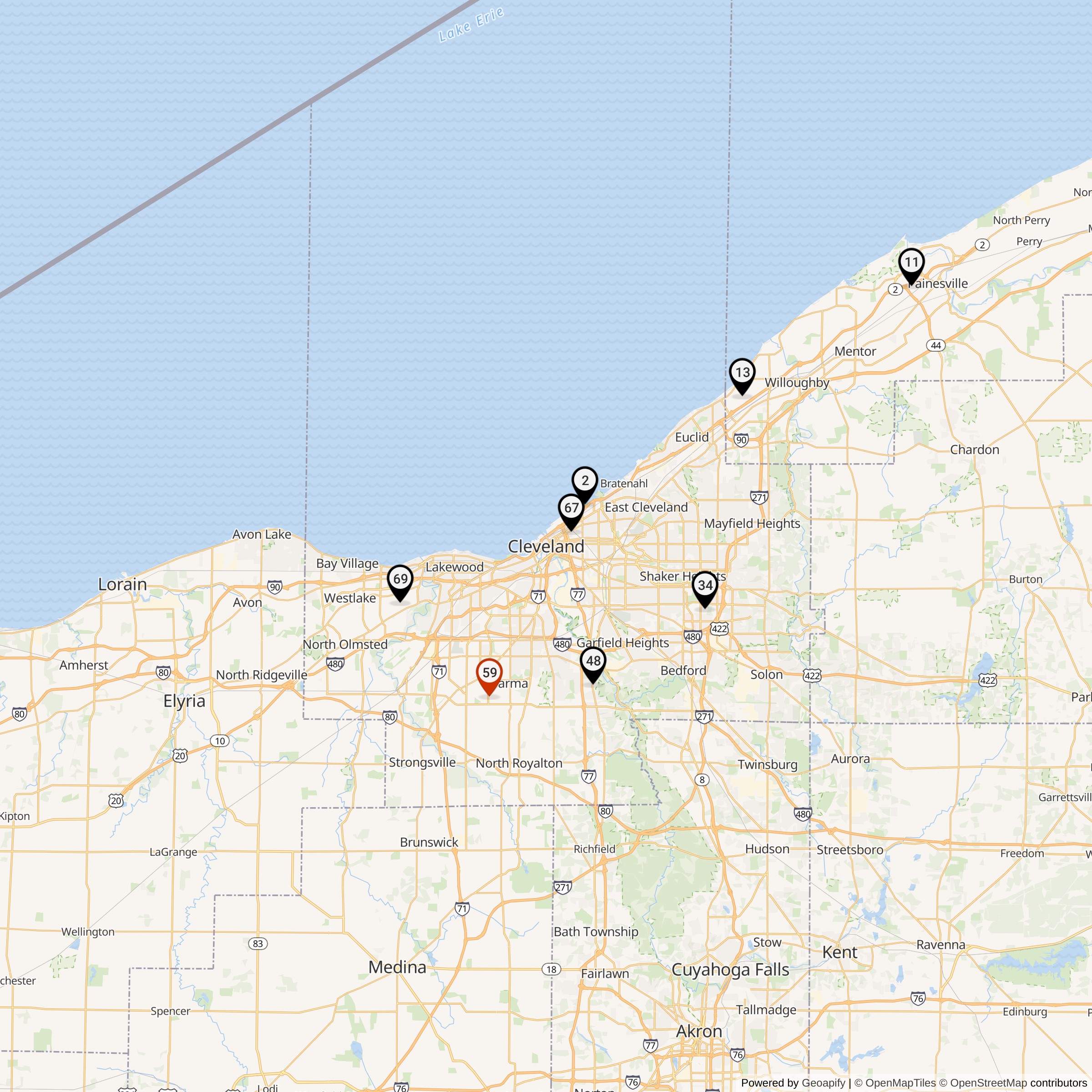
The Cleveland-area Nike sites included CL-02 at Bratenahl, CL-11 at Painesville, CL-13 at Willowick, CL-34 at Warrensville / Highland Hills, CL-48 at Garfield Heights / Independence, CL-59 at Parma / Midpark Station, CL-67 at Lakefront Airport, and CL-69 at Fairview Park / Rocky River. Headquarters facilities were associated with the Shaker Heights Armory and Cleveland. Construction of the Cleveland-region sites was handled by the U.S. Army Corps of Engineers Pittsburgh District, part of the Ohio River Division.
The local Cleveland Nike bases were built in and around suburbs rather than on remote military reservations. That mattered. These were Cold War weapons sites inserted into ordinary metropolitan landscapes: near roads, parks, schools, hospitals, residential neighborhoods, and municipal boundaries. CL-59 is one of the clearest examples of that pattern. It stood in the Parma-Parma Heights area near residential zoning and near the former Crile Hospital property. Later maps prepared for the former site show how the Nike parcels overlapped with the broader local landscape that eventually became recreational and educational property.
Nike Ajax at CL-59
CL-59 was a Nike Ajax site. Nike Ajax was the Army's first operational guided surface-to-air missile and the first operational missile of the Nike family. It was designed to engage enemy bombers before they could reach defended cities and installations. It used command guidance from the ground rather than self-contained homing. The battery's radars and computer tracked both the hostile aircraft and the outgoing missile, calculated an intercept, and sent steering commands to the missile in flight.The Nike Ajax missile was a two-stage weapon. A solid booster accelerated the missile off the launcher, and a liquid-fuel sustainer carried it toward the target. The system's official technical profile gives the missile a range of roughly 25 to 30 miles, a speed of about Mach 2.3, an engagement altitude up to about 70,000 feet, and three high-explosive fragmentation warheads. Ajax was therefore a conventional air-defense weapon, unlike later Nike Hercules batteries that could carry either high-explosive or nuclear warheads.
CL-59's reported configuration, Nike 1B, 2C/30A/12L-A, identifies it as an Ajax battery with a mixed magazine layout: one Type B magazine, two Type C magazines, 30 Nike Ajax missiles, and 12 Ajax launchers. The launcher suffix "A" is important because it indicates Ajax launchers, not universal Hercules-capable launchers. The site was therefore not an operational Nike Hercules battery, even though some later public narratives discuss Hercules in connection with CL-59 or the Cleveland Nike system in general.
The Ajax system created a significant daily workload for the soldiers assigned to the battery. The site was not simply a row of missiles waiting in the ground. It required radar operation, target-identification drills, missile inspection, propellant-handling procedures, generator operation, communications checks, security duty, vehicle maintenance, fire-control maintenance, and recurring readiness exercises. The soldiers of Battery B and the headquarters elements assigned to CL-59 lived and worked within a suburban military installation that was both highly technical and deeply routine.
Site Layout and Operation
Like other Nike batteries, CL-59 was divided into two main functional areas: the Integrated Fire Control area and the launcher area. These two portions had to be separated for safety, radar geometry, and operational reasons, but they still had to function as one weapon system. The control area found, identified, and tracked targets; the launcher area stored, serviced, and launched the missiles.The IFC / control area was the nerve center of the battery. It contained the radars, battery-control equipment, radar-control equipment, power support, administration and living facilities, and the personnel who operated and maintained the fire-control system. Site-specific photographs and captions identify the target-tracking radar, acquisition radar, missile-tracking radar, and battery-control van in the CL-59 IFC area. They also describe the mess hall, orderly room, day room, supply room, officers' offices, barracks, battalion headquarters, bachelor officers' quarters, and internal road layout. These details are valuable because they show that the control area was both a technical radar station and a small Army post.
CL-59 used LOPAR, the Low-Power Acquisition Radar, which was the standard search radar associated with the Nike Ajax system. Once a target appeared, the target-tracking radar followed the hostile aircraft, the missile-tracking radar followed the outgoing missile, and the battery's fire-control computer generated guidance commands. In a live engagement, a missile would be launched from the separate launcher area and guided by command signals from the IFC until detonation near the target.
The launcher area contained the underground missile magazines, launchers, assembly and maintenance functions, generator and support facilities, propellant-related facilities, and launch-control equipment. A standard underground Ajax magazine stored missiles horizontally below grade. When raised to the surface by elevator, missiles could be moved to launchers and prepared for firing. Because Nike Ajax used hazardous liquid propellants, the launch area also required fuel and oxidizer handling, acid-storage provisions, safety precautions, and waste-management practices. Later environmental work at CL-59, including the removal of underground storage tanks in 2000, reflects that part of the site's operating history.
Operational Role in the Cleveland Defense Area
CL-59's job was to defend the southwestern approach to Cleveland. In a coordinated air-defense engagement, warning information would flow through the regional air-defense network, and the battery would be ordered to acquire and engage targets within its assigned sector. The site's position complemented the other Cleveland batteries by covering an approach sector not covered as directly by the lakefront, eastern, or western sites.The Nike system was intended as the last line of defense. The Air Force's long-range radars, interceptors, and command network were supposed to detect and engage enemy aircraft before they reached the immediate defended area. If attacking bombers penetrated that outer defense, Army Nike batteries such as CL-59 were meant to engage them near the target region. In practice, this meant that CL-59's soldiers maintained a constant readiness posture for an attack that never came.
The military significance of CL-59 lies partly in that tension. It existed because Cold War planners believed nuclear attack by long-range bombers was plausible. Yet most of the site's daily life involved maintenance, drills, inspections, off-duty recreation, unit sports, and interaction with nearby communities. The site-specific CL-59 page preserves an unusual glimpse of that social side through photographs and captions of the Battery B basketball team. The team reportedly played in a local industrial league whose opponents included teams associated with local companies such as Sherwin-Williams. That kind of detail places the missile battery back into the civilian world around it: soldiers were living in a Cold War weapons site, but they were also participating in ordinary local community life.
Hercules Conversion Question
CL-59 should be treated as an Ajax-only operational site unless stronger primary evidence is found. This point matters because some public summaries of CL-59 discuss Nike Hercules, and one Cleveland Historical narrative states that CL-59 was retrofitted to accept Hercules. However, the more specific Nike inventory data lists CL-59 as Nike 1B, 2C/30A/12L-A, not as a Hercules site. The same federal missile-site context identifies only CL-02, CL-11, and CL-69 as the Cleveland sites converted to fire Nike Hercules. Appendix D of the Nike Hercules history lists CL-02, CL-11, and CL-69 among converted Cleveland-area sites, but not CL-59. CL-59's launcher code also ends in "A," indicating Ajax launchers.The best interpretation is that CL-59 remained an operational Nike Ajax site until deactivation in August 1961. The presence of one Type B magazine does not by itself prove operational Hercules service. In Nike site coding, Type B magazines could be Ajax/Hercules-capable with modifications, but CL-59's 30 Ajax missiles and 12 Ajax launchers indicate that the site was not brought into the active Hercules battery group that remained in service until 1971.
Deactivation
CL-59 had a short active life. It was activated in July 1956 and closed in August 1961. Its closure was part of the reshaping of the Cleveland Defense Area as the Army moved away from maintaining every first-generation Ajax site. By the early 1960s, only selected Cleveland batteries remained active, especially those converted to Nike Hercules. The longer-lived Cleveland Hercules sites continued until June 1971, while Ajax-only sites such as CL-59 disappeared from the active air-defense network much earlier.The reasons were technological, fiscal, and strategic. Nike Hercules had a longer range, higher altitude, solid-propellant performance, and nuclear-capable warhead options. A smaller number of Hercules batteries could defend a broader area than a larger number of Ajax batteries. At the same time, the perceived strategic threat was shifting from manned bombers toward ballistic missiles. As U.S. air-defense priorities changed, many Ajax batteries around the country were either converted, consolidated, or closed.
Post-Closure Use and Environmental History
After the Army ended the missile mission, the former CL-59 land moved into civilian use. The former control site became associated with Nathan Hale Park and local recreation. The former launch area became associated with Cuyahoga Community College's Western Campus and nearby public or institutional land. Cleveland Historical describes the post-closure landscape as a combination of Nathan Hale Park, Nike Park on Pleasant Valley Road, and the southern portion of Tri-C's Western Campus.This reuse is historically important because it mirrors what happened to many Nike sites after closure. The facilities were military installations built into the edges of American cities and suburbs. When the air-defense mission ended, the land often returned to schools, parks, municipal yards, police or fire training facilities, storage yards, or private redevelopment. CL-59's transformation into recreational and educational space is one of the more visible examples of that pattern in the Cleveland area.
Site Condition and Surviving Landscape
CL-59 no longer reads as an intact missile base in the way that a preserved Nike site does. The former launcher area has been absorbed into the modern institutional and recreational landscape, especially the Cuyahoga Community College Western Campus vicinity. The former control area has similarly been incorporated into parkland and local public use. Most of the visible military character appears to have been removed or obscured by redevelopment, landscaping, parking, recreation, and institutional construction. List of all Nike Installations in the Cleveland Defense AreaList of all Nike Installations in Ohio