
Kern County Airport / Meadows Field, Bakersfield California
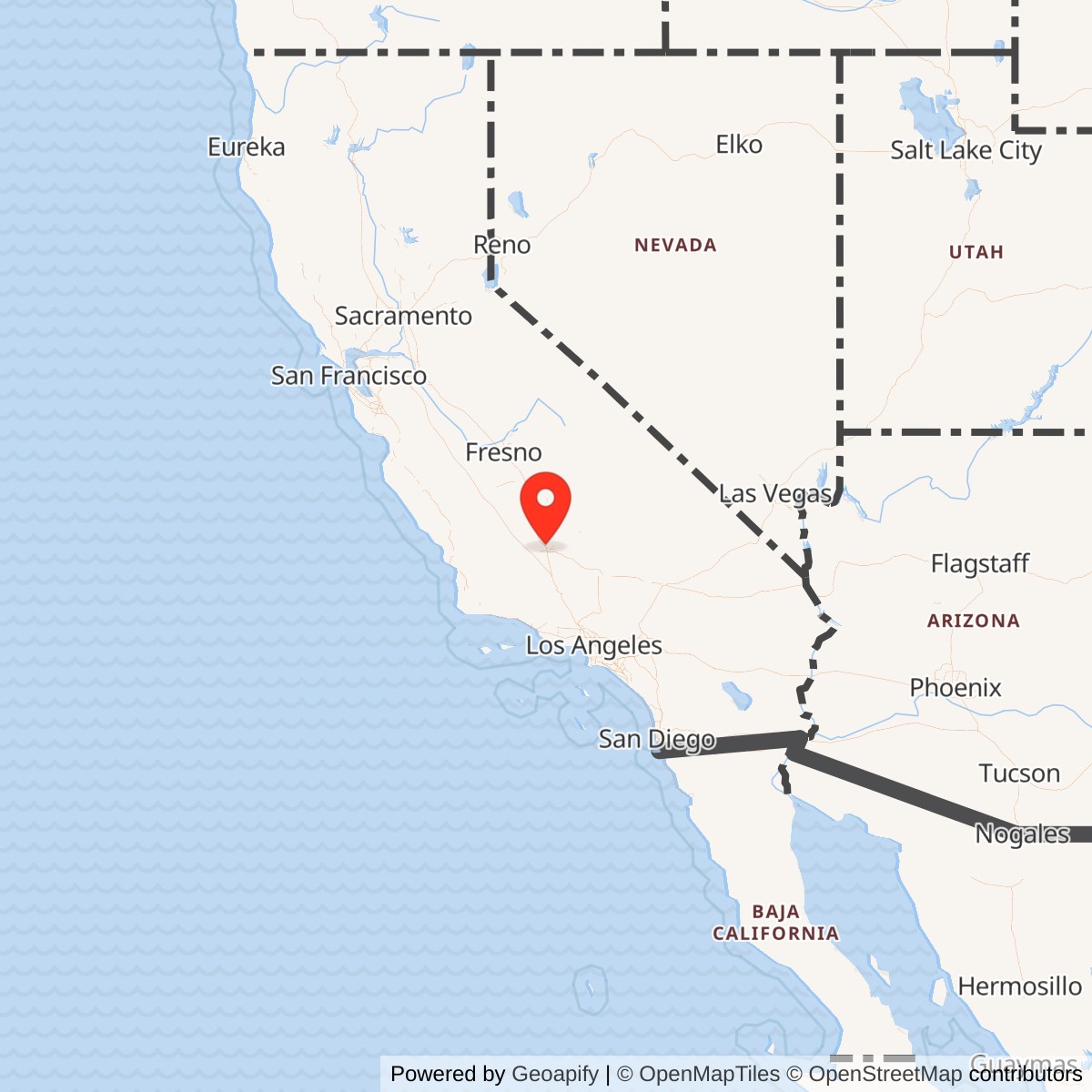
Longitude: -119.0576667
Airport ICAO ID: KBFL
Official Base Website: Meadows Field Airport
Current Role: Meadows Field Airport, KBFL, active Kern County public airport serving Bakersfield and the southern San Joaquin Valley with airline, general aviation, business aviation, emergency, law-enforcement, flight-training, and occasional military traffic
The Bakersfield field that entered the Fourth Air Force wartime network was not a giant standalone Army air base like Hammer Field, March Field, or Mather Field. Its significance was more specialized and more revealing. It was a civilian airport drawn into the Army Air Forces night-fighter training system at the exact moment when the United States was trying to turn a new kind of air combat into an operational skill. At Bakersfield, crews who would soon fly P-70 Havocs and P-61 Black Widows overseas learned the first physical habits of the night-fighter trade, including familiarization flying, transition routines, local airspace discipline, and the early steps in a training pipeline that linked Bakersfield to Hammer Field, Salinas Field, Santa Ana, and then combat theaters abroad.
The naming requires care. Stephen L. McFarland's official Air Force History and Museums Program study Conquering the Night (link to this PDF is in the Sources & References section at the bottom of this page) identifies the Phase One site as "Bakersfield Municipal Airport." Current FAA/AirNav records, however, show today's Bakersfield Municipal Airport, FAA identifier L45, as an airport south of the city with a June 1947 activation date, too late for the 1944 night-fighter training described by the AAF history. The wartime field at issue is therefore best treated as the Bakersfield area municipal/county airport now known as Meadows Field, KBFL, historically Kern County Airport No. 1.
Geographically, the airport sat in the southern San Joaquin Valley, three miles northwest of Bakersfield and close to the larger Kern County flight-training environment. lay to the northwest, Delano and Wasco were farther up the valley, Gardner Field lay near Taft, and Hammer Field at Fresno anchored the night-fighter school after the program moved from Florida to California in January 1944. That landscape gave the Army excellent flying weather, broad valley airspace, nearby auxiliary fields, and enough separation from major coastal urban centers to support intensive training. Meadows Field's current civil status can obscure the wartime point: for a short but important period in 1944, this airport functioned as a working piece of the Army Air Forces pipeline that prepared night fighter crews for the European, China-Burma-India, Pacific, and Central Pacific air wars.
Mission Evolution
The airport's prewar identity was civilian. The site's predecessor was Kern County Airport No. 1, established in the 1920s as Kern County's principal airport for Bakersfield and the surrounding valley. By the late 1930s and early 1940s, the federal government's Development of Landing Areas for National Defense program and related airfield-improvement efforts made civilian airports more useful to the military. That national program was designed to strengthen the country's aviation infrastructure before and during the war, giving the Army Air Corps and then the Army Air Forces access to fields that could support training, dispersal, defense, ferrying, and emergency operations.
The decisive military role came in 1944, after the Army Air Forces moved its night-fighter training program from Florida to California. The P-61 Black Widow was being manufactured in Southern California by Northrop, and the Army needed a western training system close to the aircraft source and to Pacific-bound deployment routes. Hammer Field near Fresno became the headquarters of the program. Under Fourth Air Force and the 481st Night Fighter Operational Training Group, night-fighter crews entered a three-phase training sequence. Phase One was familiarization training at Bakersfield Municipal Airport. Phase Two took place at Hammer Field, where pilots and radar operators were welded into combat teams and received instruction in day and night interception. Phase Three took place at Salinas Field, where crews received advanced night flying practice. After additional organizational training at Santa Ana, the squadrons were ready for overseas movement.
That mission was brief but meaningful. Bakersfield was not the final combat training station, and it was not the headquarters of the school. Its task was to prepare crews for the more complex phases that followed. In the training logic of 1944, that made the field a gateway. Before a night-fighter pilot and radar operator could become an effective combat pair, the pilot needed to be comfortable with the aircraft, the local training pattern, and the demands of handling twin-engine fighters in a crowded wartime training environment. Bakersfield supplied that first stage within the California night-fighter system.
By late 1944 the field's Army role diminished. Later aviation summaries describe Meadows Field as having been placed on standby status after the night-fighter training reorganization, with emergency use under Hammer Field control. The airport then returned to civil aviation after the war. Unlike San Bernardino, Paine Field, McClellan, Mather, Merced/Castle, or other Army Air Forces fields that continued as Air Force bases after 1947, the Bakersfield field did not become a long-term USAF installation.
World War II Operations
The operational work at Bakersfield centered on the Army Air Forces' effort to produce night-fighter crews quickly enough to meet overseas demands. Night fighting was not simply ordinary fighter flying after sunset. It required instrument confidence, radar cooperation, ground-control procedures, disciplined navigation, cockpit coordination, target identification, and a tolerance for long, disorienting hours in darkness. The Army had created an improvised night-fighter training program in Florida, but by January 1944 it shifted the core training program to California, where aircraft supply, weather, and deployment geography made more sense.
Bakersfield's Phase One role placed it at the start of that pipeline. Crews used the field for familiarization before moving to Hammer Field for more intensive pilot and radar-operator team training. The aircraft types associated with the broader program included the Douglas A-20 derivative used as the P-70 Havoc night fighter and the new Northrop P-61 Black Widow. The P-70 represented the improvised early phase of American night fighting, while the P-61 was the purpose-built American night fighter that became the program's most recognizable aircraft. Bakersfield's importance came from supporting the transition from improvised training to a more mature system built around the Black Widow.
The field's wartime activity was not isolated from the rest of Kern County's aviation landscape. Minter Field trained basic pilots nearby. Delano, Wasco, Poso, Gardner, and other valley fields helped make Kern County one of California's dense World War II flying regions. The Army's use of civilian and county airports also reflected a wartime reality: the AAF expanded faster than permanent military bases alone could support. Existing airports became military assets when they could provide runways, airspace, and local support with less delay than building entirely new installations.
The training was demanding and hazardous across the system. McFarland's official Air Force history notes that the night-fighter training accident problem required constant attention. That warning applies to the entire program rather than to Bakersfield alone, but it helps explain the seriousness of the work carried out there. A familiarization field was not a minor convenience. It was one safeguard in a sequence meant to prevent crews from reaching combat without the basic physical and procedural confidence required for night operations.
Specific Units and Aircraft
The central organization was the 481st Night Fighter Operational Training Group, operating under Fourth Air Force after the training program moved to California. The 481st had been activated in 1943 to organize night-fighter training, then moved west as the AAF shifted the program out of Florida. At Hammer Field and its associated fields, the group and its successor training structure produced night-fighter squadrons for overseas deployment.
Bakersfield's most firmly documented role in official Air Force history is Phase One familiarization training under Fourth Air Force and the 481st Night Fighter Operational Training Group. Later aviation summaries and unit-history references associate Meadows Field with the training of the 427th Night Fighter Squadron in mid-1944 and the 549th Night Fighter Squadron later in 1944, along with movements or training activity involving P-61 flights from the 426th, 547th, 548th, and 550th Night Fighter Squadrons.
The aircraft were the practical heart of the mission. The P-70 Havoc, adapted from the Douglas A-20, gave the Army an interim night fighter when the dedicated P-61 was still delayed. The P-61 Black Widow, with airborne radar and a crew built around night interception, represented the future of the mission. Training in California was designed to get crews ready for the Black Widow's operational use in Europe, the Mediterranean, China-Burma-India, the Southwest Pacific, and the Central Pacific. The Bakersfield field therefore connects directly to the wartime transition from night-fighter improvisation to purpose-built all-weather air combat.
Facilities and Physical Layout
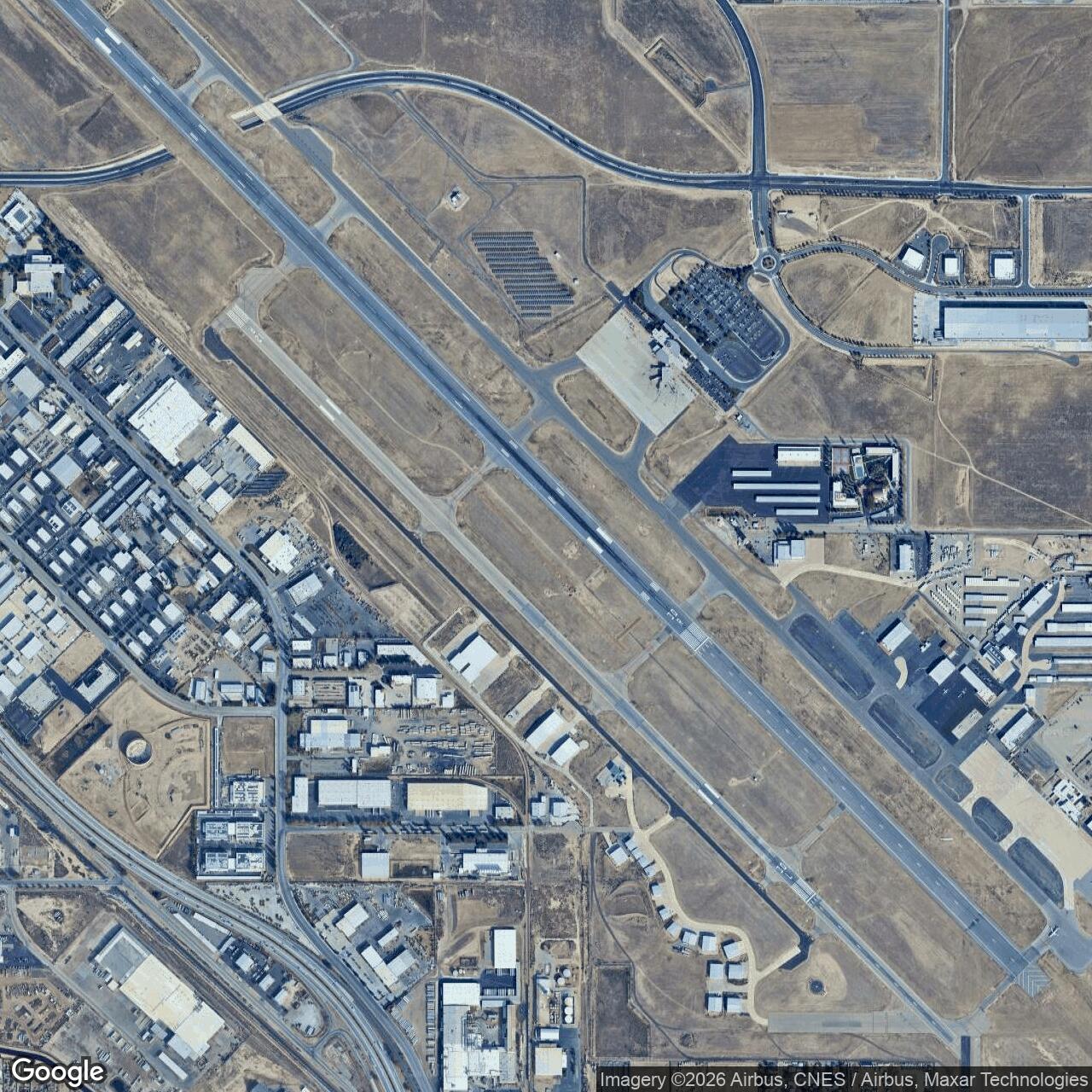
The current successor site, Meadows Field Airport, is an active public airport northwest of Bakersfield. AirNav lists the KBFL airport reference point at 35.4338611, -119.0576667, three miles northwest of Bakersfield. The modern airport has two parallel asphalt runways, with a long primary runway and a shorter parallel runway, and supports airline, air taxi, general aviation, business aviation, emergency, and occasional military traffic. FAA's Flight Deck airport page describes Meadows Field as a public airport serving Bakersfield with commercial airline operations, general and business aviation, military traffic, air ambulance and law-enforcement helicopter activity, and a flight school.
The wartime field would have been far simpler than the present airport. Its value to the Army lay in its runway, open valley setting, connection to the Bakersfield airport system, and proximity to Hammer Field and other San Joaquin Valley training locations. The 1944 mission did not require a massive cantonment or a depot complex. It required a usable flying field that could absorb familiarization activity within a larger training network.
The airport's acreage also needs care. AirNav and airport-data summaries identify the current Meadows Field property as approximately 1,357 acres, while the Kern County regional aviation plan describes Meadows Field as 1,017 acres in that planning context. No Army-era acquired-fee acreage for the wartime usage-rights period was located. The Army appears to have used the existing airport by rights and operating control rather than creating a permanent owned Army base on the scale of the larger AAF installations.
Role in the Wider Military Network
Bakersfield's military importance comes from network position rather than from size. Fourth Air Force's wartime job began with West Coast air defense and then expanded into operational and replacement training. In 1944, the night-fighter school was one of the more technically demanding pieces of that mission. The AAF had to produce crews who could fly in darkness, use airborne radar, cooperate with controllers, and defend Allied bases and bomber routes against nighttime attack. That requirement linked research, manufacturing, training fields, radar schools, operational squadrons, shipping ports, and overseas theaters.
Within that network, Bakersfield was a first-stage training node. Hammer Field served as the headquarters and core night-fighter replacement training base. Salinas supplied advanced night flying. Santa Ana supported organizational training before overseas deployment. Bakersfield gave crews the familiarization phase needed before they moved deeper into the pipeline. Its function was therefore narrow, but without narrow functions like this the broader training system could not move smoothly.
The field also illustrates the way civilian airports became military infrastructure during World War II. The AAF did not need every airport to become a named Army Air Field with a long independent command history. Some civilian airports served as subbases, auxiliary fields, emergency fields, or temporary training nodes. Bakersfield's short Army use fits that pattern. It should not be overstated as a permanent base, but it should not be omitted either, because the official night-fighter training history specifically places a phase of Fourth Air Force training there.
Current Status
The site today is Meadows Field Airport, KBFL, a public airport serving Bakersfield and the southern San Joaquin Valley. It is owned and operated as a civil airport, not as an Army or Air Force installation. Current activity includes commercial airline service, general aviation, business aviation, air taxi, emergency medical and law-enforcement aviation, flight training, and occasional military operations. The active airport remains the physical successor to the wartime field even though its present infrastructure and mission are civilian.
The present Bakersfield Municipal Airport at L45 is a separate airport south of Bakersfield. Its FAA/AirNav activation date of June 1947 is important because it helps prevent a misidentification. The AAF source phrase "Bakersfield Municipal Airport" should not be mapped automatically to modern L45.
Chronology
- 1920s Kern County Airport No. 1 was established as Bakersfield's principal county airport predecessor.
- 1935 Kern County acquired the airport from the Chamber of Commerce, creating one of the early county-owned airport systems in the United States.
- 1939 War in Europe accelerated U.S. aviation-defense planning and led to federal programs for developing landing areas useful to national defense.
- 1941 Federal and Army Air Corps assistance and improvements were being directed to airports such as Meadows Field as the national defense aviation network expanded.
- Late 1943 Later aviation summaries describe the Army Air Forces as acquiring usage rights to Meadows Field and placing it under IV Fighter Command jurisdiction.
- 1944-01 The Army Air Forces moved the night-fighter training program from Florida to California, with Hammer Field near Fresno serving as headquarters under Fourth Air Force supervision.
- 1944 Under Fourth Air Force and the 481st Night Fighter Operational Training Group, Phase One night-fighter familiarization training was conducted at Bakersfield Municipal Airport, the historical source name associated in this row with Meadows Field.
- 1944 P-70 Havoc and P-61 Black Widow night-fighter training across the Hammer Field network prepared squadrons for overseas deployment.
- 1944-03-31 The 481st Night Fighter Operational Training Group was disbanded as the AAF reorganized domestic training units into base-unit structures.
- 1944-04 The 319th Wing and 450th AAF Base Unit structure took over the night-fighter replacement training mission in California.
- 1944-05 to 1944-10 Secondary aviation and unit-history summaries associate Meadows Field with training activity involving the 427th and 549th Night Fighter Squadrons and related P-61 movements.
- 1944-12 Later aviation summaries indicate that the field's active training role ended and that Meadows Field was placed on standby or emergency status under Hammer Field control.
- 1945 With the end of World War II, the Bakersfield field returned to civil airport functions.
- 1947-06 FAA/AirNav records show activation of the present Bakersfield Municipal Airport at L45, confirming that modern L45 is a separate postwar airport and should not be treated as the direct wartime site.
- 1957 Kern County modernized the airport and the Meadows Field name became firmly associated with the county airport.
- Present Meadows Field Airport, KBFL, remains an active public airport serving Bakersfield and the southern San Joaquin Valley.
Information sources (8)
- PDFAir Force History and Museums Program, Stephen L. McFarland
Conquering the Night: Army Air Forces Night Fighters at War
- WEBThe Army Air Forces in World War II, Volume VI, Men and Planes
Chapter 4, Air Bases and Air Fields
- WEBAirNav, KBFL
Meadows Field Airport
- WEBFederal Aviation Administration
Meadows Field Airport Flight Deck page
- WEBMeadows Field Airport official site
-
- PDFKern Council of Governments
Kern County Regional Aviation System Plan PDF
- WEBAirNav, L45, Bakersfield Municipal Airport
Used to distinguish the present L45 airport from the wartime AAF source name
- WEBAirports Worldwide, Meadows Field Airport historical summary
Secondary source for wartime AAF use and Meadows Field naming