
Minuteman S-01 Missile Alert Facility and Sierra Flight (Sierra-01 MAF), Yoder Wyoming
Longitude: -104.222551
Site Type: Missile Alert Facility (MAF) - Launch Control Center (LCC)
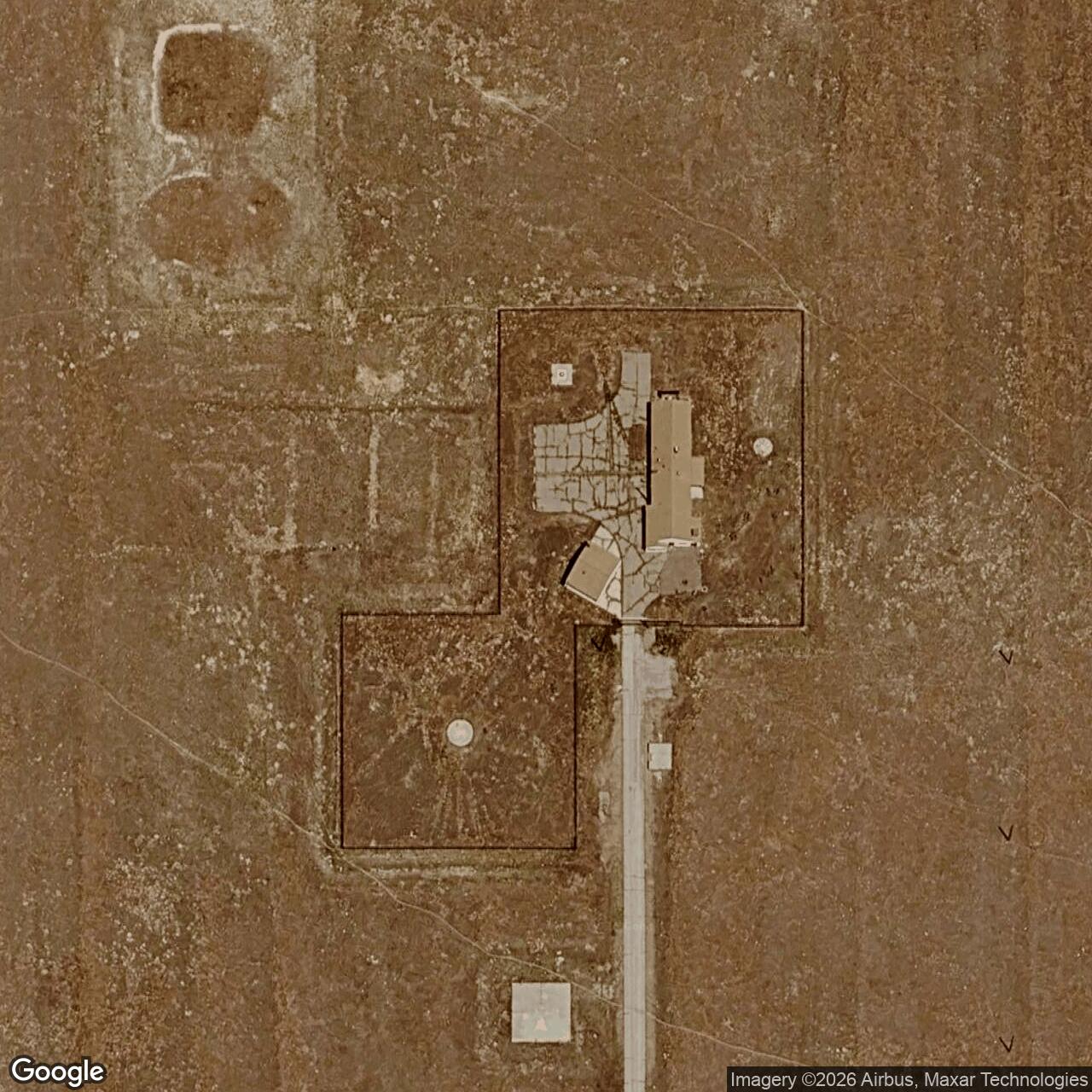
A MAF is located within a fenced area averaging about 5.5 acres. All facilities are enclosed by a security fence, except for a helicopter pad and a buried antenna consisting of two intersecting rings (each about four feet in diameter) buried four feet below surface. The sewage lagoon is enclosed by a separate fence. Top-side structures include a launch control support building (LCSB) and a detached garage. Subsurface structures include a launch control center (LCC) and a launch control equipment building (LCEB). Each MAF Controlled 10 Launch Facilities and their missile.
Missile Type: LGM-30B Minuteman I; LGM-30G Minuteman III; LGM-118A Peacekeeper
Parent Base: F.E. Warren AFB
Missile Wing: 90th Strategic Missile Wing; 90th Missile Wing
Missile Squadron: 400th Strategic Missile Squadron / 400th Missile Squadron
Permanent Installation Number: 8512
Installation Location Code: GHZG
Current Site Use: Former Minuteman / Peacekeeper Missile Alert Facility; public New START-era EA stated MAF surface buildings would remain as real property while underground LCC/LCEB access would be sealed/backfilled; current parcel-level reuse not verified.
Site Ownership: Former U.S. Air Force missile field property; post-New START real-estate disposition/current ownership not verified from public parcel records.
Accessible: No public access confirmed; view only from public roads where legal; do not enter former MAF or surrounding land without current owner permission.
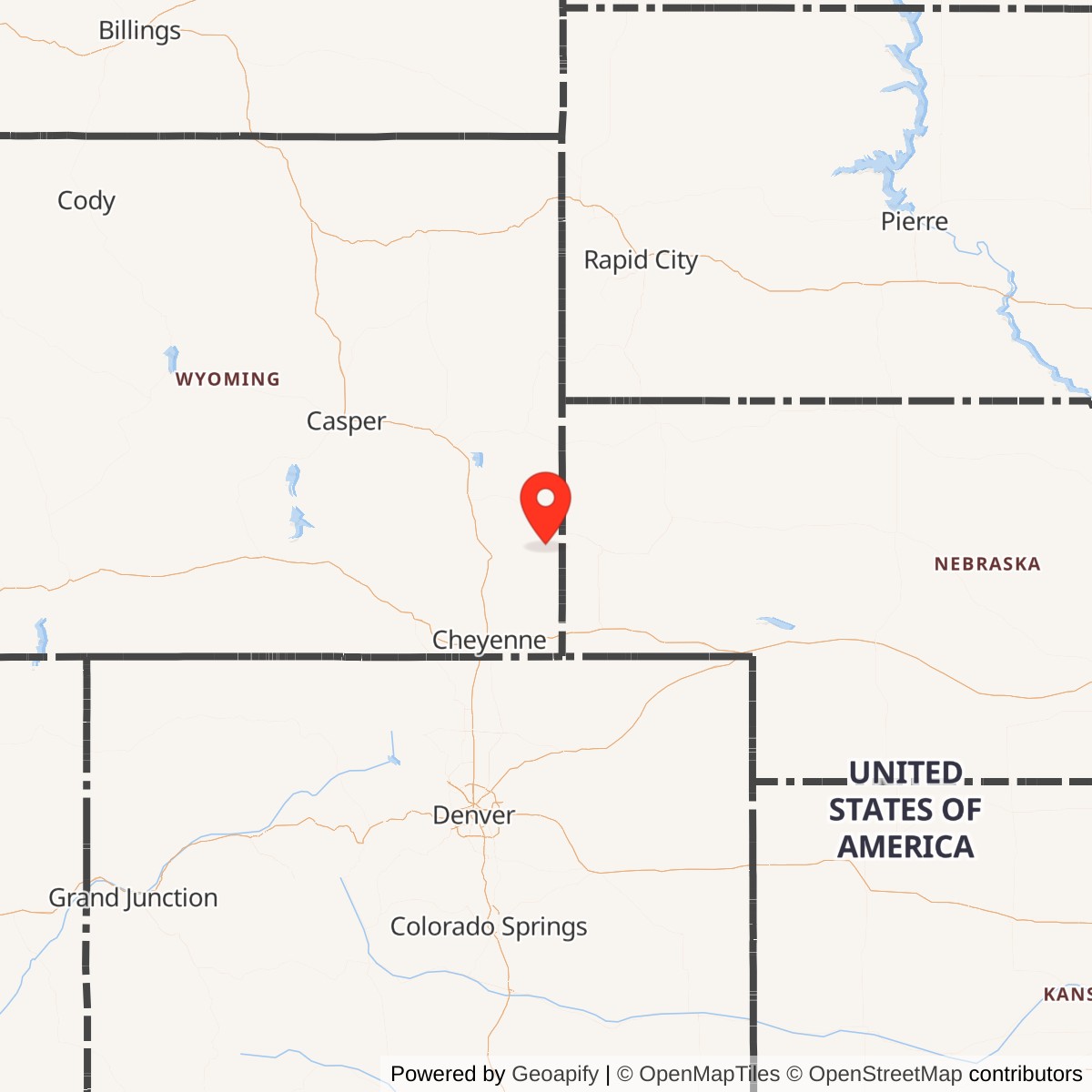
From the road, S-01 could pass for a hard-edged utility compound on the Wyoming plains: fencing, service buildings, a tower, and a rectangular military footprint set among ranchland and section roads. The real story was below the surface. Beneath the Sierra Flight Missile Alert Facility was a hardened Launch Control Center that once connected two missile officers to ten dispersed launch facilities and, after the 1980s, to one of the most powerful land-based missile systems ever deployed by the United States.
S-01 was the Missile Alert Facility / Launch Control Center for Sierra Flight in the former Peacekeeper-converted portion of the F.E. Warren Air Force Base missile field. The associated Sierra Flight launch facilities were S-02 through S-11.
S-01 belonged to the F.E. Warren AFB missile field, the 90th Strategic Missile Wing during the Strategic Air Command era, and the 400th Strategic Missile Squadron. In later Air Force terminology the same operational lineage became part of the 90th Missile Wing and 400th Missile Squadron. The facility originated as part of F.E. Warren's Minuteman force, was later part of the Minuteman III force, and then became one of the five former Minuteman flights converted for the LGM-118A Peacekeeper missile. The Peacekeeper alert mission ended on 2005-09-19.
Location, Landscape, and Flight Layout
S-01 stood in the open high-plains landscape of southeastern Wyoming, southeast of Yoder and north-northeast of F.E. Warren AFB. The surrounding terrain is rural, agricultural, and lightly settled, with long sightlines, section roads, rangeland, irrigated acreage in places, and small towns separated by miles of open country. That landscape was not accidental. Minuteman and Peacekeeper sites were deliberately dispersed so that one enemy weapon could not destroy an entire missile force at once.The S-01 compound was the crewed control and support point for Sierra Flight. A Minuteman / Peacekeeper Missile Alert Facility was not a missile silo. It was the aboveground support and security compound paired with a buried Launch Control Center. The surface portion supported crews, security personnel, communications equipment, backup power, maintenance activity, and the day-to-day logistics of alert duty. The hardened Launch Control Center below the compound was the place where missile combat crews monitored the assigned launch facilities and maintained the ability, under lawful authenticated command procedures, to execute a launch order.
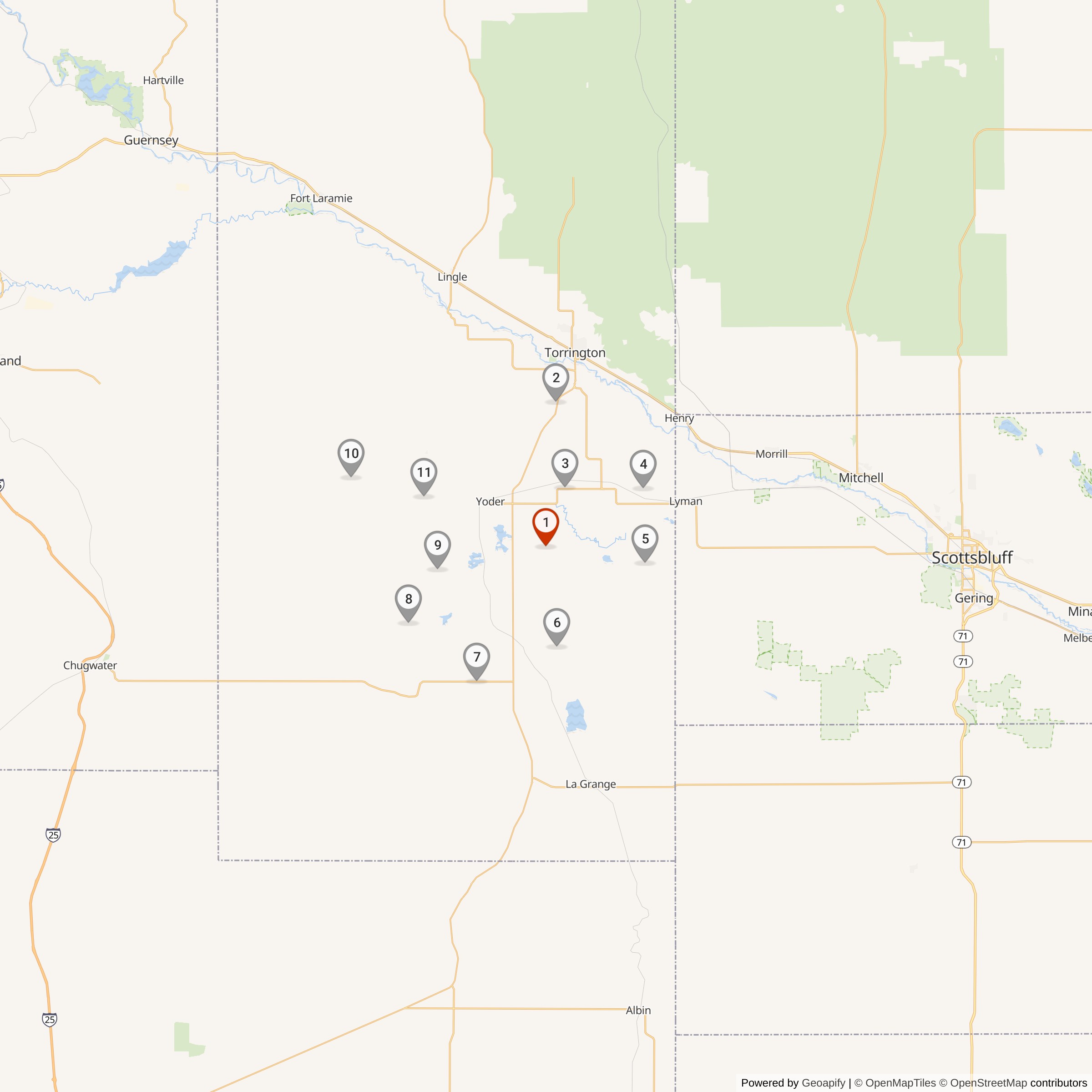
Sierra Flight's launch facilities were spread around the Yoder area and the nearby Goshen and Platte County high plains.
Strategic and Cold War Context
S-01 existed because the Minuteman system changed what a land-based nuclear deterrent could be. Earlier Atlas and Titan systems had depended on large, complex, liquid-fueled missiles. Minuteman used solid propellant, smaller hardened silos, and remote launch control. The missile could remain in long-term readiness without the dangerous prelaunch fueling cycle that defined the first generation of ICBMs. That made it better suited to a dispersed, always-ready alert network spread across the interior United States.F.E. Warren AFB was already a central ICBM base before the Peacekeeper era. It had hosted Atlas operations and then became one of the major Minuteman fields. The 90th Strategic Missile Wing was activated in 1963 as the Air Force built out a missile field that eventually covered large parts of Wyoming, Nebraska, and Colorado. The 400th Strategic Missile Squadron was organized during that Minuteman buildup and operated the northern group of flights later known as Papa, Quebec, Romeo, Sierra, and Tango.
The Peacekeeper conversion gave S-01 a second historical identity. In the 1980s, the United States chose to place the LGM-118A Peacekeeper in modified Minuteman silos at F.E. Warren instead of building an entirely new deployed missile field. Peacekeeper was the operational version of the MX missile, designed as a more accurate, multiple-warhead ICBM. Its deployment at F.E. Warren made the former 400th Strategic Missile Squadron field the only operational Peacekeeper missile field in the United States. Sierra Flight was one part of that field.
In plain language, "alert" did not mean that missiles were sitting above ground, raised, or going through launch motion. For Minuteman and Peacekeeper, the missiles were solid-fueled weapons housed inside hardened silos. The launch facilities were normally unmanned. Being on alert meant that the missile, launch facility, communications links, control equipment, crews, maintenance system, and security forces were maintained in an operational readiness posture under national command authority. The purpose was deterrence: to convince any adversary that an attack on the United States could not prevent a response.
Construction and Activation
S-01 was built as part of the F.E. Warren Minuteman missile field, not as an original Peacekeeper facility. The exact site-level construction acceptance date for S-01 was not located. Public historical summaries and DoD site inventories place the 400th Strategic Missile Squadron's Minuteman service in the mid-1960s, with the F.E. Warren Minuteman field becoming operational in that period.The Army Corps of Engineers, the Air Force Ballistic Missile organization, Boeing, and a network of contractors built Minuteman fields under an accelerated national program. The design required hundreds of dispersed launch facilities and missile alert facilities, each tied into hardened communication and command systems. For F.E. Warren, this meant spreading sites across a broad tri-state region while using the parent base at Cheyenne for command, maintenance, logistics, security, and personnel support.
By the early 1970s, the F.E. Warren Minuteman force was being modernized. The 400th Strategic Missile Squadron became the first all-Minuteman III squadron at F.E. Warren in November 1973. That conversion mattered because it made the 400th SMS a logical candidate for the later Peacekeeper program: its silos were already part of a modernized Minuteman III field.
Peacekeeper conversion began after national basing decisions in the early 1980s. President Ronald Reagan announced plans to deploy the MX / Peacekeeper at F.E. Warren, and support-facility construction began in July 1984. From 1986 through 1988, 50 former Minuteman III silos of the 400th Strategic Missile Squadron were backfitted for Peacekeeper duty. Boeing Aerospace served as the primary contractor for reconfiguring the silos. Unlike a Minuteman missile emplaced by transporter-erector as a complete missile, Peacekeeper had to be assembled stage by stage within the silo.
Missile System and Technical Role
S-01 did not house a missile. Its technical role was command and control for the Sierra Flight launch facilities. The missiles themselves were housed at S-02 through S-11. During its active history, the flight belonged first to the Minuteman force and later to the Peacekeeper force.The original missile family associated with S-01 was the LGM-30 Minuteman. F.E. Warren's original Minuteman deployment used the LGM-30B Minuteman I, a solid-fueled, three-stage ICBM. The field was later modernized to the LGM-30G Minuteman III. Minuteman III brought improved guidance, a larger missile, and a new post-boost vehicle compared with earlier Minuteman models. Public National Park Service and Air Force histories describe Minuteman III as the later generation of the Minuteman family, introduced as part of the continuing modernization of the land-based leg of the nuclear triad.
The Peacekeeper system was technically different from the Minuteman missiles that preceded it. Public Air Force sources describe the LGM-118A Peacekeeper as a four-stage ICBM with three solid-propellant booster stages and a liquid-fueled post-boost vehicle. It was cold-launched from a modified Minuteman silo: high-pressure steam pushed the missile out of the silo before first-stage ignition occurred after the missile cleared the launcher. Public Air Force data describe Peacekeeper as approximately 71 feet high, about 195,000 pounds, with a range greater than 6,000 miles, inertial guidance, and a payload of up to ten Avco Mk 21 reentry vehicles. This public description is enough to explain the historical significance of the system without entering restricted operational detail.
For S-01, the important point is that the control facility bridged three eras: Minuteman I, Minuteman III, and Peacekeeper. It began as part of the solid-fuel Minuteman network and ended as part of the only deployed Peacekeeper field.
Launch Control, Alert Duty, and Daily Operations
The day-to-day purpose of S-01 was quiet readiness. The Missile Alert Facility supported the people and systems that kept Sierra Flight on alert. Above ground, the compound housed support functions for security, facility management, food service, rest, communications, power, and maintenance coordination. Underground, the Launch Control Center housed the missile combat crew.A normal Minuteman or Peacekeeper launch facility was unmanned. The missile crew did not sit at S-02 through S-11. Instead, two officers served in the LCC at S-01 while security and maintenance personnel moved as needed between the MAF, the launch facilities, and the parent base. The crew monitored missile and site status, maintained communications with higher headquarters and the rest of the missile field, and followed strict authentication and procedural controls. Security personnel protected the MAF and supported response to alarms or field activity. Maintenance teams handled scheduled and unscheduled work at both the control facility and the launch facilities.
This arrangement created a hidden geography of Cold War operations. To a passerby, S-01 was one fenced compound. Operationally, it was the center of a web that connected ten missile silos, buried cables, radio links, security forces, maintenance convoys, base command posts, and national command authority. The effect was a missile force that could remain mostly invisible while still being continuously available.
Assigned Launch Facilities
Sierra Flight consisted of the S-01 Missile Alert Facility / Launch Control Center and ten launch facilities. The launch facilities were unmanned silo sites. The S-01 crewed LCC monitored and controlled the flight as part of the wider squadron network, while the individual launch facilities housed the missiles.S-02 Launch Facility was located north-northeast of Yoder and in the northern part of Sierra Flight.
S-03 Launch Facility was located east of Yoder and north of the S-01 control facility.
S-04 Launch Facility was located farther east of Yoder and toward the eastern edge of the Sierra Flight footprint.
S-05 Launch Facility was located southeast of Yoder and east of the S-01 MAF.
S-06 Launch Facility was located south-southeast of Yoder and south of the S-01 control facility.
S-07 Launch Facility was located south of Yoder and southwest of S-01.
S-08 Launch Facility was located southwest of Yoder and west-southwest of the S-01 control facility.
S-09 Launch Facility was located southwest of Yoder and west of S-01.
S-10 Launch Facility was located west of Yoder and northwest of S-01.
S-11 Launch Facility was located west of Yoder and northwest of the control facility.
Operational History
The operational history of S-01 follows the larger history of the 400th Strategic Missile Squadron. The squadron entered service as part of F.E. Warren's Minuteman expansion in the mid-1960s, initially with Minuteman I. After the 90th Strategic Missile Wing was activated, the base became one of the principal Minuteman fields in the United States. The 400th SMS operated the northern Peacekeeper-converted group of flights, later identified as Papa through Tango.By November 1973, the 400th SMS had become the first all-Minuteman III squadron at F.E. Warren. That transition moved the S-01 / Sierra Flight group into the more modern Minuteman III force before the Peacekeeper era. It also meant that when national leaders selected F.E. Warren for Peacekeeper, the 400th's silos were the ones chosen for conversion.
The Peacekeeper conversion was a major operational disruption and a major modernization effort. SAC chronology records show that the 400th SMS began phasing out Minuteman III missiles in preparation for Peacekeeper deployment in January 1986. The first fully operational hardware Peacekeeper launch from Vandenberg by a SAC combat crew took place in 1986, while conversion work continued in Wyoming. By the end of 1987, SAC owned 32 Peacekeeper missiles, 18 of which were on alert; reliability and supply issues kept the number below the operational target. On 1988-04-04, missile maintenance technicians at F.E. Warren removed the 50th and last Minuteman III from alert before conversion of that launch facility for Peacekeeper. On 1988-04-11, the 400th SMS completed the phaseout of Minuteman III missiles that had begun in January 1986.
By the end of 1988, F.E. Warren's Peacekeeper force was on alert in 50 modified Minuteman III silos. Public Air Force sources state that the 50 Peacekeeper missiles were brought on alert in 1988 and that the 400th Missile Squadron reached its full complement that year. DoD site inventories identify P-01 through T-11, including S-01 and Sierra Flight, as the Peacekeeper group at F.E. Warren. S-01 therefore belonged to the only operational Peacekeeper deployment area in the United States.
After SAC inactivated in 1992, the missile force passed through later Air Force organizational changes. The former 90th Strategic Missile Wing became part of Air Combat Command, then Air Force Space Command, and later Air Force Global Strike Command. These command changes did not alter the historical identity of S-01 as a former 400th SMS / Peacekeeper-converted MAF, but they do matter for understanding source terminology: older sources may call the site an LCF, while later sources generally use MAF.
Deactivation and Disposal
Peacekeeper deactivation was driven by a mix of arms-control commitments, changing strategic requirements, and the end of the Cold War force structure that had justified the missile. A 1999 Federal Register notice announced that the Air Force would prepare an environmental impact statement for Peacekeeper deactivation and dismantlement at F.E. Warren. The notice explained that START II, as modified by the Helsinki Agreement, required deactivation and complete dismantlement of the Peacekeeper ICBM force by 2007, although later treaty politics changed the legal path. The practical result for F.E. Warren was still the removal of Peacekeeper from strategic alert.Peacekeeper deactivation began in the early 2000s and ended on 2005-09-19. At a deactivation ceremony that day, the Air Force confirmed that no Peacekeeper ICBMs remained on strategic alert in the 400th Missile Squadron.
The post-alert disposal process continued after the missile mission ended. The 2013 Final Environmental Assessment for Minuteman III and Peacekeeper Silo Elimination described the proposed dismantlement of 50 Peacekeeper launch facilities and five associated MAFs assigned to F.E. Warren. It stated that the F.E. Warren Peacekeeper launch facilities and MAFs were in southeastern Wyoming in Laramie, Goshen, and Platte Counties. The action was tied to New START implementation, which required elimination of selected deactivated silos and associated alert facilities by 2018.
For MAFs such as S-01, the EA described a disposal method different from the launch-facility silo implosions. The surface buildings at the MAFs would not be demolished but would be left as part of the real property. Access to the underground LCC and Launch Control Equipment Building would be sealed, while underground portions would be backfilled using concrete and clean fill. Small surface antennas would be removed, lagoons handled and graded, hazardous materials removed or managed, and tanks removed or closed in accordance with state and federal requirements. The EA also stated that future use of the LF and MAF property was speculative and beyond the scope of the environmental analysis, while property disposition would proceed after dismantlement and grading.
Cronology
- 1963-07-01 - The 90th Strategic Missile Wing was activated at F.E. Warren AFB.
- 1964-07-01 - The 400th Strategic Missile Squadron was organized during F.E. Warren's Minuteman expansion.
- 1965-06 - F.E. Warren's Minuteman field reached full operational status at the wing level; S-01 is treated as part of that mid-1960s operational Minuteman field.
- 1973-11 - The 400th Strategic Missile Squadron became the first all-Minuteman III squadron at F.E. Warren.
- 1975 - F.E. Warren was selected for Peacekeeper basing in the former 400th Strategic Missile Squadron field.
- 1982-11-22 - President Ronald Reagan announced plans to deploy the MX / Peacekeeper missile at F.E. Warren.
- 1984-07 - Construction began for Peacekeeper support facilities at F.E. Warren.
- 1986-01-23 - The 400th Strategic Missile Squadron began phasing out Minuteman III missiles in preparation for Peacekeeper deployment.
- 1986-08-27 - An Airborne Launch Control Center test confirmed the ability to launch Peacekeeper ICBMs using equipment originally designed for Minuteman.
- 1986-08-31 - A Peacekeeper launch from Vandenberg used operationally configured missile and launch-facility hardware and a SAC combat crew.
- 1987-12-31 - SAC owned 32 Peacekeeper missiles, 18 of which were on alert.
- 1988-04-04 - Missile maintenance technicians at F.E. Warren removed the 50th and last Minuteman III from alert before conversion of that launch facility for Peacekeeper.
- 1988-04-11 - The 400th Strategic Missile Squadron completed the phaseout of Minuteman III missiles begun in January 1986.
- 1988-12-30 - Public DoD inventory sources list the 90th Strategic Missile Wing's 400th Strategic Missile Squadron conversion to Peacekeeper as complete on this date.
- 1992-06-01 - Strategic Air Command inactivated; the former SAC missile wing entered the post-SAC command structure.
- 1993-07-01 - Twentieth Air Force and the ICBM force realigned under Air Force Space Command.
- 1999-06-11 - A Federal Register notice announced the Air Force's intent to prepare an environmental impact statement for Peacekeeper deactivation and dismantlement at F.E. Warren.
- 2005-09-19 - The Peacekeeper alert mission ended at F.E. Warren; Air Force public releases stated that no Peacekeeper ICBMs remained on strategic alert in the 400th Missile Squadron.
- 2007-06 - Public EA references identify a Toltest Tank Closure Report for Missile Alert Facility Sierra-1.
- 2007 - Public EA references identify a Wyoming Department of Environmental Quality UST Minimum Site Assessment Report for Missile Alert Facility Sierra-1.
- 2011-07 - Public EA references identify an F.E. Warren pre-construction notification to Wyoming DEQ for lagoon closure activities at P-01, Q-01, R-01, S-01, and T-01.
- 2011-02-05 - New START entered into force, setting treaty deadlines that shaped elimination of deactivated silos and associated alert facilities.
- 2013-03 - The Final Environmental Assessment for Minuteman III and Peacekeeper Silo Elimination evaluated dismantlement of 50 Peacekeeper launch facilities and five MAFs assigned to F.E. Warren AFB.
- 2013-08 - Air Force Global Strike Command reported that elimination of F.E. Warren's former Peacekeeper launch facilities had begun.
- 2018-02-04 - New START's elimination deadline applied to the selected deactivated silos and associated alert facilities.
Read about the Peacekeeper Missile at F.E. Warren AFB
All Peacekeeper Missile Silo Locations
All Minuteman/Peacekeeper Missile Silo Locations