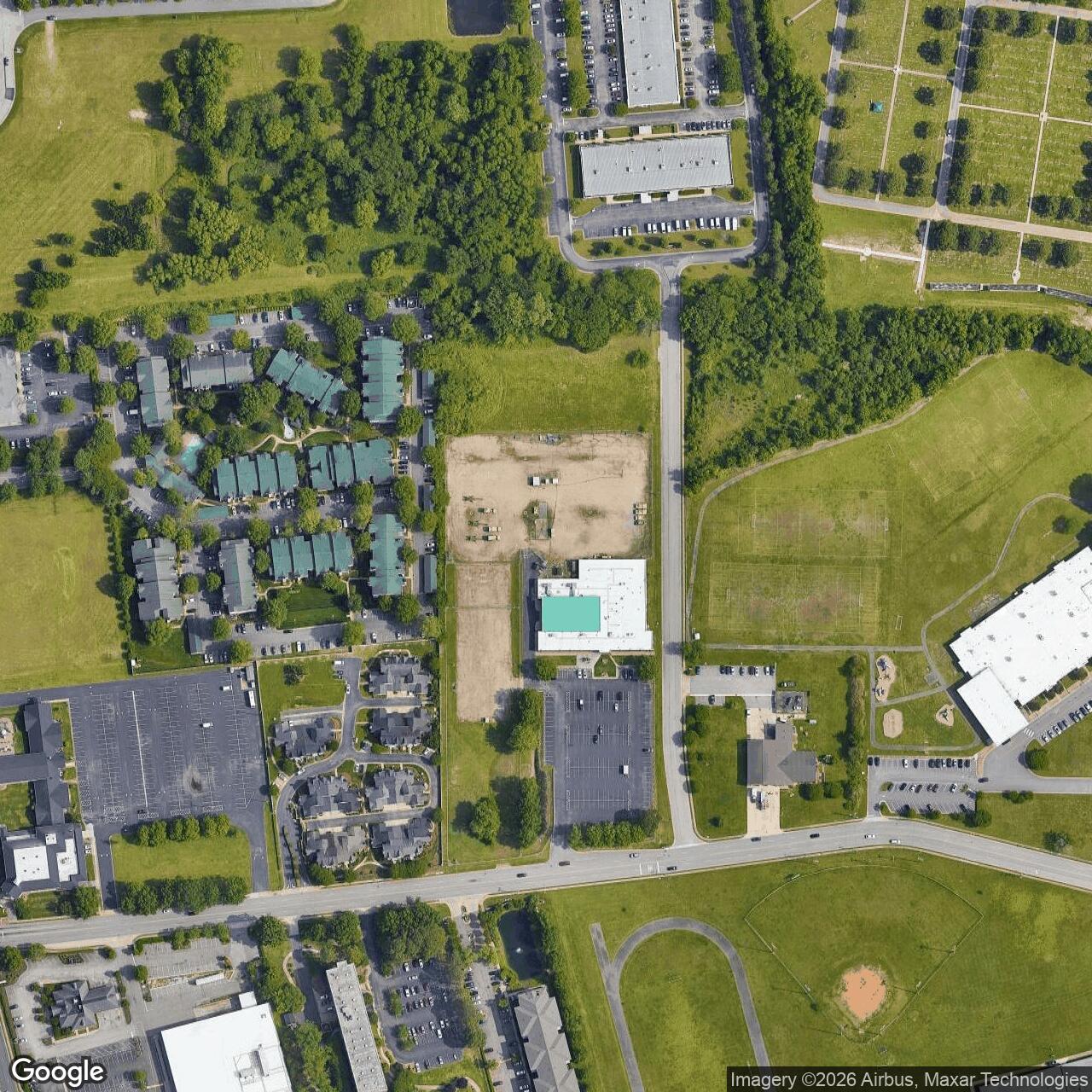
Nike Missile Site N-93 IFC, Hampton Virginia
Longitude: -76.3882203219825
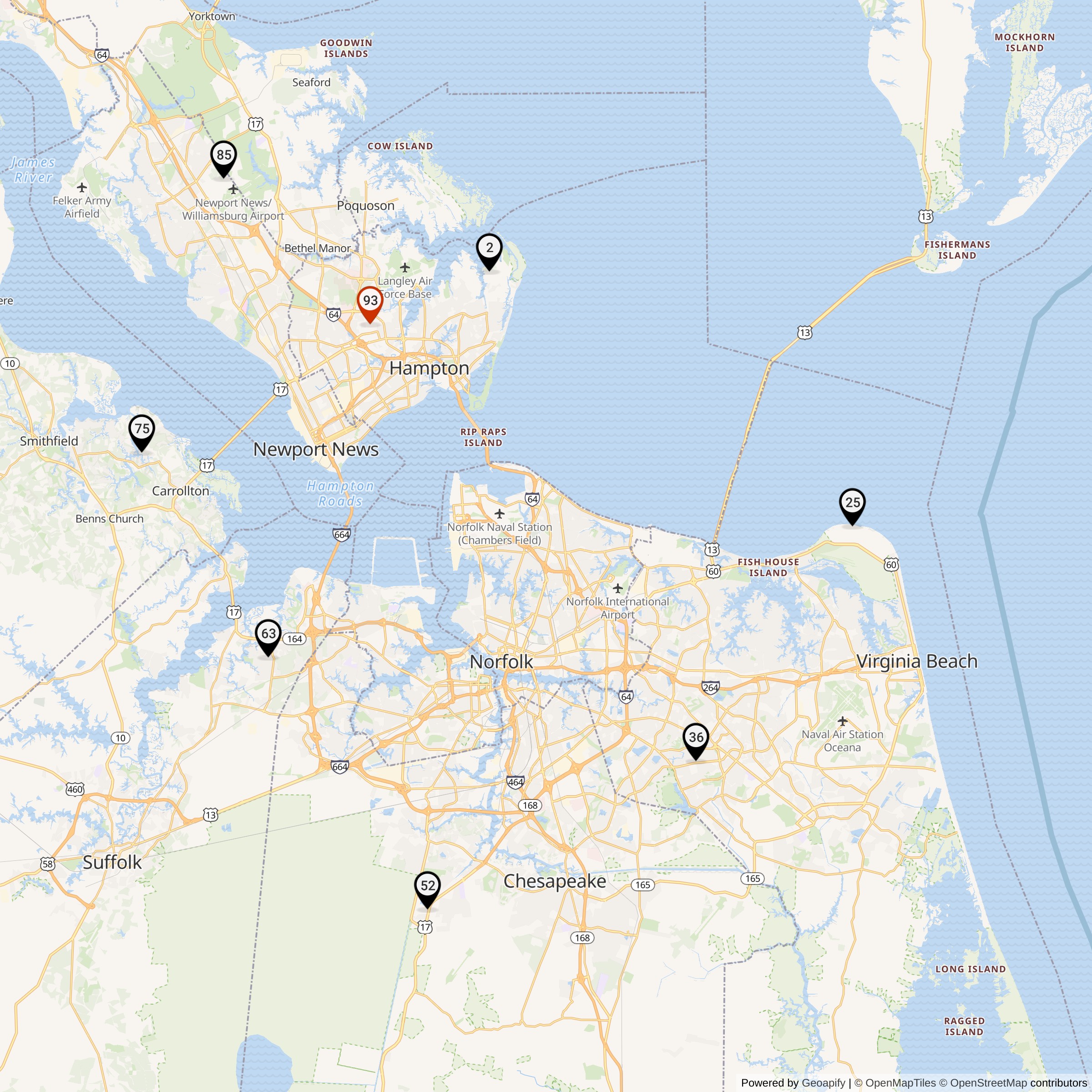
This location was part of the Norfolk Defense Area
Site ID: N-93
This site controlled the missiles at the Launch Area located here.
Site Role: IFC
A typical Nike air defense site consisted of two separate parcels of land. One area was known as the Integrated Fire Control (IFC) Area. This site contained the Nike system's ground-based radar and computer systems designed to detect and track hostile aircraft, and to guide the missiles to their targets.
The second parcel of land was known as the Launcher Area. At the launcher area, Nike missiles were stored horizontally within heavily constructed underground missile magazines. A large, missile elevator brought the Nikes to the surface of the site where they would be pushed across twin steel rails to one of four satellite launchers.
Elaboration on how Nike worked here.
Current site status: U.S. Army Reserve property
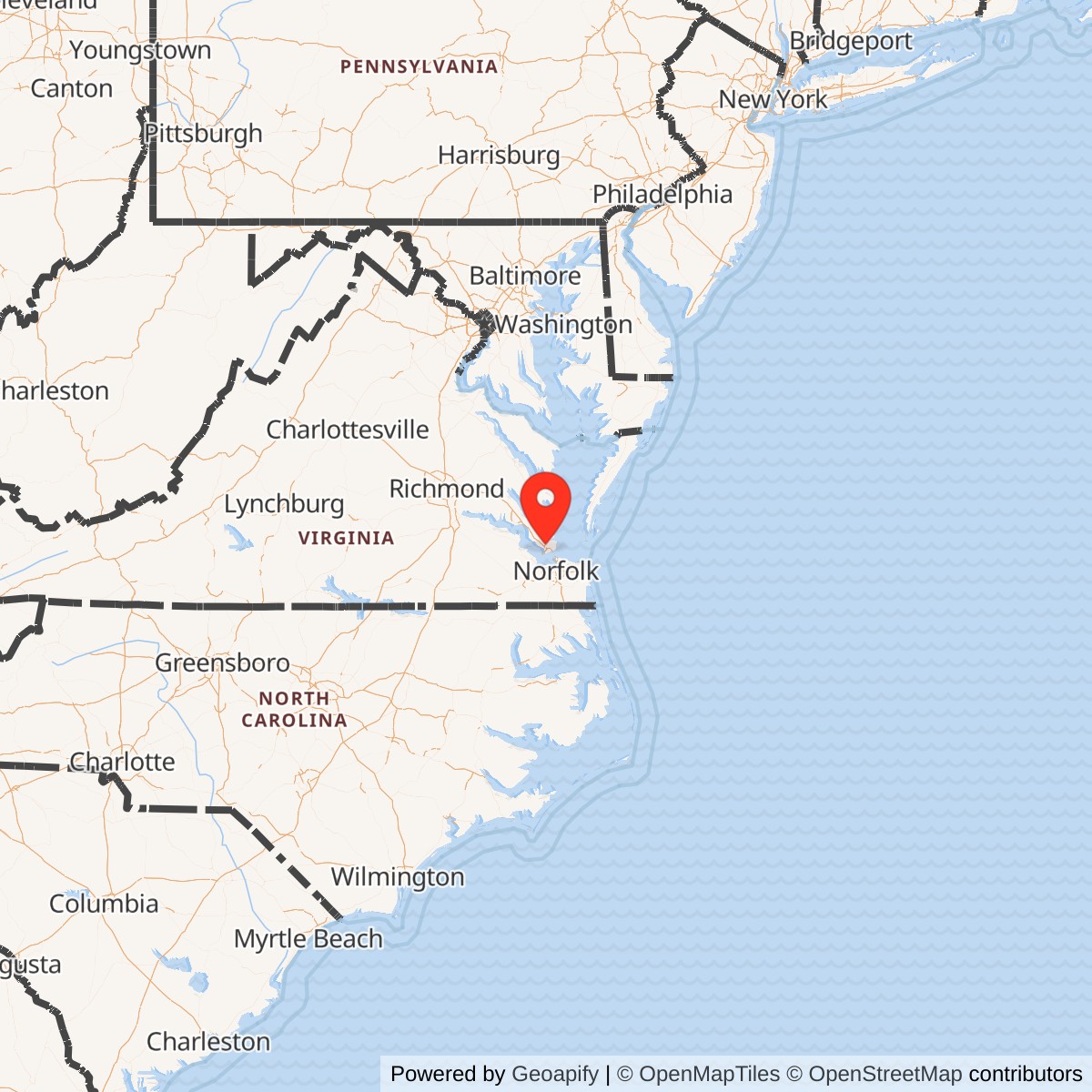
Nike Missile Site N-93 was a U.S. Army Nike Ajax air-defense missile battery in the Norfolk Defense Area of Virginia. It was located in the Hampton/Spiegelville area of Hampton, Virginia, on the north side of the Hampton Roads region. The site was part of the ring of Nike batteries built in the mid-1950s to defend the concentration of naval, air, shipbuilding, port, and military facilities around Hampton Roads.
It was an Ajax-only Nike site, active from 1955 to 1963, and it was not one of the Norfolk-area sites converted to Nike Hercules. Some sources identify the site as N-93/later N-99. N-93 is treated as the controlling designation because the site-coordinate sources, site pages, and EPA site profile all use N-93 for the Hampton/Spiegelville location.
Location and Site Setting
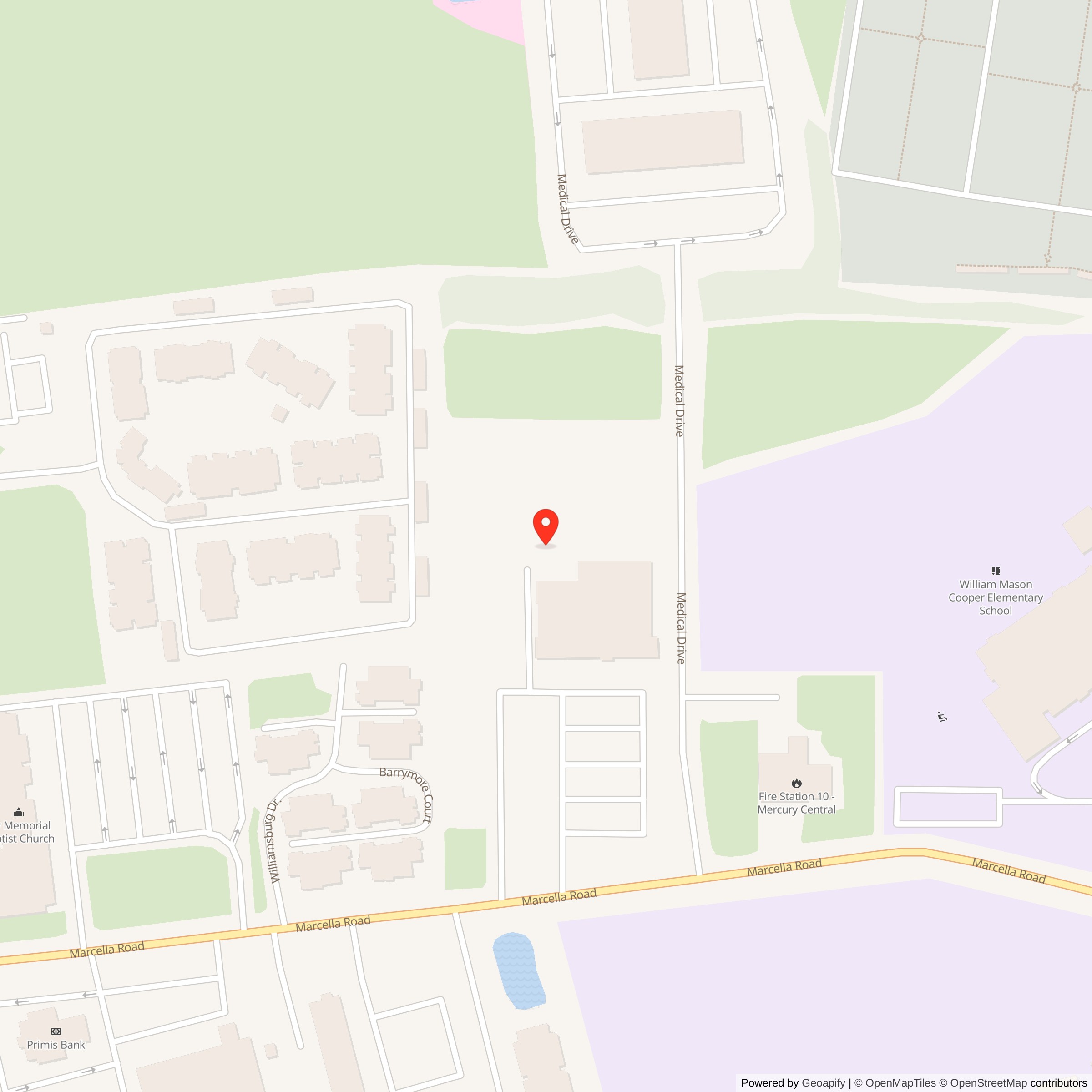
N-93 stood in the western part of Hampton, Virginia, in the Hampton/Spiegelville area. The control site was north of Marcella Road and east of Virginia Route 172. The launch area was south of Hampton Roads Parkway and east of Caldwell Drive. In later environmental records, the launch property is associated with 1401 Caldwell Drive, Hampton, Virginia 23666, under the EPA site name "Butler Farms Nike Missile N-93."The location made sense within the Norfolk Defense Area. The Army did not place Nike batteries directly on the defended target. Instead, it distributed them around the perimeter of the defended region so that incoming bomber formations could be detected, tracked, and engaged before reaching the port, shipyard, fleet, airfield, and command facilities around Hampton Roads. N-93's position on the Hampton side of the water approaches gave the Army coverage of the northern and northwestern approach sector of the Tidewater defense network.
The site was not a single compact base. Like most Nike installations, it was split into a launch area and an IFC area. The launch area stored and launched the missiles. The IFC area contained the radars, tracking equipment, computer equipment, plotting equipment, administrative functions, and tactical control elements needed to guide the Nike Ajax missile to its target. The physical separation between the two areas reduced radio-frequency interference and allowed the radars to sit where they had a clear view of the defended airspace while the launch magazines occupied a site with enough land for the underground storage and launching system.
Norfolk Defense Area Context
The Norfolk Defense Area was one of the most strategically important Nike defense areas on the East Coast because Hampton Roads contained an extraordinary concentration of military targets. Naval Station Norfolk, the broader Norfolk naval complex, Langley Air Force Base, the Newport News shipbuilding area, port facilities, Army terminals, and other military installations all lay within the region that the Nike network was designed to protect.
The mid-1950s Norfolk Nike deployment included the following sites:
N-02, Fox Hill
N-20, Ocean View, temporary site
N-25 / later N-29, Fort Story
N-36 / later N-49, Kempsville
N-52 / later N-59, Deep Creek / Portsmouth
N-63 / later N-69, Nansemond / Suffolk
N-75, Smithfield / Carrollton
N-85 / later N-97, Denbigh / Patrick Henry
N-93 / later N-99, Hampton / Spiegelville
Headquarters and command facilities associated with the defense area were located at Fort Monroe, Ballantine School in Norfolk, Reedsville / South Norfolk, Craddock Branch / Portsmouth, and Newport News. A BIRDIE command-and-control site operated from the Hampton Roads Army Terminal. BIRDIE, or Battery Integration and Radar Display Equipment, helped coordinate the fire of multiple Nike batteries so that the region's batteries did not duplicate engagements or interfere with friendly aircraft.
The Norfolk Defense Area eventually included both Ajax and Hercules sites, but the Hercules conversion was selective. N-25, N-52, and N-85 were modernized to fire Nike Hercules. N-52 and N-85 remained active until April 1974. N-93 did not receive that modernization. Its short life and Ajax-only missile configuration place it in the earlier phase of the Norfolk Nike network.
Nike Ajax Mission and Equipment
N-93 was an Ajax-era site. Its missile type is commonly listed as "Nike 1B, 2C/30A/12L-A." This code indicates an Ajax battery with one B-type magazine and two C-type magazines, a nominal missile allowance of 30 Ajax missiles, and 12 Ajax launchers. The final "A" identifies the system as Nike Ajax rather than Nike Hercules.Nike Ajax was the Army's first operational guided surface-to-air missile. It was designed to intercept high-flying jet bomber formations before they could deliver nuclear or conventional weapons against American cities, industries, and military bases. The system depended on a closely integrated radar-and-computer fire-control process. The acquisition radar searched the defended airspace. Once a target was detected, tracking radars followed both the target and the missile. The fire-control computer calculated the interception point and sent guidance commands to steer the missile until detonation.
At N-93, the IFC area would have contained the target-tracking and missile-tracking radars, acquisition radar equipment, control vans or buildings, radar towers, generator and support facilities, operations areas, and personnel facilities. The launch area would have contained underground missile magazines, elevator-launchers, launch control structures, assembly and checkout functions, security fencing, ready storage, and supporting utility buildings. Because Ajax used a liquid-fuel sustainer motor and solid-fuel booster, the launch area also required safety procedures for missile fueling, handling, and warhead operations.
The site's mission was constant alert rather than combat launch. Nike batteries trained to detect, identify, track, and engage hostile aircraft, but their operational value in peacetime was deterrent and defensive. The soldiers at N-93 maintained the missiles and radars, conducted readiness drills, kept equipment functioning in a salt-air coastal environment, and integrated their battery operations with the broader Hampton Roads air-defense command system.
Construction and Activation
N-93 was part of the Nike site wave built in the mid-1950s after the Korean War and after the Soviet Union's atomic test made continental air defense a national priority. The Norfolk area sites were intended to protect one of the nation's densest military regions from long-range bomber attack. N-93's documented activation year is 1955.The site's launch and IFC areas were almost certainly designed according to the standard dispersed Nike pattern. The IFC required open lines of sight and clear radar operation. The launcher required enough land for the buried magazines, elevators, launch rails, missile handling, fueling, warhead security, motor pool functions, and exclusion/security space.
Operational History
1955 marked the beginning of N-93's operational life. By that time, Nike Ajax batteries were being emplaced around major American defense areas. At Hampton/Spiegelville, the site filled a northern Hampton sector in the Norfolk Defense Area.The site operated in a region where air-defense planning was especially complicated. The defended area contained major Navy, Army, and Air Force installations, but it also contained heavy civil and military air traffic. This made coordination essential. Nike batteries had to fit into an air-defense system that included radars, command posts, fighter-interceptor forces, aircraft-control procedures, and identification requirements. The Hampton Roads BIRDIE site helped integrate the Army missile batteries into the regional defense system.
N-93's tactical purpose was to stop hostile bomber aircraft before they reached the naval base, shipyards, ports, air stations, and associated military facilities. From the Hampton side of the defense area, it contributed to coverage of approaches from the Chesapeake Bay, the lower peninsula, and the northern approaches into the Tidewater region.
The site remained active through 1963. By that time, the national air-defense picture was changing. The Soviet bomber threat still existed, but the emergence of intercontinental ballistic missiles and submarine-launched ballistic missiles had made fixed bomber-defense sites less central to national defense strategy. At the same time, the Army modernized selected Nike locations to fire the nuclear-capable Nike Hercules missile and closed many Ajax-only sites that were not chosen for conversion. In the Norfolk Defense Area, N-93 was one of the Ajax-only sites that closed rather than converting to Hercules.
Deactivation and Why N-93 Closed
N-93 deactivated in 1963. The site's closure fits the larger pattern of early Ajax-only Nike reductions. Nike Ajax was a first-generation system. It used liquid-fuel components, required intensive maintenance, and had more limited range and altitude performance than Nike Hercules. Hercules could carry either conventional or nuclear warheads and could engage targets at longer ranges and higher altitudes. As the Army shifted toward Hercules in selected defense sectors, some Ajax sites were upgraded while others were closed.N-93 fell into the second category. It did not become a Hercules site. The Norfolk Defense Area retained N-25, N-52, and N-85 as Hercules-capable positions, while other Ajax positions were phased out. N-63 continued as an Ajax site until November 1964, reportedly making it the last operational Nike Ajax site in the continental United States. N-93 had already closed by then.
Post-Closure Reuse and Current Condition
After deactivation, the N-93 properties entered a typical post-Nike pattern of local, reserve, or institutional reuse. The control site has been reported as a U.S. Army Reserve property associated with the 359th Transportation Company and scheduled for demolition in older site notes. The launch area has been reported in site inventories as a U.S. Army Reserve center associated with the 302d Transportation Company, and later field notes report that Hampton's school system owned and maintained the property but that it appeared vacant and minimally maintained at the time of a 2013 visit.The launch-area remains are important because the site was not completely erased. Later site descriptions indicate that the magazine area remained visible and that the concrete was badly deteriorated. Satellite imagery of the launch site shows the former magazine slab pattern and launch-area outline visible from aerial view. The IFC imagery shows a later reused compound rather than an intact radar hill with complete equipment, but the location remains traceable.
Chronology
- 1955 N-93 entered service as a Nike Ajax site in the Norfolk Defense Area.
- 1955 The site operated as the Hampton/Spiegelville sector battery, with a separate IFC area north of Marcella Road/east of VA 172 and a launch area south of Hampton Roads Parkway/east of Caldwell Drive.
- Mid-1950s The broader Norfolk Defense Area included Nike batteries at Fox Hill, Ocean View, Fort Story, Kempsville, Deep Creek/Portsmouth, Nansemond/Suffolk, Smithfield/Carrollton, Denbigh/Patrick Henry, and Hampton/Spiegelville.
- Late 1950s Norfolk-area Nike command and control was integrated through a BIRDIE facility at the Hampton Roads Army Terminal.
- Late 1950s-early 1960s Norfolk sites N-25, N-52, and N-85 were selected for Nike Hercules modernization; N-93 remained an Ajax-only site.
- 1963 N-93 was deactivated.
- 1964 Norfolk site N-63 remained active until November 1964 and became the last operating Nike Ajax site in the continental United States; N-93 had already closed.
- Post-1963 The N-93 properties were reused for Army Reserve, school-system, or local support purposes according to later site notes and environmental records.
- 2013 A field note reported the launch area surrounded by housing and commercial development, gated and locked, with intact buildings and guard shacks but minimal apparent use.
- Current record EPA lists the launch-related property as Butler Farms Nike Missile N-93, 1401 Caldwell Drive, Hampton, Virginia 23666, EPA ID VAN000305050, not on the National Priorities List.
List of all Nike Installations in Virginia