
Willows Municipal Airport / Willows Auxiliary Field / Willows-Glenn County Airport, California
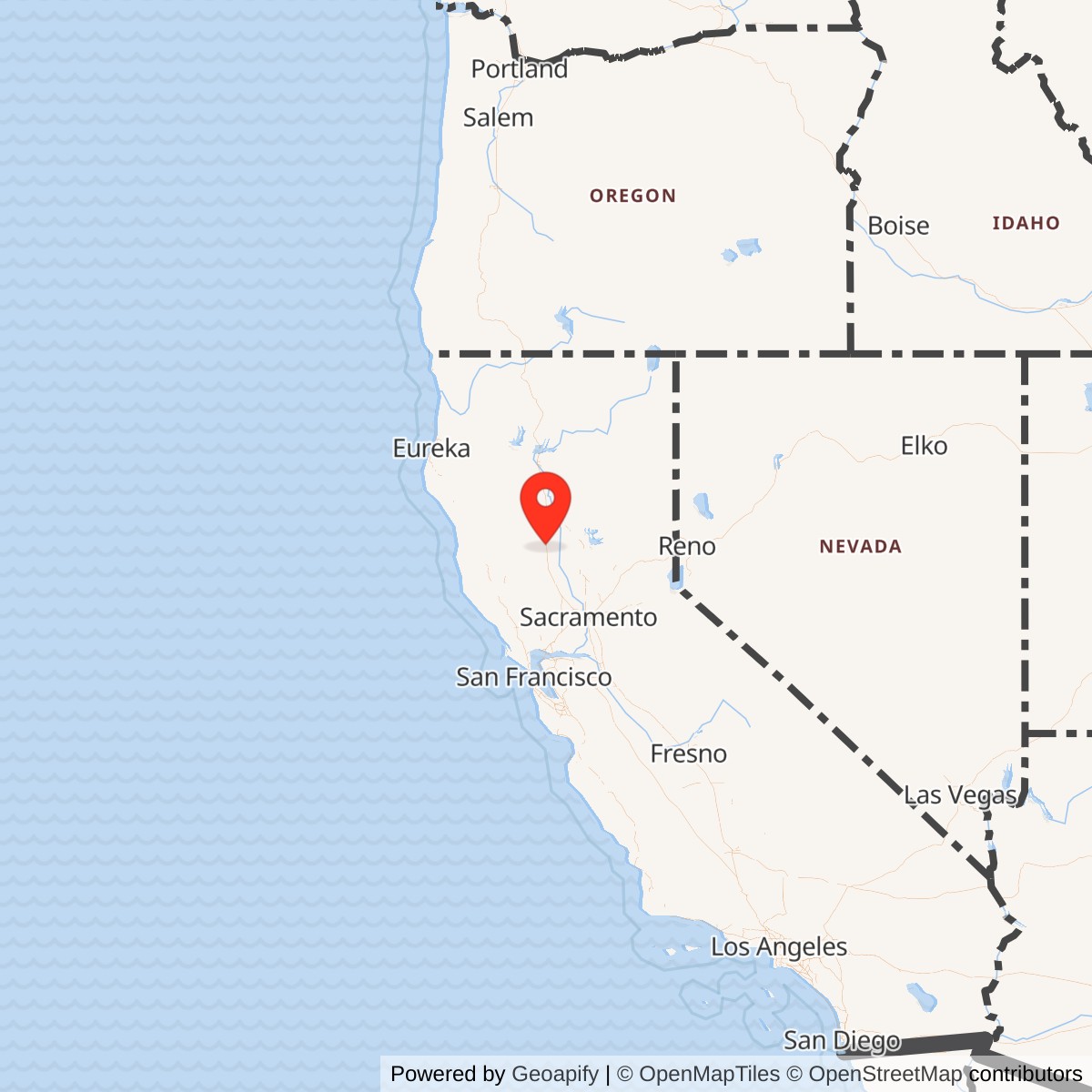
Longitude: -122.2173330
Airport ICAO ID: KWLW
Official Base Website: Willows-Glenn County Airport
Current Role: Active Willows-Glenn County Airport, a county-owned general-aviation and agricultural-aviation airport with two asphalt runways, historic beacon tower and hangars, emergency functions, and nationally significant aerial-firefighting heritage
Willows was not built as one of Chico Army Air Field's numbered square landing mats. It was already a mature community airport, an airway beacon station, an agricultural-aviation center, and one of the busiest non-airline fields in Northern California before the Army arrived. That difference shaped everything that followed.
The airport began in 1928 as a Department of Commerce Intermediate Landing Field on the San Francisco-to-Seattle lighted airway. Local government and civic organizations then transformed it into a public airport. Agricultural pilots used it to seed rice and apply fertilizer. Air shows drew crowds during the Depression. Public-works programs improved the runways and hangars. By the time the Army Air Forces assumed control in April 1942, Willows already possessed pilots, mechanics, aviation businesses, community support, navigational lighting, and a recently constructed military-length runway.
Its wartime names included Willows Airport, Willows Municipal Airport, Willows Auxiliary Field, Willows Auxiliary Landing Field, and Willows Army Auxiliary Airfield. The military site was not assigned a numbered Chico auxiliary designation. It served as an additional training and emergency field associated most clearly in official documentation with Chico Army Air Forces Field. Some secondary summaries also connect it with Hamilton Field activity, but the strongest direct source record identifies Chico as its principal parent training relationship.
The Army leased the airport and approximately 318.2 surrounding acres from Glenn County in 1942. The lease reportedly cost one dollar per year and was renewable annually. The Army controlled the airport from April 1942 through 1945, declared it excess on July 24, 1944, and terminated the lease on June 11, 1945. Glenn County accepted return of the airport in November 1945 together with approximately $500,000 in wartime repairs and improvements.
Willows also holds a place in the history of the Doolittle Raid. During the final days of March 1942, before the formal Army takeover, B-25B Mitchell crews used the field for final short-takeoff practice after their aircraft underwent inspection and modification at the Sacramento Air Depot at McClellan Field. Rear Admiral Henry L. Miller later recalled bringing aircraft and crews to Willows to practice takeoffs before the bombers flew to Naval Air Station Alameda and embarked aboard USS Hornet. The training was a small but genuine link in the chain leading to the April 18, 1942 strike on Japan.
The airport's postwar history became nearly as important as its wartime service. In 1955 and 1956, Willows pilots, agricultural aircraft, and U.S. Forest Service personnel developed the first operational air-tanker program. The Mendocino Air Tanker Squad used modified Boeing-Stearman and Navy N3N biplanes to drop water and fire retardant. Willows became a foundational site in the history of modern aerial firefighting.
The present Willows-Glenn County Airport is an active county-owned general-aviation airport. It retains two asphalt runways, historic hangars, an early airway-beacon tower, agricultural-aviation businesses, and the physical layout shaped by prewar civil aviation, Army wartime expansion, and postwar firefighting. The airport was listed in the National Register of Historic Places in 2023 for its transportation, military, and aerial-firefighting significance.
Origins as an Airway Landing Field
The first Willows aviation field was a grassy landing area near the location later occupied by Glenn Medical Center. The present airport west of town developed from a different and more ambitious project.
During the 1920s, the federal government built a national system of lighted airways to guide mail and passenger aircraft. Rotating beacons, course lights, concrete directional arrows, emergency landing fields, and intermediate stations allowed pilots to follow routes at night and during marginal visibility before radio navigation became universal.
Willows lay on the San Francisco-to-Seattle airway, part of the Pacific Coast air-mail corridor. The Department of Commerce Airways Division selected a location west of Willows as an Intermediate Landing Field.
In 1928, the City of Willows and Glenn County helped make private parcels available for airport development. Much of the land had been owned by the Glenn-Colusa Irrigation District. Local government turned the project over to an airport advisory committee associated with the Veterans of Foreign Wars and the Achaean Club.
The federal government installed a 51-foot steel beacon tower, rotating light, course lights, an equipment shed, and a directional arrow. The field initially had a natural sod landing area rather than the paved runways familiar today.
The intermediate field was identified within the airway system as a landing and navigational station. Aircraft could use it in emergencies, while the beacon guided traffic moving north and south along the Pacific Coast route.
The tower survives as one of the airport's most important artifacts. It connects Willows to the era when pilots navigated by following chains of lights across the landscape.
Community Airport Development
Local residents did not regard the federal field as merely an emergency strip.
The Northern California Air Show Association formed in 1931 to raise money and support airport ownership. Air shows became annual civic events. They combined flying demonstrations, competitions, visiting aircraft, entertainment, and fundraising.
Local organizations eventually acquired or managed the airport when the Department of Commerce no longer required it solely as an intermediate field. The airport opened to broader public use and was formally dedicated as a community airport during the early 1930s.
Willows developed an aviation culture unusual for a small agricultural county seat. Pilots, mechanics, business owners, civic leaders, farmers, government officials, and spectators all had a stake in the field.
The airport became one of the busiest Northern California fields outside those offering scheduled passenger service. Agricultural aviation was a major reason.
Floyd Nolta and Agricultural Aviation
Floyd H. Nolta was central to the early airport.
Nolta served as airport manager, pilot, mechanic, innovator, and civic advocate. He had worked in military aviation during World War I and knew James Doolittle from their service at Rockwell Field in California.
The Sacramento Valley rice industry faced a labor-intensive problem. Rice seed and fertilizer had to be spread across large fields that were then flooded. Ground equipment was slow and could damage prepared soil.
In 1928, Nolta developed equipment that allowed seed and fertilizer to be released from an aircraft. A hopper and controlled opening spread material across the field while the airplane flew low over the prepared ground.
Aerial seeding reduced time and labor. It allowed fields to be flooded before seed was dropped, limiting losses to birds and reducing the need for ground equipment.
Nolta's work helped establish agricultural aviation as a major local industry. Other operators joined Willows Flying Service and developed crop-seeding, fertilizing, spraying, and pest-control businesses.
The airport's agricultural role sustained it during the Great Depression when many general-aviation fields struggled.
Agricultural pilots also developed skills that later influenced aerial firefighting. They understood low-level flight, wind, terrain, payload release, rapid loading, and operation from rural airports.
Depression-Era Improvements
Federal public-works programs improved Willows Airport during the 1930s.
The Civil Works Administration provided approximately $5,000 in 1934 for airport work. The Public Works Administration later supplied approximately $10,819 for hangar and runway improvements.
The Civil Aeronautics Administration and predecessor agencies improved drainage, runway surfaces, lighting, and navigation facilities.
Drainage was especially important because winter flooding had threatened the airport's continued use. The federal government helped construct a large siphon beneath the Glenn-Colusa Irrigation Canal to improve water movement.
The airport's development represented a partnership among federal aviation programs, Glenn County, the City of Willows, local service organizations, pilots, and farmers.
By the late 1930s, Willows was no longer a primitive grass emergency field. It had become an established civil airport with a strong regional reputation.
Expansion Before Pearl Harbor
The military transformation began before the United States entered World War II.
In 1940, the City of Willows deeded its portion of the airport property to Glenn County, consolidating public ownership.
An additional 125 acres were added to support expansion.
The Army Air Forces planned a new runway in 1941 in preparation for using the airport as an auxiliary field. Contemporary reporting described the proposed runway as approximately 5,000 feet long, which would have made it among the longest in Northern California at the time.
In October 1941, the Sacramento construction firm A. Teichert and Sons received an Army contract of approximately $140,000 to build the runway.
Runway 13-31 was under construction when Japan attacked Pearl Harbor on December 7, 1941. Work continued through the winter.
The Army-built runway changed the airport's capabilities. It could accept heavier and faster military aircraft, provide an alternate landing surface during crosswinds, and support more intensive operations.
The runway also gave Willows a role in the secret preparations for the Doolittle Raid.
Doolittle Raid Training
The Doolittle Raid was conceived as an early American response to Japan following Pearl Harbor.
The plan called for North American B-25B Mitchell medium bombers to launch from the aircraft carrier USS Hornet, strike targets in Japan, and continue toward landing fields in China.
Army pilots were not normally trained to launch medium bombers from an aircraft carrier. The crews needed short-takeoff instruction and repeated practice.
Training began in Florida under Lieutenant Henry L. Miller, a Navy pilot who taught the Army crews carrier-style procedures.
In late March 1942, the surviving mission aircraft flew to McClellan Field and the Sacramento Air Depot for inspection, maintenance, and final modifications.
Willows offered a useful location for additional short-takeoff work. It was close enough to Sacramento for aircraft to shuttle between the depot and training field, but remote enough to reduce public attention. The recently improved runway and open approaches suited repeated B-25 operations.
Rear Admiral Miller later recalled that as aircraft emerged from depot inspection, he took them and their crews to Willows for takeoff practice. He remembered Doolittle saying they would finish at Willows and then fly to Alameda to go aboard the carrier.
Published raid summaries identify additional training by five crews on March 30 and 31, 1942. Sixteen bombers then moved to Naval Air Station Alameda.
Willows was not the main Doolittle training base. Most specialized training occurred at Eglin Field and its auxiliaries in Florida. Willows was the final California check, a place to confirm short-field performance after depot work and before carrier loading.
The distinction matters. Willows should neither be omitted nor exaggerated. It contributed a brief but operationally meaningful stage between McClellan and Alameda.
Floyd Nolta's personal connection to Doolittle may have helped make the airport available. Their World War I association and later friendship gave Doolittle confidence in the field and local aviation community.
The raid launched from USS Hornet on April 18, 1942. The physical damage in Japan was limited, but the psychological and strategic impact was considerable. It demonstrated that the Japanese home islands could be reached and raised American morale after months of setbacks.
The Willows sessions linked a small agricultural airport to one of the most famous American air operations of the war.
Formal Army Takeover
The Doolittle work occurred just before the formal government takeover.
In April 1942, the Army assumed control of Willows Airport. Land records and later airfield summaries identify an April 25 lease involving approximately 318.2 acres.
Glenn County leased the airport to the federal government for one dollar per year on a renewable basis.
During military control, the airway beacon displayed the light sequence used to identify a military field rather than a civilian airport.
The Army Air Forces used Willows as an auxiliary landing field for pilot trainees based at Chico Army Air Forces Field.
The airport also served as a training base for ordnance and quartermaster personnel according to the National Register documentation. This mission broadened the field beyond flight operations.
Willows did not become a full Army air base comparable to Chico. No evidence establishes a large permanent cantonment, independent flying school, major depot, combat group headquarters, or separately assigned wing.
Its value came from the existing airport and its position within a regional training network.
Relationship to Chico Army Air Field
Chico Army Air Field was the primary wartime training installation associated with Willows.
Chico began basic-flight instruction in 1942. Cadets trained principally in the Vultee BT-13 and related aircraft before moving to advanced schools.
The school relied on outlying fields to reduce congestion and provide emergency landing options.
Chico's numbered auxiliary network included Orland, Kirkwood, Vina, Campbell, and Oroville. These fields were generally constructed or adapted specifically for the training program and were often identified by number.
Willows differed because it was an existing public airport outside the numbered sequence.
Its two-runway layout provided a more developed alternative than the simple square mats at several numbered auxiliaries.
A student or instructor could use Willows for practice landings, navigation, cross-country training, emergency recovery, or diversion from weather and congestion.
The airport's location west of Chico placed it within a broad training circuit across the Sacramento Valley.
Willows also had local aviation personnel and maintenance experience that could assist military operations even if the Army supplied its own duty crews and procedures.
The airport's role should be understood as supplementary. It extended Chico's operating area without duplicating the parent base.
Training and Emergency Mission
Auxiliary fields were essential to mass pilot production.
Basic flying required many takeoffs, approaches, landings, simulated emergencies, and navigation exercises. Concentrating all of that activity at one base increased accident risk and reduced training efficiency.
Willows allowed aircraft to spread across a wider area.
Its runways could accommodate basic trainers, liaison aircraft, transports, and other military traffic.
Emergency value was equally important. Mechanical failures, fuel problems, weather, navigational error, hard landings, and student mistakes were normal risks in wartime training.
A pilot unable to return to Chico could divert to Willows rather than attempt a forced landing in agricultural fields.
The field's civil origins made it readily identifiable. Its beacon, runway geometry, location near Willows, and relationship to roads and the Sacramento Valley helped pilots find it.
Unlike Kirkwood's large square mat, Willows used conventional crossing runways. Pilots had more directional options than at a single-runway airport but less all-direction flexibility than the square auxiliaries.
Ordnance and Quartermaster Training
The National Register nomination records that the Army used the airport as a training base for ordnance and quartermaster personnel.
Ordnance personnel maintained, inspected, stored, and handled weapons, ammunition, vehicles, and technical equipment.
Quartermaster personnel managed transportation, supply, fuel, clothing, food, field services, and other logistical functions.
The exact organizations assigned to Willows are not fully identified in the available public record. It would be misleading to invent a permanent unit roster.
The mission may have involved temporary classes, detachments, field exercises, vehicle operations, storage and handling practice, or support of the aviation field.
Willows offered open land, runways, roads, agricultural surroundings, and separation from the crowded Chico cantonment.
This ground-training role helps explain why the Army takeover involved more than simply making the runway available to pilots.
Military Facilities
The best-documented wartime improvement was the second asphalt runway built in 1941.
The Army also invested heavily in repair and improvement. When Glenn County accepted the airport's return in November 1945, county officials valued the retained work at approximately $500,000.
The surviving record does not provide a complete building-by-building inventory of wartime construction.
No evidence has been found for a major permanent barracks complex, hospital, base headquarters, aircraft depot, or extensive fuel system equivalent to those at Chico.
The airport likely relied on temporary or adapted facilities, duty detachments, and support from the parent command.
The wartime field included runways, lighting, beacon systems, aircraft operating areas, access roads, utilities, and whatever temporary support was necessary for training.
Later airport construction should not be mistaken for Army work. The major multi-plane hangars surviving today were built after the military period, beginning in 1947 and 1952.
The original 1928 beacon tower survived both military and civilian eras. During Army use, the light code identified the airport as military.
Aircraft and Operations
The B-25 Mitchell is the most famous aircraft associated with Willows because of the Doolittle training.
The regular auxiliary mission would more commonly have involved aircraft associated with Chico's training program, especially BT-13 basic trainers and other school, liaison, and support aircraft.
Transient aircraft could also use the field.
No evidence establishes that a B-25 bombardment group or permanent bomber unit was based at Willows.
The Doolittle aircraft were temporary visitors. Their crews came for a specific final-training purpose and continued to Alameda.
Similarly, Willows did not become a permanent fighter or transport station.
Its military importance came from access and flexibility rather than resident combat strength.
Assigned Units and Organizations
No fully independent permanent Army Air Forces wing, group, or squadron has been verified as based at Willows Auxiliary Field.
The principal documented parent relationship was Chico Army Air Forces Field and its basic-flying training system.
Army Air Forces training, ordnance, and quartermaster personnel used the site.
Duty detachments likely operated communications, field control, crash response, maintenance coordination, security, and support as required.
Doolittle Raid crews used the field temporarily in late March 1942 under the direction of Lieutenant Colonel James Doolittle and Lieutenant Henry L. Miller.
Glenn County remained the underlying public owner during the federal lease.
The absence of a resident unit does not reduce the site's status as a military installation. Auxiliary fields were defined by mission, control, and operational use, not by the size of their permanent garrison.
Regional Airfield Network
Willows belonged to a dense wartime aviation network.
Chico Army Air Field operated to the northeast.
Orland, Kirkwood, Vina, Campbell, and Oroville served as numbered Chico auxiliaries.
Hamilton Field, McClellan Field, Mather Field, Sacramento-area depots, Redding, Marysville, and other Northern California fields supported air defense, training, maintenance, ferrying, logistics, and emergency operations.
McClellan's Sacramento Air Depot handled the final Doolittle aircraft inspection before Willows.
Naval Air Station Alameda received the bombers before they boarded USS Hornet.
Willows sat at the intersection of this network and the civil airway system. It had been built to guide and protect peacetime air-mail traffic, then adapted to military training.
Its agricultural operators formed another network linking farms, rural landing strips, maintenance shops, and county airports.
After the war, those same skills and relationships helped create the aerial-firefighting network.
The Fourth Air Force and Closure Decision
Later military real-estate summaries state that Fourth Air Force declared Willows excess on July 24, 1944.
The timing matches the decline of Chico's original basic-flying mission.
By 1944, the Army Air Forces was reducing some pilot-training programs as the wartime manpower pipeline changed. Bases shifted missions, consolidated, or closed.
Chico moved from basic training to fighter replacement and other activities. Its square-mat auxiliaries no longer had the same demand.
Willows remained usable as an airport, but its dedicated military lease was no longer essential.
An excess declaration did not mean immediate abandonment. Administrative processing, residual use, maintenance, property accounting, and lease termination continued.
The federal lease ended on June 11, 1945.
Return to Glenn County
Glenn County faced an important choice when the Army returned the airport.
The original agreement contemplated return of the property in its prewar condition. The Army's improvements could therefore have been removed or altered.
In November 1945, the Glenn County Board of Supervisors voted to accept the airport and retain approximately $500,000 in repairs and improvements.
The decision preserved the wartime runway system and gave the county a much more capable airport than it had possessed before the war.
The military conversion therefore had a direct postwar infrastructure legacy.
The county resumed civil operation rather than allowing the airport to disappear.
New multi-plane hangars followed in 1947 and 1952. An administration building was constructed in 1952. Additional hangars and businesses developed later.
Veterans returning from military aviation contributed to the national expansion of general aviation.
Agricultural operators resumed and expanded their work.
Birth of the Air-Tanker Program
The airport's postwar firefighting history began with tragedy and experimentation.
On July 9, 1953, fifteen firefighters died in the Rattlesnake Fire in the Mendocino National Forest.
The disaster intensified efforts to find ways to attack fires more quickly and reduce risk to ground crews.
Joe Ely, fire-control officer for the Mendocino National Forest, believed agricultural pilots could adapt their aircraft and low-level application skills to drop water on wildfire.
Floyd Nolta and his brother Vance helped test the idea.
Floyd modified a Boeing-Stearman biplane with a tank and rapid-release opening.
During a demonstration, Vance flew low over a controlled burn and released water. The drop showed that an aircraft could deliver a useful load in a concentrated pattern.
On August 13, 1955, Vance Nolta made an operational freefall water drop on the Mendenhall Fire in the Mendocino National Forest.
The date appears in some local sources as August 12 and in the National Register nomination as August 13. The one-day difference reflects source variation, but the event itself is well documented.
During the winter of 1955-1956, the Forest Service supported creation of a formal squadron.
The Mendocino Air Tanker Squad included eight agricultural pilots from Willows and surrounding communities.
Aircraft included Boeing-Stearman Model 75 and Navy N3N biplanes modified to release water or retardant.
Willows Airport served as the principal base. Aircraft also staged from Corning, Red Bluff, and remote strips to shorten response time.
The program conducted successful operations on wildfires across California in 1956.
Drop testing at Willows helped establish useful combinations of height, speed, load, release pattern, and wind conditions.
Federal, state, county, and private organizations participated.
The experiments became the foundation of a worldwide aerial-firefighting industry.
From Auxiliary Field to Firefighting Center
The transition was not accidental.
Wartime aviation had produced large numbers of surplus aircraft, trained pilots, mechanics, and airfields.
Agricultural aviation had developed low-level application techniques.
The Forest Service needed faster methods of initial attack.
Willows brought those elements together.
Military trainers such as the Stearman and Navy N3N were rugged, available, and familiar to veteran pilots.
Former military bombers and transports later became heavy tankers. B-25 Mitchells, the same basic aircraft type associated with the 1942 raid training, returned to Willows in a completely different role as fire-retardant aircraft.
The airport became a place where peacetime public safety adapted wartime technology.
The Forest Service continued using Willows as a regional aerial-firefighting base until 1982 according to the National Register documentation.
Agricultural and firefighting aviation remained part of the airport's identity even after operations shifted elsewhere.
Current Airport
Willows-Glenn County Airport remains active and is owned by Glenn County.
The current federal identifier is WLW and the ICAO identifier is KWLW.
The FAA lists the airport approximately one mile west of Willows.
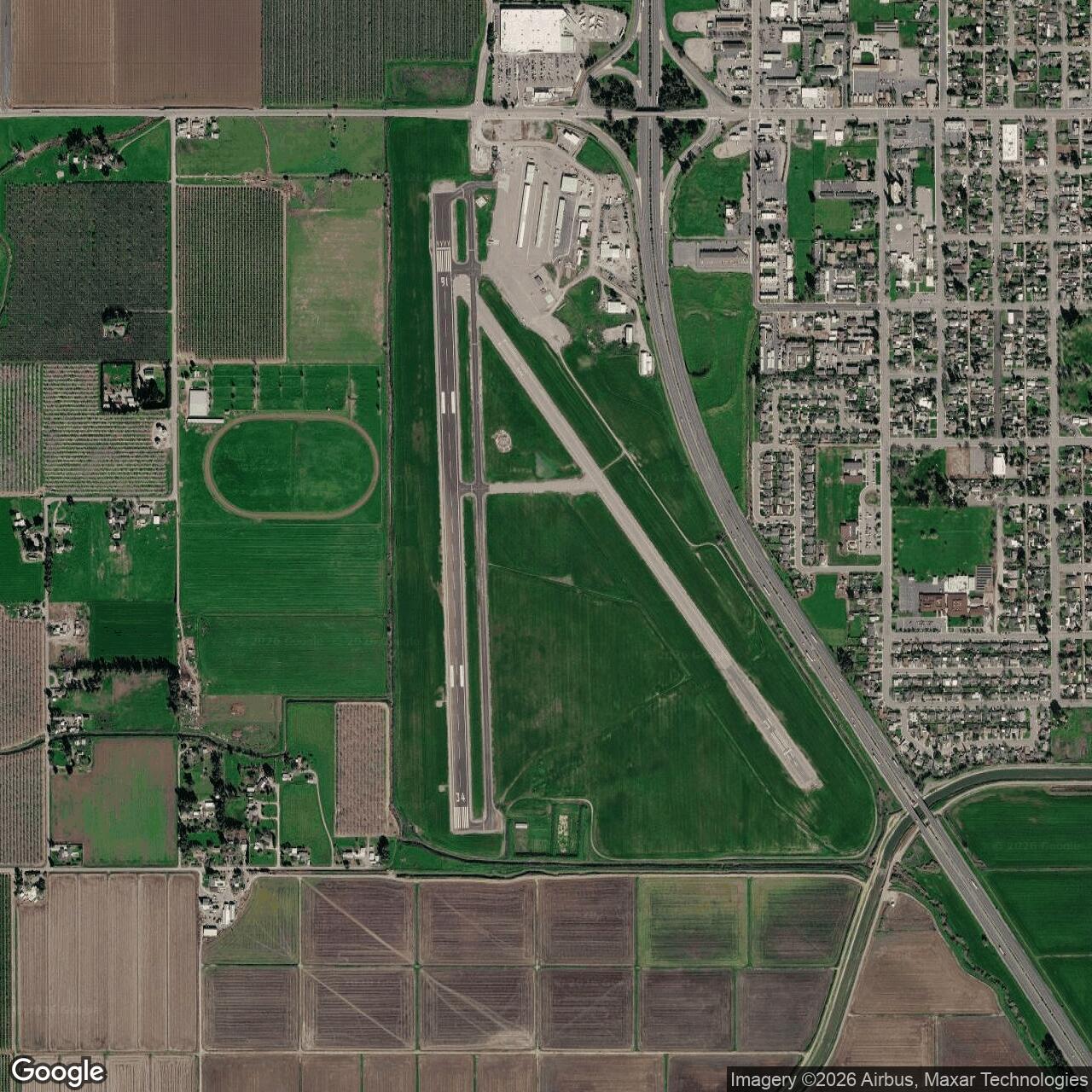
Runway 16-34 is an asphalt runway measuring approximately 4,125 by 100 feet.
Runway 13-31 is asphalt and measures approximately 3,788 by 60 feet.
The airport supports general aviation, agricultural application, emergency operations, private aircraft, aircraft services, and transient traffic.
It has no operating control tower.
Glenn County manages both Willows-Glenn County Airport and Orland-Haigh Field.
The airport remains surrounded partly by agricultural land, while Interstate 5 and urban development define its eastern side.
Modern development reduced or altered portions of the historic property, but the central aviation landscape survives.
The current 320-acre historic-district figure differs from the 254-acre figure used in the 2008 master plan and from the 318.2-acre wartime lease. These numbers describe different dates, boundaries, ownership calculations, and nomination areas.
Current Status
Willows Auxiliary Field is closed as a military installation.
Its physical successor, Willows-Glenn County Airport, remains active. The County of Glenn owns and operates the airport. The military-era second runway remains part of the current two-runway configuration. The historic airport district was listed in the National Register in 2023.
The 1928 beacon tower, postwar hangars, flight apron, runways, and airport businesses preserve the site's long aviation continuity.
Chronology
- 1928 The Department of Commerce selected and developed the present airport site west of Willows as an Intermediate Landing Field on the San Francisco-to-Seattle airway.
- 1928 The City of Willows and Glenn County helped make private land available for airport development.
- Late 1928 A 51-foot steel beacon tower, course lights, equipment facilities, and directional markings were installed.
- 1928 Floyd Nolta developed practical aircraft equipment for aerial seeding and fertilizing of rice.
- 1929-01-10 Published airport history records completion of the initial lighting system by this date.
- 1929-06 Willows held a major airport dedication celebration.
- 1931 The Northern California Air Show Association formed to raise funds and support airport ownership.
- 1932 The airport opened to broader civil aviation use after local service organizations assumed greater responsibility.
- 1933-09-09 Willows held a formal airport dedication and aviation celebration.
- 1934 The Civil Works Administration provided approximately $5,000 for airport improvement.
- 1935 Public Works Administration funding of approximately $10,819 supported hangar and runway improvements.
- Late 1930s Willows became one of Northern California's busiest airports outside the scheduled passenger-service fields.
- 1940 The City of Willows deeded its airport property interest to Glenn County.
- 1940 Approximately 125 acres were added for expansion.
- 1941-10 A. Teichert and Sons received an Army contract of approximately $140,000 for the new runway.
- 1941-12-07 Runway 13-31 was under construction when Japan attacked Pearl Harbor.
- Winter 1941-1942 The new Army-financed runway was completed.
- 1942-03-30 to 1942-03-31 Published raid histories identify final short-takeoff work at Willows by selected Doolittle Raid crews after Sacramento Air Depot inspections.
- 1942-03-31 Mission B-25s moved from the Sacramento and Willows area to Naval Air Station Alameda.
- 1942-04 The Army assumed control of Willows Airport.
- 1942-04-25 Later military real-estate histories identify this as the lease date for approximately 318.2 acres.
- 1942-1944 Willows served as an Army Air Forces auxiliary landing field for Chico pilot trainees and as a training location for ordnance and quartermaster personnel.
- 1944-07-24 Fourth Air Force declared the field excess to military needs.
- 1945-06-11 The federal lease was terminated.
- 1945-11 Glenn County voted to accept return of the airport and retain approximately $500,000 in Army repairs and improvements.
- 1947 A fifteen-plane hangar was constructed, beginning major postwar airport expansion.
- 1952 A second large hangar and an airport administration building were completed.
- 1953-07-09 Fifteen firefighters died in the Rattlesnake Fire, helping motivate development of safer and faster wildfire attack methods.
- 1955 Floyd and Vance Nolta demonstrated an aircraft water-drop system using a modified Boeing-Stearman.
- 1955-08-13 The National Register nomination identifies Vance Nolta's Mendenhall Fire mission as the first operational freefall water drop from an aircraft; some local histories give August 12.
- 1956 Eight agricultural pilots formed the Mendocino Air Tanker Squad based principally at Willows.
- 1956 Successful wildfire operations and controlled drop tests established practical air-tanker procedures.
- Late 1950s Larger aircraft joined the aerial-firefighting system, including converted military bombers and transports.
- 1982 The National Register nomination identifies the end of Willows's period as a principal regional U.S. Forest Service air-tanker base.
- 2008-08-19 Glenn County adopted the airport master plan used for modern planning and historical documentation.
- 2023-10-06 The National Register listing process recorded Willows-Glenn County Airport as a historic property.
- Present Willows-Glenn County Airport remains an active county-owned general-aviation and agricultural-aviation airport with identifiers WLW and KWLW.
Information sources (7)
- PDFGlenn County, Willows-Glenn County Airport Master Plan
adopted August 19, 2008
- PDFCalifornia Office of Historic Preservation
Willows-Glenn County Airport National Register nomination
- WEBCalifornia Office of Historic Preservation
2023 Actions Taken
- WEBFederal Aviation Administration
Chart Supplement Southwest, Willows/Glenn County WLW (KWLW)
- WEBFederal Aviation Administration
Willows/Glenn County weather camera and airport coordinates
- WEBGlenn County
Airport Advisory Committee materials
- WEBGlenn County
Current airport property and lease documents