Nike Missile Site D-16 IFC, Selfridge AFB Michigan
Longitude: -82.8193611426828
This location was part of the Detroit Defense Area
Site ID: D-16
This site controlled the missiles at the Launch Area located here.
Site Role: IFC
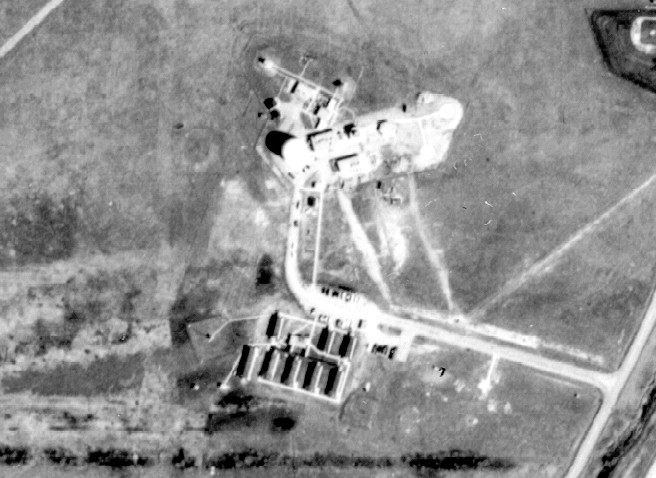
A typical Nike air defense site consisted of two separate parcels of land. One area was known as the Integrated Fire Control (IFC) Area. This site contained the Nike system's ground-based radar and computer systems designed to detect and track hostile aircraft, and to guide the missiles to their targets.
The second parcel of land was known as the Launcher Area. At the launcher area, Nike missiles were stored horizontally within heavily constructed underground missile magazines. A large, missile elevator brought the Nikes to the surface of the site where they would be pushed across twin steel rails to one of four satellite launchers.
Elaboration on how Nike worked here.
Missile Type: Ajax/Hercules
The Nike Ajax was the first in the Army's family of guided missiles, and the world's first operational, guided, surface-to-air missile system. Nike Ajax had a burnout speed of Mach 2.3, a range of 25-30 miles, and a ceiling of 65,000 feet.
Designed to carry either nuclear and/or high-explosive warheads, the Nike Hercules missile could attack supersonic aircraft operating at altitudes in excess of 150,000 feet and at a range of more than 87 miles.
Battery Type: single
Current site status: partially intact
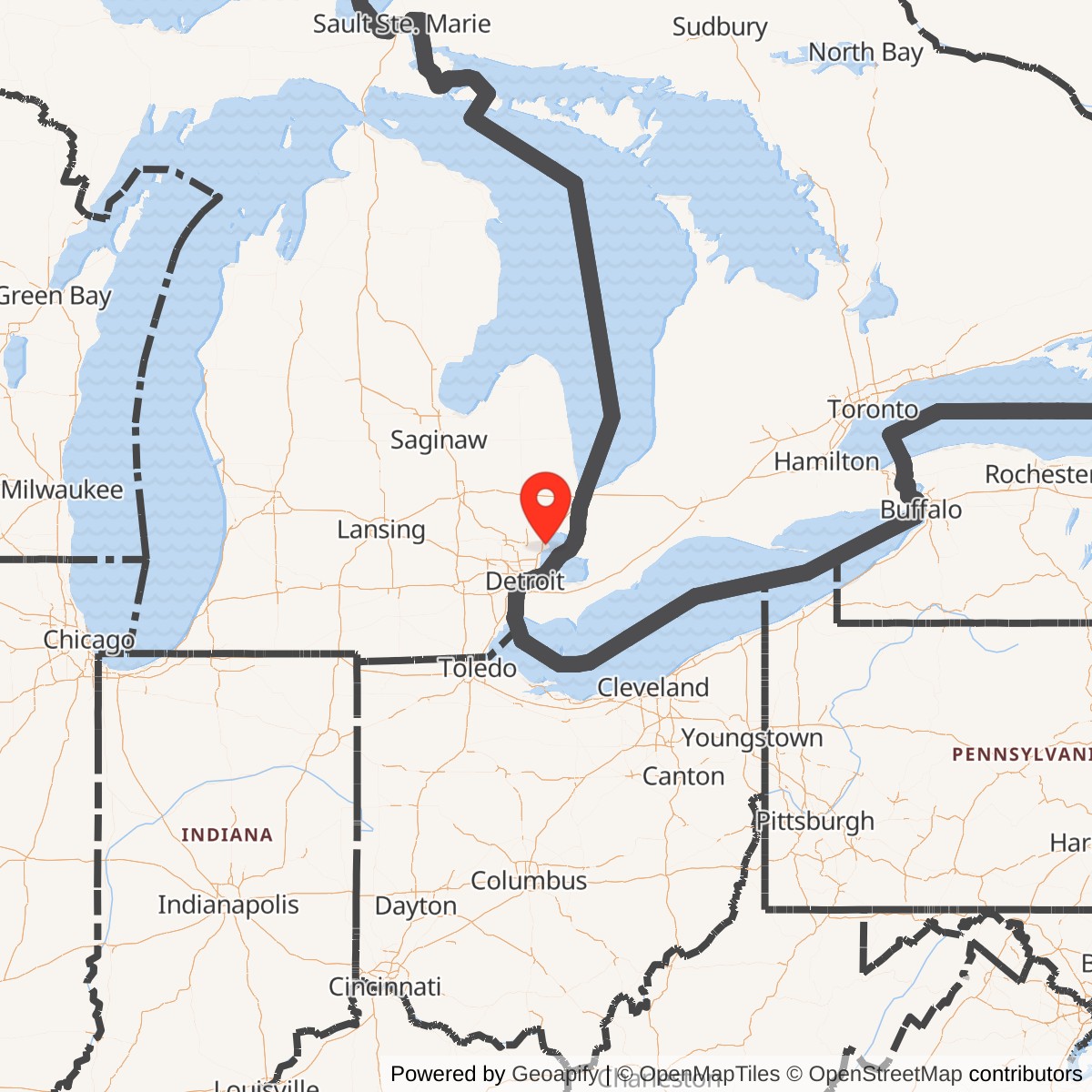
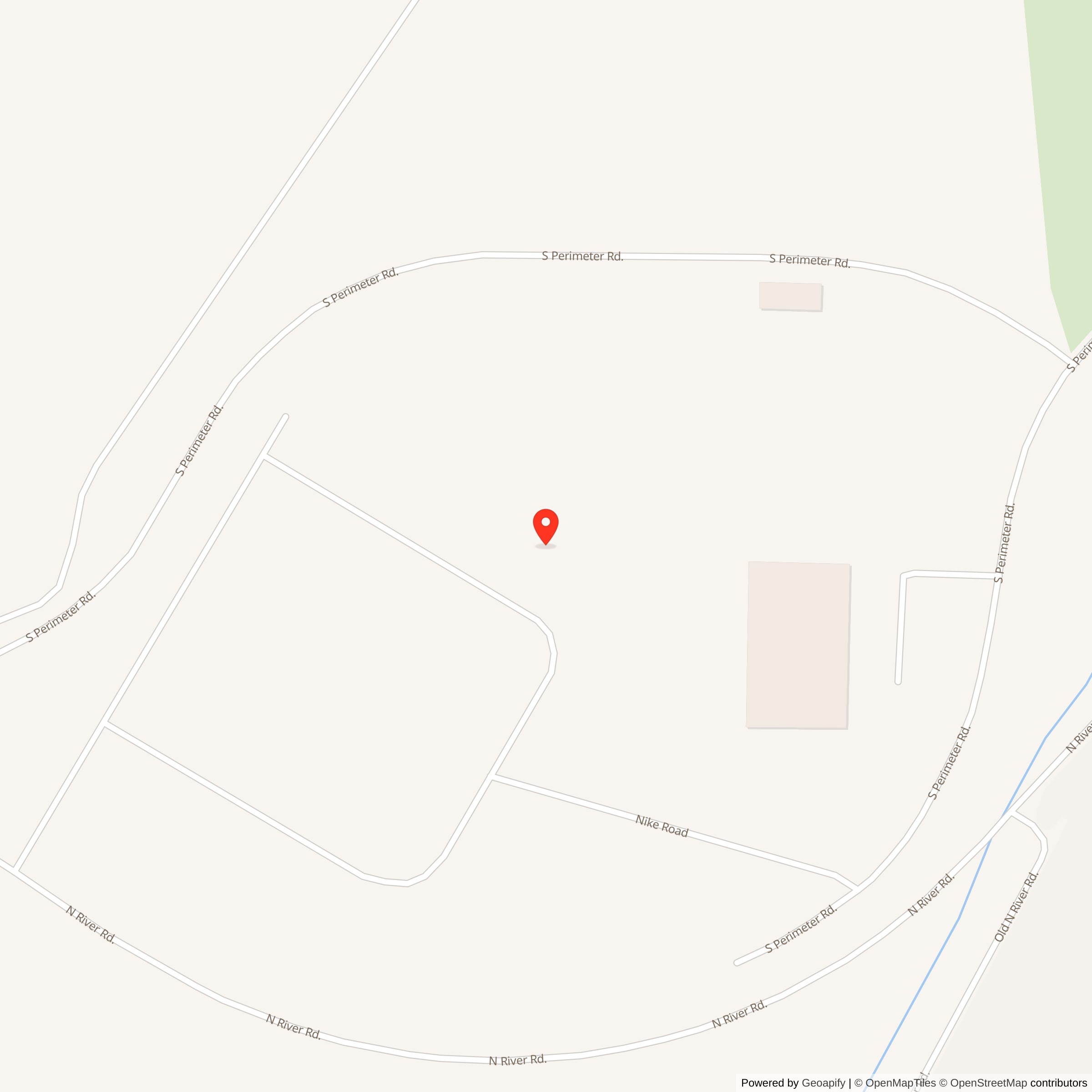
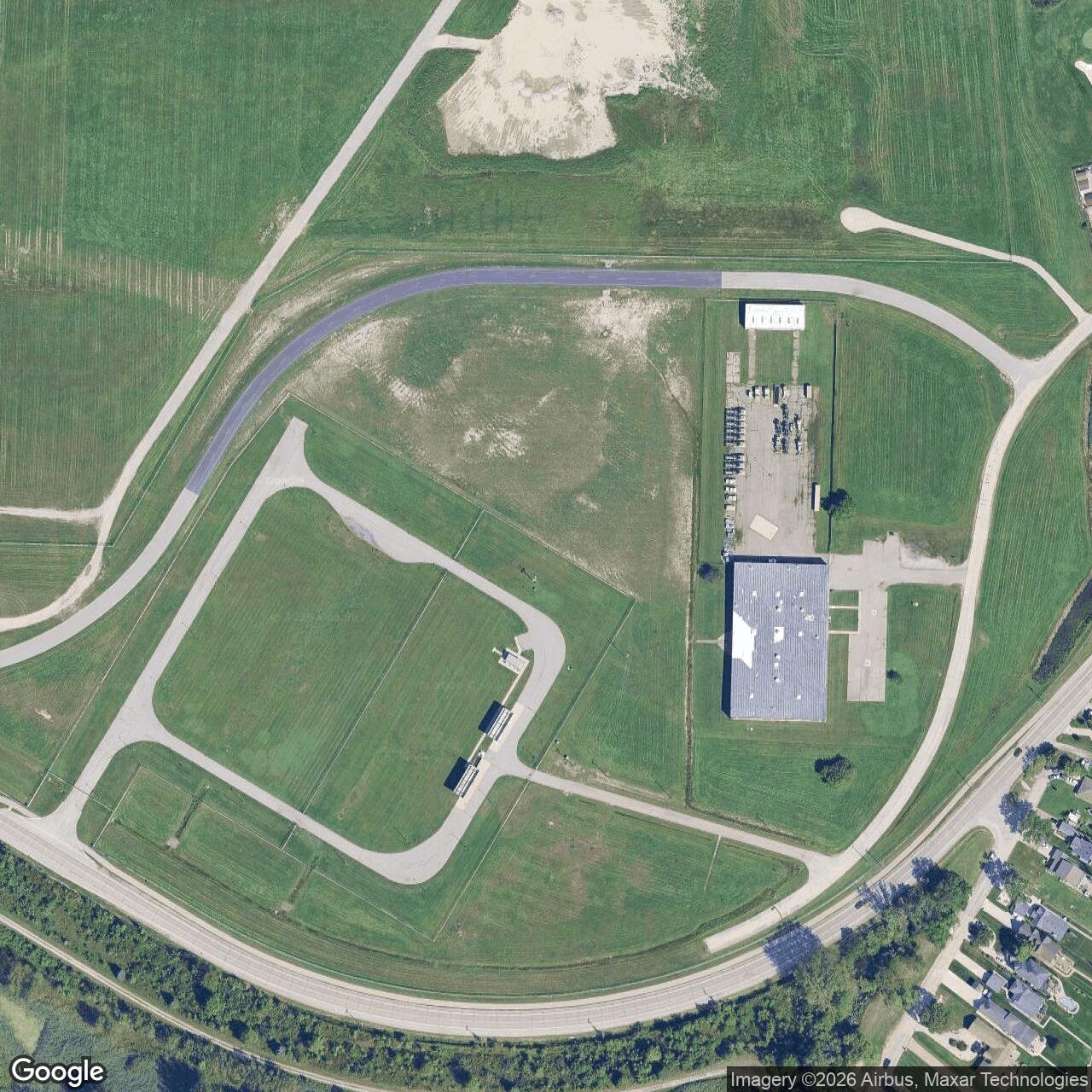
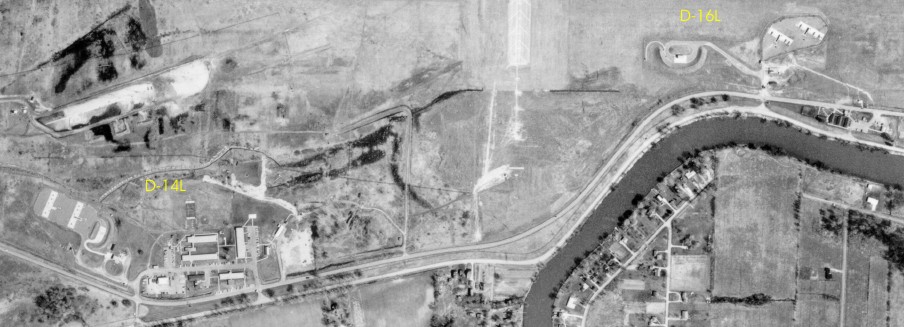
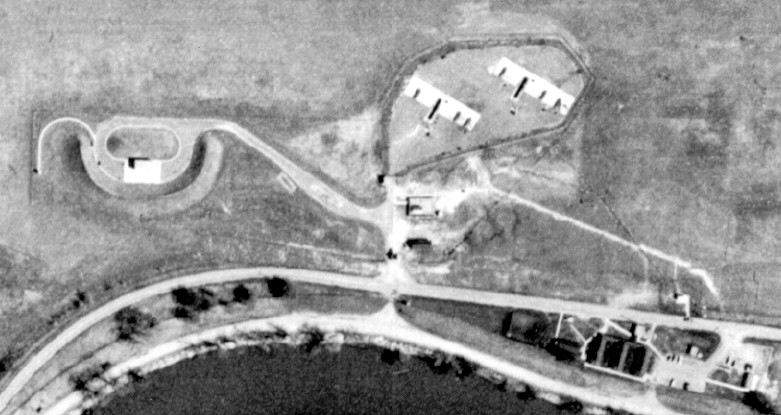
Nike Site D-16 occupied separate launch and Integrated Fire Control areas along the southern portion of Selfridge Air Force Base, now Selfridge Air National Guard Base, in Harrison Township near Mount Clemens, Macomb County, Michigan. The launcher area stood west of the IFC area within the restricted military installation. D-16 also shared an administrative and support area with neighboring Nike site D-14, creating an unusually compact cluster of missile, radar, command, and air-base functions.
Two Nike batteries began the Cold War side by side at Selfridge, but only one crossed fully into the Hercules era. D-14 remained an Ajax battery and closed in February 1963. D-16 received the larger, longer-ranged, nuclear-capable Nike Hercules and continued on alert until June 1971. For the last eight years of its service, D-16 was the surviving Selfridge firing battery at a base that also housed Army air-defense headquarters, regional missile-control equipment, Air Force radar, and fighter-interceptors.
D-16 entered active service in 1955 with Nike Ajax. Its documented configuration, Nike 2B/12H,20A/8L-U, records two underground B-type magazines, an Ajax allowance of twenty missiles, a Hercules allowance of twelve missiles, and eight universal launchers. The configuration describes a converted two-magazine battery, not twelve missile silos or eight underground launch cells. Missiles were stored horizontally in the shared magazines, raised on elevators, and moved to surface launchers.
The national Army inventory ends D-16's service in June 1971. That date is historically significant at Selfridge. The base transferred from active Air Force control to the Michigan Air National Guard on July 1, 1971, only weeks after the firing battery closed. D-16 therefore belongs to the final phase of active-duty Army missile operations at the old Air Force base, even though Army air-defense headquarters and several other Detroit Hercules batteries survived until 1974.
Why Selfridge and Detroit Mattered
Detroit was among the country's most important Cold War target areas. Automobile and truck factories, steel mills, chemical works, transportation infrastructure, military production, and the skilled industrial labor force that had formed the World War II "Arsenal of Democracy" were concentrated in southeastern Michigan. A successful bomber attack could have killed large numbers of people and damaged a major part of the nation's defense-production capacity.Selfridge was both a protected asset and a defensive center. The base supported fighter-interceptor operations and radar surveillance on the northeastern side of metropolitan Detroit. It also stood near Lake St. Clair and the approaches from Canada, part of the broad northern arc from which American planners expected Soviet bombers to arrive. D-16 could protect Selfridge itself while contributing to the overlapping missile coverage around the Detroit industrial region.
The 28th Artillery Group established its headquarters in the southwestern portion of Selfridge in 1952. It initially administered antiaircraft-gun defenses and later took responsibility for combat-ready Nike units in the Detroit-Cleveland region. In 1960, the Detroit Army Air Defense Command Post, designated D-15DC, received Missile Master equipment at Selfridge. Missile Master, later replaced by the more compact solid-state Missile Mentor system, helped the regional command assign targets and coordinate multiple firing batteries.
D-16 consequently operated in one of the most concentrated air-defense settings in the United States. Air Force early-warning and height-finding radar, fighter-interceptors, Army command-and-control equipment, the 28th Artillery Group, local Nike radars, and the missile launchers all occupied the same larger installation. The systems performed different tasks, but together they formed a layered defense against attacking aircraft.
Construction and the Selfridge Nike Complex
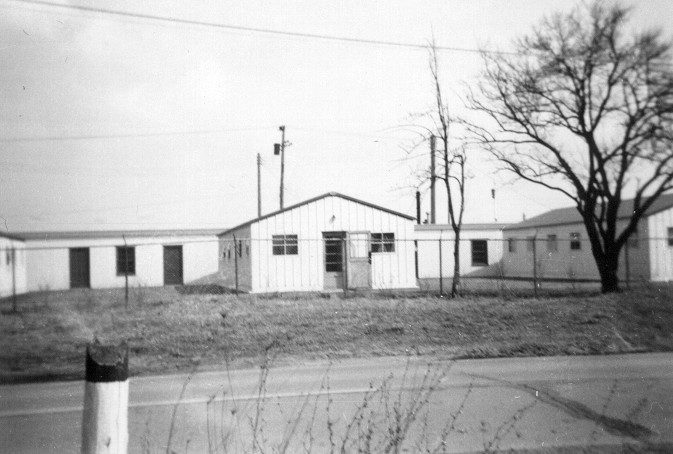
The Army inventory begins D-16's active period in 1955. National Archives holdings include 1958 as-built drawings for both D-14 and D-16 at Selfridge. The drawings demonstrate that the paired batteries were substantial engineered facilities with separate operational identities, even though later property histories often discuss them together.The Selfridge Nike and radar district occupied the southwestern and southern part of the base. Historic American Engineering Record documentation describes it as a self-contained complex isolated from the rest of Selfridge for functional and security reasons. Buildings 1582, 1583, and 1584 were erected in 1955 north of the southwestern Nike IFC complex. They initially supported radar crews and later Nike personnel. The regional Nike headquarters and command functions occupied buildings 1515 through 1537.
The arrangement of D-14 and D-16 has produced a recurring records problem. Some histories describe the batteries as sharing a single IFC. Modern component directories identify separate D-14 and D-16 IFC locations, while contemporary site notes specifically identify a shared administrative area.
The Ajax Battery
D-16 began with Nike Ajax, the Army's first operational guided surface-to-air missile. Ajax used a solid-fueled booster and a liquid-fueled sustainer. The launcher area therefore needed more than magazines and firing positions. Missile assembly, testing, fueling, maintenance, electrical support, power generation, security, and command functions all had to be maintained inside a controlled area.The two B-type magazines were buried reinforced-concrete chambers. Missiles rested horizontally on handling rails below ground. An elevator platform raised a missile to the surface, where crews transferred it along rails to a launcher and erected it for firing. The underground arrangement protected the missiles and allowed a compact battery to serve several surface launchers, but it did not make each missile an independent silo weapon.
The IFC area was the technical center of the engagement. An acquisition radar searched for aircraft. Once a target was selected, the target-tracking radar followed it while a separate missile-tracking radar followed the launched Nike. Analog computing equipment continuously compared the two tracks, calculated steering commands, and transmitted those commands to the missile. When the intercept geometry was correct, the system issued the burst command.
This command-guidance method explains why the IFC and launcher areas had to remain connected by dependable communications while occupying separate ground. The IFC crew controlled the missile after launch, but the launcher crew maintained the weapon, raised it, prepared it, and fired it. A break in power, radar tracking, land-line communications, or missile readiness could interrupt the entire engagement.
Configuration and Decoded Meaning
D-16's Army inventory notation is "Nike 2B/12H,20A/8L-U." Read in plain language, the code records the following physical and operational arrangement:2B: two B-type underground missile magazines. The B design could be modified to handle Hercules, especially through changes to the elevators and missile-handling system.
20A: a documented Ajax allowance or capacity of twenty missiles during the Ajax phase.
12H: a documented Hercules allowance or capacity of twelve missiles after conversion. Hercules was substantially larger than Ajax, so the same two-magazine plant held fewer missiles.
8L-U: eight universal surface launchers capable of handling either Ajax or Hercules.
These quantities should not be read as a guaranteed daily count. They describe the standard documented configuration and missile allowances associated with the two phases of the battery. Nor do they prove that all twenty Ajax missiles and all twelve Hercules missiles were present at the same moment. During conversion and transition, equipment and missile inventories could change while the physical site retained its two-magazine layout.
Conversion to Nike Hercules
D-16 was one of six Detroit batteries selected for Hercules conversion, together with D-06, D-26, D-58, D-61, and D-87. The decision separated it from neighboring D-14. Instead of maintaining two Ajax batteries indefinitely at Selfridge, the Army invested in the battery that could cover a wider area with the more capable missile.Hercules offered longer range, greater altitude, higher performance against fast aircraft, and a solid-fueled sustainer that eliminated the Ajax missile's liquid sustainer fuel and oxidizer. It was also nuclear-capable. That capability allowed the system to attack a bomber formation rather than depend on destroying aircraft one at a time. The reviewed sources establish the weapon system's capability, but they do not provide a dependable date-specific inventory of warheads stored at D-16. This history therefore does not claim that a particular number or type of nuclear warhead was present at Selfridge on a given day.
Conversion required changes on both sides of the battery. At the launcher area, the elevators and handling arrangements had to accommodate a missile far larger and heavier than Ajax. Universal launchers replaced an Ajax-only firing arrangement. At the IFC, Hercules-compatible electronics and radar modifications supported the longer-range engagement. Additional security accompanied the nuclear-capable system. The Selfridge HAER record notes that military working dogs were commonly quartered near Nike facilities after Hercules replaced Ajax and that the 1580-series support buildings later housed the base K-9 Corps.
The exact D-16 conversion year is not fully reconciled in the surviving public record. The Selfridge Military Air Museum's display sheet dates conversion to 1957, but the national Nike historical overview states that field conversion of selected Ajax batteries began in late 1958, and Defend and Deter places the Detroit conversions between 1958 and 1961. The supplied Army conversion appendix lists D-16 but does not preserve a readable exact operational date for its Hercules missiles. The strongest conclusion is that D-16 converted during the late-1950s Hercules modernization program. A more precise operational date should not be asserted without the underlying conversion file or legible construction table.
Personnel and Readiness
The Selfridge Military Air Museum identifies D-16 as staffed by U.S. Army personnel. That wording matters because the Michigan Army National Guard assumed many Detroit Nike missions in the 1960s, but not every site followed the same transfer pattern. The available D-16-specific source does not support labeling the battery as a Michigan Guard operation.Selfridge histories associate the Nike facilities with the 3rd Battalion, 517th Artillery during the Hercules years, and service records place the battalion headquarters at Selfridge in the later 1960s. The official 127th Wing history also quotes a 1955 account of the 516th Antiaircraft Missile Battalion during the early Ajax period.
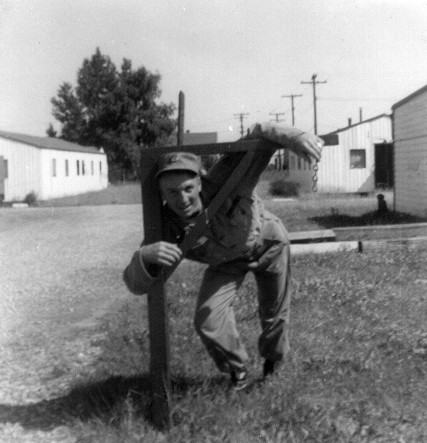
Readiness depended on specialists at the launcher, IFC, and shared support area. Radar operators, fire-control technicians, computer personnel, missile crewmen, power-generation specialists, electricians, mechanics, communications personnel, security troops, cooks, and administrative staff all contributed to the alert mission. The battery practiced detecting, identifying, assigning, tracking, and engaging simulated targets. Actual missile firing and qualification occurred at authorized ranges, not over Detroit or Lake St. Clair.
The routine could be repetitive, but the responsibility was not. Crews calibrated radar, tested communications, exercised elevators, inspected launchers, maintained missiles, checked generators, guarded the restricted areas, and rehearsed engagements. The official Selfridge photographs from the mid-1950s show soldiers with Nike equipment on the flight line, with base operations buildings, hangars, and C-46 transports nearby. The captions do not identify D-14 or D-16, so they document the Selfridge Nike environment rather than a proven D-16 crew.
Role in the Wider Military Network
D-16 was a tactical firing battery inside a regional command center. Warning information could arrive from Air Force radar and the wider continental network. Missile Master and later Missile Mentor at D-15DC helped the Army command decide which Detroit battery should engage a particular target. D-16's local IFC then acquired or accepted the target, tracked both aircraft and missile, calculated the intercept, and controlled the weapon through flight.This division of labor prevented the central command post from replacing the battery's own fire-control system. D-15DC coordinated the defense area; D-16 executed the local engagement. The proximity of the two systems at Selfridge shortened administrative and communications links, but it also made disciplined identification essential. Army radar crews operated near an active Air Force flight line and had to distinguish friendly interceptors, routine military traffic, and training activity from a genuine hostile track.
D-16's Hercules conversion expanded the portion of the northeastern Detroit approach that one Selfridge battery could cover. After D-14 closed in 1963, D-16 alone carried the local missile-firing mission while the Air Force radar, interceptors, and Army command functions continued. Its importance was therefore greater than its two-magazine size suggests. It was the surviving missile layer at the installation that coordinated much of the region's air defense.
The system defended against aircraft, not intercontinental ballistic missiles. By the 1960s, ICBMs had become a dominant strategic threat, and no Nike battery around Detroit could stop them. Hercules remained useful against bombers, but changing threats, high operating costs, manpower pressures, and national force reductions steadily weakened the case for maintaining every continental firing battery.
Closure in 1971
The Army deactivated D-16 in June 1971. It did not survive to the final Detroit closure in 1974, when D-06, D-58, and D-87 ended their missions. The official Selfridge history describes a major national cutback of the Nike system in 1971, and D-16's date places it squarely in that reduction.The closure also coincided with a transformation of Selfridge. Defense Department force reductions announced in 1969 affected the base's active Air Force organizations. The Michigan Air National Guard moved its 127th Tactical Reconnaissance Wing to Selfridge in December 1970, and the base transferred to Guard control on July 1, 1971. D-16 closed just before that formal transfer. The firing battery's end was therefore part of a larger shift from an active-duty interceptor and missile center toward the joint Guard and reserve installation that followed.
A complication remains in the Selfridge property record. The 1996 HAER history states that Nike missiles were removed from Selfridge in 1969, while the national Army inventory and the Selfridge museum identify D-16 as active through 1971. The HAER statement may describe removal from the original southwestern support complex, a staged drawdown, or a broader base-history milestone rather than the final tactical deactivation.
Reuse and Current Condition
After closure, the D-16 areas remained federal military property and were absorbed into later Selfridge functions. The national Army inventory characterizes the control area as partially intact and associated with Army engineering-support buildings. It characterizes the launcher area as obliterated and associated with the Army's Tank-Automotive Command. These are historical inventory descriptions, not a guarantee of present-day survival.The HAER documentation says that the missiles and launchers were removed and the subsurface components of the Selfridge Nike batteries were filled. Later observer reports complicate that description. In June 2001, an observer reported that D-16 magazine features, including ventilator hoods and escape hatches, still appeared visible. A 2005 observer said the site was completely gone. A January 2013 site-directory update described equipment storage at the former control area and boat or recreational-vehicle storage at the former launcher area. The reports may refer to different features or stages of demolition, and none should be treated as a complete 2026 field survey.
Both operational areas remain within active Selfridge Air National Guard Base. They are not public ruins or an open historic site. The base continues to support Air Force, Army, Navy, Marine Corps, Coast Guard, reserve, National Guard, and federal law-enforcement organizations. Normal public satellite imagery and roadside observation cannot resolve whether every slab, filled magazine outline, ventilation structure, or support-building foundation survives inside the restricted installation.
The most responsible current assessment is therefore conservative. D-16's missile equipment is gone, its magazines were decommissioned and reportedly filled, and later military reuse or demolition erased much of the launch-area arrangement. Some support or surface traces persisted into the early twenty-first century, but the present condition of individual D-16 features requires controlled-access verification. The "partially intact" label used by some modern directories should not be read as proof that a complete Hercules battery survives.
Public interpretation is available at the Selfridge Military Air Museum. Its air park displays restored Nike Ajax and Nike Hercules missiles, and its Hercules information sheet specifically identifies D-16. Because the museum is on the active base, visitors must follow its current advance-approval and base-access procedures. The museum preserves the most accessible physical connection to D-16 even though it is not located in a restored D-16 magazine or IFC compound.
Chronology
- 1952 The 28th Artillery Group establishes its headquarters in the southwestern portion of Selfridge and assumes responsibility for regional antiaircraft defense.
- 1955 D-16 enters active service as a Nike Ajax battery. Prefabricated radar and Nike support buildings are erected near the southwestern air-defense complex.
- 1955 to 1958 The paired D-14 and D-16 facilities are completed and documented. National Archives holdings include 1958 as-built drawings for both Selfridge batteries.
- 1957 The Selfridge Military Air Museum display sheet dates D-16's Hercules conversion to this year. National Nike histories instead place field conversions beginning in late 1958, leaving the exact D-16 transition date unresolved.
- Late 1958 to 1961 The Army converts six selected Detroit batteries, including D-16, from Ajax to Hercules. D-16 receives universal launchers and a documented twelve-missile Hercules allowance.
- 1960 Missile Master command-and-control equipment becomes operational in the Selfridge-centered Detroit network, improving regional target assignment and battery coordination.
- February 1963 Neighboring D-14 closes. D-16 remains as the only operating Nike firing battery at Selfridge.
- Mid- to late 1960s The 3rd Battalion, 517th Artillery is associated with the Selfridge Hercules mission. D-16 remains an active U.S. Army battery.
- 1969 The HAER base history records Nike missile removal and relocation of remaining 28th Artillery Group administrative personnel. Site-specific sources nevertheless continue D-16's active period to June 1971.
- December 1970 The Michigan Air National Guard's 127th Tactical Reconnaissance Wing moves to Selfridge as the base begins its institutional transition.
- June 1971 D-16 is deactivated during the national Nike drawdown.
- July 1, 1971 Selfridge transfers from active Air Force control to the Michigan Air National Guard and becomes Selfridge Air National Guard Base.
- 1974 The 28th Artillery Group and the remaining Detroit-area Nike command mission are deactivated. D-06, D-58, and D-87 are the last Detroit firing batteries to close.
- 1996 The Historic American Engineering Record documents surviving radar and Nike support buildings 1582, 1583, and 1584 in the southwestern Selfridge complex.
- 1999 to 2013 Site observers report planned demolition, visible magazine features, later disappearance, and equipment or vehicle-storage reuse. The reports document change but do not agree on the survival of every feature.
- Present The former D-16 areas remain within restricted Selfridge ANGB. The Selfridge Military Air Museum interprets the Nike mission and displays a restored Hercules missile, but the operational site itself is not open to the public.
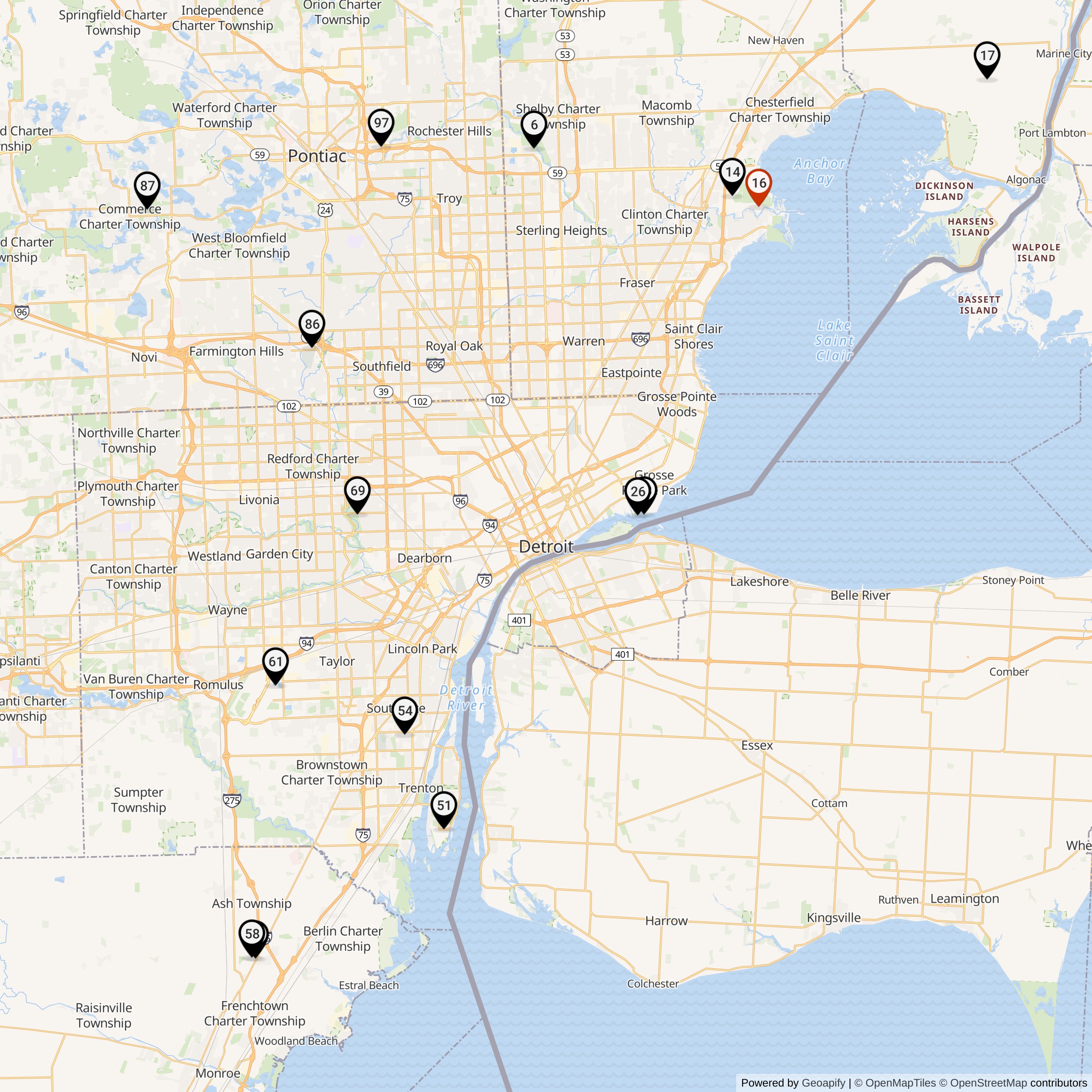
List of all Nike Installations in Michigan
Sources & References
- PDF Defend and Deter: The Legacy of the United States Cold War Missile Program Source for the Detroit Defense Area, D-16 configuration, 1955 to June 1971 active period, condition fields, Hercules conversion list, and Selfridge command role.
- WEB National Archives at Chicago, Nike Missile Sites Source for the 1958 D-14 and D-16 as-built drawing collection and related Detroit District Nike engineering records.
- PDF National Park Service and Library of Congress, Historic American Engineering Record MI-116-YY, Selfridge Field, Building Nos. 1582, 1583, 1584 Source for the southwestern air-defense complex, Nike and radar support buildings, 28th Artillery Group headquarters, removal and filling, later building uses, and 1996 physical documentation.
- WEB 127th Wing, U.S. Air Force, Cold War mission remembered Source for the layered Selfridge fighter, radar, and Nike mission, 1971 system cutback, historic personnel accounts, and official photographs.
- WEB 127th Wing, U.S. Air Force, Selfridge Air National Guard Base Official source for the base's Nike role, 1971 transition, and continuing joint military use.
- WEB Selfridge Military Air Museum, Nike Hercules display information and air-park display page Sources for D-16's Ajax-to-Hercules identity, U.S. Army staffing, 1971 inactivation, museum interpretation, and the restored Hercules display.
- PDF B. N. McMaster et al., Historical Overview of the Nike Missile System, Environmental Science and Engineering, 1984 Source for Nike system design, Hercules deployment beginning in late 1958, magazine conversion, environmental history, and the D-16 Selfridge property listing.
- WEB Ed Thelen, Missile Sites: Michigan Secondary site notes for separate D-16 components, shared administration with D-14, later equipment and storage uses, and conflicting late-1990s to early-2010s condition reports.
- WEB The Military Standard, D-16 launcher and IFC component pages. Secondary location and satellite-image references. The listed 1963 closing date appears to repeat D-14 chronology and is rejected in favor of the national Army inventory and Selfridge museum https://www.themilitarystandard.com/missile/nike/sites/d-16-l/