Nike Missile Site D-17 IFC, Algonac / Marine City Michigan
Longitude: -82.5758159015034
This location was part of the Detroit Defense Area
Site ID: D-17
This site controlled the missiles at the Launch Area located here.
Site Role: IFC
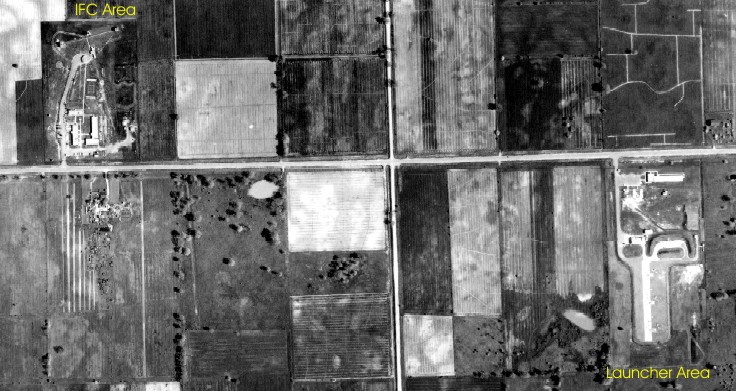
A typical Nike air defense site consisted of two separate parcels of land. One area was known as the Integrated Fire Control (IFC) Area. This site contained the Nike system's ground-based radar and computer systems designed to detect and track hostile aircraft, and to guide the missiles to their targets.
The second parcel of land was known as the Launcher Area. At the launcher area, Nike missiles were stored horizontally within heavily constructed underground missile magazines. A large, missile elevator brought the Nikes to the surface of the site where they would be pushed across twin steel rails to one of four satellite launchers.
Elaboration on how Nike worked here.
Missile Type: Ajax
The Nike Ajax was the first in the Army's family of guided missiles, and the world's first operational, guided, surface-to-air missile system. Nike Ajax had a burnout speed of Mach 2.3, a range of 25-30 miles, and a ceiling of 65,000 feet.
Designed to carry either nuclear and/or high-explosive warheads, the Nike Hercules missile could attack supersonic aircraft operating at altitudes in excess of 150,000 feet and at a range of more than 87 miles.
Battery Type: single
Current site status: unknown
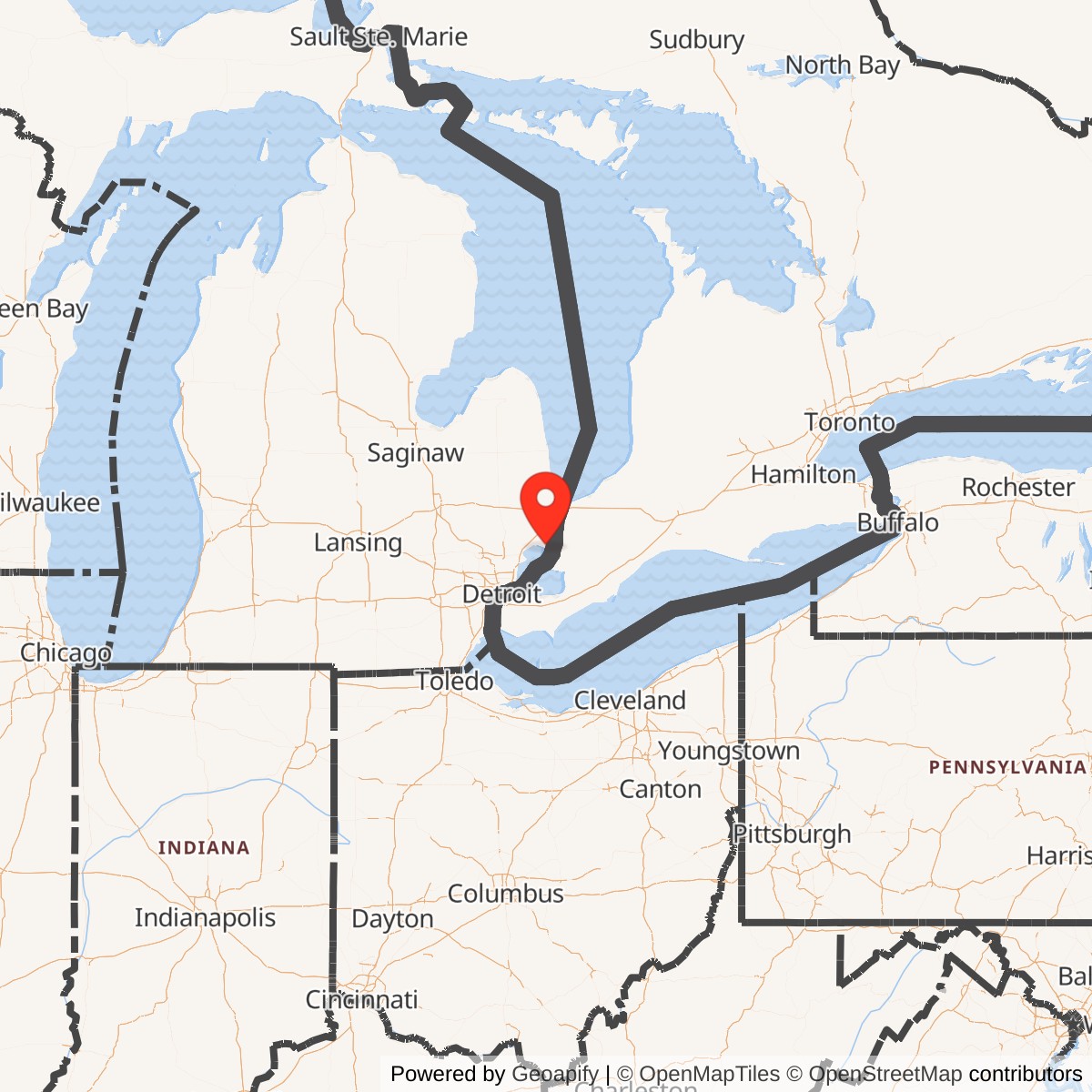
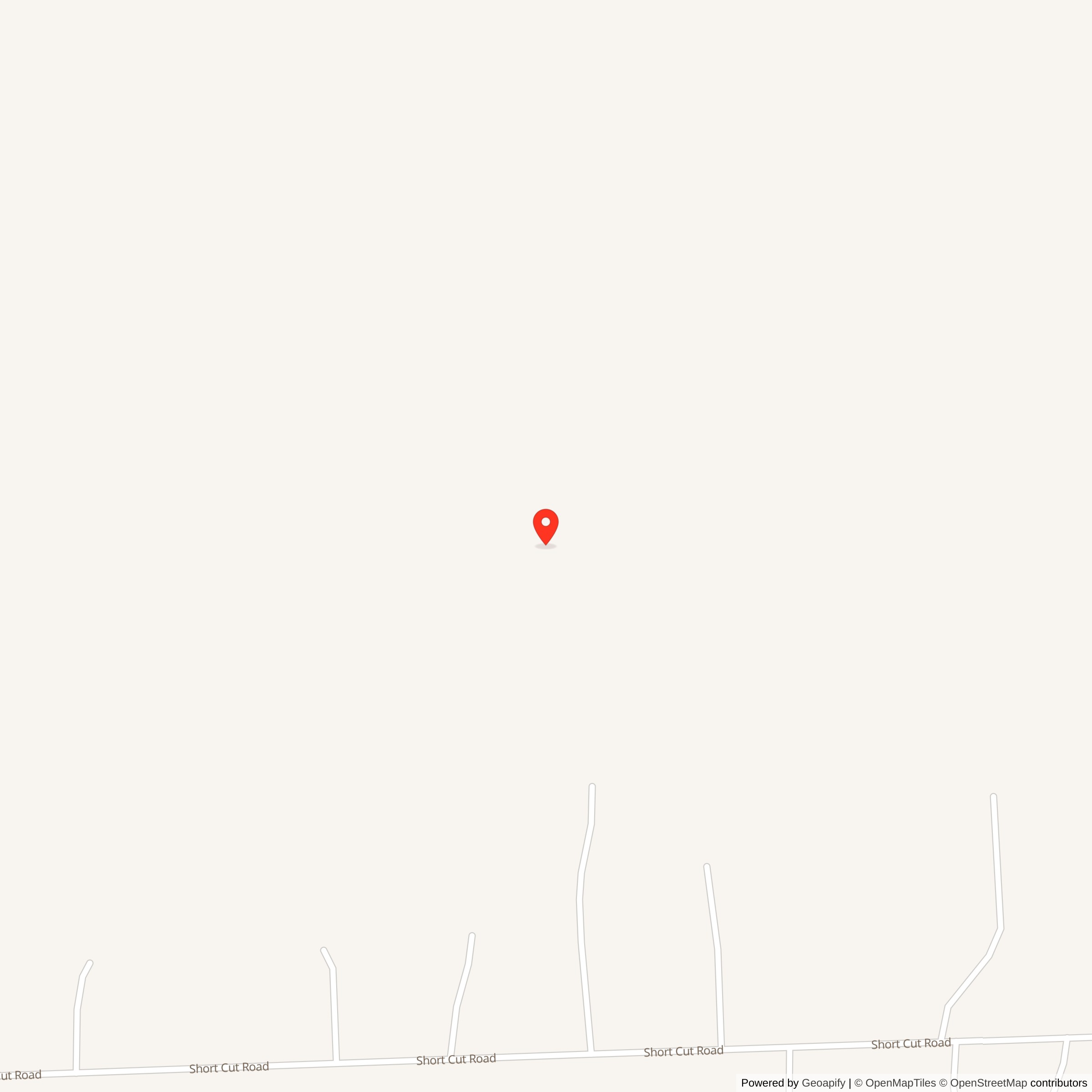
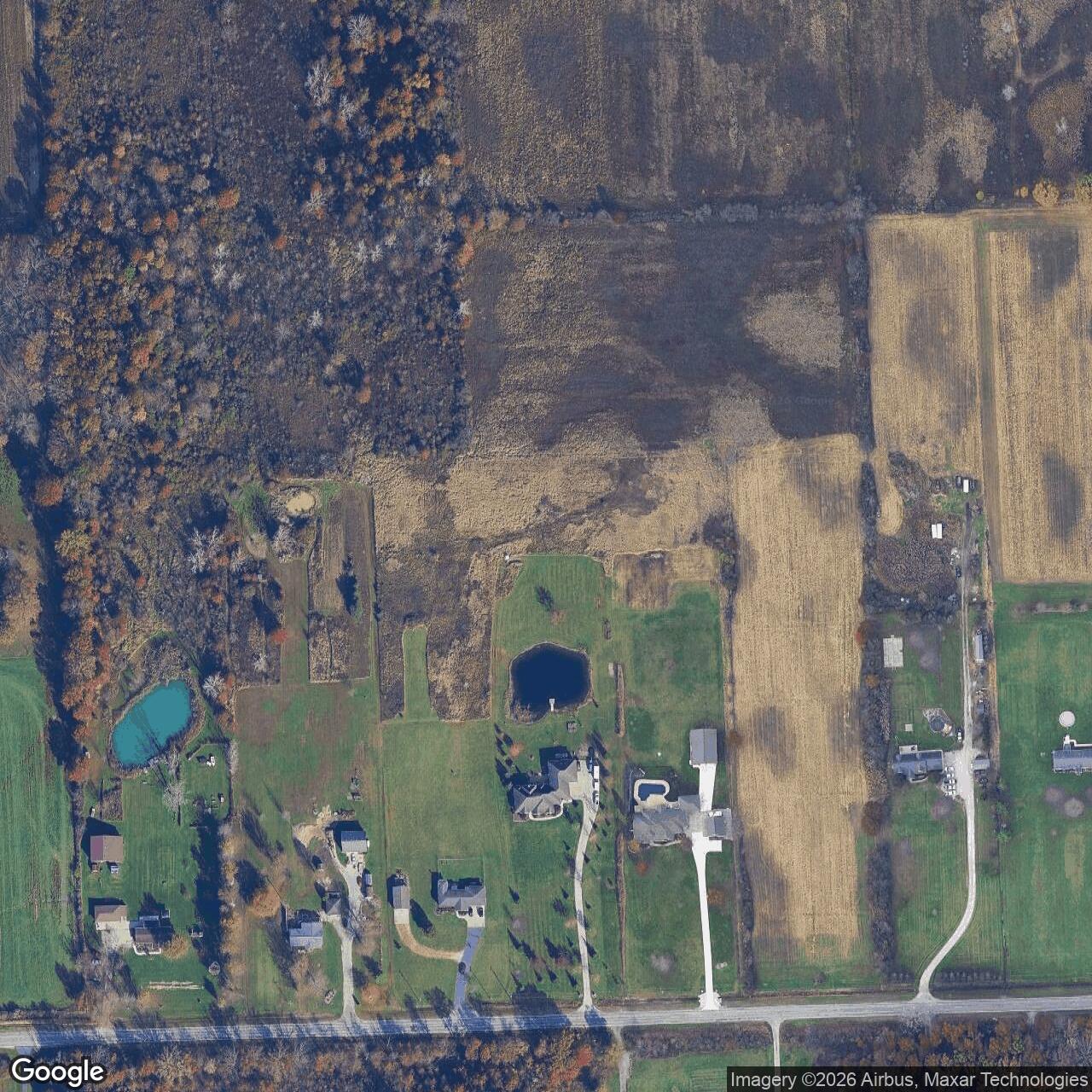
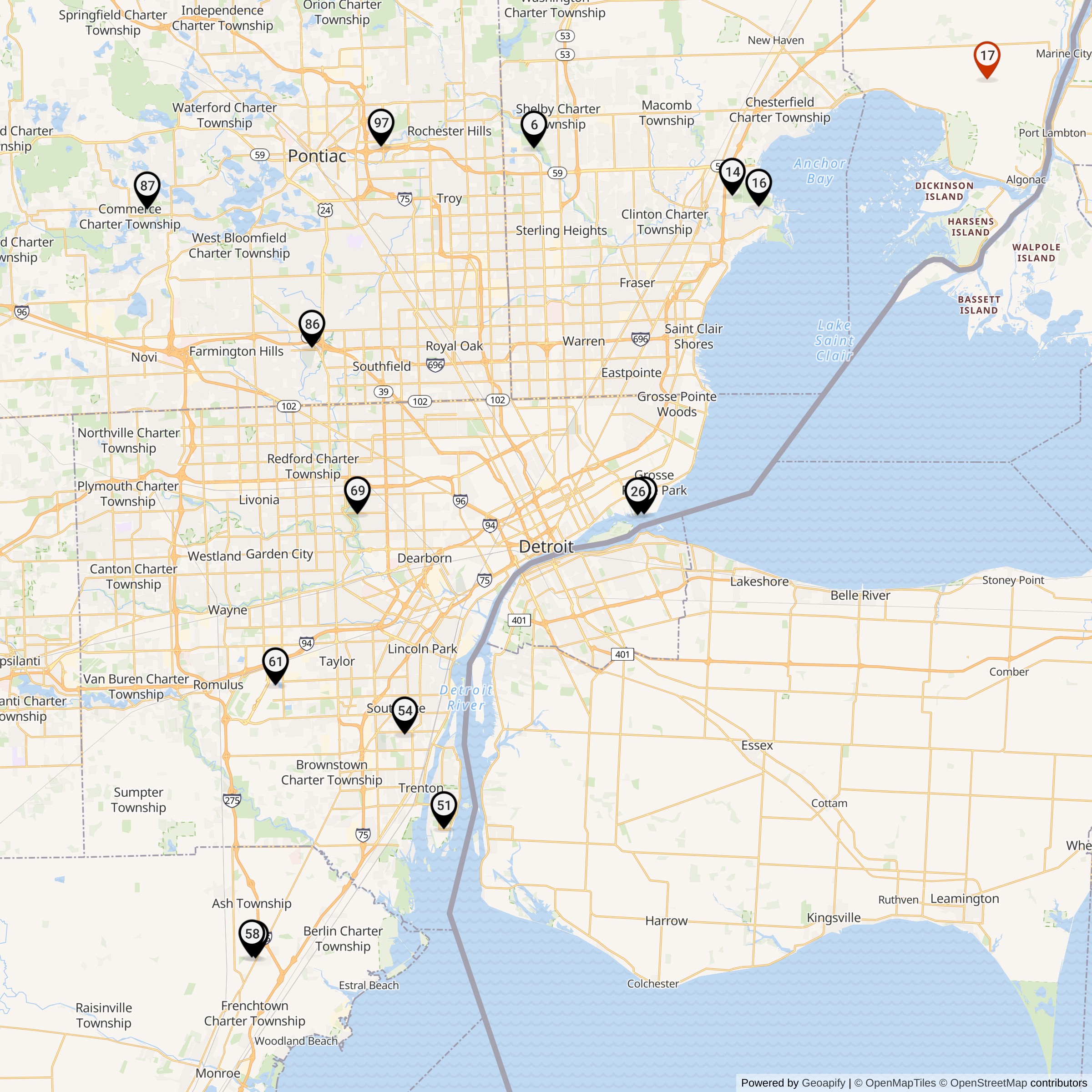
Nike Site D-17 stood in rural Cottrellville Township, St. Clair County, between the Algonac and Marine City communities and near the small settlement of Starville. The historic inventories use "Algonac/Marine City" as the site location even though neither operational parcel was inside the center of either city. The Integrated Fire Control area occupied ground north of Short Cut Road, west of the launcher. The launch area stood about three-quarters of a mile to the southeast, on the south side of the road. Both properties are privately owned today.
The battery was roughly thirty-five air miles northeast of downtown Detroit and only a few miles inland from the St. Clair River and the Canadian border. That rural position placed D-17 on the northeastern edge of the Detroit Defense Area, looking across the approaches from Lake Huron, the St. Clair River corridor, and southern Ontario toward Selfridge Air Force Base and metropolitan Detroit.
Site Overview
D-17 was a short-lived battery with an unusually legible physical story. It opened in June 1957, operated only the Nike Ajax missile, passed from Regular Army to Michigan Army National Guard control, and closed in February 1963. Its documented configuration was Nike 1B,2C/30A/12L-A: one B-type underground missile magazine, two C-type Ajax magazines, an allowance of thirty Ajax missiles, and twelve Ajax surface launchers. It was never converted to Nike Hercules.The site's six years on alert coincided with the most compressed period of change in continental air defense. D-17 entered service while the United States still expected massed Soviet bombers to be the principal threat to Detroit. By the time it closed, selected Detroit batteries had been rebuilt for the longer-ranged and nuclear-capable Hercules, Selfridge had received automated regional command-and-control equipment, and intercontinental ballistic missiles had begun to dominate strategic planning. D-17's Ajax-only plant was therefore modern when opened and already outside the Army's preferred long-term configuration when deactivated.
Its later history divided sharply along the original functional line. The IFC property became residential, with the radar towers and most military buildings removed. The launcher property remained in federal use as a U.S. Army Reserve Center, entered the Formerly Used Defense Sites cleanup program, and later became a private storage facility. Those different afterlives make D-17 a clear example of why a Nike battery should be documented as a linked system rather than as one undifferentiated "missile base."
Why the Northeastern Detroit Approach Mattered
Detroit's Cold War importance extended far beyond the city limits. The metropolitan region contained automobile and truck factories, steel works, chemical plants, machine-tool production, rail lines, port facilities, military research and manufacturing, and a workforce capable of converting civilian production to defense needs. The industrial concentration that had earned Detroit the title "Arsenal of Democracy" during World War II remained a strategic asset in the 1950s.The northeastern side of the defense ring had an additional military focus. Selfridge Air Force Base near Lake St. Clair supported fighter-interceptor, radar, and Army air-defense activities. Bombers approaching from the polar routes could reach the upper Great Lakes through Canadian airspace. D-17's position near the international waterway helped extend the missile belt toward that approach rather than leaving the northeastern sector dependent entirely on the batteries closer to Detroit.
D-17 did not defend a narrow circle centered on Algonac or Marine City. Nike batteries were placed so their engagement zones overlapped. The battery contributed one sector to a regional network whose headquarters and later automated direction center were at Selfridge. Its placement also gave the Army open rural ground for underground magazines, launchers, radar equipment, safety zones, and clear radar sight lines while keeping the site close enough to the assets it was intended to protect.
Construction and Physical Layout
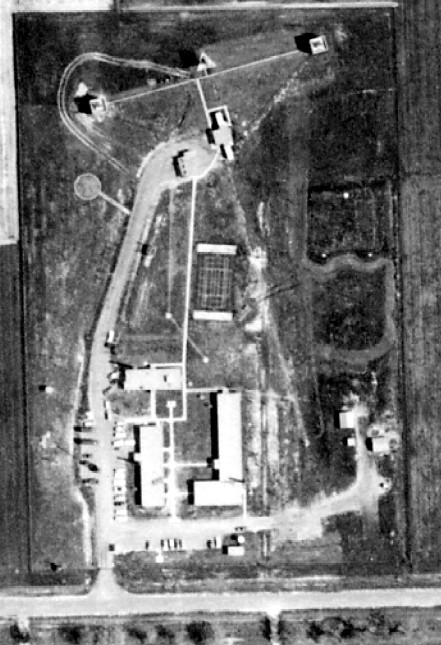
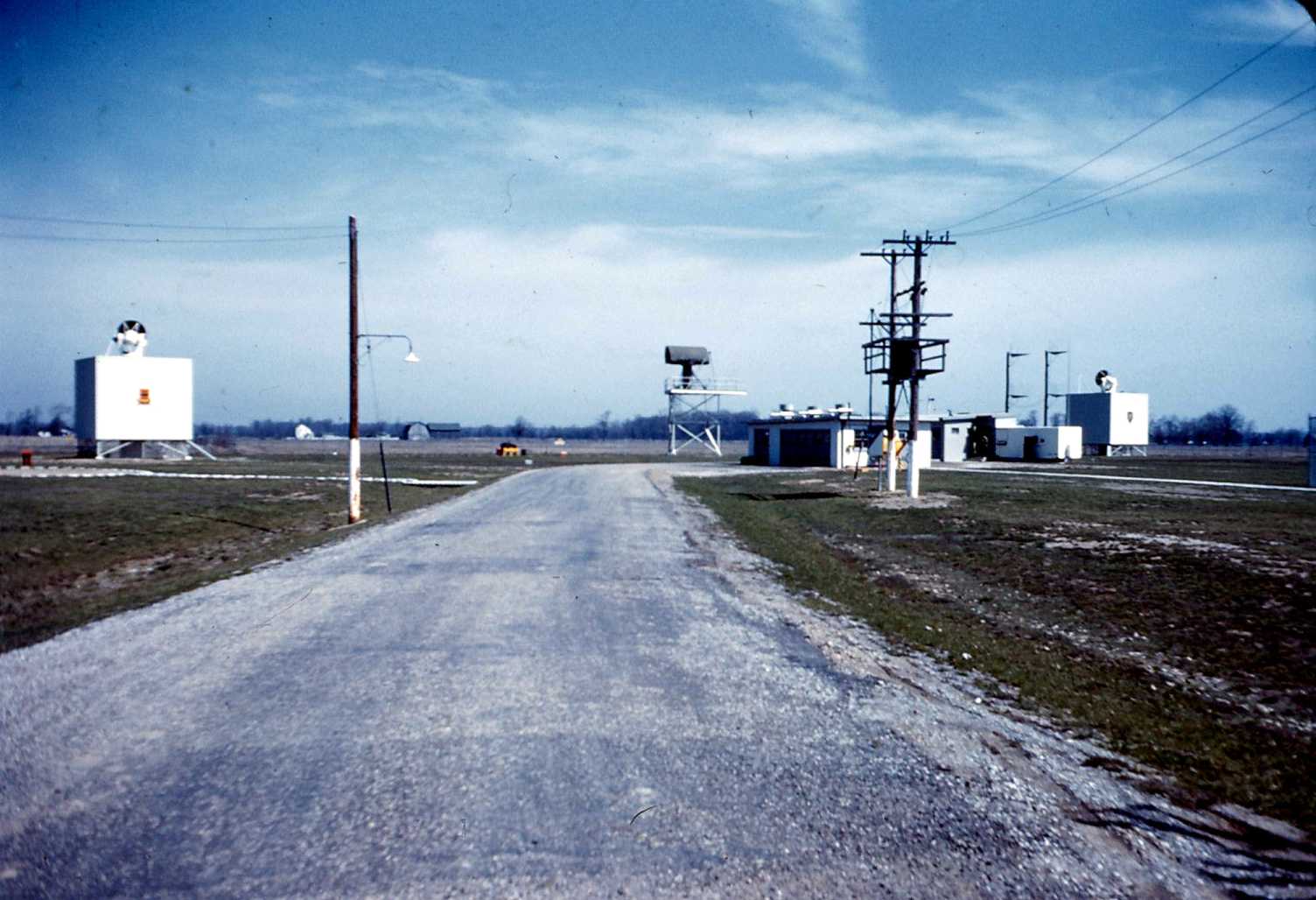
The Army separated the functions that detected and guided an engagement from the functions that stored and launched the missiles. At D-17, the IFC and launch areas occupied two distinct fenced compounds along Short Cut Road. A dependable land-line communications link connected them. The separation reduced radar interference and gave the tracking radars a clear view of a missile after launch, but it meant that neither parcel could fight alone.The IFC area was the operational brain. Its acquisition radar searched for aircraft. Once a target was selected, the target-tracking radar followed that aircraft while a separate missile-tracking radar followed the Nike after launch. Analog computing equipment compared the two tracks, calculated steering commands, and transmitted guidance to the missile. A surviving 1961 photograph taken at the site shows the target-tracking tower, the low-power acquisition radar, or LOPAR, and the missile-tracking tower. Another view from the target-tracking position looks back toward the mess hall and barracks, confirming that D-17's control and administrative functions shared the northern compound.
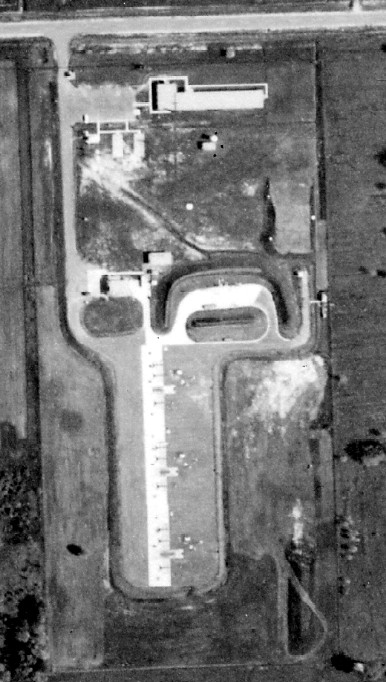
The launch area was the physical weapon plant. It contained three underground reinforced-concrete magazines, missile elevators, surface rails, twelve launchers, assembly and test space, fueling and neutralization facilities, electrical and generator equipment, a guard post, and support buildings. Ajax missiles were stored horizontally below ground. During preparation, an elevator raised a missile to the surface, after which the crew moved it on rails to a launcher and erected it for firing.
Configuration and Decoded Meaning
D-17's inventory notation, "Nike 1B,2C/30A/12L-A," compresses the battery's design into four elements. "1B,2C" records one B-type magazine and two C-type magazines. Both were underground missile-storage structures, but the distinction matters. The B design could be modified for the larger Hercules missile through changes to the elevator and handling system. The C design was an Ajax-only form. The presence of two C magazines helps explain why D-17 was not a simple candidate for full Hercules conversion."30A" is the documented Ajax missile allowance associated with the three magazines, commonly understood as ten missiles per magazine in this configuration. It is not proof that exactly thirty serviceable missiles were present every hour of the site's life. Missiles could be away for maintenance, training, inspection, or replacement. The code identifies the designed allowance and standard operating configuration.
"12L-A" means twelve Ajax launchers at the surface. It does not mean twelve underground silos. The magazines were shared storage and handling chambers, and missiles could be distributed from an elevator along surface rails to multiple launchers. The twelve launchers gave the battery firing positions and reload flexibility, while the underground plant held the bulk of the missiles.
The configuration also confirms that D-17 remained entirely in the Ajax era. There is no Hercules allowance, no universal-launcher notation, and no parenthetical number of launchers converted for Hercules. National program histories list the Detroit batteries selected for conversion as D-06, D-16, D-26, D-58, D-61, and D-87. D-17 is absent from that list and closed as Hercules modernization reduced the need to keep every short-range Ajax battery.
How D-17 Would Have Fought
An engagement began with detection and identification, not with a launcher crew pressing a local firing switch at an unknown aircraft. Warning information could come from the wider Air Force and Army network, and D-17's own LOPAR searched the local airspace. Regional command personnel coordinated target assignments so that two batteries would not waste missiles on the same track. The D-17 IFC crew then had to acquire the assigned target, establish a stable track, and prepare the fire-control system.After launch, the Nike Ajax remained dependent on the ground system. The target-tracking radar measured the bomber's movement. The missile-tracking radar followed a transponder on the missile. The computer calculated the desired intercept and sent steering commands through the missile-tracking radar. When the missile reached the proper point, a command detonated its conventional fragmentation warheads. Ajax was not a heat-seeking weapon and did not become autonomous after leaving the launcher.
That guidance method made readiness a chain. The acquisition radar, both tracking radars, computer, transmitters, generators, communications line, missile electronics, launchers, and crews all had to work together. A battery with full magazines but an unserviceable tracking radar could not complete an engagement. An IFC with a perfect track but no prepared missile was equally ineffective.
D-17 used conventional-warhead Nike Ajax missiles. It should not be described as a nuclear missile site merely because later Detroit batteries carried the nuclear-capable Hercules. Ajax employed a solid-fueled booster and a liquid-fueled sustainer. The launch crew consequently dealt with jet fuel, inhibited red fuming nitric acid oxidizer, and an igniter fluid in addition to explosives and high-voltage equipment. Fueling, testing, and neutralization demanded protective gear, strict procedures, and trained specialists.
Units and the National Guard Transition
The D-17-specific Detroit-Cleveland site history identifies four successive Battery D organizations. It places Battery D of the 18th Antiaircraft Artillery Missile Battalion at the site from June 1957 into 1958. The 18th had been activated in Michigan as a gun battalion, redesignated as a missile battalion in June 1957, and inactivated at Detroit in September 1958. D-17's opening therefore coincided with the unit's conversion from gun-era identity to Nike service.The same site history next lists Battery D of the 516th Antiaircraft Artillery Missile Battalion during 1958, followed from September 1958 to November 1959 by Battery D, 3rd Missile Battalion, 517th Artillery. The rapid changes reflect Army-wide reorganization and the Combat Arms Regimental System as much as physical turnover at the battery. A new designation did not necessarily mean that every soldier and piece of equipment departed on the same day.
From November 1959 until closure in February 1963, the directory identifies Battery D, 2nd Missile Battalion, 177th Artillery, Michigan Army National Guard. Defend and Deter independently confirms that the Michigan Guard assumed responsibility for many Detroit batteries, although it does not provide a D-17 unit table. The detailed succession is therefore useful but remains dependent on the specialized site history pending confirmation from battery rosters, morning reports, or official orders.
National Guard operation did not turn D-17 into a part-time weekend installation. Nike alert required continuous coverage. Guard batteries combined full-time technicians and alert personnel with traditional Guard members who trained to reinforce and rotate through the mission. The transition also rooted the battery more deeply in southeastern Michigan, since Guard members often lived in the communities the system protected.
Daily Readiness and Training
The public usually saw fences, radar antennas, and the occasional missile raised during a demonstration. Most of the battery's work was less visible. Radar operators calibrated equipment and practiced acquisition. Computer personnel checked the analog fire-control system. Launcher crews inspected missiles, elevators, rails, erecting mechanisms, and electrical connections. Fueling specialists maintained protective equipment and handled hazardous liquids. Generator and communications crews prepared for failures in commercial power or the land line between compounds.Security covered two separate sites. The launch compound held missiles, explosives, propellants, and controlled equipment. The IFC held classified or sensitive radar and computing systems. Guards monitored gates and fences while the operating crews maintained alert status. Administrative, dining, barracks, and maintenance functions at the IFC supported the people who kept the technical system running.
Training joined the two compounds. An exercise might begin as a simulated track at the IFC, progress through identification and target assignment, and end with the launch crew preparing a missile without firing it. Actual qualification launches occurred at designated firing ranges, not across Michigan or Canadian airspace. The objective at D-17 was to prove that a crew could carry out every step short of live launch and then perform successfully when sent to a range.
The 1961 D-17 photographs provide rare evidence of the working battery during its Guard period. They show the radar arrangement, the visual relationship between the towers and support buildings, and the launcher plant before later conversion to storage use. They also prevent an easy historical mistake: a rural site that is quiet today was once a staffed, technically dense installation whose value depended on constant maintenance rather than on whether a missile was ever fired in combat.
Role in the Selfridge-Centered Network
Detroit's batteries were initially coordinated through manual procedures and voice communications. In 1960, the Army placed Missile Master equipment at the Selfridge command post. Missile Master used automatic data communications, processing, and display equipment to help the defense-area commander assign targets among multiple Nike batteries. It was later replaced by the less expensive solid-state Missile Mentor system.D-17's local IFC remained essential after Missile Master became operational. The Selfridge center did not steer a D-17 missile directly. It coordinated the defense and passed target information or assignments. D-17's own radars and computer acquired the target, tracked target and missile, generated guidance commands, and controlled the intercept. The central system reduced duplicated engagements, while the local battery carried out the technical firing sequence.
The battery's northeastern placement gave it a distinctive role within this network. It was the outer Detroit site nearest the St. Clair River corridor and the air approaches beyond Lake St. Clair. Its Ajax range was shorter than Hercules, but overlapping coverage with Selfridge and other Detroit sites made the battery valuable during the period when the Army relied on numerous closely spaced Ajax positions.
Why D-17 Did Not Convert to Hercules
The Army did not upgrade every Ajax site. Hercules had a much longer reach, could engage higher and faster aircraft, used a solid-fueled sustainer, and could carry a nuclear warhead. A smaller number of Hercules batteries could cover a broad area that had required many Ajax sites. Conversion also cost money and required suitable magazines, elevators, launchers, radar equipment, security, and support facilities.D-17's two C-type magazines were Ajax-only. Its B-type magazine offered some conversion potential, but a one-magazine Hercules plant would not reproduce the capacity of Detroit's selected two- and three-magazine conversion sites.
By 1963, the Detroit ring could rely on Hercules-converted batteries at Utica, Selfridge, Belle Isle, Carleton/Newport, Wayne County Airport, and Commerce/Union Lake. Ajax-only batteries including D-17 closed as the network contracted. The transition traded local density for greater range and firepower at fewer locations.
Closure in February 1963
The national Army inventory and the D-17-specific site history agree on February 1963 as the closing month. The deactivation ended the Michigan Guard's alert mission at the site and removed D-17 from the Selfridge-controlled defense network.The battery's short service life should not be confused with failure. D-17 performed the mission for which it was built during the period when Ajax formed the principal missile shield. Its closure was part of a national modernization and consolidation program. The system it joined in 1957 was materially different by 1963, even though the Cold War and Detroit air-defense mission continued for another decade.
Launcher Reuse, Reserve Center, and Cleanup
The launcher parcel did not immediately leave military use. Federal Formerly Used Defense Sites information identifies the property as "USARC & NIKE D-17L" and states that it served first as a Nike missile battery and later as a U.S. Army Reserve Center. The property record covers about thirty-one acres and identifies private ownership after federal disposal.The launcher area also received environmental attention. A 2001 General Accounting Office inventory lists one combined containerized and hazardous, toxic, or radioactive waste project at USARC & NIKE D-17L. The project began in 1995, reached remedial-action completion in 2000, used a waste-disposal remedy, and had no remaining estimated cost in that inventory. This is evidence of a completed federal cleanup project, not evidence that every underground structure was demolished or that no later environmental question could ever arise.
Historical observer reports trace the physical transition. In 1999, the launcher property was identified as Jerry's Self Storage and Marine City Glass. The original fence and sentry hut reportedly remained, but the military layout was already heavily altered. A later account anticipated demolition and referred to the Army Corps of Engineers pumping water from the magazine pits. By 2016, an observer reported storage buildings, recreational vehicles, and boats on the property, with the pits filled but their metal outlines still visible.
Current business listings continue to identify Jerry's Mini Storage at the former launcher address in Cottrellville Township. The Better Business Bureau lists the limited-liability company at that property, and current commercial directories describe household, recreational-vehicle, and camper storage. These listings confirm continued storage use. They do not independently verify the condition of each former magazine, hatch, rail, or support building.
IFC Residential Reuse
The IFC followed a quieter and less documented path. A 1999 observer found much of the compound still recognizable, including the sentry hut, administrative and barracks buildings, and several radar platforms. In July 2001, a different observer reported that the IFC had been almost completely cleared. Two buildings and the flagpole reportedly remained, while fencing, towers, utility poles, and the guard shack were gone and a private residence occupied the property.The difference between those reports is too large to dismiss as casual wording. It indicates rapid removal around the turn of the century, or that the observers described different portions of a former compound that had already been divided. Public property records for the address associated with the site identify a single-family residence on roughly five and one-half acres and give 1969 as its construction year. That date shows residential reuse began well before the 2001 report, but the parcel does not necessarily encompass the full historic IFC boundary.
The best-supported current description is therefore "private residential reuse; military radar structures largely removed." The old national inventory's simple "private ownership" remains legally broad but historically incomplete. Claims that the perimeter fence or individual rear buildings survive should not be carried forward as present fact without a contemporary survey and permission from the owner.
Current Condition and Access
D-17 is not a preserved museum site. Both parcels are private property. The former IFC is residential, and the former launcher is an operating storage property. Visitors should not enter either area without the owner's permission, and roadside or satellite observation should not be treated as authorization to cross fences or driveways.At the IFC, the 1961 photographs, 1999 and 2001 observer reports, and modern residential records show a progression from a complete radar and cantonment compound to a heavily altered private property. The radar towers are gone. Two military-related buildings were reported in 2001, but their present identity and survival are unverified.
At the launcher, storage reuse preserved the broad industrial character of the property while obscuring the missile plant. The Army Reserve period and federal cleanup are documented. Filled magazine areas or surface outlines were reported as late as 2016, and the storage business remains listed today. A current controlled-access architectural survey would be needed to determine whether original guard, assembly, generator, fueling, magazine, or rail features survive beneath later construction and paving.
Chronology
- 1952 to 1958 A secondary Michigan fortification directory places an antiaircraft gun battery in the Short Cut Road area before and during the transition to Nike. The exact relationship between that gun position and the later D-17 parcels has not been established.
- June 1957 D-17 becomes operational as a Nike Ajax battery. Battery D of the 18th Antiaircraft Artillery Missile Battalion is identified as the first operating unit.
- 1958 Battery D of the 516th Antiaircraft Artillery Missile Battalion is associated with D-17 during the Regular Army period.
- September 1958 Battery D, 3rd Missile Battalion, 517th Artillery assumes the D-17 mission in the Army-wide reorganization period.
- November 1959 Battery D, 2nd Missile Battalion, 177th Artillery, Michigan Army National Guard assumes responsibility for D-17.
- 1960 Missile Master becomes operational at Selfridge, improving automated coordination and target assignment across the Detroit Defense Area.
- 1961 Site-specific photographs document the D-17 launcher, IFC, radar towers, barracks, mess hall, and working layout during the National Guard period.
- February 1963 D-17 closes as the Army withdraws Ajax-only batteries and consolidates Detroit's defense around Hercules sites.
- After 1963 The launcher property remains in federal service as a U.S. Army Reserve Center. The IFC enters residential reuse; public property data date the associated residence to 1969.
- 1995 to 2000 A Formerly Used Defense Sites cleanup project at the combined USARC and former D-17 launcher property proceeds to remedial-action completion.
- 1999 Observers describe a still-recognizable but deteriorated IFC and a heavily altered launcher operating as self-storage and glass-business property.
- July 2001 An observer reports removal of nearly all IFC features except two buildings and the flagpole. The property is residential.
- 2014 The specialized D-17 history page republishes Formerly Used Defense Sites information identifying the former launcher and Reserve Center as a privately owned, roughly thirty-one-acre property.
- 2016 A site observer reports storage use at the launcher, filled magazine pits with visible outlines, and parking for recreational vehicles and boats.
- 2003 to present Business sources identify Jerry's Mini Storage at the former launcher address. Current listings continue to show private storage use.
- Present The IFC remains private residential property, and the launch area remains private commercial storage property. Neither parcel is open as a historic attraction.
List of all Nike Installations in Michigan
Sources & References
- PDF Defend and Deter: The Legacy of the United States Cold War Missile Program Source for the Detroit Defense Area, D-17 configuration, 1957 to February 1963 service period
- WEB National Archives at Chicago, Nike Missile Sites Source for the Record Group 291 holding Nike Site 17, St. Clair County, MI, accession 61A128, Box 3, and for related Detroit Nike engineering collections.
- WEB U.S. General Accounting Office, Environmental Contamination Cleanup Actions at Formerly Used Defense Sites Source for FUDS property E05MI0189, USARC & NIKE D-17L, the 1995 to 2000 cleanup project, remedy status, and zero remaining estimated cost in that inventory.
- WEB Ed Thelen, Missile Sites: Michigan Secondary source for the correct relationship of the two D-17 components, the 1999 and 2001 IFC reports, 1999 launcher reuse, 2016 storage and filled-pit report.
- PDF U.S. Army Center of Military History, official 3d Air Defense Artillery lineage certificate Source for the 18th Antiaircraft Artillery Battalion's Michigan activation, June 1957 missile redesignation, and September 1958 Detroit inactivation.
- WEB Michigan Department of Military and Veterans Affairs, 1279th Combat Engineers Official source confirming the Michigan Guard lineage connection to the 1st Missile Battalion, 177th Artillery and the state's Nike-Ajax mission.
- PDF B. N. McMaster et al., Historical Overview of the Nike Missile System, Environmental Science and Engineering, 1984 General source for Ajax site design, magazine types, hazardous-material history, and post-closure property research.