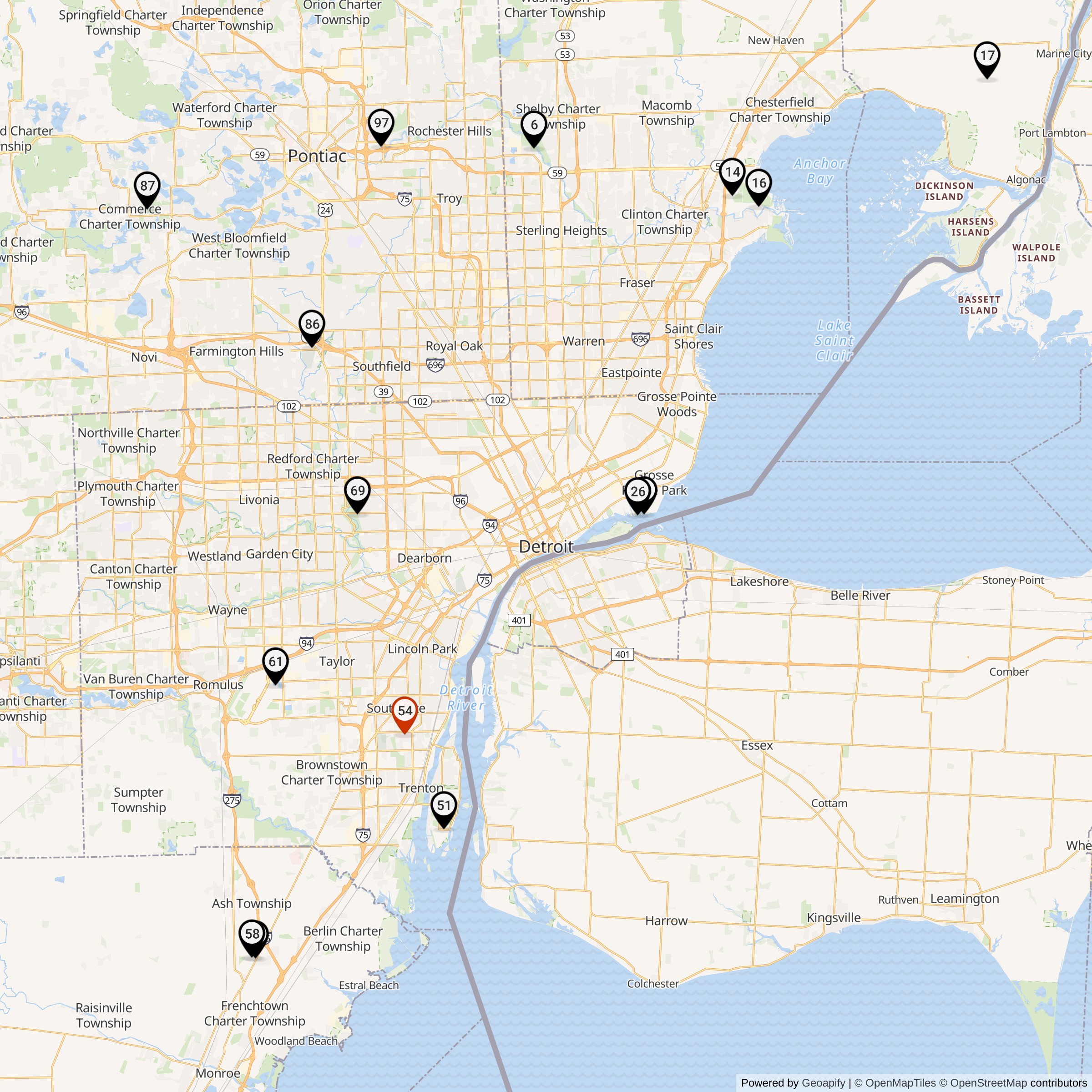
Nike Missile Site D-54 IFC, Riverview / Wyandotte Michigan
Longitude: -83.1968919764487
This location was part of the Detroit Defense Area
Site ID: D-54
This site controlled the missiles at the Launch Area located here.
Site Role: IFC
A typical Nike air defense site consisted of two separate parcels of land. One area was known as the Integrated Fire Control (IFC) Area. This site contained the Nike system's ground-based radar and computer systems designed to detect and track hostile aircraft, and to guide the missiles to their targets.
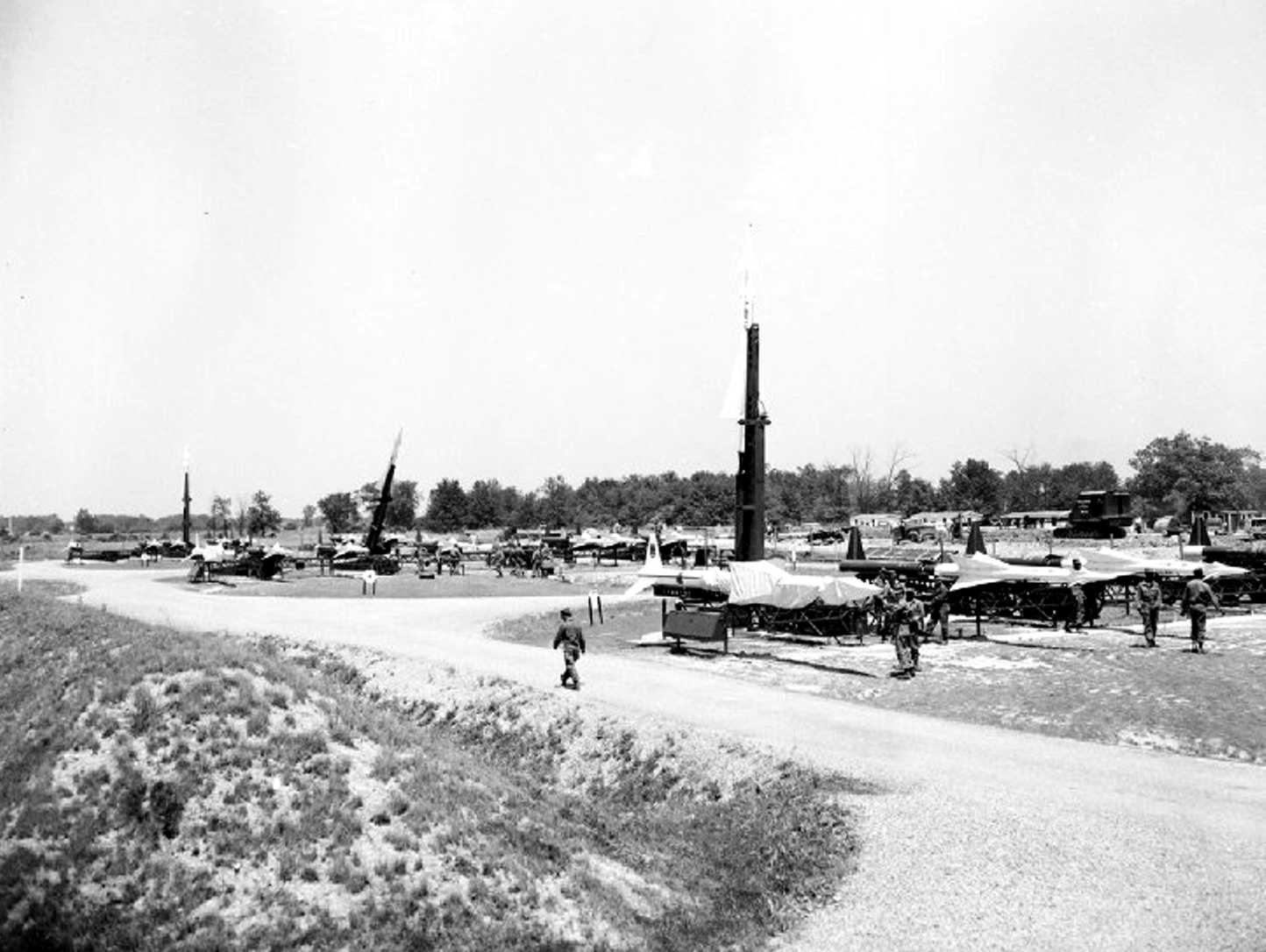
The second parcel of land was known as the Launcher Area. At the launcher area, Nike missiles were stored horizontally within heavily constructed underground missile magazines. A large, missile elevator brought the Nikes to the surface of the site where they would be pushed across twin steel rails to one of four satellite launchers.
Elaboration on how Nike worked here.
Missile Type: Ajax
The Nike Ajax was the first in the Army's family of guided missiles, and the world's first operational, guided, surface-to-air missile system. Nike Ajax had a burnout speed of Mach 2.3, a range of 25-30 miles, and a ceiling of 65,000 feet.
Designed to carry either nuclear and/or high-explosive warheads, the Nike Hercules missile could attack supersonic aircraft operating at altitudes in excess of 150,000 feet and at a range of more than 87 miles.
Battery Type: single

Riverview's principal community park preserves its Cold War past in two contradictory ways. A Nike Hercules missile stands above ground for a battery that never operated Hercules, while six Nike Ajax magazines are reported capped beneath the recreation landscape. The former radar ground is less visible still. Its military buildings and antennas gave way to the Rivergate care campus south of Pennsylvania Road. Together, these places formed D-54/55, a double Ajax site built to defend the lower Detroit industrial corridor. Its history is not the story of two ordinary batteries placed side by side. It is the story of two fire-control missions sharing one enlarged launch plant, followed by a complicated Army and Michigan National Guard succession that the surviving records do not describe consistently.
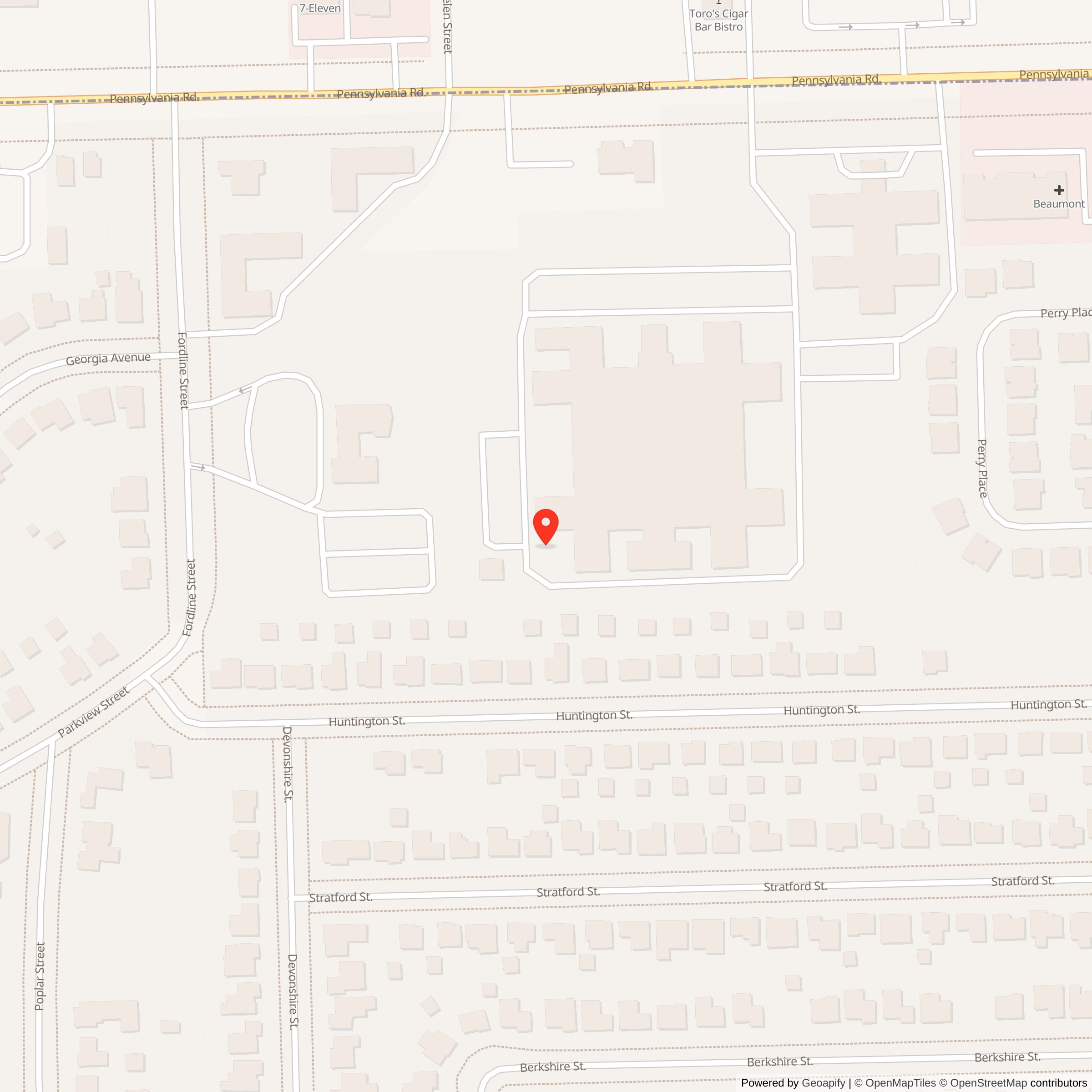
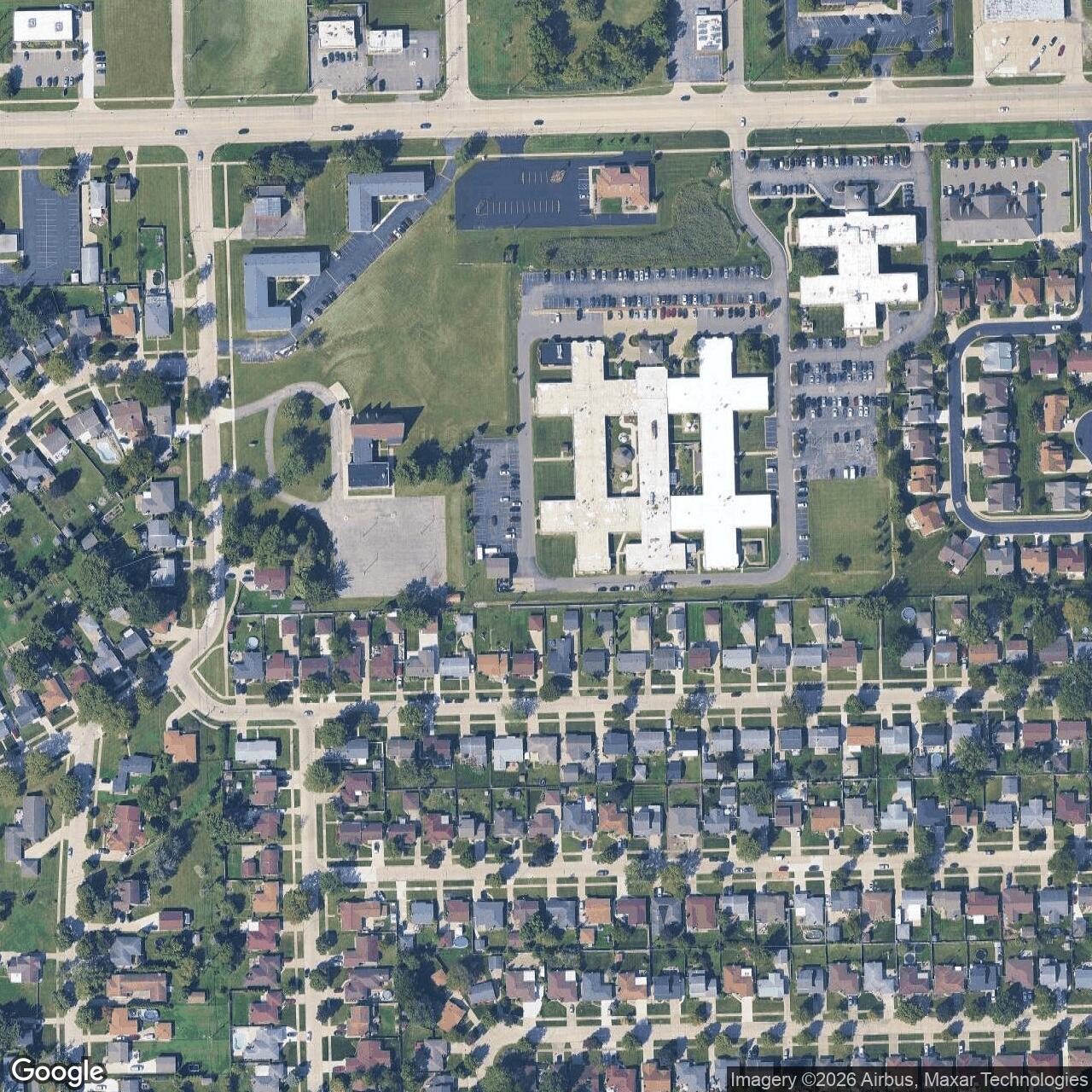
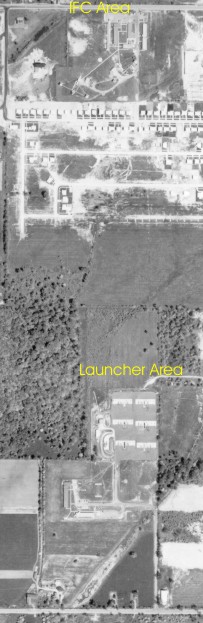
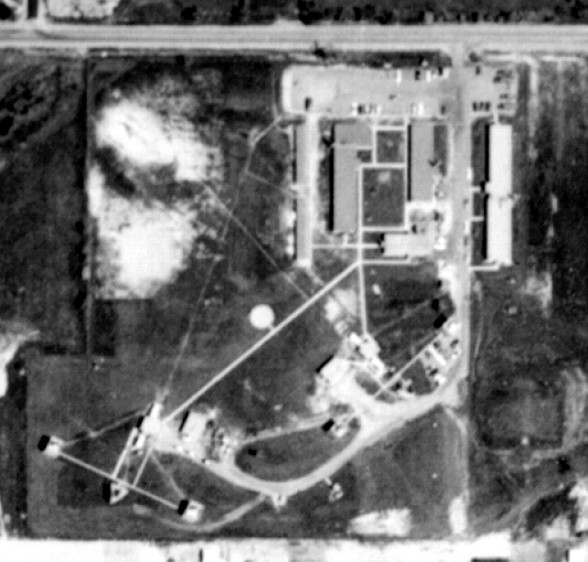
Nike D-54/55 occupied two separated properties in Riverview, Michigan, southwest of central Detroit and close to the Detroit River industrial corridor. The Integrated Fire Control property lay south of Pennsylvania Road and west of Fort Street. The supplied national site file plots two adjacent control positions there, identified as D-54 IFC number one and D-55 IFC number two. The shared launch area stood farther south, on the north side of Sibley Road west of Fort Street. That launch property is now within Young Patriots Park and Riverview's civic complex.
The location placed the battery near some of metropolitan Detroit's most strategically important Cold War infrastructure. Automobile plants, steel production, chemical works, rail connections, port facilities, power systems, and the river crossings to Canada made the region a major industrial target. Aircraft approaching from the south or southeast could use the Great Lakes and the Detroit River corridor as a route toward the metropolitan area. D-54/55 helped close the lower part of the Nike ring between Grosse Ile's D-51 and the longer-lived batteries farther west and southwest.
The Army separated the radar and launcher properties for practical and safety reasons. The IFC required open radar horizons, stable power, communications, operations buildings, and enough space for acquisition and tracking equipment. The launch plant required guarded missile storage, assembly and servicing areas, underground magazines, elevators, rails, launchers, and explosive-safety separation. Dedicated communications joined the two properties. A target tracked from the Pennsylvania Road ground could therefore be engaged by a missile raised and launched at the Sibley Road ground.
Why It Was a Double Site
Most Nike Ajax locations in the first Detroit ring were single batteries. D-54/55 was larger. The national inventory calls Riverview/Wyandotte a dual site, the supplied mapping file preserves separate D-54 and D-55 IFC placemarks describes a double launch area. The physical inventory also supports that interpretation: six underground magazines and twenty-four launchers are twice the common three-magazine, twelve-launcher Ajax arrangement.The most defensible reading is therefore two battery missions, each with its own fire-control function, using one shared or contiguous double launch plant. This arrangement allowed two target engagements to be developed from the same general location without forcing both crews to depend on a single radar and computer set. It also concentrated missile storage, maintenance, security, roads, and support facilities on one enlarged launch property.
The names D-54 and D-55 were not preserved uniformly. Defend and Deter lists the Riverview/Wyandotte dual site under D-54. The supplied KMZ and former-defense-property references preserve D-54/55. Local Riverview interpretation usually calls the installation D-54. Those labels describe the same combined installation at different levels of detail.
The distinction matters when interpreting later records. A plaque that names one battery or one period may commemorate only one side of the double site. A consolidated inventory line may describe the shared launch property while omitting the second fire-control designation. Neither kind of source should automatically be expanded into a complete history of both halves.
Construction and Activation
Defend and Deter records service from 1955 through February 1963. This placed D-54/55 among the early permanent Ajax installations protecting Detroit. The Army was still building and organizing the national Nike network, so construction, property acquisition, equipment installation, crew training, and formal activation did not necessarily occur on one date.An older Formerly Used Defense Sites description says the Department of Defense acquired approximately 82.84 acres in 1956. That year does not fit neatly with a January 1955 activation. Several explanations are possible: the Army may have entered under an earlier lease, permit, or right of entry; the later figure may refer to completed acquisition of a larger property; or one of the summarized dates may be imprecise.
The City of Riverview's historical account describes the Nike facility as active from 1956 to 1962, following the wording on the park monument. Those dates are useful as evidence of local commemoration but are less precise than the January 1955 to February 1963 endpoints repeated in the military-oriented records. The local span appears rounded or tied to the unit named on the plaque rather than to the full life of both battery missions.
Physical Layout
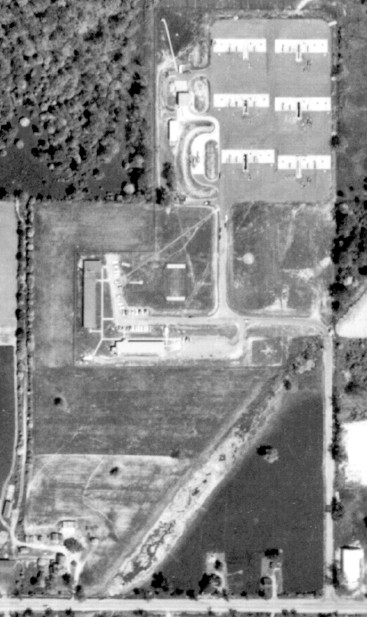
The Pennsylvania Road control property contained two nearby IFC positions. Each battery mission required an acquisition radar to search for aircraft, a target-tracking radar, a missile-tracking radar, an analog computer, communications equipment, generators, maintenance space, and an operations building. The dedicated site record identifies LOPAR, the low-power acquisition radar associated with early Nike Ajax operations. Radar towers, antennas, fenced technical areas, barracks or administrative support, and access roads would have made the control compound visually distinct from the surrounding semirural landscape of the 1950s.The Sibley Road launcher was a double plant. Its six underground storage magazines were arranged to support twenty-four Ajax launchers. Elevators raised missiles from protected storage to the surface, where crews moved them on handling rails or dollies, checked connections, and placed them on launchers. Missile assembly, fueling, test, maintenance, warhead control, power generation, security, and crew facilities occupied the rest of the fenced ground.
Ajax was liquid fueled after its solid booster, so the launch area was also an industrial workplace. Fuel and oxidizer demanded protective clothing, careful procedures, ventilation, spill response, and repeated training. The underground structures were commonly called silos in local accounts, but magazines or launcher sections are more accurate. Nike missiles were stored horizontally below grade, lifted to the surface, moved into firing position, and elevated on surface launchers. They were not fired vertically from enclosed silos.
Configuration
The site configuration is: Nike 4B,2C/60A/24L-AAThis means four B-type underground magazines and two C-type underground magazines in the shared double launch plant, an allowance or designed capacity of sixty Nike Ajax missiles, and twenty-four Ajax launchers. The final AA denotes a double-Ajax site. It does not mean twenty-four double launchers, and it does not identify a Hercules conversion.
The four B magazines were a storage type that could support Ajax and was associated nationally with elevator arrangements capable of modification for Hercules use. The two C magazines were original Ajax-type magazines. A magazine's design potential should not be confused with the weapons actually assigned. No reviewed source shows that D-54/55 received Hercules missiles, nuclear-capable Hercules operations, or an operational Hercules modernization. The installation remained Ajax-only until closure.
Defend and Deter prints the code 4B,2C/30A/24L-AA. Its magazine and launcher counts fit the double site, but thirty missiles are the normal allowance associated with one three-magazine Ajax battery. The dedicated D-54 record lists sixty Ajax missiles, four B magazines, two C magazines, twenty-four launchers, and a double site.
How Nike Ajax Worked
Nike Ajax was a command-guided antiaircraft missile. It did not carry an autonomous seeker that could independently find a bomber after launch. The entire battery remained part of the engagement from detection to intercept.An acquisition radar searched the assigned airspace and helped the crew place a designated target into the tracking system. The target-tracking radar followed the aircraft. After launch, a separate missile-tracking radar followed a beacon response from the missile. An analog computer continuously compared target and missile positions, calculated a predicted intercept point, and generated steering commands. The IFC transmitted those commands by radio. At the calculated point, the system sent the burst command for the missile's conventional fragmentation warheads.
This architecture explains both the separation of the IFC and launcher and the need for two control missions at a double site. A launcher without dependable radar data, communications, and guidance was not an effective weapon. A radar crew without a ready missile section could develop a track but could not complete the engagement. D-54/55's value came from the whole system operating as one coordinated installation.
Ajax used a solid-propellant booster for initial acceleration and a liquid-fueled sustainer for the guided portion of flight. The booster separated after launch. The missile then followed ground commands toward the predicted intercept. Its multiple conventional warheads were intended to create a destructive fragment pattern against bomber formations. D-54/55 was built to counter aircraft, not intercontinental ballistic missiles.
D-54/55 supported two battery missions. Regular Army organizations operated the site in its early years, and elements of the Michigan Army National Guard's 1st Battalion, 177th Artillery operated it in the later period. Battery A and Battery C appear in the late record, consistent with the site's double character.
Regular Army to Michigan National Guard
The appearance of the 177th Artillery reflects the increasing role of the Army National Guard in continental air defense. Guard conversion did not turn the installation into a part-time weapon. Nike units had to maintain alert coverage, technical proficiency, physical security, missile accountability, and reliable equipment. Guard personnel trained for the same radar, computer, missile, maintenance, communications, and readiness responsibilities as active Army crews.A double site required a broad range of specialties. Radar operators searched and tracked. Computer personnel checked analog circuits and engagement solutions. Launcher crews maintained elevators, rails, erecting mechanisms, launchers, cables, and missiles. Missile specialists assembled and tested components and handled liquid propellants. Generator and electrical teams prepared for commercial-power failure. Communications personnel maintained the link between Pennsylvania Road and Sibley Road and connected the site to higher headquarters. Guards protected both properties, while mechanics, cooks, clerks, medics, and leaders kept the installation functioning around the clock.
The administrative redesignations of the late 1950s can make unit lists appear more dramatic than daily life at the battery. A new battalion title did not necessarily mean that every experienced soldier left, every radar was replaced, or the site stopped operating. Some transitions reflected the Combat Arms Regimental System and broader Army reorganization. Others marked a genuine handoff to Guard staffing. Personnel records, morning reports, and unit orders would be needed to reconstruct the Riverview sequence at company-level precision.
Daily Readiness in an Urban Industrial Landscape
Most activity at D-54/55 consisted of testing, maintenance, drill, and alert. IFC crews aligned radars, checked the computer, practiced acquisition and tracking, and verified communications. Launcher crews inspected missiles, elevators, launchers, fueling equipment, and electrical systems. Security personnel controlled access to two geographically separate properties. Maintenance teams had to keep a complex 1950s electronic and mechanical system ready through Michigan winters, summer heat, precipitation, and industrial air pollution.Exercises could reproduce most of an engagement without firing a missile over metropolitan Detroit. A warning or simulated target assignment passed through the regional command system. The IFC acquired and tracked a practice aircraft. The computer developed an intercept solution. The launcher reported the status of missiles and firing sections. Crews practiced the sequence until it became routine. Live qualification firing occurred at designated ranges, not from Riverview across populated suburbs.
D-54/55 never fired at an enemy aircraft. Its deterrent value depended on the credible possibility that it could. Readiness demanded repetitive work precisely because an actual warning would allow little time to discover a failed cable, misaligned radar, contaminated fuel system, or malfunctioning elevator.
The surrounding community lived close to this routine. Fort Street and the river connected steel mills, factories, residences, and commercial districts. The launch site was near what would become the civic center, and the control property was close to expanding suburban development. Nike's enormous national footprint was often hidden in this way: armed, fenced installations stood only a short distance from homes and ordinary roads because the industrial cities they protected were also densely settled.
Role in the Detroit Defense Area
D-54/55 was part of a ring, not an isolated fort. D-51 on Grosse Ile covered the southern river approach. D-57/58 and D-61 helped cover the lower western sector and later received Hercules. Other batteries extended around the metropolitan area and toward Selfridge. Their engagement zones overlapped so commanders could assign targets according to direction, readiness, and available weapons.Early Detroit Nike operations relied on warning networks, voice communications, plotting, and manual target assignment. In 1960, the Missile Master system at Selfridge improved regional coordination with automated data handling and displays. It helped the defense-area command identify raids and reduce duplicate engagements. It did not replace the Riverview radars or analog computers. Once D-54 or D-55 received a target assignment, its local crew still had to acquire the aircraft, track the target and missile, transmit guidance commands, and complete the intercept.
The City of Riverview describes a lower Detroit defensive group consisting of D-51, D-54, D-57/58, and D-61. That local summary captures the overlapping southern ring, even though the full Detroit Defense Area was larger. D-54/55's double Ajax capacity made it an important early position when bomber defense depended on a dense network of relatively short-range sites.
Why D-54/55 Closed
D-54/55 deactivated in February 1963. Both the dedicated history and Defend and Deter support that endpoint. The City of Riverview explains that D-51 and D-54 were closed because Hercules-equipped sites D-57/58 and D-61 could cover their sectors. That interpretation fits the national transition from numerous short-range Ajax batteries to fewer, longer-range Hercules positions.Hercules offered greater range, altitude, and destructive power. It allowed commanders to maintain wide-area coverage with fewer sites. D-54/55 had B-type magazines that might have been physically adaptable, but no record shows an operational conversion. The Army chose consolidation rather than modernization at Riverview.
The threat was changing as well. Nike Ajax and Hercules were principally air-defense weapons against bombers. By the early 1960s, intercontinental ballistic missiles had become central to strategic planning. A local Ajax ring could not defend Detroit from that threat. Bomber defense did not disappear immediately, but every first-generation position was no longer justified.
Closure ended eight years of operation, but it did not immediately erase the installation. Missiles, radars, classified equipment, and reusable military property were removed. Land, buildings, underground magazines, pavement, utilities, and fences remained for disposal agencies and local owners to address.
Federal Excess and Civilian Transfer
The older former-defense-property summary identifies the combined property as NIKE D-54-55. It states that the Department of Defense reported approximately 75.54 acres excess on August 1, 1963, only months after deactivation, with the remaining acreage declared excess by 1973. The phased dates suggest that not every parcel or continuing federal requirement was resolved at once.The launch and control properties then entered different civilian histories. The City of Riverview obtained and developed the Sibley Road ground as part of its civic and recreation complex. The former control land passed into private institutional use. That division is typical of Nike disposal, where functionally linked military components could become unrelated parcels after closure.
The former-property description says the control area became the Rivergate Nursing Home and Terrace. Current Wayne County material similarly identifies the former IFC with Rivergate Nursing Home and Terrace, and the Rivergate organization currently operates skilled-nursing and rehabilitation facilities on Pennsylvania Road. The evidence supports the property-level reuse even though no current archaeological survey was located to establish what, if anything, survives below the redeveloped campus.
The Launcher Becomes Young Patriots Park
The shared launch property became Young Patriots Park and the center of Riverview's civic landscape. The current city park page places the park along Sibley Road between Fort and Grange and lists baseball and softball fields, Reflection Pond, basketball courts, a playground, walking path, picnic shelters, the public library, Community Center, and Veterans Memorial. These are present civic uses, not preserved missile operations.One military building has a clearer afterlife. Both the City of Riverview history and the older former-property description identify the Riverview Community Center as a former Nike barracks. The specialized site account likewise says an original building was reused. Alterations for civic use may obscure military details, but the building gives the launch ground a surviving above-ground link to the soldiers who served there.
The underground magazines followed a different path. Older federal and site-history accounts say all six remained below the recreation property after disposal. They were capped or covered with concrete, ash, slag, and soil, and the surface became athletic or park ground. The history reports that children entered flooded underground spaces during the abandoned period before the structures were secured. Its account of a fatal electrocution is based on one resident's recollection and was not independently corroborated.
The IFC Becomes the Rivergate Campus
The Pennsylvania Road radar property was cleared more thoroughly above ground. The specialized site history says the IFC was removed by the late 1970s as the care campus developed. Current Rivergate facilities occupy the former control property's general area. The site's two adjacent IFC positions are no longer legible as separate radar compounds in the normal institutional landscape.No reviewed current source confirms an extant Nike radar building, tower base, generator building, fence line, or operations structure at Rivergate.
This redevelopment also helps explain why the double site's history is now concentrated at Young Patriots Park. The launch property remained publicly accessible and received a monument. The control ground became private care facilities without a comparable military display. Visitors can therefore easily mistake the park for the entire installation even though the radar crews worked on a separate property to the north.
Environmental Work and the Buried Magazines
The older FUDS description recorded environmental concern at NIKE D-54-55 and referred to site investigation in 2001 and 2002. It also described a perimeter leachate-collection system installed by the city. These references need careful interpretation because the launch property received fill and was integrated into a municipal recreation and civic complex. A contaminant detected in that setting is not automatically proof that former missile operations were its source.The federal inventory historically distinguished investigation and remedial-design stages and projected additional cost. Those entries are snapshots from an earlier program period, not current public-health determinations. A later public database built from Department of Defense cleanup data lists NIKE D-54/55 as response complete. That status indicates completion of the recorded federal response phase; it does not certify that every subsurface military feature was removed or that no environmental question could ever arise.
Current City of Riverview pages present Young Patriots Park as an active public facility and list its recreation amenities without a special Nike-site warning. That is strong evidence of normal municipal use. It should not be turned into an independent technical conclusion about buried structures or environmental conditions. The city, state environmental agency, and federal property records remain the appropriate authorities for current land-use controls, sampling data, and engineering restrictions.
The environmental history is therefore stated in three parts. First, the underground magazines were historically reported as filled, capped, and buried. Second, older federal records document investigation and remedial attention, including questions associated with site fill. Third, present public records show active park use and a later response-complete designation, while the exact physical condition of the buried structures remains unverified.
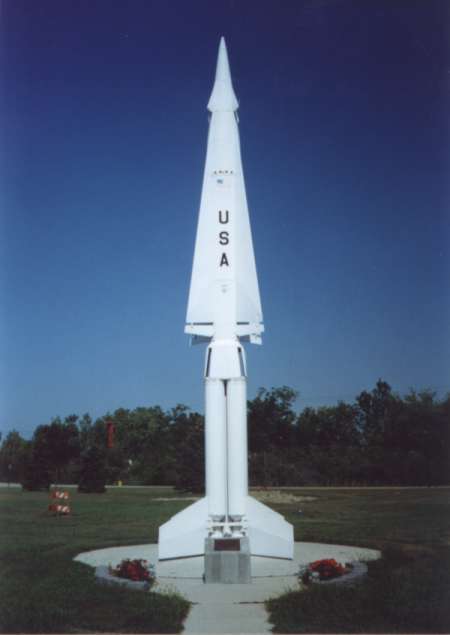
The Hercules Monument at an Ajax Site
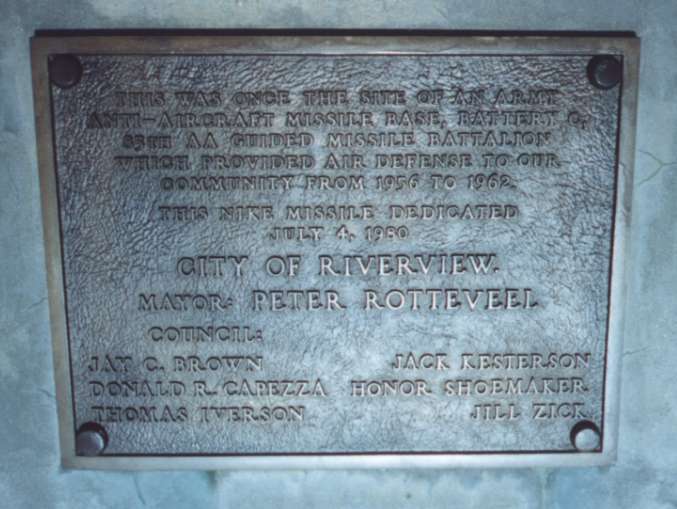
Riverview dedicated the Nike missile monument on July 4, 1980. It is one of the most visible reminders of the Detroit Defense Area and has become a familiar feature of Young Patriots Park. Photographs show a Nike Hercules missile displayed horizontally or at a shallow angle near a plaque commemorating the local battery.The display creates a common interpretive trap. D-54/55 operated Nike Ajax, not Nike Hercules. The Hercules monument represents the Nike program broadly rather than the weapon type actually stored and launched at Riverview. Its larger body and distinctive form make an impressive memorial, but it should not be used as physical evidence for a local Hercules conversion.
The plaque presents a second interpretive caution because it names Battery C, 85th Antiaircraft Guided Missile Battalion and gives 1956 to 1962. Those details conflict with the more complicated unit list and the January 1955 to February 1963 site chronology. The monument remains historically important as evidence of how Riverview remembered the installation in 1980. It is not a complete technical or organizational record.
For visitors, the best reading is layered. The missile and plaque mark the public memory of Nike defense. The former barracks connects the civic complex to the people who lived and worked at the launcher. The park surface conceals the reported magazine remains. The former IFC lies north at a private care campus. Understanding all four elements restores the scale of the double site that the monument alone cannot show.
Chronology
- 1954-1955 Property assembly, construction, equipment installation, and crew preparation occur during the buildout of the Detroit Nike Ajax ring.
- January 1955 The specialized D-54 record gives activation of the Riverview/Wyandotte double Ajax site. Battery B, 504th is listed as an early Regular Army operator.
- 1956 An older former-property description gives this as the Department of Defense acquisition year for approximately 82.84 acres. Riverview's later monument also uses 1956 as the beginning of its commemorated service span. Both conflict with the January 1955 operational date and may describe different milestones.
- January 1955-August 1958 Battery B, 504th Antiaircraft Artillery Missile Battalion
- September 1958-October 1960 Battery C, 3rd Missile Battalion, 55th Artillery is listed. The transition reflects Army reorganization and may also reflect a unit handoff.
- November 1959-February 1963 Battery C, 1st Missile Battalion, 177th Artillery, Michigan Army National Guard, is listed. Its overlap with the Regular Army chronology may reflect the double site's phased transfer or a date error.
- Probably October 1960-February 1963 Battery A, 1st Battalion, 177th Artillery is listed with an impossible start date of "10/50." October 1960 is the most plausible correction, but it remains an inference.
- 1960 Missile Master becomes operational at Selfridge, improving regional warning display and target assignment while leaving local engagement control at the battery.
- 1956-1962 The 1980 Riverview monument attributes this span to Battery C, 85th Antiaircraft Guided Missile Battalion. The inscription conflicts with the broader site chronology and unit list and may represent one half, a local association, or a commemorative error.
- February 1963 D-54/55 deactivates as the Detroit Defense Area consolidates around longer-range Hercules sites. The Riverview position never receives an operational Hercules conversion.
- August 1, 1963 The former-property summary reports approximately 75.54 acres declared excess.
- By 1973 The same summary says the remaining federal acreage was declared excess.
- Late 1970s The former IFC is reported cleared as Rivergate institutional development replaces the control property.
- July 4, 1980 Riverview dedicates the Nike missile monument at the former launcher. The displayed missile is a Hercules, although the site operated Ajax only.
- Late twentieth century Young Patriots Park, the library, fire and civic facilities, recreation grounds, and the Community Center develop across the former launch property. The Community Center incorporates a former Nike barracks.
- 2001-2002 Older FUDS material records site investigation and environmental work, including attention to the filled launch property and leachate collection.
- Later Department of Defense cleanup reporting A public database derived from federal data lists NIKE D-54/55 as response complete.
- Present Young Patriots Park remains an active municipal park and civic complex. Rivergate skilled-nursing and rehabilitation facilities occupy the former IFC property. The Hercules monument, plaque, and reused barracks remain the principal visible links to Nike service; the six Ajax magazines are reported capped below the park.
Sources & References
- PDF Defend and Deter: The Legacy of the United States Cold War Missile Program Source for the Detroit Defense Area, D-54 dual-site identity, Riverview/Wyandotte location
- WEB Ed Thelen, Nike Missile Locations, Michigan Secondary cross-check for the D-54/D-55 identity and Detroit site list.
- WEB City of Riverview, History of Riverview Current official local source for the site's role in the lower Detroit defensive ring
- WEB City of Riverview, Park Information and Location Current official source for Young Patriots Park's location and present recreation, library, Community Center, and memorial amenities.
- WEB Wayne County, Riverview community page Current official county source identifying the former launch site at Young Patriots Park, the former IFC with Rivergate Nursing Home and Terrace, and the Ajax-only installation's Hercules display.
- WEB Life Care Centers of America, Rivergate Health Care Center and Rivergate Terrace Current operator pages used to confirm skilled-nursing and rehabilitation activity on Pennsylvania Road in the former IFC area.
- WEB U.S. Government Accountability Office, Formerly Used Defense Sites inventory tables for Michigan, 2001 Historical program snapshots for NIKE D-54/55 cleanup status and projected work.
- WEB ProPublica, Bombs in Your Backyard, Michigan Secondary presentation of Department of Defense cleanup data listing NIKE D-54/55 as response complete.
- WEB Historical Marker Database, Nike Missile Site D-54 Secondary source for plaque transcription, monument date, and current photographs.
- WEB Michigan Technological University student project, Riverview, MI Nike Missile Base Secondary local synthesis consulted for the site configuration, community memory, and reuse.
List of all Nike Installations in Michigan