
Naval Outlying Landing Field Brown-Fabian, Tracy California
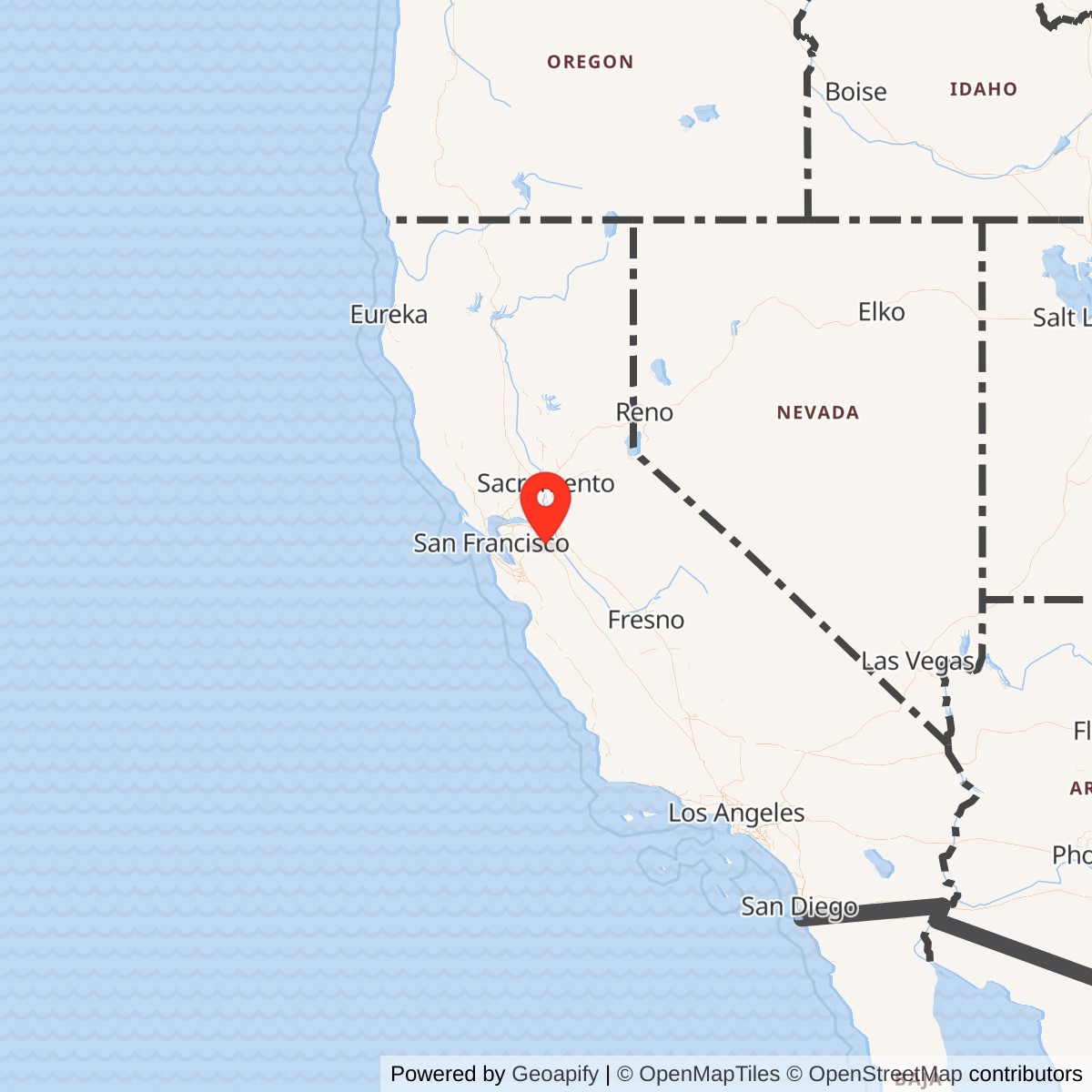
Longitude: -121.49
Current Role: Former NAS Livermore outlying landing field near Tracy; documented in the 1944 Army/Navy Directory-derived listing as a separate 6,300-foot sod runway from NOLF Brown. No active Navy or airport use identified; modern area appears rural/agricultural.
Naval Outlying Landing Field Brown-Fabian was a small wartime Navy flying field, but it belonged to one of the most intense naval aviation training systems in northern California. It was not a full naval air station, and it was not a long-lived shore base with barracks, headquarters buildings, and a permanent military community. Its purpose was narrower and more urgent. Brown-Fabian existed to give Naval Air Station Livermore another landing surface where student naval aviators could practice takeoffs, approaches, landings, and traffic-pattern work away from the congestion of the parent station.
The field was located in the Tracy area of San Joaquin County. Airfield-history research citing the 1944 U.S. Army and Navy Directory of Airfields identifies "NOLF Brown-Fabian" as a Navy outlying landing field with a 6,300-foot sod runway. The same directory-derived list identifies nearby NOLF Brown separately with a 4,000-foot sod runway. That distinction is important. Brown and Brown-Fabian were both Tracy-area fields, both served the same NAS Livermore training network, and both were probably easy to confuse in later memory.
Brown-Fabian's military identity was functional. It was a training runway, a satellite field, and a piece of open agricultural land turned into wartime aviation capacity. The Navy needed many such fields because pilot training consumed runway time at an enormous rate. A single student might need repeated circuits, repeated corrections, and repeated supervised landings before he was safe to move forward in the training pipeline. Every outlying field took pressure off the main station and reduced the amount of high-volume student landing traffic in the same airspace as administrative, maintenance, and operational aircraft.
The name also suggests a local landholding or civilian-airfield association, although the available sources do not yet provide a detailed pre-Navy ownership record. That is typical of the Livermore outlying-field network. Some of the fields were existing or local flying grounds, some were agricultural tracts adapted for wartime use, and some were known by the names of landowners or nearby local features. Brown-Fabian should therefore be understood as a temporary naval adaptation of a local landscape rather than a purpose-built permanent station.
Mission and Military Role
Brown-Fabian's mission was primary flight-training support for NAS Livermore. The parent station was developed in 1942 as the Navy expanded training capacity east of the Bay Area and relieved pressure on earlier Oakland-area naval aviation facilities. Livermore handled the command, instruction, aircraft-support, and station functions. Brown-Fabian handled one of the most basic needs of that system: landing space.During World War II, naval aviation training depended on distributed airfields. Main air stations could not absorb every approach, landing, takeoff, solo hop, and emergency-field exercise required by the training syllabus. Small outlying landing fields solved the capacity problem. They allowed instructors to send students away from the main base for repetitive practice while keeping aircraft within a manageable radius of the parent station. Brown-Fabian's 6,300-foot sod runway made it one of the longer fields in the Livermore outlying network and would have given the Navy a useful amount of open landing distance for student work.
The day-to-day activity at Brown-Fabian was probably ordinary by design. Student pilots approached, landed, rolled out, took off, entered the pattern again, and repeated the process. Some flights may have included emergency-field familiarization, crosswind practice, or dispersal use when other sod fields were wet, crowded, dusty, or otherwise less suitable. The field did not need to host a separate naval command structure to be useful. Its value was the runway and the open airspace around it.
That ordinary work was dangerous and important. Primary trainers were forgiving aircraft, but student pilots were still students. They misjudged height, drifted off centerline, bounced, overcorrected, flared too high, or carried too much speed. Brown-Fabian's open rural setting reduced the risk that those mistakes would occur in a crowded main-base environment. The field helped convert inexperience into competence, one landing at a time.
Brown-Fabian also supported the tempo of the wider war. The pilots trained through the Livermore system did not remain at Livermore or at its outlying fields. They moved onward through the naval aviation pipeline toward advanced training, operational units, carrier aviation, patrol work, and combat service. Brown-Fabian did not launch combat missions, but it contributed to the stateside training infrastructure that made combat aviation possible.
Site Design and Facilities
The available evidence identifies Brown-Fabian as a sod outlying landing field with a 6,300-foot runway. No source used for this focused history documents a large hangar complex, permanent barracks, independent station headquarters, fuel farm, hospital, magazine, or large administrative plant at the site. That is consistent with its NOLF designation. Outlying landing fields were normally subordinate to a parent air station and existed chiefly to provide landing surfaces rather than full base services.The 6,300-foot runway length is the most important physical clue. Within the directory-derived Livermore outlying-field list, Brown-Fabian appears longer than many of the other sod fields. Abel was listed with a 3,800-foot runway, Brown with a 4,000-foot runway, Cope with a 3,200-foot runway, Gelderman with a 2,200-foot runway, Linderman with a 3,900-foot runway, Rita Butterworth with a 3,000-foot runway, Spring Valley with a 3,500-foot runway, and Wagoner with a 2,000-foot runway. Brown-Fabian's 6,300-foot listing therefore suggests that it may have offered especially useful runway margin, though the field still appears to have been an unpaved or sod installation rather than a paved auxiliary station.
The rural Tracy-area setting was also part of the design logic. The Navy needed level land, safe approaches, and enough surrounding open space to absorb student training errors. The San Joaquin Valley edge near Tracy offered farmland and low-density surroundings close enough to Livermore to serve the parent station, but far enough from the immediate main-base traffic pattern to relieve congestion. That kind of geography made Brown-Fabian valuable even if its physical plant was minimal.
Brown-Fabian's simplicity also explains why it is difficult to read on the modern landscape. A sod runway could disappear quickly after military use ended. Once markings, windsocks, boundary markers, or temporary support features were removed, the land could be plowed, irrigated, graded, or otherwise returned to agricultural use. Unlike a concrete naval auxiliary air station, a sod NOLF often left few durable traces.
Role in the Wider Military Network
Brown-Fabian only makes sense inside the NAS Livermore network. Airfield-history research states that Livermore had twelve outlying fields to assist the primary training mission: Abel, Cope, Brown, Brown-Fabian, Gelderman, Heath, Lindeman, Livermore, Mays School, Rita-Butterworth, Spring Valley, and Wagoner. The U.S. Naval Activities World War II state list separately identifies Naval Air Station Livermore, Wagoner Field, and a Combat Aircrew Refresher Training Unit at Livermore. Together, these sources show that Livermore was not a single airfield story. It was a dispersed aviation system.The logic of that system was capacity. Naval pilot training required repeated use of landing fields, and repeated use created congestion. By distributing operations among many rural fields, the Navy could increase training throughput while reducing traffic conflicts at the parent base. Brown-Fabian's role was to add runway capacity to that distributed system. Its long sod runway gave the Livermore command another place to send students when the main station or another outlying field could not absorb more traffic.
The system also provided resilience. The Livermore outlying fields were sod or unpaved fields, and sod fields were sensitive to weather and ground condition. If one field was too wet, dusty, soft, or otherwise unavailable, another could be used. A network of fields gave the Navy flexibility that a single main station could not provide. Brown-Fabian's length may have made it especially useful when instructors needed more landing margin or when training schedules demanded a larger practice field.
The geography of the network reached across Alameda, Santa Clara, and San Joaquin County landscapes. Abel was toward Warm Springs and Milpitas, Cope and Rita-Butterworth were around Pleasanton, Gelderman was around Dublin and San Ramon, Heath was in the Fremont area, Livermore and Wagoner were closer to the parent station, and Brown, Brown-Fabian, and Lindeman pushed east toward Tracy. This broad distribution turned much of the East Bay and the western San Joaquin Valley into a temporary naval aviation classroom.
Brown-Fabian also shows how small facilities supported large strategic outcomes. Naval aviation is often remembered through carriers and combat aircraft, but those front-line operations depended on stateside training networks. Every qualified pilot passed through fields, instructors, and repetitive exercises before joining operational aviation. Brown-Fabian was one of the quiet pieces of that system.
Postwar Reuse and Current Status
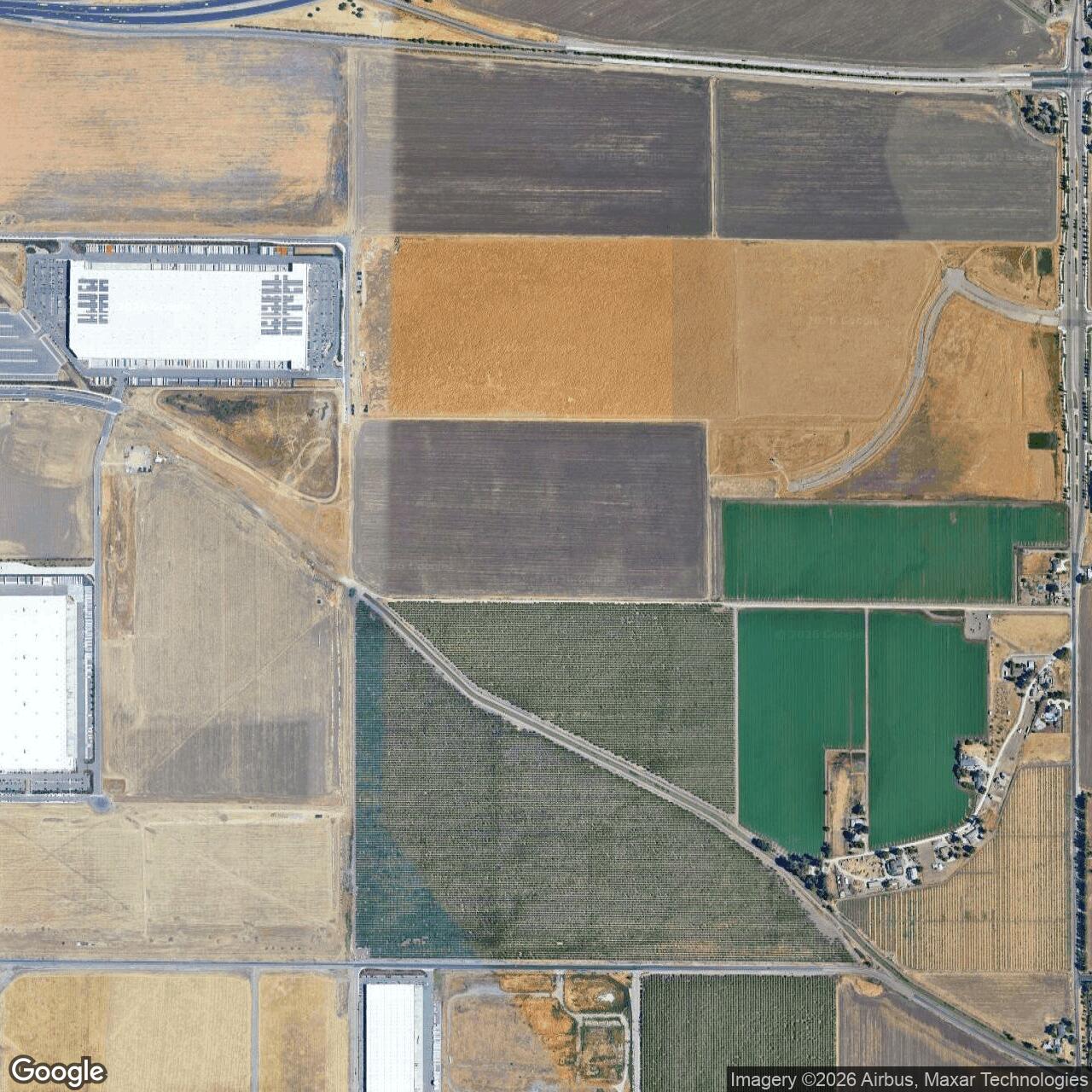
Brown-Fabian's Navy use appears to have ended as wartime training requirements declined in 1945. No active postwar Navy role is identified in the sources used for this focused history. Unlike some former naval fields that continued as municipal airports or later federal facilities, Brown-Fabian does not appear in the available sources as a long-lived active aviation successor.The present site is best described as a closed former naval outlying landing field in the Tracy area, with no active Navy function and no active airport use identified. Modern land use at and around the recorded coordinate appears rural and agricultural. Because the field was a sod training strip, that outcome is historically plausible. A wartime landing surface could be removed from aviation use and returned to farming with few obvious remains.
Chronology
- 1942 Naval Air Station Livermore was developed as a Navy training station east of the Bay Area, relieving pressure on earlier Oakland-area naval aviation facilities.
- 1943 Brown-Fabian entered wartime Navy use as one of the outlying landing fields associated with NAS Livermore.
- 1944 The U.S. Army and Navy Directory of Airfields, as preserved in airfield-history research, listed NOLF Brown-Fabian at Tracy, California, with a 6,300-foot sod runway at approximately 37.73, -121.49.
- 1944 The same directory-derived listing identified Brown-Fabian separately from nearby NOLF Brown.
- 1944 NAS Livermore reached peak use in the training era, with hundreds of primary trainers and nearly 2,900 personnel reported in airfield-history research.
- 1944-10-15 NAS Livermore's primary training function declined as pilot demand changed, and the station increasingly served operational carrier-based units and transient naval aircraft.
- 1945 Navy use of the Livermore outlying-field network wound down as wartime training requirements declined.
- Post-1945 Brown-Fabian did not continue as a documented active Navy installation and appears to have returned to rural or agricultural land use.
- Present The former NOLF Brown-Fabian site is a closed former naval outlying landing field near Tracy, with no active Navy or aviation use identified in the sources used here.
Sources & References
- WEB Abandoned & Little-Known Airfields Abandoned & Little-Known Airfields: San Jose area NAS Livermore and Livermore outlying-field discussion
- WEB U.S. Naval Activities, World War Two, By State [California] Naval Historical Center transcription hosted by HyperWar