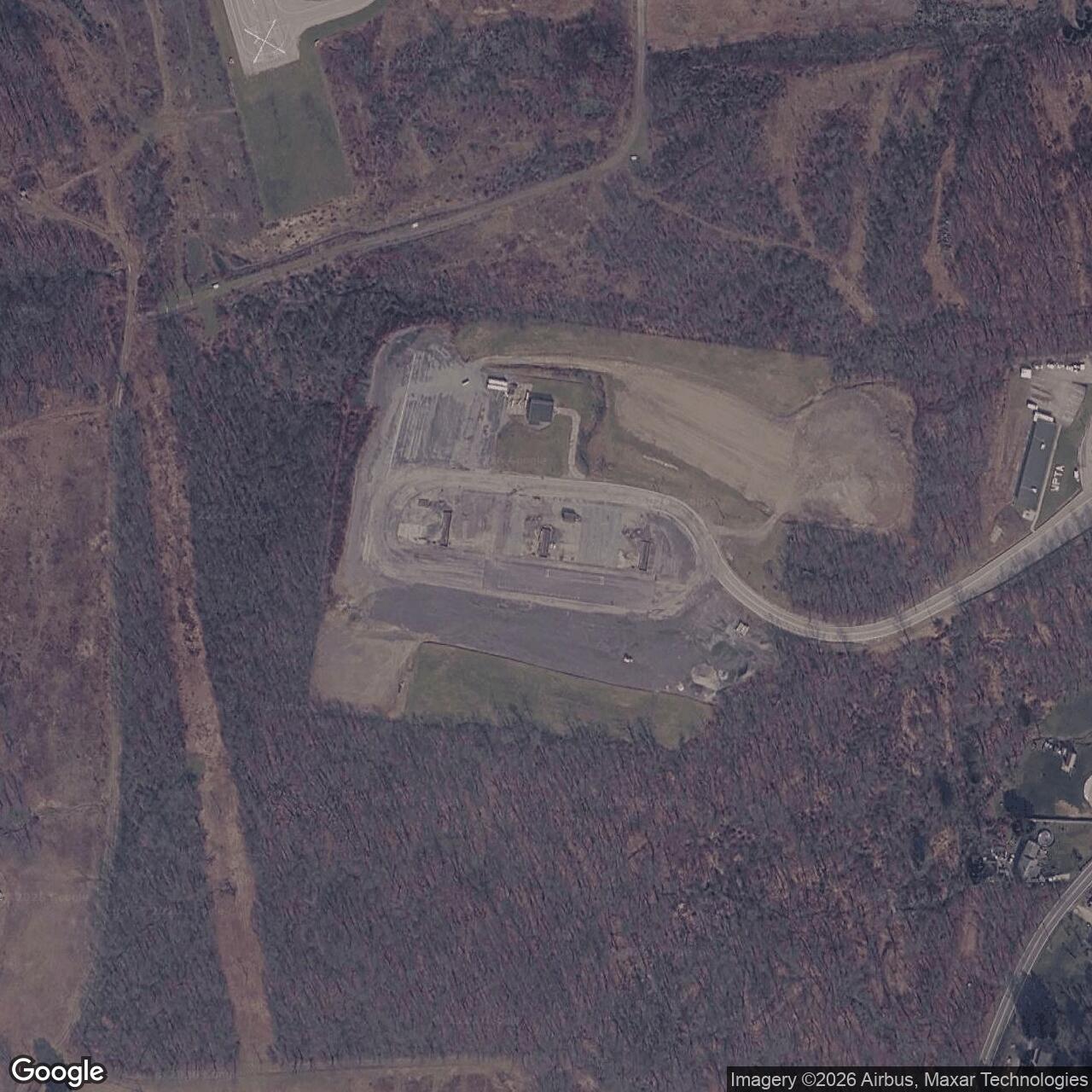
Nike Missile Site PI-02 Launcher, Rural Ridge Pennsylvania
Longitude: -79.8226738610134
This location was part of the Pittsburgh Defense Area
Site ID: PI-02
The missiles at this Launch Area were controlled by the Integrated Fire Control site located here.
Site Role: Launcher
A typical Nike air defense site consisted of two separate parcels of land. One area was known as the Integrated Fire Control (IFC) Area. This site contained the Nike system's ground-based radar and computer systems designed to detect and track hostile aircraft, and to guide the missiles to their targets.
The second parcel of land was known as the Launcher Area. At the launcher area, Nike missiles were stored horizontally within heavily constructed underground missile magazines. A large, missile elevator brought the Nikes to the surface of the site where they would be pushed across twin steel rails to one of four satellite launchers.
Elaboration on how Nike worked here.
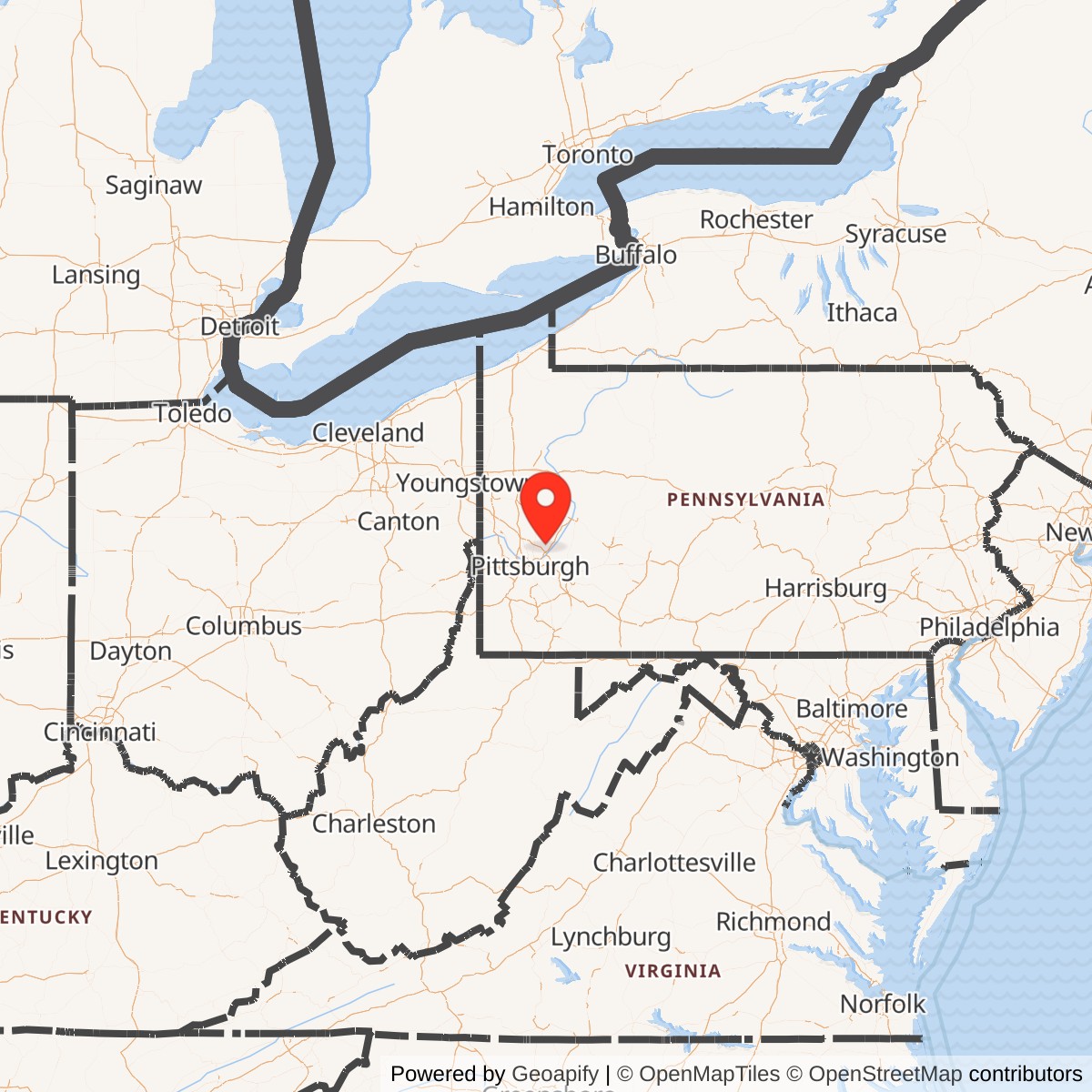
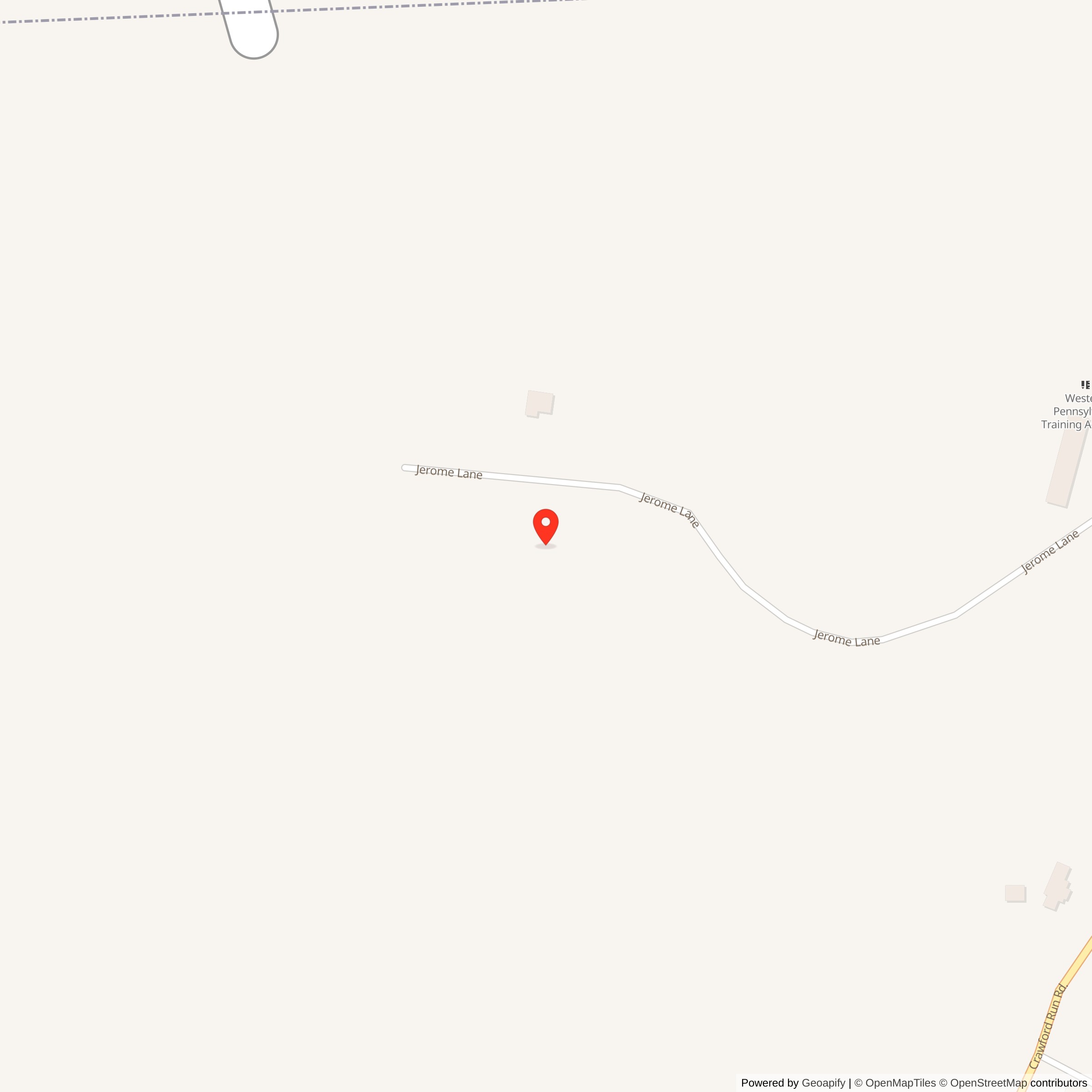
Nike Missile Site PI-02 was a U.S. Army Nike Ajax air-defense missile battery in the Pittsburgh Defense Area. The site was located at Rural Ridge in northeastern Allegheny County, Pennsylvania, in the Indiana Township / Cheswick / Rural Ridge area northeast of Pittsburgh. It was part of the ring of Nike missile batteries built to defend Pittsburgh, the Allegheny Valley, and the region's steel, transportation, power, and heavy-industrial infrastructure during the early Cold War.
It was an Ajax-only Nike battery, active from April 1955 to April 1963. It was not one of the Pittsburgh Defense Area sites converted to Nike Hercules. After closure, the control area and launcher area were transferred out of Department of Defense control and reused for civilian and state purposes.
History
PI-02 belonged to the Nike ring built around Pittsburgh during the early Cold War. Pittsburgh was not defended simply because it was a large city. It was defended because the region was one of the nation's major industrial centers, with steelmaking, heavy manufacturing, river and rail transportation, bridges, electrical infrastructure, and other assets considered vital to national defense and wartime production. During the 1950s, U.S. air-defense planning assumed that Soviet long-range bombers could attack American industrial regions, and the Army's Nike system became the last layer of defense for selected metropolitan and military targets.The Pittsburgh Defense Area developed out of earlier antiaircraft-gun defenses. In April 1952, before the permanent Nike missile sites were complete, Army troops and heavy equipment moved through the region to establish gun positions to protect the "Steel City." These early gun batteries were a temporary and transitional measure. With the introduction of Nike Ajax, the region received permanent missile batteries with underground magazines, radar-guidance facilities, support buildings, and trained missile crews. The Corps of Engineers Pittsburgh District, part of the Ohio River Division, was responsible for constructing the Nike installations in the Pittsburgh area. The first construction contract for the Pittsburgh Nike system was awarded in July 1954.
Pittsburgh's terrain made site development difficult. Nike batteries required separated launcher and control areas: the launcher area had to provide secure missile storage and launch positions, while the IFC area had to provide radar line-of-sight for acquisition, target tracking, and missile tracking. Around Pittsburgh, steep hills, river valleys, wooded ridges, and suburban development forced the Corps and Army planners to place the paired parcels carefully. The result was a ring of dispersed sites, some on ridges for radar coverage and others on lower but usable ground for launch operations.
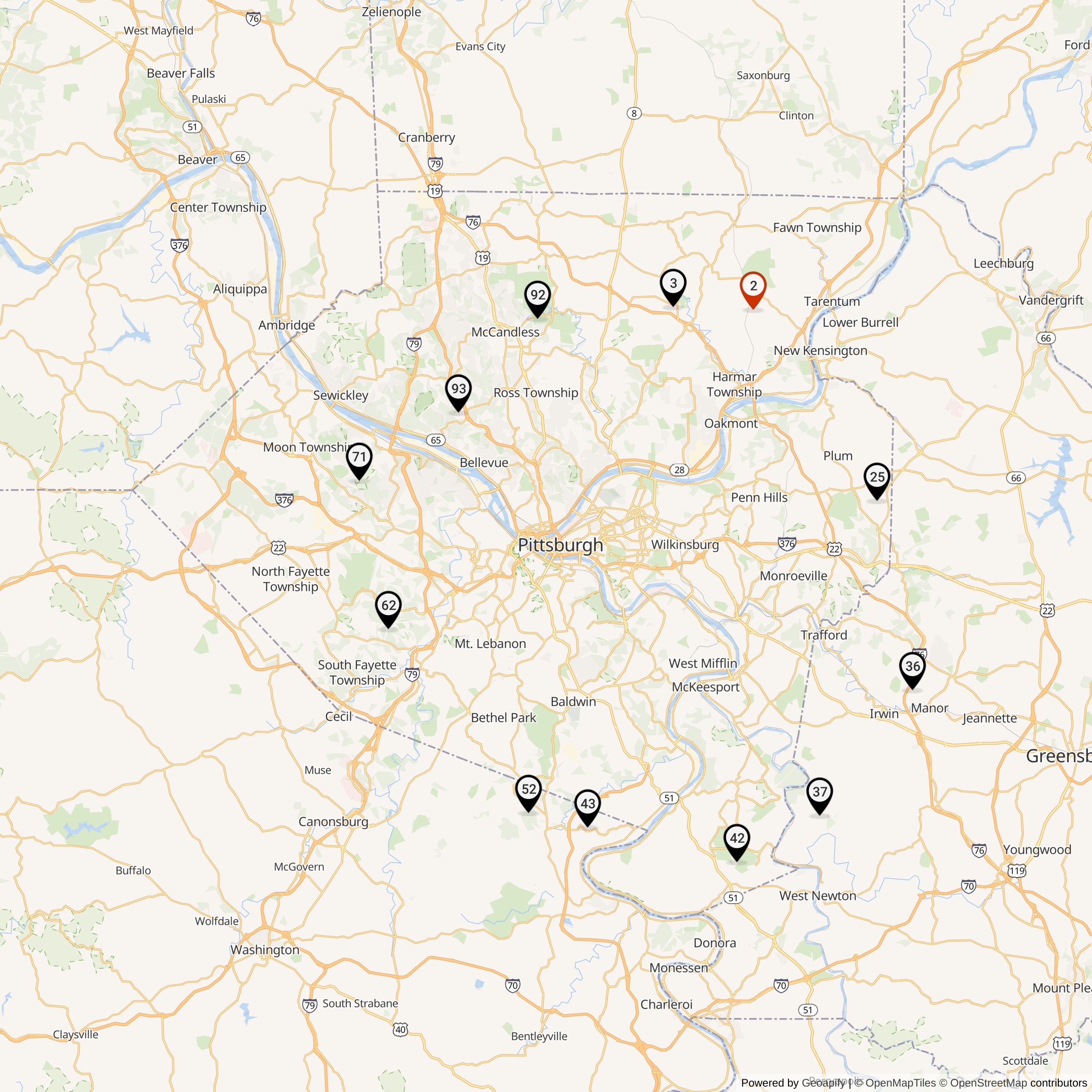
The Pittsburgh Nike network included PI-02 at Rural Ridge, PI-03 at Dorseyville / Indianola, PI-25 at Murrysville / Monroeville, PI-36 at Irwin, PI-37 at Cowansburg / Herminie, PI-42 at Elizabeth, PI-43 at Elrama / east of Finleyville, PI-52 at Finleyville, PI-62 at Bridgeville / Hickman, PI-71 at Coraopolis / Beacon, PI-92 at Bryant / North Park, and PI-93 at West View. Of these, PI-03, PI-36, PI-37, PI-43, PI-71, and PI-93 were the Pittsburgh sites upgraded to Nike Hercules. PI-02 was not upgraded and remained an Ajax-only site until its closure.
Site Layout
PI-02 consisted of two principal operating areas.The Integrated Fire Control area was the radar and guidance side of the battery. It contained acquisition and tracking radar equipment, target-identification and fire-control functions, guidance electronics, power and support facilities, and operating buildings. The PI-02 IFC/control area was located south of Rural Ridge on or near Rich Hill Road. Later site listings identify this parcel with Teen Challenge / drug and alcohol rehabilitation use.
The launcher area was the missile-storage and launch side of the battery. It was located north of Rural Ridge. This was the secured area that held the underground magazines, launchers, missile-handling surfaces, ready areas, access roads, fencing, and supporting utilities. Later site listings identify the launcher area with Pennsylvania Department of Transportation use, including a road-equipment or training yard. A 1999 site note reported that the three launch silos were still intact and empty, while later summaries describe the magazines as visible and used in connection with equipment storage or earth-moving-equipment training.
In standard Nike operation, missiles were stored horizontally in underground concrete magazines. Elevator platforms raised missiles to the surface, where crews moved them onto launch rails. At an Ajax-only site such as PI-02, the missiles were smaller than Nike Hercules and the facility was not modified for the larger Hercules missile. The federal Nike inventory lists PI-02 as Nike 1B,2C/30A/12L-A, indicating one Type B magazine, two Type C magazines, 30 Nike Ajax missiles, and 12 Ajax launchers.
The separation between PI-02's launcher and IFC parcels was not incidental. It reflected the basic Nike architecture. Radars needed suitable elevation and line-of-sight; magazines needed secure land with enough space for launchers, roads, fences, and safety zones. The two parcels had to be far enough apart to work with terrain and safety requirements but linked operationally by communications and command systems.
Nike Ajax Period
PI-02 entered service in April 1955 during the first permanent Nike missile buildup around Pittsburgh. At that time the site's weapon was the Nike Ajax. The Ajax missile represented the Army's first operational guided surface-to-air missile and replaced the earlier gun-battery concept with radar-guided missile defense. For the Pittsburgh area, this meant that air defense moved from temporary gun positions to a permanent and technologically sophisticated network of batteries around the city.The Ajax period at PI-02 coincided with rapid Cold War air-defense expansion across the United States. The Soviet atomic bomb, the Korean War, and the fear of bomber attack had pushed the United States to build a national air-defense system combining early-warning radars, fighter interceptors, command-and-control centers, and Army surface-to-air missile batteries. PI-02 was one local element of that national system.
In the first years of operation, PI-02 would have maintained missile crews, radar operators, maintenance personnel, guards, and support staff on a round-the-clock readiness basis. Nike service was routine, technical, and highly disciplined. Crews trained to receive target information, acquire and track aircraft, prepare missiles, and execute launch procedures only under command authority. Even though no Nike missile was ever fired in combat in the United States, the batteries were intended to be ready at all times.
PI-02 did not receive the later Nike Hercules upgrade. Nike Hercules was larger, solid-fueled, longer-ranged, and able to carry either a high-explosive or nuclear warhead. In the Pittsburgh Defense Area, selected sites were converted to Hercules, allowing fewer batteries to cover broader sectors. Ajax-only sites such as PI-02 were no longer as useful in the revised air-defense pattern and were closed earlier than the retained Hercules batteries.
Mission and Operation
PI-02's mission was to detect, track, and, if ordered, engage hostile aircraft approaching the Pittsburgh region from the northeast. Like every Nike battery, it was not a free-standing tactical missile base in the later ballistic-missile sense. It was a fixed air-defense battery tied into a regional and national command-and-control network. The system worked by combining long-range radar detection, target tracking, missile tracking, and ground-based computer guidance.The Nike Ajax system used a command-guidance method. The missile did not independently search for the target. Instead, radar and computer equipment in the IFC area tracked both the target and the missile. Ground equipment calculated an intercept course and sent steering commands to the missile. When the missile reached the calculated intercept point, the system detonated its warhead.
The daily work of PI-02 would have included radar operation, missile maintenance, security, communications maintenance, generator operation, vehicle support, magazine maintenance, launcher drills, and repeated readiness training. The control area was the nerve center of the battery, while the launcher area was the secured weapons side. Ajax operations also required careful handling of missile components, liquid-fuel-era equipment, and hazardous materials associated with missile maintenance.
Command and Control
PI-02 operated as part of the Pittsburgh regional Nike command system. Command-and-control functions for the Pittsburgh Defense Area were eventually handled through a Missile Master / Missile Mentor facility collocated with Air Force radars near Oakdale. The Missile Master became operational in 1960. The Oakdale site is commonly identified as PI-70DC and was tied into the Air Force air-defense radar and SAGE environment as part of the larger North American air-defense system.For a battery such as PI-02, this meant that local radar and launcher crews did not operate in isolation. The battery was part of a regional network in which surveillance data, target assignments, identification procedures, and engagement authority flowed through higher command channels. The Nike battery could track and fire locally, but target assignment and engagement control were coordinated within the regional air-defense command structure.
The presence of this command network is important for understanding PI-02's purpose. The site was not simply a set of missile pads. It was a node in an integrated defense system that linked Army missile batteries, Air Force radars, and national air-defense command organizations.
Deactivation
PI-02 remained operational until April 1963. By that time the Pittsburgh Defense Area had begun shifting away from a dense Ajax ring toward selected Nike Hercules batteries. Nike Hercules had greater range and altitude than Ajax and could defend larger sectors with fewer installations. The Army therefore retained some Pittsburgh sites and closed others.PI-02's closure in April 1963 reflects that transition. It was not a failure of the site itself; it was a consequence of changing weapons technology, changing air-defense doctrine, and the reduced need for numerous Ajax-only batteries after Hercules deployment. The remaining Hercules sites in the Pittsburgh Defense Area continued into the early 1970s, with several operating until 1974.
After PI-02 closed, its missiles, classified equipment, and active military functions were removed. The site then entered the post-military property-disposal and reuse cycle typical of many Nike installations.
Post-Closure Use and Current Condition
After deactivation, the PI-02 parcels followed different post-military paths.The IFC/control area was reused by Teen Challenge / Adult & Teen Challenge-related rehabilitation programming at Rural Ridge. Public site listings describe a few former military buildings in use and no surviving radar towers. A current public rehabilitation-center listing identifies Teen Challenge of Western Pennsylvania at 220 Challenge Lane, Rural Ridge, Pennsylvania, which corresponds to the former control-side reuse area.
The launcher area was reused by the Pennsylvania Department of Transportation. Older Nike site notes describe it as a PennDOT road-equipment yard, and later public summaries describe the magazine area as being used for earth-moving-equipment training, with magazines visible and snow plows stored on or around them. A 1999 observer note recorded that the former barracks building had been remodeled for offices and classrooms and that the three launch silos were still intact and empty. The same note mentioned a possible future sale to a neighboring airport owner, but the core verified post-closure interpretation is that the launch area was reused for transportation-related equipment or training activity.
PI-02 also appears in Pennsylvania hazardous-site and Formerly Used Defense Site references, reflecting the broader environmental and property-management legacy of former Nike installations. Many Nike sites had to be evaluated for residual contamination, underground structures, demolition debris, petroleum, solvents, asbestos, lead paint, or other defense-site concerns after their military mission ended.
List of all Nike Installations in the Pittsburgh Defense AreaList of all Nike Installations in Pennsylvania