Nike Missile Site PI-36 Launcher, Irwin Pennsylvania
Longitude: -79.6845924761483
This location was part of the Pittsburgh Defense Area
Site ID: PI-36
The missiles at this Launch Area were controlled by the Integrated Fire Control site located here.
Site Role: Launcher
A typical Nike air defense site consisted of two separate parcels of land. One area was known as the Integrated Fire Control (IFC) Area. This site contained the Nike system's ground-based radar and computer systems designed to detect and track hostile aircraft, and to guide the missiles to their targets.
The second parcel of land was known as the Launcher Area. At the launcher area, Nike missiles were stored horizontally within heavily constructed underground missile magazines. A large, missile elevator brought the Nikes to the surface of the site where they would be pushed across twin steel rails to one of four satellite launchers.
Elaboration on how Nike worked here.
Missile Type: Ajax/Hercules
The Nike Ajax was the first in the Army's family of guided missiles, and the world's first operational, guided, surface-to-air missile system. Nike Ajax had a burnout speed of Mach 2.3, a range of 25-30 miles, and a ceiling of 65,000 feet.
Designed to carry either nuclear and/or high-explosive warheads, the Nike Hercules missile could attack supersonic aircraft operating at altitudes in excess of 150,000 feet and at a range of more than 87 miles.
Battery Type: single
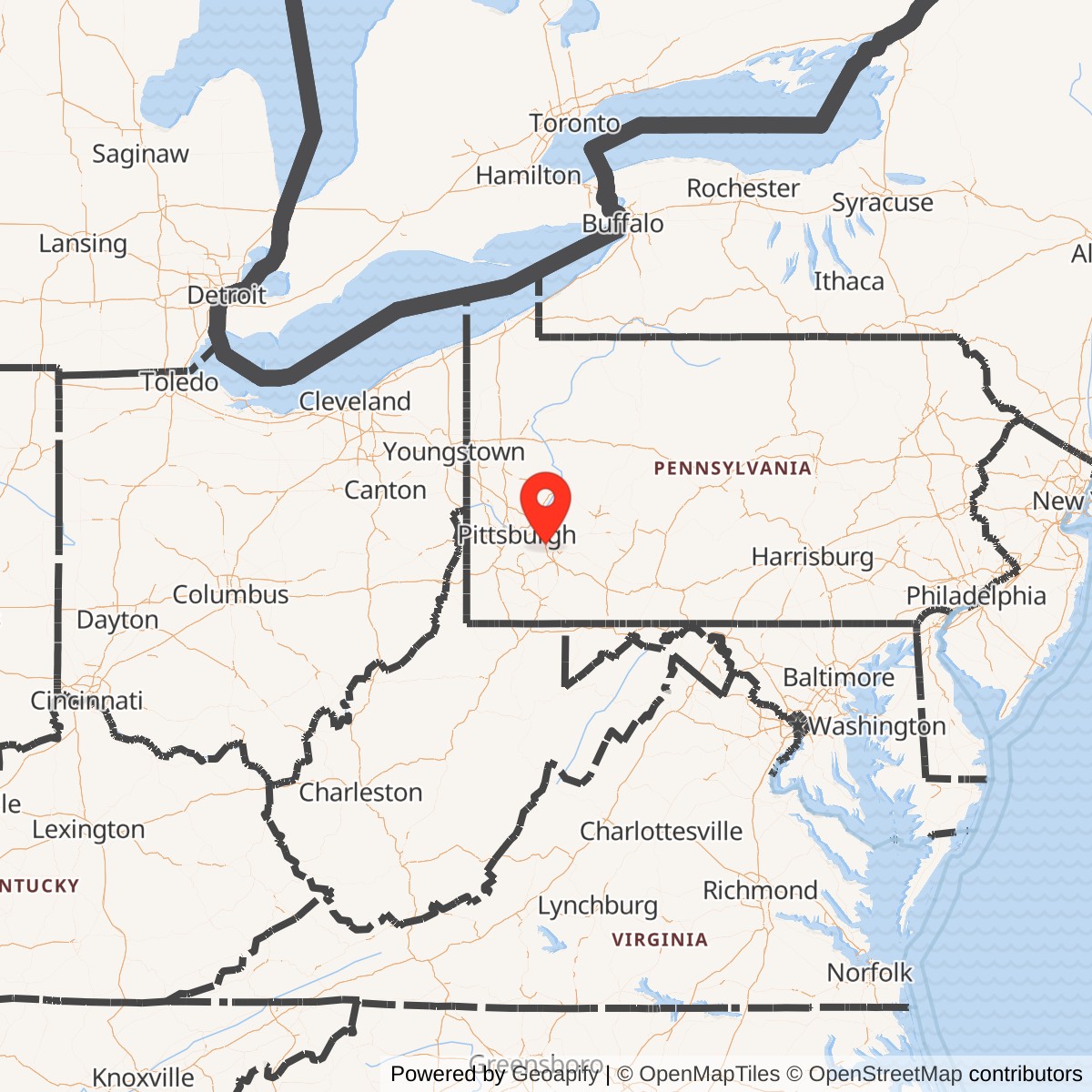
Nike Missile Site PI-36 was a U.S. Army Nike air-defense missile battery in the Pittsburgh Defense Area. The site was associated with Irwin, North Irwin, Manor, and North Huntingdon Township in Westmoreland County, Pennsylvania, southeast of Pittsburgh. Its mission was to help defend the Pittsburgh industrial region, the "Steel City", against Soviet long-range bomber attack during the Cold War.
Federal Nike inventories list PI-36 as an Army Nike site at Irwin, active from April 1955 to December 1968. The site began as a Nike Ajax battery and was later converted for Nike Hercules. Appendix D of the Army Nike Hercules history lists PI-36 among the converted defense sites, with Hercules construction from June 1958 to May 1959 and an operational Nike Hercules date of July 1, 1959.
Units and Personnel
PI-36 was known locally as an Irwin-area Nike missile battery. The American Legion memorial entry for the Irwin Nike Site Memorial identifies Missile Battery C of Site PI-36 as the unit commemorated at the Irwin Veterans Memorial. Pittsburgh air-defense organizational summaries also place Headquarters and Battery C at Irwin in the Nike era. The broader Pittsburgh Defense Area was initially manned by active Army air-defense battalions. After the Pittsburgh sites were upgraded and reorganized, manning responsibilities in the area were supplied by one Regular Army unit, the 3rd Missile Battalion, 1st Artillery, and one Pennsylvania Army National Guard unit, the 2nd Missile Battalion, 176th Artillery, known as the Duquesne Greys.
Cold War Background and Pittsburgh Defense Mission
PI-36 existed because Pittsburgh was one of the most important industrial targets in the United States during the early Cold War. The region's steel mills, heavy manufacturing plants, river transport network, rail lines, bridges, power infrastructure, and dense urban population made it a logical target for strategic air attack planning. During the early 1950s, before intercontinental ballistic missiles became the dominant nuclear threat, the primary danger envisioned by U.S. air-defense planners was a Soviet bomber attack carrying nuclear weapons against American cities and industrial regions.The first layer of Pittsburgh's missile-era air defense was not Nike but conventional antiaircraft artillery. In April 1952, soldiers and heavy equipment moved through the McKeesport area toward Pittsburgh to establish a ring of hastily sited gun positions around the metropolitan region. These gun batteries were a transitional response to the Soviet atomic threat. They were built quickly, often under rough field conditions, and were later replaced by permanent missile batteries as the Nike Ajax system became available.
The Pittsburgh District of the U.S. Army Corps of Engineers supervised construction of the Pittsburgh Nike sites. The terrain around Pittsburgh made the work unusually difficult. A Nike battery required separation between the radar/control area and the launch area, but those two areas also needed a workable line-of-sight relationship so that the guidance radars and missile-control equipment could operate correctly. Around Pittsburgh, that meant adapting standard Nike designs to ridges, valleys, wooded hillsides, and suburban edges. Corps histories cited in the federal missile-context report note that Pittsburgh site-construction contracts began in July 1954 and that individual sites cost roughly $600,000 to $700,000 to construct.
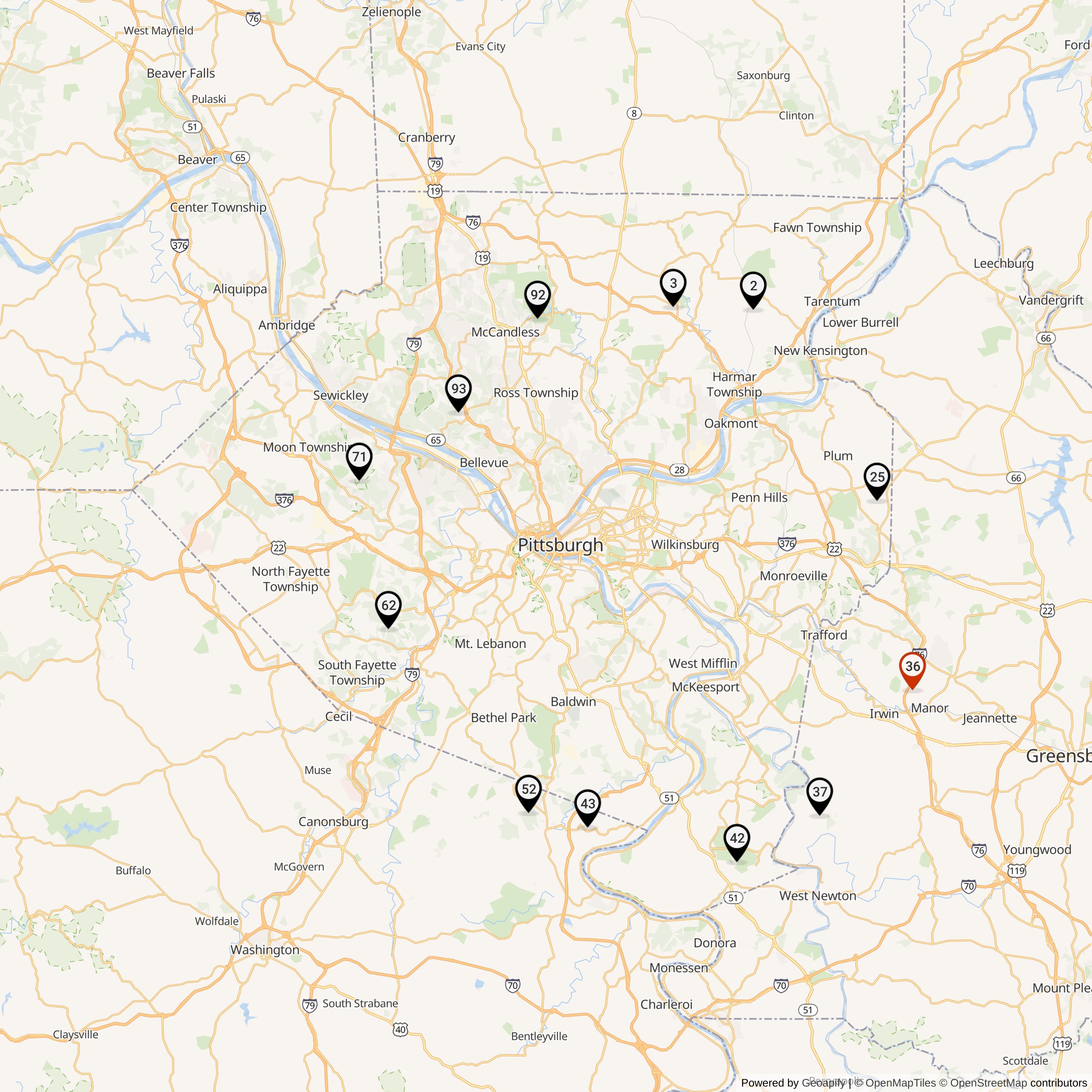
PI-36 was one of the batteries in this Pittsburgh ring. Its southeast-of-city position helped cover approaches toward Pittsburgh from the east and southeast and contributed to overlapping defense with other Pittsburgh-area batteries, including Rural Ridge, Dorseyville/Indianola, Cowansburg/Herminie, Elrama, Finleyville, Bridgeville/Hickman, Coraopolis/Beacon, North Park, West View, Elizabeth, and other sites in the defense area.
Nike Ajax Period
PI-36 began service as a Nike Ajax site. The Nike Ajax was the Army's first operational surface-to-air guided missile system and was designed to intercept high-flying bomber formations before they reached protected targets. Unlike earlier antiaircraft guns, Nike Ajax was a radar-guided missile system. A typical battery used acquisition radar to search for hostile aircraft, target-tracking radar to follow the selected aircraft, missile-tracking radar to follow the launched missile, and a ground-based analog computer to calculate an intercept solution. The missile itself was command-guided from the ground.At PI-36, the Ajax-era installation would have followed the standard two-part Nike battery layout. The Integrated Fire Control area contained the radar and computer equipment. The launch area contained underground missile magazines, elevators, launch rails, missile assembly and maintenance areas, security fencing, guard facilities, generators, and support buildings. The two areas were separated for safety, blast protection, and technical reasons but were linked operationally as one battery.
Federal inventory shorthand identifies PI-36 as "Nike 1B,2C/18H,30A/10L-U." In practical terms, this means the site had a mixed magazine configuration from its Ajax construction and Hercules conversion history. It was capable of housing 30 Nike Ajax missiles during its Ajax period, and after conversion it was associated with 18 Nike Hercules missiles and 10 universal launchers. The "1B,2C" magazine designation indicates one Type B magazine and two Type C magazines; Type C magazines were Ajax-only original-design magazines, while Type B magazines could be modified for Hercules operations. The later universal launchers allowed the battery to support the larger Hercules missile.
Nike Hercules Conversion
PI-36 was one of the Pittsburgh Defense Area batteries selected for conversion from Nike Ajax to Nike Hercules. The Hercules conversion was part of the national modernization of the Nike system. Nike Hercules was larger, solid-fueled, longer-ranged, and more capable than Ajax. It could carry either a conventional high-explosive warhead or a nuclear warhead, giving it the ability to engage formations of attacking bombers at greater range and altitude. This did not mean that every public source confirms nuclear warheads were physically stored at every converted site at all times, but it does mean the Hercules-configured site was part of the nuclear-capable Nike Hercules system.Appendix D of the Nike Hercules history lists PI-36 in the Pittsburgh Defense Area as a converted defense site. The conversion period is given as June 1958 to May 1959, with the site operational with Hercules missiles on July 1, 1959. The same table lists the site's converted magazine configuration as 1B and 2C. That source is important because it distinguishes PI-36 from Ajax-only Pittsburgh sites and confirms it as one of the Pittsburgh batteries that carried the missile-defense mission into the Hercules period.
The Pittsburgh Defense Area history in the federal Cold War missile context identifies PI-03, PI-36, PI-37, PI-43, PI-71, and PI-93 as the Pittsburgh sites that received Nike Hercules. Those converted batteries became the long-term core of the area's missile defense after the Ajax-only sites were closed.
Control, Command, and the Oakdale Missile Master System
By the Hercules period, individual Nike batteries such as PI-36 did not operate in isolation. They were tied into a larger regional air-defense network that included Army command-and-control facilities, Air Force radar data, and the national air-defense warning system. In the Pittsburgh Defense Area, command and control was handled through the Missile Master / Missile Mentor facility collocated with Air Force radar facilities near Oakdale. The Missile Master facility became operational in 1960.This command system helped coordinate target assignment among multiple batteries so that several Nike sites would not waste missiles on the same aircraft while other threats went unengaged. It also integrated the local missile batteries into broader air-defense command structures. In the larger Cold War context, this reflected the shift from isolated antiaircraft gun positions to computerized, radar-driven air defense.
For PI-36, this meant that the Irwin battery was a local tactical site whose actual firing orders and air-defense picture were tied into a regional system. Crews at PI-36 maintained their own radar, launch, security, generator, and missile-handling functions, but the battery's wartime role depended on command data and target-assignment networks reaching outward to the rest of the Pittsburgh Defense Area and beyond.
Site Layout and Physical Description
PI-36's former control area was located near the Irwin / North Irwin / North Huntingdon side of the site. Philadelphia Architects and Buildings identifies the PI-36 Nike Missile Launch Complex at 1800 Morris Avenue in North Huntingdon Township.The control area would have contained the radar and fire-control components of the battery: acquisition radar, target-tracking radar, missile-tracking radar, control vans or fixed control structures, generator support, communication equipment, operations buildings, and personnel/support buildings. Later veteran and local-history comments indicate that at least some control-side buildings and hardened features survived after military use ended, including references to a blockhouse-like room and surviving structures at or near the Oak Hollow side.
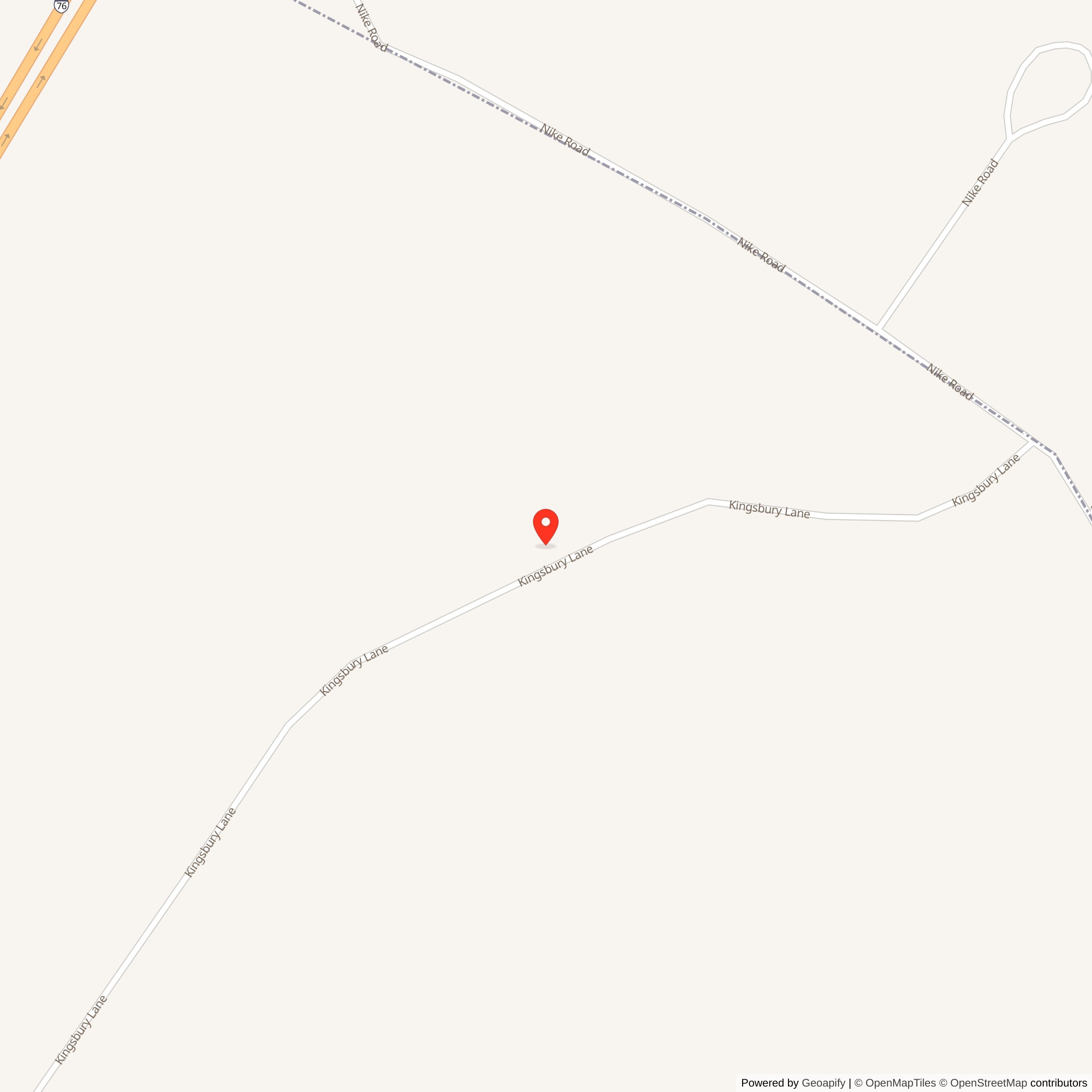
The launch area was across the Pennsylvania Turnpike, west of South Sandy Hill Road near Nike Road. During operation, this area would have included the underground magazines, launch rails, missile elevators, blast/earth berms, security fencing, a guard post, access roads, launcher-control equipment, missile handling areas, and support buildings.
The separation of the two areas was typical of Nike design. The launch area needed open, secure space for missiles and magazines, while the IFC area needed higher or clearer radar lines of sight. In hilly western Pennsylvania, the siting of the two areas also reflected the ridgeline terrain and the need for unobstructed radar and missile-tracking geometry.
Operation and Daily Life
PI-36 was a small, specialized missile installation rather than a large Army post. The soldiers who served there worked in a highly technical environment that combined air-defense doctrine, electronics, missile maintenance, security, and around-the-clock readiness. Launcher-area personnel handled missile storage, assembly, fueling-era safety requirements during the Ajax period, launcher preparation, elevator operation, and firing-panel procedures. IFC personnel operated and maintained radars, computers, communications equipment, generators, and control systems. Security personnel guarded a restricted site whose mission became even more sensitive after Hercules conversion.The work was routine until it was not. Much of daily life involved drills, maintenance checks, equipment calibration, alert duty, inspections, training, and readiness exercises. Crews had to be able to move quickly from routine status to engagement status if warning systems reported hostile aircraft. Even though no Nike missile was fired in combat from PI-36 or any other continental U.S. Nike battery, the point of the site was deterrence through demonstrated readiness: hostile aircraft approaching Pittsburgh would face a coordinated ring of missile batteries.
The site also had a local social presence. Like other Nike batteries, PI-36 placed Army personnel in the middle of suburban and semi-rural communities. Soldiers lived and worked near Irwin, North Irwin, Manor, and North Huntingdon; some families lived in nearby Army housing or surrounding towns. The Irwin memorial's focus on Battery C indicates that the local community remembered the Nike battery not simply as abandoned infrastructure but as a specific group of people who served there during the Cold War.
Deactivation
PI-36 was deactivated in December 1968, earlier than some other Pittsburgh Hercules batteries that remained in service into the 1970s. The deactivation fits the broader national drawdown of Nike sites. By the late 1960s, the principal strategic threat to the United States had shifted away from massed Soviet bomber attack toward ballistic missiles launched from land-based silos and submarines. Nike Hercules remained useful for some air-defense missions, but its original bomber-defense role was becoming less central to U.S. strategic planning. Budget pressures, changing technology, and changing threat assessments led the Army to close many Nike batteries.After PI-36 closed, Pittsburgh's remaining Nike Hercules sites continued under a smaller regional defense structure until the final phaseout of the Pittsburgh Defense Area. Five Pittsburgh-area Hercules sites remained in operation until 1974, but PI-36 was not among them.
Post-Closure Reuse
The two halves of PI-36 followed different post-closure paths.The former control area became part of a civic and recreational landscape in North Huntingdon. Public Nike-location sources identify the control area with the Norwin Soccer Club, Norwin YMCA, and Oak Hollow Seniors Center. Philadelphia Architects and Buildings places the complex at 1800 Morris Avenue, North Huntingdon Township. Local and veteran comments indicate that some buildings and hardened features survived on or near the control-area side after military use ended, though the site was adapted to civilian and park/recreation functions.
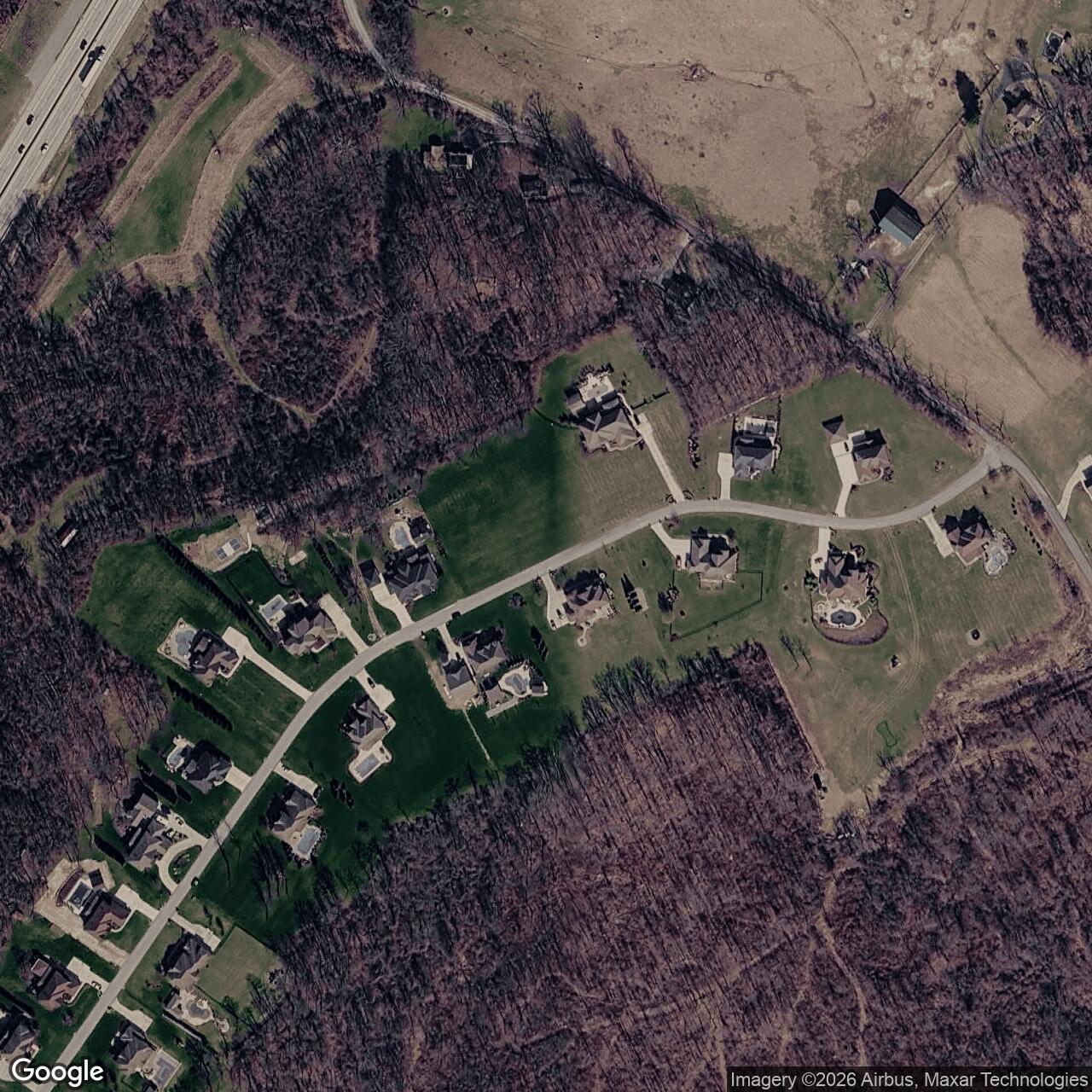
The former launch area was more heavily altered.Site observations reported that the launch area was sold into private use and ultimately destroyed for residential development. Virtual Globetrotting comments state that the launch site was completely destroyed in 2011, with the buildings and berms leveled, the magazines broken open and excavated, and an upscale housing development placed on the land. While such site-observation comments are not official environmental documentation, they are consistent with aerial-map interpretation and with the general pattern of suburban redevelopment on former Nike launcher properties.
List of all Nike Installations in the Pittsburgh Defense AreaList of all Nike Installations in Pennsylvania