Nike Missile Site PI-92 Launcher, Bryant Pennsylvania
Longitude: -80.009410887101
This location was part of the Pittsburgh Defense Area
Site ID: PI-92
The missiles at this Launch Area were controlled by the Integrated Fire Control site located here.
Site Role: Launcher
A typical Nike air defense site consisted of two separate parcels of land. One area was known as the Integrated Fire Control (IFC) Area. This site contained the Nike system's ground-based radar and computer systems designed to detect and track hostile aircraft, and to guide the missiles to their targets.
The second parcel of land was known as the Launcher Area. At the launcher area, Nike missiles were stored horizontally within heavily constructed underground missile magazines. A large, missile elevator brought the Nikes to the surface of the site where they would be pushed across twin steel rails to one of four satellite launchers.
Elaboration on how Nike worked here.
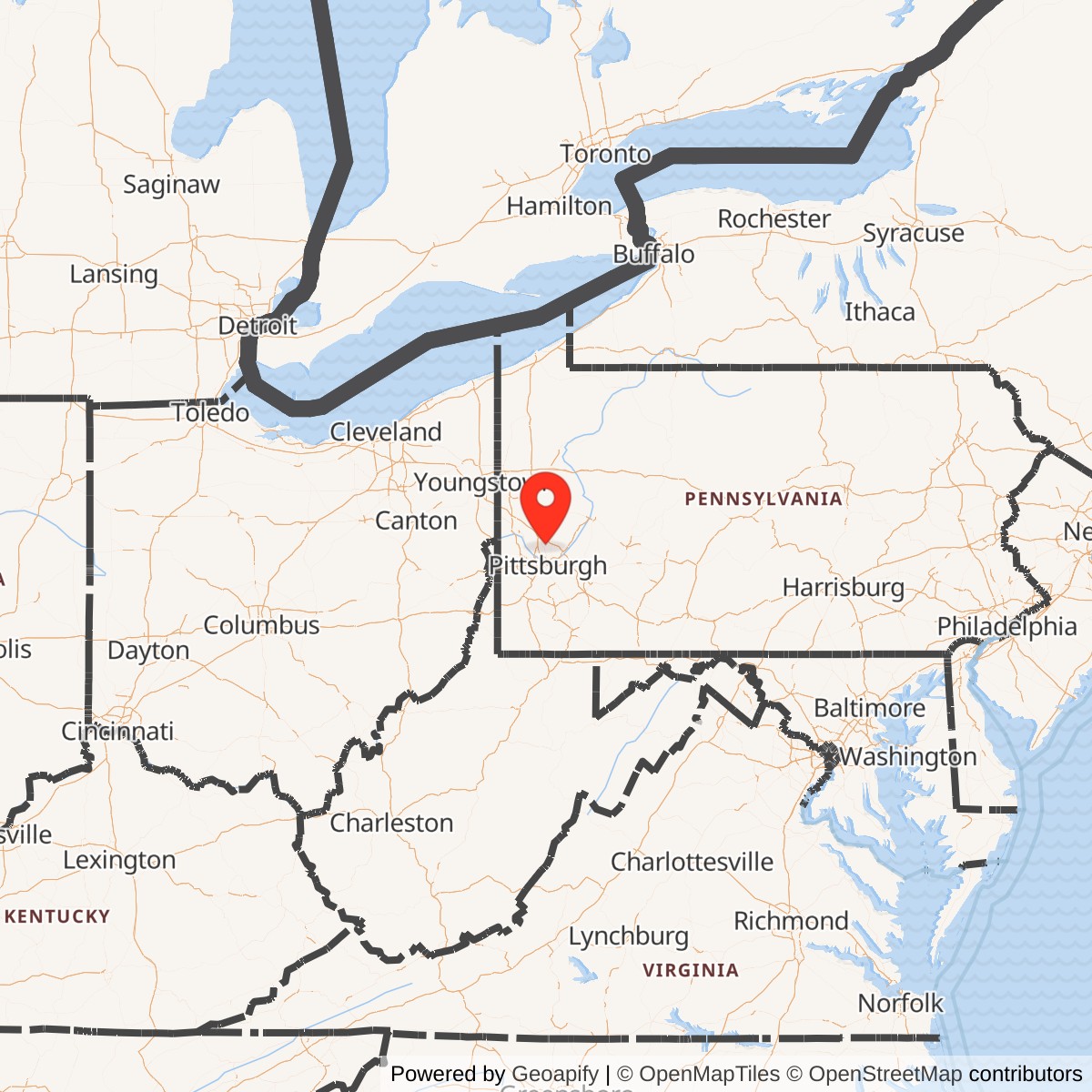
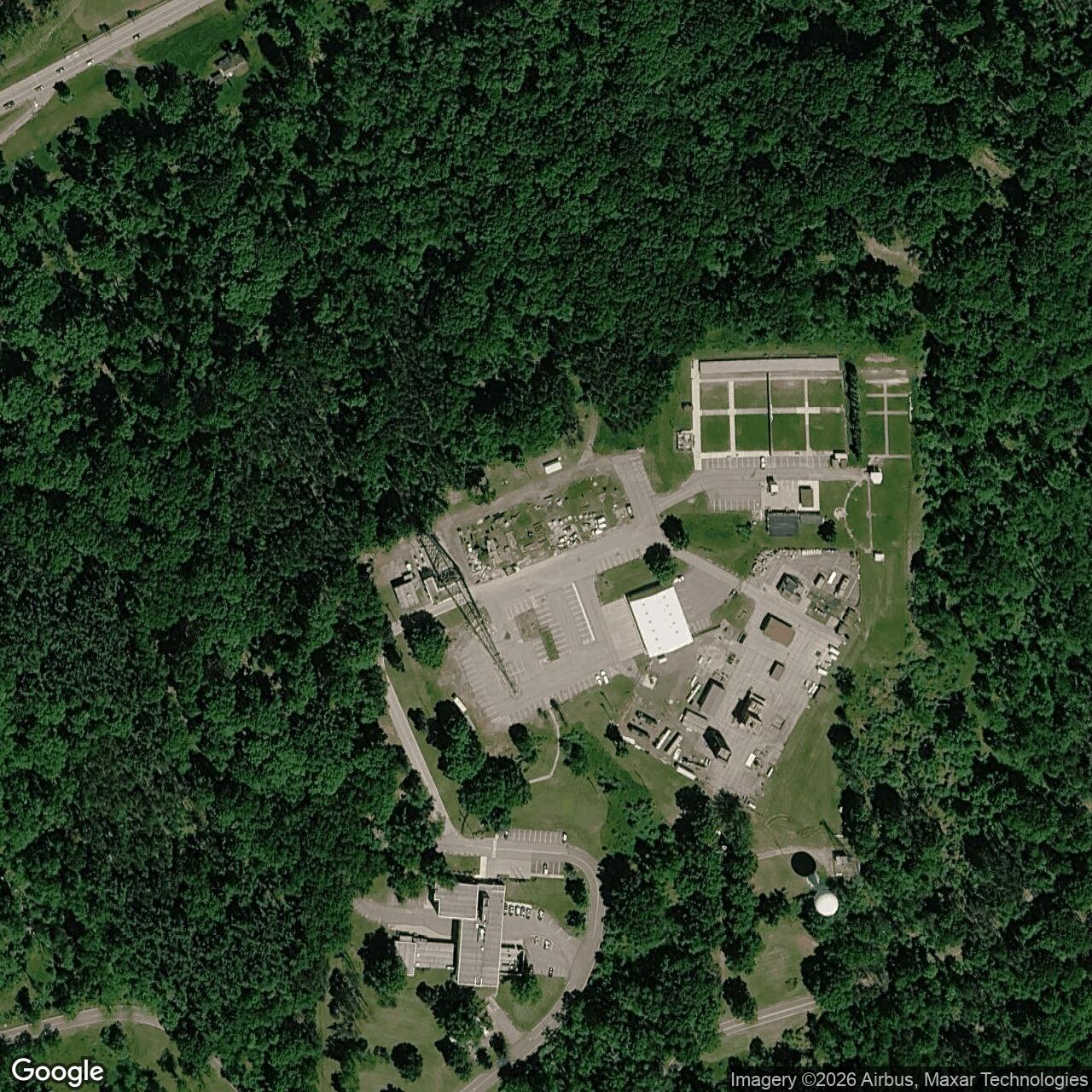
Nike Missile Site PI-92 was a U.S. Army Nike Ajax air-defense missile battery in the Pittsburgh Defense Area. The site was located in the Bryant / North Park / Allison Park area of northern Allegheny County, Pennsylvania, north of Pittsburgh. It was part of the ring of Nike missile batteries constructed around Pittsburgh during the early Cold War to defend the city's industrial region, transportation corridors, and population center from Soviet bomber attack.
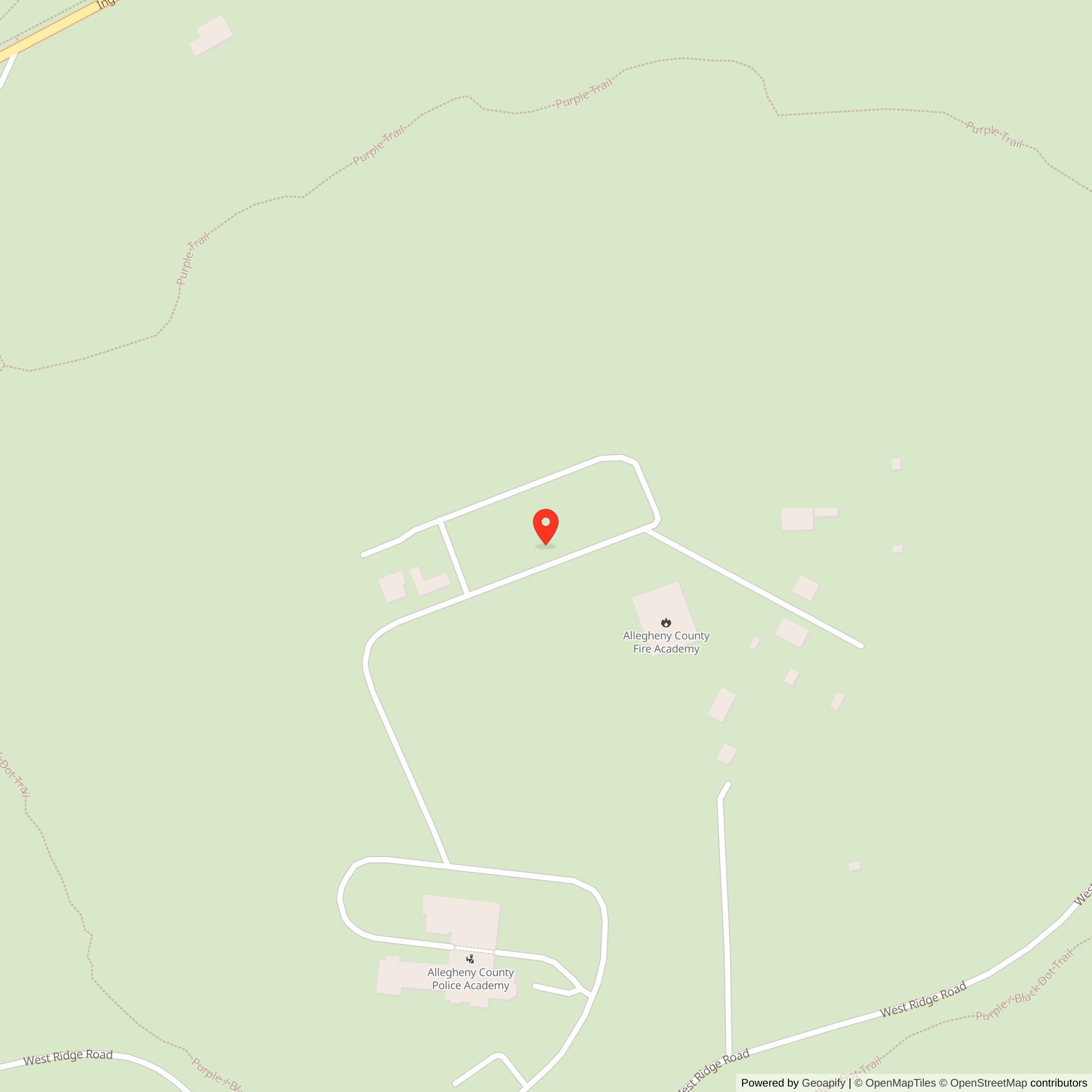
It was an Ajax-only site, active from 1956 to April 1963. It was not converted to Nike Hercules. After deactivation, the control-area property passed into civilian reuse associated with the North Allegheny School District, while the launcher area became part of the Allegheny County Police and Fire Training Academy campus in North Park. Some launch-area remnants remained visible or usable for training long after the missiles and military equipment were removed.
History
PI-92 belonged to the Pittsburgh Defense Area, the Cold War missile-defense network built around one of the United States' most important industrial regions. Pittsburgh's strategic value in the 1950s was not limited to its population. The region contained steel mills, machine shops, rail lines, river transport routes, bridges, power and utility infrastructure, and a large concentration of heavy industry. In a Cold War emergency, these assets would have supported military production, logistics, and national mobilization. For that reason, Pittsburgh became one of the urban-industrial targets protected by Army air-defense units.Before the permanent missile sites were completed, Pittsburgh was defended by antiaircraft-gun positions. In April 1952, soldiers and equipment moved through the region to establish temporary gun defenses around the "Steel City." Those gun sites were transitional. The Nike program replaced gun-based local air defense with a radar-guided surface-to-air missile system. By the mid-1950s, the Pittsburgh region had a ring of fixed Nike Ajax batteries placed on the approaches to the city.
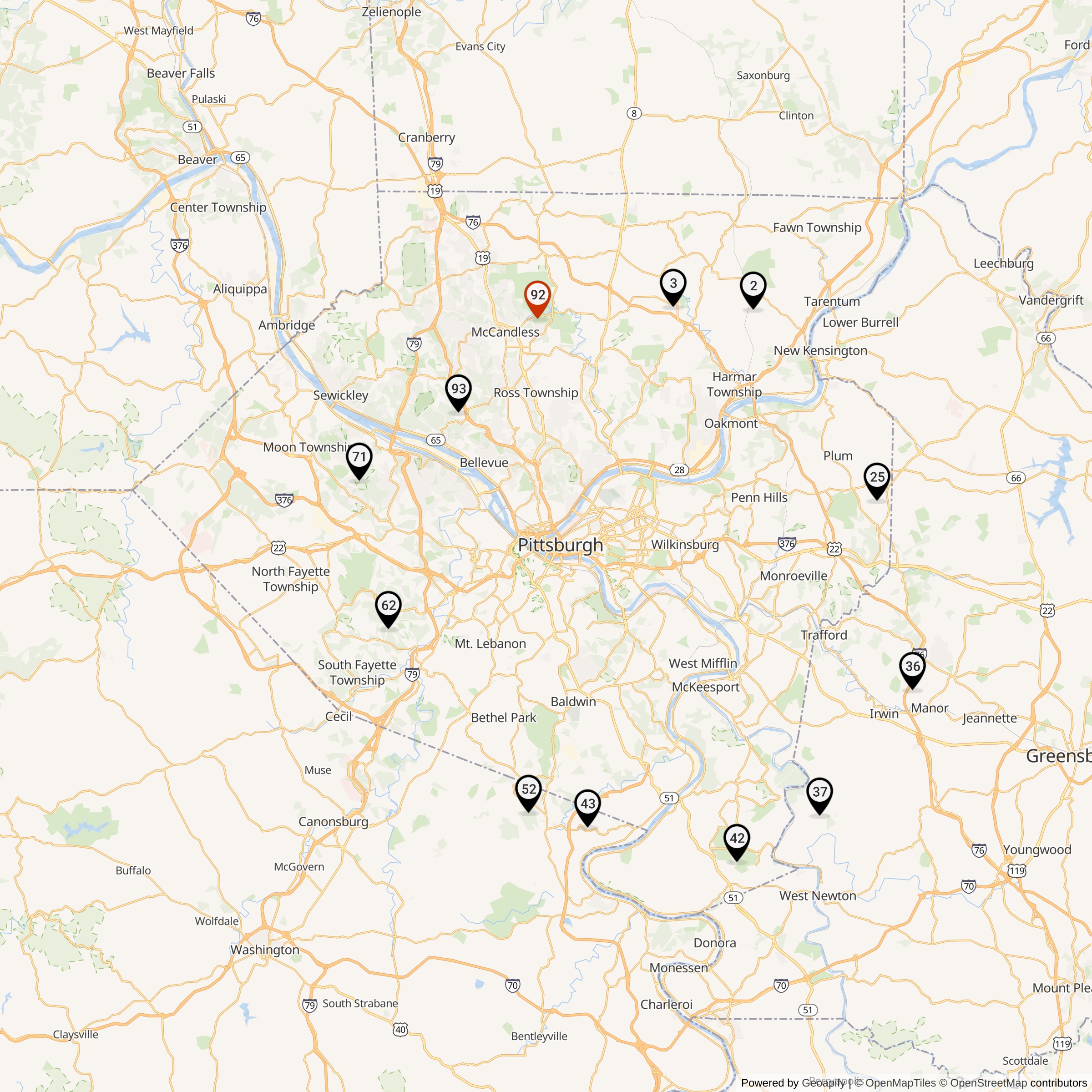
PI-92 occupied the northern part of that defensive ring. Its Bryant / North Park location positioned it to help cover the northern approaches toward Pittsburgh and the North Hills. Along with other sites such as PI-02 at Rural Ridge, PI-03 at Dorseyville / Indianola, PI-25 at Murrysville / Monroeville, PI-36 at Irwin, PI-37 at Cowansburg / Herminie, PI-42 at Elizabeth, PI-43 at Elrama / east of Finleyville, PI-52 at Finleyville, PI-62 at Bridgeville / Hickman, PI-71 at Coraopolis / Beacon, PI-92 at Bryant / North Park, and PI-93 at West View. PI-25 was one of the earlier Ajax sites in this ring, but it was not one of the batteries retained for Hercules service. formed part of a dispersed defensive belt rather than a single large base.
The Pittsburgh District of the Corps of Engineers, part of the Ohio River Division, had responsibility for constructing the Pittsburgh Nike sites. The first Pittsburgh Nike construction contract was awarded in July 1954. As with other Pittsburgh batteries, terrain shaped the site. The region's hills and valleys required separate control and launch areas, with the fire-control area placed where radars could perform effectively and the launcher area placed where there was enough secure land for underground magazines, launchers, roads, fencing, and support facilities.
Units and Manning
Open sources identify PI-92 with Battery B at North Park. The Nike Historical Society's Pittsburgh Defense page includes a photograph captioned for Battery B, 1st Missile Battalion, North Park, Pittsburgh, Pennsylvania, Site PI-92L, and notes that the launch site later became the home of the Allegheny County Police and Fire Training Academy.The larger Pittsburgh Defense Area was initially manned by active Army antiaircraft and guided-missile units. In the later Nike Hercules period, Pittsburgh's retained Hercules sites were manned by a combination of active Army and Pennsylvania Army National Guard units. PI-92, however, did not remain active into the Hercules era. It was an Ajax-only battery and closed in April 1963, before the final long-lived Hercules sites around Pittsburgh remained in service into the 1970s.
PI-92's personnel would have included missile crews, radar operators, fire-control technicians, mechanics, communications personnel, guards, administrative staff, and support personnel. Nike sites were not large installations in the sense of an Army post, but they were complex technical batteries that required constant readiness. Local accounts of the North Park Nike site describe a readiness requirement in which a crew of approximately 60 men could prepare to launch within a short warning period. That figure is consistent with the labor-intensive nature of Nike Ajax operations, which required manning across the control area, launcher area, maintenance functions, and site security.
Mission and Operation
PI-92's mission was to detect, track, and, if ordered, engage hostile aircraft approaching Pittsburgh from the north. The battery was part of an integrated air-defense system that included early-warning radars, Air Force interceptor aircraft, Army missile batteries, and regional command-and-control facilities. It was not an independent offensive missile site. It was a defensive battery designed to protect an industrial city from bomber attack.The Nike Ajax system used ground-based radar and command guidance. The missile itself did not independently search for a target. Instead, the Integrated Fire Control area used acquisition radar to detect a target, target-tracking radar to follow it, missile-tracking radar to follow the outgoing missile, and ground-based computers to calculate an intercept. Steering commands were sent from the ground to the missile during flight. When the missile reached the intercept point, its warhead detonated near the target.
The Nike Ajax missile was a first-generation operational guided surface-to-air missile. It was designed for the bomber-defense problem of the early Cold War, when the primary fear was that Soviet long-range aircraft could attack American cities and industrial centers with nuclear weapons. The site's federal inventory configuration is listed as Nike 1B,2C/30A/12L-A, meaning the launcher area had one Type B magazine and two Type C magazines, with a listed Ajax missile capacity of 30 missiles and 12 Ajax launchers.
Unlike the Nike Hercules sites retained elsewhere in the Pittsburgh ring, PI-92 did not receive the larger Hercules missile. Nike Hercules had greater range, greater altitude capability, solid-fuel propulsion, and potential nuclear-warhead use. Because Hercules could cover more area, the Army did not need every Ajax site after conversion began. PI-92's April 1963 closure reflects that shift from the dense first-generation Ajax belt to a smaller number of more capable retained batteries.
Site Layout
PI-92 consisted of two principal operating areas: the Integrated Fire Control area and the launcher area.The IFC / control area was the radar and guidance side of the battery. It contained the acquisition radar, tracking radars, fire-control equipment, operating buildings, power and communications systems, and support functions needed to detect and guide an intercept. Federal and public inventory summaries report that after closure the control-area property was given to or reused by the North Allegheny School District.
The launcher area was the missile-storage and firing side of the battery. It was located within the North Park / Allison Park area. The launch area held underground magazines, elevators, launcher rails, missile-handling surfaces, security fencing, support buildings, and access roads. The former launch site is now part of the grounds of the Allegheny County Police and Fire Training Academy.
Nike launch areas stored missiles underground for protection, safety, and readiness. At an Ajax site, missiles were kept horizontally in underground magazines. When needed for alert or drill operations, a missile elevator raised the missile to the surface, where crews moved it on rails to a launcher. The launch area at PI-92 reportedly had multiple magazines. Later photo documentation of the former launch site states that of four launch magazines, one was completely buried, one was inaccessible, and two were being used for training exercises, with poor condition and rusted doors.
Nike Ajax Period
PI-92 became operational in 1956 as one of the Pittsburgh Defense Area's Nike Ajax batteries. The Ajax period represented a major technological leap from gun-based antiaircraft defense. Instead of trying to shoot down aircraft with large-caliber guns, the Army now used radars and guided missiles to attempt an intercept at greater range and altitude.The site's location inside or adjacent to North Park made it one of the more locally visible Pittsburgh Nike sites after closure, even though access to the launch remnants has generally been restricted because of police and fire training use. During active service, the site would have operated under strict security. Missile crews maintained readiness, conducted drills, kept equipment operational, and supported regional air-defense exercises. Residents in the surrounding North Hills communities may have known that a missile site existed, but the technical and operational details of readiness, target assignment, and launch authority remained under military control.
PI-92's Ajax-only life was comparatively short. It served during the high point of the first-generation Nike network, from 1956 to 1963. When Pittsburgh's air-defense system shifted toward Nike Hercules, PI-92 was among the Ajax-only sites closed rather than modernized.
Relationship to the Pittsburgh Command System
PI-92 operated within the Pittsburgh Defense Area's command-and-control structure. As the Nike system matured, Pittsburgh's missile batteries were coordinated through an Army Air-Defense Command Post at Oakdale, commonly identified as PI-70DC. That facility became operational in 1960 and was associated with the Air Force radar and SAGE air-defense environment. It provided regional command-and-control functions for the Pittsburgh Nike network.For PI-92, this meant that local radar and launcher crews were part of a broader regional system. A Nike battery could track and fire locally, but target identification, engagement assignment, and firing authority were coordinated through higher command channels. The site was therefore not merely a set of launch magazines in North Park. It was one node in a connected air-defense system linking radars, command centers, fire-control equipment, and launch batteries.
Deactivation
PI-92 was deactivated in April 1963. Its closure followed the national and regional pattern in which many Ajax-only batteries were removed from service after selected sites were upgraded to Nike Hercules. In Pittsburgh, Hercules batteries such as PI-03, PI-36, PI-37, PI-43, PI-71, and PI-93 remained more important to the later defense area, while Ajax-only sites such as PI-92 closed earlier.The closure also reflected changing strategic assumptions. The Nike system had been designed primarily for bomber defense. By the early 1960s, however, intercontinental ballistic missiles and submarine-launched ballistic missiles were becoming the central strategic threat. Nike Ajax could not defend Pittsburgh against ballistic missiles, and a dense belt of short-range Ajax batteries was no longer the best use of air-defense resources.
After deactivation, the missiles and sensitive military equipment were removed. The control and launch parcels were transferred out of Department of Defense control and entered civilian or public safety reuse.
List of all Nike Installations in the Pittsburgh Defense AreaList of all Nike Installations in Pennsylvania