Nike Missile Site PI-03 Launcher, Dorseyville Pennsylvania
Longitude: -79.8918094944252
This location was part of the Pittsburgh Defense Area
Site ID: PI-03
The missiles at this Launch Area were controlled by the Integrated Fire Control site located here.
Site Role: Launcher
A typical Nike air defense site consisted of two separate parcels of land. One area was known as the Integrated Fire Control (IFC) Area. This site contained the Nike system's ground-based radar and computer systems designed to detect and track hostile aircraft, and to guide the missiles to their targets.
The second parcel of land was known as the Launcher Area. At the launcher area, Nike missiles were stored horizontally within heavily constructed underground missile magazines. A large, missile elevator brought the Nikes to the surface of the site where they would be pushed across twin steel rails to one of four satellite launchers.
Elaboration on how Nike worked here.
Missile Type: Ajax/Hercules
The Nike Ajax was the first in the Army's family of guided missiles, and the world's first operational, guided, surface-to-air missile system. Nike Ajax had a burnout speed of Mach 2.3, a range of 25-30 miles, and a ceiling of 65,000 feet.
Designed to carry either nuclear and/or high-explosive warheads, the Nike Hercules missile could attack supersonic aircraft operating at altitudes in excess of 150,000 feet and at a range of more than 87 miles.
Battery Type: single
Current site status: unknown

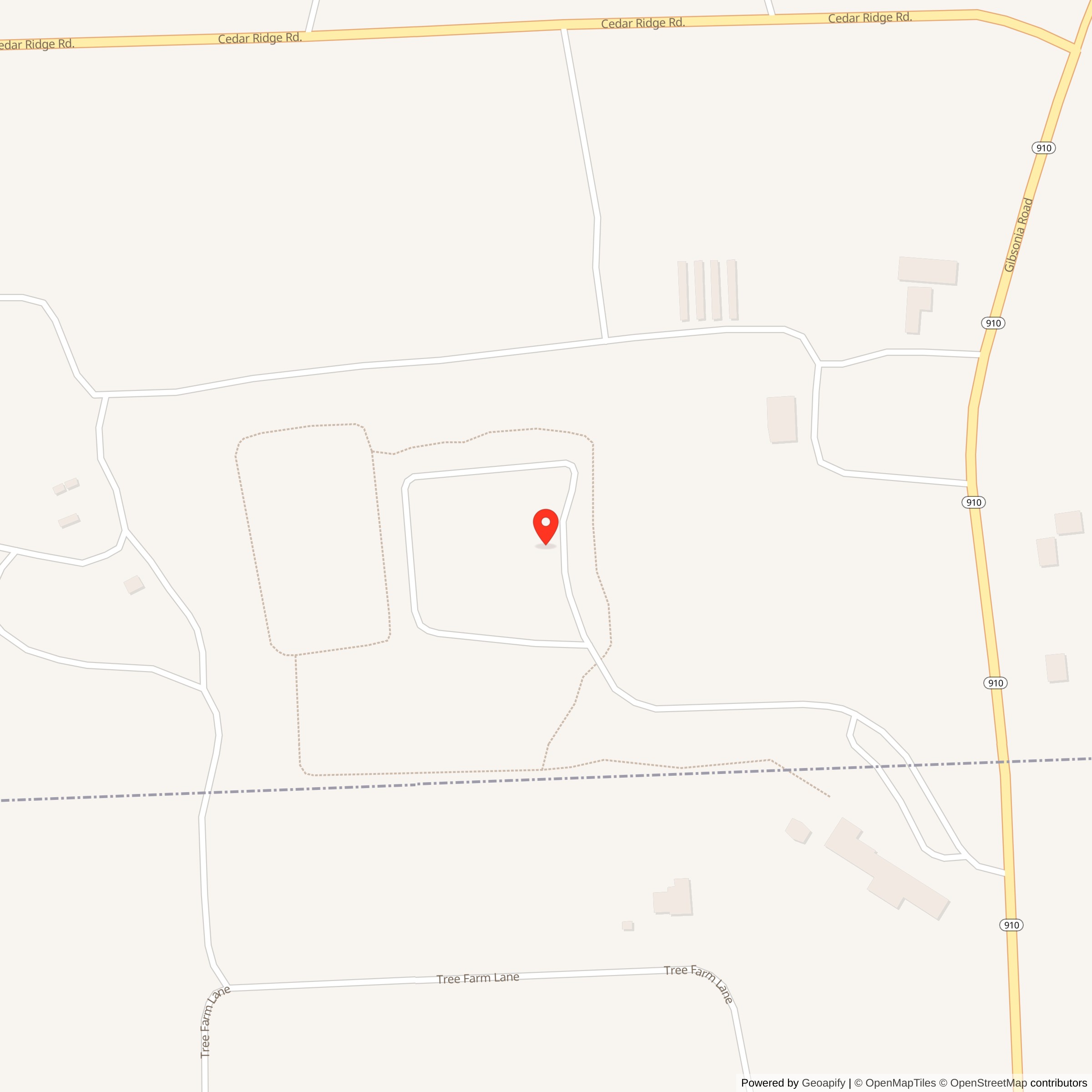
Nike Missile Site PI-03 was a U.S. Army Nike air-defense missile battery in the Pittsburgh Defense Area. The site is usually identified in Nike inventories as Dorseyville / Indianola, Pennsylvania, reflecting its position northeast of Pittsburgh in the Allegheny County suburban-rural belt. The control / Integrated Fire Control area was in the Dorseyville / Indiana Township vicinity, historically associated with Saxonburg Boulevard and the later Council of Three Rivers American Indian Center Singing Winds site. The launcher area was separated to the north, in the Dorseyville / West Deer Township area.
It was an operational Nike battery from October 1956 to March 1974. It began as a Nike Ajax site and was later converted to Nike Hercules. Its Hercules conversion placed it among the retained Pittsburgh batteries that survived the early-1960s drawdown of Ajax-only Nike sites and continued in service until the final phase of Nike operations around Pittsburgh.
The site's common inventory configuration is Nike 3B / 18H, 30A / 12L-U. In practical terms, this means the site had three Type B underground magazines, could support thirty Ajax missiles before conversion, eighteen Hercules missiles after conversion, and twelve universal launchers. Appendix D of Mary T. Cagle's History of the Nike Hercules Weapon System site-construction table lists PI-03 as a converted defense site in the Pittsburgh Defense Area with three Type B magazines and an operational Hercules date of 17 February 1959. The asterisk in Appendix D also identifies PI-03 as one of the sites still active as of March 1972.
Regional command-and-control:
Pittsburgh Nike command and control was handled through the Missile Master / Missile Mentor facility at Oakdale Army Base / Oakdale military reservation, collocated with Air Force radar functions and later integrated with the broader air-defense radar network.
History
Nike Site PI-03 was built during the transition from conventional antiaircraft artillery to guided-missile air defense. Pittsburgh was one of the industrial regions considered important enough to receive a full Nike defense ring. The city and its surrounding valleys contained steel mills, bridges, rail lines, river transport corridors, power and manufacturing facilities, and a dense industrial labor base. In Cold War air-defense planning, this made Pittsburgh more than a city to be defended; it made the region a strategic industrial target whose loss would affect national war production and transportation.Before Nike missiles arrived, Pittsburgh's early Cold War air defense relied on conventional antiaircraft gun positions. In April 1952, soldiers and heavy equipment moved through the McKeesport area toward Pittsburgh to set up a ring of hastily sited gun positions defending the Steel City. Those gun batteries were an emergency response to the bomber threat, but they were also a transitional system. The arrival of jet bombers, atomic weapons, and the expectation that any future attack might come at high altitude and high speed made gun defenses increasingly inadequate. The Nike missile system was the Army's answer.
The U.S. Army Corps of Engineers Pittsburgh District, part of the Ohio River Division, was responsible for constructing the Pittsburgh Nike sites. The first Pittsburgh Nike construction contract was awarded in July 1954. Pittsburgh's topography made the work more difficult than it was in flatter defense areas. The region's steep ridges, narrow valleys, wooded hillsides, and irregular suburban growth meant that launchers and radar-control areas had to be placed far enough apart to function safely, but close enough and high enough to maintain line-of-sight and communications. Contemporary Corps accounts describe construction costs for Pittsburgh-area sites in the range of roughly $600,000 to $700,000 per site. In 1956, four additional sites were added to the Pittsburgh defenses, completing the expanded ring.
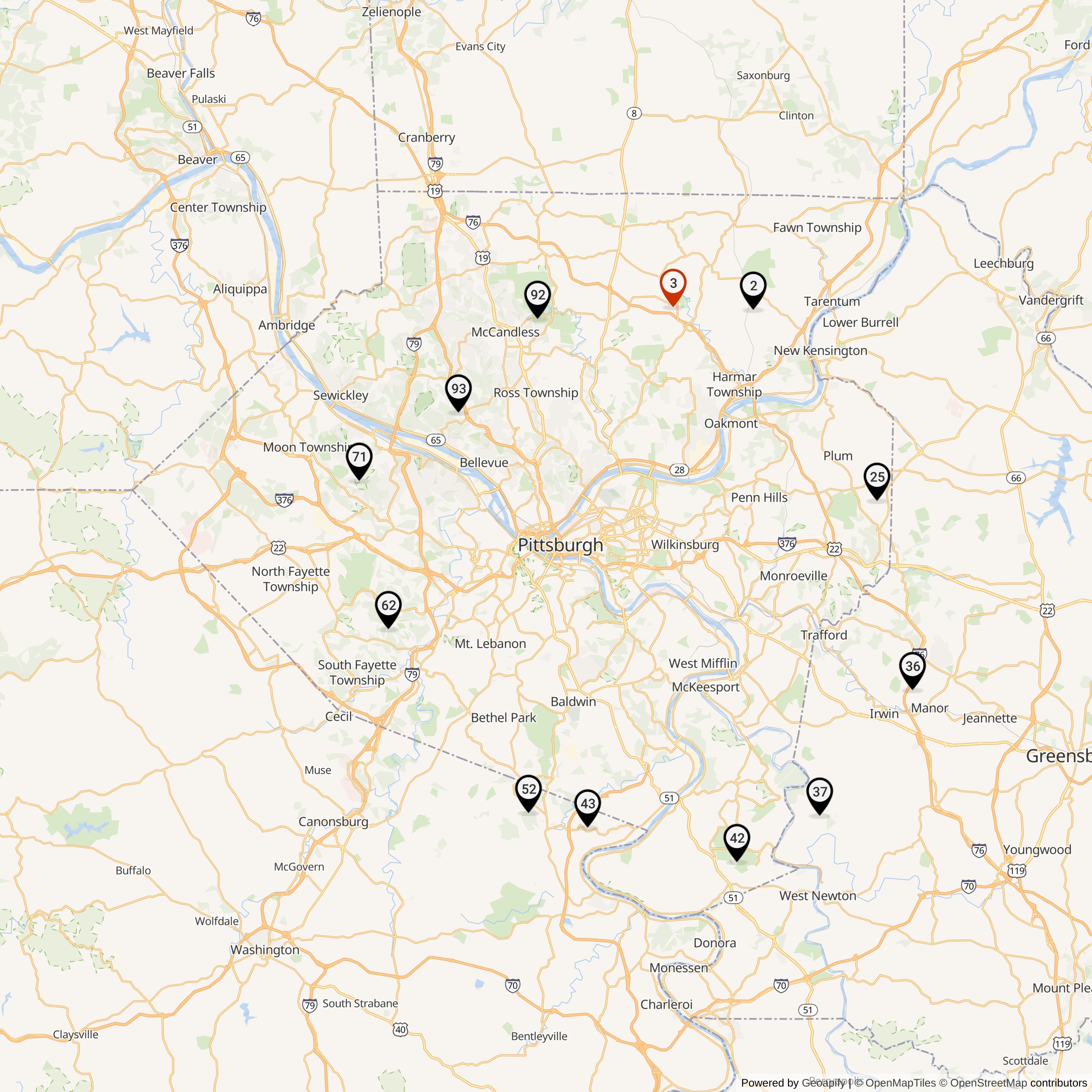
The Pittsburgh Defense Area eventually included PI-02 at Rural Ridge, PI-03 at Dorseyville / Indianola, PI-25 at Murrysville / Monroeville, PI-36 at Irwin, PI-37 at Cowansburg / Herminie, PI-42 at Elizabeth, PI-43 at Elrama / east of Finleyville, PI-52 at Finleyville, PI-62 at Bridgeville / Hickman, PI-71 at Coraopolis / Beacon, PI-92 at Bryant / North Park, and PI-93 at Westville / West View. PI-03 occupied the northeastern part of the defense ring, covering approaches into the Pittsburgh industrial region from the Allegheny Valley and from the northeast.
PI-03 became operational in October 1956 as a Nike Ajax battery. Nike Ajax was the Army's first operational guided surface-to-air missile system. It was designed to intercept high-flying aircraft before they could reach defended targets. The missile depended on ground-based radars and analog computing rather than onboard target-seeking guidance. The control area acquired and tracked a target, tracked the missile after launch, and transmitted steering commands to guide the missile to an intercept point. The launch area stored, prepared, raised, and fired the missiles.
The Ajax system was a major technological leap beyond antiaircraft artillery, but it had limitations. It was a liquid-fueled missile with a solid booster, required hazardous propellant handling, and was armed with conventional high-explosive fragmentation warheads. It could engage only one target at a time. It also had a shorter range than the later Nike Hercules. Ajax was suitable for the first dense ring of Nike batteries around Pittsburgh, but the Army quickly moved toward a longer-ranged and more powerful successor.
PI-03 was among the Pittsburgh sites selected for Nike Hercules conversion. Hercules was larger, solid-fueled, longer-ranged, and capable of carrying either a conventional high-explosive warhead or a nuclear warhead. It was designed in part to improve defense against massed bomber formations. Its greater range also meant that fewer batteries could cover a larger area, which is why many Ajax-only sites were deactivated once Hercules became operational.
For PI-03, the Hercules conversion was more than a missile swap. A converted Hercules site required changes to the launcher area, magazines, handling equipment, rails, launchers, fencing, and security arrangements. Type B magazines, like those at PI-03, were originally Ajax-capable underground magazines that could accept Hercules after modification. Hercules missiles were larger, so magazine storage capacity was reduced when the site was converted. The post-conversion configuration of eighteen Hercules missiles and twelve universal launchers reflects this reduced capacity and upgraded launch equipment.
The official Appendix D conversion table identifies PI-03 as one of the early Hercules conversion sites in the Pittsburgh Defense Area, with Hercules missiles operational on 17 February 1959. That date places PI-03 firmly in the early phase of Hercules modernization. It was one of the Pittsburgh sites that remained in service after the Army began retiring Ajax-only positions.
By the early 1960s, the Pittsburgh Defense Area had changed shape. The older dense ring of Ajax sites gave way to a smaller number of Hercules batteries. Sites PI-03, PI-36, PI-37, PI-43, PI-71, and PI-93 were converted to Hercules. Other sites, such as PI-02, PI-25, PI-42, PI-52, PI-62, and PI-92, ended their active missile role earlier or did not continue through the full Hercules period. PI-03 therefore represents the surviving, upgraded portion of the Pittsburgh Nike network.
The regional command structure also modernized. Nike batteries were not independent in the strategic sense; they were local firing units in a coordinated air-defense network. Pittsburgh's command and control was handled by a Missile Master / Missile Mentor facility at the Oakdale military reservation, collocated with Air Force radar functions. The Missile Master became operational in 1960, providing automated or semi-automated regional coordination for Nike engagements. This reduced the risk that multiple batteries would engage the same target while another passed through the defense, and it helped integrate Army Nike batteries with Air Force radar and fighter-interceptor systems.
PI-03 remained active through the 1960s and into the early 1970s. This long service life reflects its Hercules status. By the late 1960s and early 1970s, however, the logic of continental air defense had changed. The main Soviet threat had shifted from manned bombers to intercontinental ballistic missiles and submarine-launched ballistic missiles. A surface-to-air missile ring designed to stop bombers could not defend Pittsburgh against ballistic missiles. At the same time, costs, changing doctrine, arms-control politics, and the Vietnam-era defense budget environment pushed the Army toward closing the Nike network.
PI-03 was deactivated in March 1974. That was part of the final nationwide stand-down of most remaining CONUS Nike Hercules sites. With the exception of a few sites in Alaska and Florida that remained active later, the Nike Hercules system disappeared from the continental U.S. air-defense landscape by the mid-1970s.
Site Layout and Operation
PI-03 followed the standard Nike split-site pattern. The Integrated Fire Control area and the launcher area were geographically separated. The control area needed enough elevation and open radar exposure to search for and track aircraft; the launcher area needed enough space for magazines, launchers, safety zones, access roads, and guarded missile handling. The two areas had to remain functionally connected by communications and line-of-sight requirements.The IFC / control area was the battery's nerve center. It contained acquisition radar, target-tracking radar, missile-tracking radar, electronic computing equipment, communications equipment, power-generation support, radar towers and pads, control vans or later control buildings, and administrative or support structures. For PI-03, later site notes describe the former fire-control site as part of the Council of Three Rivers American Indian Center / Singing Winds site and as being in good condition after military use. Veteran recollections and site notes also refer to surviving radar pads, control-related buildings, and later radar improvements such as TRR and HIPAR-era equipment.
The launcher area was the most physically distinctive part of the installation. It stored missiles underground in reinforced-concrete magazines. Missiles were raised to the surface by elevators, moved along rails, and placed on launchers. The launcher side also included assembly and test buildings, warhead and maintenance functions, ready buildings, a launch-control point, fuel and safety equipment in the Ajax period, generators, security fencing, guard facilities, internal roads, and storage buildings.
PI-03's three Type B magazines and twelve launchers made it a substantial single Nike battery. In the Ajax period, the site could support thirty Nike Ajax missiles. After Hercules conversion, it supported eighteen Nike Hercules missiles, reflecting the larger size of the Hercules missile and the reduced number that could be accommodated in converted underground magazines.
Operationally, a PI-03 alert would have depended on careful coordination between the control and launcher sections. The IFC crew would acquire a target, identify and track it, assign a missile, and compute an intercept. Launcher crews would prepare the selected missile, raise it from the magazine, place it on the launcher, and stand ready to fire. Once launched, the missile would be tracked by the missile-tracking radar while the ground computer transmitted steering commands. The system was complex, and its readiness depended on constant maintenance of radar, power, launch, communications, and missile-handling equipment.
The move from Ajax to Hercules changed both the physical and operational character of PI-03. The Ajax-era site was a high-readiness guided-missile battery with conventional warheads and hazardous liquid-fuel procedures. The Hercules-era site became a longer-ranged, solid-fuel, nuclear-capable defense battery requiring heavier missiles, more restrictive security, modified magazines, double fencing at many converted sites, and more advanced radar and command-and-control integration.
Deactivation and Post-Closure Use
PI-03 was deactivated in March 1974, near the end of the Nike Hercules program in the continental United States. After the missiles were removed, the two halves of the installation entered different post-military lives.The former IFC / control area became associated with the Council of Three Rivers American Indian Center. The site is widely identified as the American Indian Center / Singing Winds site. Later public-history and community sources describe how the Council of Three Rivers American Indian Center, incorporated as a nonprofit in 1972, applied for and received use of a decommissioned hilltop military site in Dorseyville. Council members refurbished existing structures, named the site Singing Winds, and moved there in 1976. The site became an important center for Native American community programming, Head Start and family services, cultural gatherings, and the annual Pow Wow.
This reuse is one of the most historically meaningful afterlives of any Pittsburgh Nike site. Many Nike properties became schools, parks, reserve centers, warehouses, municipal yards, or industrial sites. PI-03's control area became a place of cultural continuity and community service. The Cold War radar hilltop was repurposed by an Indigenous community organization that had begun in Pittsburgh in the late 1960s and early 1970s. The site name Singing Winds preserved a new layer of meaning over the older military landscape.
COTRAIC's own current public information identifies the Singing Winds Food Pantry and Dorseyville location as part of its service network. The University of Pittsburgh's University Times also identifies the annual Council of Three Rivers American Indian Center Pow Wow as taking place at the Singing Winds Food Pantry, 120 Charles Street, Dorseyville, Indiana Township. These current references confirm that the former Nike control-site landscape remains part of the region's living community geography, not simply an abandoned Cold War remnant.
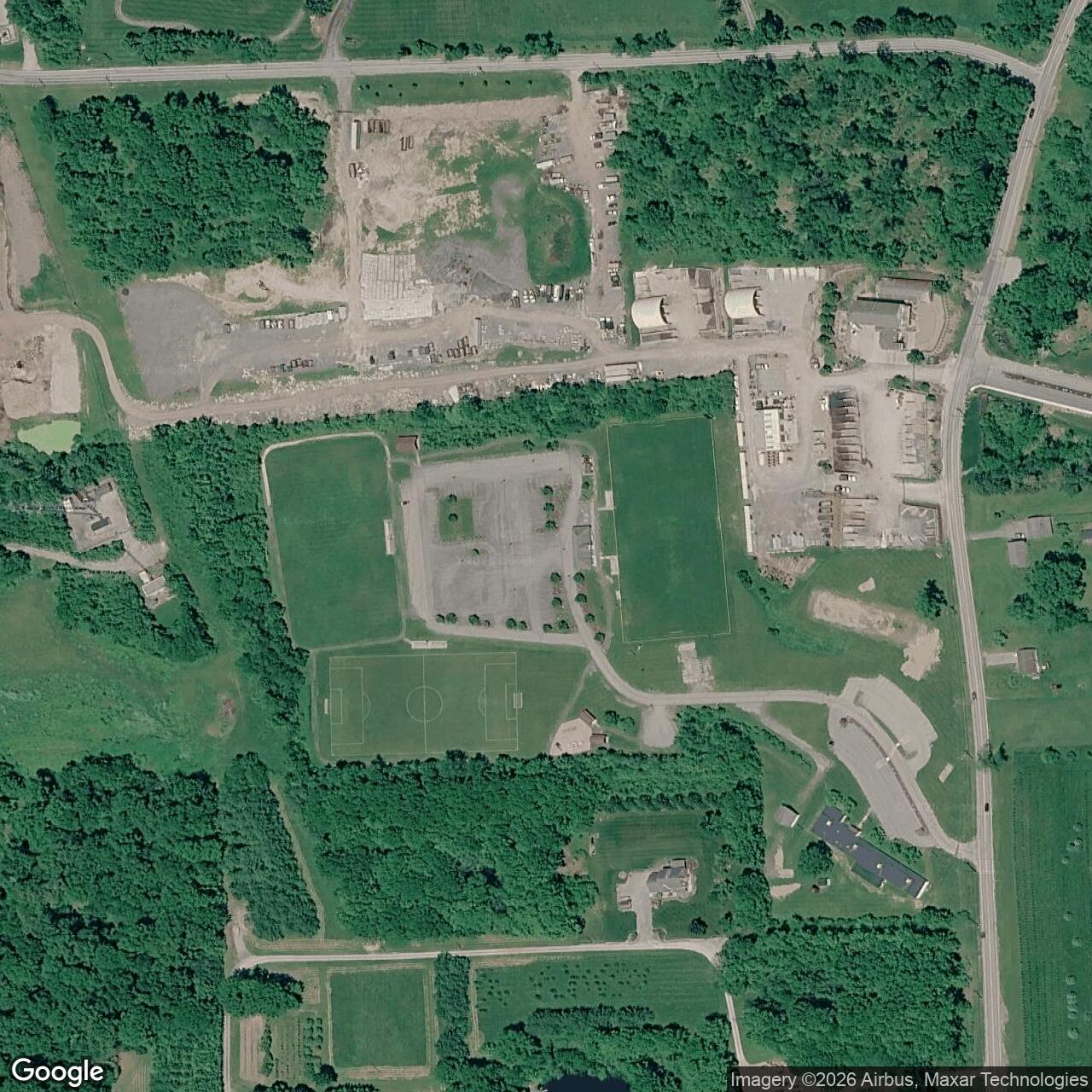
The former launcher area followed a more conventional reuse pattern. Site notes describe it as later associated with West Deer Township / Northwest Deer Township senior-citizen or community-center use, recreation, and soccer fields. A 2000 site note reported that a soccer club had built two fields at the former launch site, with the original barracks building used as a community center, the warhead building and assembly building used seasonally for storage, and the underground magazines still recognizable but filled with water. A 2001 note reported removal of some above-ground launch-pad hardware as the township and soccer use expanded.
List of all Nike Installations in the Pittsburgh Defense AreaList of all Nike Installations in Pennsylvania