Nike Missile Site PI-25 Launcher, Murrysville Pennsylvania
Longitude: -79.7152
This location was part of the Pittsburgh Defense Area
Site ID: PI-25
The missiles at this Launch Area were controlled by the Integrated Fire Control site located here.
Site Role: Launcher
A typical Nike air defense site consisted of two separate parcels of land. One area was known as the Integrated Fire Control (IFC) Area. This site contained the Nike system's ground-based radar and computer systems designed to detect and track hostile aircraft, and to guide the missiles to their targets.
The second parcel of land was known as the Launcher Area. At the launcher area, Nike missiles were stored horizontally within heavily constructed underground missile magazines. A large, missile elevator brought the Nikes to the surface of the site where they would be pushed across twin steel rails to one of four satellite launchers.
Elaboration on how Nike worked here.
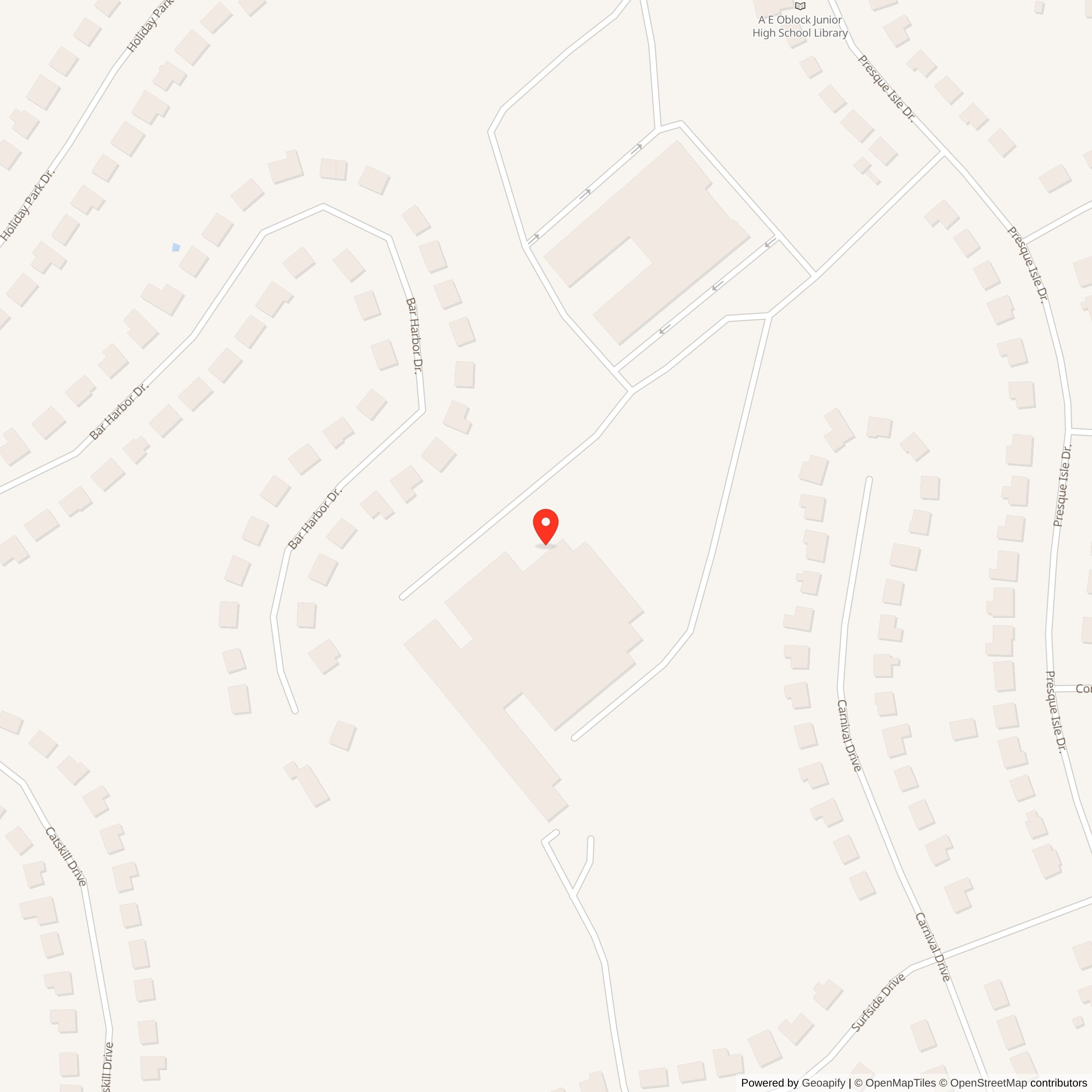
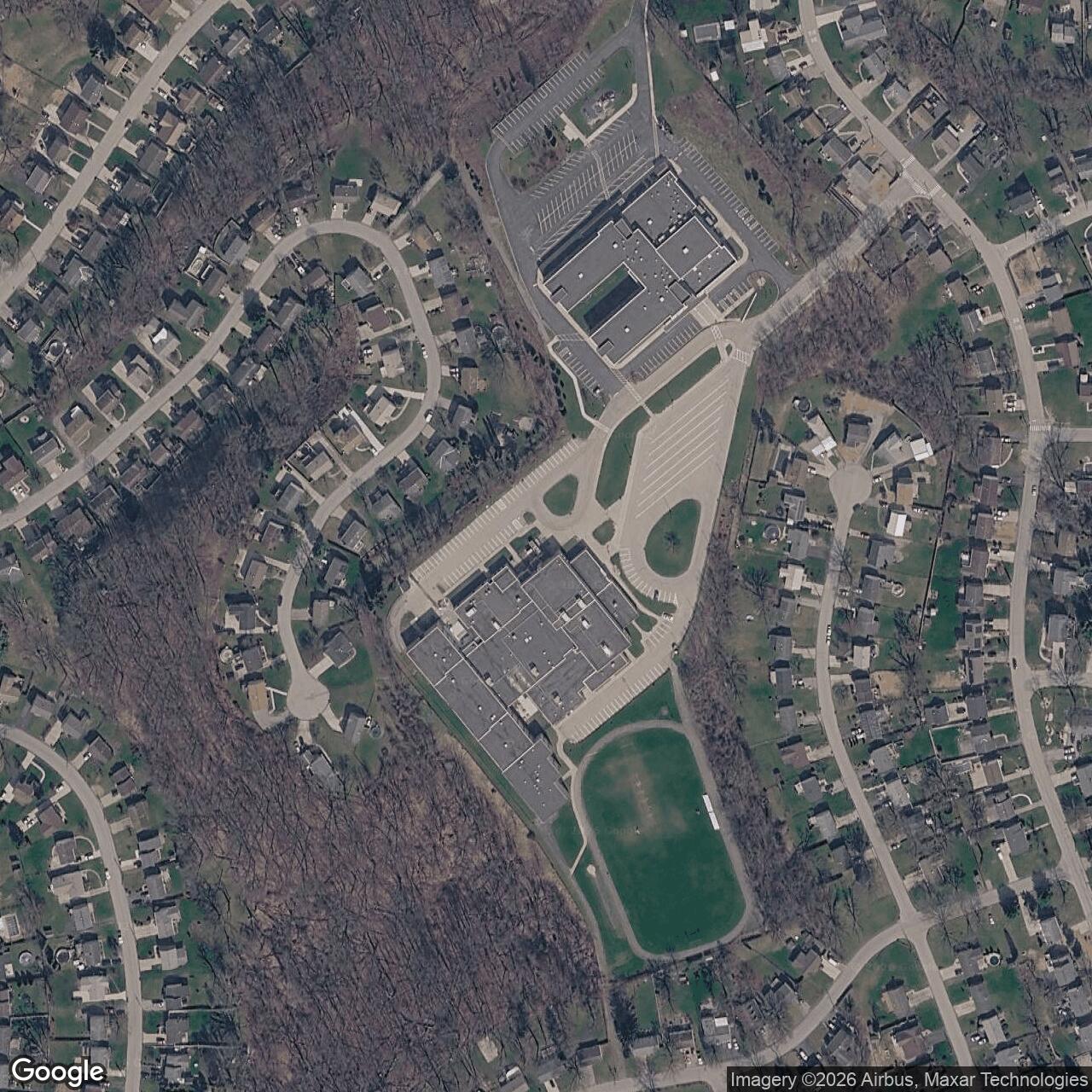
Nike Missile Site PI-25 was a U.S. Army Nike Ajax air-defense missile battery in the Pittsburgh Defense Area. The site is most often listed in national Nike inventories as "Murrysville / Monroeville," though more precise local accounts place both the Integrated Fire Control area and the launcher area in Plum Borough, Allegheny County, Pennsylvania, near the borders of Plum, Monroeville, and Murrysville. The control side was associated with New Texas Road, while the launch side was associated with Presque Isle Road and the later A.E. O'Block / Adlai Stevenson school property.
PI-25 is no longer an active military installation. It was an Ajax-only Nike battery and was not upgraded to Nike Hercules. It entered service in April 1955 and closed in 1960. Its short operational life reflects the rapid turnover of early Nike Ajax batteries as the Army shifted selected Pittsburgh sites to Nike Hercules and closed others that were no longer needed in the reorganized defense network.
History
PI-25 belonged to the Pittsburgh Defense Area, the Cold War Nike network built to defend the "Steel City" and its surrounding industrial region. Pittsburgh was not just another metropolitan target. In the 1950s it remained one of the nation's major centers of steelmaking, heavy manufacturing, bridge and rail infrastructure, river transportation, power generation, and related industrial capacity. Cold War planners treated such areas as likely targets in a Soviet bomber attack because they supported war production, transportation, and national economic strength.The Pittsburgh Defense Area began with gun defenses before the permanent Nike missile batteries were complete. In April 1952, Army soldiers and heavy equipment moved through the region to establish a ring of hastily sited antiaircraft-gun positions around Pittsburgh. Those early gun sites were temporary and austere. The troops who manned them lived in tents, and the system was a stopgap while the Army developed and deployed guided missile defenses.
Nike Ajax changed that situation. Instead of temporary gun positions, the Army built permanent air-defense missile batteries with underground magazines, radars, fire-control systems, support buildings, security fencing, access roads, and trained missile crews. The Corps of Engineers Pittsburgh District, part of the Ohio River Division, was responsible for constructing the Pittsburgh Nike installations. The first Pittsburgh-area Nike construction contract was awarded in July 1954.
PI-25 occupied the eastern / northeastern side of the Pittsburgh defense ring. Its siting near Plum, Monroeville, and Murrysville gave the Army a battery that could help cover approaches toward Pittsburgh from that sector and provide overlapping protection with other Nike batteries in the region.
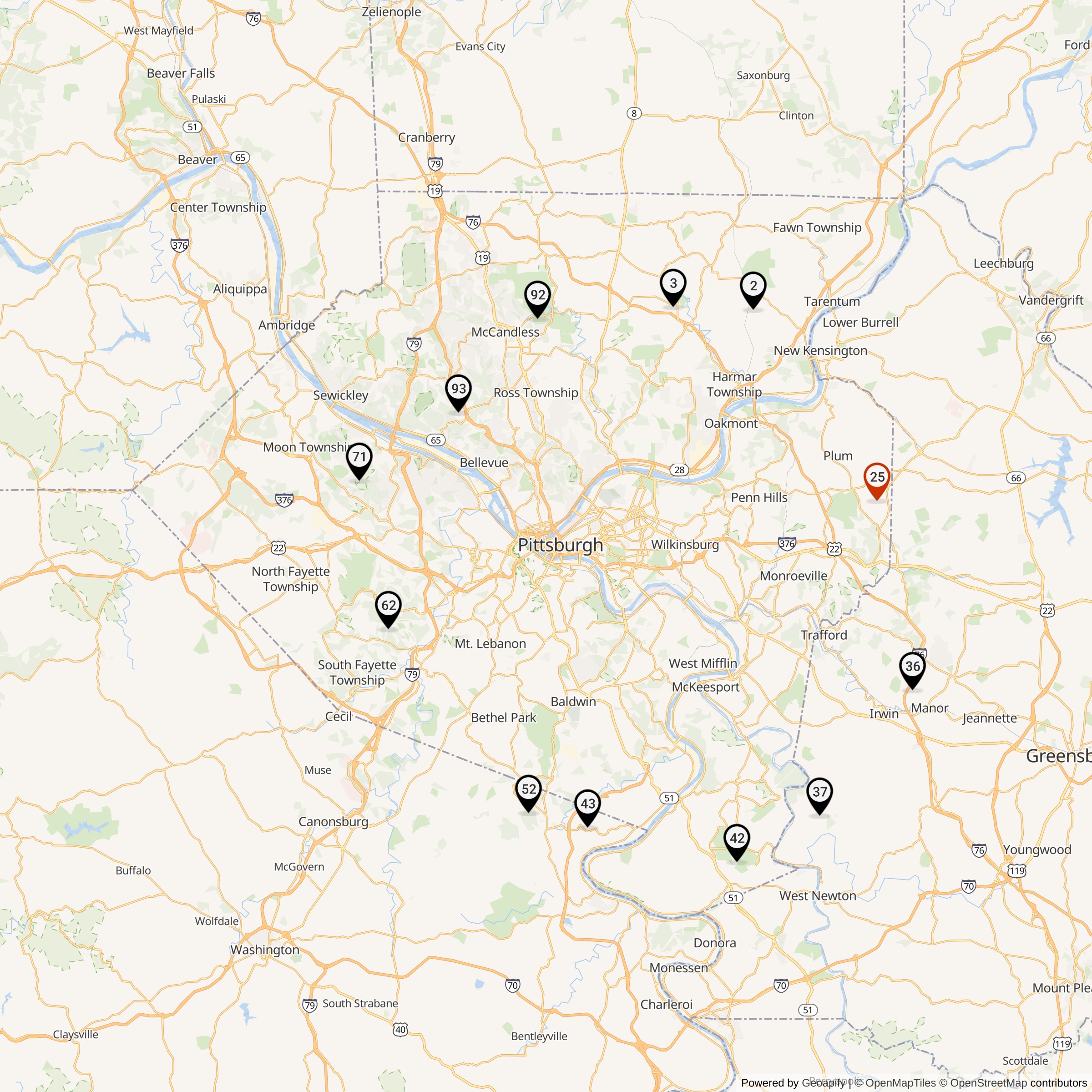
The Pittsburgh Defense Area included the following Nike sites: PI-02 at Rural Ridge, PI-03 at Dorseyville / Indianola, PI-25 at Murrysville / Monroeville, PI-36 at Irwin, PI-37 at Cowansburg / Herminie, PI-42 at Elizabeth, PI-43 at Elrama / east of Finleyville, PI-52 at Finleyville, PI-62 at Bridgeville / Hickman, PI-71 at Coraopolis / Beacon, PI-92 at Bryant / North Park, and PI-93 at West View. PI-25 was one of the earlier Ajax sites in this ring, but it was not one of the batteries retained for Hercules service.
Site Location and Naming
PI-25 is a good example of why Nike site place names can be confusing. National inventory sources usually list the site as Murrysville / Monroeville, and older listings sometimes render the second name as "Monroe," apparently a truncation or error for Monroeville. Local notes clarify that both the control and launch parcels were actually in Plum Borough, northeast of Pittsburgh and immediately north of Monroeville. Murrysville lies east of Monroeville and southeast of Plum, which helps explain why the broader site name was used.The control area was associated with New Texas Road. Ed Thelen's Pennsylvania Nike listing identifies the PI-25 control side as "713 New Texas Rd" and associates it with the University of Pittsburgh Primate Research Lab / private reuse. The same listing records local notes that the site is in Plum near the meeting area of Plum, Monroeville, and Murrysville, and that old Army housing was still present in the late 2000s.
The launch area was associated with Presque Isle Road. Ed Thelen's listing identifies it as "428 Presque Isle Rd" and links the launch-area reuse to A.E. O'Block Junior High and Adlai Stevenson Elementary School. National Nike summaries likewise identify the launch area as redeveloped into A.E. O'Block Junior High and Adlai Stevenson Elementary School, with some concrete foundations visible and the magazine used as an auxiliary gym.
Site Layout
PI-25 followed the standard Nike layout with two separated operating areas: the Integrated Fire Control area and the launcher area.The Integrated Fire Control area was the radar, tracking, and guidance side of the battery. It contained acquisition and tracking radar equipment, fire-control electronics, plotting functions, power and support buildings, and the operating spaces where crews detected targets, tracked hostile aircraft, tracked the missile, and generated engagement commands. The control side was on or near New Texas Road.
The launcher area was the missile-storage and launch side of the battery. It held underground missile magazines, elevator mechanisms, launch rails, launcher-control equipment, paved handling areas, access roads, fences, and support buildings. The launch area was on or near Presque Isle Road and later became part of the school-property landscape associated with A.E. O'Block Junior High and Adlai Stevenson Elementary School.
The two parcels were not adjacent because Nike batteries were intentionally split. The control area needed a radar position with suitable line-of-sight, while the launch area needed secure space for magazines, missile-handling surfaces, and safety zones. The two areas had to be separated but operationally connected. Pittsburgh's rugged terrain made that arrangement especially difficult. The hills, valleys, roads, and suburban boundaries around Plum and Monroeville shaped the final site geometry.
The federal Nike inventory lists PI-25 as Nike 1B,2C/30A/12L-A. This indicates a Nike Ajax configuration with one Type B magazine, two Type C magazines, a listed complement of 30 Ajax missiles, and 12 Ajax launchers. The "A" designation indicates Ajax launchers, not Hercules universal launchers. Because PI-25 was not converted to Hercules, this Ajax configuration defined its entire active military life.
Nike Ajax Mission
PI-25's weapon was the Nike Ajax, the Army's first operational guided surface-to-air missile. Nike Ajax replaced the limitations of gun-based point defense with radar-guided missile interception. The missile was designed to defend key urban, industrial, and military targets against enemy bomber attack.The Nike Ajax system depended on ground-based control. The missile did not independently guide itself to the target in the modern "fire-and-forget" sense. The IFC radars tracked both the target aircraft and the missile. Ground-based computers calculated an intercept course and transmitted steering commands to the missile. When the missile reached the calculated intercept point, its warhead detonated.
At PI-25, the Ajax missiles would have been stored horizontally in underground magazines at the launcher area. During alerts and drills, launcher crews raised missiles to the surface on elevators, moved them onto launch rails, prepared the missile for firing, and executed launch procedures only under command authority. Control-area crews operated the radars and fire-control equipment. The two halves of the site had to function as one integrated weapon system.
Operational History
PI-25 became operational in April 1955, during the early permanent Nike deployment around Pittsburgh. Its activation placed it among the first-generation missile batteries that replaced the earlier ring of antiaircraft-gun defenses. The site's work was continuous readiness rather than combat. Like other continental Nike batteries, PI-25 never fired a missile in combat, but it existed to be ready if hostile aircraft approached the defended area.The daily life of the site would have included radar operation, launcher drills, missile maintenance, security watches, generator maintenance, communications checks, vehicle upkeep, site inspections, and recurring readiness training. Nike sites were technically demanding installations. They required soldiers who could operate electronics, maintain mechanical systems, handle missiles safely, work within rigid command procedures, and remain ready for an attack that never came.
PI-25's active period was comparatively short. It remained an Ajax site through 1960 and was then deactivated. The timing reflects the transition from the first Nike Ajax pattern to a reduced Nike Hercules pattern. Nike Hercules had greater range and altitude and could carry a nuclear warhead. Because Hercules could cover a larger area, the Army did not need to retain every Ajax battery in a dense ring. In Pittsburgh, sites PI-03, PI-36, PI-37, PI-43, PI-71, and PI-93 were converted to Hercules. PI-25 was not in that group.
The fact that PI-25 closed in 1960 is significant. It makes PI-25 one of the short-lived Pittsburgh Nike batteries, active during the early guided-missile air-defense phase but closed before the long Hercules period that carried some Pittsburgh batteries into the 1970s.
Relationship to Pittsburgh Command and Control
PI-25 operated within the Pittsburgh Defense Area, not as an isolated battery. The defense area eventually used a Missile Master / Missile Mentor command-and-control facility collocated with Air Force radars near Oakdale. That Missile Master facility became operational in 1960. Because PI-25 closed in 1960, it belonged chiefly to the early Pittsburgh Ajax network, but its final year overlapped the transition toward more centralized command and control.The larger Pittsburgh system combined Army Nike batteries, Air Force radar coverage, and regional air-defense command structures. Target information and engagement authority were coordinated above the individual battery level. A Nike site such as PI-25 had local radar and launcher capability, but its wartime function depended on the regional network.
Deactivation
PI-25 was deactivated in 1960. Its closure came before the main Pittsburgh Hercules sites completed their long service lives. The reason was not that Pittsburgh no longer required air defense, but that the structure of the defense area changed. Nike Hercules allowed fewer batteries to cover larger sectors, and the Army chose selected sites for modernization while closing others.Because PI-25 was Ajax-only, its closure ended its active military purpose. Missiles and sensitive equipment were removed, and the parcels were eventually transferred or reused. Like many former Nike locations, the site did not vanish completely. It entered the civilian landscape in altered form, with the launch area especially absorbed into school use.
List of all Nike Installations in the Pittsburgh Defense AreaList of all Nike Installations in Pennsylvania