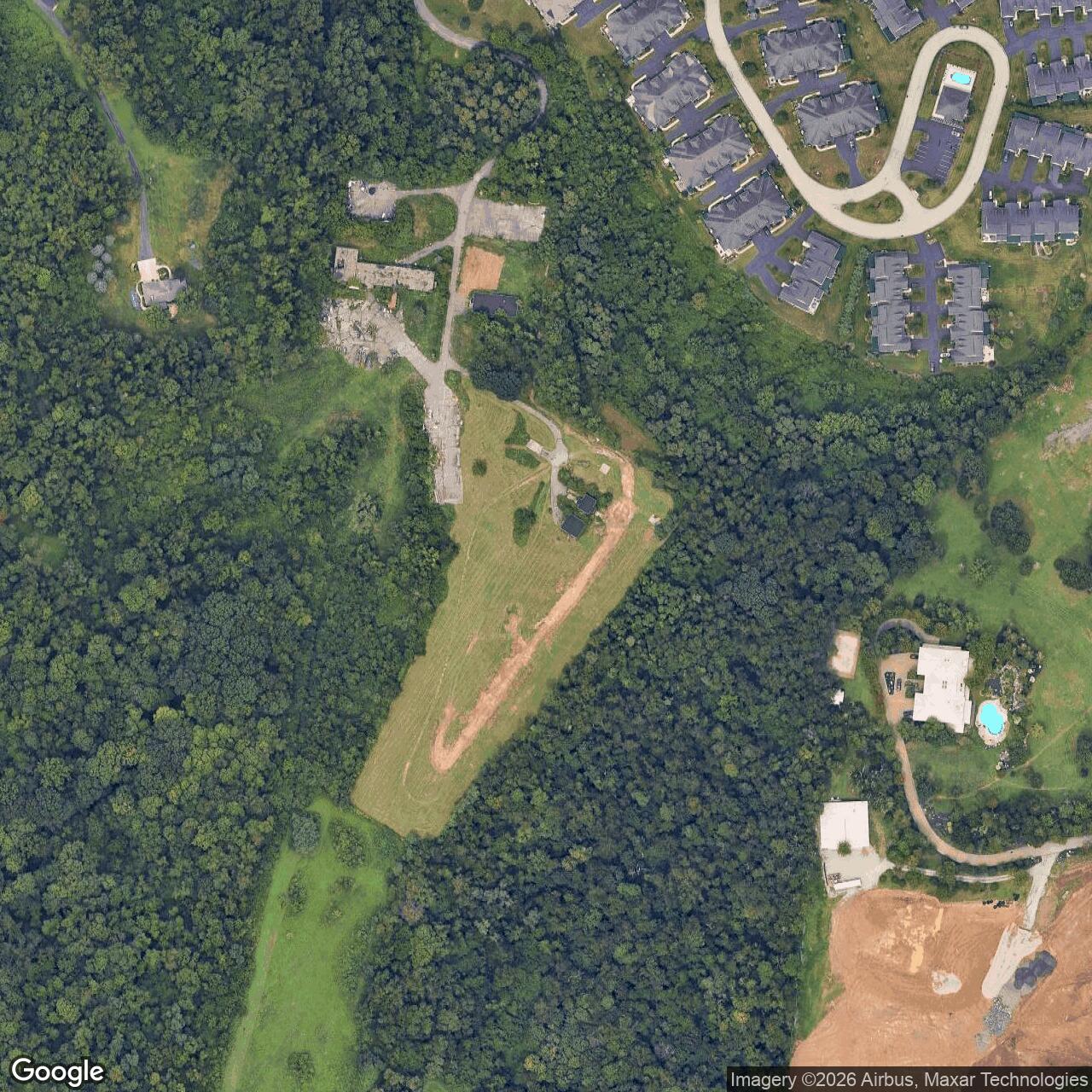
Nike Missile Site PI-62 Launcher, Bridgeville Pennsylvania
Longitude: -80.138889
This location was part of the Pittsburgh Defense Area
Site ID: PI-62
The missiles at this Launch Area were controlled by the Integrated Fire Control site located here.
Site Role: Launcher
A typical Nike air defense site consisted of two separate parcels of land. One area was known as the Integrated Fire Control (IFC) Area. This site contained the Nike system's ground-based radar and computer systems designed to detect and track hostile aircraft, and to guide the missiles to their targets.
The second parcel of land was known as the Launcher Area. At the launcher area, Nike missiles were stored horizontally within heavily constructed underground missile magazines. A large, missile elevator brought the Nikes to the surface of the site where they would be pushed across twin steel rails to one of four satellite launchers.
Elaboration on how Nike worked here.
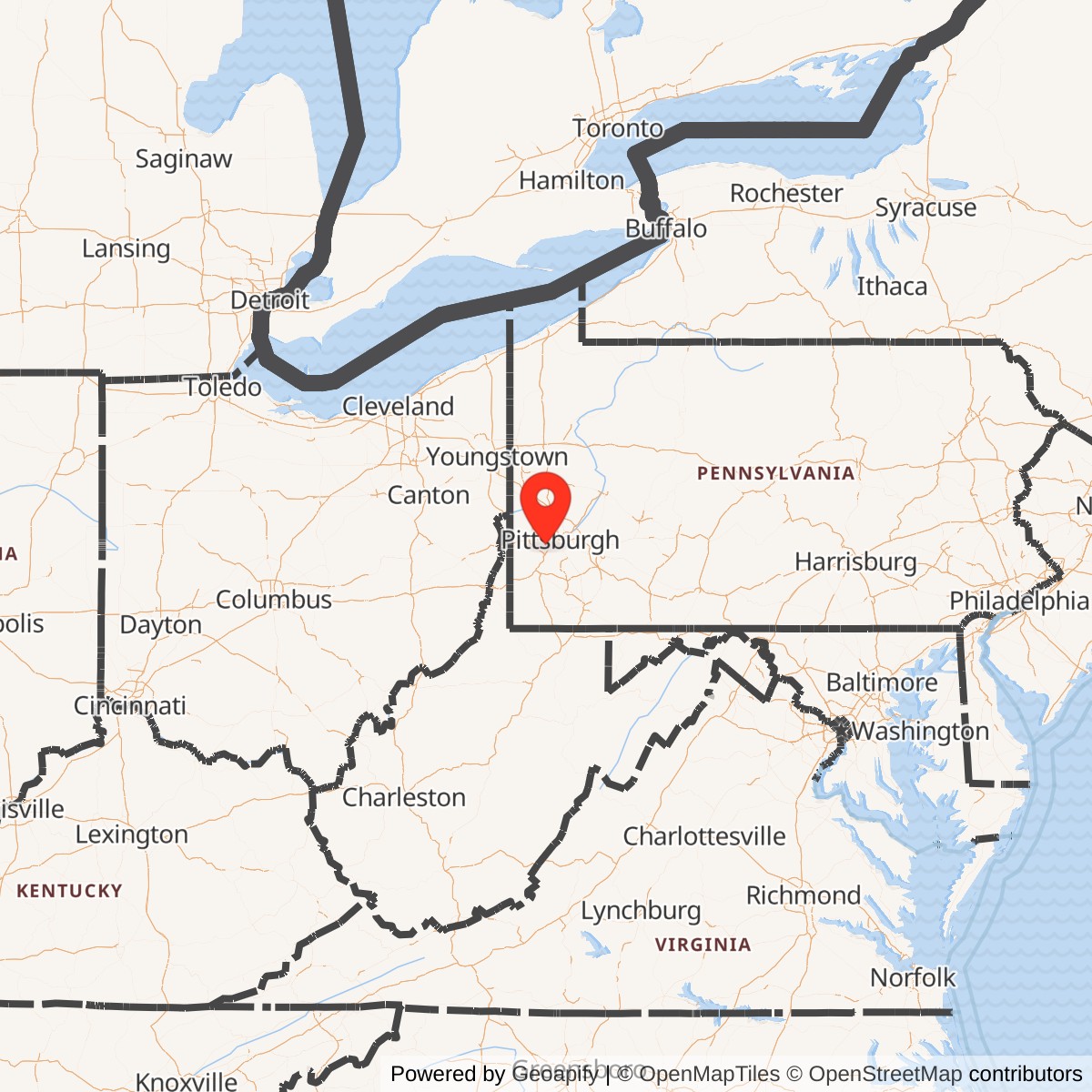
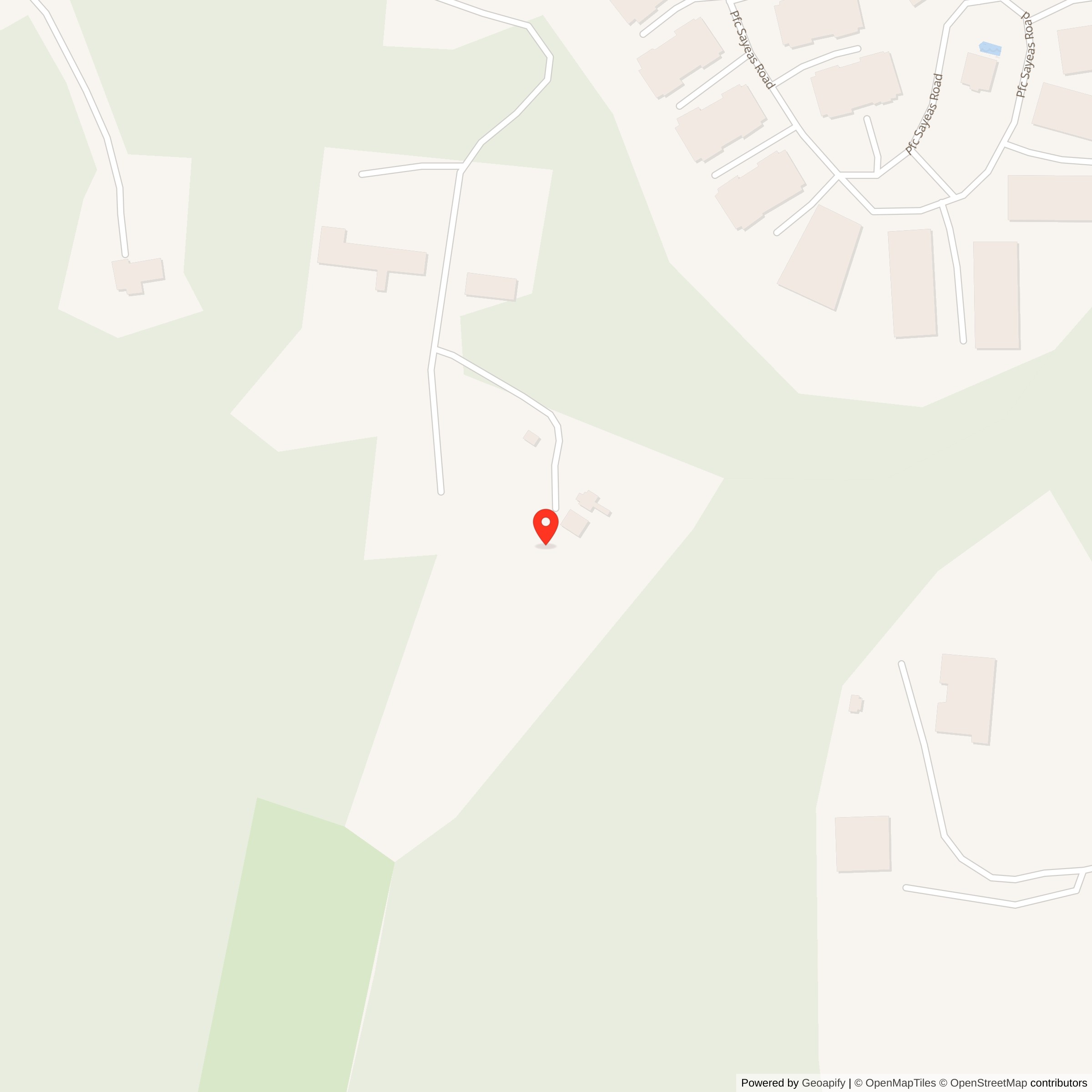
Nike Missile Site PI-62 was a U.S. Army Nike Ajax air-defense missile battery in the Pittsburgh Defense Area. It is generally listed in federal Nike inventories as PI-62, Bridgeville / Hickman, Pennsylvania, and in some local Nike-site listings as Bridgeville / Bryant. The site was part of the Cold War ring of Nike missile batteries built to defend Pittsburgh, the "Steel City," and the surrounding industrial valleys, bridges, rail corridors, transportation routes, and manufacturing districts.
It was an Ajax-only Nike battery, active from 1956 to April 1963. It was not converted to Nike Hercules. The former battery parcels were later reused for military support, Army Reserve, motor-pool, and related support functions; more recent sources describe the former control-side / nearby Oakdale command-center landscape as associated with post-military redevelopment, including Grist House Command, while the launch-side area is described in older Nike field notes as retaining intact but sealed missile-magazine features.
History
PI-62 was built because Pittsburgh was one of the most important industrial regions in the United States during the early Cold War. The Pittsburgh region's strategic value came from steelmaking, heavy manufacturing, river and rail transportation, power and industrial infrastructure, major bridges, and its long association with defense production. Cold War air-defense planners assumed that a Soviet bomber attack would likely target major industrial centers, and Pittsburgh therefore received a ring of Army air-defense missile batteries.The Pittsburgh Nike system grew out of earlier antiaircraft-gun defenses. In April 1952, before the permanent Nike batteries were complete, Army soldiers and heavy equipment moved into the region to set up temporary gun positions defending the "Steel City." Those temporary defenses reflected the urgency of the Korean War and early Cold War air-defense buildup, but guns were already being overtaken by guided-missile technology. By the mid-1950s, the U.S. Army, with Corps of Engineers construction support, was replacing gun defenses around key cities with Nike Ajax missile sites.
The Corps of Engineers Pittsburgh District, part of the Ohio River Division, was responsible for constructing the Pittsburgh-area Nike sites. The first Pittsburgh Nike construction contract was awarded in July 1954. The region's topography complicated site placement. Nike batteries required a launcher area for missiles and magazines and a separate Integrated Fire Control area for radar and guidance equipment. Around Pittsburgh, hills, valleys, wooded ridges, suburban roads, and industrial land forced planners to choose sites that could satisfy both line-of-sight radar needs and secure missile-launch requirements.
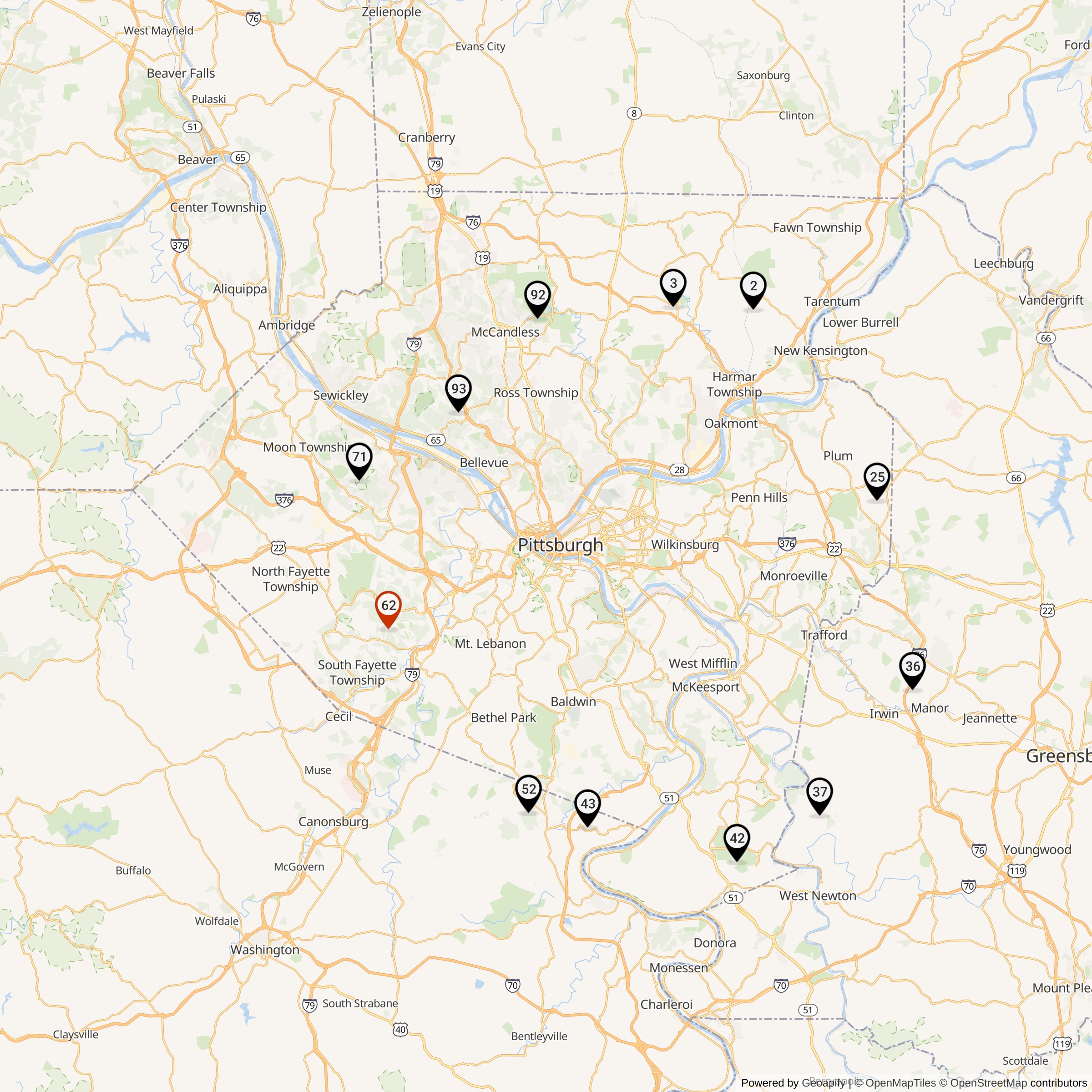
PI-62 occupied the western / southwestern portion of the Pittsburgh defense ring, near the Oakdale, Bridgeville, Hickman, and Collier Township area. Its position helped cover approaches toward the Pittsburgh metropolitan region from the southwest and west. It worked in concert with the rest of the Pittsburgh Nike network, which included PI-02 at Rural Ridge, PI-03 at Dorseyville / Indianola, PI-25 at Murrysville / Monroeville, PI-36 at Irwin, PI-37 at Cowansburg / Herminie, PI-42 at Elizabeth, PI-43 at Elrama / east of Finleyville, PI-52 at Finleyville, PI-62 at Bridgeville / Hickman, PI-71 at Coraopolis / Beacon, PI-92 at Bryant / North Park, and PI-93 at West View. PI-25 was one of the earlier Ajax sites in this ring, but it was not one of the batteries retained for Hercules service.
Site Layout
PI-62 followed the standard Nike pattern of a separated Integrated Fire Control area and launcher area.The Integrated Fire Control area was the radar, guidance, and fire-control side of the battery. It contained acquisition radar, tracking radar, fire-control electronics, plotting and computing equipment, operating buildings, power and communications support, and the personnel who detected and tracked targets. It was located about one mile east-southeast of Oakdale, near Oakdale and Thoms Run roads.
The launcher area was the missile-storage and launch side of the battery. It was located about two miles southeast of Oakdale, on the south side of Battle Ridge Road. The launcher area contained the underground missile magazines, elevators, launch rails, missile-handling pavements, launcher-control equipment, support buildings, security fencing, and access roads.
The federal Nike inventory describes PI-62 as Nike 1B,2C/30A/12L-A. In practical terms, this means that the site was configured with one Type B magazine, two Type C magazines, a listed Ajax missile capacity of 30 missiles, and 12 Ajax launchers. The "A" launcher designation indicates Ajax launchers, not universal Hercules launchers. This supports the conclusion that PI-62 remained an Ajax-only site and was not modernized for Nike Hercules.
The separation between the PI-62 control and launch areas was not accidental. Nike batteries depended on command guidance, in which ground radars tracked both the target and the missile and ground-based equipment calculated the intercept. The radar side needed suitable elevation and line-of-sight, while the launch side needed secure land for magazines, launchers, and safety clearances. The two parcels operated together as a single battery.
Nike Ajax System
PI-62 was armed with Nike Ajax, the Army's first operational guided surface-to-air missile. The Nike Ajax system was designed to intercept hostile aircraft, especially bomber formations approaching important urban and industrial targets. The missile itself was only one part of the system. The full battery included radars, computers, launchers, magazines, communications equipment, power supply, support buildings, trained crews, and command links to the regional air-defense network.The Ajax missile was stored horizontally in underground concrete magazines. During drills or alert conditions, an elevator raised the missile to the surface, where crews moved it along rails to a launcher. The Integrated Fire Control area tracked the target aircraft and the missile. Ground equipment calculated the flight path and sent steering commands to the missile. The missile did not independently search for the target; it depended on the battery's radar and fire-control system.
Ajax was a first-generation Cold War solution to the bomber threat. It represented a major advance over gun-based air defense, but it was still a comparatively short-range system intended for point defense and close-in protection of strategic targets. In the late 1950s, the Army began replacing selected Ajax batteries with Nike Hercules, a larger solid-fueled missile with greater range and altitude capability and the ability to carry a nuclear warhead. PI-62 was not one of the Pittsburgh sites selected for Hercules conversion, which is why it closed earlier than the Hercules batteries.
Mission and Operation
PI-62's mission was to defend the Pittsburgh region against hostile aircraft approaching from its sector. It was part of a layered air-defense system that included long-range surveillance radar, Air Force interceptor aircraft, command-and-control centers, and Army Nike batteries. The Nike batteries were the fixed missile layer closest to the defended urban and industrial area.The site was built for constant readiness. Crews trained to detect aircraft, identify targets, track them with radar, prepare missiles, and execute launch procedures if authorized. Launcher crews maintained the missiles, magazines, elevators, launchers, rails, generators, and security areas. IFC crews maintained and operated radar and fire-control systems. Support personnel maintained the site's buildings, vehicles, communications, power systems, roads, and perimeter security.
Although no Nike missile was ever fired in combat from PI-62 or any other continental U.S. Nike site, the purpose of the installation was serious and immediate: it existed to be ready if deterrence failed and hostile bombers approached Pittsburgh. Its presence also reflected the psychological geography of the Cold War. A relatively rural and suburban landscape near Oakdale and Bridgeville became part of a national missile-defense network because Pittsburgh's industrial core was considered strategically vital.
Relationship to the Pittsburgh Defense Area
The Pittsburgh Defense Area originally included a dense ring of Nike Ajax batteries. PI-62 was one of those first-generation sites. In the late 1950s and early 1960s, the network changed as Nike Hercules replaced Ajax at selected sites. The Pittsburgh sites converted to Hercules included PI-03, PI-36, PI-37, PI-43, PI-71, and PI-93. Those retained batteries remained active longer, some until 1974. PI-62, as an Ajax-only battery, was deactivated in April 1963.The Pittsburgh system also included a regional command-and-control site at Oakdale, usually identified as PI-70DC. That site was an Army Air-Defense Command Post equipped first with Missile Master and later Missile Mentor command-and-control technology, and it was integrated with Air Force / NORAD radar networks as part of the larger air-defense system. This creates a source-confusion problem for PI-62 because several modern local accounts discuss the former Oakdale missile-command center and sometimes refer to its historical relationship with PI-62 or the Nike defense area.
PI-70DC was the regional command-and-control facility for the Pittsburgh missile-defense network.
Command and Control
During PI-62's operating years, the Pittsburgh air-defense network became increasingly centralized. The Oakdale command-and-control site became operational in 1960 and provided regional coordination for Nike missile batteries around Pittsburgh. The facility was associated with Missile Master command-and-control equipment and later upgraded systems. It helped connect Army missile batteries, Air Force radar, and broader air-defense command structures.This mattered for PI-62 because a Nike battery did not operate as an isolated local weapon. Engagement authority, target assignment, identification procedures, and regional coordination flowed through the air-defense command system. The battery's local radars and launchers were essential, but they were part of a wider detection-to-intercept chain.
The modern Grist House Command redevelopment is associated with the former Oakdale missile-command-center landscape, not the underground launcher magazines of PI-62 itself. Grist House's own historical note says the 55,000-square-foot building in Collier Township served as a Nike Missile Command Center during the Cold War, was constructed in 1957, became operational with Missile Master capabilities in 1960, and was originally known in their account as "PI-62." WESA's 2025 reporting similarly describes Grist House Command as a brewery, taproom, and restaurant built inside the shell of the region's Cold War-era missile command center near Oakdale. Because official Nike listings distinguish PI-62 from PI-70DC, the safest interpretation is to describe the brewery site as part of the Oakdale command-center / Nike command landscape closely associated with the Pittsburgh Defense Area, while keeping the PI-62 battery history separate.
Deactivation
PI-62 was deactivated in April 1963. Its closure reflected the larger Nike transition taking place across the United States. By the early 1960s, the Army was reducing the number of Ajax-only batteries and relying more heavily on selected Nike Hercules sites. Hercules had greater range, altitude, and destructive capability, allowing fewer sites to cover larger areas. The Ajax-only Pittsburgh sites, including PI-62, closed earlier than the Hercules batteries.The closure also reflected changing strategic priorities. The Nike system had been built primarily to defend against manned bomber attack. By the 1960s, intercontinental ballistic missiles and submarine-launched ballistic missiles were becoming the dominant strategic threat. Fixed surface-to-air missile batteries could still defend against aircraft, but they could not protect American cities from a large ballistic-missile attack. As a result, the continental Nike network gradually contracted.
Post-Closure Use and Current Condition
Ed Thelen's Pennsylvania Nike listing identifies the former PI-62 control area near Oakdale and Thoms Run roads as having been used by the U.S. Army Reserve as a motor pool. The same listing identifies the former launch area on the south side of Battle Ridge Road as a U.S. Army Support Facility. A later field note in that listing describes the site as intact, with buildings in use by the Oakdale support facility, the launch area still fenced, the missile pits still present but welded shut, and stairways to the missile-storage area locked.The nearby Oakdale command-center landscape has had a different reuse history. Grist House Craft Brewery announced in 2019 that it had purchased a 55,000-square-foot former Nike Missile Command Center in Collier Township and planned to convert it into a production facility, taproom, and retail space. WESA reported in 2025 that Grist House Command opened as a brewery, taproom, and restaurant in the former Cold War-era missile command center near Oakdale, with the nearby radome still active for air-traffic-control purposes. Mt. Lebanon Magazine's 2021 article also described the Oakdale / Collier Township radar tower and command-center landscape as a visible Cold War landmark, with the FAA continuing to use long-range radar functions at the site.
List of all Nike Installations in the Pittsburgh Defense AreaList of all Nike Installations in Pennsylvania