Nike Missile Site PI-93 Launcher, West View Pennsylvania
Longitude: -80.0781268526005
This location was part of the Pittsburgh Defense Area
Site ID: PI-93
The missiles at this Launch Area were controlled by the Integrated Fire Control site located here.
Site Role: Launcher
A typical Nike air defense site consisted of two separate parcels of land. One area was known as the Integrated Fire Control (IFC) Area. This site contained the Nike system's ground-based radar and computer systems designed to detect and track hostile aircraft, and to guide the missiles to their targets.
The second parcel of land was known as the Launcher Area. At the launcher area, Nike missiles were stored horizontally within heavily constructed underground missile magazines. A large, missile elevator brought the Nikes to the surface of the site where they would be pushed across twin steel rails to one of four satellite launchers.
Elaboration on how Nike worked here.
Missile Type: Ajax/Hercules
The Nike Ajax was the first in the Army's family of guided missiles, and the world's first operational, guided, surface-to-air missile system. Nike Ajax had a burnout speed of Mach 2.3, a range of 25-30 miles, and a ceiling of 65,000 feet.
Designed to carry either nuclear and/or high-explosive warheads, the Nike Hercules missile could attack supersonic aircraft operating at altitudes in excess of 150,000 feet and at a range of more than 87 miles.
Battery Type: single
Current site status: unknown
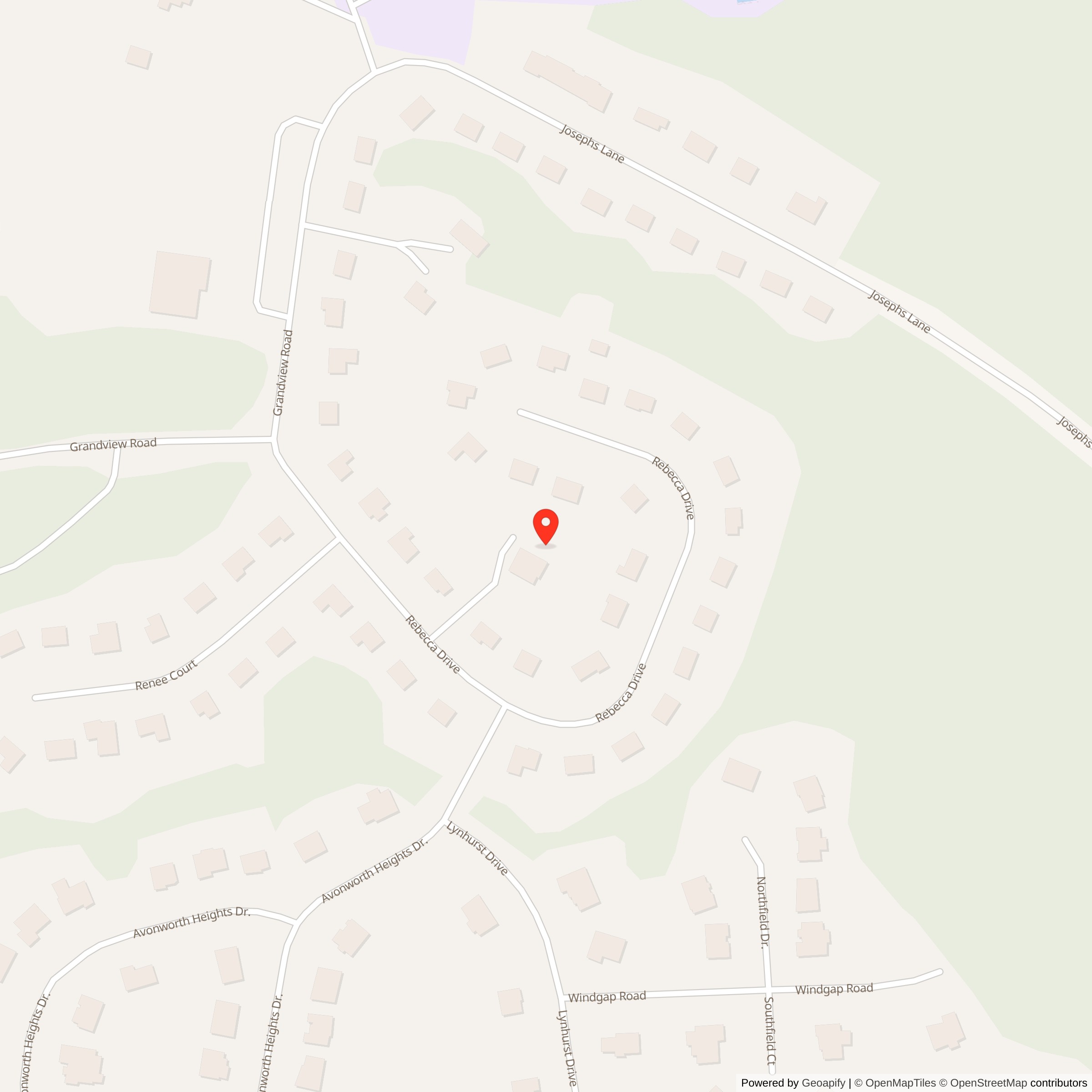
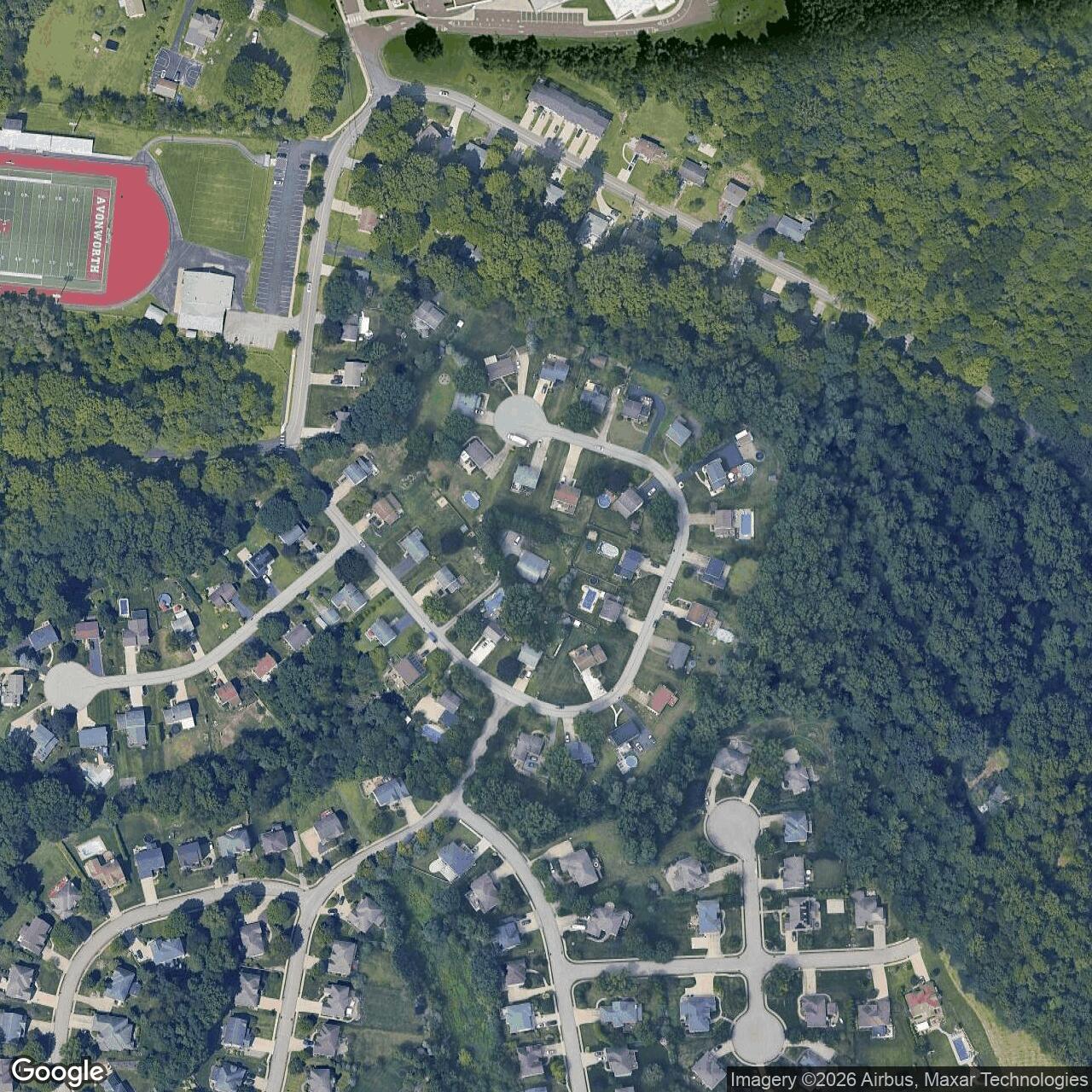
Nike Missile Site PI-93 was a U.S. Army Nike Ajax and Nike Hercules air-defense missile battery in the Pittsburgh Defense Area. The site is most commonly identified in Nike inventories as PI-93, West View, Pennsylvania, although its paired operating areas extended beyond the simple town-name label. The Integrated Fire Control area was associated with the West View / Gass Road area, while the launcher area was across the valley near Joseph's Lane, near the present Avonworth High School area north-northeast of Emsworth.
PI-93 is no longer an active military installation. It entered operational service in October 1956 as a Nike Ajax site, was converted for Nike Hercules service in the late 1950s, and remained active until June 1971. After the Army ended the battery's air-defense mission, the two halves of the installation followed different post-closure paths: the control side remained in federal / Army Corps of Engineers communications-related use, while the launcher side was redeveloped into residential housing.
History
PI-93 was part of the ring of Nike missile sites built around Pittsburgh in the 1950s. Pittsburgh's defense was a national-security priority because the region was one of the United States' most important industrial centers. The city and its surrounding valleys contained steel plants, heavy manufacturing facilities, rail yards, bridges, river navigation routes, and related infrastructure that were considered vital to defense production and wartime mobilization. In the early Cold War, when U.S. planners feared Soviet bomber attack against industrial and urban targets, Pittsburgh was a logical site for a dense air-defense network.The Pittsburgh Defense Area began with temporary antiaircraft-gun defenses before the permanent Nike missile system was completed. In April 1952, soldiers and heavy equipment moved through the Pittsburgh region to establish a ring of 12 gun positions defending the "Steel City." Those gun batteries were an interim measure. The introduction of Nike Ajax changed the Pittsburgh air-defense system from heavy antiaircraft artillery to radar-guided missiles, underground magazines, fire-control radars, and permanent operating installations.
The Corps of Engineers Pittsburgh District, part of the Ohio River Division, was responsible for constructing the Pittsburgh-area Nike sites. The first construction contract was awarded in July 1954. Pittsburgh's topography made the work unusually difficult. Nike sites required both a launcher area and a radar-control area. The launcher side needed secure, usable land for magazines, launchers, security fencing, access roads, and support equipment. The control side needed suitable radar visibility and line-of-sight relationships. In the Pittsburgh region, steep terrain, wooded ridges, narrow valleys, roads, and suburban communities forced planners to split sites across complicated landscapes.
PI-93 illustrates that geography clearly. The control area sat near West View, on or near Gass Road, while the launcher area was across the valley near Joseph's Lane, in the Avonworth / Emsworth side of the operating area. The two areas were physically separate but functioned as a single battery.
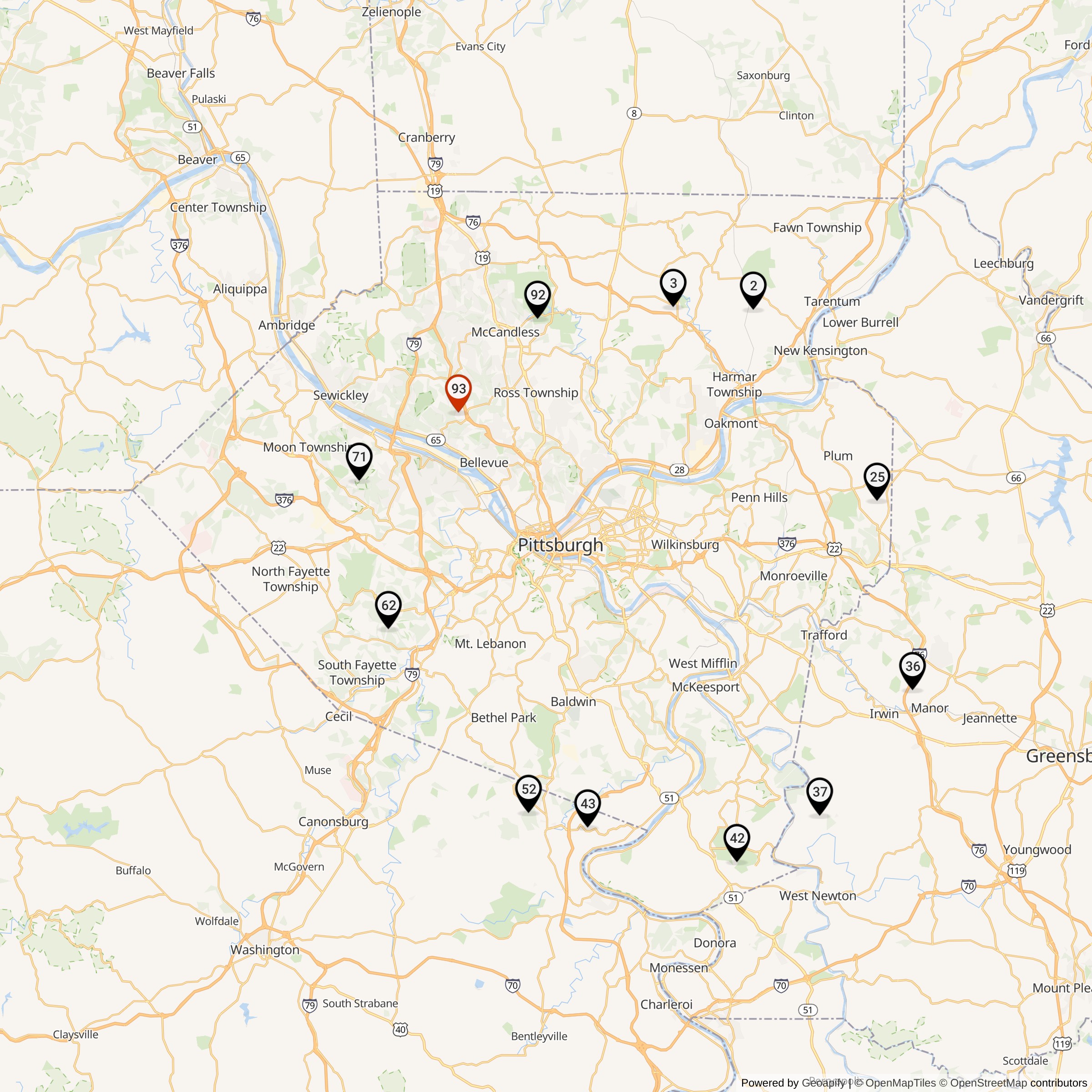
The Pittsburgh Nike network included PI-02 at Rural Ridge, PI-03 at Dorseyville / Indianola, PI-25 at Murrysville / Monroeville, PI-36 at Irwin, PI-37 at Cowansburg / Herminie, PI-42 at Elizabeth, PI-43 at Elrama, PI-52 at Finleyville, PI-62 at Bridgeville / Hickman, PI-71 at Coraopolis / Beacon, PI-92 at Bryant / North Park, and PI-93 at West View. Of these, PI-03, PI-36, PI-37, PI-43, PI-71, and PI-93 were among the Pittsburgh sites upgraded from Nike Ajax to Nike Hercules.
Units and Manning
PI-93 was part of the Pittsburgh Defense Area's active Army and later mixed active / National Guard Nike force. The broader Pittsburgh Nike system was initially manned by active Army battalions. With the introduction of Nike Hercules, manning eventually came from one active-duty unit, the 3rd Missile Battalion, 1st Artillery, and one Pennsylvania Army National Guard battalion, the Duquesne Greys, formally the 2nd Missile Battalion, 176th Artillery.Pittsburgh-area Nike order-of-battle references identify PI-93 with Battery A at West View. Earlier antiaircraft-gun defenses in the same general north-hills area included gun positions off Gass Road at Valley Hi Drive, and when the gun sites were deactivated, the area became part of the Nike missile defense system. Later Nike documentation and local accounts describe PI-93 as the radar-control station for the associated missile launchers across the valley.
Because the open-source unit record for PI-93 is not as detailed as for some sites, the most cautious interpretation is that PI-93 belonged to the Pittsburgh Hercules group manned under the active Army / Pennsylvania Army National Guard structure used for the region's late-surviving Hercules sites. Its operation through June 1971 places it within the period when Pennsylvania Army National Guard participation had become a major part of continental air defense.
Mission and Operation
PI-93's mission was to detect, track, and, if ordered, engage hostile aircraft approaching the Pittsburgh region. It was not a ballistic-missile silo or a strategic nuclear deterrent site. It was a fixed surface-to-air missile battery built to defend a major metropolitan-industrial area from enemy bombers.Nike batteries used a command-guidance system. The missile did not independently guide itself to the target in the modern fire-and-forget sense. Instead, radar equipment at the Integrated Fire Control area tracked the target and the missile, while a ground-based computer calculated the intercept. Steering commands were transmitted to the missile in flight. At the calculated intercept point, the warhead was detonated.
During its first operational years, PI-93 used the Nike Ajax missile. Ajax was the Army's first operational guided surface-to-air missile and was intended to replace conventional heavy antiaircraft-gun defense around selected U.S. cities, air bases, and industrial targets. It was designed primarily to engage individual bomber aircraft.
PI-93 was later upgraded to Nike Hercules. Hercules was larger, solid-fueled, longer-ranged, and more capable than Ajax. It could carry either a conventional high-explosive warhead or a nuclear warhead intended to destroy bomber formations. Because Hercules had greater reach and destructive effect, the Army did not need to keep every Ajax site open. Many Ajax-only Pittsburgh batteries were closed, while selected Hercules-capable sites remained in service. PI-93 was one of those retained sites.
The site's federal Nike inventory configuration is generally listed as Nike 1B, 2C / 18H, 30A / 10L-H. In practical terms, this indicates one Type B magazine and two Type C magazines, a listed complement associated with both Hercules and Ajax missiles, and ten Hercules launchers or Hercules-capable launch positions. The Appendix D Hercules conversion table lists PI-93 as a converted Pittsburgh defense site with a 1B and 2C magazine configuration, conversion work from June 1958 to May 1959, and a Hercules operational date of September 17, 1959.
Site Layout
PI-93 consisted of two principal operating areas.The Integrated Fire Control area was the radar and guidance side of the battery. It was located near West View on Gass Road. Local and site-listing accounts state that the control area remained largely intact into the 2000s and 2010s, with cell towers, an Army Corps of Engineers building, and communications functions added after the Nike era. One contributor described the site as a communications hub for Corps of Engineers locks and dams in Pennsylvania and Ohio.
The launcher area was the missile-storage and firing side of the battery. It was located across the valley near Joseph's Lane. Local descriptions place the launchers near the present Avonworth High School area, while coordinate inventories identify the launch area as north-northeast of Emsworth. During the Nike period, this area would have contained underground missile magazines, launchers, ready areas, access roads, security fencing, power and communications links, and support structures.
In standard Nike operation, missiles were stored horizontally in underground magazines. Elevators raised missiles to the surface, where crews moved them onto launchers. Ajax-era sites used the smaller Ajax missile, while Hercules conversion required changes to handling, launcher, magazine, safety, and support arrangements. PI-93's 1B and 2C magazine configuration reflects an Ajax site adapted for the Hercules period.
The separation between the PI-93 control and launcher areas was a functional requirement. Radar control needed suitable terrain and line-of-sight. The launch area needed a secured parcel with enough room for magazines, launchers, and safety zones. The paired arrangement allowed the two areas to work together even though they were not physically adjacent.
Nike Ajax Period
PI-93 entered service in October 1956, during the first phase of the Pittsburgh Nike missile system. In this period, the site was part of a broader national deployment of Nike Ajax batteries around major cities and strategic targets. Ajax replaced the earlier heavy-gun approach with a guided missile system that depended on radar tracking, ground-based computers, and trained missile crews.For the Pittsburgh region, PI-93's northern position helped cover approaches over the Ohio River valley and the suburban-industrial north and west sides of the metropolitan area. Its location near West View also complemented nearby Pittsburgh Defense Area sites, including PI-92 at Bryant / North Park and PI-71 at Coraopolis / Beacon.
Daily operation during the Ajax period would have involved radar watch, missile maintenance, launcher-area readiness, communications drills, power-generation maintenance, security, training, and periodic evaluations. Nike sites were designed for high readiness even though they were never used in combat in the continental United States. Crews had to be prepared to identify aircraft, receive engagement authority, track targets, and launch within a compressed timeline.
Conversion to Nike Hercules
PI-93 was converted to Nike Hercules in the late 1950s. Appendix D of the Nike Hercules weapon-system history lists PI-93 as a converted Pittsburgh Defense Area site. The listed conversion period was June 1958 to May 1959, and the listed Hercules operational date was September 17, 1959.This conversion was historically important because it changed PI-93 from a first-generation Ajax battery into one of the retained, high-capability batteries of the Pittsburgh Defense Area. Nike Hercules allowed the Army to cover larger areas with fewer sites. Hercules also introduced a nuclear-capable antiaircraft option, reflecting the Cold War assumption that massed Soviet bomber formations might have to be destroyed before reaching American industrial centers.
The upgrade also extended PI-93's life. Many Pittsburgh-area Ajax-only batteries closed in the early 1960s, but PI-93 remained active until June 1971. Although it did not stay open as long as the five Pittsburgh Hercules batteries that lasted until 1974, it still outlived the short-lived Ajax-only layer and remained an important north-side component of the region's Hercules defense.
Command and Control
PI-93 operated within the Pittsburgh Defense Area's regional command system. Command and control for the Pittsburgh Nike batteries was handled by a Missile Master / Missile Mentor facility collocated with Air Force radar facilities near Oakdale. That Missile Master facility became operational in 1960.The Oakdale command site is commonly identified as PI-70DC. It tied the Pittsburgh missile batteries into a larger air-defense network that included Army surface-to-air missiles, Air Force radars, and the broader continental air-defense command structure. For PI-93, this meant that the local battery could track and launch, but target assignment and engagement control were coordinated through higher command channels.
This command relationship is important to understanding PI-93's role. The site was not merely a cluster of missile magazines. It was a node in a larger air-defense architecture that combined local radar guidance, regional command, and national Cold War air-defense planning.
Landscape and Daily Life
PI-93's day-to-day life would have resembled other Nike Hercules batteries. The IFC area was the technical nerve center, staffed by radar operators, fire-control personnel, communications specialists, and maintenance crews. The launcher area was the missile-handling and security center, where crews maintained magazines, elevators, launchers, missiles, generators, security systems, and support equipment.The site required constant routine work. Crews maintained readiness, trained on drills, inspected equipment, guarded restricted areas, and supported the communications and command procedures that made the battery part of the larger defense network. Ajax-era service involved liquid-fuel missile hazards and the handling of smaller missiles; Hercules-era service involved a larger missile, different safety procedures, and nuclear-capable air-defense doctrine.
Local geography shaped the site experience. The control site near Gass Road and the launcher site across the valley were close enough to function together but separated by real terrain. This made PI-93 a visible example of how Cold War military infrastructure was inserted into the hills, roads, and communities of suburban Pittsburgh.
Deactivation
PI-93 remained in service until June 1971. Its closure came during the broader decline of the Nike air-defense network. By the late 1960s and early 1970s, the United States' primary strategic concern had shifted from bomber attack to intercontinental ballistic missiles and submarine-launched ballistic missiles. Nike Hercules could defend against aircraft, but it could not stop a large-scale ballistic-missile attack.At the same time, changing military budgets, arms-control politics, and new strategic assumptions reduced the value of fixed continental surface-to-air missile batteries. Pittsburgh's Nike system was gradually reduced, with PI-93 closing in 1971 and several other Hercules sites surviving until 1974.
Post-Closure Use and Current Condition
After deactivation, the two halves of PI-93 had different fates.The control site remained in government-related use. Ed Thelen's Pennsylvania Nike listing includes several later observations describing the former West View control site as still substantially intact, with cell towers, an Army Corps of Engineers building, and communications use. A 2010 note in that listing states that the site was occupied by the United States Army Corps of Engineers as a communications hub for locks and dams in Pennsylvania and Ohio. Other site inventories describe the control side as used by the Army Corps of Engineers.
The launcher site was redeveloped. Nike site inventories describe the launch area as obliterated by a residential housing plan. Ed Thelen's Pennsylvania listing adds a local account that Ryan Homes purchased the launch site after closure and built a housing development there. The same account repeats a local rumor that at least one house may have incorporated part of a former missile bay or launcher-magazine structure into a basement, but this remains anecdotal and should be treated as an unverified local story rather than a confirmed physical-survival claim.
As a result, PI-93's surviving historical visibility is uneven. The launcher side appears to have lost most or all of its military character through residential redevelopment. The control side appears to have retained more continuity because it remained in communications-related federal or military-associated use, even though it no longer served as a Nike radar-control station.
List of all Nike Installations in the Pittsburgh Defense AreaList of all Nike Installations in Pennsylvania