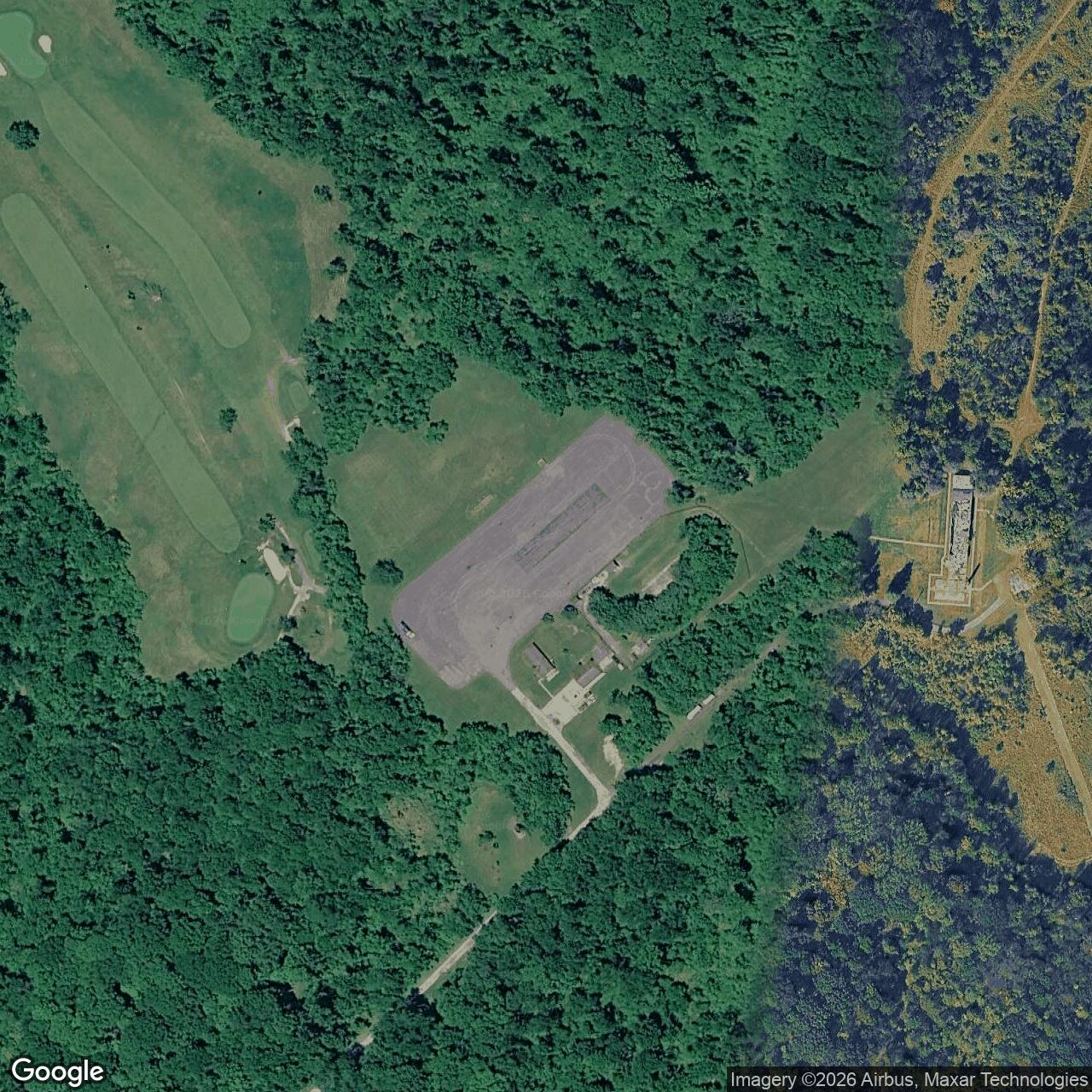
Nike Missile Site PI-42 Launcher, Elizabeth Pennsylvania
Longitude: -79.8367171308056
This location was part of the Pittsburgh Defense Area
Site ID: PI-42
The missiles at this Launch Area were controlled by the Integrated Fire Control site located here.
Site Role: Launcher
A typical Nike air defense site consisted of two separate parcels of land. One area was known as the Integrated Fire Control (IFC) Area. This site contained the Nike system's ground-based radar and computer systems designed to detect and track hostile aircraft, and to guide the missiles to their targets.
The second parcel of land was known as the Launcher Area. At the launcher area, Nike missiles were stored horizontally within heavily constructed underground missile magazines. A large, missile elevator brought the Nikes to the surface of the site where they would be pushed across twin steel rails to one of four satellite launchers.
Elaboration on how Nike worked here.
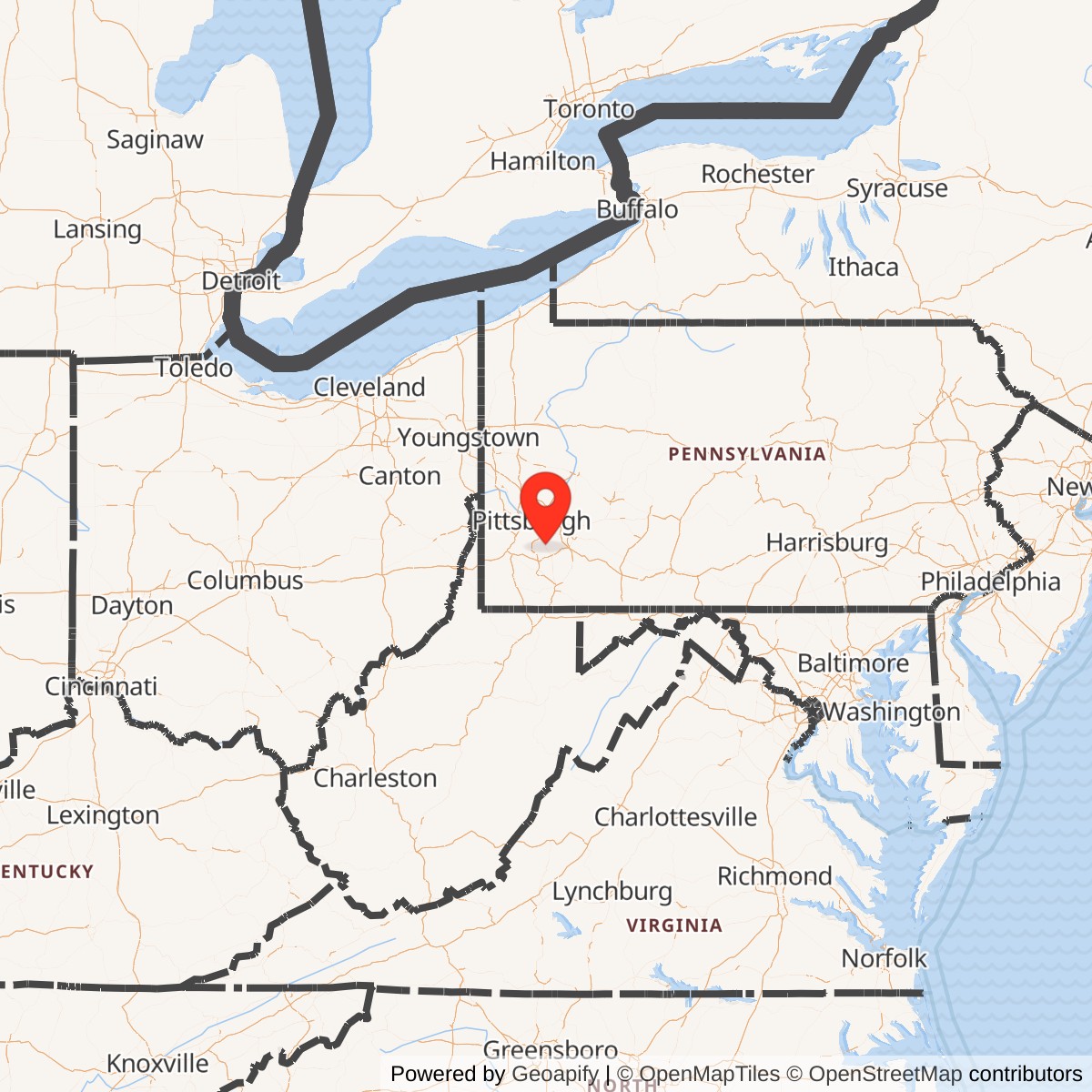
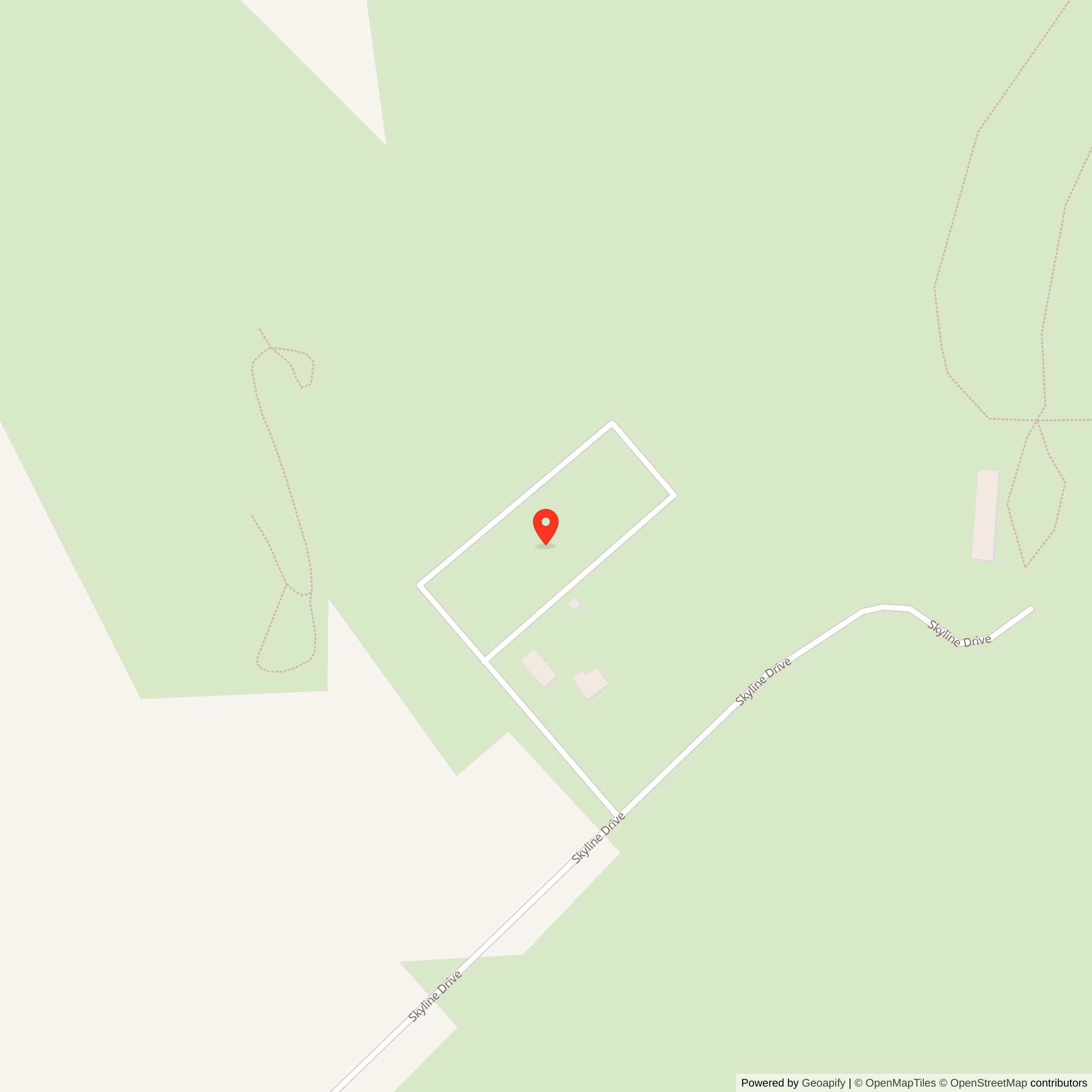
Nike Missile Site PI-42 was a U.S. Army Nike Ajax air-defense missile battery in the Pittsburgh Defense Area. The site was located in the Elizabeth / Elizabeth Township area of Allegheny County, Pennsylvania, southeast of Pittsburgh. It was one of the fixed missile batteries built in the mid-1950s to defend the Pittsburgh industrial region, including the Monongahela Valley, the steel and manufacturing corridor, river crossings, rail infrastructure, power facilities, and the urban-industrial core that Cold War planners considered strategically important.
It was an Ajax-only Nike site, active from 1956 to April 1963. It was not one of the Pittsburgh-area sites converted to Nike Hercules. After deactivation, the control and launch parcels were transferred out of Department of Defense control and reused for local institutional and public-safety purposes.
History
PI-42 was part of the Pittsburgh Defense Area, a Cold War air-defense network of Nike missile batteries positioned around one of the nation's most important industrial regions. Pittsburgh's military importance in the 1950s was not limited to its population. The city and its surrounding valleys contained steel mills, heavy industry, bridges, railroads, river navigation routes, and industrial plants essential to wartime production. Cold War air-defense planners expected that a Soviet bomber attack would target such industrial and transportation centers. The Nike system was built to provide a final defensive layer around these targets if enemy aircraft penetrated the outer radar and fighter-interceptor defenses.The Pittsburgh Nike system evolved from earlier antiaircraft-gun defenses. In April 1952, before the permanent missile sites were complete, Army soldiers and heavy equipment moved into the Pittsburgh region to establish temporary gun positions around the "Steel City." The gun batteries were a transitional defense. The permanent Nike sites introduced underground missile magazines, separated radar-control areas, hardened support infrastructure, launcher surfaces, power generation, communications, and trained missile crews.
The Corps of Engineers Pittsburgh District, part of the Ohio River Division, was responsible for constructing the Nike installations defending the Pittsburgh region. The first construction contract for Pittsburgh Nike sites was awarded in July 1954. The terrain around Pittsburgh made site selection and construction difficult. The Nike system required two separate but integrated areas: a launch area for the missiles and underground magazines, and an Integrated Fire Control area for radar and guidance equipment. In the hills and valleys southeast of Pittsburgh, locating those paired parcels required enough elevation for radar line-of-sight, enough open ground for missile storage and launch operations, and enough separation for safety and operating requirements.
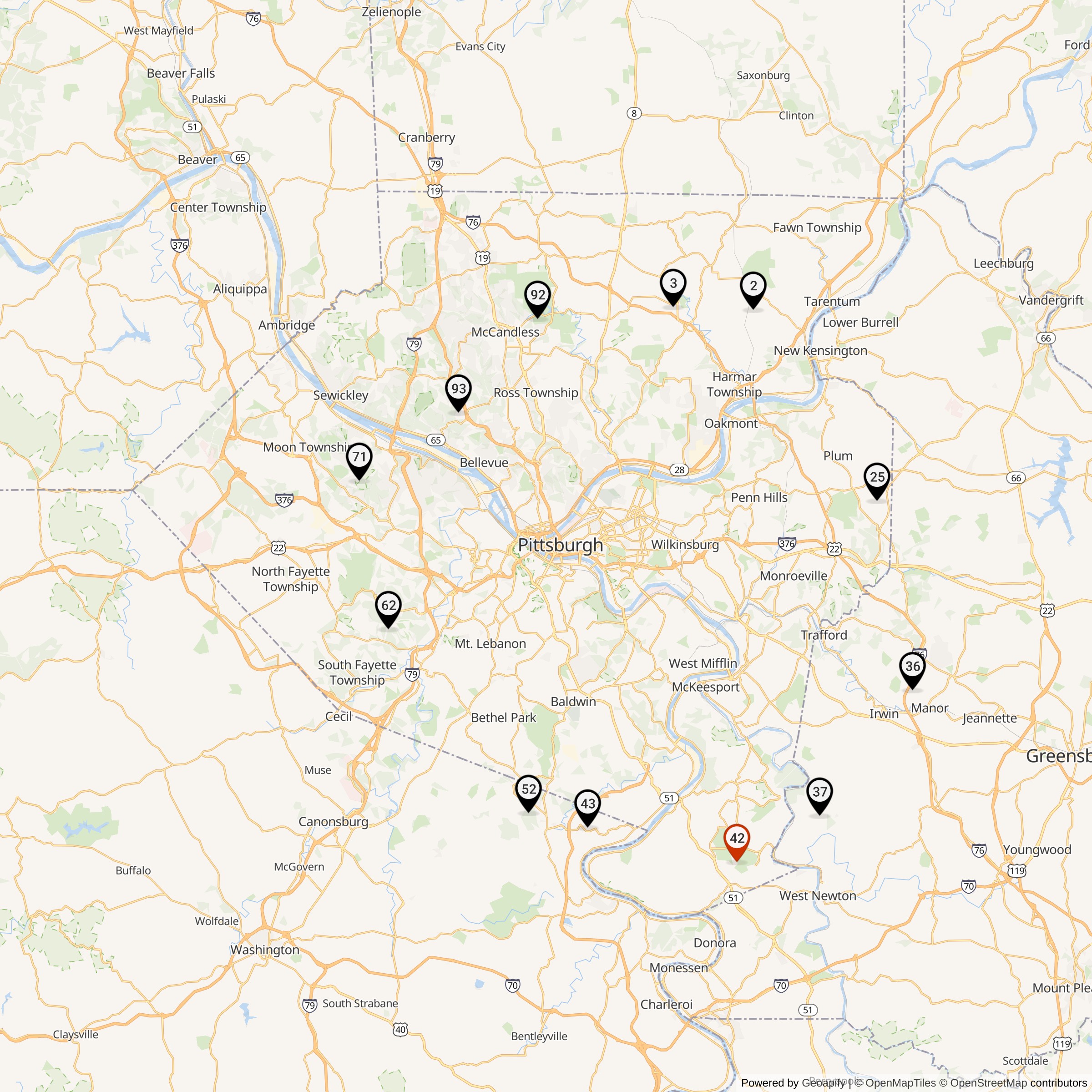
PI-42 occupied the southeastern portion of the Pittsburgh defensive ring. Its Elizabeth Township location gave the battery coverage over the Monongahela Valley approaches and the industrial corridor southeast of the city. The site worked in combination with other Pittsburgh-area Nike batteries, including PI-02 at Rural Ridge, PI-03 at Dorseyville / Indianola, PI-25 at Murrysville / Monroeville, PI-36 at Irwin, PI-37 at Cowansburg / Herminie, PI-42 at Elizabeth, PI-43 at Elrama / east of Finleyville, PI-52 at Finleyville, PI-62 at Bridgeville / Hickman, PI-71 at Coraopolis / Beacon, PI-92 at Bryant / North Park, and PI-93 at West View.
Site Layout
PI-42 followed the standard Nike site pattern, with a separated Integrated Fire Control area and launcher area.The Integrated Fire Control area was the radar and guidance portion of the battery. It contained the acquisition radar, target-tracking radar, missile-tracking radar, fire-control computer equipment, communications equipment, radar pads, operating buildings, power and support facilities, and administrative functions needed to detect, track, and engage hostile aircraft. The PI-42 IFC was located east of Hillsdale and west of Pennsylvania Route 48. Later site notes identify the control side with the Elizabeth Forward School District, and field notes place former Nike housing across from the IFC.
The launcher area was the missile-storage and launch portion of the battery. It was located west of Mustard and north of Pineview Road. The launcher parcel contained the underground missile magazines, elevators, launch rails, paved launcher surfaces, missile-handling areas, fencing, security features, access roads, utilities, and support buildings. Later reuse sources identify this area with a police/public-safety firing range and regional training function.
The separation between the two parcels was central to Nike design. Radars needed suitable position and line-of-sight; missiles needed secure storage, launch space, and safety zones. The two areas were linked operationally by communications and command systems so that radar operators and launcher crews functioned as a single battery.
Nike Ajax System
PI-42 was equipped with the Nike Ajax, the Army's first operational guided surface-to-air missile. Nike Ajax represented a major shift from conventional antiaircraft artillery to radar-guided missile defense. The Ajax system was designed to intercept enemy bomber aircraft before they could reach defended targets.The Nike Ajax missile was stored horizontally in underground magazines at the launch site. During drills or alert operations, an elevator raised the missile to the surface. Crews then moved the missile along rails to a launcher. The IFC area tracked both the target aircraft and the missile. Ground-based equipment calculated an intercept course and transmitted steering commands to the missile in flight. When the missile reached the calculated intercept point, its warhead detonated near the target.
The federal Nike inventory identifies PI-42 as Nike 1B, 2C/30A/12L-A. This indicates a launch configuration with one Type B magazine and two Type C magazines, a listed Ajax missile capacity of 30 missiles, and 12 Ajax launchers. The "A" launcher designation is important because PI-42 was not converted to Hercules. It remained an Ajax site until deactivation.
Mission and Operation
PI-42's mission was to defend the Pittsburgh region from enemy aircraft approaching from the southeast and the Monongahela Valley side of the defense area. It was not an isolated military base in the sense of a large post. It was one fixed battery within an integrated defensive network. The site's crews were responsible for maintaining readiness, operating radars, maintaining missiles and launch equipment, securing the magazine area, and training for rapid engagement under higher command authority.Nike duty was technical and procedural. Personnel had to maintain liquid-fueled Ajax missiles, radars, generators, elevators, communications systems, and fire-control electronics. Launcher crews trained to raise and position missiles safely. Radar and fire-control crews trained to acquire targets, track missiles, and process engagement data. Security personnel protected the fenced launch and control areas. Support personnel handled maintenance, supplies, vehicles, buildings, and administrative work.
PI-42 never fired a missile in combat. Its purpose was deterrent and defensive: to stand ready as part of the continental air-defense system. The presence of the site demonstrated how deeply Cold War defense planning entered the daily geography of the Pittsburgh suburbs. The site was close enough to local roads, schools, and communities to become part of the Elizabeth Township landscape, but its mission was tied to a national air-defense system aimed at defending industrial America from strategic air attack.
Relationship to the Pittsburgh Defense Area
PI-42's operational history fits the first-generation Nike Ajax period in the Pittsburgh Defense Area. The initial Pittsburgh Nike ring contained a relatively dense pattern of Ajax batteries. As Nike Hercules entered service, the Army retained and upgraded selected batteries while closing many of the Ajax-only sites. Hercules had longer range, greater altitude, solid-fuel propulsion, and the ability to carry either conventional or nuclear warheads. Because of those capabilities, fewer Hercules sites could cover larger sectors.The Pittsburgh sites selected for Hercules conversion included PI-03, PI-36, PI-37, PI-43, PI-71, and PI-93. PI-42 was not converted. Its April 1963 deactivation was part of the broader reduction of Ajax-only batteries after the defense area shifted toward the smaller Hercules network.
PI-42 also operated during the period when Pittsburgh's Nike command-and-control structure was becoming more automated and centralized. The regional Missile Master / Missile Mentor facility near Oakdale became operational in 1960 and coordinated Pittsburgh-area Nike batteries with the larger air-defense radar network. PI-42's service overlapped that command-center era, although the site itself remained an Ajax launcher and control battery rather than a Hercules or command-center installation.
Deactivation
PI-42 was deactivated in April 1963. The closure reflected the changing structure of the Pittsburgh Defense Area rather than an isolated local decision. As Nike Hercules replaced selected Ajax batteries, the Army no longer needed every first-generation Ajax site. PI-42, like several other Ajax-only Pittsburgh sites, was closed while the Hercules sites remained in service.The site's military mission ended before the final closure of Pittsburgh's Nike Hercules batteries. Some Pittsburgh Nike sites remained active into 1974, but PI-42's service ended more than a decade earlier because it had not been modernized to Hercules.
After deactivation, missiles, radar equipment, and classified military systems were removed. The land and remaining facilities were transferred out of Department of Defense control or otherwise reused by local institutions.
Post-Closure Use and Current Condition
The former IFC/control area has long been associated with the Elizabeth Forward School District. Public site summaries describe a few old IFC buildings as still in use, with no radar towers remaining. A later local comment also describes the former control-side buildings as having been used for school-district offices or maintenance functions. The former military housing reportedly located across from the IFC has passed into private residential use.The former launch area has been reused for public-safety training. Older Nike site summaries identify the launch side as used by the Twin Pines Council of Governments as a police firing range. The current Steel Rivers Council of Governments Regional Training Complex is located in Elizabeth Township at 2600 Skyline Drive and is described as a multi-use public-safety training facility for member police departments, law-enforcement agencies, and public-safety agencies. The complex includes a classroom, firing range, tactical training building, driver-proficiency course, and Firearms Training Simulator. This is consistent with the long-running reuse pattern described for the former PI-42 launch area.
The physical integrity of the PI-42 launch area appears mixed. Public summaries report that some buildings remained standing and that the magazine existed but had been concreted over and may have been used as a parking lot. This suggests that the site's operational missile function is gone, but parts of the built or subsurface military landscape may remain beneath or within later reuse.
List of all Nike Installations in the Pittsburgh Defense AreaList of all Nike Installations in Pennsylvania